ACS is the most effective non-surgical treatment I offer. In my patients it produces a response in over 90% of cases, across nearly every type of hair loss, provided the follicles are still capable of being stimulated.
It is designed to be combined with a home regimen, so that all three pillars of hair loss are addressed together. It is also an entirely natural treatment, made from your own blood, and some women prefer it to medication and use it on its own.
I developed ACS here at Northwestern Hair after years of using the same platelet-based therapies everyone else was using and watching them fall short of what my patients needed. It has been our primary non-surgical treatment for five years.
Antes
Después
Quick facts
All natural
Full coverage, for moderate through complete hair loss, and a secure alternative to a full-coverage wig.
Over 90% response rate
In our patients.
1 to 2 hours per session
With minimal restrictions afterward. Shower, use hair products and style as usual the next day. Avoid anti-inflammatory medications such as NSAIDs.
Maintainable with home treatment
In 85% of patients, rather than with ongoing in-office sessions.
About ACS
ACS raises the metabolism of the hair — keeping follicles in their growth phase longer and producing hair of greater caliber — and drives the formation of new blood vessels to the treated area.
Those are two of the three pillars of hair restoration:
Block the instigator
Whatever is driving the loss
Raise metabolism
Keep follicles growing longer and thicker
Increase blood flow
Build and maintain the supply that growth depends on
ACS addresses the second and third. It is paired with a home regimen aimed at the first.
What makes it different from other blood-derived treatments is what is actually in the syringe. ACS does not deliver growth factors alone. It delivers the cells that carry out wound healing, intact and active, and those cells coordinate the response between themselves. That is a different thing from injecting free growth factors into tissue and hoping they organize.
Wound Healing Is Hair Healing
The stem cells that regenerate skin and the stem cells that regenerate hair are the same cells. They sit in the bulge, directly beneath the oil gland of the hair.
From there, one population travels upward, building the layers of skin that exfoliate over time. Another travels down the hair sheath into the follicle, populating it and generating a hair — a shaft that is, in its structure, very close to skin.
So if you want to grow hair, the process you need to understand is how the body heals a wound.
Antes
Después
The sequence
Healing an injury is a coordinated cascade, and each step depends on the one before it.
Bleeding stops
Platelets rush to the wound and are activated by contact with exposed tissue. The platelet is the first cell to arrive, and it forms the clot.
Other cells are recruited
Once activated, platelets release growth factors that call in the rest of the cells involved in repair — leukocytes in particular.
The leukocytes take over
They release growth factors of their own, and these are the ones that rebuild tissue. Vascular endothelial growth factor (VEGF) drives the formation of new blood vessels. Epidermal growth factor (EGF) stimulates skin and hair cells to grow.
Blood flow increases and growth begins
New vessels form, existing vessels carry more, and skin and hair cells divide. Collagen is laid down. Those same growth factors activate the stem cells in the bulge — the ones that build hair.
That is the basis of this treatment. If you can produce a controlled wound-healing response in a scalp that is not injured, you can activate follicles that have stopped producing.
What Is Actually in the Serum
A centrifuge separates blood by weight. What you end up with depends entirely on how you spin it.
Spin it hard, or spin it repeatedly, and you strip out the cellular contents
What remains is plasma with very little in it. This makes for a poor treatment.
Spin it lighter and you concentrate the platelets
This is what most platelet-based treatments use. But the same spin still filters out the leukocytes and the other cells wound healing depends on.
ACS uses a very light spin
That leaves the separation incomplete on purpose, and it puts the composition in my hands rather than the protocol’s. Plasma, platelets, leukocytes and red blood cells can each be separated independently, and what ends up in the syringe is a decision made for that patient. That requires knowing what is happening inside the centrifuge. It is not a fixed recipe.
Three Treatments, One Pathway
ACS is the best of three options to regrow hair through wound healing.
All three are versions of the same idea rather than three different ideas. Microneedling and platelet-derived therapy each reproduce part of the cascade. ACS reproduces all of it.
ACS
The full active cell population, pre-activated before it goes in, delivered into 400 to 2,000 controlled wounds placed at the level of the bulge.
Under a microscope the difference is visible. In a conventional platelet preparation the platelets activate, burst and disperse. In ACS they extend outward and engage with the cells around them.
Platelet-based therapy
It skips the injury entirely and injects platelets, the first cell in the cascade, to try to start the process from there. But without a wound, activation is weak, and the cells further down the cascade may never be recruited at all. That is why response rates are what they are. It’s not because the mechanism is wrong, but because half of it is missing.
Its main use here is volume. It lets us treat more of the scalp at a much lower cost per area, which matters when the loss is widespread and some regions matter more to you than others.
Why the ACS technology is better
This is not only a matter of technique. It is a matter of what the equipment allows.
A conventional preparation uses a tube with a separating gel. Only the plasma and whatever settles above it can be drawn off the top. The leukocytes are trapped beneath the gel and cannot be retrieved. They are not excluded by choice — they are unreachable.
The ACS device has three chambers, each accessible separately:
Plasma
Red blood cells
The fraction containing the platelets and leukocytes
That third chamber is the treatment
healing and blood-derived treatments to separate out the red blood cells and produce something usable with very little training. The cost is that the leukocytes go with them, and the double spin that is common practice is vigorous enough that most of the platelets are lost as well.
So the standard preparation is shaped by what is easy to perform, not by what produces the best result.
Activation and Delivery
Activation
Calcium is one of the body’s primary activation signals. It makes muscles contract, and it makes platelets release their growth factors.
In ACS, calcium is introduced into the syringe with the leukocytes still present. The wound-healing cascade begins before the serum is injected — platelets releasing their growth factors alongside the cells that respond to them, so the response is coordinated by cell-to-cell contact rather than by free signal alone. The activated serum is injected within seven minutes.
Conventional platelet treatments are not activated at all. The platelets are left to fire on their own once they are in the tissue, and many have already ruptured before they get there.
Delivery
ACS is not 20 to 30 injections, the way a typical platelet-derived therapy is.
It is 400 to 2,000 injections per scalp, spaced 3 to 4 millimetres apart, placed precisely at the level of the bulge where the stem cells sit. The needle is one inch long and travels immediately below the dermis, so each pass creates a controlled tissue tunnel an inch long and deposits activated serum into its walls.
Each of those injections is a controlled micro-wound. It exposes tissue factor, which is what triggers the clotting cascade in a real injury, and that contact activates the preparation further — the same way platelets are activated in an actual wound. So the serum arrives pre-activated and is then activated again by the tissue it lands in.
By comparison, a conventional platelet treatment is roughly 30 injections across the entire scalp, widely and often randomly spaced.
We used conventional platelet-based therapies here for years before I developed ACS. The comparison below is between two treatments I have performed, not a comparison against something we never offered.
Antes
Después
ACS
Platelet-based therapy
What is delivered
ACS: Platelets at 6 to 10 times the concentration in your blood, plus the leukocytes involved in wound healing
Platelet-based therapy: Platelets at 1.5 to 2.5 times the concentration in your blood. Leukocytes generally absent
Coverage
ACS: 400-2,000 injections per scalp, 3-4 mm apart, at the level of the bulge
Platelet-based therapy: About 30 injections across the whole scalp, widely and often randomly spaced
Activation
ACS: Calcium in the syringe with the responding cells present, then again by tissue contact
Platelet-based therapy: Not activated
Response rate
ACS: Over 90%, observed at Northwestern Hair
Platelet-based therapy: 60-70%, observed at Northwestern Hair
Pain
ACS: Performed under local anesthesia
Platelet-based therapy: Notoriously painful
Afterward
ACS: Tenderness to touch and swelling in about 15% of patients, which can be massaged away. No downtime - showering, exercise and hair coloring the following day
Platelet-based therapy: Tenderness to touch and swelling, which can be massaged away. Typically 3-5 days off exercise
Qué esperar
Antes
Después
The schedule
Four sessions, six weeks apart. Each session runs one to two hours.
You do not have to commit to four sessions
We most often look for a response at the third session. What we are looking for is one of two things.
Growth, which is the outcome we want.
Shedding, which happens in about one in eight patients and is also a good sign. It means hairs that were sitting in the resting phase have moved into active growth, and the old shaft — which had stopped growing — is being pushed out to make room.
If neither is happening, we reconsider whether a different treatment would serve you better, and the ACS physician fee you have already paid transfers to whatever we decide on. More on that below.
Response and plateau
Every patient reaches a plateau, and where it falls varies.
In the vast majority of cases, patients are satisfied with their result well before they reach it. Less than 10% of the time does the plateau arrive before we are satisfied.
A plateau is not a failure. It is the point that shows how far non-surgical treatment can take you. When we reach it, we discuss what to add — exosomes, a transplant, or a home regimen if you have not already started one.
Afterward
Shower, use hair products and style your hair as usual the next day. Exercise and hair coloring resume the following day as well. Avoid anti-inflammatory medications such as NSAIDs, which interfere with the inflammatory signalling the treatment depends on. About 15% of patients have some tenderness to touch and swelling afterward. It can be massaged away.
The Treatment Itself
Four hundred to two thousand injections is a number that gives people pause, so it is worth saying plainly: the treatment is performed under local anesthesia. Maddy agreed to let us record her entire session, including the questions she asked partway through. I perform every ACS treatment personally, regardless of location or the size of the treatment.
The Guarantee
ACS is a treatment I developed, and I back it. If ACS does not get you the result you want, the physician fee you have already paid transfers to cover the physician fee for whatever you try next. It can be applied to anything clinically beneficial — a transplant, exosomes, or another therapy we decide on together.
After the first two sessions
If two sessions have produced no response, we can decide then that ACS is not the right treatment for you, and the fee transfers.
Within the first year
If your result does not hold and you decide not to continue with maintenance, the fee transfers to the next step. No qualifying reason required.
The judgment is yours. If you are unhappy with your result, we move to another treatment.
One procedure fee.
The physician fee is the same for ACS, platelet-derived therapy and microneedling. The difference in total price comes from what is being delivered.
Tratamiento
Cost per kit
$1,000
Physician fee
$1,500
per session
This is the same for ACS, platelet-derived therapy and microneedling. The fee is for the procedure itself — the preparation, the selection of what goes into the syringe, and the placement.
HOW MANY KITS YOU NEED
Most patients use between one and five ACS kits, depending on how much of the scalp is being treated. One kit covers each of:
01
The hairline
02
The part line
03
The crown
04
The sides
05
The lower back scalp
A patient treating only her part line uses one kit. A patient with diffuse loss across the whole scalp uses five. The price follows the extent of the loss rather than a fixed plan.
NORTHWESTERN HAIR STUDIO
The same treatment is available through Northwestern Hair Studio at a reduced physician fee of $750 per session. Kit pricing is unchanged.
Same physician, same protocol, same kits, same guarantee. The difference is that Studio patients take part in content production — the procedure, and the questions patients ask while it is happening — which may be seen publicly.
Consent for this is irrevocable, and we say so before you decide. Hair loss in women is under-discussed and poorly understood, and a real session is the most useful material we can produce. That is what the reduced fee is in exchange for.
Same physician, same protocol, same kits, same guarantee. The difference is that Studio patients take part in content production — the procedure, and the questions patients ask while it is happening — which may be seen publicly.
Physician fee
$750
physician fee per session
Kit pricing is unchanged.
Antes
Después
How Your Home Regimen Pairs With ACS
ACS is the strongest driver I have for raising metabolism and building blood flow to the scalp. What it does not do is run continuously. A home regimen carries those two pillars forward between sessions and after your course finishes — and it adds the third.
For patients who would rather not take medication, ACS on its own remains the plan. This is the standard pairing, not a requirement.
Raising metabolism
At-home microneedling creates micro-wounds in the scalp, extending the same wound-healing process ACS sets in motion. It is shallower than the in-office version and can be repeated, though it is uncomfortable, which is part of why the depth stays limited. Laser caps use a specific wavelength of red light to excite the follicle and raise its metabolism directly.
Maintaining blood flow
ACS forms new blood vessels. We use medication that dilates both the existing supply and the newly formed vessels, so the flow that growth depends on stays open.
Blocking the instigator
This is the pillar ACS does not touch. Once we have identified what is driving your loss — hormonal, inflammatory, thyroid, iron, metabolic, weight loss — we use medication targeted at that cause. For hormonally driven loss, there is also an in-office option that can be combined with ACS.
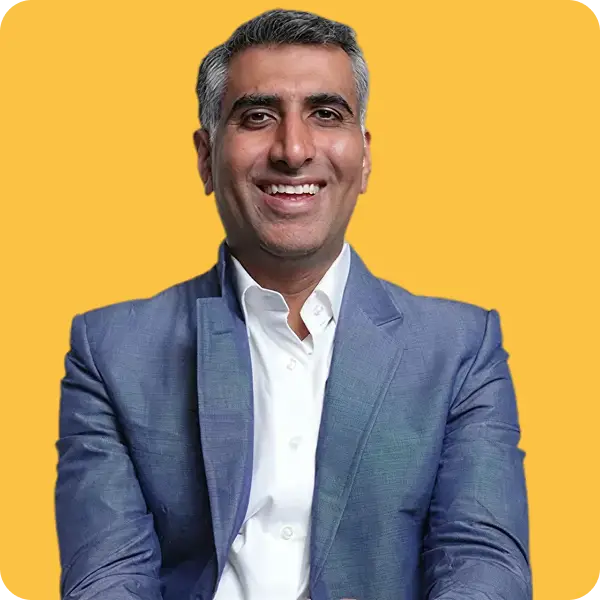
Dr. Vinay, Pioneer of ACS for Hair Restoration
How a plastic surgeon develops expertise in hair growth treatments
Plastic surgery is the specialty that heals wounds. That is what the training is.
I began practicing plastic surgery and grafting techniques in 2009, alongside the rest of a plastic surgery practice. For the last five years my work has been entirely hair. The advances we made in transplantation and in non-surgical restoration were significant enough that it became the only thing we do.
I trained in plastic and reconstructive surgery at Northwestern University, where I was Chief Resident and the Louis E. Fazen Endowed Scholar of Medicine, and at the University of Chicago. I have performed over 10,000 procedures.
I have colleagues with real expertise in hair loss. What our particular training gave us was expertise in this treatment specifically — in wound healing as a process rather than as a complication to be managed. It is also why we are successful at grafting, since a transplant is a wound-healing problem before it is anything else.
That is what allowed me to bring ACS into hair restoration from orthopedic medicine, where it was developed for healing tendons, ligaments and cartilage — tissues where blood supply is poor and healing is slow. A thinning follicle has the same problem. I was the first to use it for hair, and we have continued to develop both it and the platelet-based therapies it came from.