




Introduction
Hair transplantation is not simply a cosmetic service—it is a medical procedure that permanently redistributes your donor hair supply. In your hair transplant team, the quality of your outcome depends directly on the expertise, planning, and oversight of the clinical professionals involved, as well as long-term strategy, precision, and consistent physician guidance throughout.
Every stage of the process matters, from the initial consultation and diagnosis to hairline design, graft extraction, placement, and post-procedure care. A well-qualified team evaluates not just where hair is being restored, but how your hair loss is expected to progress over time. This long-term perspective is essential to creating results that remain natural as you age. Contact Northwestern Hair Restoration today for more information.
Here’s what truly matters when evaluating a hair transplant clinic.
1. Physician-Led Evaluation and Planning
The most important factor is physician involvement.
A qualified hair restoration doctor should:
- Perform your scalp evaluation
- Assess donor capacity and long-term hair loss patterns
- Design your hairline and density plan
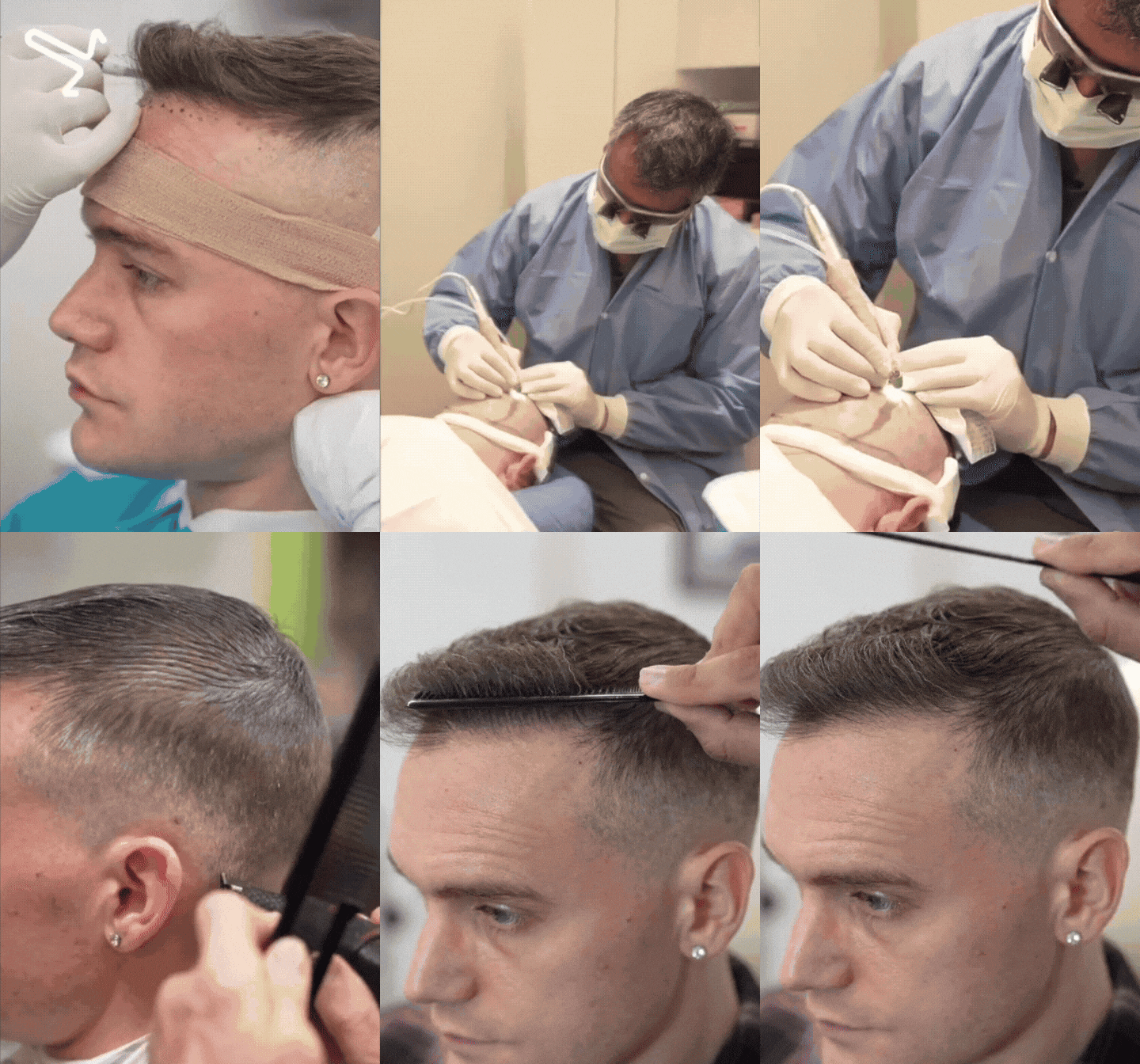
- Oversee extraction and graft placement
Hair transplantation requires both surgical precision and aesthetic design. Proper medical oversight ensures the procedure aligns with your long-term hair loss progression — not just your short-term goals.
2. Dedicated Experience in Hair Restoration
Not all surgeons specialize in hair transplantation.
Look for a physician who has:
- Focused specifically on hair restoration
- Performed a high volume of FUE or Micro-PUE procedures
- Demonstrated consistent, natural results
Experience in unrelated surgical fields does not automatically translate to hair transplant expertise. Hairline artistry and donor management are highly specialized skills.
3. Advanced Technique and Graft Preservation
 Modern hair restoration relies on refined techniques that prioritize graft survival and donor integrity.
Ask about:
- Extraction method (standard FUE vs Micro-PUE)
- Punch size and instrumentation
- Donor area management strategy
- Graft handling protocols
Minimizing follicular trauma directly impacts density, healing, and long-term growth.
4. Transparent Credentials and Licensing
Your clinic should clearly outline:
- Medical licensing
- Surgical training
- Scope of physician involvement
In the United States, hair transplantation is considered a surgical procedure and should be performed under proper medical supervision.
5. A Long-Term Treatment Philosophy
Hair loss is progressive. A qualified team should discuss:
- Future hair loss planning
- Donor preservation
- Adjunctive therapies
- Age-appropriate hairline design
A transplant that looks good today should still look natural 10–20 years from now.
Final Thoughts
The most important qualification isn’t just years of experience—it’s physician-led strategy combined with refined technique. In hair restoration, outcomes are shaped not only by technical skill, but by the ability to plan for how your hair will evolve.
Hair transplantation permanently redistributes a limited donor supply, which makes careful planning essential. Choosing a medically driven, precision-focused clinic protects both your immediate results and your long-term options. This is where the role of an experienced physician becomes critical. Dr. Vinay Rawlani leads every stage of the process, from evaluation and diagnosis to hairline design and surgical execution, ensuring consistency and accountability throughout.
Considering Hair Restoration?
Schedule a private consultation with a Northwestern Hair physician to discuss your candidacy, donor capacity, and long-term strategy, with personalized recommendations tailored to your goals.
Choose between in-person and virtual evaluations.