





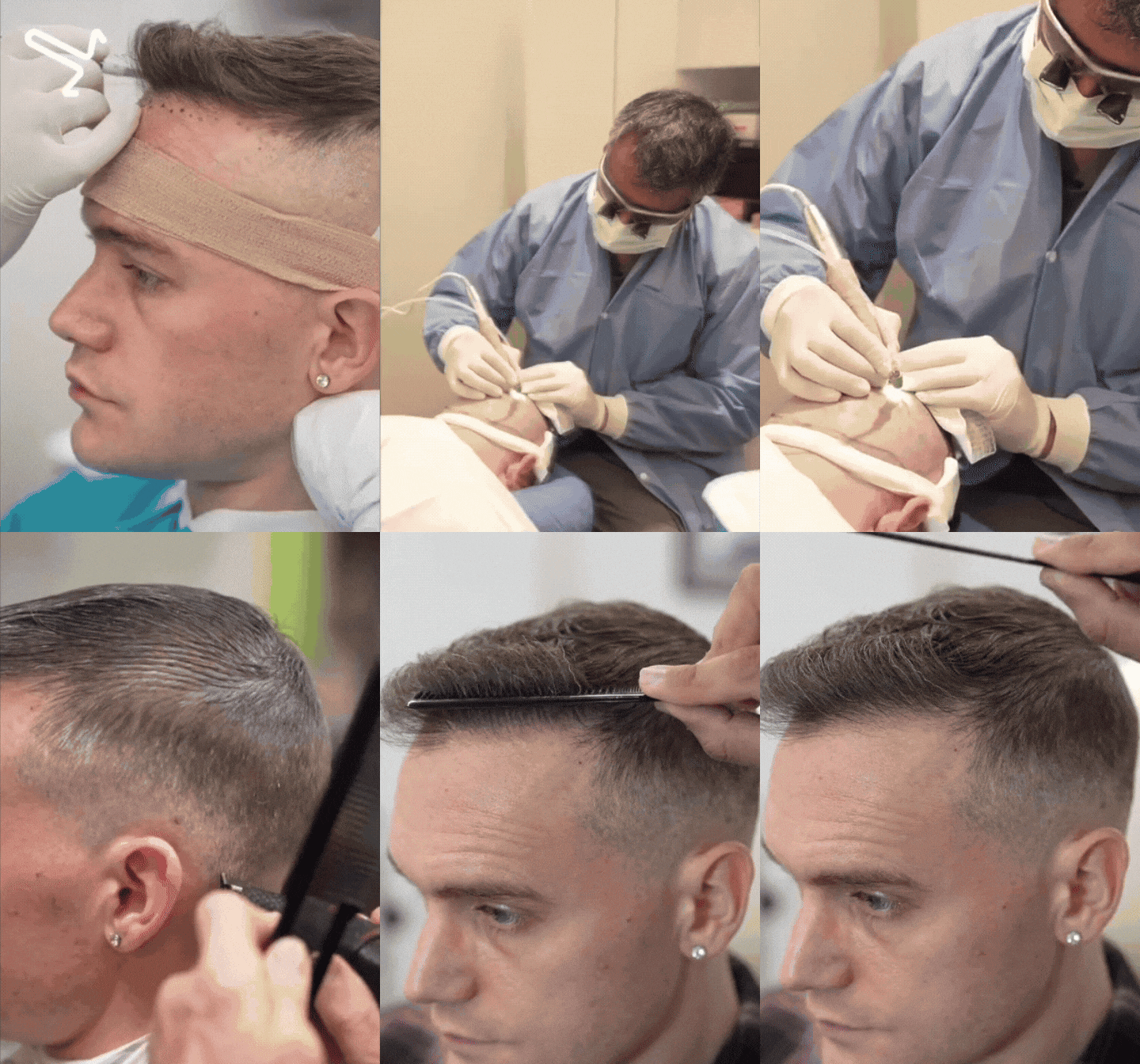
Hair loss is often framed as inevitable—something written into your DNA long before the first strand falls. Others point to modern life, including stress, diet, sleep, or environmental exposure. In What Matters More Genetics Or Lifestyle, the reality is that both factors play critical roles. The more important question is not which matters more, but how they interact.
At Northwestern Hair, Dr. Vinay Rawlani approaches hair loss as a multifactorial biological process. Trained in plastic surgery and having personally undergone hair restoration, Dr. Vinay understands that while genetics may load the gun, lifestyle often pulls the trigger. His diagnostic process is designed to identify not only inherited susceptibility, but also the environmental and physiological factors that determine how quickly and severely hair loss progresses.
Understanding the relationship between genetics and lifestyle is essential to both prevention and effective treatment. Contact Northwestern Hair Today for more information.
The Genetic Blueprint of Hair Loss
 The most common form of hair loss in both men and women is androgenetic alopecia. This condition is genetically mediated and hormonally driven.
Genetic influence:
- Which follicles are sensitive to androgens
- Where thinning will occur
- How aggressively hair loss progresses
- At what age may changes begin
Susceptible follicles contain receptors that respond to dihydrotestosterone (DHT). Over time, DHT alters follicle behavior, leading to miniaturization. Hair becomes finer, growth cycles shorten, and visible density decreases.
Genetics determines vulnerability—not inevitability.
Two individuals with similar genetic profiles may experience dramatically different outcomes depending on their internal physiology and external exposures.
What Lifestyle Actually Controls
Lifestyle does not change DNA, but it profoundly influences follicle expression.
Hair follicles depend on:
- Stable hormonal signaling
- Efficient circulation
- Low inflammatory burden
- Adequate nutrient availability
- Healthy immune regulation
Lifestyle factors directly affect all of these.
Stress and cortisol
Chronic stress elevates cortisol, which disrupts immune balance, inflammatory signaling, and vascular function. This accelerates follicle cycling disruption and increases susceptibility to shedding and miniaturization.
Nutrition and metabolic health
Hair follicles are energy-dependent structures. Deficiencies in iron, protein, essential fatty acids, and micronutrients impair keratin production and weaken emerging hair shafts. Poor metabolic health compromises scalp circulation and follicle repair.
Sleep and circadian regulation
Growth hormone secretion, tissue repair, and cellular regeneration occur primarily during deep sleep. Chronic sleep disruption interferes with these processes, reducing follicle recovery capacity.
Hormonal stability
Lifestyle influences thyroid function, insulin sensitivity, cortisol balance, and sex hormone regulation—all of which affect follicle biology.
Inflammation and environmental exposure
Smoking, UV damage, pollution, and inflammatory scalp conditions degrade the follicular microenvironment and accelerate density loss.
Lifestyle determines how aggressively genetic susceptibility is expressed.
Why Some People Lose Hair Faster Than Others
 Two men may inherit similar androgen sensitivity. One experiences mild thinning in one’s forties. The other develops significant loss in his twenties.
The difference is often explained by:
- Chronic stress load
- Metabolic health
- Nutritional status
- Hormonal stability
- Scalp inflammation
- Immune regulation
Lifestyle factors do not cause androgenetic alopecia, but they magnify or moderate its progression.
In some patients, lifestyle-driven conditions such as telogen effluvium or inflammatory shedding overlap with genetic loss, making progression appear sudden and severe.
Dr. Vinay Rawlani’s Integrated Diagnostic Philosophy
Dr. Vinay does not evaluate hair loss as purely genetic or purely environmental. His diagnostic process examines the entire follicular ecosystem.
Each consultation assesses:
- Hair loss pattern and progression rate
- Follicle miniaturization
- Hair shaft caliber and density gradients
- Scalp circulation and metabolic health
- Signs of inflammatory or hormonal involvement
- Lifestyle and physiological contributors
This allows Dr. Vinay to determine:
- The degree of genetic susceptibility
- Which lifestyle factors are accelerating loss
- Whether follicles are suppressed, miniaturized, or non-viable
- What biological interventions are most appropriate
Because Dr. Vinay personally designs and performs all surgical procedures, this biological understanding also informs long-term architectural planning and hairline design.
Where Genetics End and Treatment Begins
While genetics cannot be altered, follicle behavior can be influenced.
Early intervention can:
- Slow or stabilize miniaturization
- Improve hair shaft thickness
- Support longer growth cycles
- Preserve vulnerable follicles
- Reduce the need for extensive surgical restoration
Treatment is most effective when follicles are still producing hair.
How Northwestern Hair Addresses Both Factors
Northwestern Hair operates under a physician-led restoration model where treatment is built around both genetic reality and biological optimization.
1. Stabilizing genetically susceptible follicles
Programs are designed to reduce the biological signals that drive miniaturization and to strengthen follicles before irreversible loss occurs.
2. Improving scalp biology
Non-surgical therapies focus on:
- Enhancing microvascular circulation
- Reducing inflammatory signaling
- Supporting follicle metabolism
- Improving oxygen and nutrient delivery
These therapies counteract many lifestyle-driven accelerators of hair loss.
3. Regenerative support with Autologous Cellular Serum (ACS)
Regenerative medicine plays a central role in Dr. Vinay’s treatment philosophy. Autologous Cellular Serum (ACS) uses components derived from the patient’s own biology to support:
- Cellular repair pathways
- Growth factor signaling
- Scalp circulation
- Follicle resilience
ACS is often integrated into treatment plans when follicles require metabolic and regenerative support.
4. Surgical restoration guided by biology and design
When follicles are no longer viable, surgical restoration becomes appropriate. Dr. Vinay personally designs and performs every procedure, applying his proprietary hairline design methodology developed through years of studying facial proportions, density architecture, and aging patterns.
Surgery is never approached as an isolated cosmetic act, but as part of a long-term biological and aesthetic strategy.
Why the Question Should Not Be “Which Matters More?”
Genetics defines where hair loss can occur.
Lifestyle determines how quickly it happens and how well follicles survive.
Successful hair restoration requires addressing both.
Ignoring genetics leads to unrealistic expectations.
Ignoring lifestyle leads to unstable results.
Dr. Vinay’s approach integrates both realities into a unified treatment model.
Northwestern Hair’s Physician-Led, Long-Term Framework
At Northwestern Hair, diagnosis, biological treatment, and aesthetic design are unified under the direction of Dr. Vinay Rawlani.
Each plan is constructed to:
- Identify genetic susceptibility
- Correct biological accelerators
- Preserve viable follicles
- Restore lost density where needed
- Design outcomes that remain natural over time
This integrated framework allows patients not only to restore hair, but to protect it.
Final Thoughts
Hair loss is neither purely genetic nor purely lifestyle-driven. It is the product of their interaction.
Genetics may establish vulnerability, but biology determines expression. By identifying both inherited patterns and modifiable contributors, treatment can shift from reaction to prevention.
Under the clinical leadership of Dr. Vinay Rawlani, Northwestern Hair approaches hair loss through biological precision, regenerative innovation, and aesthetic intention—helping patients regain not only hair, but long-term control over their hair health. Contact Northwestern Hair Today for more information.