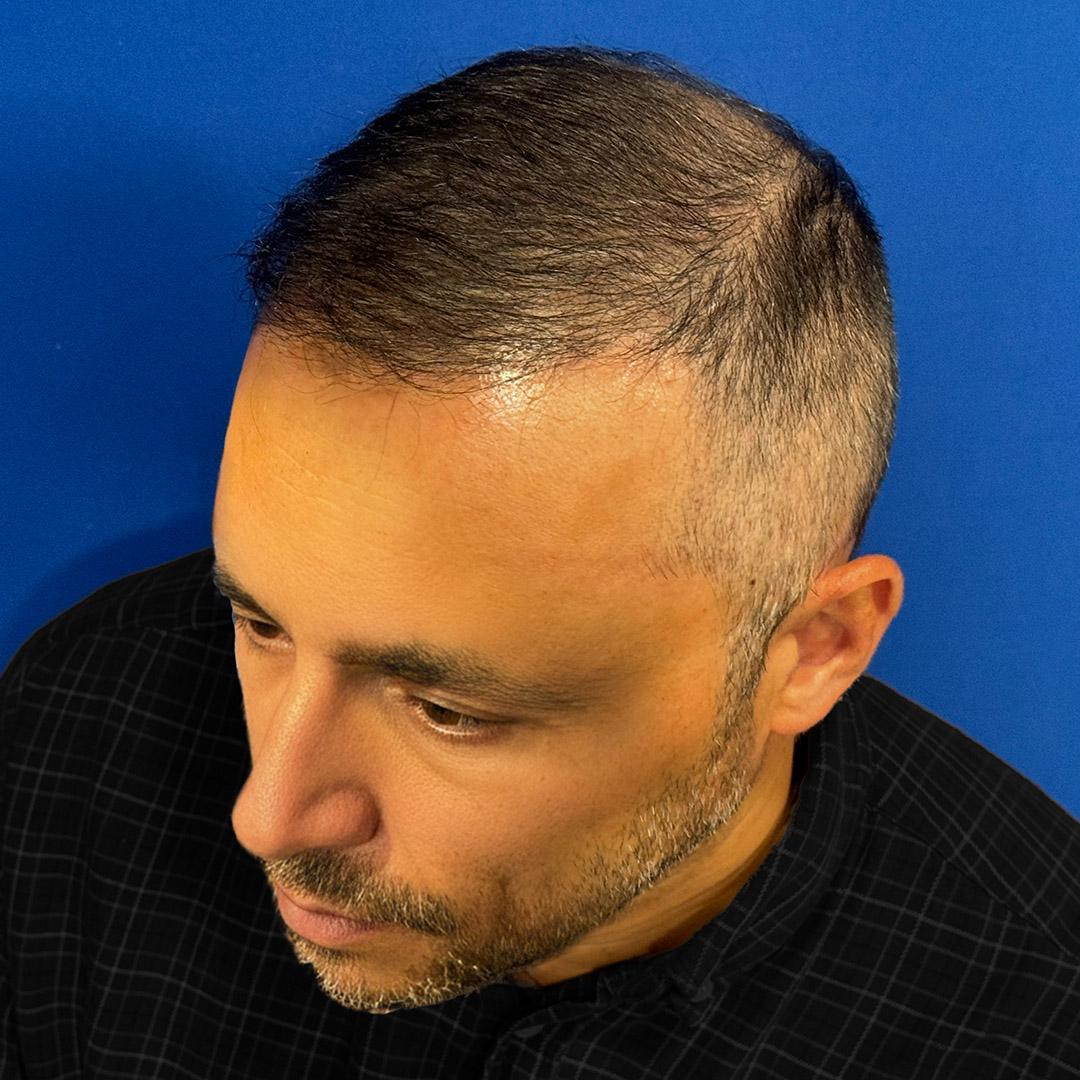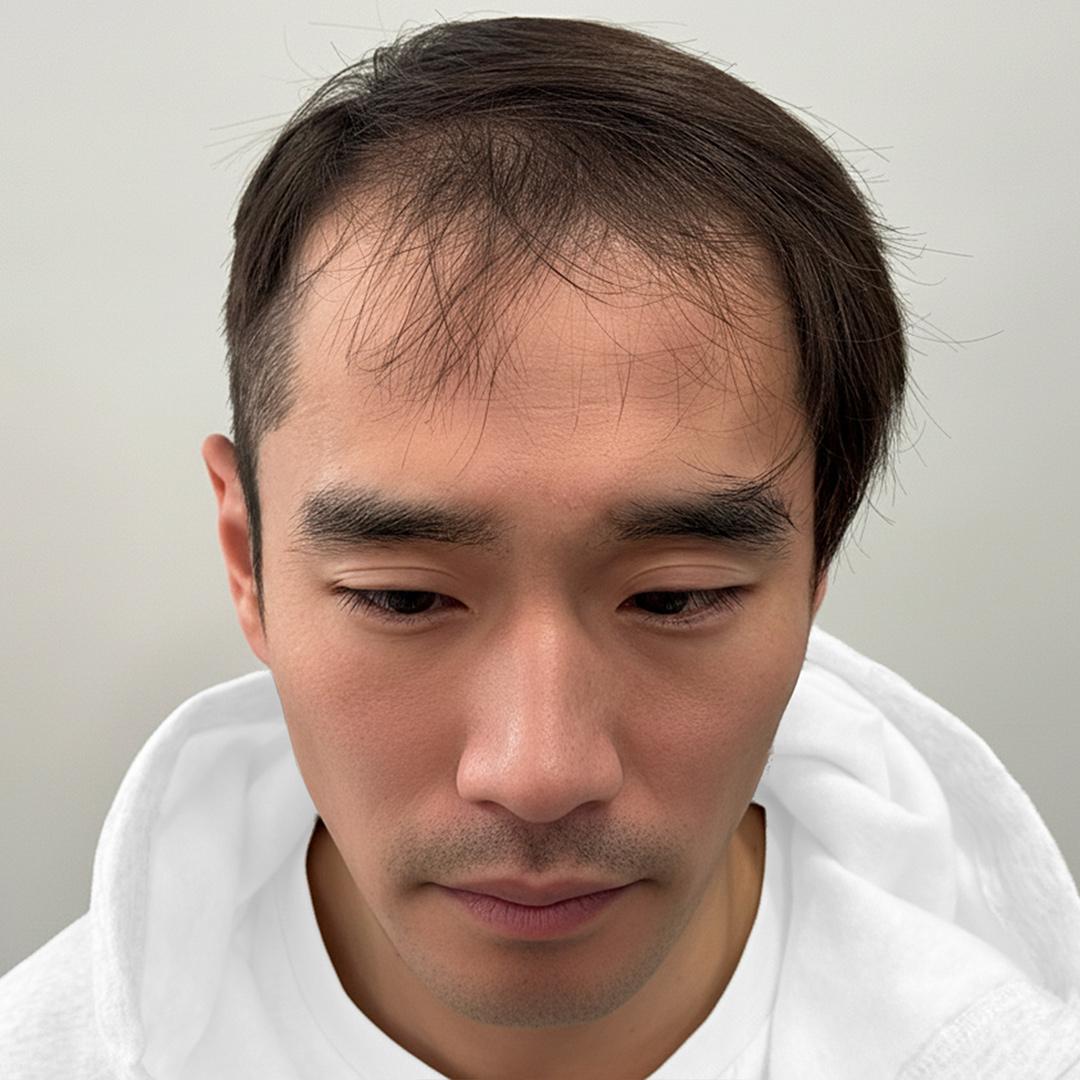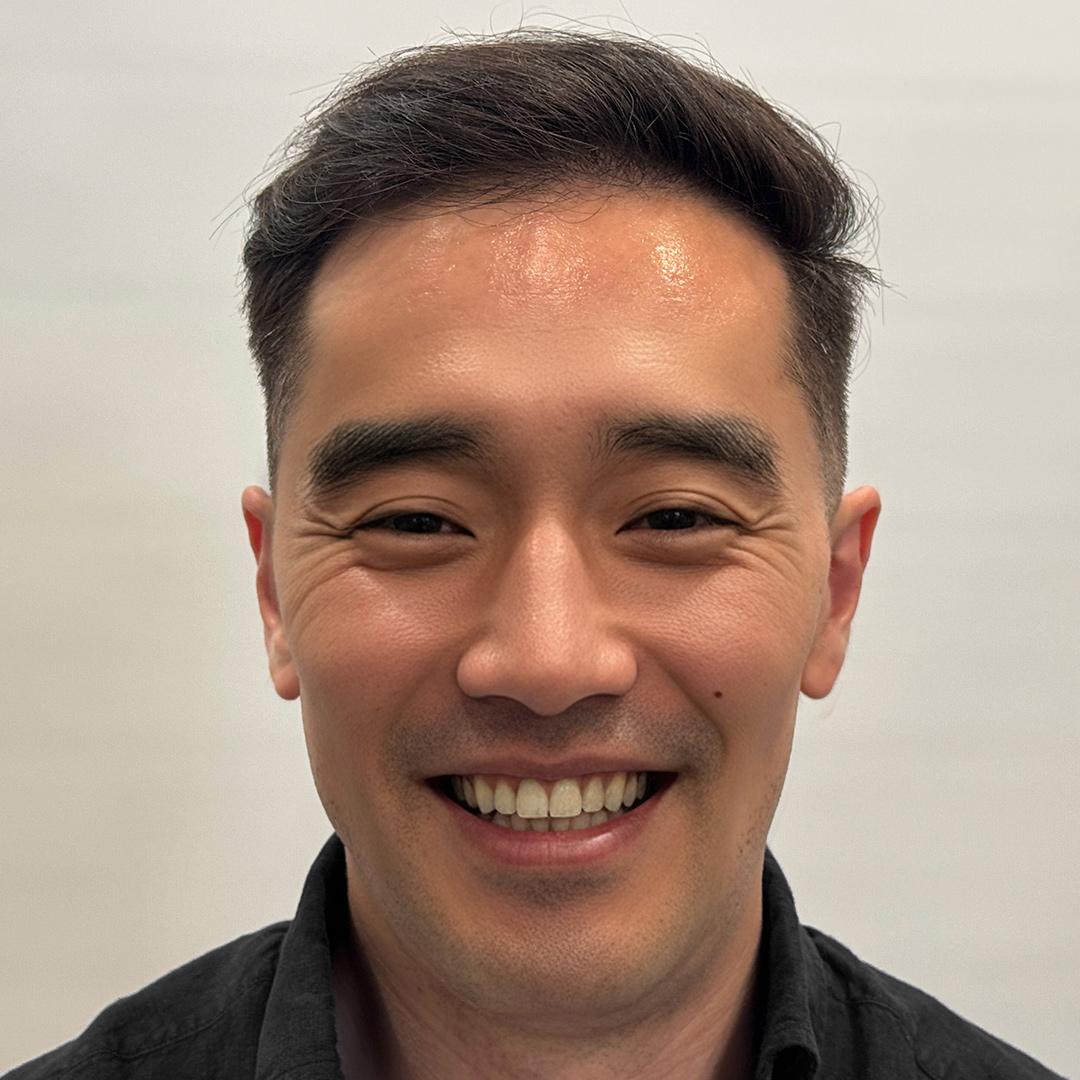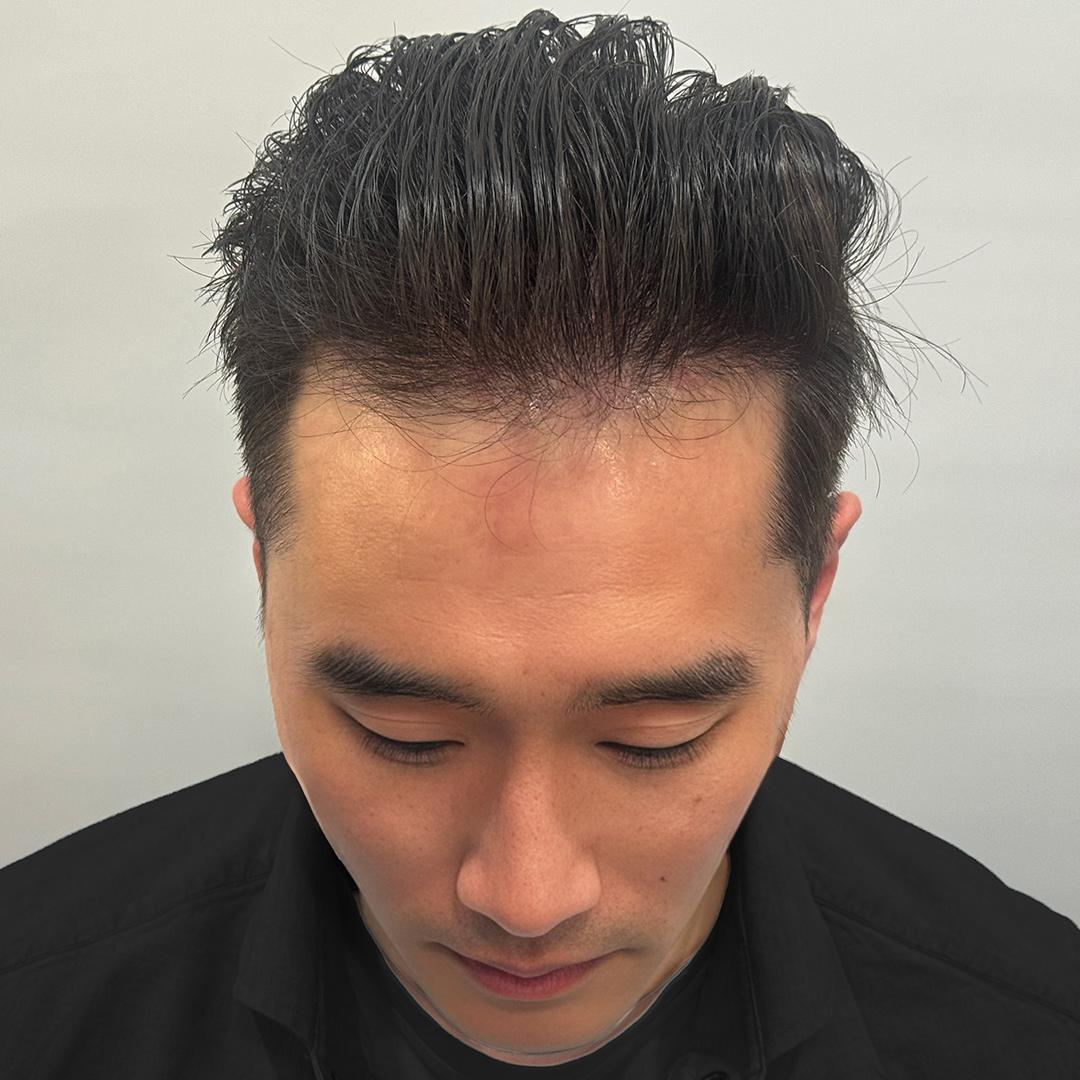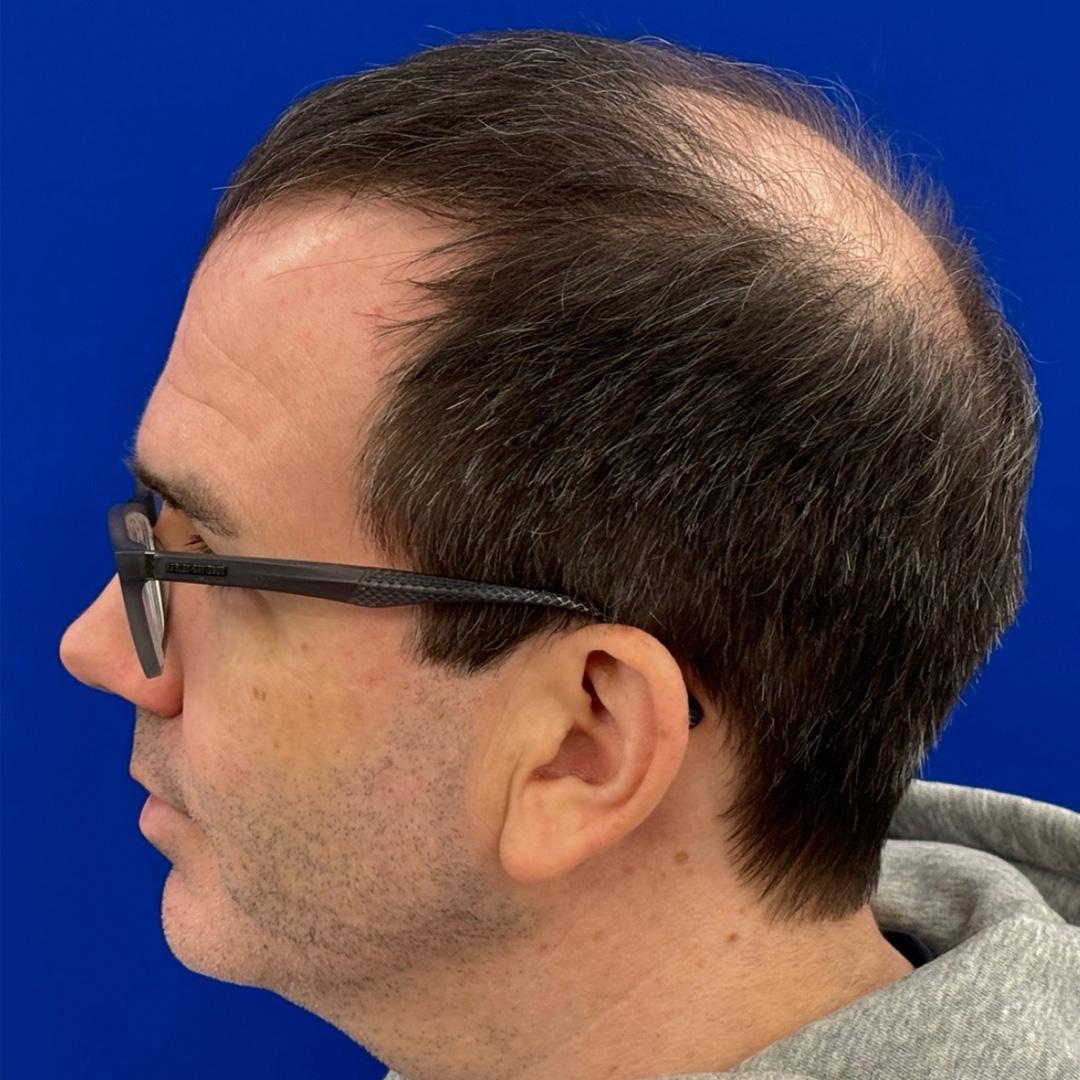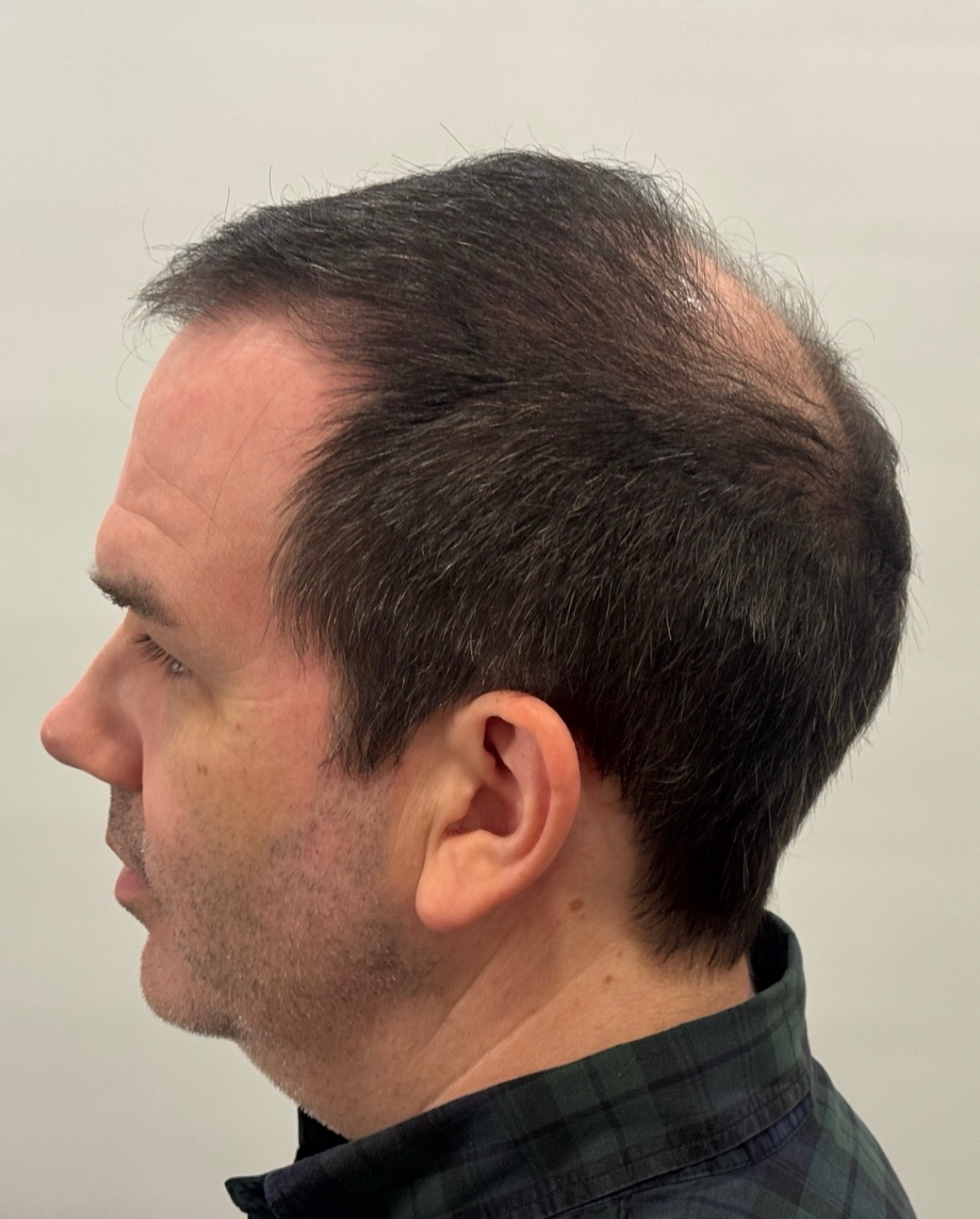
When patients start researching a hair transplant, the question is almost always the same: how many grafts do I need? It’s the right hair transplant graft count question to ask — but the number means more once you understand how it’s built. This page walks you through it: map your area, calibrate to your donor hair, then weigh the other influences.
Step 1
Click the regions you want to restore. Each carries an average graft count; together they give your base graft count.
Most online calculators map your graft count to the Norwood scale and assume you’ll fill every bald area in the pattern. That’s the part to question. Norwood is a picture of where hair is missing — it isn’t a plan for what should be restored. Filling the whole pattern isn’t always the right call, and often isn’t the most natural one.
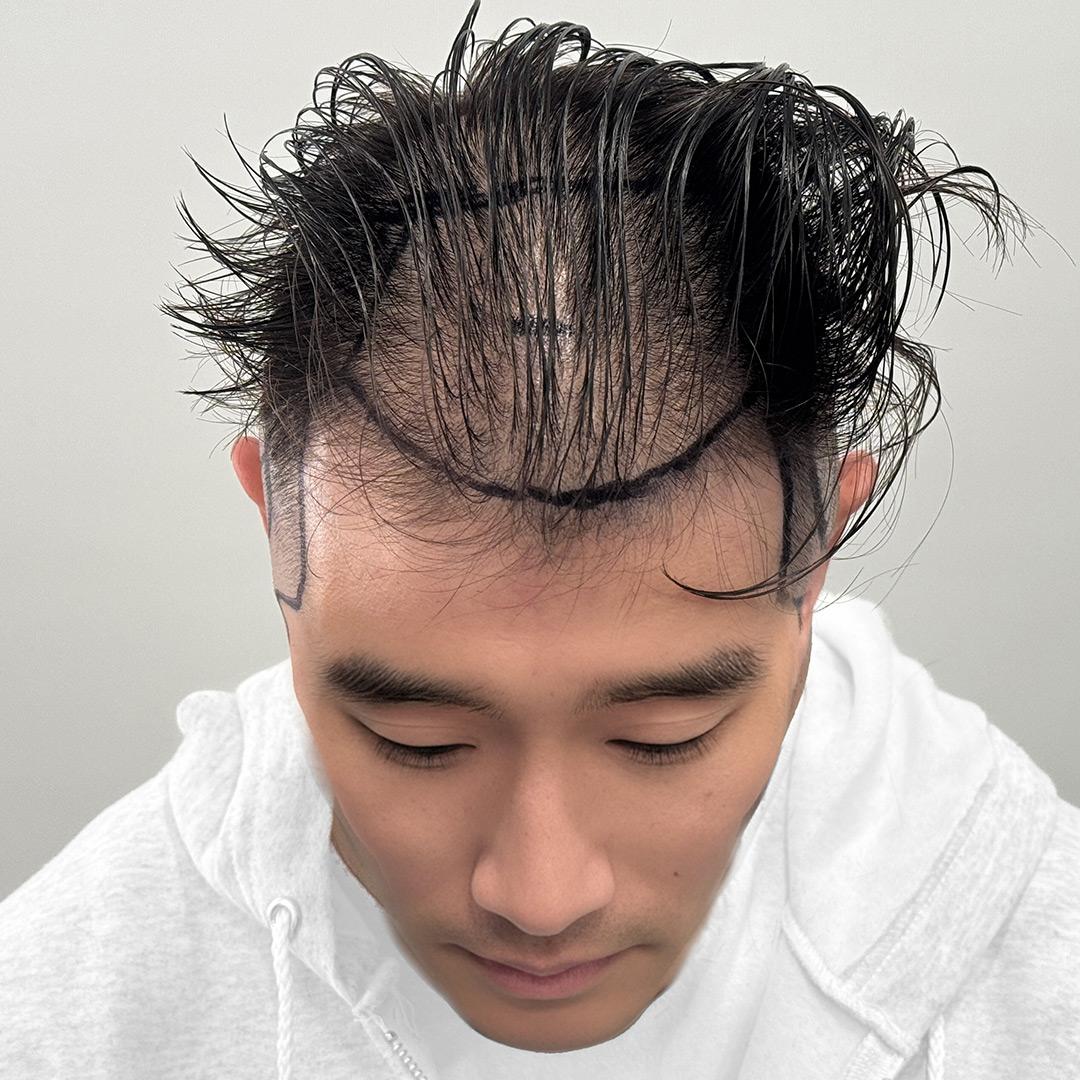
At Northwestern Hair, the area is set by Dr. Vinay’s Timeless Hairline Design, not by Norwood alone. The design maps three things: where your loss is heading along the sides, where the front of the crown sits, and where the hairline belongs — which is why we draw distinct lines for each. Together they define a naturally shaped area built to look right for the rest of your life, not just on the day of the procedure.
You don’t always repair everything the Norwood pattern shows. You repair what gives a natural result over time. That’s how a generic estimate becomes a real graft count plan for your case.
*This is an estimate. It doesn't account for hairs per graft. Dr. Vinay performs a clinical and trichoscopic exam to finalize your number — with no operational bias from clinic, surgeon, team, or technology.
Step 2
A hair transplant isn’t a transfer of hairs from the back of your scalp to the front. It’s a transfer of visual density — and different hair carries different amounts of it per graft. The real question isn’t how many hairs we move; it’s how much density your donor zone holds, and how many grafts it takes to bring that density where you need it.
Four characteristics shape that answer, and the calculator below uses all four: caliber (thicker hair carries more density per graft), texture (wavy and curly cover more volume), and hair color plus skin color, which together set your contrast — the higher it is, the more scalp show-through reads as thinning, and the more grafts you need. Together these four can shift your graft count by up to 2.5x versus another patient restoring the same area.
*This is an estimate. It doesn't account for hairs per graft. Dr. Vinay performs a clinical and trichoscopic exam to finalize your number — with no operational bias from clinic, surgeon, team, or technology.
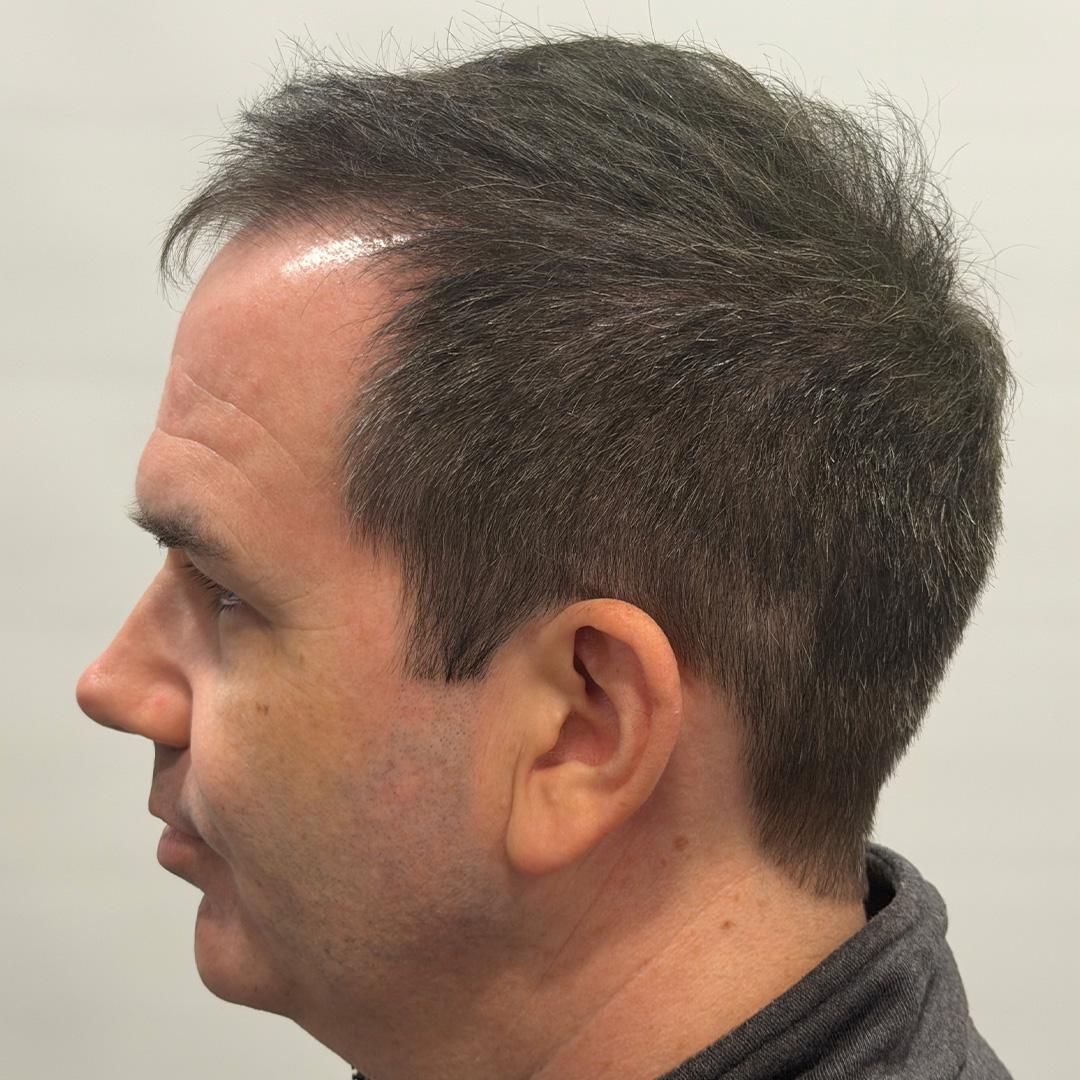
Two more characteristics matter just as much, but neither can be read from the outside — both need a look under the trichoscope in consultation.
Hairs per graft. Hair grows in clusters of one to four sharing one exit point, and each cluster is one graft. Around the perimeter — near the ear and neckline — grafts usually carry one hair, sometimes two; along the ridge and equator, where hair is thicker, two, three, or four. A donor zone rich in multi-hair grafts covers the same area with a lower count — a swing of roughly 1–4x, visible only in person.
Oiliness. Drier hair is frizzier and stands away from the scalp, covering more volume; oilier hair lies flat, covers less, shows more scalp, and needs more grafts.
Keep the two numbers straight: the four-characteristic Donor Hair Density Factor in the calculator runs about 0.75 to 1.6. Hairs per graft (1–4x) sits on top of that, added by Dr. Vinay after a trichoscopic exam.
Step 3
Beyond the area and your hair characteristics, two more things shape how much coverage you get and where it goes: how much density you want, and how the hairline is built. Both come down to placing density well.
A common assumption is that density should be thick. It doesn’t have to be — density should be harmonious with the hair you already have. Patients with naturally full coverage should be restored to match it, and the graft count rises accordingly. Restore lighter native coverage too thickly and it looks transplanted, not natural — at an inflated count for no benefit. The result has to read as continuous with what’s already there. The simple rule: the density you want, calibrated to what you have, times the size of the area, gives your base graft count before any refinement.
The hairline is where naturality is judged — and where the graft count climbs as a direct result of wanting a natural result. A natural hairline is a soft, feathered gradient: fine single-hair grafts at the very front, building to thicker multi-hair grafts behind. Those fine perimeter grafts carry less density, so it takes a higher count of them to match the density behind. Two techniques make it possible:
The feathering zone runs about 5 to 10 mm deep — roughly 600 to 1,000 grafts at 5 mm, 1,200 to 2,000 at 10 mm. Even with thicker hair, the hairline needs close to double the count of the area right behind it. It’s where the count compounds.
Step 4
Longevity is the part of your graft count that plays out over time. It works in two directions — what we can do for you today, and the final shape you’re aging into.
Evaluated dry, you see the visible voids — what most people notice. Dry correction fills what’s plainly missing today. But wet the hair and thinning shows up that the dry view hides. That wet zone is at high risk of going bare in the next few years — and wet correction grafts it now, placing grafts between existing native hairs with intra-follicular grafting and an SP89 blade. It raises today’s count and lowers what you’ll need later. Even a modest amount is one of the most cost-effective ways to buy longevity.
Here’s the core of it. Grafts buy you area and density — and the two trade against each other. Underneath your hair characteristics there’s a simple floor: a partial or frontal restoration takes 6,000 to 8,000 grafts at minimum, even with thick hair. If that can’t be reached and there’s no existing hair to lean on, one of two things happens:
That’s why graft count and longevity are the same conversation. Three shapes age naturally, and the Timeless Hairline Design identifies which one your case is built toward:
Until you reach one of these endpoints, a second procedure should stay on the table. Staging is legitimate — it lets you pace by budget — but it isn’t optimal, because every surgery lays down scar tissue that lowers the survival of later grafts. If you can reach the endpoint in one procedure, you should.
*This is an estimate. It doesn't account for hairs per graft. Dr. Vinay performs a clinical and trichoscopic exam to finalize your number — with no operational bias from clinic, surgeon, team, or technology.
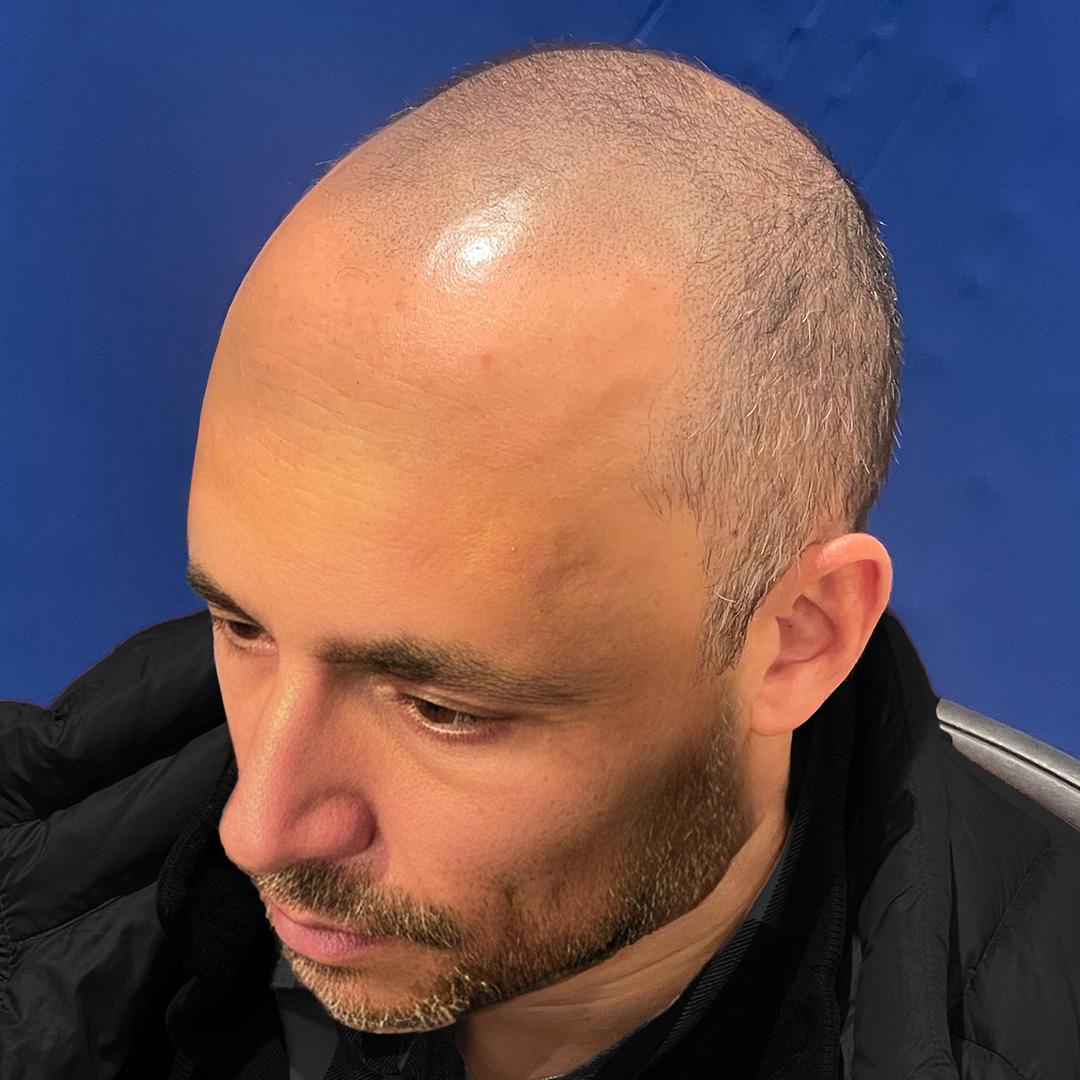
Most clinics cap a hair transplant at around 3,000 grafts per session. Northwestern Hair’s limit is closer to 10,000. The difference isn’t anatomy — it’s the kind of limitation. Caps usually come from the clinic: the team, the surgeon, or the technology. Those are operational limits, and they belong to the clinic, not to you. If all three are capable of more, the only real limit is your body — whether the procedure stays safe.
World Record
World-record single-day graft count.
World Record
Largest fully concealed session — restored without shaving the donor zone.
Northwestern Hair is one of the few clinics in Chicago — or anywhere — that can perform 6,000+ grafts in a single day. The full story of how we built that capacity lives on our mega sessions page.
+200 reviews
The only way to know how many grafts you actually need is a consultation at Northwestern Hair — directly with Dr. Vinay. Because our office has no operational ceiling on graft count, there’s no bias in the recommendation. The number Dr. Vinay recommends is the number that matches your case.
Because our office features world-record mega-session capabilities up to 10,000+ grafts, our recommendations are never limited by operational staff or clinic tools—only by what is perfectly safe and effective for your body.
It varies widely. Five things set the answer: the area being restored, your density target, whether you’re building a hairline, the long-term shape you’re aging into, and your hair characteristics — which alone can shift the count by up to 2.5x. Use the calculator above for an estimate; book a consultation for an accurate number.
In two parts. Part 1 asks you to select scalp regions, each with an average graft count, producing your base count. Part 2 asks four questions about your hair and returns a Donor Hair Density Factor that adjusts the base up or down. Your estimate is base count × density factor.
It gives a calibrated starting point, not a final number. It can’t measure your donor density per square centimeter, your hairs per graft, or what your body can safely support — those need an in-person or virtual evaluation.
A frontal restoration — hairline through to the front of the crown — typically needs 6,000 to 8,000 grafts in one session. Most US clinics cap near 3,000 and can’t deliver it in one procedure. Northwestern Hair built the capacity to do it routinely.
Most US clinics cap at 2,500 to 3,000 — a limit of schedule, staffing, and tools, not anatomy. Northwestern Hair routinely performs 6,000 to 8,000 in a single session, with mega-session capability above 10,000 when the case calls for it.