




Chicago vs. Turkey for Hair Transplants: An Honest Cost-Benefit Breakdown from a Chicago Surgeon
Turkey has become the dominant destination for medical tourism hair transplants, and the price differential is real enough that it deserves a serious answer rather than a dismissive one. Packages that include the procedure, hotel, and flights for a total cost that undercuts Chicago pricing by thousands of dollars are genuinely available. The question isn’t whether those numbers are accurate — they largely are. The question is what you’re actually comparing when you compare them.
This isn’t a post designed to scare you away from Turkey with horror stories. It’s a straight cost-benefit breakdown from a Chicago surgeon’s perspective — one that accounts for what the Turkey price includes, what it doesn’t include, what happens when something goes wrong, and what the full financial picture actually looks like when you run the numbers honestly. Contact Northwestern Hair Restoration today for more information.
Why Turkey Is So Much Cheaper: The Actual Reasons
Understanding the price gap starts with understanding why it exists. There are three legitimate structural reasons Turkish clinics can offer substantially lower prices:
Currency and labor cost arbitrage. The Turkish lira has depreciated significantly against the dollar and euro over the past decade. Clinic operating costs, staff salaries, and facility overhead are all paid in lira. For a patient paying in dollars, that currency differential translates directly into lower effective prices — regardless of quality.
Volume. Many Turkish hair transplant clinics operate at extremely high volume — multiple procedures per day, per room, with surgical technicians performing significant portions of the work under physician supervision. High volume drives down per-unit cost, which gets passed to the patient as a lower price point.
Package bundling. All-inclusive packages that bundle procedure, hotel, airport transfers, and sometimes flights create a perception of comprehensive value that makes the total number feel like a complete accounting. It often isn’t.
None of these reasons is inherently sinister. Currency arbitrage is economics. Volume efficiency is a legitimate business model. The issue is what volume and cost-cutting mean for the specific technical demands of your procedure.
What the Turkey Price Doesn’t Include
 The sticker price comparison breaks down quickly once you account for what isn’t in the package.
Travel and time. A round-trip flight from Chicago to Istanbul runs $700–$1,200 depending on timing and routing. Factor in multiple days away from work — most Turkey packages require a minimum 4–5 day stay — and the out-of-pocket and opportunity cost of the trip adds several hundred to several thousand dollars depending on your income and situation.
Revision procedures. This is the cost that doesn’t appear in any comparison until it becomes relevant. If you need a revision — whether because of poor graft survival, unnatural density, a hairline that doesn’t look right, or damage to your donor area — you’re either flying back to Turkey or finding a Chicago surgeon willing to work on someone else’s case. Revisions after poorly executed first procedures are significantly more complex and expensive than primary procedures, and your options are constrained by whatever donor supply remains after the first surgery.
Complications management. Infection, excessive scarring, folliculitis, or persistent healing issues require follow-up care. If that follow-up care happens in Chicago — at a dermatologist or surgeon who didn’t perform the procedure — you’re paying full U.S. rates out of pocket, with no existing relationship with the treating provider and no procedural records to refer to.
The emotional cost of a bad result. This one is unquantifiable but real. Patients who’ve had unsuccessful or suboptimal procedures and then spent years either living with a result they’re unhappy with or navigating the revision process describe the experience in consistent terms: the money saved upfront didn’t feel like savings once the full picture emerged.
The Volume Question: What It Means for Your Procedure
The high-volume model that enables low Turkish pricing is worth examining directly, because it’s the factor most directly connected to outcome quality.
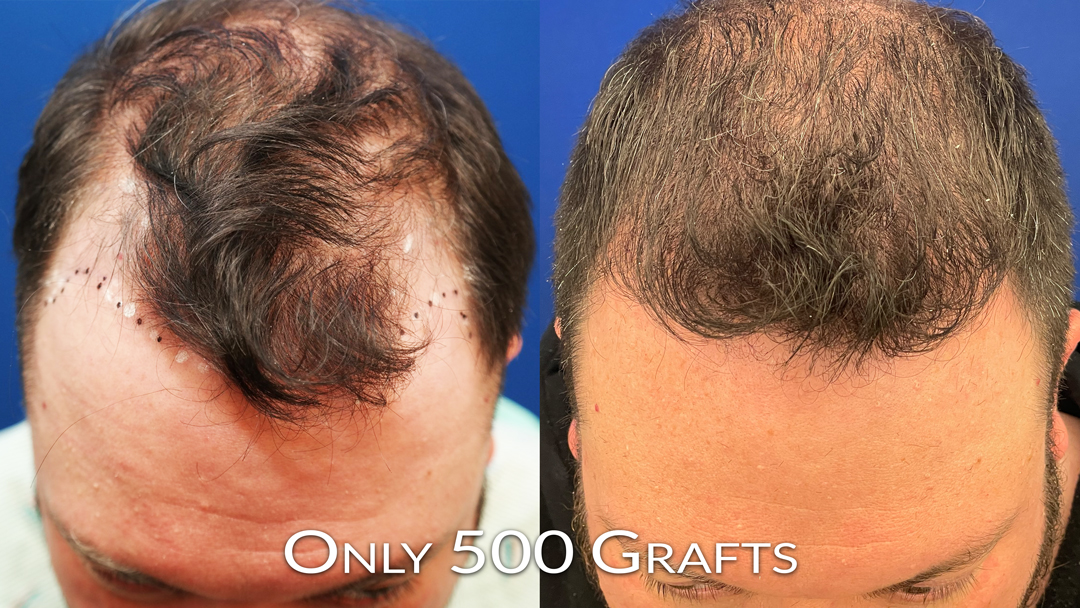
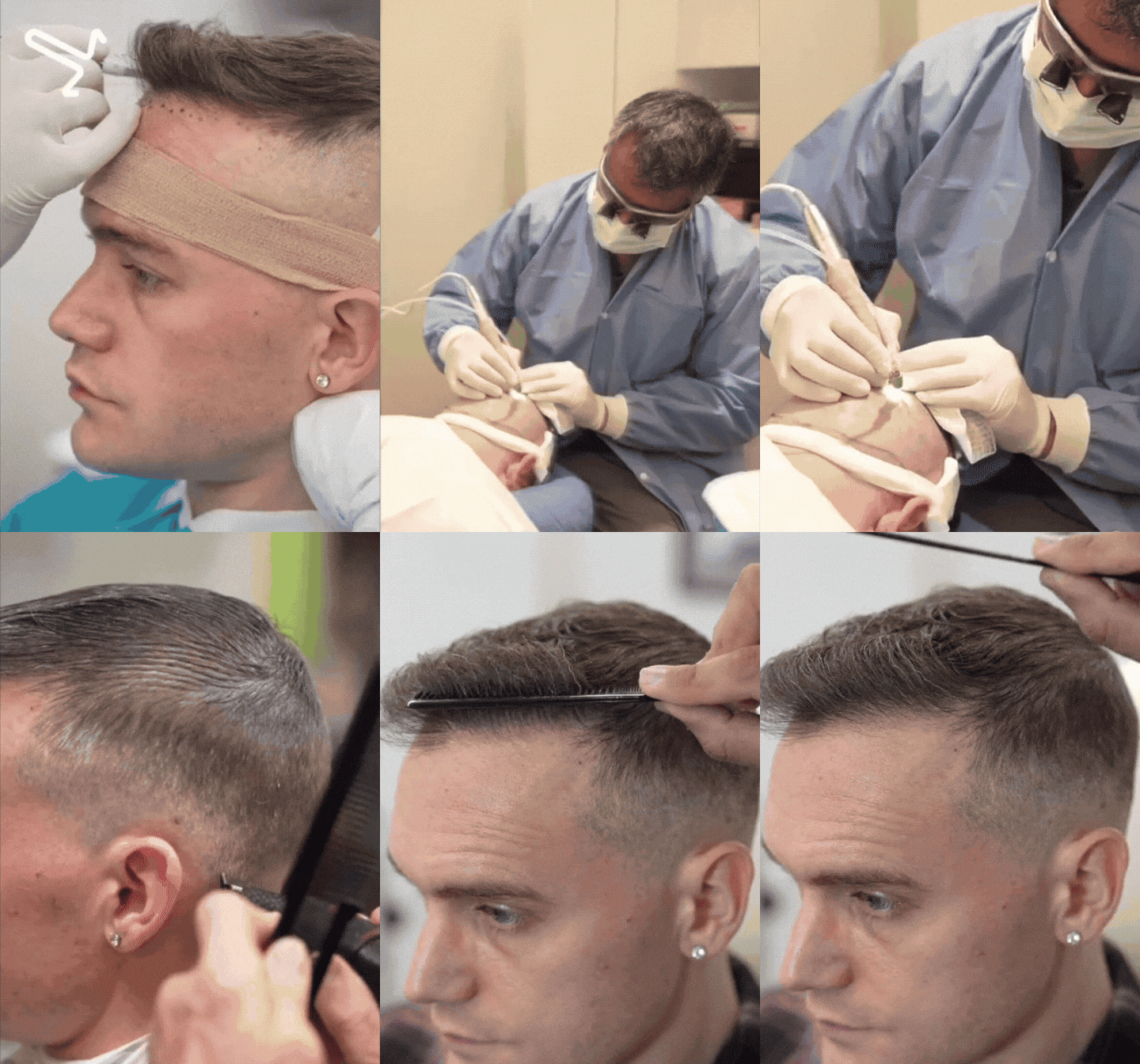
Northwestern Hair commits to only one procedure per day, with Dr. Vinay personally involved at every step — from consultation to aftercare. That model costs more to operate than a multi-room, multi-procedure-per-day clinic. It also means that the surgeon designing your hairline is the same person extracting your grafts and placing them — with full attention on your case for the duration of the procedure.
In high-volume Turkish clinics, the surgeon is often present for hairline design and oversight, with trained technicians performing extraction and placement. This is legal, widely practiced, and can produce adequate results — but it’s a different product than a procedure performed by a specialist surgeon from start to finish. The difference in who holds the instruments, and for how long, is directly correlated with the variability of outcomes.
For procedures involving complex cases — larger graft counts, ethnic hair characteristics, hairline reconstruction after previous loss, or revision work — the surgeon’s hands-on involvement throughout is the variable that separates acceptable from exceptional.
What Happens If Something Goes Wrong
This is the most important section of any Turkey comparison, and the one most often glossed over in the initial research phase.
Hair transplant complications aren’t common, but they happen — even with skilled surgeons. Infection, poor graft survival, scarring, unnatural density distribution, hairline placement that looks wrong in person even if it looked acceptable in a photo, donor area over-harvesting that limits future options. When complications arise with a local provider, you have a direct relationship, accessible records, and a surgeon who can evaluate you in person.
When complications arise after a procedure performed in Istanbul, your options narrow considerably. You can fly back to Turkey for follow-up care — a significant added expense and time commitment with no guarantee the same provider will be available or that their evaluation will be objective. Or you can find a Chicago-area surgeon to manage the issue — a surgeon working without procedural records, without knowledge of the exact technique used, and in some cases facing a donor area that’s been compromised in ways that limit what’s achievable in revision.
Northwestern Hair’s guarantee is that they stay with you until the end — critical of their own work and relentless in the pursuit of the right result. That ongoing relationship has concrete value that doesn’t appear in a price comparison spreadsheet until something requires that relationship to exist.
The Real Cost Comparison
 Running the numbers honestly, the gap between Turkey and Chicago is smaller than the headline prices suggest — and in some scenarios, it disappears or inverts.
A representative Turkey all-inclusive package: $2,500–$4,500 for the procedure. Flights: $800–$1,200. 5 days away from work: variable, but real. True Turkey cost before complications: $3,500–$6,000+
Northwestern Hair surgical cases typically start in a range comparable to the upper end of that fully-loaded Turkey number — before accounting for the procedural differences, graft quality, surgeon involvement, and the value of accessible aftercare and a guaranteed ongoing relationship.
For patients whose cases involve revision risk, ethnic hair characteristics that demand specialized technique, or larger graft counts where the margin for error is lower, the effective value comparison shifts further.
This isn’t an argument that Northwestern Hair is the cheapest option — it isn’t. It’s an argument that “cheapest” and “best value” are different calculations, and that the Turkey comparison looks different at full accounting than it does at headline price.
Where Turkey Makes Sense — and Where It Doesn’t
An honest breakdown requires acknowledging that Turkey isn’t the wrong choice for everyone. There are skilled surgeons in Istanbul performing technically excellent work. The entire industry isn’t low-quality simply because it’s lower-priced.
Turkey may be a reasonable option if you’ve done extensive research and identified a specific surgeon — not just a clinic — with a verifiable track record on cases similar to yours, with a clear protocol for managing complications remotely, and with results in patients with your hair type that you’ve evaluated carefully.
Turkey is a higher-risk option if you have Afro-textured or Asian hair that demands a specialized extraction technique and ethnic-specific design sensibility. If you’ve had a previous procedure and are considering revision work. If your case involves scarring, a compromised donor area, or a complex hairline reconstruction. If you’re not in a position to absorb the cost and logistics of a revision if one becomes necessary. And if the value of a direct, ongoing relationship with a surgeon you can physically return to matters to you — because at some recovery point, it usually does.
What “Affordable” Actually Means in Hair Restoration
The patients who get the best value from hair restoration — in the full sense of the word — tend to be the ones who define “affordable” as the best achievable result for the investment, rather than the lowest possible upfront number.
A procedure that costs $4,000 and delivers a result you’re thrilled with for the next 30 years is a better financial outcome than a $2,500 procedure that requires a $5,000 revision two years later — to say nothing of the time, stress, and the years spent with a result you weren’t happy with in between.
At Northwestern Hair, the pricing reflects a specific set of commitments: one procedure per day, Dr. Vinay personally involved at every step, and a guarantee that they will stay with you through the full arc of your result. That’s the product. It isn’t the lowest price available. It is, for patients who’ve done the full comparison, consistently the best value.