





Introduction
One of the most common concerns patients have before a hair transplant is scarring. The reality is that all surgical procedures involve some level of healing — but the visibility and extent of scarring depend heavily on the technique used.
Understanding the difference between FUT and modern FUE can help you make an informed decision.
Do Hair Transplants Leave Scars?
Technically, yes — but the type and visibility of scarring vary significantly between procedures.
The key distinction is linear scarring vs. micro-extraction healing.
FUT (Strip Method): Linear Scarring
Follicular Unit Transplantation (FUT), often called “strip harvesting,” involves removing a thin strip of scalp from the donor area.
Because the incision must be closed with sutures, this method results in a linear scar across the back of the scalp. While it can often be concealed by longer hair, it may be visible with shorter hairstyles.
For this reason, FUT has become less common as newer techniques have advanced.
FUE: Micro-Extraction Healing
 Follicular Unit Extraction (FUE) removes individual follicular units using small, circular instruments.
Instead of a single line, FUE creates tiny extraction sites that heal as small micro-dots. When performed properly, these are:
- Evenly distributed
- Minimally perceptible
- Typically undetectable once healed
Advanced techniques such as Micro-PUE utilize smaller instrumentation and physician-controlled extraction patterns to further reduce donor visibility and preserve surrounding hair density.
What About No-Shave or Discreet FUE?
For patients concerned about visible signs of surgery, no-shave FUE techniques allow surrounding hair to remain in place to conceal healing areas during recovery.
This approach is ideal for professionals who want maximum privacy during the process.
Can You Wear Your Hair Short After FUE?
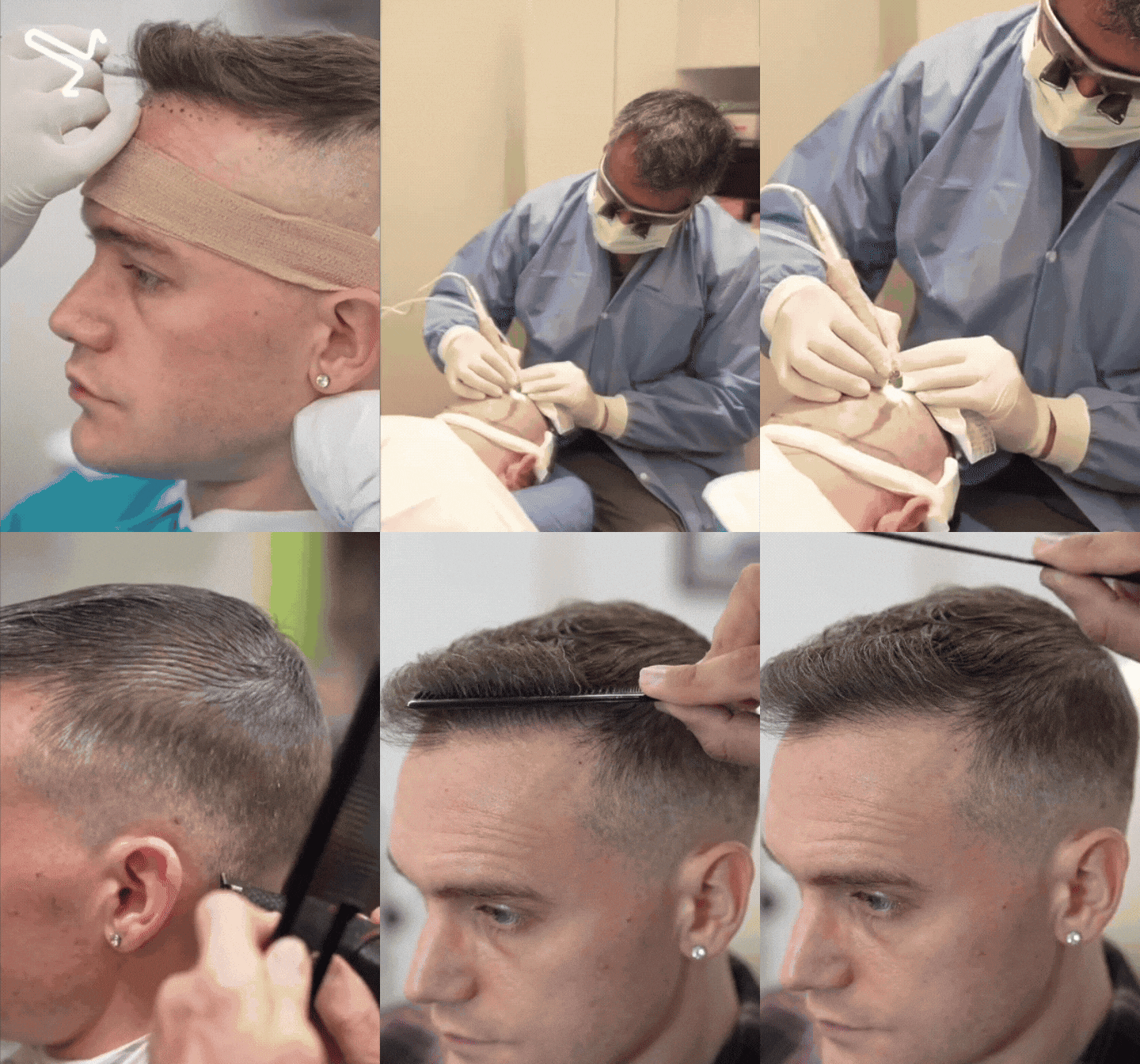
Most patients can comfortably wear their hair short after healing — often down to a #1 or #2 guard — without noticeable scarring.
Final visibility depends on:
- Donor density
- Skin type
- Extraction technique
- Physician planning
Strategic donor management is essential to avoid overharvesting.
Final Verdict
All surgical procedures involve healing, but modern FUE techniques dramatically reduce visible scarring compared to older strip methods.
When performed with precision and proper donor planning, FUE allows for natural-looking results with minimal evidence of treatment — even with shorter hairstyles.
Choosing a physician-led clinic focused on graft preservation and donor integrity is what ensures the best cosmetic outcome.