



When Will You See Results After a Hair Transplant? A Realistic Timeline
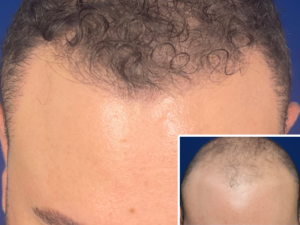 Hair transplantation procedures work effectively, but full results take time. While the procedure is completed in a day, hair growth develops gradually over the course of a year, making it important for patients to understand each stage of the recovery process.
Transplanted hair doesn’t grow on a surgical schedule. It grows on a biological one, following the same cycle every follicle on your scalp has always followed. Understanding that cycle is what makes the timeline legible. Contact Northwestern Hair Restoration today for more information.
The Hair Transplant Growth Timeline
Weeks 1–2: Healing and stabilization
In the first two weeks, the focus is on healing. Mild redness and scabbing at the graft sites are normal and resolve within the first ten to fourteen days. The grafts are secured beneath the scalp surface. Nothing is growing yet, and nothing should be.
Weeks 2–8: Shedding
Transplanted hairs shed. For most patients, this begins around the second week and continues through the sixth to eighth week. The scalp may look similar to how it looked before the procedure. This is the phase that generates the most unnecessary alarms — and it’s also one of the most normal parts of the process.
What’s shedding is the hair shaft, not the follicle. The follicle remains intact beneath the scalp, transitioning through its resting phase before reentering active growth. The technical term is shock loss, but that framing slightly overstates the drama of what’s happening. It’s a predictable biological reset, not a setback.
Months 3–6: Early growth
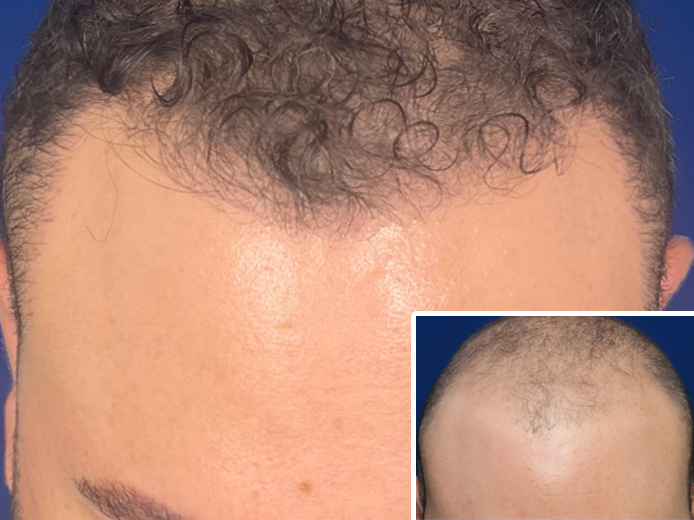
Around the three to four month mark, fine new hairs begin breaking through the scalp surface. Growth is typically uneven at this stage — follicles reenter the growth phase independently, not simultaneously — and the texture may be softer or thinner than the final result will be. This is the beginning of the result, not a preview of the ceiling.
By month six, density is improving meaningfully. Hair begins to blend with the surrounding native hair. Most patients find this the first stage where they can see clearly where things are headed.
Months 6–12: Visible improvement
Density continues to build. Hair shafts thicken and mature. By twelve months, most patients are at or near their final result — the transplanted hair behaving like the rest of their natural hair because, genetically, it is. Crown areas can continue improving through fifteen to eighteen months in some patients, as that region tends to develop slightly later than the hairline.
What Determines How Well It Works
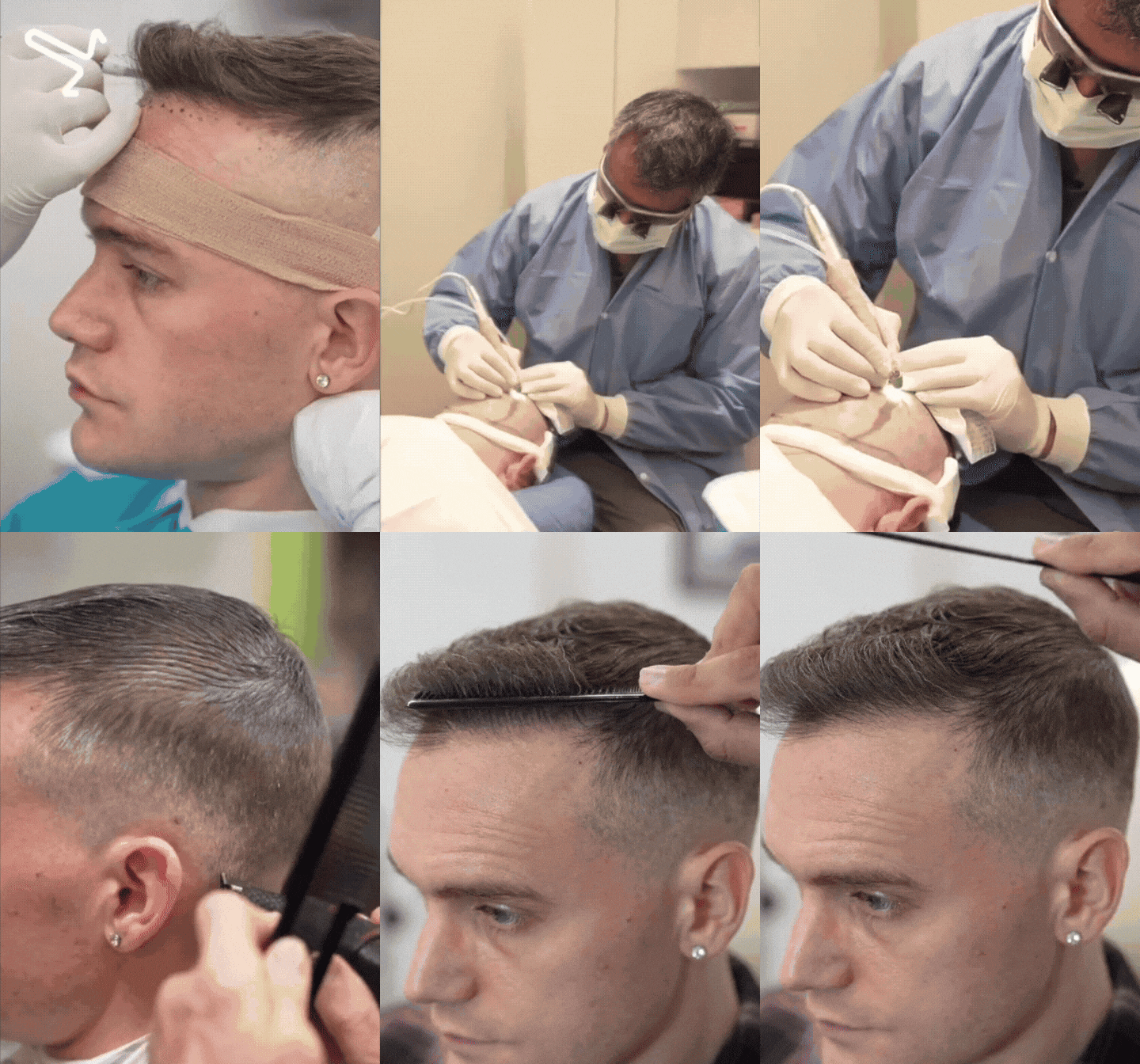
 The timeline above applies to procedures that are performed well. What actually determines the quality of the result is the combination of donor density, extraction technique, how grafts are handled between harvest and placement, the precision of the placement itself, and whether the overall plan accounts for long-term hair loss progression.
Micro PUE — our refined approach to follicular extraction — is designed specifically to minimize trauma at each stage of that chain. The reduced mechanical stress on each graft during extraction translates directly into better survival rates and more consistent density at twelve months. The difference between a procedure that delivers most of its planned grafts and one that delivers all of them is visible in the final result in ways that matter.
Does It Work for Every Type of Hair Loss?
Hair transplantation is most effective for male pattern hair loss, female pattern thinning with a stable donor supply, receding hairlines, and crown thinning where donor capacity is sufficient to address the area. Hair loss driven by medical conditions — thyroid disorders, autoimmune conditions, certain nutritional deficiencies — may require a different primary approach, or medical stabilization before surgery is appropriate. A proper evaluation is what determines which category a patient falls into and what the realistic range of outcomes looks like for their specific case.
Schedule a Consultation at Northwestern Hair Restoration
If you’re considering a hair transplant and want a clear picture of what the timeline looks like for your case — your hair loss pattern, your donor capacity, and what results are realistically achievable — a consultation with Dr. Vinay Rawlani is where that conversation starts. We’ll walk through the biology, the planning, and what the growth arc looks like for your hair specifically.
In-person evaluations are available at our Chicago clinic. Virtual consultations are available for patients anywhere.
Q&A
Will hair transplantation procedures work effectively for my hair?
Hair transplantation procedures work effectively for the right candidate. Because transplanted follicles are taken from genetically resistant donor areas, they typically continue growing permanently in their new location. Success depends on donor density, hair characteristics, scalp health, and long-term planning. The best way to determine effectiveness for your specific case is through a physician-led evaluation that assesses both your current hair loss and future progression.