
Not all surgeons are equipped to work with tightly coiled hair. The follicles curve beneath the scalp. Extraction requires a different approach. Done wrong, the results show it. Done right, they don’t.


+197 reviews
For Black men, the hairline is personal. It’s tied to how you carry yourself, how you present, the version of you the world sees first. When thinning hair or hair loss enters the picture, the weight of that doesn’t disappear. It gets heavier. Dr. Vinay built this approach because hair this personal deserves a surgeon who treats it that way.
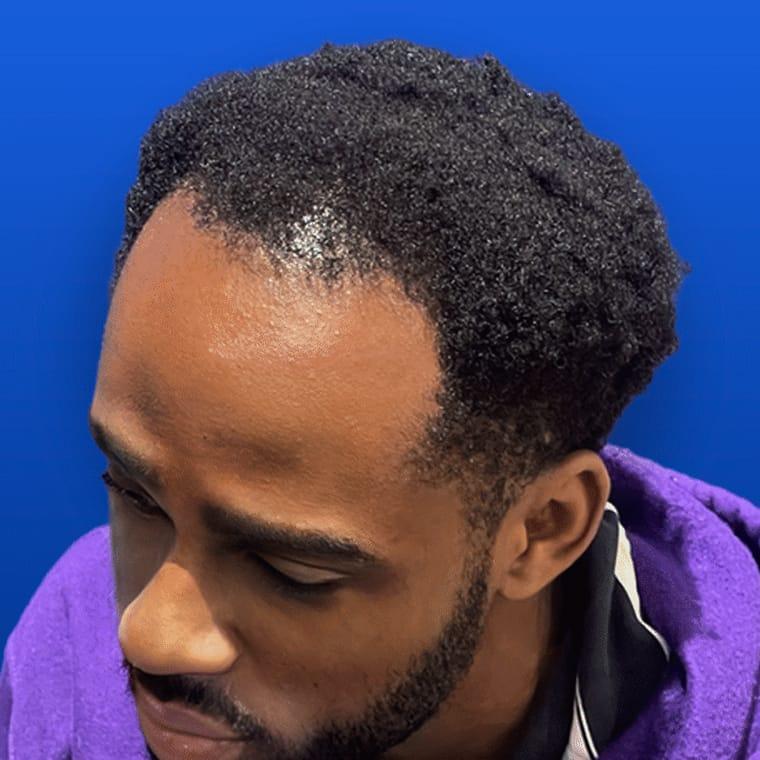
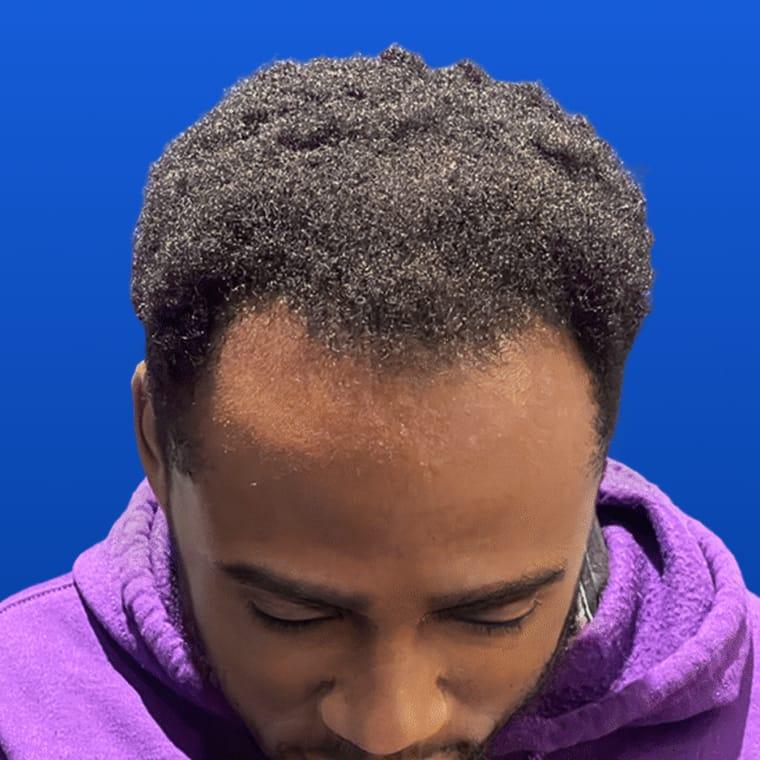
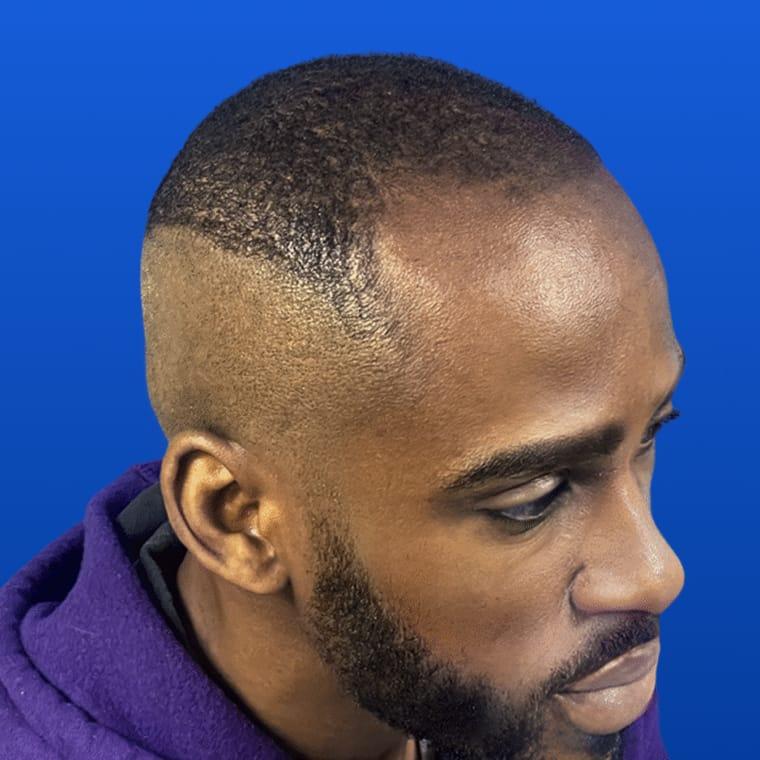
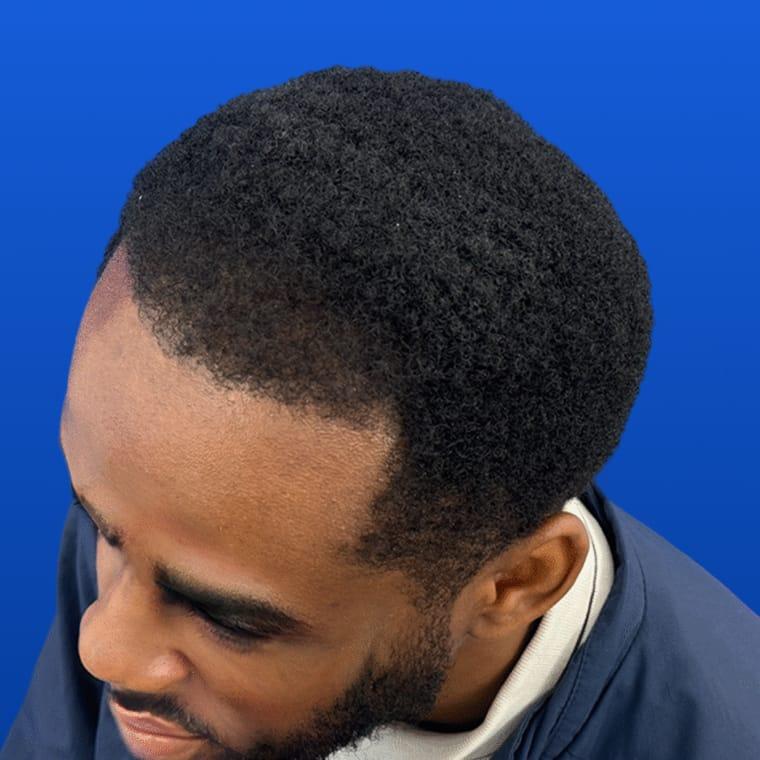
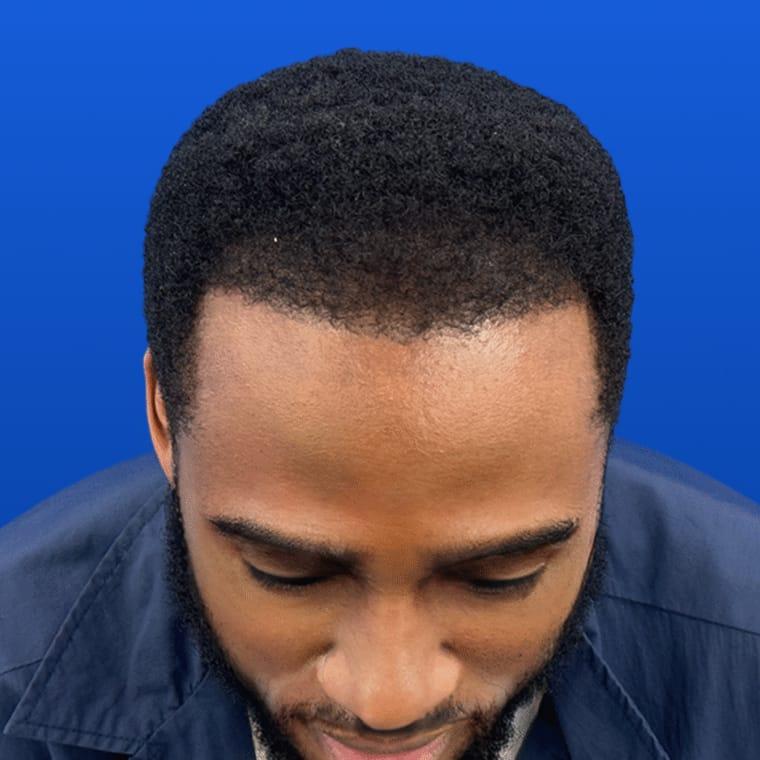
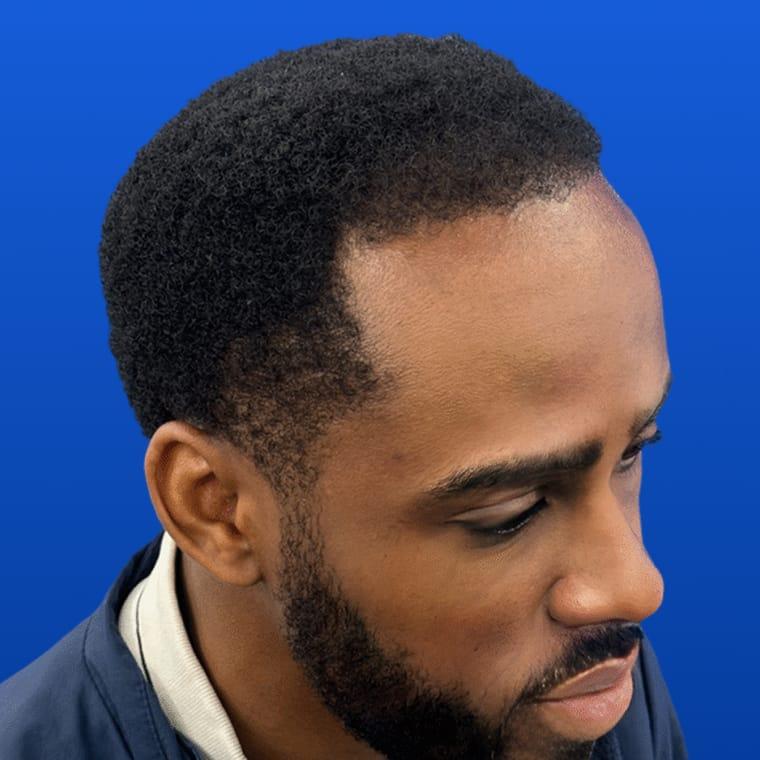

Dr. Vinay

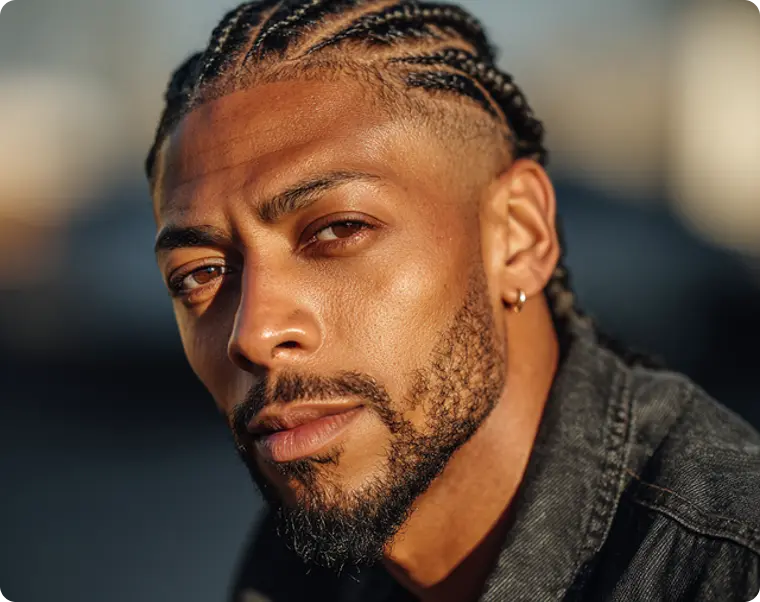
“
We have what separates a result that looks right from one that doesn’t.
+197 reviews
African American hair restoration demands technical precision that accounts for the hair’s unique characteristics. The curvature of afro-textured hair follicles — curved follicles that grow beneath the scalp at distinct angles — complicates both extraction and implantation.
Not every surgeon accounts for these unique challenges — and the results reflect it. Skilled surgeons who work extensively with afro-textured hair understand that the extraction process itself is where most of the risk lives. Get it wrong and no amount of placement skill recovers the result.
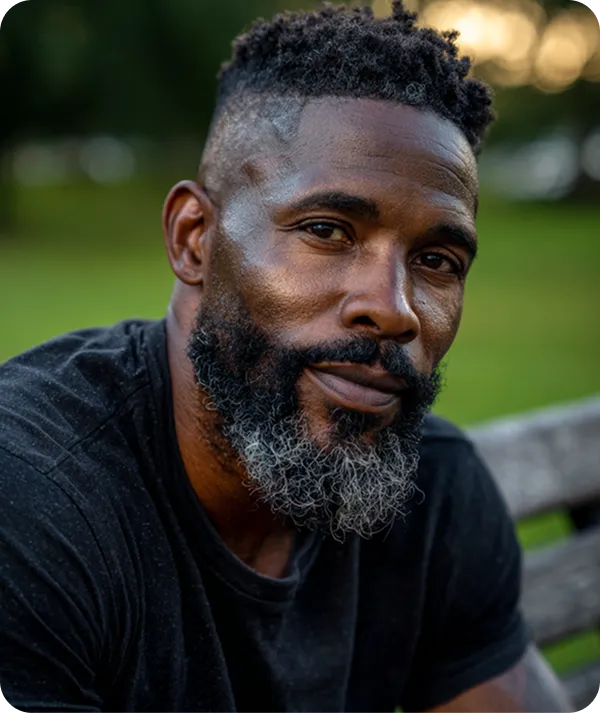
Andre has one of the most genuinely happy personalities I’ve encountered in this office. Our consultations ran long because the conversation kept wandering somewhere good.
What he came in for was a hairline that didn’t match the presence he had. He’d noticed himself pulling back in conversations, and it wasn’t really about the hair; the hair was just the part he could point to. He wanted something forward-facing, something he could style.
We restored the hairline, and with it the curls he’d been missing. He sends us photos every six months — new styles, new looks, clearly a man enjoying himself. The procedure was straightforward. What it gave back was the part of him that was already there.
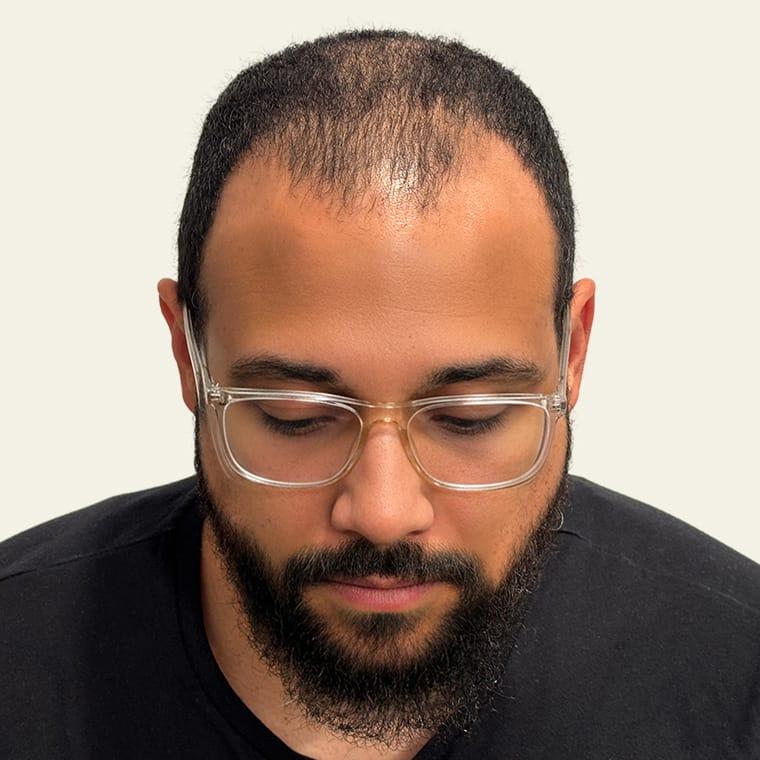
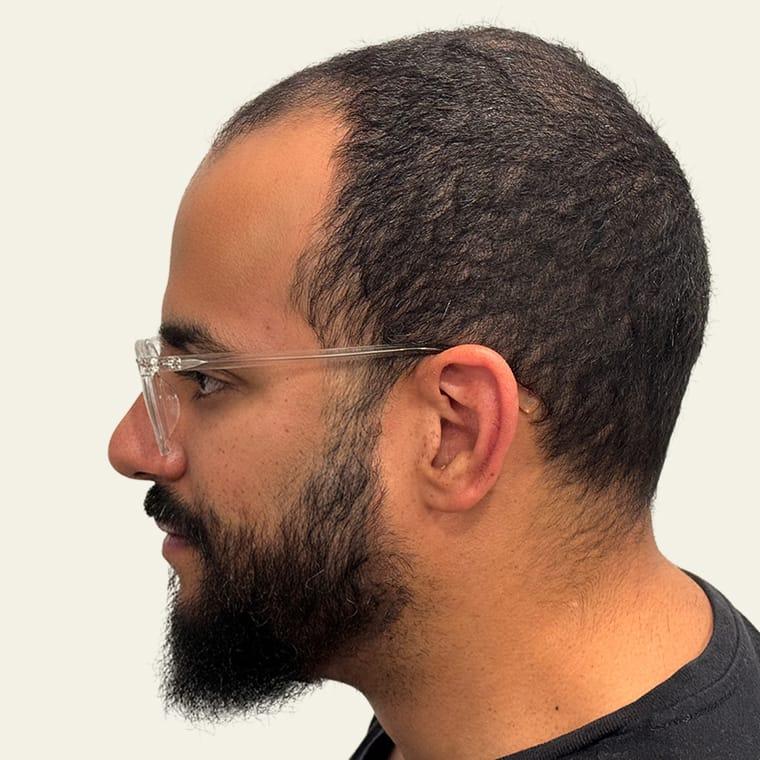
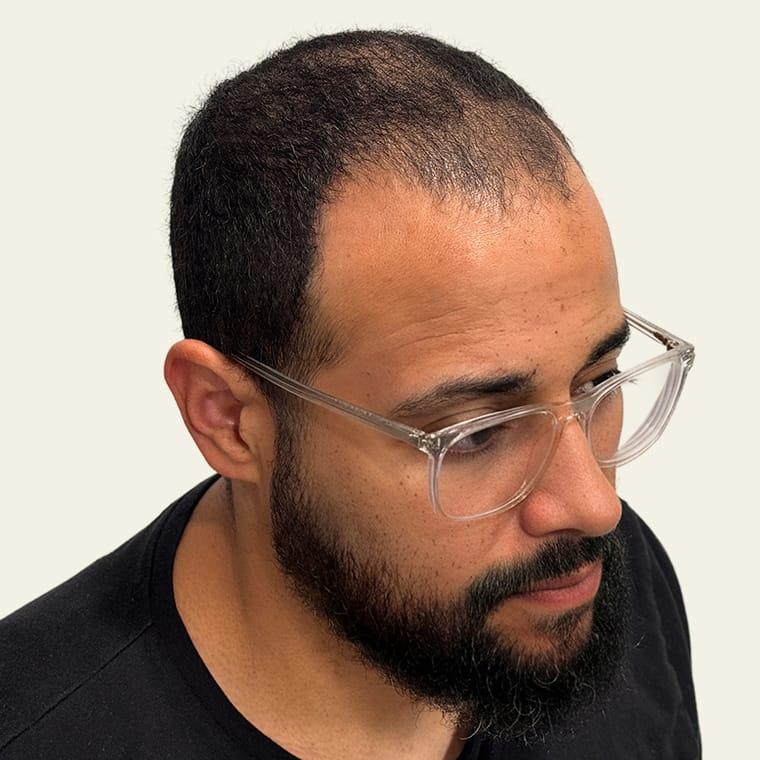
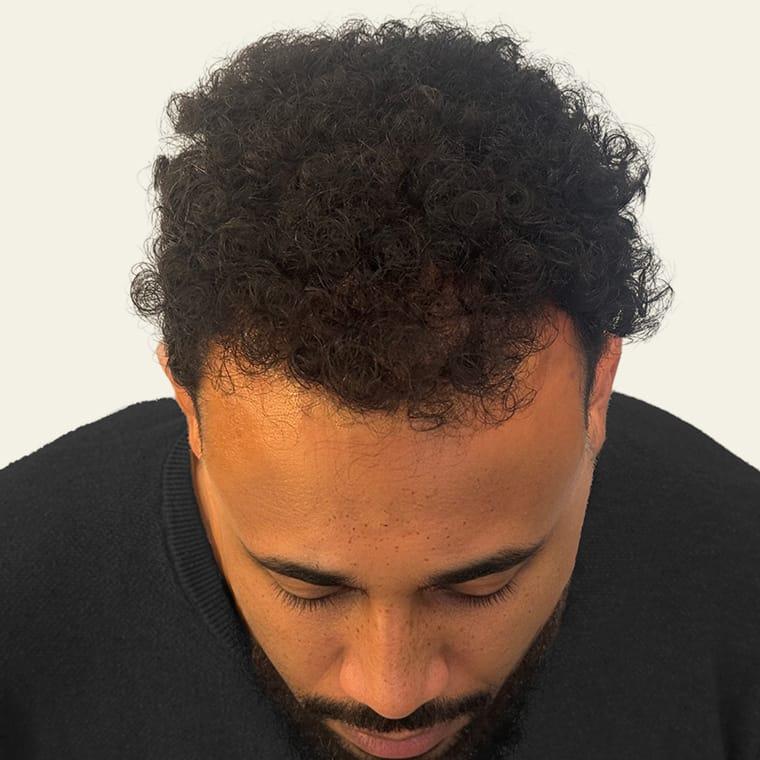
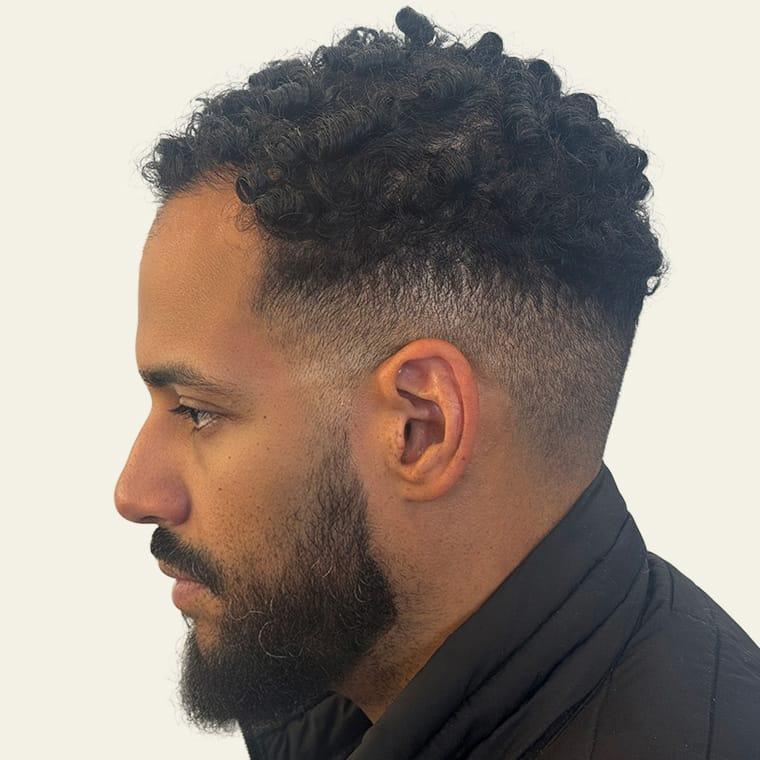
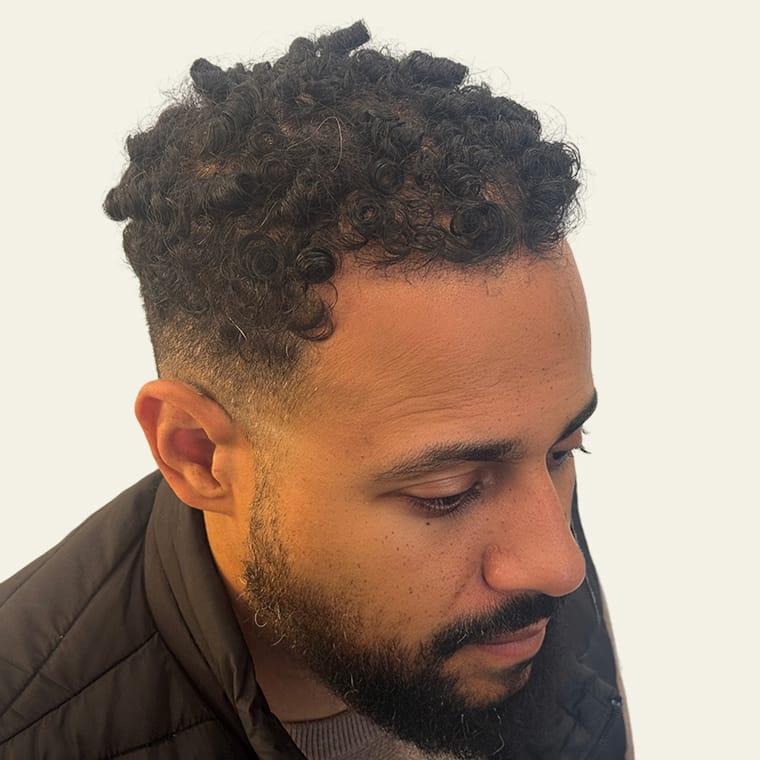
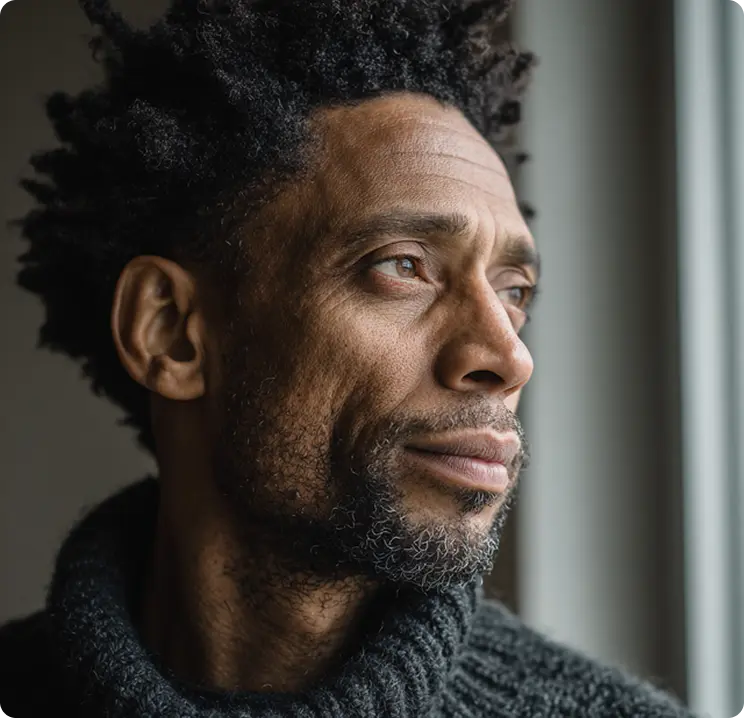
Curly hair follicles curve beneath the scalp. Surgeons must use specialized punches and adjusted angles to avoid transecting the root during individual hair follicle extraction. The unique curl pattern and curly nature of afro-textured hair creates tension and torsion during the extraction process, increasing the risk of follicle damage if technique is not specifically adapted.
Proper angle, specialized punch sizes, and careful handling are essential at every stage. With optimal precision, each hair follicle arrives at the recipient area intact and viable. Without it, even a technically clean procedure can underperform.
Natural African American hairlines are typically fuller and more rounded than Caucasian hairline standards. A design that ignores this aesthetic logic looks wrong regardless of technical execution. Achieving a natural hair appearance requires different density patterns and angles than other hair types.
Black males in particular require a surgeon who designs to their specific anatomy, not a generic template. The best hair transplant result for a Black man isn’t judged against a universal standard — it’s judged against what that specific face calls for.
Patients of African descent have a higher predisposition to keloid and hypertrophic scarring than other ethnic groups. FUE avoids the long horizontal scar associated with strip methods, which can be prone to keloid formation and increased scar visibility. We assess personal and family scarring history in consultation before anything else is planned.
In cases where the risk is elevated, we’ll tell you plainly what that means for your options. Technique modifications ensuring minimal scarring are applied from the first extraction through final placement. We’d rather have a hard conversation early than a preventable outcome later.
Afro-textured hair often has lower hair density and a more limited donor area than other hair types, which can restrict the number of viable grafts available for transplantation. Expert graft maximization and careful distribution planning are essential.
Every follicle extracted has to count, and the existing hair length and current hairstyle factor into the strategic approach. Lower density in the donor area doesn’t mean fewer options — it means the planning has to be more precise.
Dominic came to us as a tech entrepreneur — a company built from nothing with his own hands, a partner he was about to marry, and a clear sense of who he was. What he didn’t have was a hairline that matched it.
Once we began, we found his hair carried a very tight curl below the surface — tight enough that extraction was only viable through Micro PUE, where vibration and suction free the follicle without severing the curl.
The result is one of the most successful African-American transplants we’ve performed. Dominic is back out building his company and his life — now as a husband and a father.
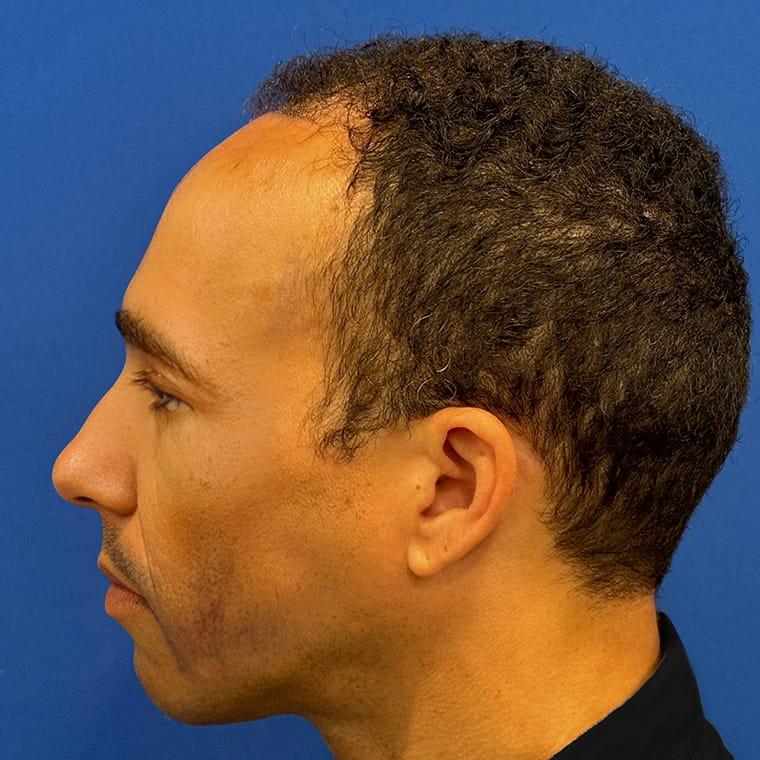
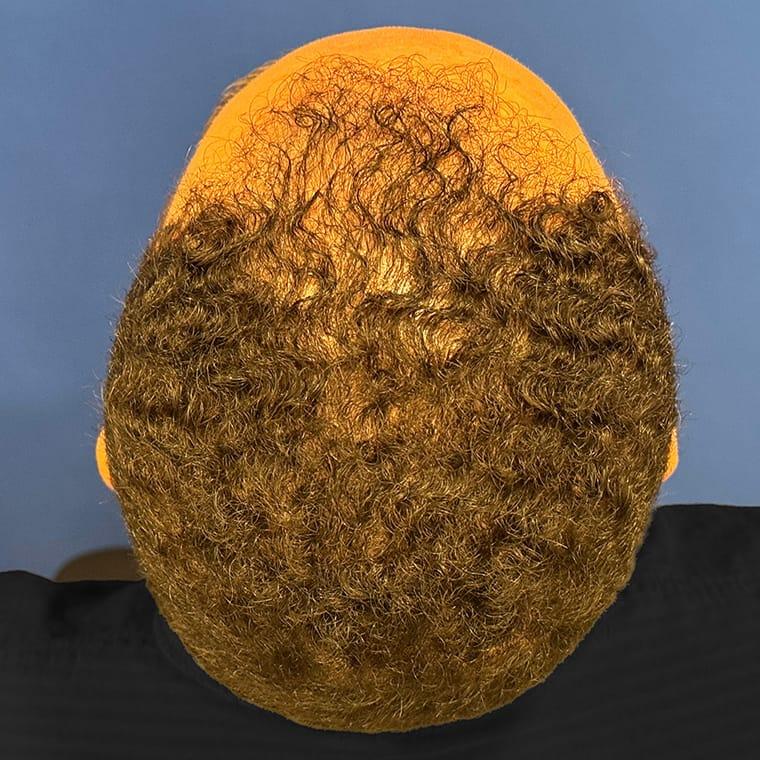
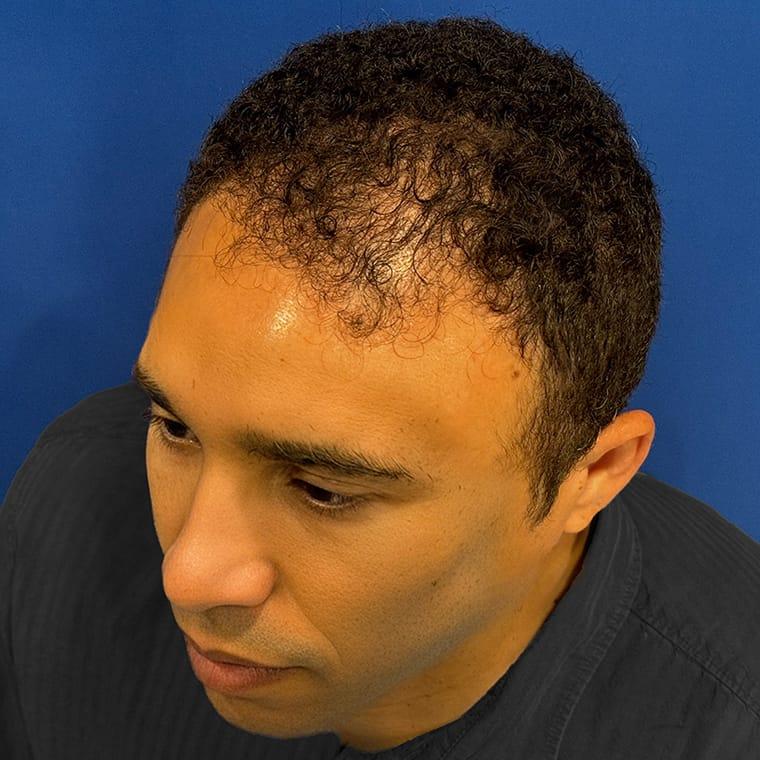
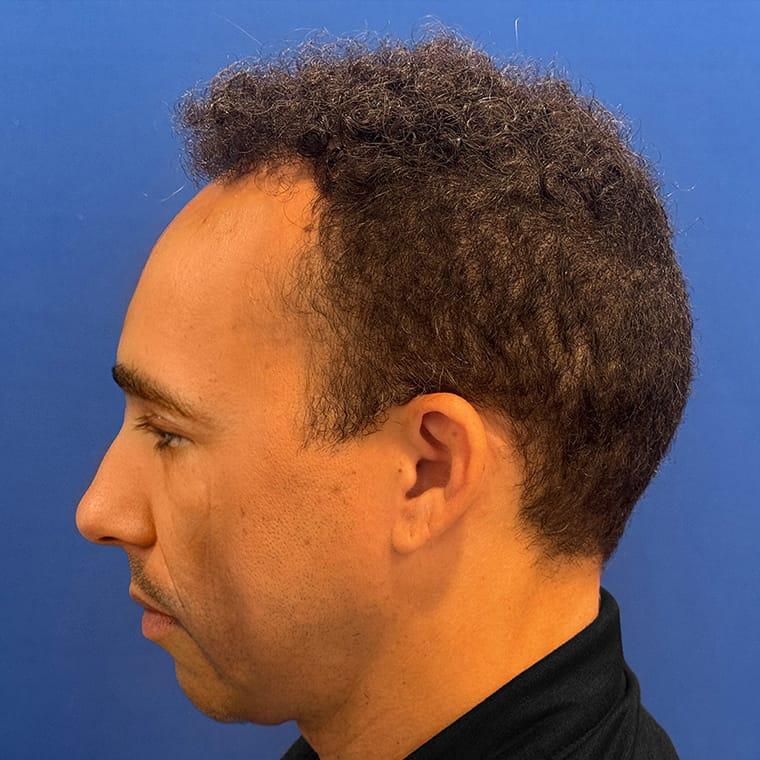
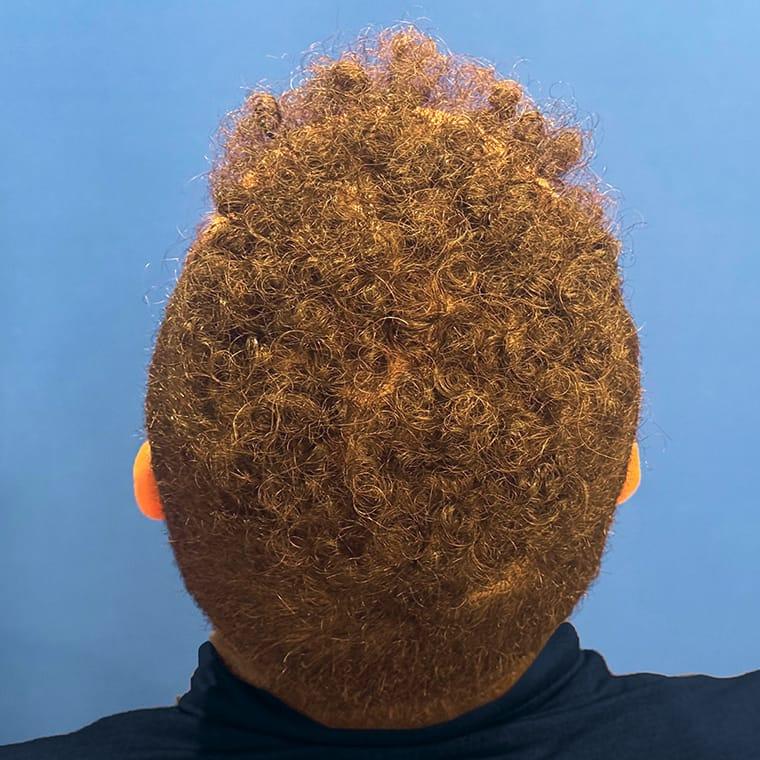
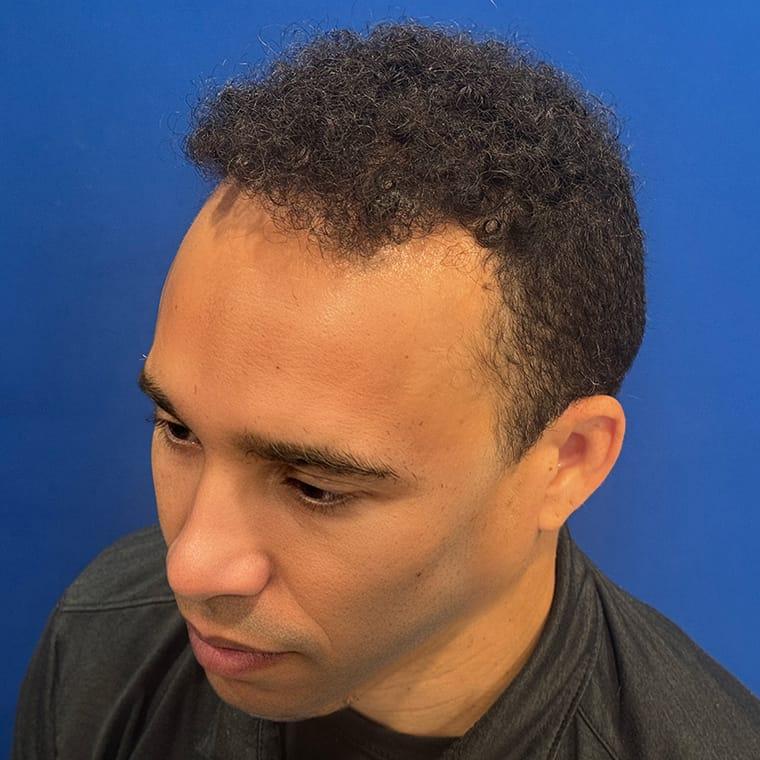
Northwestern Hair offers a full range of hair restoration services for African American men — surgical and non-surgical, each built around the specific demands of afro-textured hair.
For patients where transplantation is the right path, Dr. Vinay leads every hair restoration surgery personally — designing the hairline, overseeing extraction, and directing graft placement with his surgical team. He is present and engaged at every critical stage.
The Micro PUE technique supports high-graft sessions without compromising the limited donor area. Results speak for themselves in the gallery — natural looking results that hold up in every light, at any distance, built to last decades.
For patients not yet at the point of surgery, or managing early-stage traction damage, ACS offers an effective non-surgical option that addresses hair loss at the root. ACS uses regenerative cells from your own blood to reactivate dormant follicles, restore blood flow, and stimulate hair growth — going beyond traditional platelet therapies.
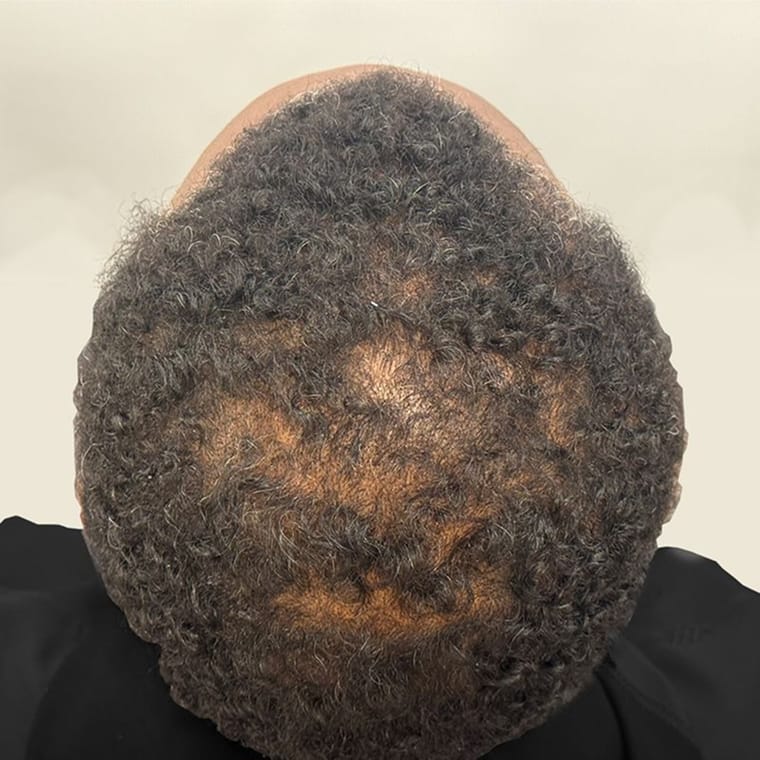
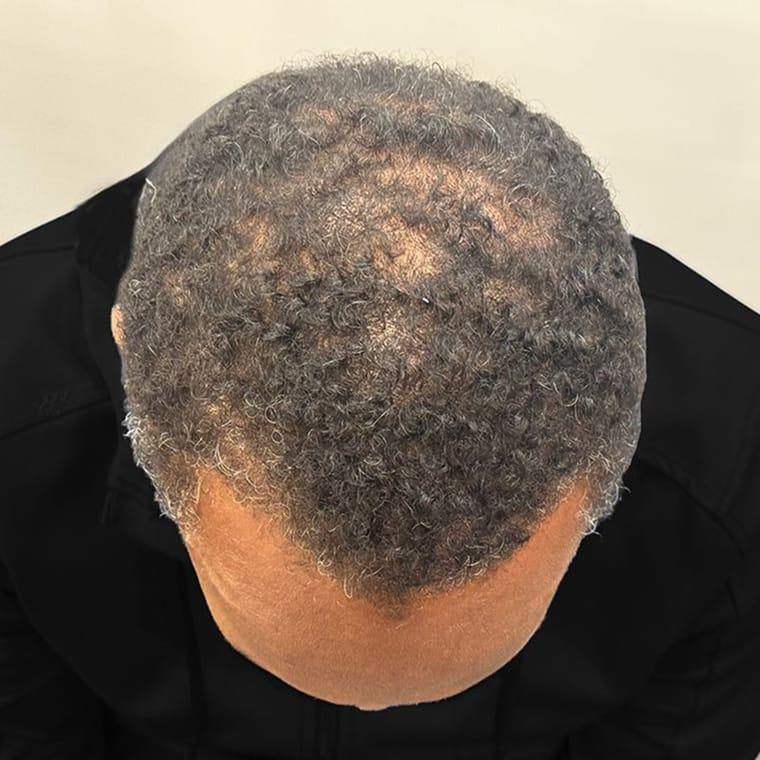
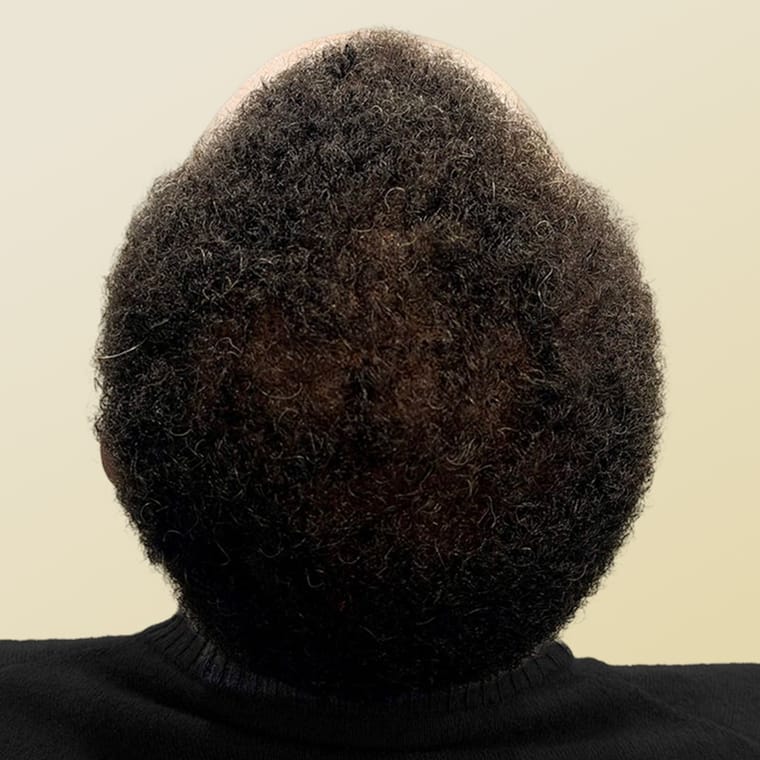
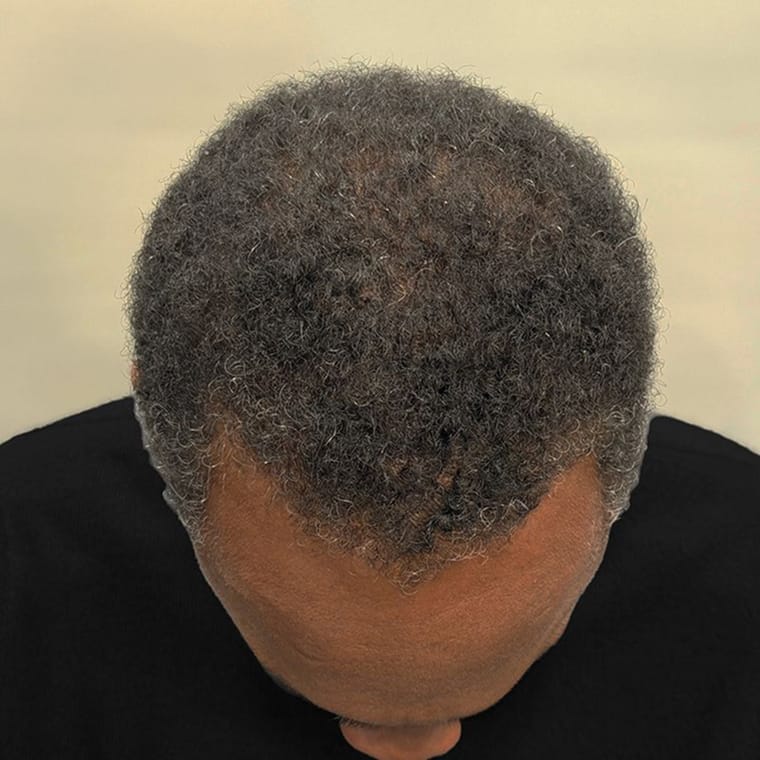
Reggie didn’t come to us in any distress. He just wanted a little more hair.
He’s a figure most of Chicago has never seen but benefits from daily — the kind of person who takes calls from the mayor and from the heads of major companies, and who moves the city’s infrastructure forward through quiet, substantial work. He arrived with modest, well-calibrated expectations. No dramatic transformation. Just a measured improvement.
We started ACS, and the response outpaced what we’d projected — closer to double the result we’d told him to expect. Four treatments later, he’s back to his routine, keeping the city running, feeling rejuvenated for the work. Not every case is a turnaround story. Some are simply a capable man getting exactly what he asked for, and a little more.
For hair loss in its earlier stages, ACS combined with a targeted at-home regimen can support significant recovery and revitalized hair before major surgery becomes necessary. Early treatment consistently produces better outcomes than waiting.
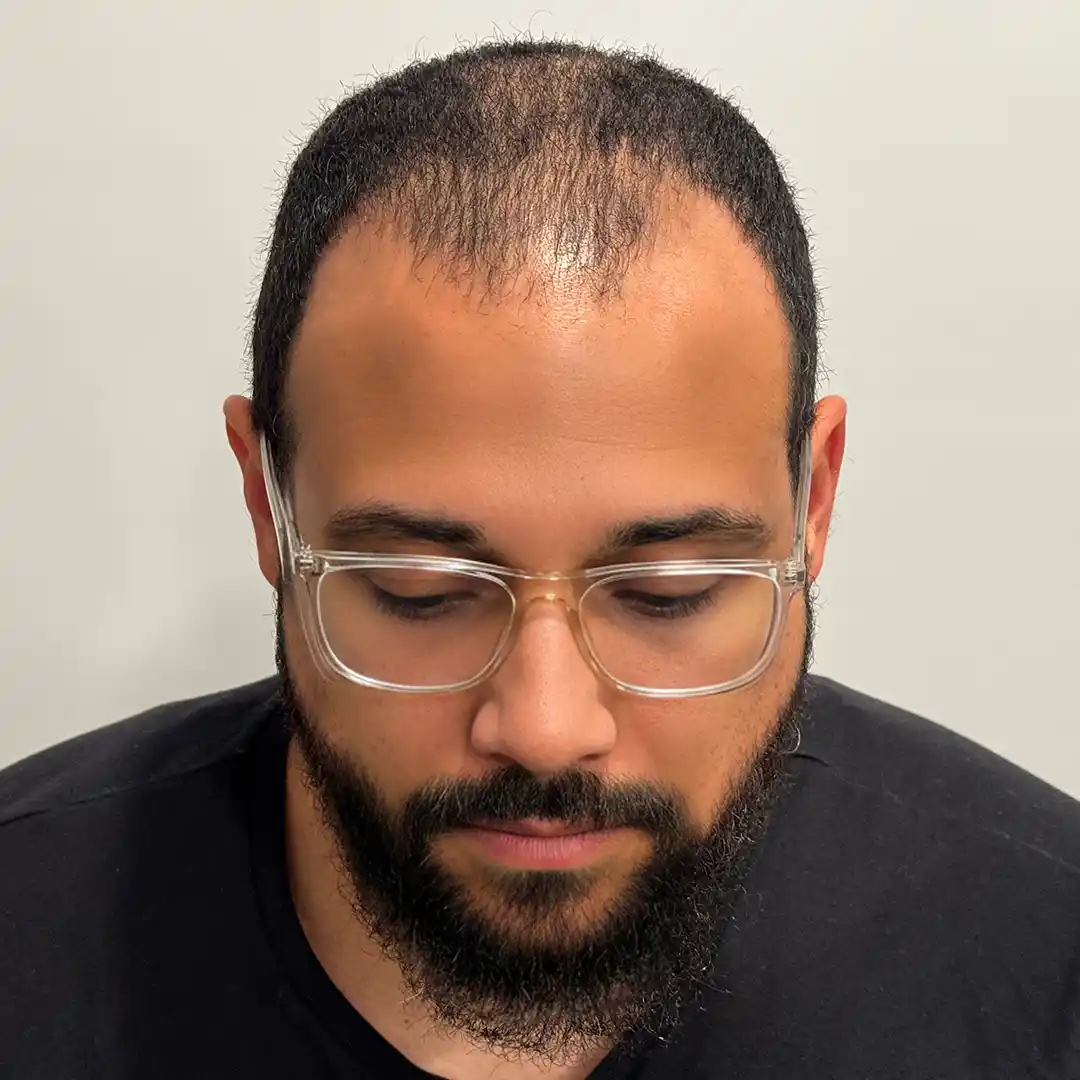
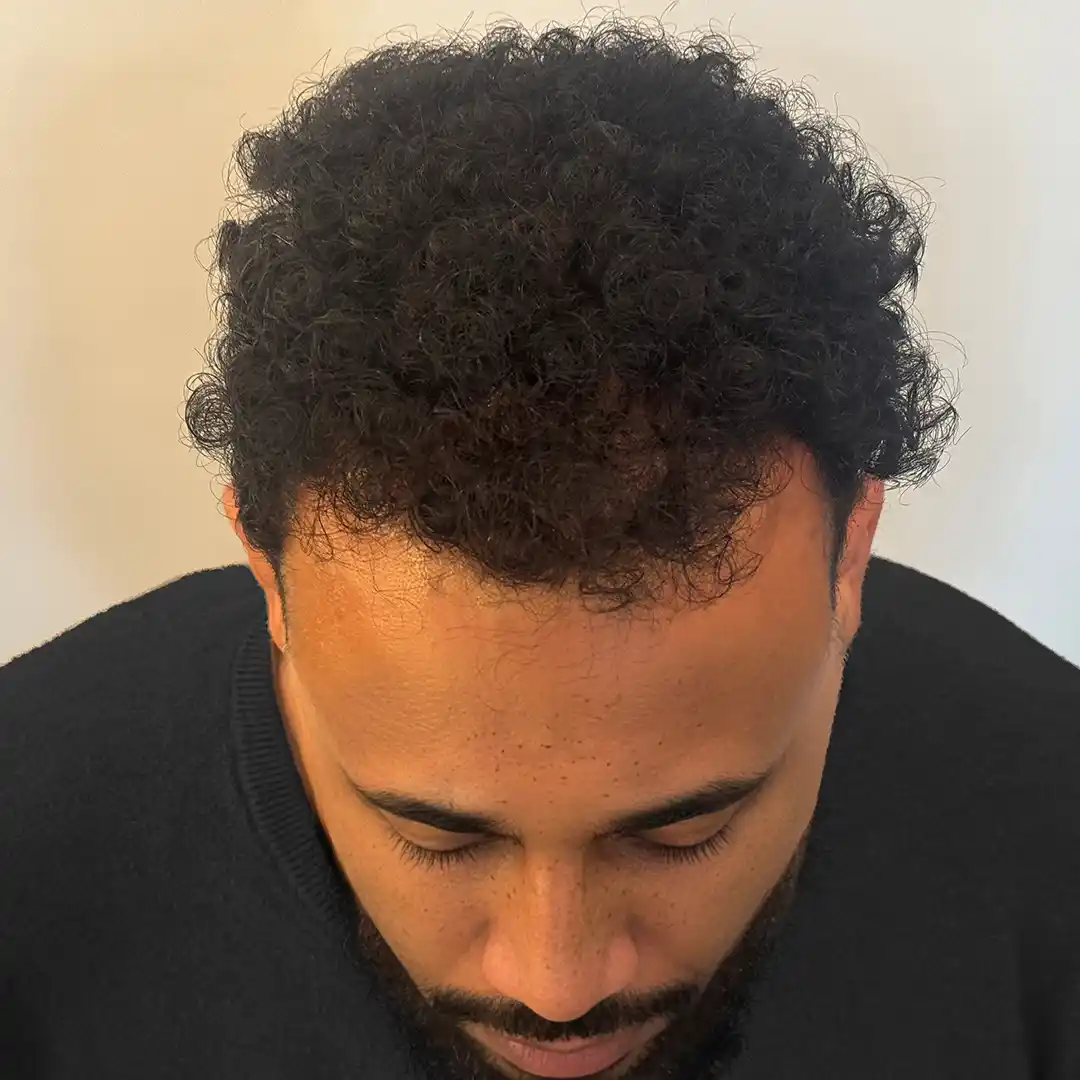
There is no universal hairline standard. The shape, height, and hair density that looks natural on a Black patient has its own aesthetic logic. African American hairline restoration at Northwestern Hair is designed to your anatomy — not a textbook average.
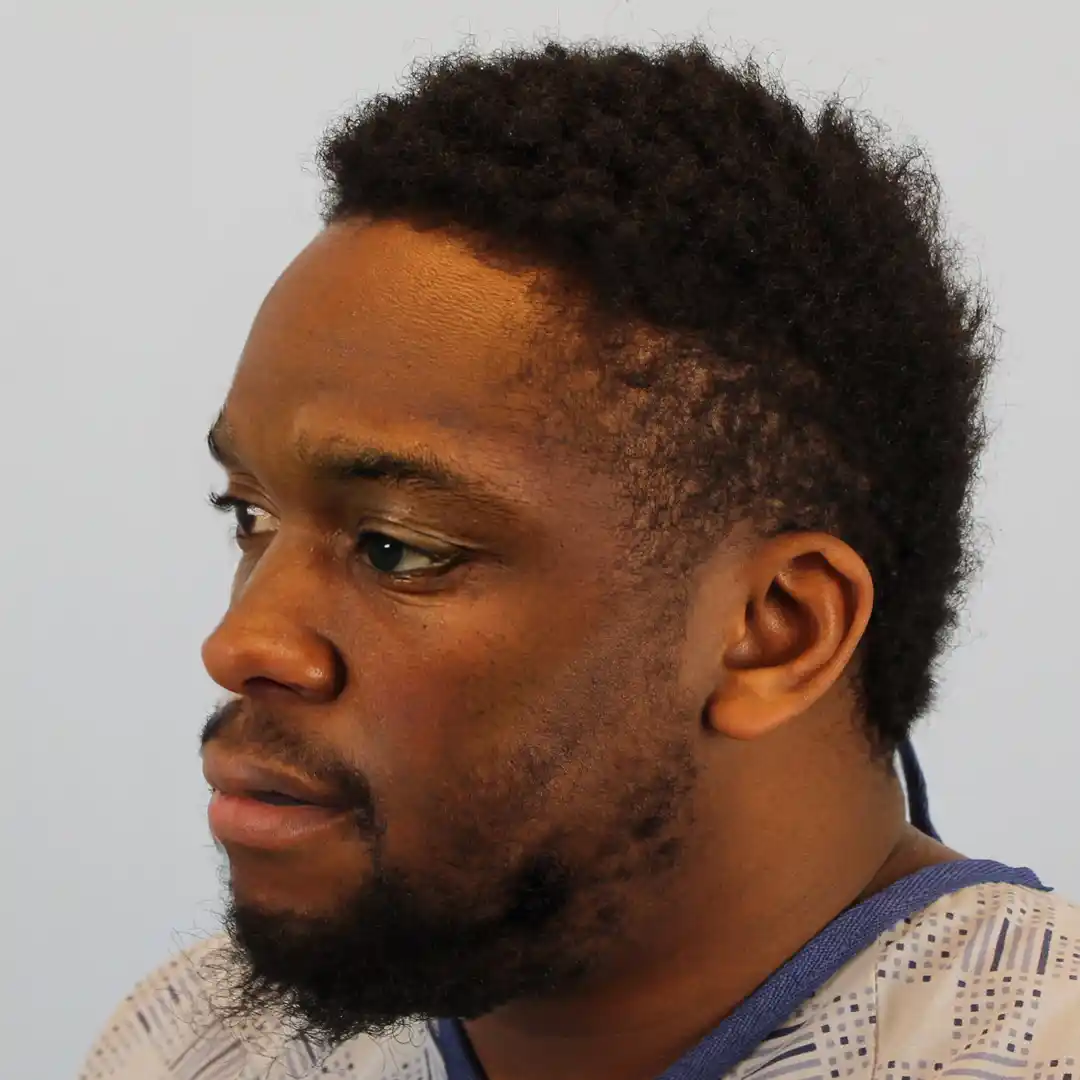
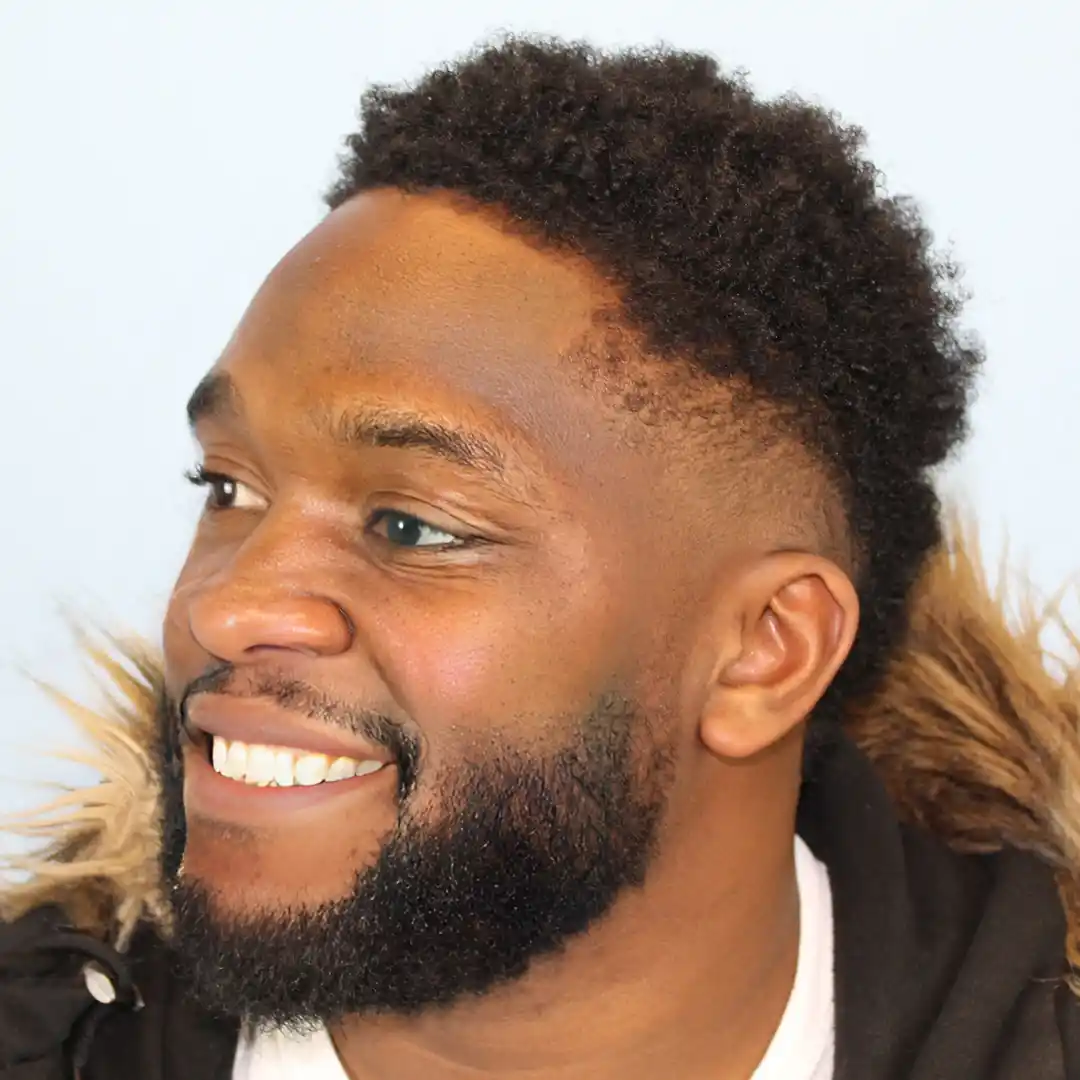
We also perform beard restoration for patients looking to address patchy growth, scarring, or uneven density. Ask about it at your consultation.
The techniques that produce exceptional results in African American hair transplantation aren’t modifications of standard approaches — they’re purpose-built for afro-textured hair from the ground up. Here’s what that looks like in practice.
Extracting afro-textured hair requires specialized tools and precise angular adjustments at every stage. The unique curl pattern and curly nature of afro-textured hair demand optimal precision to preserve each individual hair follicle during the extraction process.
Without proper technique, transection rates increase significantly across the transplantation process. Skilled surgeons who specialize in advanced procedures for afro-textured hair understand that this is where results are made or lost — before a single graft is placed.
Our approach to keloid risk is thorough and upfront. Before any treatment begins, we review your personal and family scarring history, evaluate how previous wounds have healed across different ethnic groups, and design both the extraction and incision approach to minimize incision size and tension.
Technique modifications ensuring minimal scarring are applied from the first extraction through final placement. For elevated risk cases, we will tell you plainly what that means for your options before we proceed.
Fuller and more rounded than Caucasian standards, and designed specifically to your anatomy. Dr. Vinay’s approach to African American hairline restoration recognizes that natural hair appearance requires understanding what a natural hairline looks like for a Black patient specifically.
Shape, height, and natural looking hair placement are determined by your facial anatomy and personal goals. The design session is where the outcome is built. Everything in the procedure room follows from the decisions made there.
Afro-textured hair can have a lower ability to conceal donor area scarring, making scar visibility a key consideration. Micro PUE uses sub-1.0 mm punches with angle adjustments specific to curved hair follicles, minimizing scar visibility and preserving follicle integrity.
This approach supports high-graft sessions without compromising the limited donor area, even for patients with lower hair density. The result is a procedure that addresses the unique challenges of afro-textured hair at every stage rather than adapting a technique built for a different hair type.
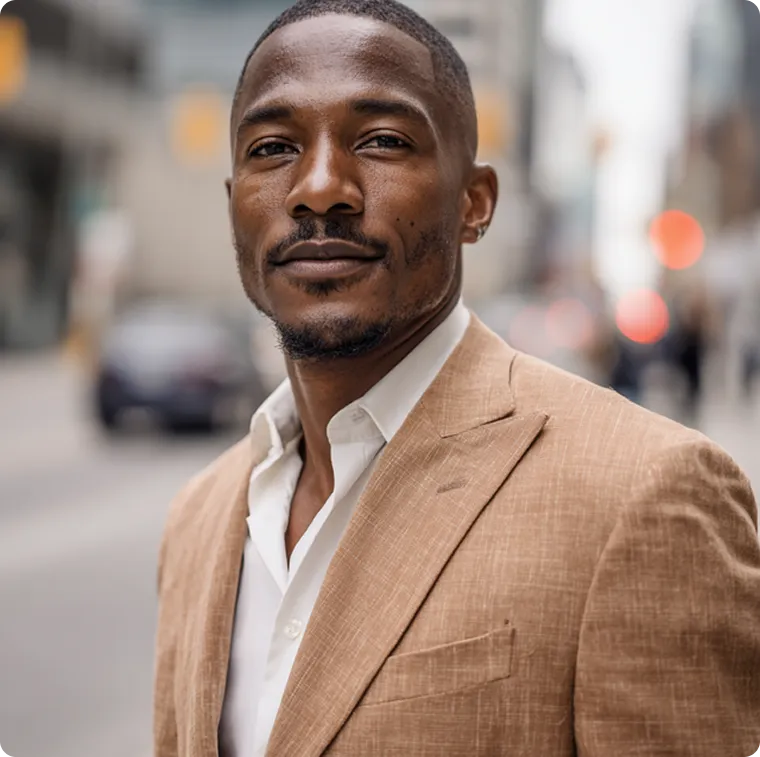
Dr. Vinay personally conducts every consultation for African American male patients. This is where the honest conversation happens — your hair loss history, your goals, and what’s actually achievable given your specific hair characteristics and donor supply.
Assessment includes curved hair follicle anatomy, keloid risk factors, and the extent of any traction damage. You leave the consultation today with a clear picture of where you are and what your real options are.
Understanding Your Hair Loss Pattern
Hair loss patterns in African American men include male pattern baldness, traction alopecia from protective styling, and combinations of both. Understanding the underlying cause — and whether hair follicles remain viable or have been permanently damaged — determines everything about the path forward.
Your personalized treatment plan accounts for your donor supply and hair density, long-term hair loss progression, and whether surgical Micro PUE, non-surgical ACS, or a combination approach is right for your situation.
Your current hairstyle and existing hair length also factor into the strategic approach for both extraction and the recipient area design. Long-term planning covers where your hair loss is headed — not just where it is today.
Donor Supply Analysis for African American Hair
African American hair often has a more limited donor area and lower hair density than other hair types, which makes donor supply analysis especially important. We assess how many viable grafts are available, how they should be distributed, and how to preserve supply for potential future procedures.
Every graft has to count. The analysis shapes every decision that follows — session planning, extraction distribution, and what’s realistic for the outcome.
Dr. Vinay personally designs every hairline and oversees every critical stage of the hair restoration surgery. Specialized curved follicle extraction accounts for the unique curly nature of natural hair. Graft placement across the entire head respects the natural coil pattern.
Hair density distribution is planned to look natural looking — not artificially placed. Skilled professionals on Dr. Vinay’s surgical team execute the extraction and handling steps they’ve built deep expertise in, while Dr. Vinay directs every placement decision.
Placement for Natural Hair Appearance
Achieving natural hair appearance with transplanted afro-textured hair requires careful attention to the angle, direction, and curl pattern of each implanted follicle. Every placement decision ensures the transplanted hair integrates seamlessly with existing hair.
The goal is a result that grows in a direction consistent with your natural hair appearance — one that looks the same in every light, from every angle, now and decades from now.
Post transplant care for afro-textured hair addresses the specific needs of the curly nature during healing. Proper post-operative care minimizes scalp irritation — which can be more pronounced in afro-textured hair after a procedure.
Long-term maintenance planning and medical therapy integration support optimal hair growth over time. We stay involved through follow-up appointments to track progress and adjust the plan as needed.
Dr. Vinay Rawlani has seen both sides of the hair restoration process. Having undergone both surgical and non-surgical treatments for his own hair loss, he understands firsthand what works—and what doesn’t.
With medical training from Northwestern University and the University of Chicago, Dr. Vinay combines artistry, precision, and innovation to deliver exceptional results. Whether he’s crafting a timeless hairline or optimizing density, every step is guided by his commitment to perfection.
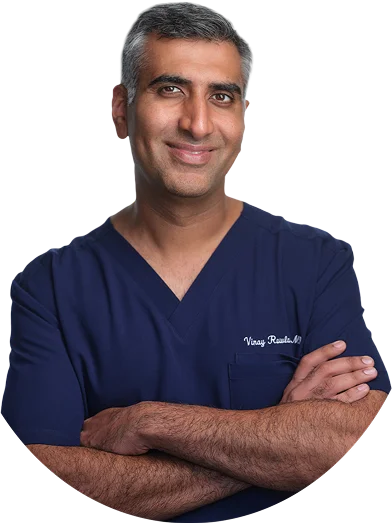


At your consult, Dr. Vinay will assess your specific situation and give you a straight answer on what’s possible. No overselling. Just the truth. The consultation covers your hair loss history, goals, and concerns — and produces a personalized plan built around your specific hair characteristics and donor supply.
Schedule your consultation — in-person at our Chicago clinic or virtually for patients outside Illinois.
Yes — with proper specialized techniques and surgeon expertise. The curvature of afro-textured hair follicles complicates the extraction process, requiring technique specifically adapted to avoid damage. Dr. Vinay’s experience with black male hair transplant procedures ensures the transplantation process accounts for these anatomical differences at every stage.
The results speak for themselves in natural looking hair and hair density. African American men who work with surgeons experienced in afro-textured hair consistently achieve better outcomes than those treated with standard approaches.
Surgical procedures at Northwestern Hair start at $5 per graft, with 0% financing available. The total cost varies depending on the number of grafts your specific case requires — which Dr. Vinay will assess during your consultation today. There are no hidden fees.
The total cost is determined by your specific situation, not a package price. Cost is discussed honestly after the evaluation — so you have a real number based on your actual case, not an estimate built on assumptions.
Patients of African descent have a higher predisposition to keloid and hypertrophic scarring compared to other ethnic groups. We assess this during your consultation before any treatment begins. FUE avoids the long horizontal scar associated with strip methods.
Our approach includes review of personal and family scarring history, evaluation of previous wound healing, technique modifications for minimal scarring, and a direct conversation about what elevated risk means for your options. We’d rather have that conversation early than deal with a preventable outcome later.
Natural African American hairlines require different density patterns and angles than other hair types for a realistic natural hair appearance. Fuller, rounded patterns honor African American aesthetics rather than applying generic Caucasian templates.
Dr. Vinay’s approach designs to your facial anatomy and personal goals — the shape, height, and natural looking hair placement are all specific to you. There is no universal hairline standard. There is only the one that belongs to your face.
The outlook depends on damage assessment and follicle viability. When traction alopecia has progressed to permanent scarring, surgical restoration offers highly effective outcomes for the right candidate. Earlier stages may respond well to ACS combined with styling changes.
We provide a realistic assessment based on the extent of damage, whether follicles remain viable, and your long-term styling plans. The earlier we assess it, the more options remain available.
Yes — hair transplant surgery is classified as cosmetic surgery and is not typically covered by insurance. Cost and financing are discussed during your consultation, where Dr. Vinay assesses your specific situation and gives you a clear picture of what your case requires.
Yes — virtual consultations are available for patients outside Illinois. In-person consultations take place at our Chicago clinic at 3 E Huron St, Mezzanine Floor, Chicago, IL 60611.