
For Asian women, a hair transplant isn’t just about filling in what’s been lost. It’s about designing what should have been there all along – a softer hairline, a fuller part, a frame that finally fits the face in the mirror. That’s a different kind of work. And it demands a different kind of surgeon.


+197 reviews
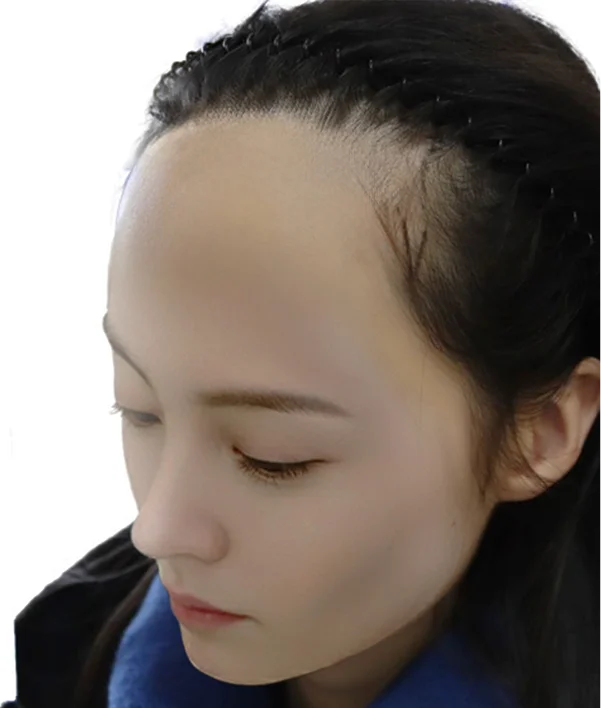
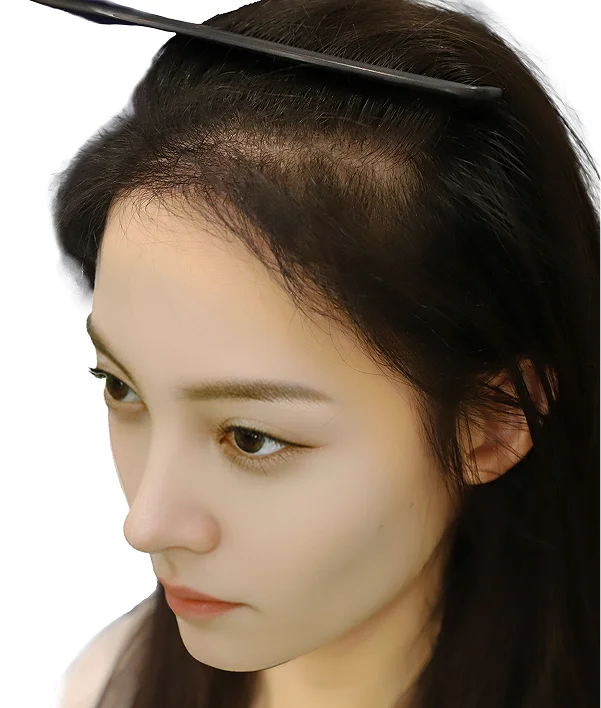
Diffuse thinning in Asian women often progresses gradually – across the part, at the temples, along the crown – before it registers as something requiring attention. By the time most patients come to our Chicago hair transplant clinic, the loss has been happening quietly for years. We see it. And we know how to address it.
The unique characteristics of Asian hair – thick shafts, high shaft-to-scalp contrast, lower follicular unit density – create both advantages and challenges that demand a specific level of surgical skill. When placement is precise, the results can be extraordinary. When it isn’t, the same contrast that makes Asian hair beautiful makes a poor result immediately visible.
Dr. Vinay’s approach was built for cases where precision isn’t optional. That applies to every patient who walks through our door – and it applies with particular force here. The confidence patients leave with is built on the quality of the work, not just the promise of it. Contact Northwestern Hair Today for more information.

Dr. Vinay
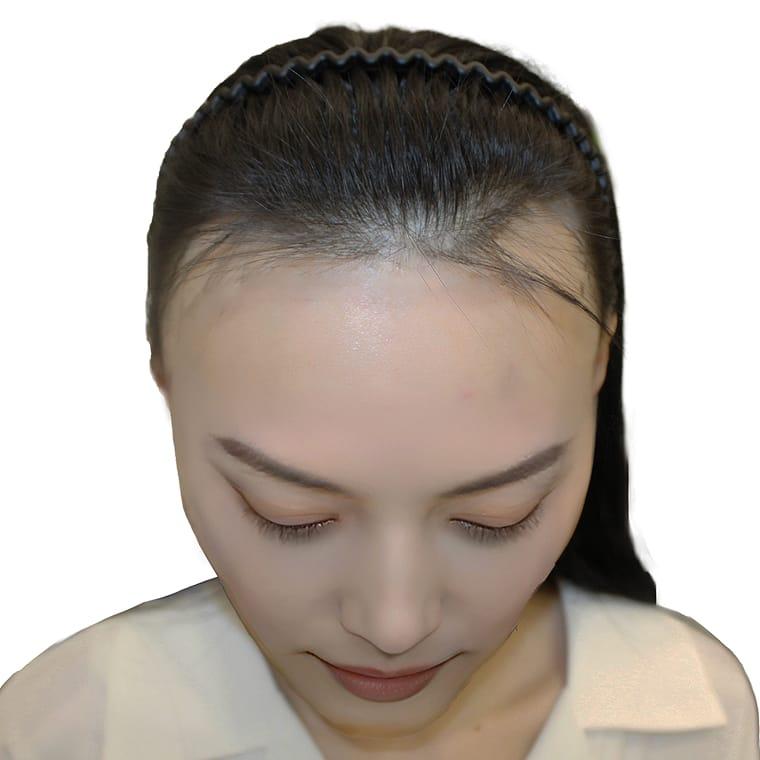
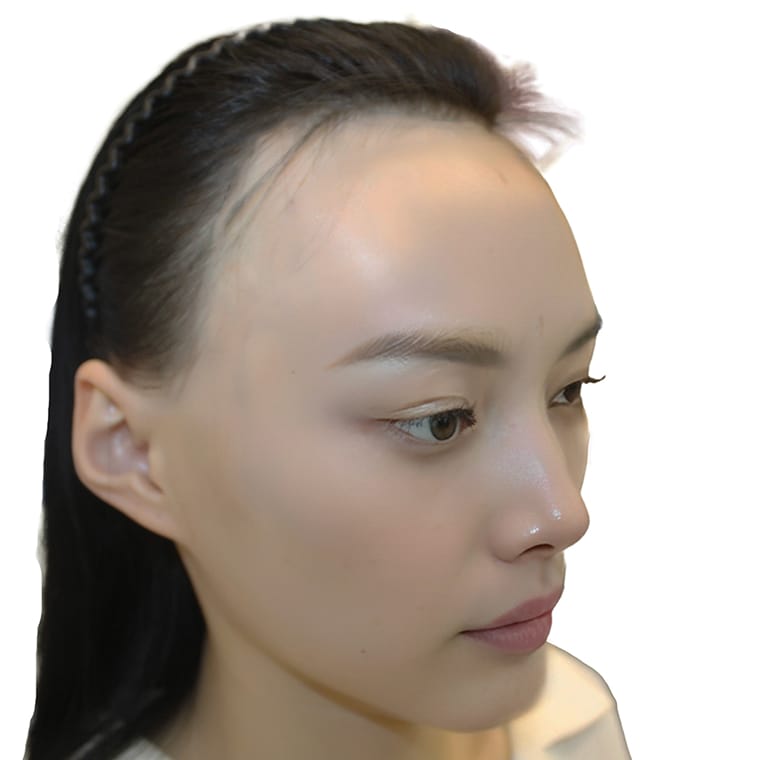
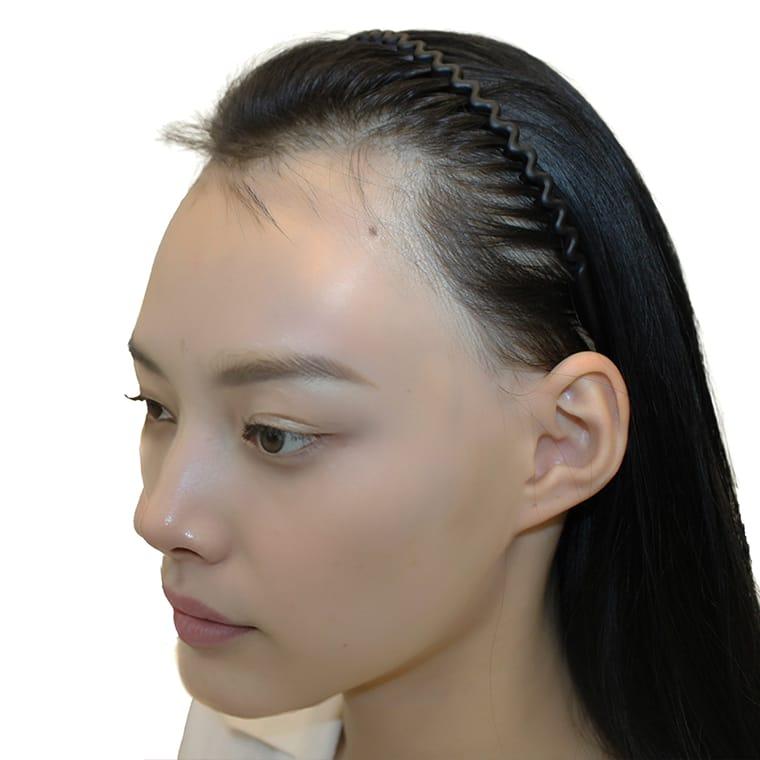


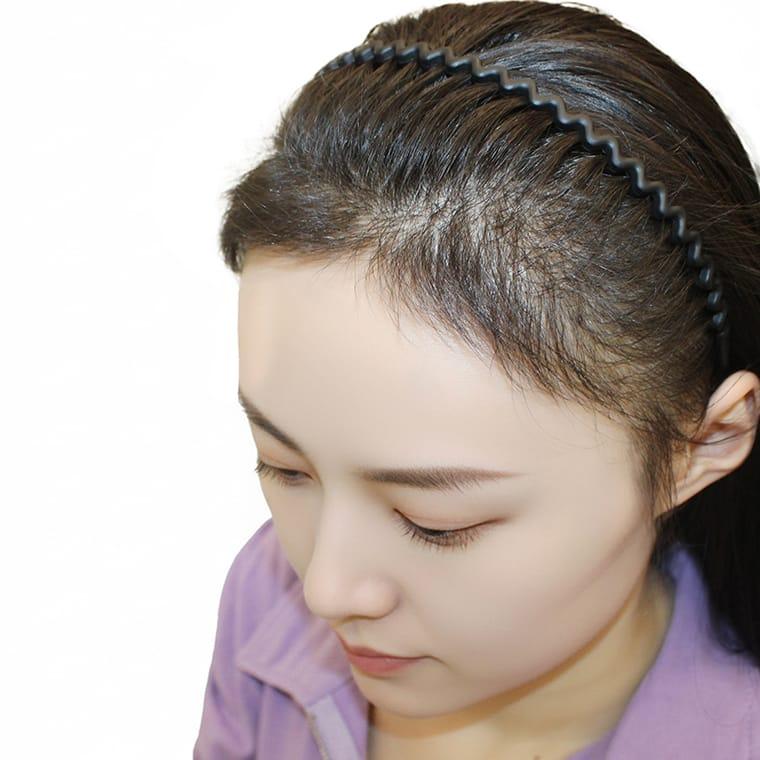
Asian hair restoration surgery in Chicago requires a personalized approach that most hair clinics aren’t equipped to deliver. The specific anatomical and aesthetic considerations of Asian hair – shaft diameter, growth angle, follicular density – affect every stage of hair transplantation from initial consultation through final follow-up.
Understanding why these characteristics matter is the first step toward understanding why the results at Northwestern Hair look the way they do.
Asian hair shafts average 80–100 micrometers in diameter – significantly thicker than other hair types. This thickness creates sharper visual definition against the scalp. When hair restoration surgery is executed with precision, each graft provides substantial coverage. When placement is imprecise, the same thickness makes every error immediately apparent to physicians and patients alike.
Individual strands are thicker and straighter, creating sharper contrast against the scalp. When done well, results are extraordinary.
While Asian hair strands are individually thicker, follicular unit density tends to be lower – approximately 80–100 follicular units per square centimeter in the donor area. Hair transplant patients cannot rely on volume to mask imprecision. Every graft placement directly impacts how the final result reads.
Donor area management is especially critical – strategic harvesting protects supply for potential future procedures. The decisions made in the first session shape everything that’s possible afterward.
Asian hair naturally grows at a more acute angle to the scalp. Implantation angles must account for this to prevent hair from growing perpendicular rather than flowing naturally. This is one of the details that separates exceptional results from results that announce themselves – and it requires a surgeon who has worked extensively with Asian hair types.
Getting the angle wrong is one of the most common failure points in hair transplantation for Asian hair transplant patients. The difference is visible – and permanent.
Dark Asian hair against lighter scalp creates significant visual contrast. Spacing, angle, and depth must all be calculated to create the appearance of natural hair growth. Some Chicago hair transplant clinics use robotic hair restoration systems – including ARTAS robotic hair transplant technology – to assist with follicle selection. At Northwestern Hair, Dr. Vinay handles this precision manually through Micro PUE, which allows for specific angle and depth control that Asian hair requires.
The difference between robotic hair transplant automation and manual precision by an experienced surgeon is most visible in high-contrast cases like Asian hair. Adapting in real time to each patient’s unique growth pattern is what produces natural looking results consistently.
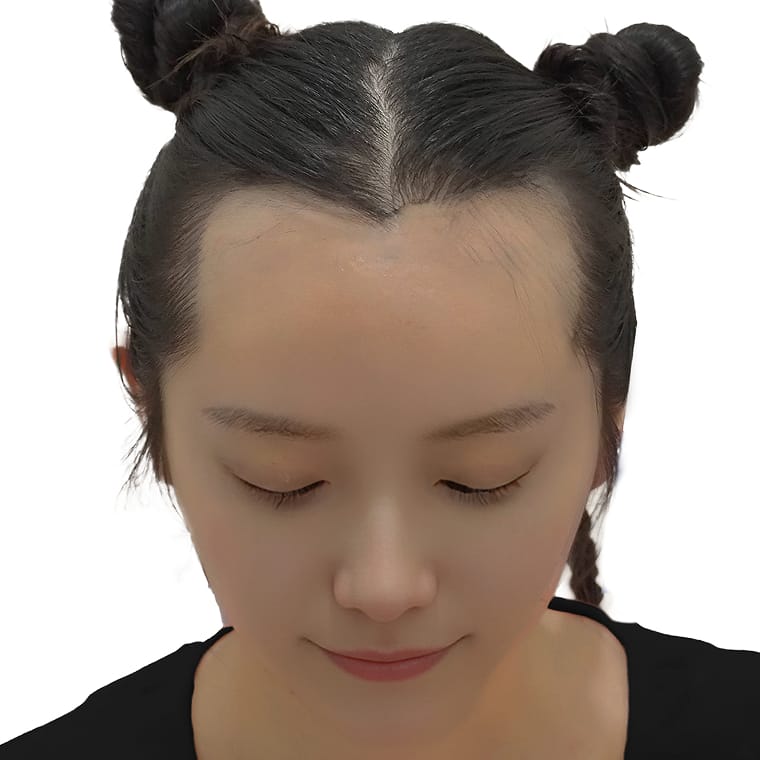
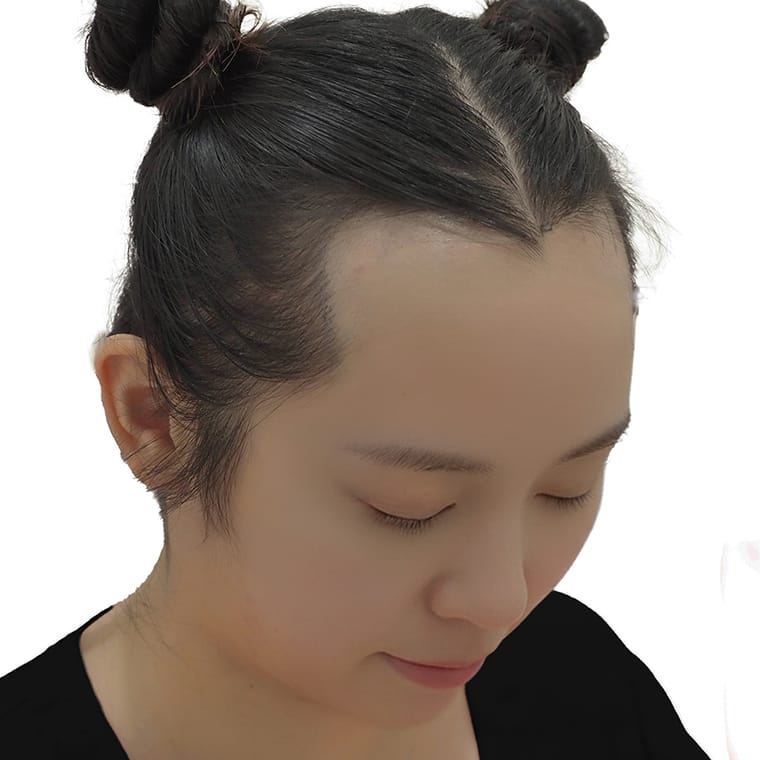
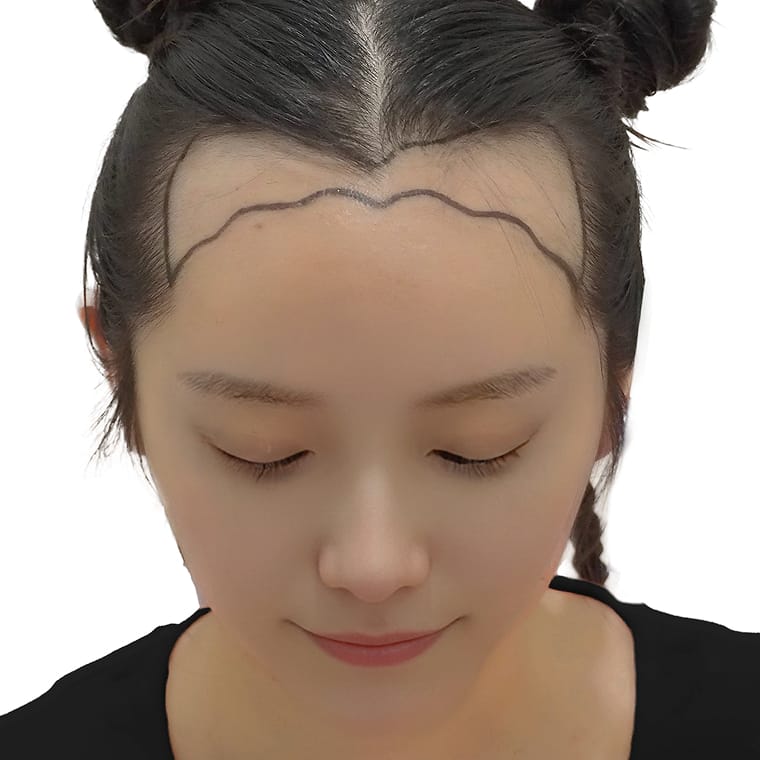
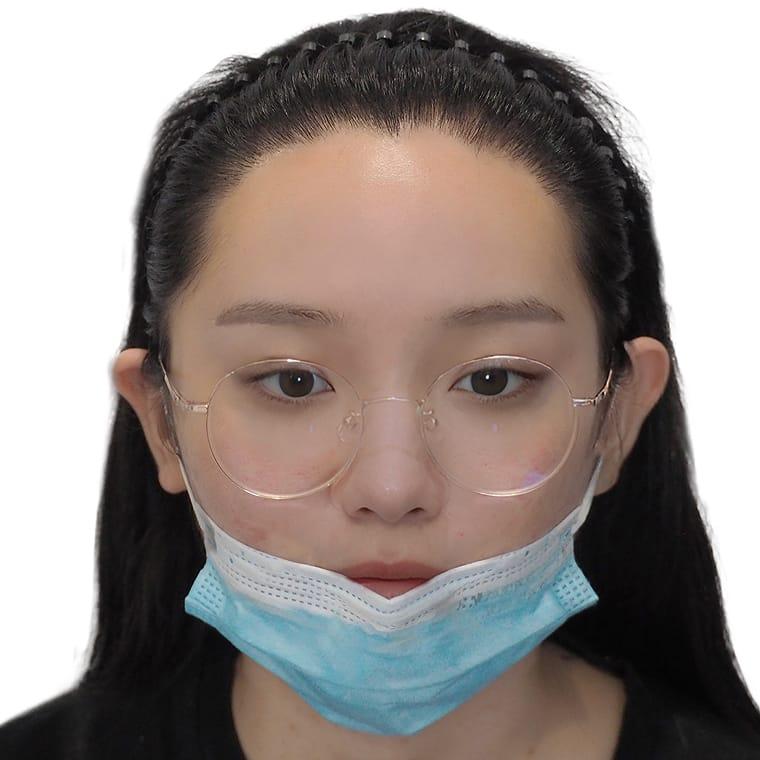
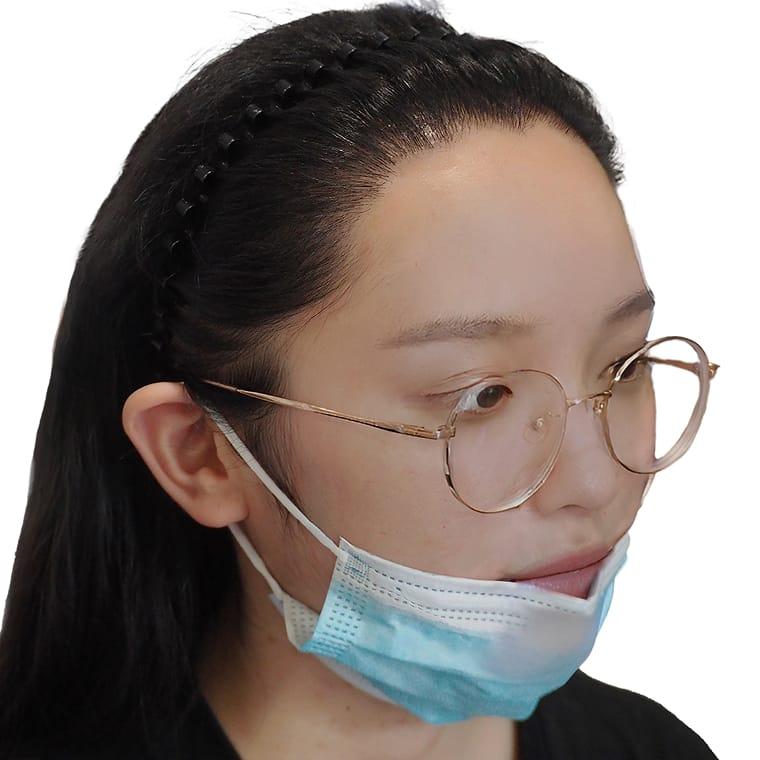
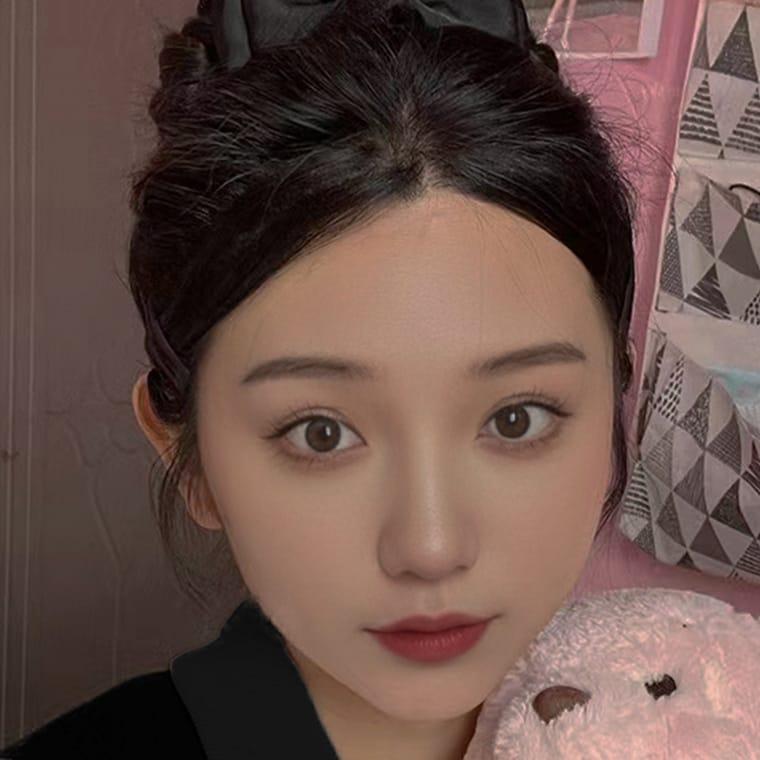
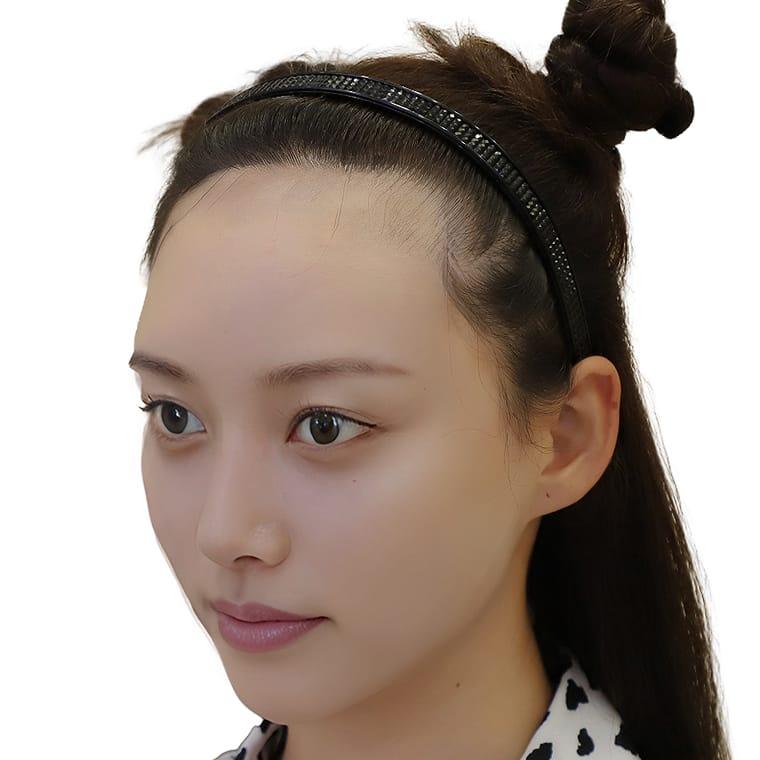
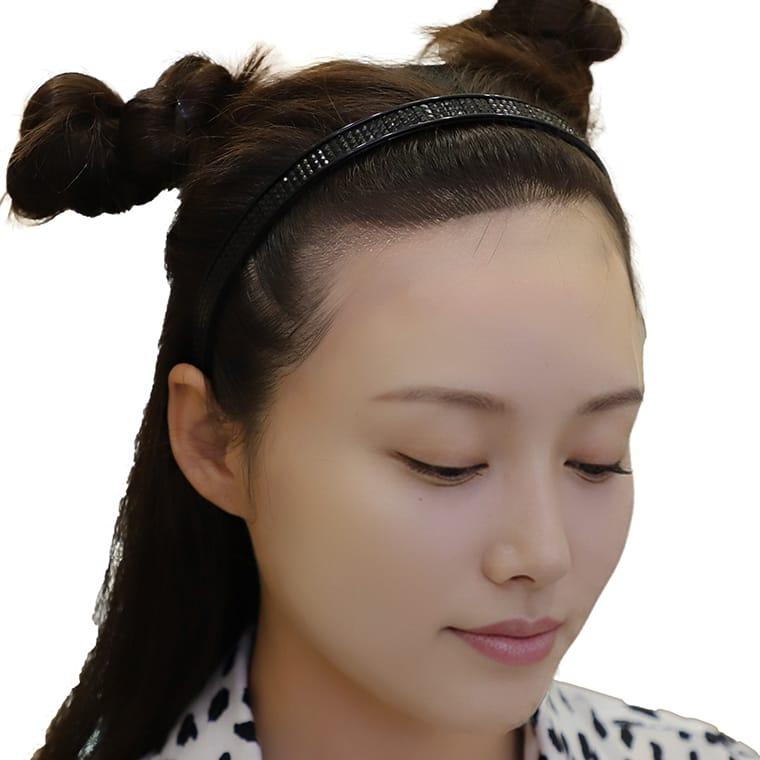
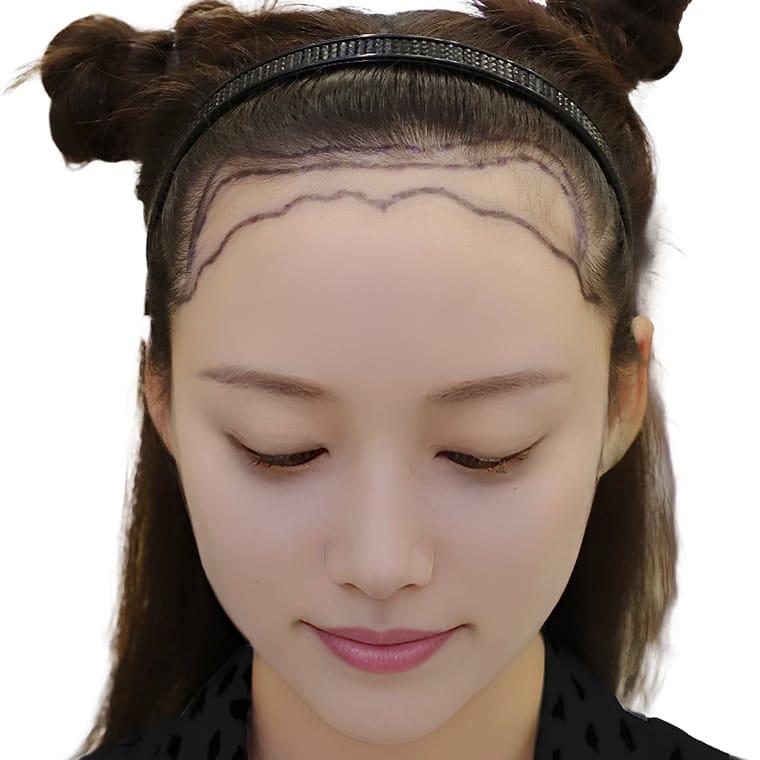

For Asian women, the unique characteristics of their hair create both specific challenges and specific opportunities. The goals are often different from Asian men — frequently focused on lowering the hairline, restoring softness at the temples, or addressing diffuse thinning across the part — rather than filling in a receding hairline.
Understanding those goals, and designing to them rather than applying a generic surgical protocol, is what makes the difference between a result that belongs to the patient and one that looks like a procedure.
For Asian women, a hair transplant isn’t just about restoring what was lost. Often, it’s about creating what was always envisioned — a softer, lower, more feminine hairline that frames the face the way it should. That’s a design problem before it’s a surgical one. The art leads. The medicine makes it real.
Lower density means extraction must be distributed thoughtfully across donor areas. We use sub-1.0 mm punches and adjust extraction angles to the underlying follicle curves — minimizing transection and preserving follicle integrity throughout the hair transplant procedure.
Dr. Vinay Rawlani has seen both sides of the hair restoration process. Having undergone both surgical and non-surgical treatments for his own hair loss, he understands firsthand what works—and what doesn’t.
With medical training from Northwestern University and the University of Chicago, Dr. Vinay combines artistry, precision, and innovation to deliver exceptional results. Whether he’s crafting a timeless hairline or optimizing density, every step is guided by his commitment to perfection.
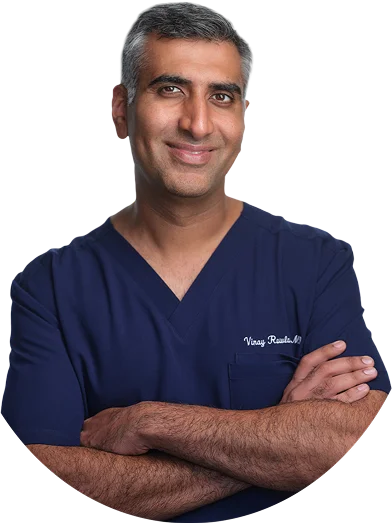


For patients whose goals require structural change — a lower hairline, restored density, improved temple shape — surgical hair restoration is the most effective and permanent path. Dr. Vinay leads every hair restoration surgery personally, from the design session through extraction and graft placement.
His involvement ensures the precision required for hair transplant surgery without donor compromise. Every procedure is built around what the specific patient actually needs — not a standard protocol applied uniformly.
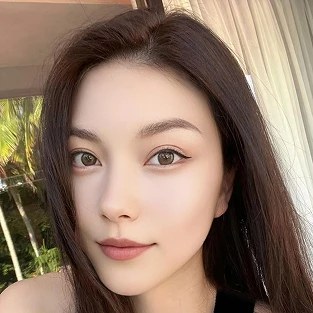

Hair restoration surgery for Asian women typically focuses on restoring softness and density along the part and temples — the areas where diffuse thinning first becomes visible. Dr. Vinay personally designs every hairline and oversees each procedure from extraction through final graft placement.
01 Hairline design that complements Asian facial features and bone structure
02 Strategic planning for long-term hair loss progression
03 Donor area managed to protect future options
04 High-graft sessions without donor compromise using Micro PUE
Our Micro PUE technique is a refined form of FUE hair transplant — follicular unit extraction — a minimally invasive hair transplant surgery that extracts individual follicular units from the donor area and transplants them to thinning areas. This approach avoids linear scarring and is well-suited for Asian hair transplant patients who want minimal visible evidence of the procedure.
Follicular unit extraction FUE has become the standard for hair transplant surgery because it avoids the linear scar associated with older methods and supports faster healing and recovery. For Asian hair, the refinements built on top of standard FUE are what produce exceptional results rather than acceptable ones.
After hair transplant surgery, patients can expect initial shedding within the first 2–3 weeks — a normal part of the hair growth cycle. New hair growth typically becomes visible at 3–4 months, with faster healing and recovery compared to older strip methods. Full results mature at 12–15 months.
Most patients return to their daily routine within 2–3 days. The recovery period is manageable, and the social footprint of a Micro PUE procedure is minimal compared to older hair transplant methods.
These results are permanent. The grafts will grow for the rest of your life. That permanence is exactly why the design work that precedes surgery matters as much as the procedure itself. A beautiful result that doesn’t account for future hair loss progression is a result that won’t hold up over decades.
Dr. Vinay designs for where your hair will be in 20 years, not just where it is today.
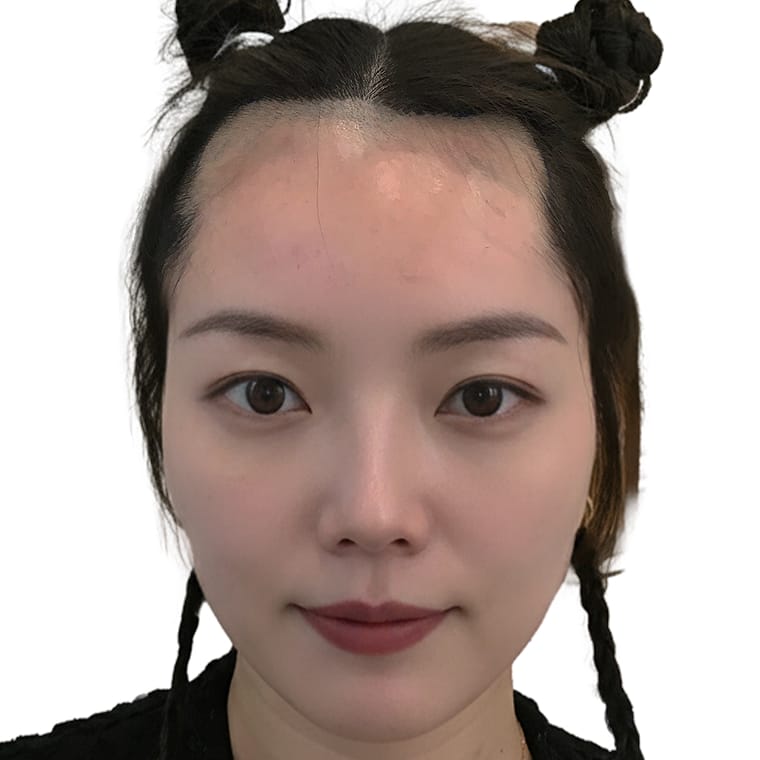
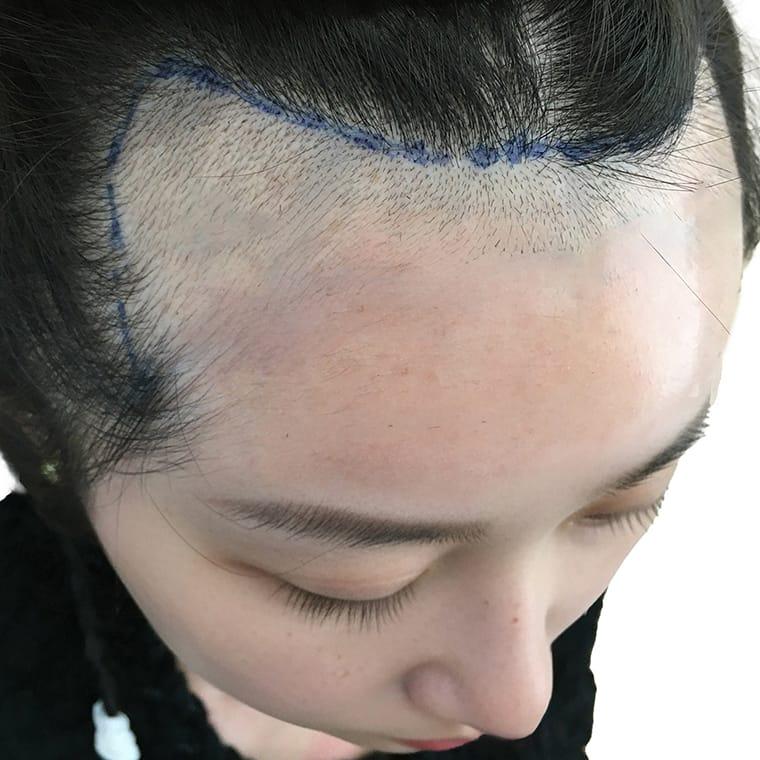
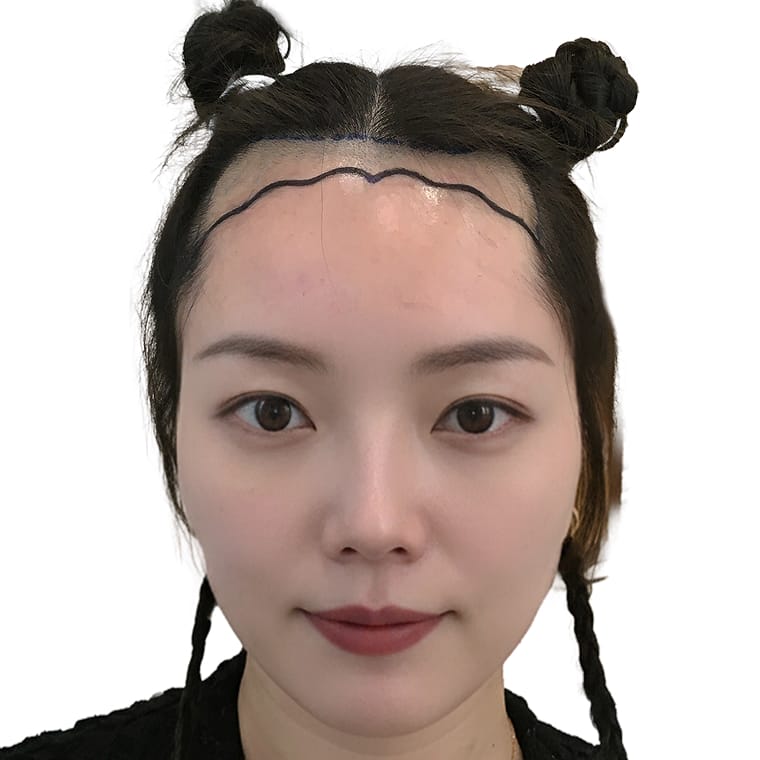

For patients who aren’t yet surgical candidates — or who want to maintain results long-term — ACS (Autologous Cellular Serum) draws on active healing cells from your own blood to reactivate dormant follicles and restore scalp blood flow. Unlike traditional platelet therapies, ACS uses the full spectrum of regenerative cells — making it more effective for the diffuse thinning patterns common in Asian women.
ACS is not a replacement for surgery in cases where surgery is the right answer. But for the right patient at the right stage, it can produce meaningful improvement without the commitment of a surgical procedure.

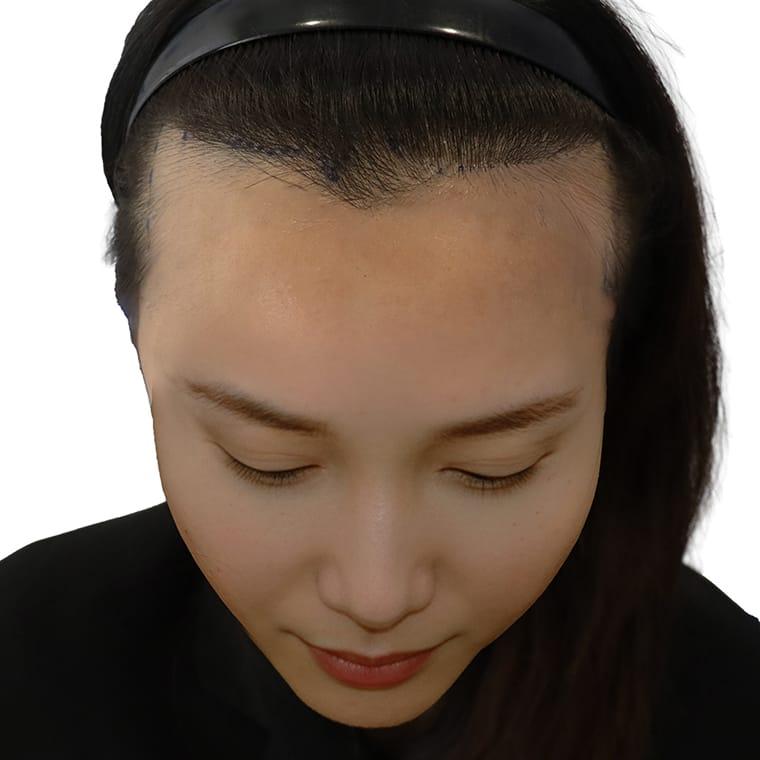
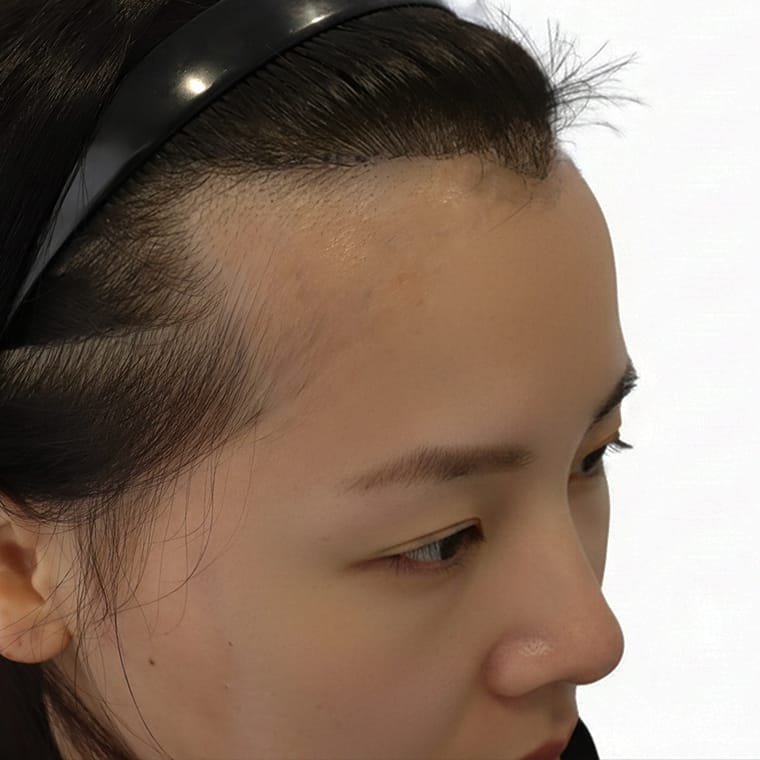
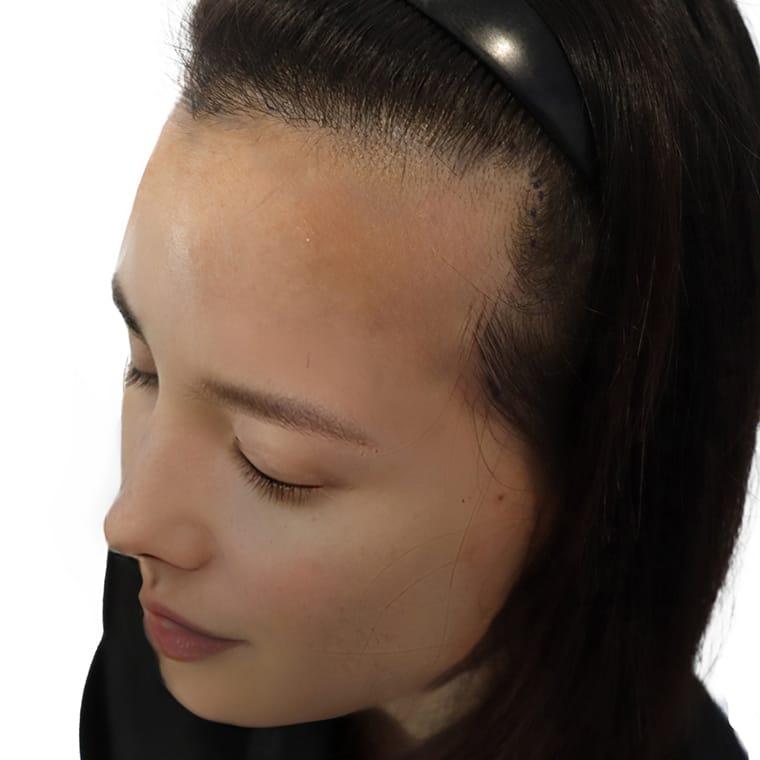
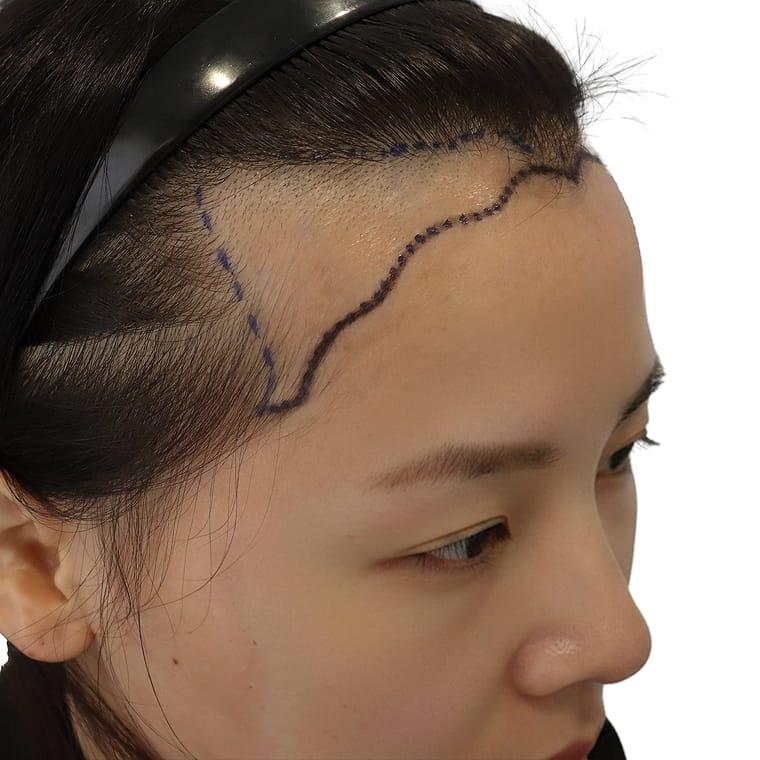

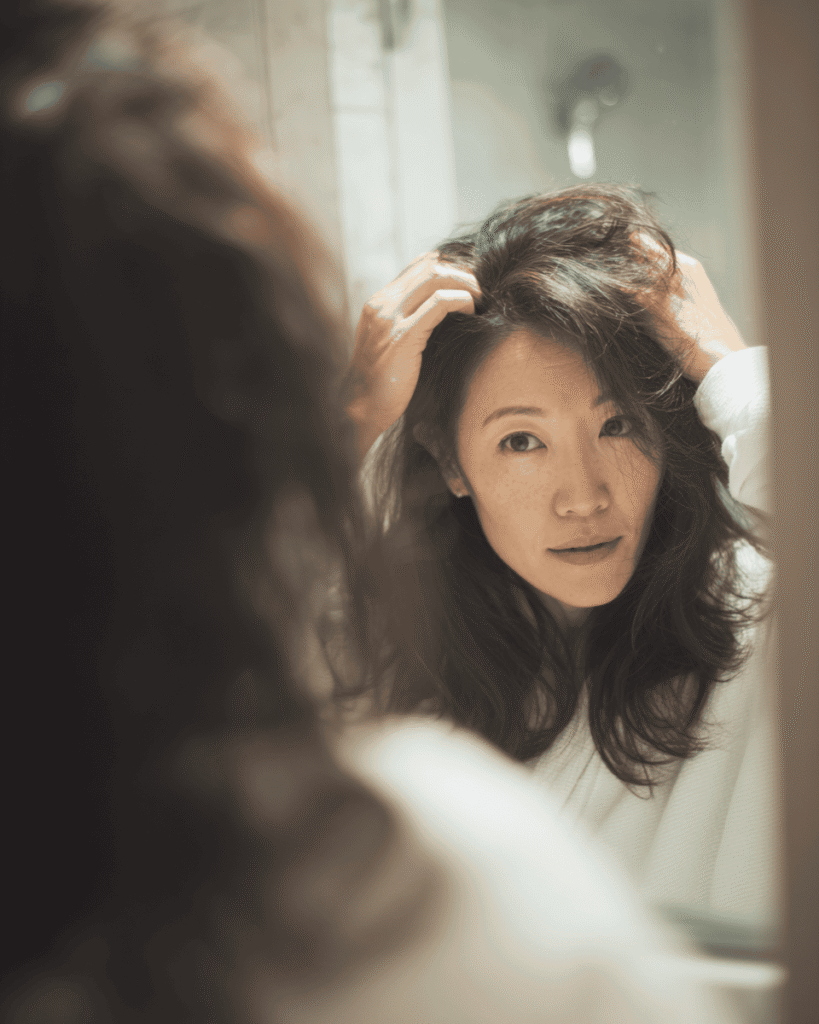
Progressive in-office sessions target dormant follicle reactivation, calibrated to the specific thinning pattern that often progresses gradually across the part, temples, and crown. Each session builds on the last. Paired with a personalized at-home maintenance plan — topical treatments and medications applied directly to the scalp — ACS can produce significant, lasting improvement without cosmetic surgery.
For Asian women experiencing diffuse thinning who aren’t yet surgical candidates, ACS is often the right starting point. Many patients find that after a course of ACS, they either achieve the density they were looking for without surgery — or arrive at surgery with a healthier scalp and better outcomes.
ACS is often most powerful when used alongside surgical hair restoration — before the procedure to optimize the scalp environment, and after to support graft survival and protect existing hair. The combination approach reflects Northwestern Hair’s full-spectrum philosophy: every patient gets the plan their specific situation requires, not the most expensive or the most conservative option by default.
Dr. Vinay will assess whether ACS makes sense as part of your plan, when to use it, and how to integrate it with any surgical treatment options during your consultation.
Not every patient who comes in asking about surgery needs surgery. Many women who come to Northwestern Hair turn out to be better served — at least first — by ACS and medical maintenance therapy. That’s why we offer the complete range of treatment options and work from an honest assessment of what each patient actually needs.
The right answer for one Asian woman isn’t always the right answer for another. That’s why the evaluation process is the first thing we do — not the last.

Every case at Northwestern Hair follows the same process — one built around honest assessment, thorough planning, and surgical precision. Here’s what that looks like from first contact through long-term follow-up.
Dr. Vinay personally assesses every patient. Evaluating donor area capacity, current loss patterns, and progression trajectory. Medical history, family history, and lifestyle are all part of the picture. Hair loss in Asian women often manifests as diffuse thinning across the scalp, requiring a different evaluation approach than male pattern baldness.
Pictures from multiple angles help document the current state and track progress over time. This documentation is part of how we hold ourselves accountable to the result.
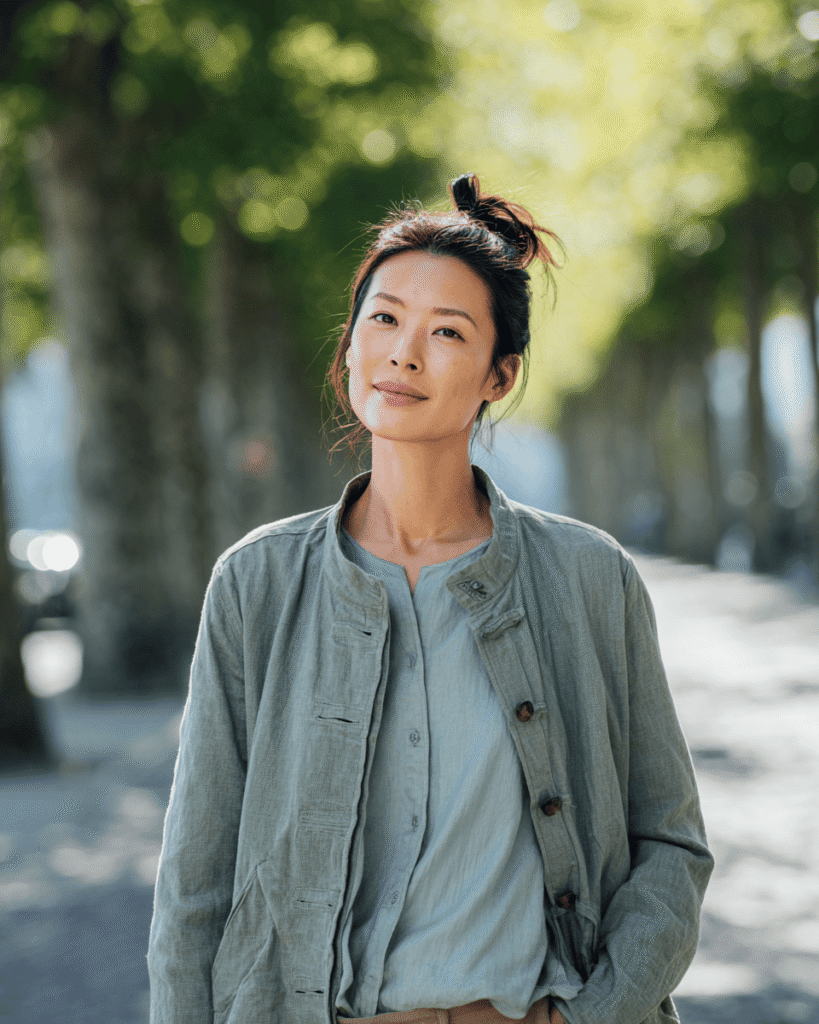

A personalized approach is essential. We discuss your specific needs, goals, and concerns — and give you an honest assessment of what’s achievable with your specific hair characteristics. Some follicles that appear bald or dormant may still be viable. Others may be permanently gone. Knowing the difference determines everything about the path forward.
The goal of the first consultation isn’t to sell a procedure. It’s to give you a clear, accurate picture of where you are and what your real options are.
The hairline and part design must fit your specific anatomy. For Asian women, goals typically center on softness and density along the part and temples. Dr. Vinay considers the acute angle at which Asian hair naturally grows, planning implantation angles that ensure hair flows naturally.
Long-term planning — including 5 and 10-year projections — ensures the design holds up as hair loss continues to progress. A hairline designed only for today can look wrong in five years. We design for your life, not just your appointment.

Before any procedure begins, Dr. Vinay spends significant time designing the hairline with the patient. This isn’t a quick sketch before surgery — it’s the session where the outcome is built. Every proportion, angle, and density decision is made here.
Patients are encouraged to ask questions, notice details, and push back on anything that doesn’t feel right. The design session is collaborative by design. The result should feel like yours before a single graft is placed.
Dr. Vinay maintains direct involvement at every critical stage of hair transplant surgery. Micro punch extraction preserves follicle integrity while minimizing visible scarring in the donor area. Graft placement accounts for the high contrast visibility characteristic of Asian hair.
The goal is natural density distribution that appears graduated and three-dimensional — achieving exceptional results that are undetectable. If you can notice it, it isn’t finished.
Recovery protocols support faster healing while protecting graft survival. Long-term maintenance therapy — including topical treatments and medications applied directly to the scalp — is essential for sustaining hair restoration results.
Regular follow-up consultations with our team assess hair growth and adjust treatment as needed to maintain exceptional care over the long term. The relationship doesn’t end at the procedure — it extends through the life of the result.
Celine is a native of mainland China who relocated to the United States as the U.S. representative for Barley Microneedle Hair Transplantation, the largest hair transplant clinic in Asia. After acquiring Chicago’s International Hair Institute on Barley’s behalf, she partnered with Dr. Vinay at Northwestern Hair to bring expanded hair restoration services to patients in the U.S. market — and ultimately joined Northwestern Hair to lead our work making hair restoration more accessible to the Asian community.
As a fluent Mandarin speaker, Celine handles consultations for Chinese-speaking patients — walking you through your options, answering your questions, and making sure language is never a barrier to getting the right information. Surgical procedures start at $5 per graft, with 0% financing available. She’ll make sure you leave the consultation with a clear picture of what’s possible — and a plan that actually fits your life.
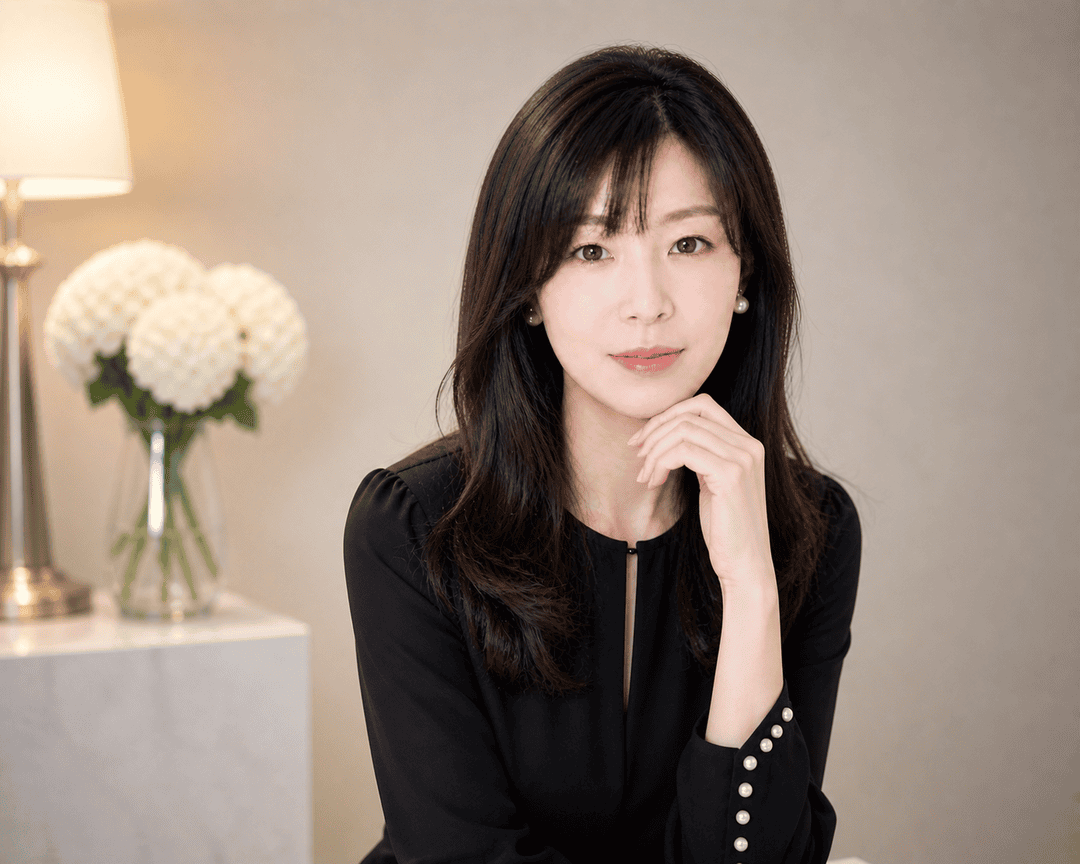
You’ve been managing it long enough. Hair loss in women is common and under-treated, especially diffuse thinning that progresses gradually over many years. The conversation starts with understanding what’s actually happening, not with a predetermined plan.
Dr. Vinay will give you a clear picture of what your hair is doing, where it’s headed, and what’s genuinely achievable. Schedule your consultation with Celine to go over your goals and options.
Asian hair restoration surgery presents unique considerations. The thicker caliber — 80–100 micrometers compared to other hair types — creates sharper scalp contrast, making precise graft placement essential for natural looking results. Lower follicular unit density means fewer grafts are available from the donor area. Asian hair also grows at a more acute angle, requiring careful implantation.
These factors together mean that hair restoration surgeons need specific experience with Asian hair types to achieve exceptional results. A surgeon who primarily treats other hair types may not notice the placement issues that become visible in Asian hair until after the result has grown in.
Candidacy depends on donor area supply, age, and progression pattern. Dr. Vinay evaluates the specific density and quality of your donor area to determine how many grafts can be safely harvested. Because Asian hair has lower follicular unit density, donor management is particularly important for hair transplant patients.
He will give you an honest assessment of what’s achievable for your specific situation. If surgery isn’t the right answer yet, he’ll tell you that too — and explain what the path forward looks like.
Most patients return to desk work within 2–3 days. Initial redness subsides within 1–2 weeks. Transplanted hair typically sheds at 2–4 weeks — a normal part of the process. New hair growth begins around month 3–4, with full results maturing by 12–15 months.
Micro PUE produces faster healing and less visible scarring than traditional hair transplant methods. Most patients find the recovery period manageable and the social footprint of the procedure minimal.
ACS (Autologous Cellular Serum) uses regenerative cells from your own blood to reactivate dormant follicles and restore scalp blood flow. Unlike traditional platelet therapies, ACS draws on active healing cells for more robust stimulation. For the diffuse thinning patterns common in Asian women — gradual progression across the part, temples, and crown — ACS combined with personalized at-home maintenance can produce significant improvement without hair transplant surgery.
ACS is not a substitute for surgery when surgery is genuinely indicated. But for patients in earlier stages of hair loss, or those who want to protect existing hair alongside a transplant, it’s a meaningful treatment option.
Surgical procedures start at $5 per graft, with 0% financing available. The total cost depends on the number of grafts your specific case requires — which Dr. Vinay will assess during your consultation. There are no hidden fees. Discover exactly what your case requires during your consultation at our Chicago hair transplant clinic.
The consultation itself is where the honest conversation about cost happens — after Dr. Vinay has actually assessed your hair, not before. We don’t give estimates without examination.
Yes, virtual consultations are available for patients outside Illinois. In-person consultations take place at our Chicago clinic at 3 E Huron St, Mezzanine Floor, Chicago, IL 60611. Contact our team to schedule.
Virtual consultations allow us to review photos, discuss history, and give you a preliminary sense of what your options look like before committing to an in-person visit. For patients traveling from outside Illinois, this is often the right first step.