
In partnership with

Hair grows out of skin. When that skin is inflamed, congested, oil-imbalanced or barrier-compromised, the follicle inside it cannot function as it should — and nothing directed at the hair itself will correct what is happening underneath it.
Trichology for hair loss is the clinical care of the hair and scalp. It focuses on the environment a follicle has to live in: the condition of the skin, the state of the follicular opening, the balance of sebum, the presence of inflammation, and the structural integrity of the hair shaft itself.

For women dealing with thinning or shedding, this is often where meaningful change begins. Not because prescription medicine has failed, but because some hair loss is driven by scalp conditions that do not respond to prescription treatment alone.
What follows explains which treatments are matched to which scalp findings and stages of loss, how trichology works alongside medical care, what home care supports the results, and what timelines are realistic.
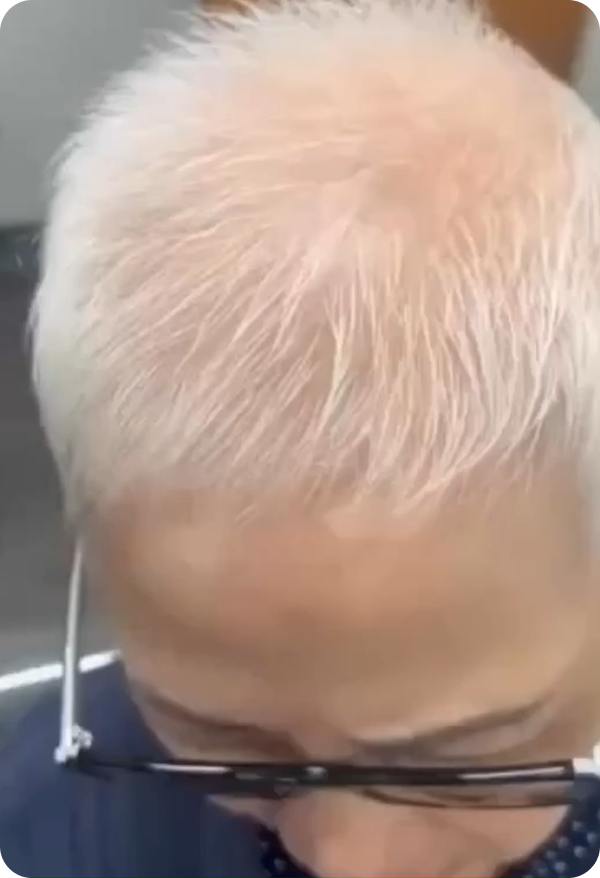

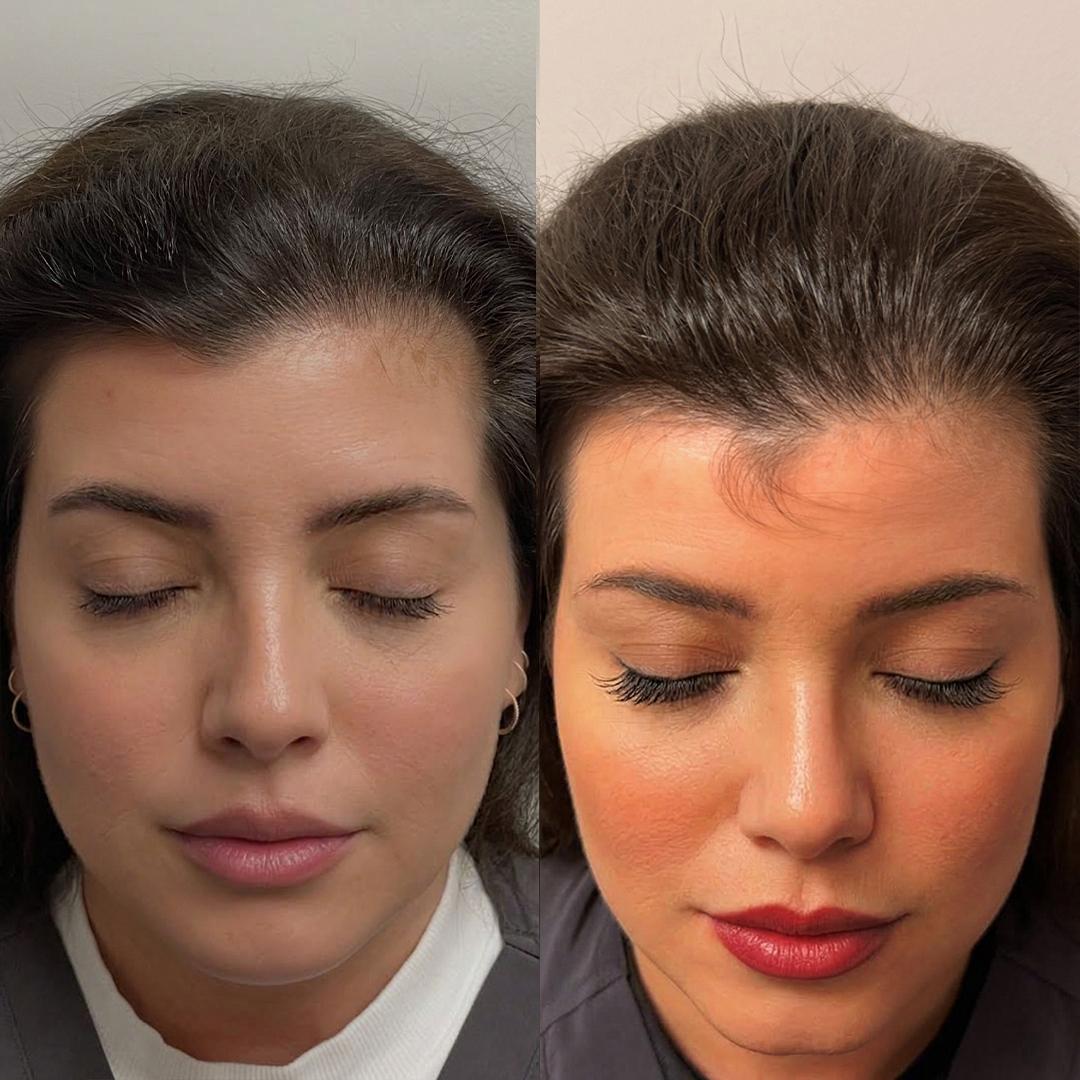
There is a whole category of hair loss that does not require prescription treatment. It requires the scalp to be cared for properly.
A scalp is a living organ with its own homeostasis — a balance of oil production, microbial population, cell turnover, barrier integrity and blood supply. When that balance is disturbed, the follicles within it come under strain long before anything shows up on a laboratory panel. Chronic low-grade inflammation weakens follicular anchoring. Sebum imbalance changes the follicular environment. Barrier disruption drives a cycle that sustains itself. Buildup obstructs the follicular opening. None of these are diseases in the sense that a prescription treats, and all of them measurably affect whether a follicle holds onto hair.
Restoring that balance — through targeted in-office treatment and a home-care routine built for your specific scalp — addresses a meaningful share of the hair loss women present with. In many cases it is the whole answer. In others it is the foundation that has to be in place before medical treatment can do its part.
Scalp treatments are performed by Debbie Ansay-Martinez, a Board Certified Holistic Health Practitioner and Trichologist with more than 25 years of experience in hair and a decade of clinical trichology practice. She is also a Certified Polarized Light Microscopy Technician through the Italian Academy of Hair Microscopy.
This advanced training allows Debbie to connect scalp and follicle findings with the structure, quality, and growth-cycle characteristics of the hair itself — creating a more complete assessment of shedding, thinning, breakage, and scalp health.
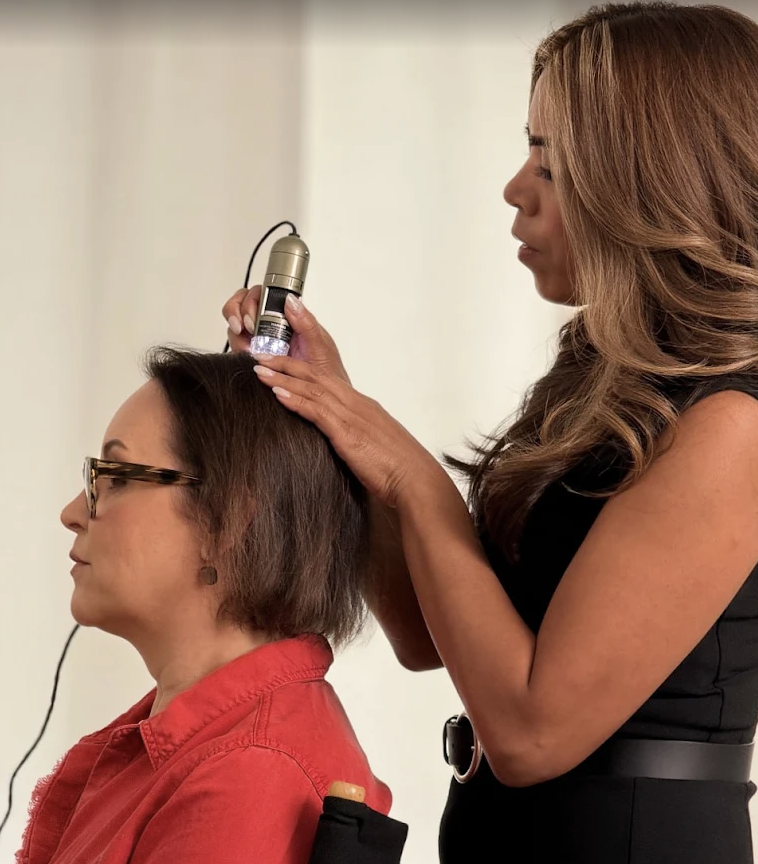
No treatment here is chosen from a menu.
Any scalp treatment requires a prior Hair Follicle Discovery consultation with Debbie Ansay-Martinez. It is a non-invasive, one-hour appointment that produces the written plan your treatments follow — trichoscopic imaging of the scalp and hair follicles at 30x to 60x magnification, assessment of follicular density and caliber, evaluation of sebum production and barrier condition, and a structured review of the nutritional, hormonal and lifestyle factors influencing growth.
What comes out of it is a plan with a sequence. Some women need the scalp environment corrected before anything aimed at regrowth will work at all. Others need both at once. Which situation you are in is not a guess.
Hair Follicle Discovery is booked through Northwestern Hair, and the full description is on our diagnosis page.
Three treatments, distinguished by what your scalp is actually doing. Each requires Hair Follicle Discovery first.
Scalp Balance is directed at the imbalances that compromise scalp health, including seborrheic dermatitis, excess sebum, dandruff and flaking, irritation, dryness and sensitivity, product buildup, accumulated dead skin cells, and follicular congestion. It also supports scalp comfort for women managing scalp psoriasis alongside their medical care. Stress and diet aggravate several of these, which is one reason the treatment is tailored after evaluation rather than before it.
Each session is built around your specific findings. The objective is a scalp restored to functional balance — barrier intact, sebum regulated, microbial population stable, follicular openings clear.
Worth being direct about: Scalp Balance cares for the scalp, not hair loss. If you are shedding or thinning, this is not the right starting point.
*For scalp conditions without active hair loss
It works by nourishing the follicle, supporting the scalp environment around it, and sustaining follicular function through a period when hair is shedding faster than it is being replaced — the objective being to support follicles that are still viable while any underlying driver is addressed.
Appropriate for telogen effluvium, hormonal thinning, postpartum shedding, perimenopausal and menopausal change, early-stage androgenetic alopecia, female pattern hair loss, seasonal or excessive shedding, and increased loss during illness or a period of significant stress.
*For early-stage thinning and shedding
It works on the biological environment the follicle depends on — supporting a calmer scalp, better nutrient delivery, and healthier signaling within the follicle itself. Where your findings indicate it and you are a qualifying candidate, the program may incorporate FDA-cleared low-level light therapy. The aim is to give less-active follicles the best opportunity to re-enter the growth phase where that remains biologically possible, and to support long-term follicular survival.
Appropriate for perimenopausal and menopausal thinning, telogen effluvium, androgenetic alopecia, progressive thinning, chronic shedding and reduced density.
The program is constructed from your Hair Follicle Discovery findings so that it matches the underlying cause, your stage of loss, your scalp condition and your goals.
*For progressive and established hair loss
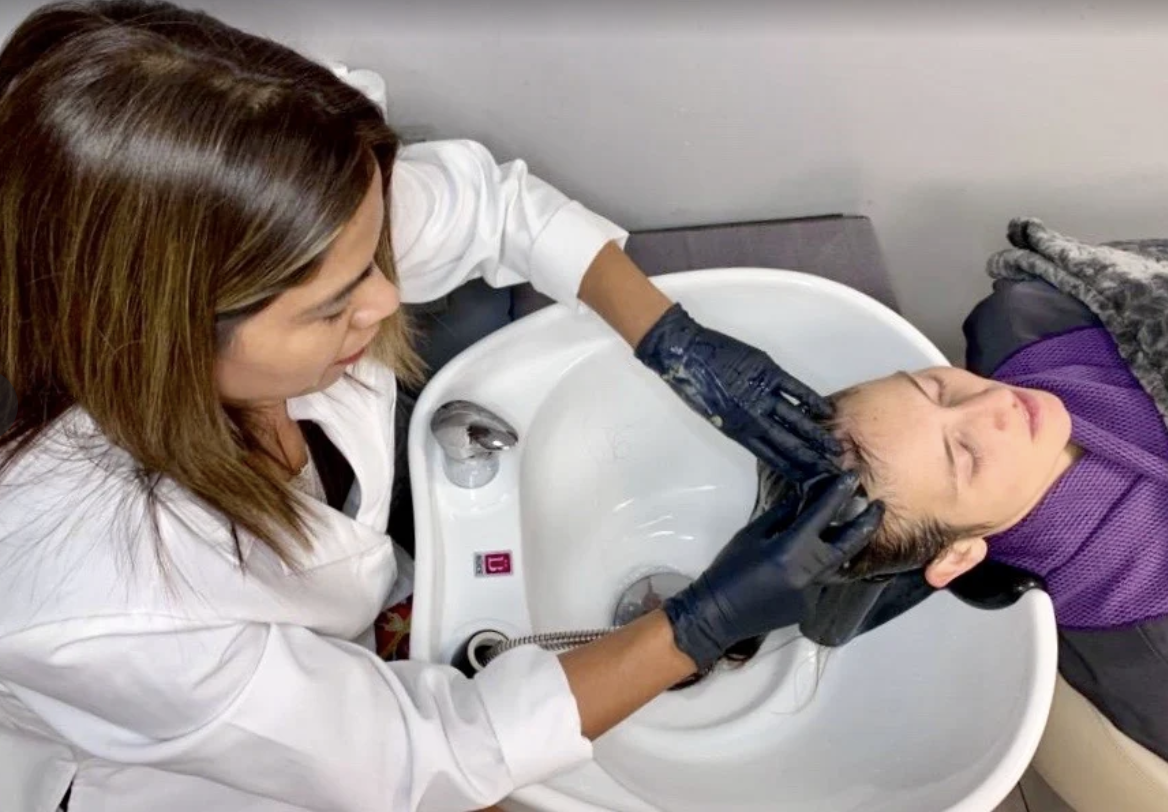
Most women arrive with a symptom rather than a diagnosis. If any of these describes your scalp, there is a treatment directed at it.
Persistent flaking and dandruff
Often seborrheic dermatitis rather than dryness — which is why treating it as dryness, with heavier conditioning products, tends to make it worse.
An oily scalp that never feels clean
Excess sebum alters the follicular environment and can sustain irritation around the follicle.
Itching, tenderness or burning
Scalp discomfort is frequently the earliest sign of inflammation, and inflammation affects follicular anchoring.
Tightness and dryness
A compromised skin barrier behaves on the scalp exactly as it does elsewhere on the body, and it perpetuates itself until it is corrected.
Buildup and follicular congestion
Residue and obstruction accumulate at the follicular opening and are not resolved by ordinary washing.
Scalp psoriasis
Supported here for barrier health and scalp comfort, alongside the medical treatment you are receiving for it.
Shedding and thinning
Where hair is actively being lost, treatment is directed at the follicle rather than the surface — and evaluation comes first.
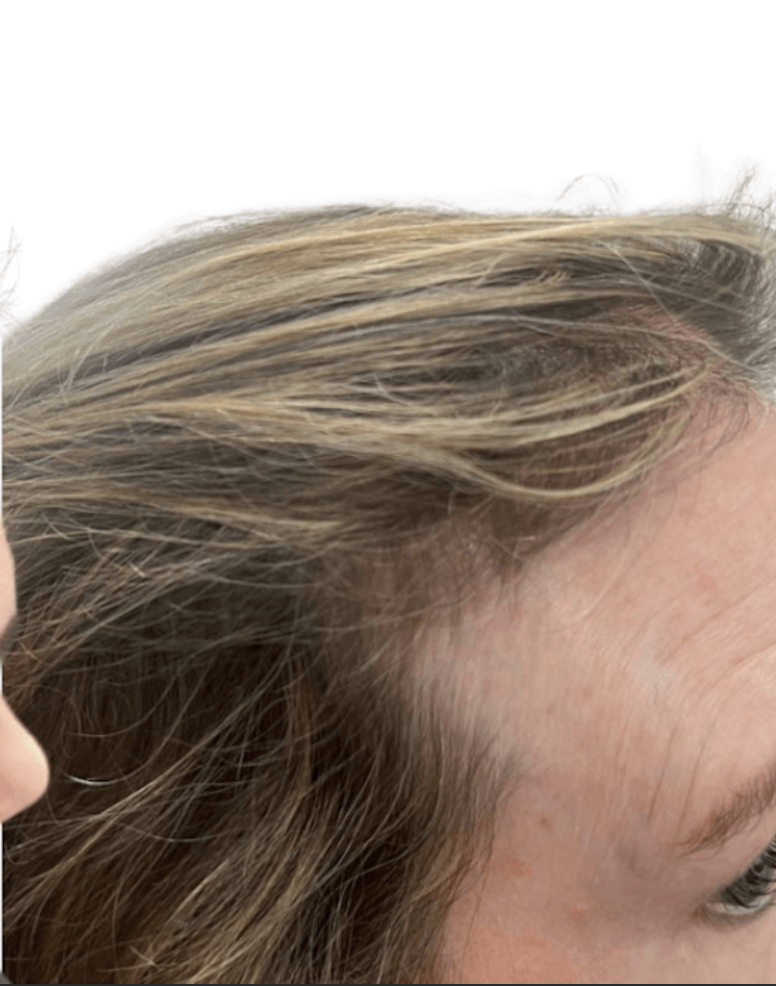
Antes
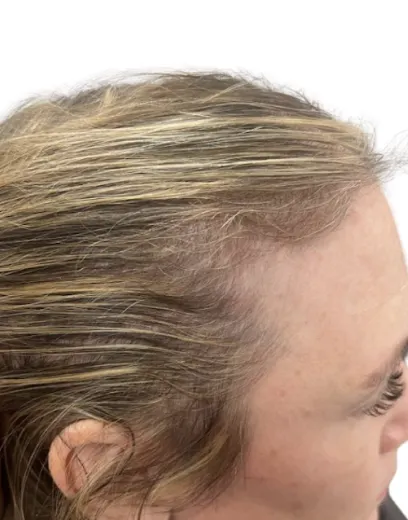
Después
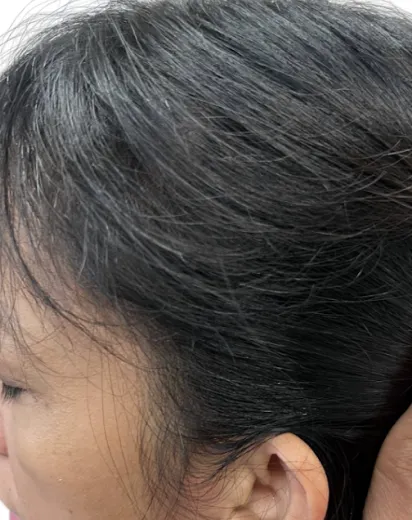
Antes
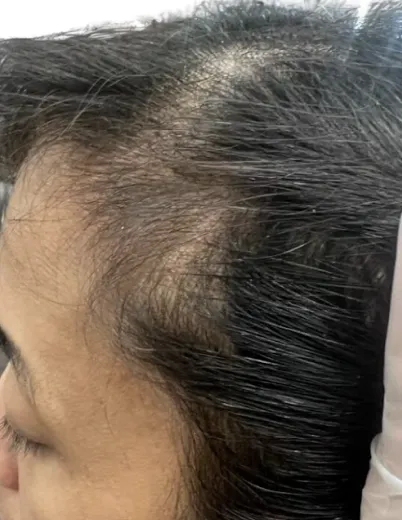
Después
Antes
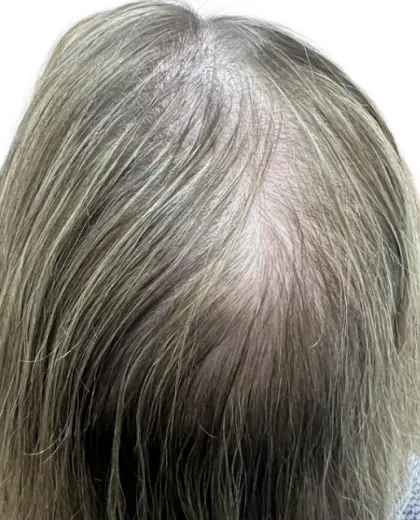
Después
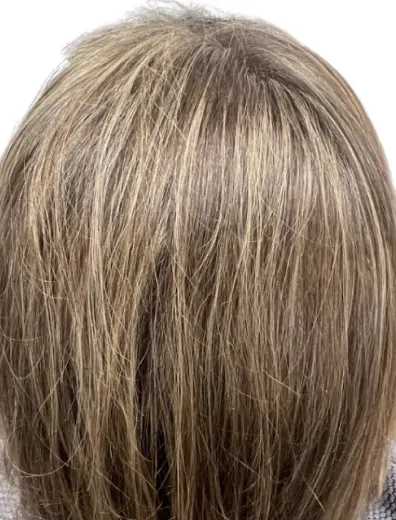
 Before and During Your Treatment
 You will not be treated on your first visit. Every plan begins with Hair Follicle Discovery, which produces the written plan your treatments follow.
Come with your hair as it normally is. Do not wash it specially beforehand — your scalp in its ordinary state is what needs to be assessed.
Treatments run 45 to 60 minutes depending on which one, and are performed seated or reclined. None of them are painful, and none require anesthetic or recovery. You will feel sensation — warmth, tingling, coolness, the pressure of manual technique — but nothing that interrupts your day. Most women find the treatments comfortable.
Immediately Afterward There is no downtime. You return to your day directly. Avoid washing your hair for the first 24 hours after treatment.
Your scalp will feel notably cleaner and lighter, particularly after a first treatment where buildup has been removed. Some women notice mild transient redness from stimulation, resolving within hours. Hair will often feel lighter with more movement at the root, since a congested scalp weighs hair down at the base.
When You Will See Results, Honestly This is where expectations need to be set against hair biology rather than marketing.
Scalp symptoms may improve first. Itching, flaking, tightness and oiliness often respond after one to three treatments, because you are treating skin and skin responds on skin’s timeline.
Shedding changes may take six to ten weeks. Some daily hair fall remains normal throughout — average loss is around 50 to 100 strands a day, and the goal is not zero. This is not slow performance; it is the hair cycle. Follicles already committed to the shedding phase will complete it regardless of treatment, so the change appears only once the follicles entering the cycle after treatment began reach that point. The same applies where shedding was triggered by stress or nutritional depletion: correcting the cause does not shorten the cycle.
Visible density changes may take three to six months. New hair has to grow to a length where it contributes to coverage. Anyone promising visible density in weeks is describing something other than hair growth.
Outcomes vary. Results depend on your diagnosis, the stage of your hair loss, your scalp condition, how consistently you follow the plan, your home care, and any medical factors involved. No outcome is guaranteed.
Treatment frequency and the number of sessions are individualized. Your plan is built after your evaluation and adjusted as your scalp responds.
Trichology addresses the scalp environment. Where the driver of hair loss is systemic or hormonal, medical care is needed as well, and the two run in parallel rather than in competition.
Debbie works alongside our medical team of hair loss specialists, dermatologists and functional medicine specialists to ensure patients have appropriate care. Where findings suggest something medical — low ferritin, thyroid dysfunction, hormonal imbalance, autoimmune activity or a scarring process — the medical evaluation is directed by Dr. Vinay Rawlani. If androgens are driving follicular miniaturization, that requires prescription therapy. If follicles in a region have been lost rather than weakened, no topical treatment restores them, and a hair transplant or hair replacement becomes the honest conversation.
Most plans run on more than one track. Trichology supports the environment hair grows in, while medical care addresses the underlying conditions affecting growth.
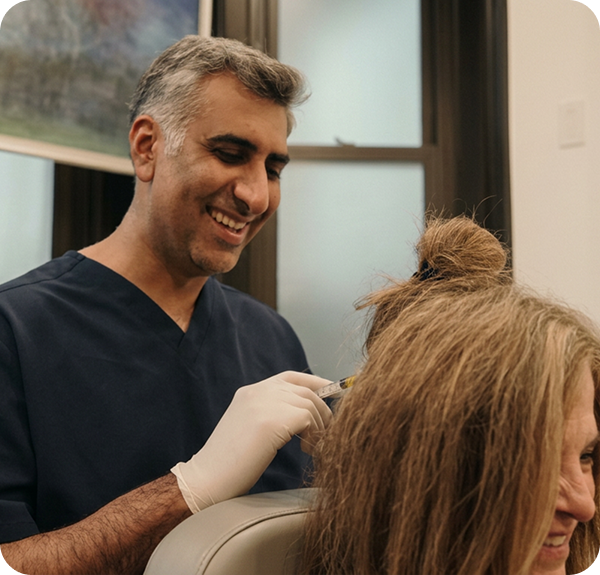

In-office treatment sets the direction. Home care determines whether it holds.
A scalp seen professionally once a month is managed by you the other twenty-nine days. The routine built alongside your treatment plan is matched to your scalp condition rather than selected off a shelf — cleansing frequency, exfoliation, and scalp-directed care chosen for your barrier and sebum profile.
Diet is part of the picture, though a more specific part than is usually claimed. Hair is built from protein, and adequate protein intake matters. Beyond that, supplementation helps where a deficiency exists and does very little where one does not. Iron, zinc and vitamin D are worth correcting when testing shows them low. This is one of the reasons testing precedes supplementation here rather than following it.
Home care is the part of trichology that most determines outcome, and the part most often neglected.
Hair loss is not static, and a protocol that was right in March may not be right in September.
Progress is monitored across visits — scalp condition, shedding rate, density, and response — with the protocol escalated, reduced or stopped as findings dictate. Changes can reflect an evolving medical picture as much as a scalp one. Thyroid disorders and polycystic ovary syndrome both disrupt the hair growth cycle, and hormonal change is one of the clearest reasons to reassess rather than continue on assumption.
Stopping a treatment that is not working is a conversation we would rather have at month four than month twelve.
Primary treatment location for North Shore patients.
Evaluations and analysis available now. Treatment coming in 2027.
Trichology is the clinical study and care of the hair and scalp. A trichologist evaluates the scalp and hair shaft under magnification, assesses the factors influencing hair growth, and directs care at the scalp environment — inflammation, sebum balance, barrier integrity, follicular congestion and circulation. A trichologist supports hair and scalp health rather than diagnosing or treating medical disease.
No. Trichology is hair and scalp care, not medical practice. Debbie works alongside our medical team, and where findings suggest something medical, the evaluation is directed by Dr. Vinay Rawlani.
It restores the scalp to functional balance so that follicles can operate normally. Inflammation, sebum imbalance, barrier disruption and follicular obstruction all measurably affect whether a follicle retains hair, and none of them require prescription treatment to correct. For many women this addresses a meaningful share of what is driving their hair loss.
Yes. Any scalp treatment requires a prior Hair Follicle Discovery consultation with Debbie. It also means we can tell you when a treatment is not appropriate for you.
No. A head spa is a relaxation service delivered the same way to everyone. Trichology treatment is selected from an evaluation and directed at a specific finding. Both feel good; only one is designed to change something.
Sometimes, when the drivers are scalp-based. Where hair loss is hormonal, metabolic or genetic, trichology supports the scalp while medical care addresses the cause. Your evaluation determines which situation applies.
Scalp symptoms such as itching and flaking may improve after one to three treatments. Shedding changes may take six to ten weeks, limited by the hair cycle rather than by the treatment. Visible density changes may take three to six months. Outcomes vary with diagnosis, stage of loss, scalp condition, consistency, home care and medical factors.
Scalp Balance and Follicle Renewal are 60 minutes. Advanced Follicle Regeneration is 45 minutes.
Avoid washing your hair for the first 24 hours afterward. There is no other downtime.
That is individualized. Your plan is built after your evaluation and adjusted as your scalp responds.
No. Treatments are comfortable, require no anesthetic, and have no downtime.
Yes, and most women do. The two work on different parts of the problem and the plans are coordinated.
Scalp treatments are performed at HairLab Chicago in Deerfield, serving Deerfield and the North Shore, and are coming to Chicago in 2027. Hair Follicle Discovery and trichoscopy are available in both Chicago and Deerfield now.
Only where testing shows a deficiency. Iron, zinc and vitamin D are worth correcting when low. Adequate protein intake matters, since hair is built from it. Test first, then supplement to the result.

