




Can Women Get a Hair Transplant? What Chicago Women Should Actually Know
The question gets asked in consultations regularly, and it gets asked with a particular kind of tentativeness — as if the woman asking it already expects to be told no, or to be redirected toward something else without the original question being fully answered.
Can women get hair transplants?
Yes. The direct answer is yes, and it deserves to be given directly rather than buried under qualifications or redirected before it’s been fully addressed. Women can and do receive hair transplants. The procedure is technically feasible, the results in appropriate candidates can be excellent, and the surgical principles that make transplantation work — the permanent DHT resistance of donor-area follicles — apply equally regardless of the patient’s sex.
But the full answer is considerably more nuanced than the yes alone, and the nuance matters more for women than it does for men. The conditions that make a woman a good surgical candidate are different from those that define male candidacy. The presentation of hair loss in women — diffuse thinning rather than defined bald zones, hormonal drivers that surgical intervention doesn’t address — means that most women who want a hair transplant are actually better served by a non-surgical program, at least initially and often entirely.
Understanding that distinction — not as a way to redirect women away from surgery, but as a way to give them the accurate clinical picture that leads to decisions they’ll be satisfied with — is what this piece is about. Contact Northwestern Hair Restoration today for more information.
Why the Question Exists in the First Place
The reason women ask “can I get a hair transplant” with uncertainty rather than confidence is partly cultural and partly clinical — and both dimensions deserve acknowledgment.
Culturally, hair transplantation has been marketed almost exclusively toward men. The imagery, the before-and-after galleries, the language of consultations — the dominant model in the industry has a male template so firmly embedded that women approaching the subject often feel like they’re asking about a procedure that wasn’t designed for them. Which, historically, it largely wasn’t.
Clinically, the uncertainty has a more legitimate basis. Not every woman with hair loss is a good surgical candidate — and in the early days of hair restoration, when the understanding of women’s hair loss patterns was less sophisticated, some women who received transplants had outcomes that were disappointing or required significant revision. The clinical caution that developed around female candidacy was a reasonable response to that history. It became overcorrected over time into a generalized reluctance that doesn’t serve women whose situations genuinely support surgery.
The accurate current picture is more specific: the question isn’t whether women can have hair transplants. It’s which women should, and under what clinical conditions, surgery represents the right tool rather than a second-best approximation of what they actually need.
What Makes Women Different as Surgical Candidates
 The difference between male and female hair loss as surgical territory isn’t primarily biological — it’s about the pattern of loss and what surgery can and cannot address within that pattern.
The Diffuse Pattern Problem
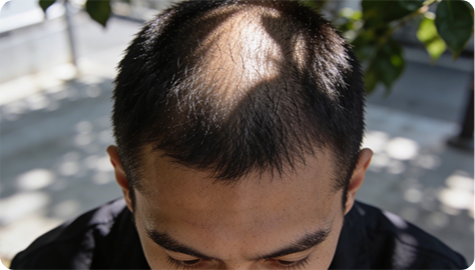
Male pattern baldness produces defined bald zones: the hairline recedes, the crown thins, and the loss follows a predictable template with a stable donor area at the back and sides. Surgery works beautifully in this context because the task is clear — move DHT-resistant follicles from the stable donor area to the defined areas of permanent loss — and the donor area is genuinely stable, meaning the hair it contains won’t miniaturize after transplantation.
Female pattern hair loss follows a different template. The Ludwig pattern — widening part, diffuse thinning across the crown and top of the scalp, preserved frontal hairline — doesn’t produce the defined bald zones that surgical planning is built around. It produces a general reduction in density across a large area. And critically, it frequently affects the donor area as well.
This is the most significant surgical distinction for women. In male androgenic alopecia, the back and sides of the scalp maintain their DHT resistance reliably. In many women with female pattern hair loss — particularly those with diffuse unpatterned alopecia — the thinning is genuinely diffuse, affecting the donor zone alongside the recipient zone. Harvesting grafts from a donor area that is itself subject to androgenic miniaturization produces transplants that may thin after the procedure, undermining the permanence that makes surgery valuable.
Evaluating donor area stability is therefore the central candidacy question for women considering surgery, more so than for men, and requiring more thorough clinical assessment than a visual examination alone can provide.
The Hormonal Layer
Male androgenic alopecia is primarily a genetic and hormonal condition whose main driver — DHT acting on susceptible follicles — doesn’t have the cyclical, transitional quality of women’s hormonal hair loss. A well-designed transplant in a man with stable androgenic alopecia produces a permanent result because the underlying loss pattern is predictable.
Women’s hair loss has a hormonal component — postpartum shifts, perimenopausal transitions, full menopause — that can produce significant changes in the hair picture over relatively short periods. Surgery performed during or around a major hormonal transition may produce a result in a very different context than the one that existed at the time of the procedure. The native hair around and behind the transplant may be more vulnerable during hormonal transitions than the transplanted hair, creating a mismatch between the treated and untreated zones that develops after surgery.
This doesn’t make surgery inappropriate for women going through hormonal transitions — but it does mean that the timing of surgery relative to hormonal stability matters more for female candidates than it typically does for male ones.
The Non-Surgical Option Is Often Better
For most women experiencing the diffuse thinning that characterizes female pattern hair loss, ACS — Autologous Cellular Serum — offers something that surgery fundamentally cannot: treatment of the entire thinning zone, including areas where follicles are miniaturized but still present and capable of being restored to fuller function.
Surgery replaces follicles that are gone. ACS addresses follicles that are still there but compromised — the miniaturized follicles distributed diffusely across the crown and central scalp that are producing finer, shorter hair than they should be. For the majority of women with female pattern hair loss, the population of treatable follicles is larger than the population of permanently lost ones, which means non-surgical treatment has more to work with — and can produce results across a broader area — than surgery could address.
This is the clinical reality that makes surgery a second rather than first tool for most women: not a limitation of the surgical option, but a genuine superiority of the non-surgical one for the specific type of hair loss most women present with.
When Surgery Is the Right Answer for Women
None of the above means that women shouldn’t have hair transplants. It means that the conditions that make surgery the right tool for a woman are more specific than they are for a man, and identifying them accurately is the work of a thorough clinical consultation.
Defined Areas of Stable Permanent Loss
 The clearest surgical indication for a woman is permanent hair loss in a specific, defined zone that has not responded to non-surgical treatment and where the donor area has been evaluated and confirmed to be stable, DHT-resistant, and unlikely to thin after extraction.
The situations most likely to produce this picture include:
Traction alopecia. Hair loss caused by chronic physical tension — tight hairstyles, extensions, braids worn over the years — produces a distinct pattern of frontal and temporal recession that is often well-defined and permanent in affected zones. When the causative styling practices have been discontinued and the loss has stabilized, surgical restoration of the affected hairline is often both clinically appropriate and aesthetically transformative.
Traumatic or scar-related hair loss. Burns, surgical scars, accidents, and other forms of physical trauma that have permanently destroyed follicles in defined areas are excellent surgical indications. The loss is defined, the remaining scalp has typically stable native hair, and the donor area is unaffected by the androgenic process driving typical female pattern loss.
Advanced female pattern hair loss with a stable donor area. Some women with more extensive female pattern loss — particularly those in post-menopausal states where the hormonal environment has stabilized — have clearly defined areas of permanent loss alongside a donor area that has been thoroughly evaluated and confirmed to be stable. For these patients, surgery to address the frontal zone and hairline — where the visual impact is highest — combined with non-surgical treatment to address the more diffuse posterior thinning is often the right combined approach.
Hairline refinement and design. Some women seek surgery not to address significant hair loss but to modify the natural hairline — lowering a high natural hairline, addressing a widow’s peak, filling temples that have always been sparse. These are defined, limited surgical goals with predictable outcomes and minimal impact on donor supply.
After Non-Surgical Treatment Has Established What It Can Achieve
For women who have completed a course of non-surgical treatment — ACS, exosome therapy, targeted medications — and achieved meaningful improvement in some areas while identifying specific zones of permanent loss that haven’t responded, surgery as a targeted complement to the non-surgical foundation is a coherent clinical strategy.
This sequencing — non-surgical first to address and preserve what can be addressed and preserved, surgical second to restore what has been permanently lost and confirmed to be so — produces the most complete overall results. The non-surgical phase identifies the true extent of permanent loss rather than treating it as an assumption. It preserves donor supply for the surgical phase. And it creates a scalp health foundation that supports better graft survival when surgery does occur.
What Female Hair Transplant Surgery Actually Involves
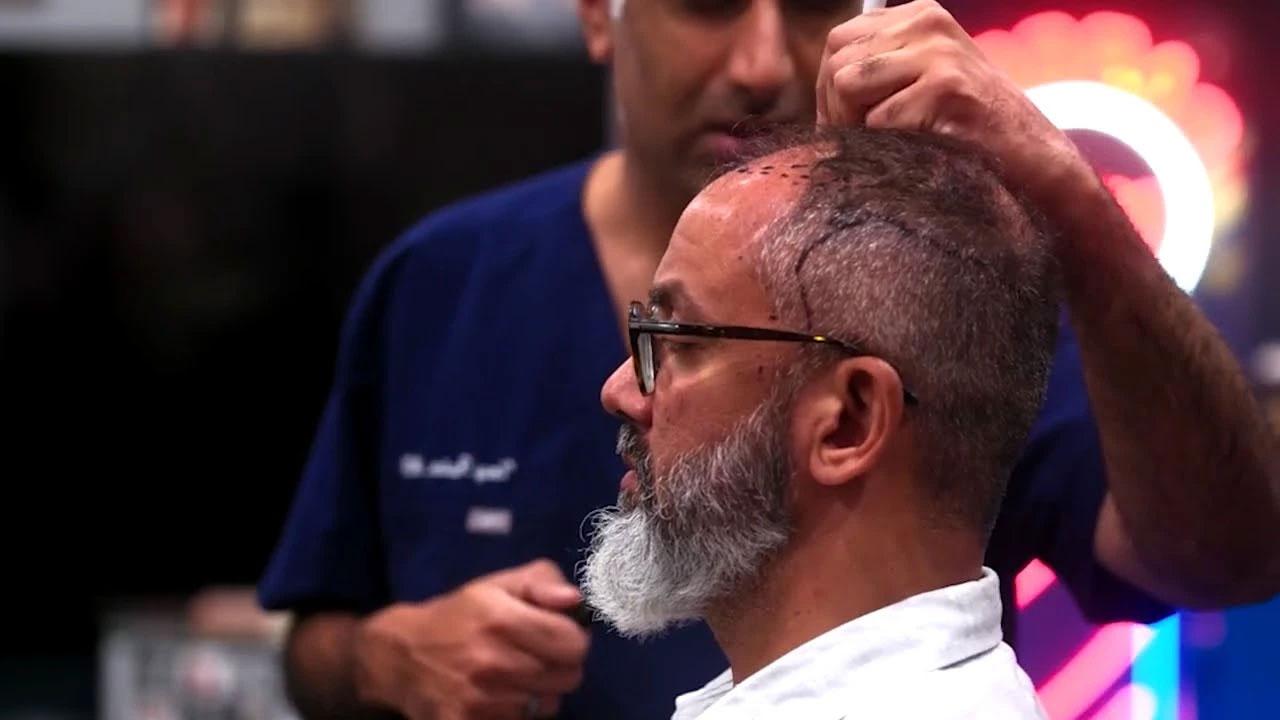
For women who are appropriate surgical candidates, the procedure itself is essentially the same as for men, with some specific design and planning considerations that account for the different goals and loss patterns.
The Technique: No-Touch Micro PUE®
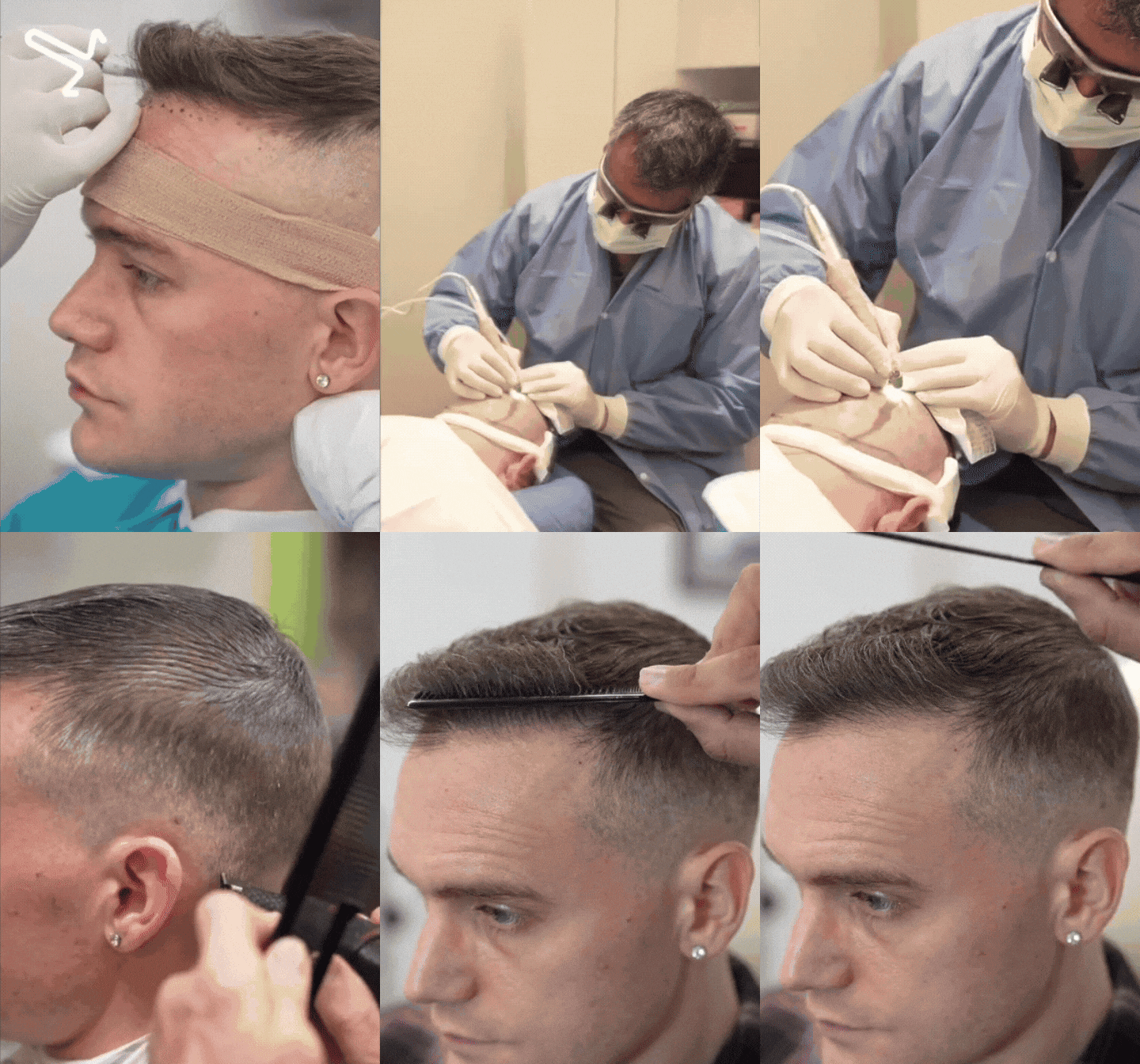
At Northwestern Hair, the surgical technique for women is the same as for men: No-Touch Micro PUE®. The extraction mechanism — vibration and suction rather than mechanical forceps and sharp punches — protects graft architecture regardless of the patient’s sex. The grafts extracted are intact, viable, and positioned to grow.
For women, the extraction planning is particularly important because donor supply management is more critical. The evaluation of donor density, the distribution of the harvest across the available zone, and the determination of the total safe graft yield all require more conservative planning for female candidates than for male ones, because the margin for over-harvesting, in a patient whose donor area may be more vulnerable to androgenic effects, is smaller.
Hairline Design for Women
Female hairline aesthetics are different from male hairline aesthetics in ways that require specific surgical judgment. Women’s hairlines are typically lower, rounder, and more continuous than men’s — without the temporal recession and Norwood-appropriate positioning that guides male hairline design. The design of a female hairline must account for the natural irregularity and character of women’s hairlines while creating something that ages naturally and fits the individual patient’s face rather than conforming to a template.
For women seeking hairline refinement — lowering a high natural hairline, softening a squared or widow’s peak hairline — the design work is the central element of the surgical plan, with the technical execution serving an artistic goal that is highly specific to the patient.
Recovery
Recovery from a female hair transplant follows the same timeline as the male procedure. The first two to four days involve the most active healing — mild discomfort resolving quickly, small scabs forming in the recipient area, and the donor area beginning its own healing. By day ten, scabs have shed, and the scalp looks normal. By month twelve, the full result is visible.
For women who wear their hair longer, the recovery is in many ways more discreet than it is for men — longer hair provides natural coverage of the recipient area during the healing phase and makes the transition period easier to manage in daily life.
What to Ask in a Consultation
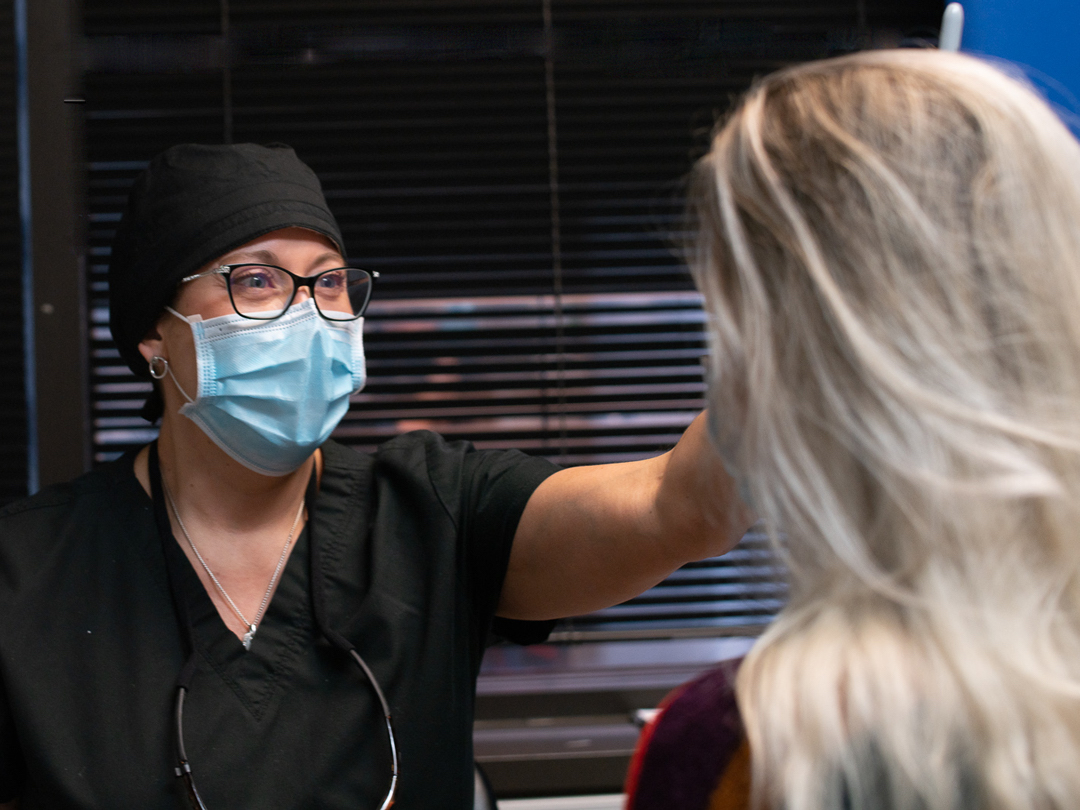
For women considering hair transplant surgery in Chicago, the consultation is where the candidacy question gets genuinely answered — not with a default yes or no, but with a clinical assessment of the specific situation.
The questions worth asking — and worth expecting direct answers to — include:
Is my donor area genuinely stable? Not an assumption based on visual inspection, but an evaluation using trichoscopy and clinical history. A surgeon who confirms donor stability based on a quick look at the back of your head is giving you less certainty than you need for a permanent decision.
What is the full extent of my permanent loss versus my miniaturized but potentially treatable loss? This is the question that determines whether surgery, non-surgical treatment, or a combination is the right path. The answer requires trichoscopic evaluation and potentially a trial of non-surgical treatment to distinguish permanent loss from treatable miniaturization.
What would the result look like if my loss pattern continues progressing? Female pattern hair loss often continues progressing after surgery in areas not surgically treated. The surgical plan needs to account for that trajectory — preserving donor supply and designing the result to look right, not just at twelve months but across the years that follow.
What does the non-surgical option offer me, and why is surgery the better choice for my situation? If a surgeon recommends surgery without clearly articulating why non-surgical treatment isn’t the better option for your specific presentation, that’s a question worth asking directly. The answer reveals whether the recommendation is clinical or commercial.
What does the combined approach look like? For many women, the best outcome involves both surgery for the permanent loss, ACS, and non-surgical treatment for the miniaturized follicles that remain. Understanding how these work together, in what sequence, and what each contributes to the overall result is part of the complete picture.
The Northwestern Hair Approach to Female Surgical Candidates
At Northwestern Hair, the Women’s Hair Restoration Program is built around the clinical reality that most women with hair loss are best served by non-surgical treatment — ACS, targeted medications, and the at-home maintenance protocol — rather than surgery. This isn’t a limitation of the surgical program. It’s an honest assessment of what the biology of female hair loss supports.
For women who are genuine surgical candidates — who have defined areas of permanent loss with a stable donor area, who have completed or aren’t candidates for non-surgical treatment, or whose specific presentation clearly calls for surgery — the surgical program offers No-Touch Micro PUE® performed by Dr. Vinay personally, with the same one-patient-per-day commitment and direct post-procedure follow-up that characterizes every surgical case at Northwestern Hair.
The combination of a robust non-surgical program and a genuine surgical option — with the clinical judgment to direct women to the right one rather than defaulting to either — is what distinguishes a comprehensive women’s hair restoration program from one that simply adapts the men’s protocol.
For women who receive ACS and don’t achieve the results they’re aiming for, Dr. Vinay’s physician fee is reinvested into the next step — whether that’s exosome therapy, a surgical procedure, or another advanced treatment. The commitment is to the outcome, not to any particular intervention.
What Chicago Women Should Actually Know
To return to the original question — and to give it the complete answer it deserves:
Yes, women can get hair transplants. The procedure works. The technique is sound. The results for appropriate candidates can be excellent and lasting. Dr. Vinay has performed successful hair transplants on women, and those patients are among the strongest advocates for what the procedure can accomplish in the right situation.
What Chicago women should also know is that the surgical question isn’t the most important question most of them need to answer. The more important question is whether surgery is the right tool for their specific presentation — whether their loss pattern supports it, whether their donor area is stable enough to use it, whether the non-surgical option has been fully explored, and whether the result that surgery can produce serves their goals better than what ACS and targeted treatment can achieve.
For some women, the answer to that question is clearly yes to surgery. For more women than the industry’s historically male-centric approach acknowledges, the answer is that the non-surgical program is both more appropriate and more effective for the type of loss they’re presenting with.
The consultation is where that determination gets made — properly, specifically, and in the interest of the patient’s outcome rather than any particular treatment preference.
Wondering whether a hair transplant is the right option for your situation? Book a consultation with Dr. Vinay at Northwestern Hair. The answer starts with an honest look at your specific clinical picture — not a default recommendation in either direction.