
The Northwestern Hair Women’s Program: A Different Approach to Female Hair Restoration in Chicago
For most of its history, the hair restoration industry built its programs for men and adjusted them for women.
The diagnostic framework came from male pattern baldness research. The treatment protocols were calibrated to androgenic alopecia as it presents in men. The surgical techniques were designed around the defined bald zones of the Norwood pattern. And women who sought help were assessed through that lens — evaluated for how closely their situation resembled the male template, and treated to the degree that the male-pattern tools could be made to fit their different reality.
The gap between what that approach could offer and what women with hair loss actually needed wasn’t subtle. Female hair loss has different causes, a different pattern, different hormonal drivers, and different psychological dimensions than male hair loss. Applying a retrofitted male-pattern framework to it produced exactly the results you’d expect: incomplete diagnoses, treatments that plateaued before achieving meaningful results, and women who spent years in clinical settings being told their hair looked fine when they knew it didn’t.
Northwestern Hair’s Women’s Hair Restoration Program was developed to fill a critical gap in Chicago, where effective options for women’s hair loss were few and far between. Not adapted from the men’s program. Not a modified version of surgical protocols designed for a different patient. A program built from the ground up around the clinical reality of how women lose hair and what effective treatment of that reality actually requires.
This is what that program looks like — and why women across Chicago and the broader Midwest are finding here what they weren’t finding anywhere else. Contact Northwestern Hair Restoration today for more information.
Why a Dedicated Women’s Program Exists
 The case for a dedicated women’s program begins with the clinical differences that make a shared approach with the men’s program inadequate.
Women’s hair loss is diffuse rather than patterned. It is driven by hormonal transitions — postpartum changes, perimenopause, and menopause — as much as by genetic androgenic susceptibility. It is influenced by thyroid function, iron levels, nutritional status, and chronic stress in ways that male pattern baldness typically is not. It presents with a widening part and thinning crown rather than a receding hairline and bald vertex. And it is frequently complicated by the fact that the donor area — the zone that surgical programs depend on for stable DHT-resistant grafts — may itself be affected by the diffuse loss pattern.
Each of these differences requires a clinical response that male-pattern programs aren’t equipped to provide reliably. A program designed around surgical hairline restoration addresses a different problem than diffuse follicular miniaturization across the crown. A diagnostic process calibrated to Norwood staging misses the hormonal and nutritional contributors that drive many women’s loss. A treatment protocol built on DHT suppression optimized for male endocrinology doesn’t map cleanly onto the hormonal complexity of a postpartum or perimenopausal patient.
At Northwestern Hair, the approach to women’s hair restoration is refined and modern. Whether a patient is noticing early thinning or has experienced ongoing shedding for years, the focus remains the same: to preserve, regrow, and maintain natural hair through advanced, non-surgical treatments customized to individual needs.
The distinction worth emphasizing is customized. Not standardized. Not protocol-driven in the sense of a fixed sequence applied uniformly. Customized to the individual patient’s specific causes, pattern, hormonal status, and goals, which is what women’s hair loss actually requires.
The Physicians Behind the Program
At Northwestern Hair, your care is in the hands of two dedicated physicians who are passionate about helping women regain their confidence through hair restoration. Dr. Vinay Rawlani and Dr. Kiracofe combine complementary expertise in hair restoration surgery and dermatology, combining science, artistry, and empathy to create personalized treatment plans that deliver transformative results.
The collaboration between surgical and dermatological expertise is not incidental to the program’s design. It reflects the clinical reality that women’s hair loss sits at the intersection of dermatology and hair restoration in a way that male pattern baldness, with its primarily surgical solution set, does not.
The dermatological dimension — the evaluation of scalp health, inflammatory conditions, systemic contributors, and the full range of causes that present as hair loss in women — is as important as the restorative dimension. A program that can only offer treatment without a comprehensive diagnosis is not a program designed around its patients’ actual needs.
Dr. Vinay personally oversees every step of the treatment journey, adapting the plan to match each patient’s progress and goals. His hands-on approach ensures every patient receives the best care — and results — possible. His philosophy is simple: every woman deserves exceptional outcomes. That’s why he takes the time to understand each patient’s needs, monitor their progress, and tailor each session for maximum growth.
For women who have experienced clinical settings where their hair loss was minimized, their concerns were dismissed, or their treatment was managed rather than genuinely addressed, this level of physician engagement is itself part of what makes the program different. The plan that gets built in the first session isn’t filed and forgotten. It evolves as the patient does — adjusted based on actual response, actual laboratory findings, and actual progress rather than adherence to a fixed protocol.
What the Program Treats
Hair loss isn’t the same for everyone. Northwestern Hair specializes in treating a wide range of hair loss causes, including hormonal hair loss from postpartum changes to menopause, stress-related shedding where chronic stress impacts hair health, nutritional and metabolic hair loss where deficiencies are identified and metabolism optimized to support healthy regrowth, and post-chemotherapy hair loss with specialized care designed to support regrowth after chemotherapy.
This breadth reflects the clinical reality of women’s hair loss — that it rarely has one cause, frequently has several operating simultaneously, and requires evaluation of the full picture rather than identification of the most obvious contributor and treatment of that alone.
The most common presentations the program addresses include:
Postpartum hair loss. The dramatic shedding that occurs two to four months after delivery is one of the most distressing experiences many women describe — and one of the most commonly dismissed as temporary and self-resolving. While it often does partially resolve, the women for whom postpartum shedding initiates a more persistent loss pattern — those with underlying androgenic susceptibility, nutritional depletion from pregnancy, or thyroid disruption — need clinical support that goes beyond waiting it out. The Women’s Program addresses both the acute shedding phase and the persistent thinning that may follow it.
Menopausal and perimenopausal hair loss. As estrogen’s protective effect on hair follicles decreases through the hormonal transition of perimenopause and menopause, women who had manageable or invisible androgenic susceptibility may find that the loss pattern accelerates dramatically. The program addresses this through the combination of ACS treatment and targeted medications designed around women’s hormonal biology — not the DHT suppression protocols calibrated for men, but interventions appropriate for the female hormonal environment.
Female pattern hair loss. The Ludwig pattern — diffuse thinning across the crown and central scalp with a preserved frontal hairline — is the most common long-term presentation. Whether it’s the widening part that has been gradually expanding for years, the thinning crown that becomes visible in photographs, or the ponytail that has noticeably decreased in circumference, female pattern hair loss is the primary indication for the program’s core treatment protocol.
Stress-related and telogen effluvium. Significant life stressors — illness, grief, sustained overload — can trigger diffuse shedding that, in women with underlying androgenic susceptibility, doesn’t fully recover on its own. The program addresses both the acute shedding component and the underlying vulnerability that prevents complete recovery.
Nutritional and metabolic hair loss. Iron deficiency, thyroid dysfunction, vitamin D insufficiency, and other nutritional factors that contribute to women’s hair loss are identified through laboratory evaluation and addressed as part of the treatment plan — not left as unmanaged contributors undermining the effectiveness of everything else.
The Two-Part Treatment Philosophy
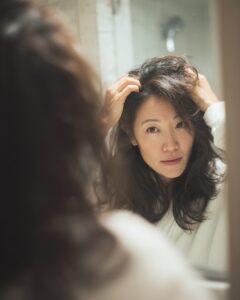 The Women’s Hair Restoration Program is built on two principles: maximize growth by re-establishing blood flow and nutrient delivery to stimulate follicles to their maximal thickness, and maintain hair by protecting and sustaining progress with a customized at-home treatment plan tailored to fit each patient’s lifestyle.
These two principles — maximize and maintain — reflect a clinical understanding that the work of hair restoration has two distinct phases that require different tools and different timescales.
Maximize: ACS In-Office Treatment
At the heart of the program is Autologous Cellular Serum (ACS), a groundbreaking treatment that uses the principles of advanced wound care. ACS targets dormant follicles and supercharges hair follicle metabolism, encouraging new growth.
The mechanism of ACS is specific to the biological problem posed by women’s diffuse hair loss: miniaturized follicles that remain but operate at reduced function, producing hair that is progressively finer, shorter, and less visually significant with each cycle. These follicles haven’t been permanently lost — they’ve been pushed toward compromised function by the combination of androgenic activity, hormonal shifts, vascular reduction, and metabolic slowdown that drives female hair loss.
ACS stimulates follicles to produce thicker, healthier hair and boosts blood flow by promoting new blood vessel growth — ensuring hair receives the nutrients it needs.
The autologous nature of the treatment — using the patient’s own cellular biology rather than external compounds — means the growth signals introduced are native to the patient’s own physiological environment. There’s no foreign substance, no allergic concern, and no mismatch between the treatment medium and the biological context it’s being applied to. The patient’s own growth factors and cellular signals, concentrated and reintroduced at therapeutic levels, speak the language the follicles already understand.
For women with diffuse thinning, the spatial scope of ACS treatment is one of its most significant advantages. Surgery addresses defined zones. ACS addresses the full thinning area — the widening part, the thinning crown, the reduced density distributed across the top of the scalp — in a single treatment session. The follicles across that entire zone are being supported simultaneously rather than selectively.
Maintain: The Personalized At-Home Protocol
Just as ACS reactivates and revitalizes follicles, at-home therapies ensure progress is protected long after in-office treatments. With a customized regimen designed to fit seamlessly into each patient’s routine, the program helps maintain, strengthen, and enhance results.
The personalized plan may include medication to keep blood vessels open to nourish follicles long after treatment, microneedling to create micro-stimuli that enhance cell absorption and boost regeneration, laser caps to increase blood flow and metabolism to maintain long-term results, and targeted medications designed to address the underlying causes of hair loss unique to women.
The at-home protocol is not a one-size-fits-all package. It’s designed around the specific patient’s contributing factors, lifestyle, and response to in-office treatment. A patient whose laboratory workup identified significant iron deficiency and thyroid irregularity has different at-home priorities than a patient whose hormonal status is stable and whose primary driver is androgenic susceptibility. A patient who travels frequently needs a protocol that travels with her. A patient whose daily schedule is compressed needs one that integrates without friction.
This customization is what the word means in a clinical context: not a personalized label on a standard package, but a genuinely different plan for each patient based on what her specific situation requires.
How the Program Unfolds: Rani’s Journey
The most concrete illustration of what the program looks like in practice is the patient whose journey Northwestern Hair has documented in detail.
At 60, Rani came to Northwestern Hair feeling like she was out of options. Years of gradual, visible hair loss had left her frustrated and doubtful that anything could make a difference. But after just six months of following her personalized treatment plan with Dr. Vinay, Rani achieved results she never thought possible.
Rani’s journey began with a thorough evaluation to uncover the root causes of her hair loss. Trichoscopic analysis, lab tests, and a biopsy provided the insights needed to craft a personalized plan. Alongside this diagnostic process, she received her first ACS treatment.
With her diagnosis in hand, the program focused on addressing hormonal imbalances, low thyroid levels, and iron deficiencies — key contributors to her hair loss. Her second session included another ACS treatment, amplifying the progress from her first.
As Rani’s hair continued to improve, the regimen was fine-tuned to maintain momentum. By transitioning from topical to oral treatments and introducing microneedling and laser caps, her hair received an additional boost.
By her final session, Rani’s transformation was undeniable. Her last ACS treatment solidified her results, and a personalized styling session helped her embrace her incredible journey. Energized by her success, Rani chose to continue her treatments, excited to see just how much further her hair could thrive.
What Rani’s journey illustrates isn’t just the clinical sequence of the program. It’s the relationship between patient and physician that the program is built around — the adjustment of the plan at each session based on actual progress, the identification and treatment of systemic contributors that other clinical settings had missed, and the sustained commitment to the outcome across months rather than a single treatment episode.
The Diagnostic Foundation That Separates This Program
The element of the program that most directly explains why it produces results that other approaches haven’t is the depth of the diagnostic process — and it deserves specific attention because it’s the part that’s most invisible to patients evaluating their options from the outside.
Most hair loss consultations in Chicago — whether in dermatology practices or hair restoration clinics — produce a visual assessment and a treatment recommendation. The visual assessment identifies what’s visible: the pattern of loss, the degree of thinning, and the apparent condition of the scalp. The treatment recommendation follows from that assessment, often defaulting to topical treatments, PRP, or surgical evaluation depending on the setting.
What gets missed in this process is everything that isn’t visible from scalp inspection: the thyroid dysfunction contributing to metabolic slowdown in the follicles, the iron deficiency limiting the cellular energy available for anagen growth, the hormonal imbalances driving the androgenic activity that the visible thinning represents, the inflammatory process that may be a scarring alopecia rather than androgenic loss.
The Women’s Program starts with all of this. The trichoscopic analysis goes beyond visual assessment to direct follicular examination — distinguishing between miniaturized follicles that are treatable and permanently lost follicles that require a different approach. The laboratory evaluation establishes the systemic picture: thyroid function, iron and ferritin, hormonal status, and vitamin levels. The clinical history documents the timeline, the triggers, the treatments attempted, and the responses.
The plan that comes out of this process is based on actual information rather than assumptions. And treatments applied with accurate diagnostic information produce better outcomes than treatments applied to an incompletely understood problem — consistently, and by a margin that patients who have been through both experiences can describe specifically.
The Investment and the Guarantee
The initial consultation is $100. Treatment plans start at $6,000.
For women who have spent years purchasing products, supplements, and single treatments without meaningful results, the program represents a fundamentally different kind of investment — not in a product, but in a clinical relationship with a defined protocol, measurable progress, and a physician who adjusts the plan based on actual response.
Dr. Vinay shares in each patient’s commitment. If ACS doesn’t bring the results they’re aiming for, the physician’s fee will be reinvested into the next step — whether that’s exosomes, a transplant, or another advanced therapy — ensuring patients are never moving forward alone.
This guarantee reflects something specific about how the program is designed: the commitment is to the outcome, not to any particular treatment modality. If the primary intervention doesn’t produce the results the patient and physician are aiming for, the clinical path continues rather than concluding. The patient isn’t handed a different product and sent home. She stays in the program, and the physician’s own financial stake in the initial outcome becomes the investment in the next step.
For women who have experienced the frustration of treatments that produced initial improvement and then plateaued, or that simply didn’t work at all without any follow-through from the provider, this commitment is one of the most meaningful differentiators of the program.
What Women Find Here That They Weren’t Finding Elsewhere
The patient reviews that document Northwestern Hair’s Women’s Program consistently return to the same themes — not because they’re curated to a marketing narrative, but because the experiences they describe are the natural outputs of a program that was genuinely built differently.
Women describe being heard in a clinical setting for the first time in their hair loss journey. Physicians who took the problem seriously rather than minimizing it. Plans that were actually specific to their situation. Progress that was monitored and responded to rather than left to unfold without clinical guidance.
One patient described spending ten years looking for help before finding Northwestern Hair. Another came accompanying her husband for his appointment and asked, almost as an afterthought, whether anything could be done for her hair too, and found that the answer was yes, and substantively so. A hairdresser of thirty years described Dr. Vinay as the only hair restoration physician she refers her clients to, specifically for the ACS treatments in the Women’s Program.
These testimonials don’t describe a product. They describe a relationship between a physician who treats the whole patient and patients who have found, often after years of searching, the clinical environment where their hair loss is taken as seriously as they’ve always felt it deserved to be.
Who the Program Is Right For
The Women’s Program at Northwestern Hair is designed for women at any stage of hair loss — early thinning that is just becoming visible, moderate loss that has been progressing for years without adequate treatment, or significant established loss that hasn’t responded to previous clinical approaches.
It is particularly well-suited for:
Women experiencing postpartum hair loss who want to address both the acute shedding phase and any persistent thinning pattern before it becomes more established.
Women in perimenopause or menopause notice a widening part, thinning crown, or general reduction in density that wasn’t present before the hormonal transition.
Women with longstanding female pattern hair loss who have tried products and single treatments without achieving results that felt clinically meaningful.
Women who have been told by other providers that they’re not surgical candidates — without being offered a clear, substantive non-surgical alternative.
Women who want a physician-led program rather than a product-based approach — a clinical relationship that adjusts to their response and stays with them across the arc of treatment rather than concluding after a single session.
And women who are simply ready to have the conversation that they’ve been waiting to have in a clinical setting that takes it seriously.
The Conversation That Changes Things
The experience that women describe most consistently from their first consultation at Northwestern Hair isn’t the treatment itself. It’s the conversation that precedes it — the one where the problem they’ve been living with is evaluated with the clinical depth it deserves, where the contributing factors they suspected but couldn’t get anyone to investigate are actually investigated, and where the plan that emerges is specific to them rather than to a general category they’ve been assigned to.
That conversation starts with a $100 consultation. What follows from it depends on what it reveals — but the direction is toward a program designed around the patient’s actual situation, delivered by physicians who are genuinely committed to the outcome, and structured to stay with the patient until that outcome is achieved.
Chicago women dealing with hair loss have had limited access to that kind of clinical engagement. The Women’s Program at Northwestern Hair is what it looks like when the gap is filled — not with a modified version of something built for someone else, but with a program built specifically for them.
Ready to have the consultation you’ve been waiting for? Book with Dr. Vinay at Northwestern Hair — and experience what a program built specifically for women’s hair loss actually looks like.