



Best Time of Year to Get a Hair Transplant in Chicago
Most people spend months researching surgeons, techniques, and costs before scheduling a hair transplant. Fewer spend much time thinking about when to book — and it turns out that decision matters more than most patients expect.
The recovery from a hair transplant isn’t particularly brutal. With a precise technique like No-Touch Micro PUE®, most patients are back to normal daily activity within days and presentable within two weeks. But there are real environmental and lifestyle variables that can either support your healing process or quietly work against it — and in Chicago specifically, the season you choose has a direct bearing on both.
Here’s what to consider.
First: Understanding What Recovery Actually Looks Like
Before talking about timing, it helps to have a realistic picture of what recovery involves — because a lot of the seasonal planning flows directly from it.
With No-Touch Micro PUE®, the recovery profile is relatively manageable compared to what older techniques required. There’s no linear scar, no staples, no extended downtime.
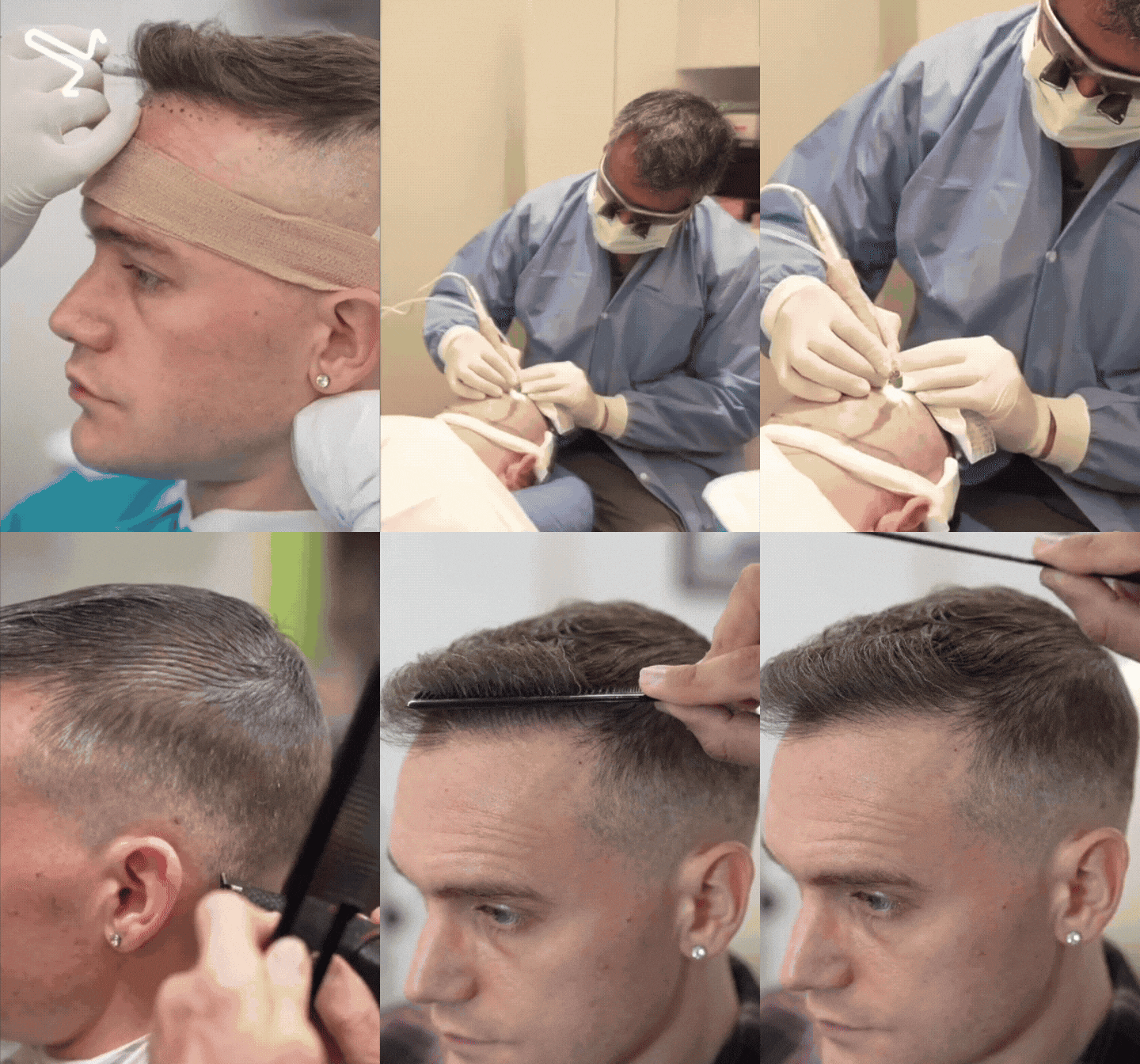
In the first 24 hours, most patients experience mild discomfort that resolves quickly — for the majority, medication isn’t needed past the following morning. By day two, bandages come off, you’re washing your hair gently, and small scabs begin forming in the recipient area. Those scabs typically shed naturally over the next week to ten days.
By day five, a baseball cap is back in play. By day ten, you’re washing normally, styling, and looking presentable to the outside world. A small percentage of patients getting hairline restoration experience some facial swelling in the first week — but it resolves on its own, and most patients never deal with it at all.
The longer arc — the one that actually matters aesthetically — plays out over months. Transplanted hairs shed in the first few weeks, which is expected. New growth begins emerging around months three to four. By months six through nine, density is visibly improving. The final result, fully matured, arrives somewhere around the twelve-month mark.
With that timeline in mind, here’s how Chicago’s seasons stack up.
Fall (September – November): The Best Window
 If you’re going to pick one season to schedule a hair transplant in Chicago, fall is it — and it’s not particularly close.
The weather works for you. Chicago in September and October is mild, mostly dry, and consistently comfortable. You’re not fighting summer humidity that can make a healing scalp feel irritated, and you’re not bundling into hats and hoods that could press against sensitive grafts. The environment is simply neutral, which, during recovery, is ideal.
Sun exposure is naturally reduced. The sun is lower in the sky, days are shorter, and the instinct to spend long stretches outdoors diminishes on its own. This matters because direct UV exposure on a healing scalp — particularly in the first few months — can disrupt the grafts and cause pigmentation changes in the recipient area. Fall takes that variable largely off the table without requiring a significant lifestyle adjustment.
Your twelve-month results land in the fall of next year. For many patients, this is the most compelling piece of the math. Schedule in September or October, and your full growth — the final, mature, completely natural-looking result — will be visible by the following September or October. You’re entering the following summer with your hair fully grown in.
Social calendar timing is favorable. Fewer outdoor events, less beach time, less reason for anyone to notice a fresh haircut or ask questions about the healing process. Fall in Chicago is naturally lower-key, which makes discretion during the first two weeks considerably easier.
Winter (December – February): A Strong Second Option
Winter gets overlooked as a hair transplant window, mostly because people assume the cold causes problems. It generally doesn’t — and in some ways, it’s genuinely advantageous.
Sun exposure is minimal. Chicago winters are overcast, the sun is weak, and outdoor time is limited by choice. From a UV-protection standpoint, winter is arguably the most protective season for a healing scalp. If avoiding direct sun during recovery is one of the main concerns, winter solves it automatically.
Hats are normal. The social awkwardness of wearing a hat during your first two weeks of healing disappears entirely in a Chicago winter. Nobody looks twice at someone wearing a beanie in February. That layer of discretion is a real practical advantage.
Recovery happens while life slows down. For many people, the stretch between mid-December and early January involves fewer professional obligations and more time at home. That natural slowdown aligns well with the early healing phase, when rest and reduced stress genuinely support the process.
The watch-out: Holiday season scheduling. If you’re booking in December, be thoughtful about the timing relative to holiday events. The first ten days involve visible scabbing in the recipient area — manageable and not dramatic, but something to plan around if you have significant gatherings on the calendar. Book in early December or wait until January to sidestep the issue entirely.
Spring (March – May): Viable, With One Caveat
Spring in Chicago is a reasonable time to schedule, but it comes with a trade-off worth understanding.
The healing environment is fine. March and April weather is similar to fall — mild, manageable, not particularly harsh on a healing scalp. Recovery proceeds normally, and the lower-sun months of early spring provide decent natural protection.
The math on results timing requires some thought. Schedule in April, and your twelve-month results arrive the following April — which means you’re entering the following summer with your hair still in the active growth phase rather than fully matured. You’ll look good by that point, but not at full density. For patients who are motivated in part by wanting their best hair for warm-weather months, spring scheduling means waiting an extra cycle.
The stronger case for spring is for patients who want a procedure before summer but don’t want to navigate cold-weather logistics. March and April hit that window without the sun and humidity complications that come with later months.
Summer (June – August): Proceed With Awareness
Summer isn’t a disqualifying time to get a hair transplant — plenty of people do it successfully — but it comes with the most environmental variables to manage.
Sun exposure requires active management. Chicago summers are sunny, and people spend time outdoors. In the first month after a procedure, direct UV exposure on the recipient area should be minimized. That means wearing a hat, being thoughtful about time in the open sun, and skipping the beach days for a few weeks. For some patients, this is a minor adjustment; for others who have a full summer calendar, it’s a meaningful imposition.
Humidity and heat can irritate a healing scalp. The first week to ten days post-procedure involves scabbing and sensitivity in the recipient area. Hot, humid conditions can increase discomfort and, in some cases, contribute to excess sweating around the scalp that requires extra care to manage hygienically.
Timing around summer plans matters. If you have a vacation, a beach trip, or a significant outdoor event in the first four weeks after your procedure, summer scheduling requires careful coordination. The procedure itself is fine in any season — it’s the lifestyle context around recovery that creates the friction.
The case for summer: Some patients simply have more flexibility in summer — fewer work obligations, more time to rest and recover at their own pace. If your lifestyle in June and July is actually quieter than the rest of the year, summer can work perfectly well with appropriate planning.
What Actually Matters More Than Season
 Honest answer: for most patients, the best time to get a hair transplant is when you’re ready — when you’ve completed your research, had your consultation, and feel genuinely confident in your surgeon and your decision.
The seasonal variables above are real, but none of them are disqualifying in any direction. No-Touch Micro PUE® is precise enough that recovery is manageable in any month, and Dr. Vinay’s approach — one procedure per day, full surgeon involvement from consultation through aftercare — means you have a committed team guiding you through whatever season you choose.
What matters more than timing:
Starting the conversation before you’re urgent about it. Patients who rush into procedures because their hair loss has reached a point of frustration often make worse decisions than patients who give themselves time to research properly. The consultation should feel like a conversation, not a sales call.
Planning for the full twelve-month arc. The procedure is one day. The result develops over a year. Think about where you want to be twelve months from now, and work backward from there.
Not delaying indefinitely, waiting for the “perfect” window. Donor supply is finite, and progressive hair loss continues while you wait. If you’ve done the research, met the surgeon, and feel ready, the calendar is less important than you might think.
The Chicago-Specific Summary
| Season | Sun Exposure | Hat Discretion | Social Timing | Results Arrive |
| Fall | Low & decreasing | Easy | Favorable | Following fall |
| Winter | Minimal | Natural | Quiet period | Following winter |
| Spring | Moderate | Easy | Moderate | Following spring |
| Summer | High | Normal | Active season | Following summer |
Fall edges out as the optimal window for most Chicago patients — the environment, the discretion, and the results-timing math all align. Winter is a close second with its own practical advantages. Spring and summer are entirely workable with the right planning.
Ready to Find Your Window?
The best starting point isn’t a calendar — it’s a consultation. Dr. Vinay will evaluate your specific hair loss pattern, discuss your goals, and help you understand exactly what your procedure would involve before any scheduling happens.
Book a consultation with Northwestern Hair and take the first step — whenever you’re ready.