
Micro PUE Recovery: What to Expect Day by Day After Your Procedure
One of the most common questions patients ask before committing to a hair transplant isn’t about the procedure itself — it’s about what comes after. How long until I look normal? When can I go back to work? What’s actually going to happen to my scalp?
If you’re considering Micro PUE at Northwestern Hair in Chicago, here’s a complete, honest breakdown of the recovery process — day by day, week by week, and month by month — so you know exactly what to expect at every stage. Contact Northwestern Hair Restoration today for more information.
Why Micro PUE Recovery Is Different From Standard FUE
Before getting into the timeline, it’s worth understanding why Micro PUE patients tend to have a smoother recovery experience than those who’ve had standard FUE.
In standard FUE, tweezers can crush grafts and sharp punches can sever key structures — leaving hairs dry, kinked, or scarred. No-Touch Micro PUE® uses vibration and suction to gently extract each graft without damaging its natural architecture.
Less mechanical trauma to the scalp during extraction means less inflammation, less disruption to surrounding tissue, and a healing process that tends to move faster and with fewer complications. That’s not a marketing claim — it’s a direct consequence of how the procedure is performed.
The Micro PUE Recovery Timeline
Procedure Day
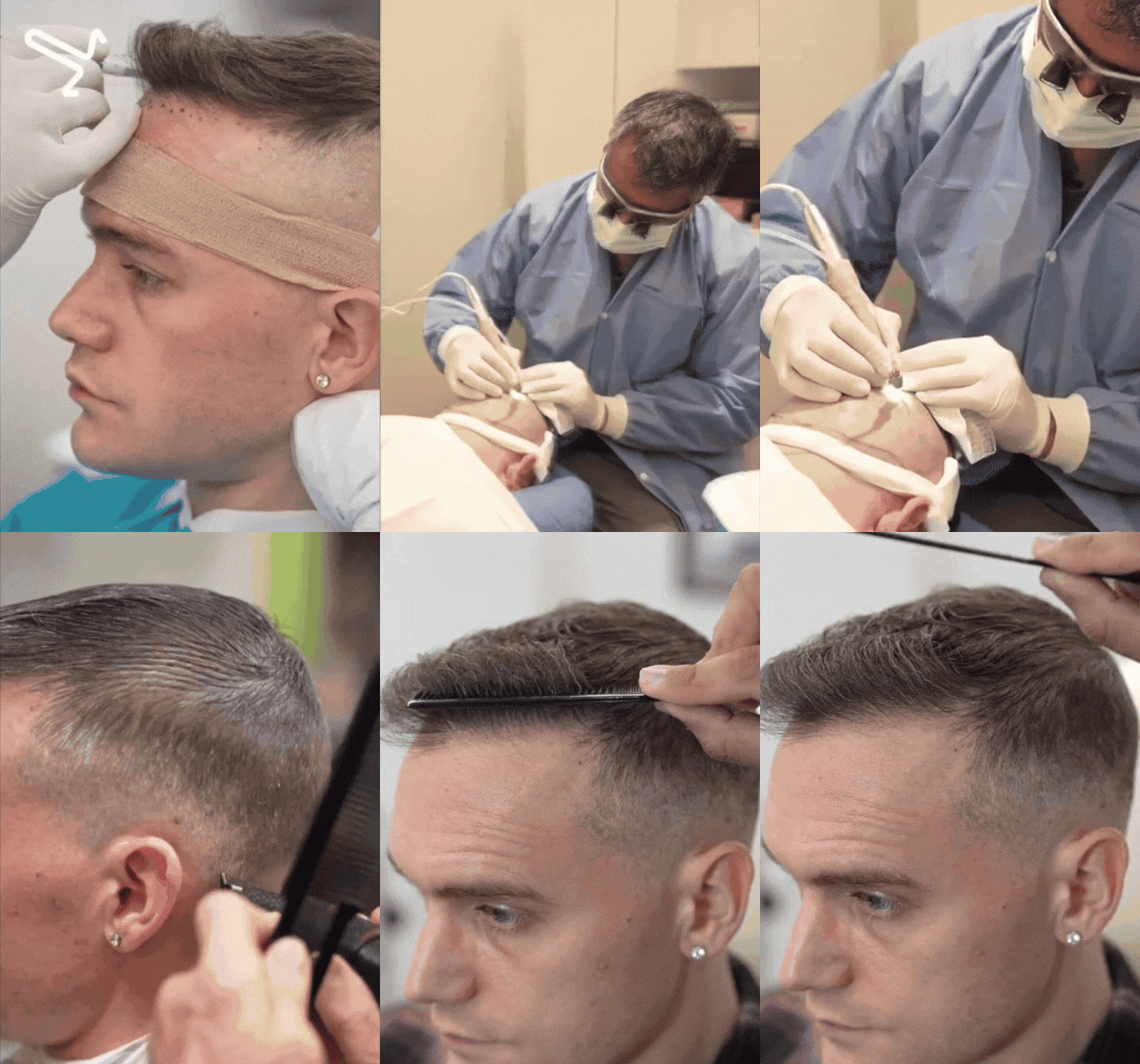
The procedure itself is performed under local anesthesia. Most patients describe it as surprisingly comfortable — more tedious than painful, with little to no sensation during extraction and placement.
Dr. Vinay is part of every step, from consultation to aftercare, and Northwestern Hair has committed to only one procedure per day, so all attention is on you. That single-patient-per-day commitment matters during a procedure that requires sustained precision — you’re not competing for your surgeon’s attention.
Plan for a full day at the clinic. Grafts are extracted from the donor area, processed, and placed into the recipient sites during a single session.
Day 1: The Morning After
For the vast majority of people, discomfort requiring medication resolves by noon the next day, and patients feel ready to resume light daily activity. Mild redness or sensitivity may occur in both the donor and recipient areas, but most patients are surprised by how manageable this is.
This is also when you’ll have the clearest sense of what the transplanted area looks like immediately post-procedure — small grafts visible, scalp pink, everything looking freshly worked. This is completely normal and temporary.
Day 2: First Wash, First Look
On Day 2, you remove bandages and shower, washing your hair gently. Tiny scabs start developing and will last about 10 days.
One thing worth knowing: approximately 20% of patients who get hairline restoration experience some facial swelling that can last up to 7 days. This is a normal inflammatory response as the body begins healing, and it resolves on its own. The vast majority of patients don’t experience this, but it’s worth knowing about, so it doesn’t catch you off guard if it does occur.
Days 3–4: Settling In
 The scalp continues to heal beneath the surface. Scabs are still present and shouldn’t be disturbed — don’t pick, scratch, or rub the recipient area. The donor area (where grafts were extracted) will feel tender but should look relatively normal with the custom concealed haircut Dr. Vinay uses to keep the procedure discreet.
Most patients are back to desk work and light daily routines within the first couple of days.
Day 5: First Green Lights
By Day 5, you can wear a baseball cap and resume light exercise. This is a meaningful milestone for patients who’ve been anxious about visibility — a cap covers the recipient area comfortably, and getting some movement back helps with the psychological side of recovery.
Day 10: The Real Reset
Day 10 brings your post-op visit. Scabs are washed out, and while your hairstyle may look different, you’ll look presentable. From this point, you can wash your hair normally, get a haircut, and use hair products. Normal exercise can fully resume.
For most patients, Day 10 is when recovery stops feeling like recovery. The visible signs of the procedure are largely gone, the scalp is healed at the surface, and daily life returns to normal.
Patient Lance M. captures this well: “A week later, I was playing drums in front of a crowd, and no one even noticed my healing head thanks to Dr. Vinay’s discreet haircut methods. One friend even mentioned my hair looked good that day, I couldn’t believe it.”
Weeks 2–4: The Shedding Phase (Don’t Panic)
This is the stage that catches most first-time hair transplant patients off guard: temporary shedding of transplanted hairs may occur during weeks 2–4. This is expected.
It’s called shock loss, and it happens because transplanted follicles enter a resting phase after being relocated. The hairs shed — but the follicle roots remain alive and intact beneath the scalp, preparing for the next growth cycle. This is not a sign that the procedure failed. It is a normal, universal part of the hair transplant healing process.
Months 1–3: The Patience Phase
During months 1–3, hairs enter their resting phase and shed, and things return to normal. The scalp is fully healed, the donor area has recovered, and on the surface, there’s little visible sign of either the procedure or the coming results.
This is the hardest stretch psychologically. Nothing dramatic is happening above the surface — but underneath, follicles are establishing blood supply and preparing to re-enter the active growth phase. Trust the process.
Months 3–4: First Signs of Growth
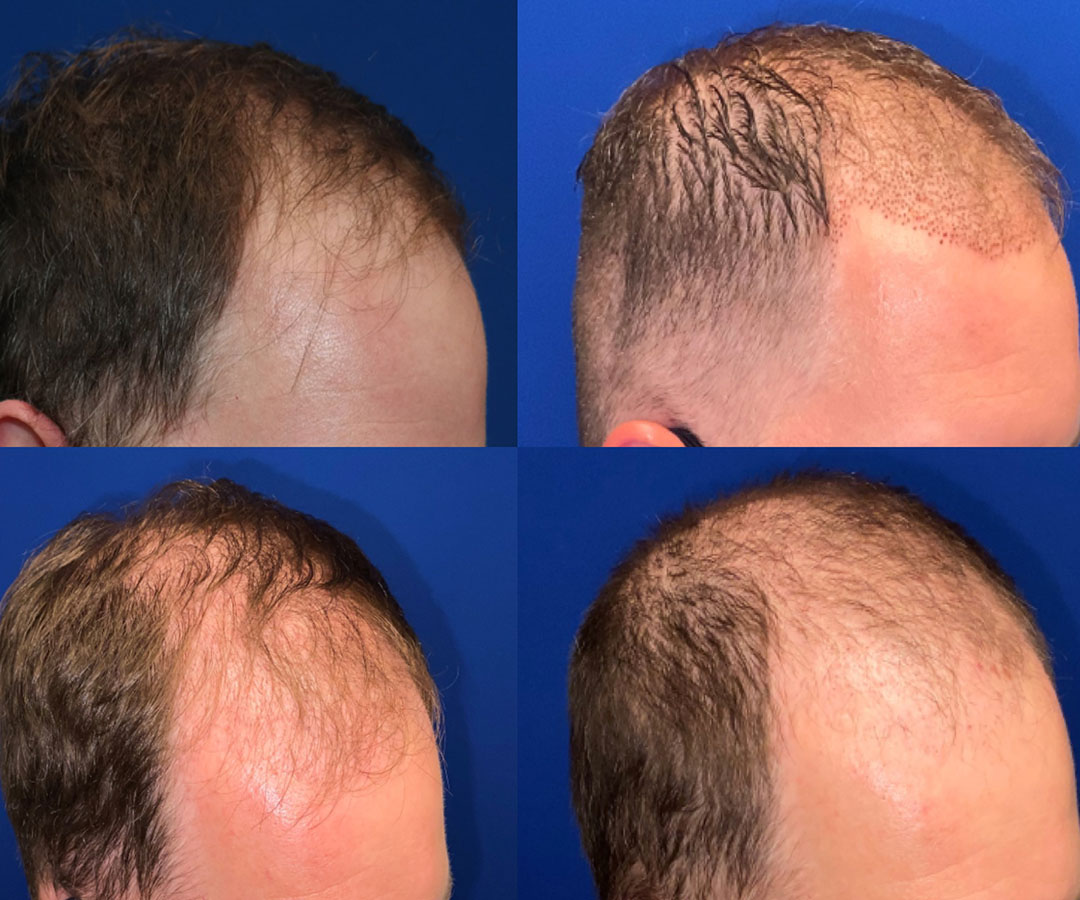
 New growth begins to emerge around months 3–4. For most patients, this is the moment the investment starts feeling real — fine new hairs appearing in the transplanted area, the first tangible evidence of what’s coming.
Growth at this stage is typically thin and delicate. The hairs will continue to thicken and mature significantly over the following months.
Months 6–9: Density Builds
From months 6–9, hair continues to thicken, and density improves as new growth continues to emerge. This is when most patients start seeing results that are actually shareable — the kind you’d post in a before/after or show friends who are considering the procedure themselves.
Hairline shape becomes clear, density fills in visibly, and the transplanted hairs begin to blend naturally with the surrounding native hair.
Months 9–12: Texture Matures
From months 9–12, density continues to increase, and hairs begin to produce oil and smooth out. This is a detail specific to Micro PUE’s graft quality advantage — because the oil glands and connecting tissue surrounding the follicle are better preserved during extraction, transplanted hairs can resume normal function more fully. They look and behave more like native hair.
Month 12 and Beyond: Final Results
At the 12-month mark and beyond, final maturation occurs, and the full result becomes apparent.
The hair you see at 12 months is substantially your final result — though some patients continue to see incremental improvement through 18 months. At this stage, a follow-up with Dr. Vinay helps assess density, evaluate whether additional coverage is warranted, and establish a long-term maintenance plan.
Recovery at a Glance
| Milestone | Timeline |
| Discomfort resolves | Day 1 (by noon) |
| Bandages off, first wash | Day 2 |
| Light exercise, baseball cap OK | Day 5 |
| Scabs cleared, normal hair washing | Day 10 |
| Temporary shedding | Weeks 2–4 |
| Back to normal appearance | Months 1–3 |
| First new growth visible | Months 3–4 |
| Visible density improvement | Months 6–9 |
| Hair smoothing, oil production resumes | Months 9–12 |
| Full results apparent | Month 12+ |
What Makes Northwestern Hair’s Recovery Experience Different
Beyond the procedure itself, Northwestern Hair’s post-procedure support structure is part of what patients consistently highlight. The level of interaction, instructions, follow-up videos, and care is described as exceptional and very personal — a structured system of check-ins, instructional communications timed to each recovery milestone, and direct access to Dr. Vinay throughout.
Dr. Vinay personally guides patients through the entire process — from the initial consultation through recovery — answering every message and checking in frequently. For patients managing the psychological side of the waiting game, that consistent contact matters.
Ready to Start the Process?
If you’re in Chicago and evaluating Micro PUE as your hair restoration option, recovery is one of the strongest arguments in its favor. The minimally invasive extraction method means less trauma going in, a faster surface healing timeline, and transplanted hairs that are better equipped to grow naturally from day one.
The first step is a consultation with Dr. Vinay to evaluate your hair loss pattern, donor area, and goals.