



Why Women’s Hair Loss Is Different — And Why Your Treatment Should Be Too
Most of what has been written about hair loss — the research, the treatments, the before-and-after galleries, the cultural conversation — was written with men in mind.
That’s not an accusation. It’s a historical fact about where research funding went, which patient population drove product development, and whose experience defined the default model of what hair loss looks like and how it should be addressed. Male pattern baldness, with its predictable Norwood progression and its DHT-driven mechanism, became the reference case. Everything else — including the hair loss experienced by roughly half the population — got treated as a variation on that theme.
It isn’t. Women’s hair loss is physiologically different in its causes, different in its presentation, different in its psychological weight, and different in what effective treatment requires. Applying a male-pattern framework to a condition that doesn’t follow male-pattern rules produces incomplete diagnoses, mismatched treatments, and patients who spend years being told their hair looks fine when they know it doesn’t.
This piece is about what’s actually happening when women experience hair loss — the specific hormonal, biological, and physiological mechanisms that make women’s hair loss its own clinical category — and what a treatment program built around that reality looks like rather than one retrofitted from a model that was never designed for it.
The First Difference: How It Looks
The most immediately visible difference between male and female hair loss is the pattern.
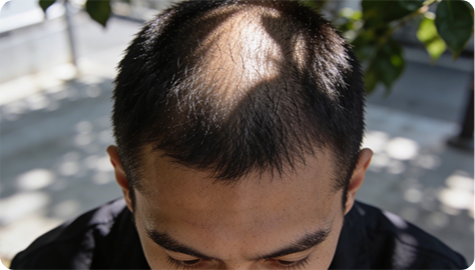
Male androgenic alopecia follows a predictable template: recession at the hairline and temples, thinning at the crown, progressive expansion of the bald zone following the Norwood scale from Stage 1 through Stage 7. The presentation is defined. The progression is charted. The endpoint, in advanced cases, is a clearly recognizable pattern of loss.
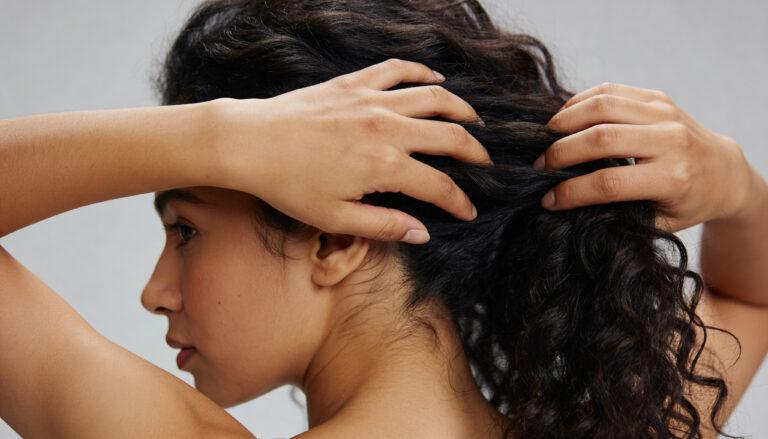
Women’s hair loss — even androgenic hair loss in women — doesn’t follow this template. The most common presentation is diffuse thinning: a reduction in overall density distributed across the scalp rather than concentrated in a defined recession zone. The hairline typically remains intact while the density behind it decreases — a widening part, a visible scalp through the hair, a ponytail that has thinned noticeably over months or years.
This diffuse pattern is why women’s hair loss is so frequently missed or minimized in clinical settings. There’s no bald spot. There’s no receding hairline. There’s just less hair than there used to be, distributed across an area that still looks covered enough to dismiss. Women are told they’re imagining it, or that everyone loses hair with age, or that it will grow back on its own. Sometimes it does. Often it doesn’t — and the delay in taking it seriously is exactly the delay that allows more follicular damage to accumulate.
The widening part is one of the most consistent early markers women describe. A part that used to be a narrow line of scalp becomes wider, then wider still, until the contrast between the hair on either side and the visible scalp between them becomes impossible to overlook. The thinning crown — where the circular pattern of growth begins to show scalp through the hair — is another. Neither of these looks like what most people picture when they think of hair loss. Both of them are hair loss.
The Second Difference: Why It’s Happening
Male androgenic alopecia has a primary driver: DHT acting on genetically susceptible follicles. The mechanism is well-characterized. The target is clear. The treatment, whether surgical or pharmacological, addresses that mechanism directly.
Women’s hair loss rarely has one primary driver. It has several — often operating simultaneously, often interacting with each other in ways that make the picture more complex than any single diagnosis captures.
Hormonal Fluctuations
Estrogen plays a protective role in the hair growth cycle. It prolongs the anagen — active growth — phase, which is why many women notice that their hair is at its thickest and most vital during pregnancy, when estrogen levels are elevated. When estrogen levels drop, that protective effect is withdrawn — and the follicles that had been supported by it become more vulnerable to the androgenic miniaturization process that drives patterned loss.
The moments when estrogen drops most significantly in a woman’s life map directly onto the most common triggers for hair loss: the postpartum period, perimenopause, and menopause.
Postpartum hair loss is one of the most common and most distressing presentations. During pregnancy, elevated hormones keep hair in the anagen phase longer than normal — women often experience the thickest, most vital hair of their lives in the second and third trimesters. After delivery, hormone levels drop sharply, and a disproportionate number of follicles enter telogen simultaneously. Two to four months later, the shedding begins — dramatic, frightening, and entirely normal in mechanism, even as it feels anything but.
For most women, postpartum shedding is temporary and the hair largely recovers. For others — particularly those with underlying androgenic susceptibility, nutritional depletion from pregnancy, thyroid disruption, or stress-related factors — the postpartum period triggers a loss pattern that doesn’t fully reverse on its own. The follicles that were already marginally vulnerable didn’t just shed temporarily. They began the miniaturization process that continues after the acute shedding episode resolves.
Menopause and perimenopause bring a more gradual but sustained hormonal shift. Estrogen and progesterone levels decline over years rather than weeks, and the relative increase in androgen activity — not because androgens are increasing, but because the hormonal environment has shifted in their direction — creates conditions where DHT-sensitive follicles begin miniaturizing in women who may never have experienced noticeable hair loss before.
The women who experience menopausal hair loss often describe it as the most disorienting aspect of the transition — not because they were unprepared for other changes, but because hair loss wasn’t in the cultural script for what menopause looks like. It is, however, a physiologically coherent consequence of the hormonal environment that menopause creates, and it deserves clinical attention rather than dismissal as a cosmetic complaint.
Thyroid Dysfunction
The thyroid gland regulates metabolic function throughout the body — including the metabolic activity of hair follicles. Both hypothyroidism and hyperthyroidism can produce hair loss, and thyroid dysfunction is significantly more common in women than in men.
The hair loss associated with thyroid disorders is typically diffuse — distributed across the scalp rather than patterned — which means it compounds and can be confused with other forms of women’s hair loss rather than presenting as its own distinct category. A woman experiencing both androgenic thinning and thyroid-related hair loss is dealing with two mechanisms simultaneously, and treating only one without identifying the other produces incomplete results.
This is one of the reasons that a thorough diagnostic workup — including laboratory evaluation — is part of the clinical approach at Northwestern Hair rather than an optional add-on. Treating hair loss without understanding what’s driving it is a treatment plan built on incomplete information.
Iron and Nutritional Deficiencies
Iron deficiency — particularly iron deficiency without anemia, which is common in women of reproductive age and often overlooked in standard screening — is one of the most frequently underdiagnosed contributors to women’s hair loss. Hair follicles require adequate iron for the cellular energy production that drives normal growth cycling. When iron stores are depleted, follicles preferentially enter telogen earlier than they should — producing the diffuse shedding that presents clinically as hair loss.
Other nutritional factors — vitamin D, zinc, ferritin, B vitamins — contribute to follicular health in ways that are measurable and addressable. The women who address their hair loss without identifying nutritional deficiencies are leaving a significant contributing factor unmanaged while treating only its downstream effects.
Stress and Telogen Effluvium
Significant physical or psychological stress — illness, surgery, grief, sustained life disruption — can trigger a condition called telogen effluvium, in which a disproportionate number of follicles shift from anagen to telogen simultaneously. The shedding that follows, typically two to four months after the stressor, can be dramatic and frightening.
Most telogen effluvium is temporary. The follicles re-enter anagen after the resting phase and regrow. But chronic stress — the sustained low-grade physiological burden that characterizes many women’s lives rather than the acute crisis of a single stressor — can produce a more persistent pattern of disrupted cycling that doesn’t fully resolve as long as the stressor remains.
The interaction between stress-related telogen effluvium and underlying androgenic susceptibility is particularly relevant: women who were losing ground slowly to DHT-driven miniaturization may find that a stress-triggered shedding episode accelerates the visible presentation significantly, producing a loss that looks more dramatic than the underlying androgenic progression alone would explain.
The Third Difference: The Emotional Weight
This dimension of women’s hair loss is rarely discussed clinically, but it belongs in any honest piece about why women’s hair loss deserves its own category of attention.
Hair carries different cultural and psychological weight for women than it does for men. This isn’t a value judgment — it’s a social reality. In contexts where thinning hair is relatively normalized for men — where male baldness has cultural scripts, aesthetic solutions, and decades of social acceptance — women’s hair loss remains largely invisible and largely undiscussed. There are fewer role models, fewer cultural narratives, and far less social infrastructure for women navigating hair loss than for men.
The consequence is that women experiencing hair loss often do so in relative isolation — without the vocabulary to describe what’s happening, without the social permission to treat it as a genuine medical concern rather than a vanity complaint, and without accessible information about what can actually be done.
One patient described it as feeling like she was losing her identity gradually. Another spent ten years looking for help before finding a practice that took her seriously. These aren’t outlier experiences. They’re the common thread through most women’s hair loss journeys — years of dismissal before finding a clinical partner willing to engage the problem directly.
The treatment that women’s hair loss deserves isn’t just clinically different from what men receive. It’s also experienced differently — with more complexity, more emotional weight, and more need for a clinical environment that treats the whole person rather than just the follicle count.
Why Standard Treatments Fall Short
Given that women’s hair loss has different causes, a different presentation, and a different psychological context than men’s, the predictable problem is that treatments designed for the male pattern — or applied without modification to a female patient — frequently underdeliver.
The most common example is the application of male-pattern thinking to a diffuse thinning presentation. A woman whose hair is thinning diffusely across the scalp is sometimes evaluated and treated as if she has a version of male androgenic alopecia — with treatments calibrated to that mechanism, at doses designed for that pattern, without adequate attention to the hormonal, nutritional, and systemic factors that may be driving her specific situation.
The result is partial treatment at best. The androgenic component may be addressed while the thyroid imbalance continues untreated. The ACS treatment may be applied without first correcting the iron deficiency that’s limiting follicular metabolism. The treatment protocol may be designed around a timeline that assumes male-pattern progression without accounting for the hormonal cycling that affects women’s loss differently across the month, across seasons of life, and across the specific circumstances of her individual history.
Effective treatment for women’s hair loss starts with accurate diagnosis — not an assumption, but an actual evaluation of what’s driving the specific presentation in front of the physician. And it continues with a protocol designed around that diagnosis rather than around a default male-pattern template.
What the Right Treatment Program Looks Like
At Northwestern Hair, the Women’s Hair Restoration Program was developed to fill a critical gap in Chicago, where effective options for women’s hair loss were few and far between. The program reflects the clinical reality that women’s hair loss requires its own approach — not a modified version of the men’s program, but a distinct clinical framework built around the causes and presentation patterns specific to women.
The program is built on two principles: maximize growth by re-establishing blood flow and nutrient delivery to stimulate follicles to their maximal thickness, and maintain hair by protecting and sustaining progress with a customized at-home treatment plan.
The Diagnostic Foundation
Before any treatment begins, the program starts with understanding what’s actually driving the loss. Trichoscopic analysis, lab tests, and biopsy provide the insights needed to craft a personalized plan. For women, this diagnostic layer is particularly important — because the causes of hair loss are more varied, more interactive, and more likely to include systemic factors that aren’t visible from scalp examination alone.
Addressing hormonal imbalances, low thyroid levels, and iron deficiencies — key contributors to hair loss in women — is part of the treatment approach rather than an afterthought. The laboratory findings don’t just inform the medical management component of the protocol. They shape the entire plan — what treatments are prioritized, in what sequence, and how the at-home regimen is structured to support what the in-office treatments are accomplishing.
ACS: The Core of the Program
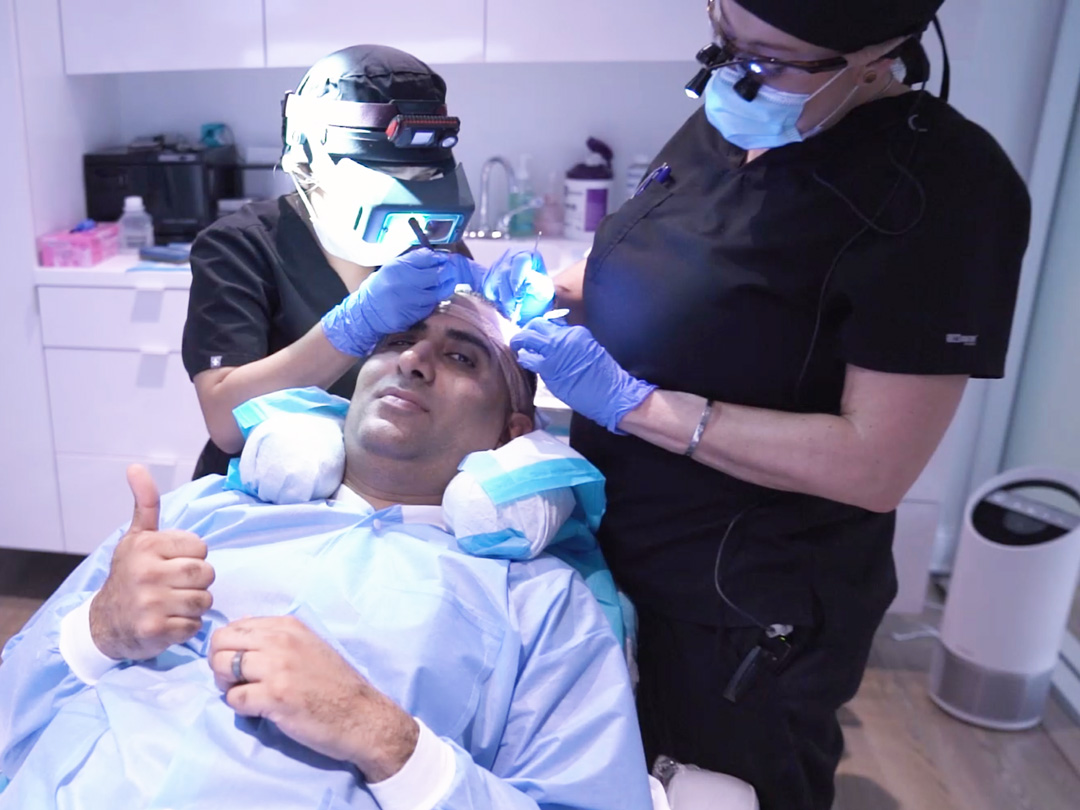
At the heart of the program is Autologous Cellular Serum (ACS), a treatment that uses the principles of advanced wound care to target dormant follicles and supercharge hair follicle metabolism, encouraging new growth.
ACS works by stimulating follicles to produce thicker, healthier hair and boosting blood flow through the promotion of new blood vessel growth — ensuring hair receives the nutrients it needs.
For women, ACS addresses the common thread that connects the various causes of hair loss: as follicles shrink, metabolism slows, and blood flow is reduced, hair becomes finer, weaker, or stops growing altogether. ACS maximizes growth by reactivating metabolism and restoring blood flow.
This mechanism is particularly well-suited to the diffuse thinning pattern that characterizes most women’s hair loss. Unlike surgical approaches that address defined bald zones, ACS works across the full thinning area — supporting the miniaturized follicles that are distributed diffusely across the scalp rather than concentrated in a specific zone.
The Personalized Maintain Protocol
The at-home treatment plan is customized to each patient’s individual needs and lifestyle, and may include medication to keep blood vessels open to nourish follicles long after treatment, microneedling to create micro-stimuli that enhance cell absorption and boost regeneration, laser caps to increase blood flow and metabolism for long-term results, and targeted medications designed to address the underlying causes of hair loss unique to women.
The targeted medications component is worth emphasizing because it reflects the hormonal specificity of women’s hair loss. The medications relevant to women’s androgenic hair loss are different from those used in male pattern treatment — the dosing, the mechanism, and the interaction with hormonal status all require calibration to the individual patient’s hormonal profile rather than application of a standard male-pattern protocol.
The Physician Relationship
Dr. Vinay Rawlani and Dr. Kiracofe combine expertise in hair restoration surgery and dermatology to create personalized treatment plans. Dr. Vinay personally oversees every step of the treatment journey, adapting the plan to match each patient’s progress and goals.
For women who have spent years in medical settings where their hair loss was minimized or addressed with generic recommendations, this level of physician engagement is itself part of what makes the program different. The adjustment of treatment plans session to session — based on actual progress, actual lab findings, actual patient experience — is what responsive clinical care looks like rather than a fixed protocol applied uniformly regardless of how the individual patient is responding.
Dr. Vinay’s commitment extends to a guarantee: if ACS doesn’t bring the results they’re aiming for, his physician fee will be reinvested into the next step — whether that’s exosomes, a transplant, or another advanced therapy — ensuring patients are never moving forward alone.
What Different Women Experience — and What That Means for Treatment
Part of why women’s hair loss requires individualized treatment is the range of presentations within the broader category. The postpartum patient, the perimenopausal patient, and the patient with longstanding androgenic thinning are all experiencing women’s hair loss — but the clinical picture, the urgency, and the treatment priorities are different for each.
The Postpartum Patient
For the woman in the postpartum period experiencing significant shedding, the immediate clinical priority is distinguishing between the expected acute shedding of telogen effluvium and the early stages of a more persistent loss pattern. Most postpartum shedding is temporary and self-limiting. But the women for whom it isn’t — those with androgenic susceptibility, nutritional depletion, or thyroid disruption triggered or worsened by pregnancy — need to be identified early before the permanent follicular damage compounds.
ACS in the postpartum context is doing specific work: supporting the follicles that are in or approaching telogen, providing the metabolic and vascular support that helps them re-enter anagen rather than miniaturizing further, and creating the conditions for a more complete recovery than the follicular environment alone might produce. The nutritional and hormonal components of the plan address the systemic factors that determine whether the recovery is full or partial.
The Perimenopausal and Menopausal Patient
For the woman experiencing hormonal hair loss in the context of perimenopause or menopause, the treatment conversation happens in the context of a shifting hormonal landscape that may continue evolving over years. The goal isn’t a single treatment episode that resolves the problem — it’s a management approach calibrated to an ongoing hormonal transition.
The ACS protocol supports follicular health through this transition, addressing the miniaturization process that the changing hormonal environment is accelerating. The targeted medication component addresses the androgenic activity that becomes more prominent as estrogen’s protective effect decreases. And the at-home maintenance plan — laser caps, microneedling, medications — extends the protection between in-office sessions in a way that accounts for the sustained nature of the hormonal shift.
The women who do best in this context are those who engage with the program as an ongoing relationship rather than a fixed-duration treatment — adjusting the protocol as their hormonal status evolves, maintaining the gains achieved in earlier sessions, and treating the program as part of a longer-term commitment to their hair health rather than a one-time intervention.
The Patient with Longstanding Diffuse Thinning
For the woman who has been managing diffuse thinning for years — who has tried products, nutritional supplements, and perhaps other clinical treatments without satisfying results — the starting point is often an accurate diagnosis of what has and hasn’t been addressed.
The most common finding in these patients is that the androgenic component of their loss was partially managed while other contributing factors — thyroid, iron, stress-related cycling disruption — were never fully evaluated or addressed. ACS applied in the context of a comprehensive diagnostic workup, with the nutritional and hormonal contributors actively managed, often produces results that previous treatments didn’t — not because ACS is doing something categorically new, but because it’s being applied within a complete clinical framework rather than in isolation.
The Gap This Program Fills
There is a specific gap in Chicago’s hair restoration landscape that the Northwestern Hair Women’s Program was created to address.
Most hair restoration clinics in Chicago — and most hair restoration clinics nationally — were built around surgical procedures for male pattern baldness. The clinical expertise, the marketing, the before-and-after galleries, and the consultation processes were designed for that patient. Women who arrived were often evaluated through the same lens, offered the same information, and managed with varying degrees of adaptation of a framework that was never built for them.
The result was a patient population with real, clinically meaningful hair loss and limited access to care that actually fit their situation. Women who were told they weren’t surgical candidates without being offered a clear non-surgical alternative. Women whose hormonal and nutritional contributors were never investigated. Women who were managed with products rather than programs — handed a bottle of minoxidil and sent home without the diagnostic depth or clinical follow-through that their situation required.
At Northwestern Hair, the women’s program takes a refined, modern approach. Whether a patient is noticing early thinning or has experienced ongoing shedding for years, the focus remains the same: to preserve, regrow, and maintain natural hair through advanced, non-surgical treatments customized to individual needs.
That customization is the operational difference between a program built for women and one adapted reluctantly from a male-pattern framework. The diagnostic depth, the hormonal specificity, the treatment sequencing, the at-home protocol calibrated to the individual patient’s lifestyle and underlying causes — these reflect a clinical investment in understanding women’s hair loss on its own terms rather than as a footnote to the primary program.
What to Expect From the Program
For women considering the Northwestern Hair Women’s Program, the experience looks different from what most have encountered in previous clinical settings.
The consultation begins with genuine investigation — not a standard visual assessment followed by a product recommendation, but a thorough evaluation that includes the clinical history, lab work to identify systemic contributors, and trichoscopic analysis of the scalp. The plan that emerges from that evaluation is specific — calibrated to the patient’s causes, her pattern, her goals, and her lifestyle — rather than a standard protocol applied uniformly.
Treatment sessions are spaced according to what the patient’s response supports rather than a fixed calendar. Progress is monitored and the plan adjusts. Every ACS session brings the patient closer to thicker, more vibrant hair, with the treatment plan fully customized to unique needs.
The women who come through the program consistently describe the same early experience: feeling genuinely heard in a clinical setting for the first time in their hair loss journey. That shouldn’t be a differentiator. For most of them, it is.
The Bottom Line
Women’s hair loss is different. Different in its causes, different in its presentation, different in its emotional weight, and different in what effective treatment requires.
The hormonal complexity of postpartum loss, perimenopausal thinning, and menopause-related shedding isn’t a variation on male-pattern baldness. The diffuse thinning that doesn’t announce itself with a receding hairline isn’t a lesser version of a more visible condition. And the women experiencing these conditions don’t need a modified male-pattern protocol. They need a program built specifically for them — one that starts with accurate diagnosis, addresses the full range of contributing factors, and delivers treatment designed for the actual clinical picture rather than a convenient approximation of it.
That program exists in Chicago. And the conversation about what it can do for your specific situation starts with a consultation.
Experiencing postpartum hair loss, menopausal thinning, or diffuse shedding that hasn’t responded to what you’ve tried before? Book a consultation with Dr. Vinay at Northwestern Hair — and find out what a program built specifically for women actually looks like.