



How Many Grafts Do You Need for a Natural Hair Transplant?
One of the first questions patients ask during a hair restoration consultation is, “How many grafts will I need?” While it’s a reasonable question, the answer is far more complex than selecting a number from a chart. How Many Grafts Do You Need For A Natural Hair Transplant? depends on your pattern of hair loss, donor hair quality, scalp characteristics, long-term goals, and the experience of the physician designing your treatment.
At Northwestern Hair Restoration, Dr. Vinay Rawlani believes that successful hair transplantation isn’t measured by the highest graft count—it’s measured by creating natural, lasting results while preserving your donor hair for the future. Every patient’s treatment plan is customized to maximize cosmetic improvement without compromising long-term options. Contact us today for more information.
What Is A Hair Graft?
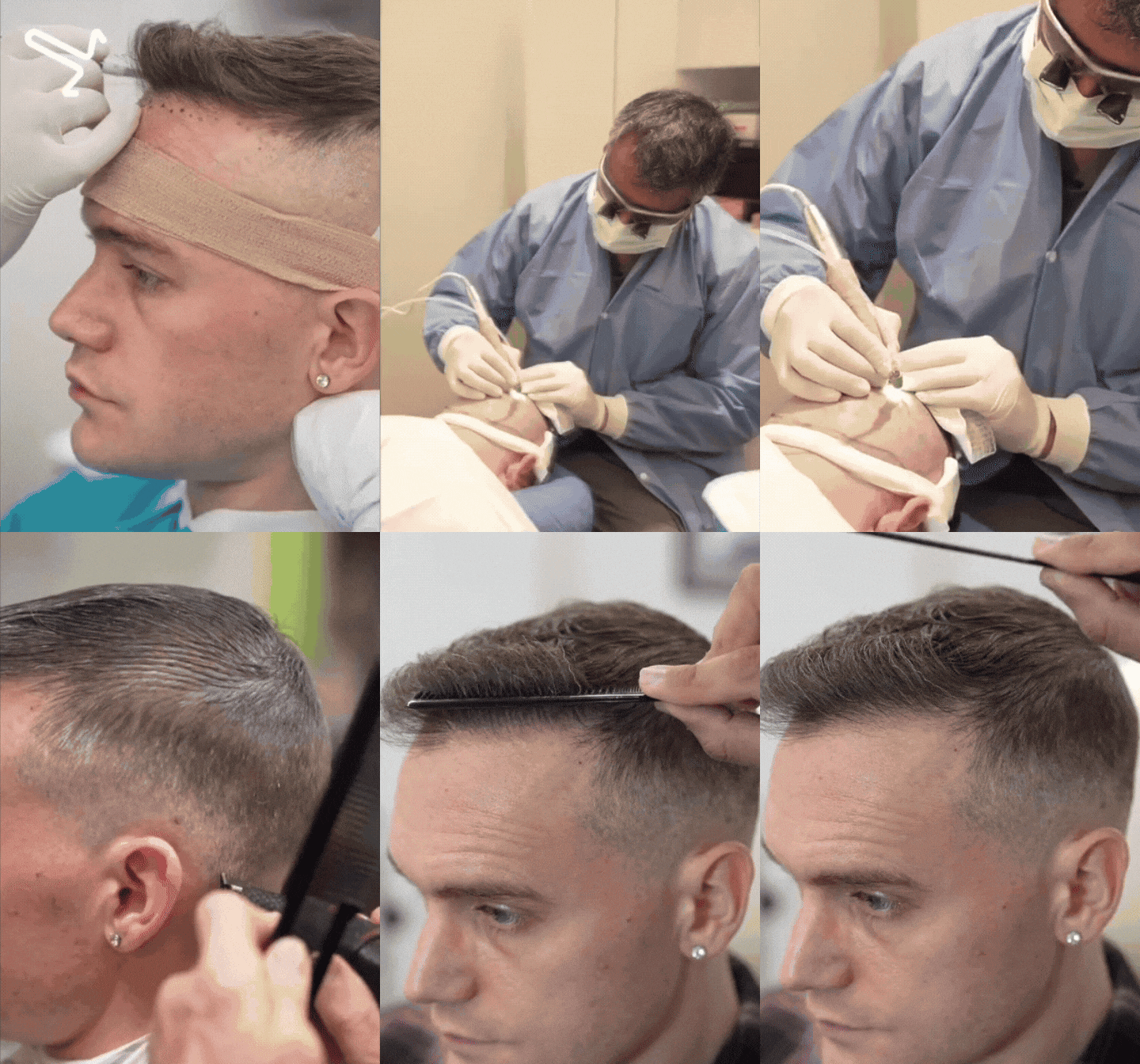
A hair graft is a naturally occurring group of one to four hair follicles harvested from the donor area, typically located on the back and sides of the scalp. During a Micro FUE (Follicular Unit Extraction) procedure, these follicular units are carefully removed and transplanted into areas affected by thinning or baldness.
Because each graft contains a different number of hairs, two patients receiving the same number of grafts may achieve different levels of density. This is why experienced surgeons evaluate follicle composition rather than focusing solely on graft totals.
Why Graft Numbers Aren’t Everything
 Many patients compare clinics based on advertised graft counts, assuming that more grafts automatically produce better results. In reality, overharvesting the donor area can permanently limit future treatment options and create visible thinning in the back of the scalp.
Dr. Vinay Rawlani approaches every procedure with long-term donor preservation in mind. Instead of transplanting the maximum number of grafts possible, he carefully determines how many are necessary to achieve natural density while maintaining a healthy donor reserve.
The goal isn’t simply to transplant more hair—it’s to transplant the right amount in the right locations.
Factors That Determine Your Graft Count
Every patient requires an individualized evaluation. Several factors influence how many grafts may be recommended, including:
Hair Loss Pattern
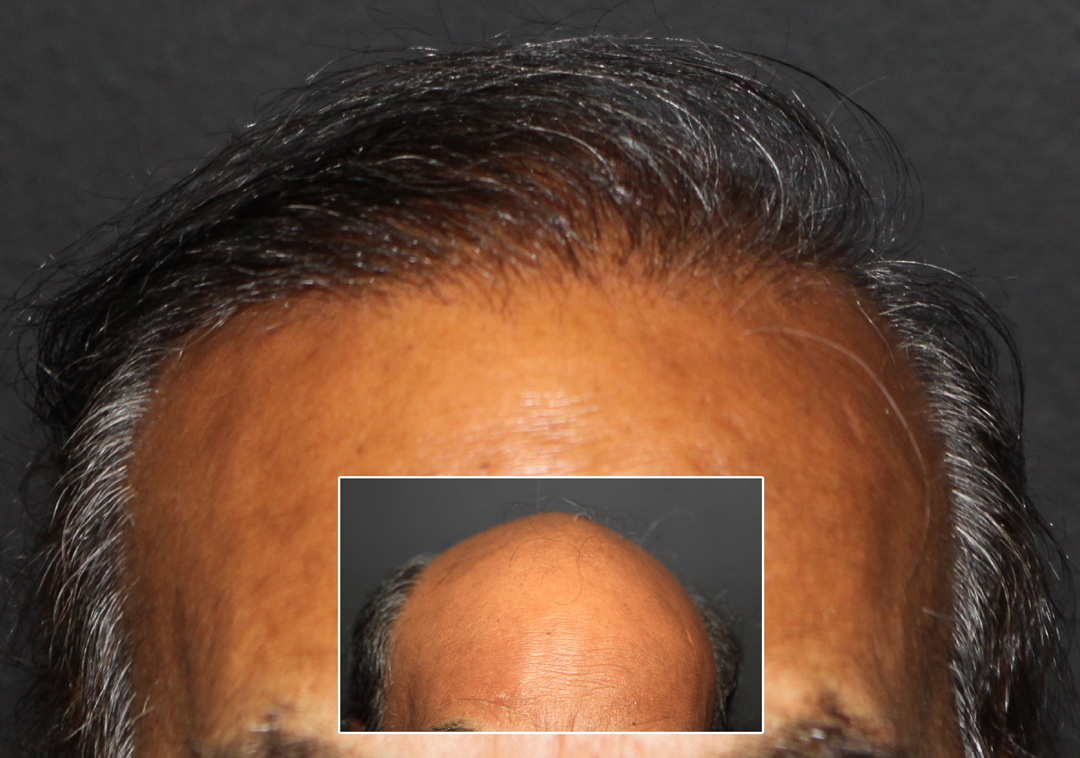
The extent and location of hair loss significantly affect graft requirements. Patients with mild temple recession typically require fewer grafts than those experiencing advanced frontal and crown thinning.
Donor Hair Density
The quality of your donor area is one of the most important considerations. Patients with thick, dense donor hair often achieve excellent coverage with fewer grafts because each follicular unit contains multiple healthy hairs.
Hair Characteristics
Hair thickness, texture, color, and curl all influence perceived density. Coarser or curlier hair naturally provides greater coverage than fine, straight hair, often reducing the total number of grafts needed.
Hairline Design
A conservative, age-appropriate hairline generally requires fewer grafts than an aggressive, youthful design. Dr. Rawlani creates customized hairlines that complement facial proportions while preserving grafts for future needs.
Typical Graft Ranges
Although every patient is different, general treatment ranges may include:
- 1,000–1,500 grafts: Mild temple recession or small frontal refinements.
- 1,500–2,500 grafts: Moderate frontal hairline restoration.
- 2,500–3,500 grafts: Extensive frontal restoration and mid-scalp coverage.
- 3,500–4,500+ grafts: Advanced hair loss involving multiple areas, depending on donor availability.
These ranges are estimates—not treatment plans. The right number is determined only after a comprehensive evaluation.
Why Natural Results Matter More Than Maximum Density
One of the biggest misconceptions in hair restoration is that higher density always creates better results.
Natural hair doesn’t grow uniformly across the scalp. It varies in direction, spacing, and density. Attempting to place too many grafts into one session may compromise blood supply, reduce graft survival, or create an unnatural appearance.
At Northwestern Hair Restoration, Dr. Vinay Rawlani carefully distributes grafts to recreate natural growth patterns. Strategic placement often produces the appearance of greater fullness than simply increasing graft numbers.
The artistry behind hair transplantation is just as important as the surgical technique.
Donor Area Management Is Essential
Your donor area contains a finite number of transplantable follicles. Once a graft has been moved, it cannot be harvested again.
This makes donor management one of the most important aspects of successful hair restoration. During your consultation, Dr. Rawlani evaluates donor density, scalp laxity, hair characteristics, and the likelihood of future hair loss before recommending treatment.
Protecting your donor supply today helps preserve options for tomorrow, especially if additional procedures become necessary later in life.
Combining Hair Transplants With Medical Therapy
 A hair transplant restores lost hair, but it doesn’t stop the progression of genetic hair loss.
For many patients, the best long-term outcomes come from combining surgery with non-surgical treatments that help preserve existing follicles.
Depending on your individual needs, Dr. Vinay Rawlani may recommend:
- ACS (Autologous Conditioned Serum) therapy
- PRP (Platelet-Rich Plasma) treatments
- Prescription medications
- Low-level laser therapy
- Personalized hair maintenance programs
These treatments can improve hair quality, slow future thinning, and support the longevity of your transplant results.
Why Choose Northwestern Hair Restoration?
Northwestern Hair Restoration takes a physician-led approach to hair restoration, emphasizing precision, personalized planning, and natural outcomes.
Unlike high-volume clinics that focus primarily on graft numbers, every procedure is carefully designed around the patient’s facial features, donor capacity, and long-term goals. Dr. Vinay Rawlani personally evaluates each patient, designs every hairline, oversees donor management, and performs the critical surgical portions of every procedure.
Whether you’re considering men’s hair transplants, women’s hair restoration, Micro FUE, or advanced non-surgical therapies, your treatment plan is built specifically for you.
Schedule Your Consultation
If you’ve been asking, How Many Grafts Do You Need For A Natural Hair Transplant?, the only accurate answer comes from a personalized medical evaluation.
Schedule a consultation with Dr. Vinay Rawlani at Northwestern Hair Restoration to assess your donor capacity, hair loss pattern, and long-term restoration goals. Together, you’ll develop a customized treatment strategy designed to deliver natural-looking results while protecting your donor hair for years to come.