
Hair Loss in Your 20s: What You Should Do Right Now
There is a particular kind of panic that comes with noticing hair loss in your twenties.
It arrives differently for different people. For some, it’s a photograph — the overhead angle that reveals a thinning crown you’ve been unconsciously avoiding in mirrors. For others, it’s a handful of hair in the shower drain that seems like too much. For others, still, it’s a comment from someone close to them, delivered with the kind of casualness that makes it land harder than anything deliberate could.
However it arrives, the response tends to be the same: a spiral of late-night research that produces more anxiety than clarity, a flood of conflicting information about products and procedures and supplements and surgeries, and an urgent sense that time is running out — that every day you’re not doing something is a day you’re falling further behind.
That urgency is understandable. It’s also, in most cases, the thing most likely to lead to poor decisions.
Hair loss in your twenties is real, it’s common, and it deserves a serious clinical response. But serious doesn’t mean immediate. And the decisions made in a state of panic about a condition that will play out over decades rarely produce better outcomes than decisions made with patience, accurate information, and a clear understanding of what the situation actually calls for.
This is the piece that should exist at the beginning of that research process — before the anxiety has fully taken hold, before the late-night product purchases, and well before anyone is talking about surgery. Contact Northwestern Hair Restoration today for more information.
How Common Is This, Actually?
More common than most twenty-somethings experiencing it believe.
Androgenic alopecia — male pattern hair loss — affects approximately 16 percent of men between 18 and 29. By the time men reach their thirties, that number climbs to roughly 53 percent. By forty, more than half of men are experiencing some degree of clinically measurable hair loss.
The cultural narrative around hair loss treats it as something that happens to middle-aged men. The biology doesn’t agree. The genetic and hormonal machinery that drives androgenic alopecia can activate in the late teens or early twenties, and the patients who experience onset at this age often have more aggressive early progression than those whose loss begins later.
Understanding that you’re not an anomaly — that early-onset hair loss is both genetically common and biologically normal — doesn’t make it less significant emotionally. But it does change the framing from crisis to a clinical situation with established management approaches and real options.
What’s Actually Happening in Your Scalp Right Now
 The biology of hair loss was covered in depth in the previous piece in this series, but a summary is worth having here in the context of what it means specifically for a twenty-something experiencing early onset.
Androgenic alopecia is driven by DHT — dihydrotestosterone — which is produced from testosterone by the enzyme 5-alpha reductase. DHT binds to androgen receptors in genetically susceptible hair follicles at the hairline, temples, and crown, triggering a progressive shortening of the growth cycle and a gradual miniaturization of the follicle itself. Over time, follicles that were producing thick, pigmented terminal hairs begin producing finer, shorter, less pigmented vellus hairs — and eventually stop producing visible hair altogether.
The critical insight for a patient in their twenties is where they are in this process.
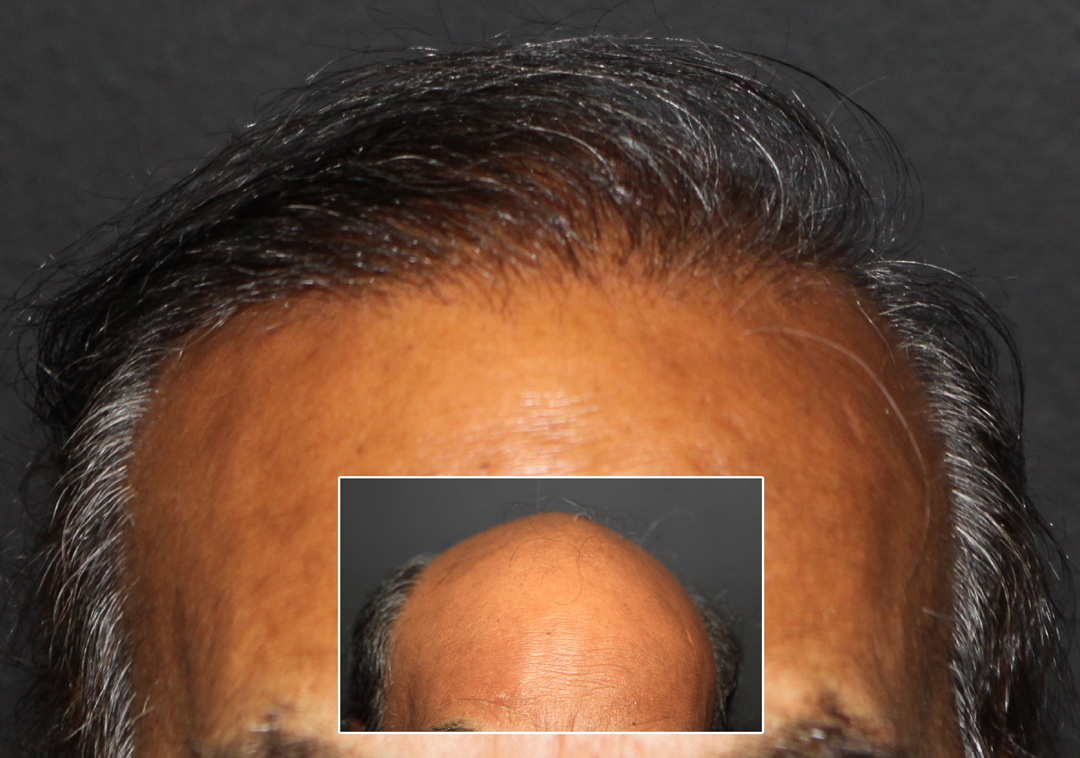
Most twenty-somethings experiencing noticeable hair loss are in the miniaturization stage — the phase where follicles are compromised but still present. The follicle that is thinning is not the follicle that is gone. And the follicle that is thinning is the follicle that treatment can still reach.
This is not a small distinction. It is the entire basis for why early intervention has more value than delayed intervention — and why the urgency patients feel, while misdirected when it pushes toward surgery prematurely, is pointing at something real when it motivates treatment.
The Two Mistakes Most Young Patients Make
Before getting to what you should do, it’s worth being specific about what you shouldn’t — because the two most common responses to early-onset hair loss in your twenties are both, in different ways, the wrong one.
Mistake One: Rushing Into Surgery
The panic of early hair loss combined with the accessibility of information about hair transplants produces a predictable outcome: young patients booking consultations with the intention of having surgery as quickly as possible.
This impulse makes emotional sense. Surgery feels like the definitive answer — the thing that ends the anxiety, restores what’s being lost, and closes the gap between the person you are and the person you want to be. And it is the right answer eventually, for many patients. Just not yet, for most patients in their early twenties.
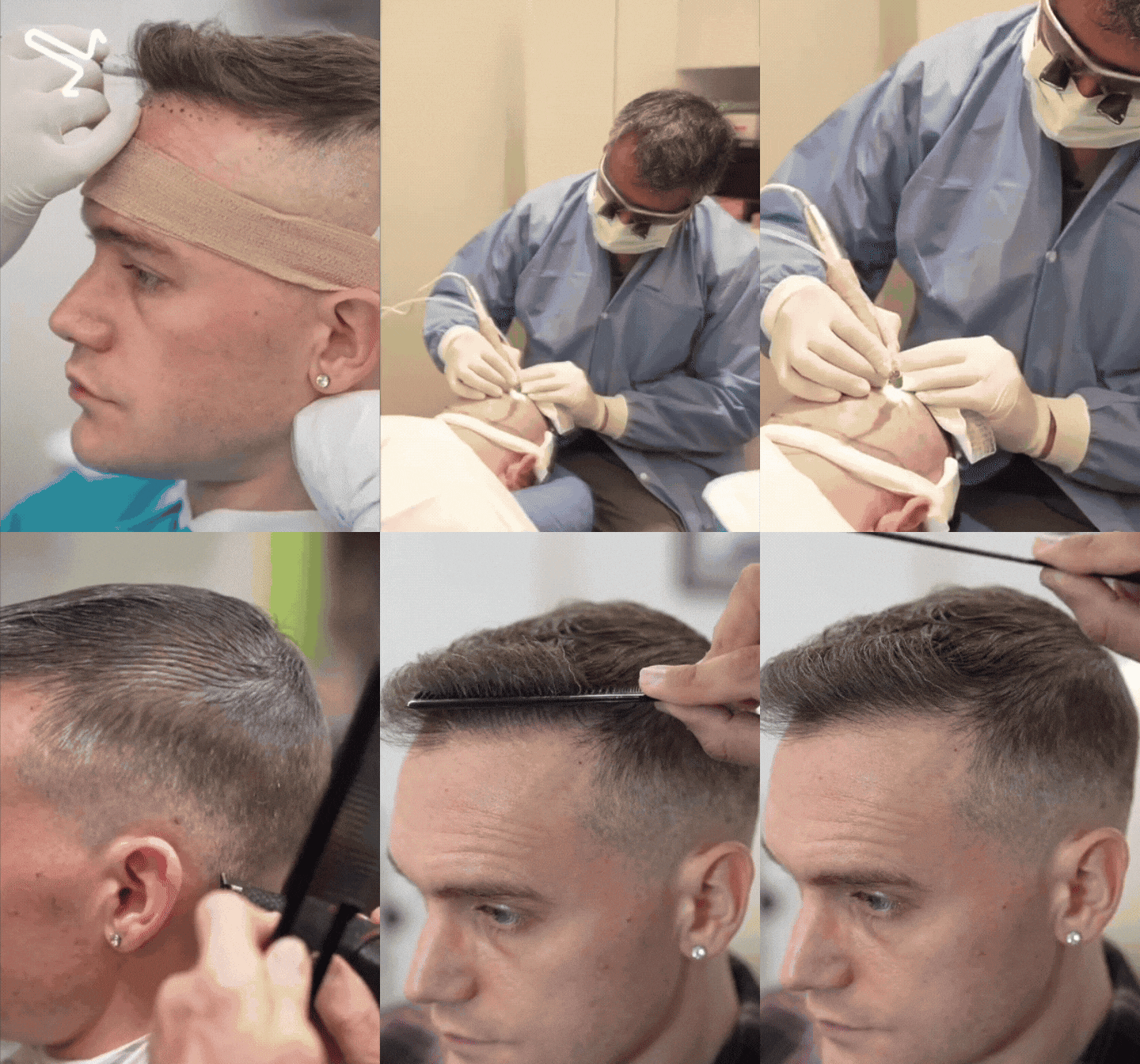
The clinical problem with surgery at this stage is trajectory uncertainty. A hair transplant is a plan, not just a procedure — and a plan built on incomplete information produces incomplete outcomes. A 23-year-old at Norwood Stage 3 doesn’t yet know where their loss will end up. They might stabilize at Stage 4 by their early thirties. They might progress to Stage 6. These two trajectories require completely different surgical plans — different graft allocations, different hairline positions, and different preservation of donor supply for future needs.
A surgeon who operates on a 23-year-old without that information is making permanent decisions based on temporary data. The hairline restored today might look excellent at 25 and incongruous at 35, when the native hair behind it has continued thinning and the donor supply needed to address it has already been spent.
There’s also a practical donor supply consideration. The pool of DHT-resistant follicles available for transplantation is finite. Using a significant portion of that supply at 23 — before the full extent of future loss is knowable — leaves fewer options for the procedures that may be more genuinely needed at 35 or 40. The patient who waits, preserves their donor supply, and operates from a clearer picture of their full trajectory typically gets a better surgical outcome than the one who acts early from urgency.
This isn’t a reason to never have surgery in your twenties. Some patients — those with clearly stable loss patterns, sufficient donor supply, realistic expectations, and a well-designed plan that accounts for future trajectory — are appropriate surgical candidates. But those patients are the exception at this age, not the rule. And the surgeon willing to tell you that honestly is worth more than the one who schedules the procedure before the ink is dry on the consultation form.
Mistake Two: Doing Nothing and Hoping It Stops
The opposite response — denying the reality of what’s happening, avoiding mirrors, deferring action indefinitely in the hope that the loss will slow on its own — is equally costly, just in a different direction.
Hair loss in your twenties is not something that benefits from a wait-and-see approach without any intervention. The window during which non-surgical treatment has its highest leverage is exactly this period — when miniaturized follicles are still present and responsive, before they cross the threshold into permanent loss that only surgery can address.
Every month that passes without treatment is a month in which follicles that could have been preserved are completing the miniaturization cycle and approaching permanent loss. The twenty-two-year-old who starts effective non-surgical treatment today arrives at thirty-two with meaningfully more follicular options — both for continued non-surgical management and for a potential surgical procedure — than the twenty-two-year-old who spent the decade doing nothing.
Avoidance is not a strategy. It’s the absence of one. And in a condition where the relevant biology is actively progressing, the absence of a strategy has measurable clinical costs.
What You Should Actually Do Right Now
Step One: Get an Accurate Assessment
The foundation of every good decision in this process is an accurate understanding of what you’re actually dealing with. Not a self-diagnosis based on online photos and Norwood Scale comparisons, but a clinical evaluation by a surgeon who can assess your specific situation — your loss pattern, your donor density, your hair caliber, your family history, and the rate of progression based on your timeline.
This assessment tells you several things you can’t determine from a mirror:
Whether your loss is androgenic alopecia or something else. Not all hair loss in young men is DHT-driven pattern loss. Alopecia areata, telogen effluvium triggered by stress or illness or nutritional deficiency, and other conditions present differently and require different approaches. Before any treatment plan makes sense, the diagnosis has to be right.
Where are you currently on the loss spectrum? How much of what you’re seeing is miniaturized follicles — still present, still treatable — versus follicles that have already passed into permanent loss? This distinction determines what treatment can realistically accomplish.
What your likely trajectory looks like. Family history on both sides, the rate of your current progression, and the pattern of your loss all inform the clinical picture of where you’re likely to end up. A surgeon who takes this information seriously gives you a foundation for decisions that will hold up over a decade, not just next year.
Whether you’re a surgical candidate at this stage. For most patients in their early twenties with active, progressive loss, the honest answer is not yet. For some, with the right combination of stability, donor supply, and realistic expectations, surgery makes sense earlier. The consultation is where that determination gets made properly.
Step Two: Start Non-Surgical Treatment — Now
 For the majority of twenty-something patients, the most important clinical action is starting effective non-surgical treatment as soon as possible.
Not because non-surgical treatment is a permanent solution to progressive androgenic alopecia — it isn’t, for most patients. But because it addresses the follicles that are still present and responsive, it slows the progression toward permanent loss and preserves more options for the surgical future that many of these patients will eventually pursue.
ACS — Autologous Cellular Serum is the primary regenerative treatment at Northwestern Hair, and it is particularly well-suited to the early-onset patient whose loss is active and whose miniaturized follicles are still worth fighting for. ACS uses the patient’s own growth factors and cellular signals to support follicular health, improve the scalp microenvironment, and stimulate activity in miniaturized follicles that have been pushed toward vellus production but haven’t yet been permanently lost.
For a twenty-three-year-old in active loss, ACS is doing several things simultaneously: addressing the current thinning, slowing the progression of active miniaturization, and preserving follicular options that would otherwise continue declining. The patient who starts ACS at 23 arrives at a potential surgical consultation at 30 with meaningfully more native hair — and more surgical options — than the patient who spent those seven years without treatment.
Exosome therapy offers a complementary regenerative mechanism — introducing extracellular vesicles carrying growth signals that can stimulate dormant or suppressed follicular activity. For patients with active miniaturization, exosome therapy targets the same population of vulnerable follicles from a different biological direction. It’s particularly relevant for early-onset patients where the miniaturization process is actively progressing, and the window for intervention is genuinely time-sensitive.
DHT-reducing treatments — primarily finasteride and dutasteride — work by inhibiting the 5-alpha reductase enzyme that converts testosterone to DHT, thereby reducing the hormonal signal driving follicular miniaturization. The clinical evidence for finasteride in slowing hair loss progression is robust. Its role in early-onset patients is as a systemic complement to the regenerative treatments that address the follicular environment directly — reducing the hormonal pressure on susceptible follicles while ACS and exosome therapy support their function.
These treatments are discussed and evaluated in the context of each patient’s situation at Northwestern Hair — not prescribed as defaults, but considered as part of a comprehensive plan that accounts for the specific clinical picture, the patient’s age and trajectory, and the realistic goals for the non-surgical phase.
Step Three: Build the Long-Term Picture, Not Just the Immediate Fix
The psychological pressure of hair loss in your twenties creates a bias toward immediate solutions. Something that produces visible change quickly. Something that feels like it’s closing the gap between the current state and the desired one.
This is understandable. It is also the framing that produces poor long-term decisions.
The patient who approaches early hair loss as a twenty-year management challenge — rather than a problem to be solved in the next six months — makes systematically better decisions at every stage. They start non-surgical treatment with a clear understanding of what it can and cannot accomplish. They monitor their trajectory honestly rather than avoiding the reality of continued progression. They engage with the surgical question when the timing is genuinely right rather than when the anxiety is at its peak. They arrive at every decision point with more options than the patient who made earlier, urgency-driven choices.
This framing isn’t pessimistic. It’s accurate. And accuracy is what produces good outcomes over a timeline that extends from your early twenties to your fifties, sixties, and beyond.
The Question About Finasteride
Younger patients researching their options will inevitably encounter substantial discussion about finasteride — both its clinical evidence for hair loss management and the contested literature around its side effect profile. This deserves direct treatment rather than a footnote.
Finasteride is clinically effective for the purpose it’s used for. The evidence that it reduces DHT levels in the scalp, slows the progression of androgenic hair loss, and produces modest density improvements in some patients is well-established and replicated across multiple clinical settings. For many patients with early-onset progressive loss, it is a legitimate component of a comprehensive management approach.
The side effect question — centered primarily on sexual side effects reported by a subset of users — is real and deserves to be part of any honest conversation about this treatment. The clinical incidence of reported side effects in the controlled trial literature is lower than online forums suggest, and most reported effects resolve with discontinuation. A smaller number of patients report persistent effects after stopping the medication — post-finasteride syndrome — which is an area of ongoing research and genuine clinical uncertainty.
The right response to this uncertainty is not to dismiss the concern or to default to avoidance. It’s to have a direct, thorough conversation with a physician about the individual patient’s risk factors, their other treatment options, and what the decision looks like when the full clinical picture is on the table. That conversation happens in a consultation — not in a Reddit thread or a product review section.
At Northwestern Hair, finasteride and dutasteride are discussed as part of the broader treatment conversation — placed in the context of the other interventions available, evaluated for each patient’s specific situation, and recommended or not recommended based on clinical judgment rather than default protocol.
What the Surgical Future Might Look Like
For most patients who start their hair loss journey in their twenties with appropriate non-surgical management, surgery enters the picture at some point in their thirties — when the loss pattern has reached a degree of stability, the trajectory is clearer, the donor supply has been managed carefully rather than prematurely spent, and the clinical conditions for a well-designed procedure are genuinely present.
At that point, the patient who spent their twenties doing nothing and the patient who spent their twenties pursuing effective non-surgical treatment are in dramatically different positions.
The patient who did nothing has lost follicles that didn’t need to be lost. Their loss has progressed further than it would have with management. Their non-surgical options are more limited because fewer miniaturized follicles remain to work with. And their surgical plan is more constrained because the canvas it’s working with is more depleted.
The patient who managed their hair loss proactively through their twenties has preserved more native hair, maintained more donor supply options, and arrives at the surgical conversation with a cleaner clinical picture and more degrees of freedom in the planning.
Both patients may have the same procedure eventually. The outcomes, everything else equal, favor the patient who managed the non-surgical phase well.
A Note on the Emotional Dimension
This piece has focused on the clinical reality of early hair loss, and deliberately so — because accurate information is what most twenty-somethings experiencing this actually need, and the emotional validation dimension of the conversation is both more accessible and more plentiful online than the clinical clarity dimension.
But it would be incomplete without acknowledging that hair loss in your twenties isn’t just a biological phenomenon. It’s an identity disruption that arrives at exactly the age when identity feels most consequential. The way you look matters in your twenties in ways that feel acutely tied to your professional trajectory, your social life, and your romantic life — and watching yourself change in ways you didn’t choose and didn’t anticipate is genuinely difficult.
That experience is real. The anxiety it produces is legitimate. And seeking clinical help for a condition that is affecting your quality of life is not vanity — it’s the same response you’d have to any other health situation that was changing something important about your daily experience.
What it doesn’t call for is decisions made from the acute phase of that anxiety. The patients who look back most positively on how they handled early hair loss are almost uniformly the ones who gave themselves time to get accurate information, built a relationship with a surgeon they trusted, and made decisions from that foundation rather than from the emotional intensity of the first few months after noticing the change.
That process starts with a consultation. It continues with honest communication about what the situation looks like and what the realistic options are. And it unfolds over years rather than weeks, which is exactly the timeline that the biology of the situation actually operates on.
The Summary: What to Do Right Now
If you’re in your twenties and noticing hair loss, here is the clearest possible summary of what the evidence and clinical experience at Northwestern Hair suggest:
Get a proper assessment. Not from a mirror and a Reddit thread. From a surgeon who evaluates your actual scalp, your loss pattern, your donor density, and your trajectory.
Start non-surgical treatment. The follicles that are miniaturizing now are the ones that treatment can still reach. Waiting costs you options.
Don’t rush to surgery. For most twenty-somethings in active loss, surgery is premature. The right timing is worth waiting for. The donor supply you protect now is the supply that makes the right surgical plan possible later.
Manage the anxiety alongside the condition. The urgency you feel is real. The decisions it’s pushing you toward are often wrong. Separating the emotional response from the clinical decision-making is the most important thing you can do at this stage.
Build a relationship with a surgeon who tells you the truth. The clinic that schedules your surgery at 23 without the honest conversation about trajectory and timing is not the clinic serving your long-term interests. The surgeon who tells you what you need to hear rather than what you want to hear is the one worth trusting with the next twenty years of this.
Noticing hair loss in your twenties and not sure what to do next? Book a consultation with Dr. Vinay at Northwestern Hair. The conversation starts with an honest look at where you are — and what actually makes sense from here.