



Beard and Eyebrow Transplants: How Facial Hair Restoration Works
When most people hear “hair transplant,” they picture a receding hairline. But some of the most detail-intensive work in hair restoration happens below the hairline entirely — filling in patchy beards, rebuilding eyebrows lost to overplucking or medical conditions, and restoring facial hair after scarring.
Demand for facial hair restoration has grown steadily at our Chicago clinic, driven by two very different patient groups: men who want a fuller, connected beard they were never able to grow, and patients — mostly women — whose eyebrows thinned from decades of grooming trends, aging, or thyroid conditions and never came back.
The underlying technique will be familiar if you’ve read our work on Micro PUE. But facial hair restoration has its own rules, and the margin for error is far smaller than on the scalp. Here’s what you should know. Contact Northwestern Hair Restoration for more information.
How a Beard Transplant Works
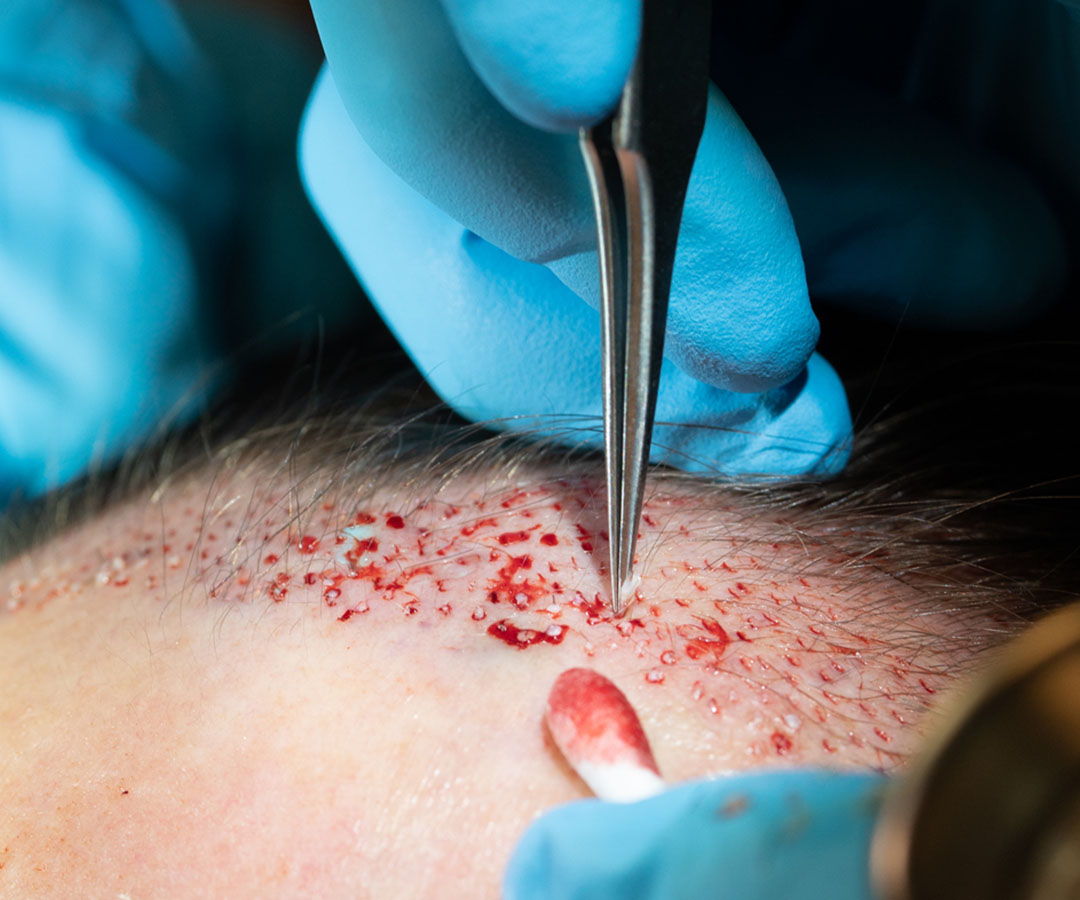
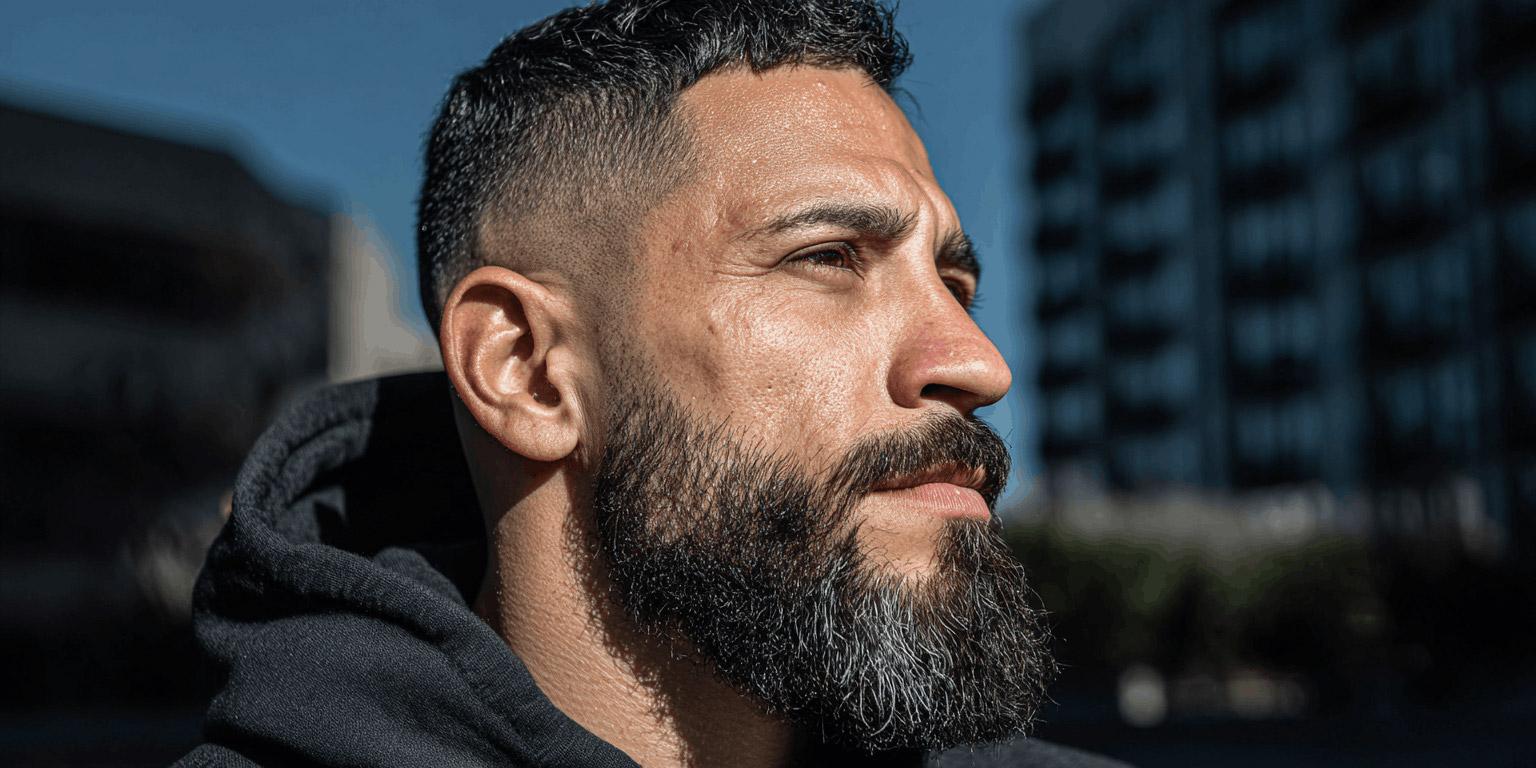
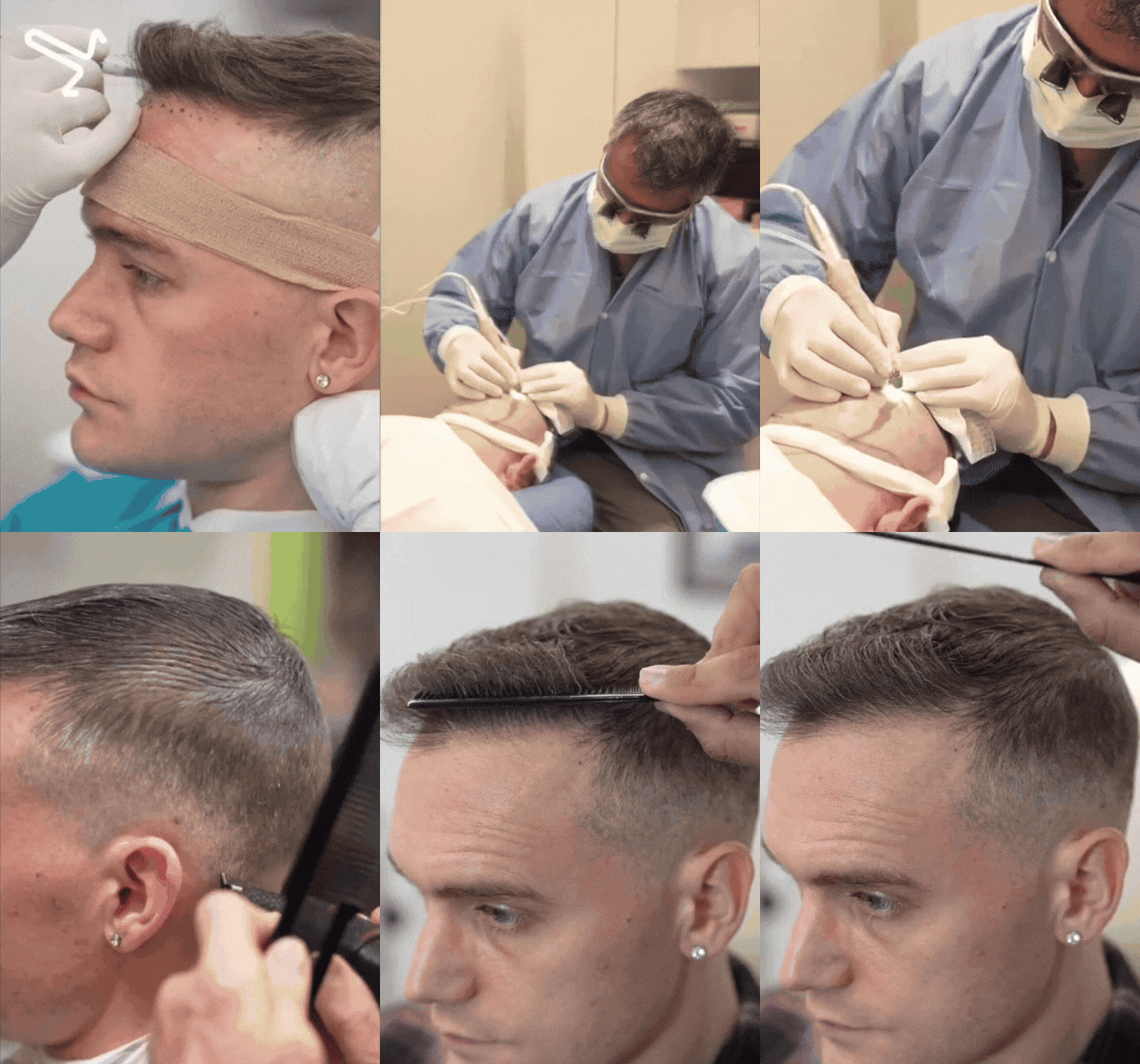
A beard transplant follows the same fundamental logic as a scalp procedure: individual follicular units are extracted from the donor area at the back and sides of the head and implanted into the beard zone — cheeks, goatee, mustache, sideburns, or jawline, depending on the goal.
What’s different is everything about the execution.
Facial hair grows at extremely acute angles. Scalp hair exits at 45 to 75 degrees; beard hair often exits at 15 to 25 degrees, nearly flat against the skin, with direction that shifts across the face — downward on the cheeks, outward around the goatee, converging along the jaw. Grafts placed at scalp angles on a face look wrong immediately, and unlike a bad hairline, you can’t comb over a bad beard.
Single-hair grafts dominate. Natural beard hair grows mostly as single follicles, not the two- and three-hair groupings common on the scalp. Building a beard primarily from singles — with occasional doubles reserved for central density zones — is what separates natural results from transplants you can spot across a room.
The face shows everything. There’s no hair around the recipient area to camouflage healing, redness, or poorly placed grafts. Precision punch sizes and gentle handling matter even more here than on the scalp — which is where the Micro PUE approach earns its keep.
Typical beard cases range from a few hundred grafts for filling patchy cheeks or connecting a goatee, up to 2,000 to 2,500+ grafts for constructing a full beard from sparse coverage. And yes — transplanted beard hair grows permanently, shaves normally, and behaves like beard hair, because the follicles adopt the growth characteristics needed while retaining their donor resilience.
Who Gets Beard Transplants?
The common candidate profiles we see:

- Genetically patchy growth. Men whose beards simply never filled in — gaps in the cheeks, a mustache that doesn’t connect to the goatee, thin sideburns. This is the largest group, and often includes men of ethnic backgrounds where sparse facial hair growth is common. As with scalp work, hair texture and growth pattern shape the technique — the same principles we covered in our ethnic hair transplant discussions apply on the face.
- Scar coverage. Beards interrupted by surgical scars, burns, acne scarring, or cleft lip repair. As with scalp scar work, grafting into scar tissue means reduced blood supply and tempered density expectations, but the camouflage effect is often dramatic.
- Gender-affirming care. Beard construction is a significant procedure for transmasculine patients, where design goals are discussed carefully and individually.
- Prior transplant repair. Just as with scalp work, we see beard transplants done elsewhere with wrong angles or pluggy placement that need revision.
One honest disqualifier: if your beard is thin because of active alopecia areata (which commonly affects beard zones as alopecia barbae), transplanting into an active autoimmune condition is a mistake. The condition needs diagnosis and stabilization first — another reason a physician evaluation precedes any plan.
How an Eyebrow Transplant Works
If beard work is precise, eyebrow work is surgical embroidery. An entire eyebrow restoration might involve only 200 to 400 grafts per brow — but every single one is visible, and every single one must be placed at nearly zero degrees to the skin, following a growth pattern that changes direction three times across two centimeters.
Natural eyebrow hair grows upward near the nose, angles horizontally through the arch, and sweeps downward and outward toward the tail — with the upper and lower edges growing toward each other to create the brow’s subtle central ridge. Reproducing that convergence is the entire art. Brows built with uniform direction look painted-on and flat.
The typical eyebrow patients we see:
- Decades of overplucking. The thin-brow trends of the ’90s and 2000s permanently ended growth for many women — repeated plucking eventually kills the follicle. This is far and away our most common eyebrow consultation.
- Age-related and hormonal thinning. Brows thin with age, and the outer third of the brow is a classic casualty of thyroid dysfunction — which, like all medically driven loss, needs workup before restoration.
- Scarring and trauma.
- Microblading fatigue. Patients tired of the cost, maintenance, and fading of semi-permanent makeup who want actual growing hair. Worth noting: heavily microbladed skin can have dermal scarring that affects graft planning, so bring that history to your consultation.
One thing every eyebrow patient must know going in: transplanted eyebrow hair comes from your scalp, and it retains scalp growth behavior. It grows longer than native brow hair and requires trimming every week or two, essentially forever. Most patients consider this a trivial trade for having brows again — but nobody should learn it after the procedure.
Recovery and Timeline
Facial hair restoration recovery is faster and more visible than scalp work:
- Days 1–7: Tiny crusts form at each graft site. This is the conspicuous week — most beard patients take 5 to 7 days away from work or video calls; eyebrow patients sometimes less.
- Weeks 2–6: The transplanted hairs shed. This is normal, expected, and alarming to everyone despite being warned. The follicle stays; the shaft goes.
- Months 3–4: New growth begins.
- Months 8–12: Full result. Beard patients can shave normally once grafts are secure — typically after the first couple of weeks, though we give individualized guidance.
The same care rules from scalp procedures apply — the “what not to do” list, sun protection, and gentle handling in the early days — with extra emphasis because facial grafts sit at such shallow angles.
What Facial Hair Restoration Costs
Facial work is priced per graft like scalp procedures, but cases are typically smaller: eyebrow restorations and modest beard fills often involve a fraction of the grafts of a full scalp case. The bigger cost variable is the same one we outlined in our Chicago cost guide — who performs the work. Facial restoration is the last place to shop on price, because the results sit in the middle of your face, and repair work (removing and redistributing badly angled facial grafts) is harder than getting it right once.
And a warning we give every beard patient: your scalp donor supply is shared. Grafts spent on a beard are grafts unavailable for future scalp restoration. If you have progressing pattern loss, the beard plan and the scalp plan need to be designed together — one budget, one strategy, one physician looking at the whole picture. A clinic that builds you a 2,500-graft beard without evaluating your Norwood trajectory has done you a disservice.
The Bottom Line
 Beard and eyebrow transplants are permanent, natural-looking solutions for patchy facial hair, overplucked brows, scarring, and thinning that never recovered — provided the work respects the unforgiving angles and direction changes of facial hair. The technique is the same Micro PUE precision we apply to scalp work; the tolerances are simply tighter.
Candidacy depends on stable underlying conditions, adequate donor supply, and a plan that accounts for your scalp’s future — which is why facial restoration should begin with a physician evaluation, not a price quote.
If you’re considering a beard or eyebrow transplant in Chicago, schedule a consultation at Northwestern Hair. Dr. Rawlani will evaluate your donor supply, discuss realistic design goals, and build a plan that fits your face — and your future hair — together.