Separating a Good FUE Hair Transplant Surgery from a Great One
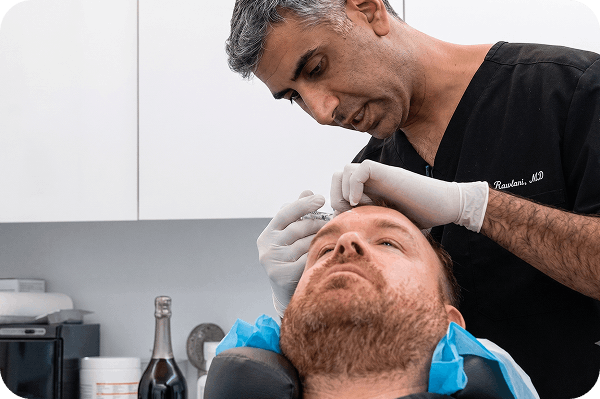
Follicular Unit Extraction (FUE) is the standard surgical technique for hair restoration, and for adults in Chicago comparing a FUE hair transplant Chicago option, Northwestern Hair’s No-Touch FUE is a physician-led, minimally invasive approach built to protect graft health and produce natural, long-lasting results. What changes the outcome is two things: how the hairline and crown are designed, and how well each graft is protected through technique and personalized planning to achieve the best results. No-Touch FUE is a technique to optimize the health of the grafts in a FUE procedure. The principle is simple: don’t touch the graft unless you absolutely have to. Every time you touch the graft, you introduce a chance for injury and an unnatural appearance when the graft grows.
The very first hair restoration procedure I observed, I was appalled by the way the delicate tissues were being handled. The technicians and surgeons were crushing the grafts every time they touched them with tweezers. The grafts were being pinched, pulled and stripped. Yes, people were focused on keeping the follicle healthy, but what about the rest of the hair. As a plastic surgeon, I knew that poor outcomes came straight from technique — the sheer force a tweezer applies to something so small and delicate. Months later, when I followed the patients, I knew why the results didn’t look good. Hairs were kinky from crushed shafts. Hairs were dry and brittle from crushed oil glands. And some hairs were weak because the follicle itself had been injured. When I started practice, I immediately implemented the No-Touch technique. I told everyone on the team don’t touch the graft unless you absolutely have to. Every time you touch the graft, you introduce a chance for injury and a chance for unnatural results. Let’s use suction instead of tweezers. Let’s plan the procedures ahead of time so we don’t have to touch the graft later. Let’s do everything possible to protect the health of the graft. I was right. The results speak: our patients had fewer kinks, less dryness, and more natural outcomes because of our no-touch principles. This set the foundation for the entire practice moving forward, eventually evolving into even more of my advanced techniques, such as Micro PUE®.
Choose your technique
You are here
No-Touch FUE
The most natural results an FUE technique can produce by delicate handling of hair grafts.
Why Patients Choose No-Touch FUE at Northwestern Hair
Deliberate, delicate handling of every graft.
Prevents injury to grafts and produces the most natural results possible from FUE.
Expertise that shows in the results
Over 50 years of combined experience at the most vulnerable step of the procedure.
Foundation for every Northwestern Hair surgical procedure
Every Micro PUE®, Discreet PUE®, and Long-Hair PUE® builds on the No-Touch FUE method.
What is a hair transplant graft?
FUE Elevated to Northwestern Hair's Minimum Standard
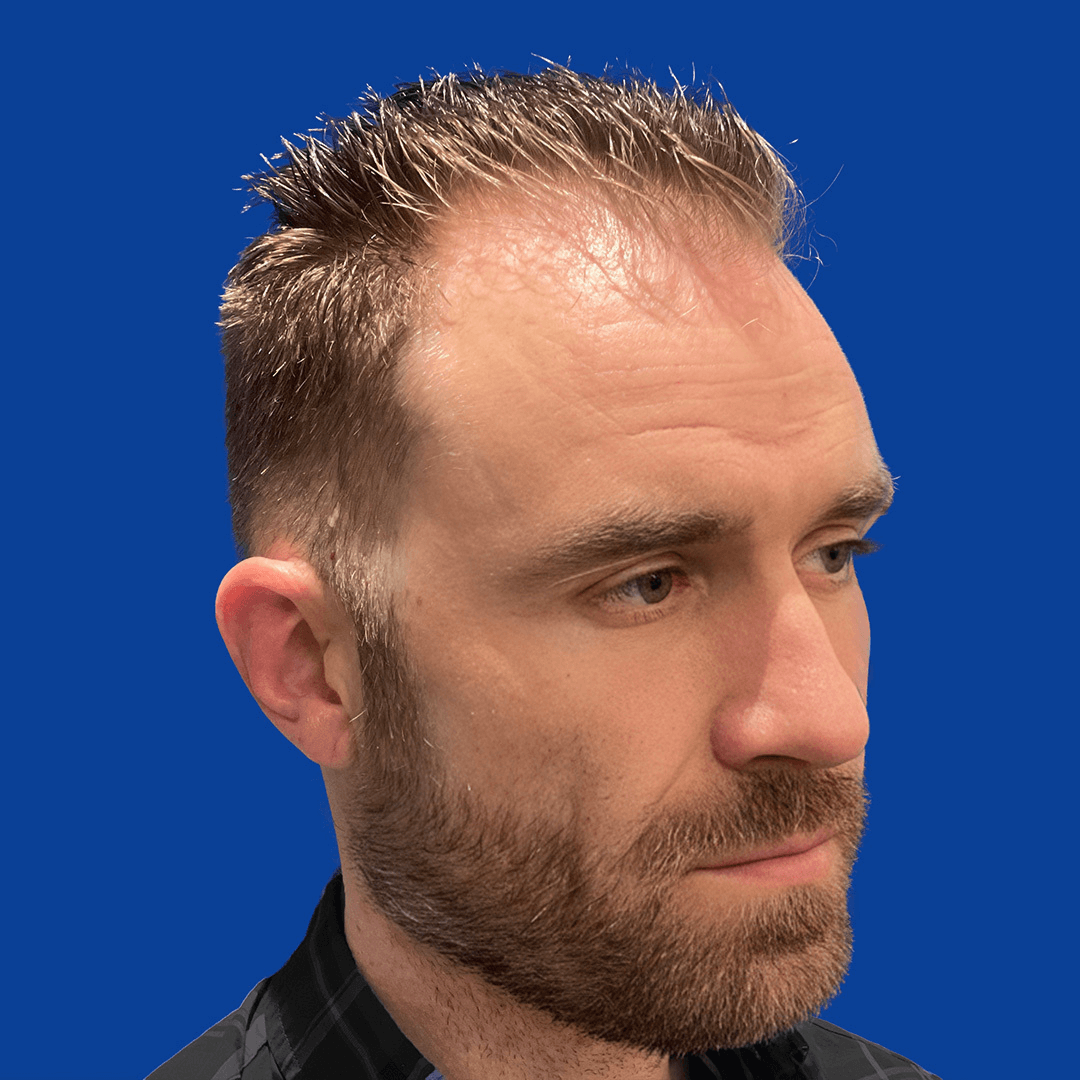
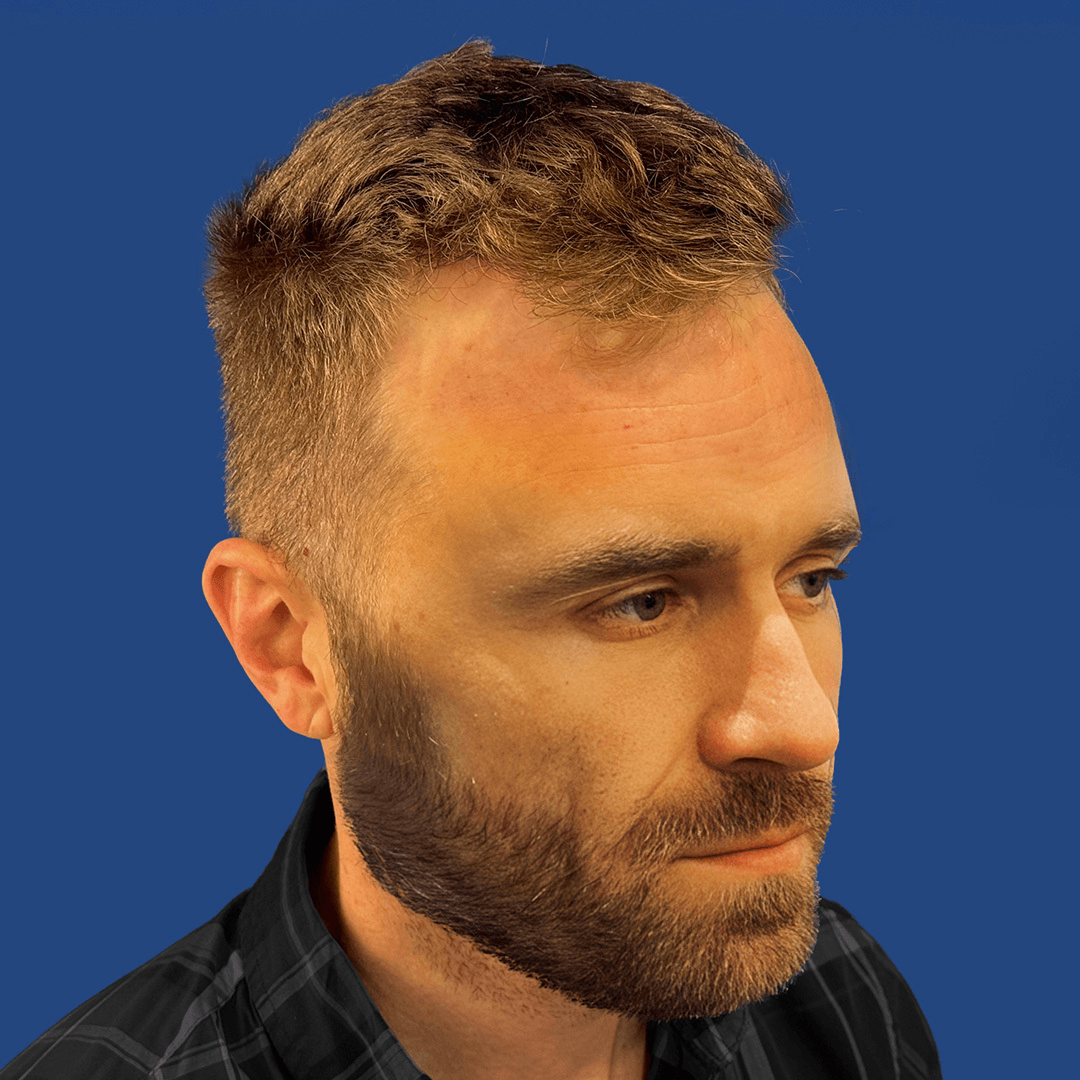
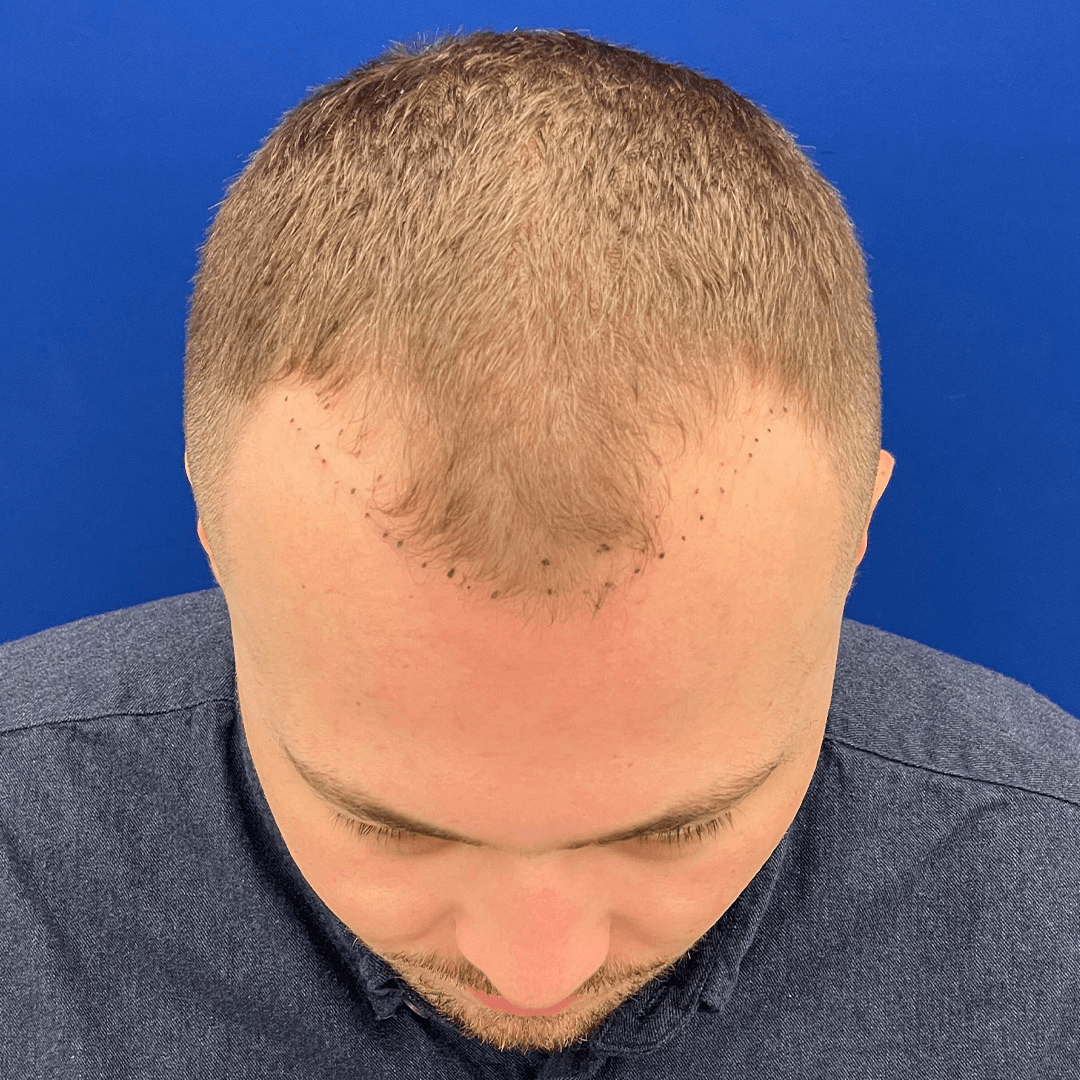
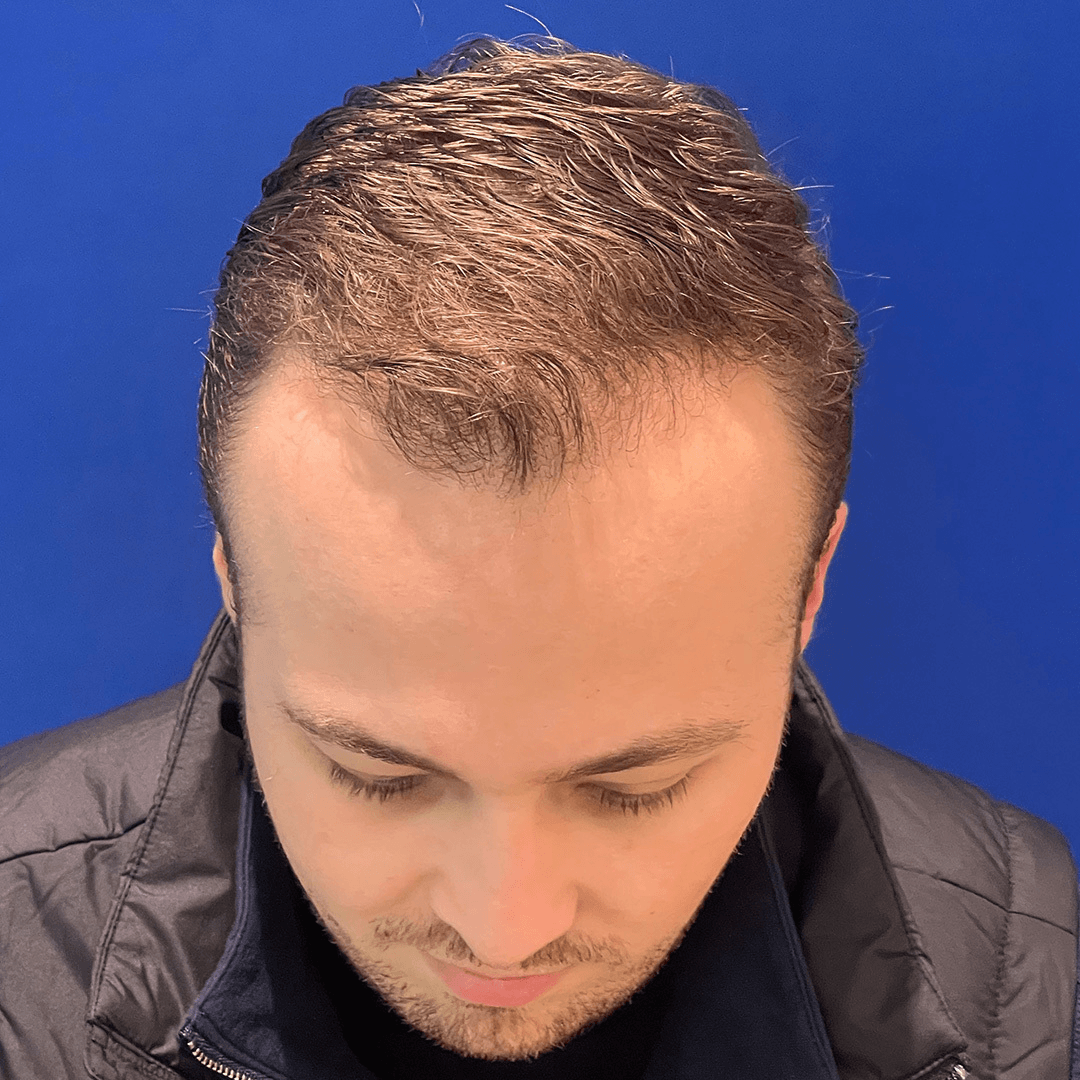
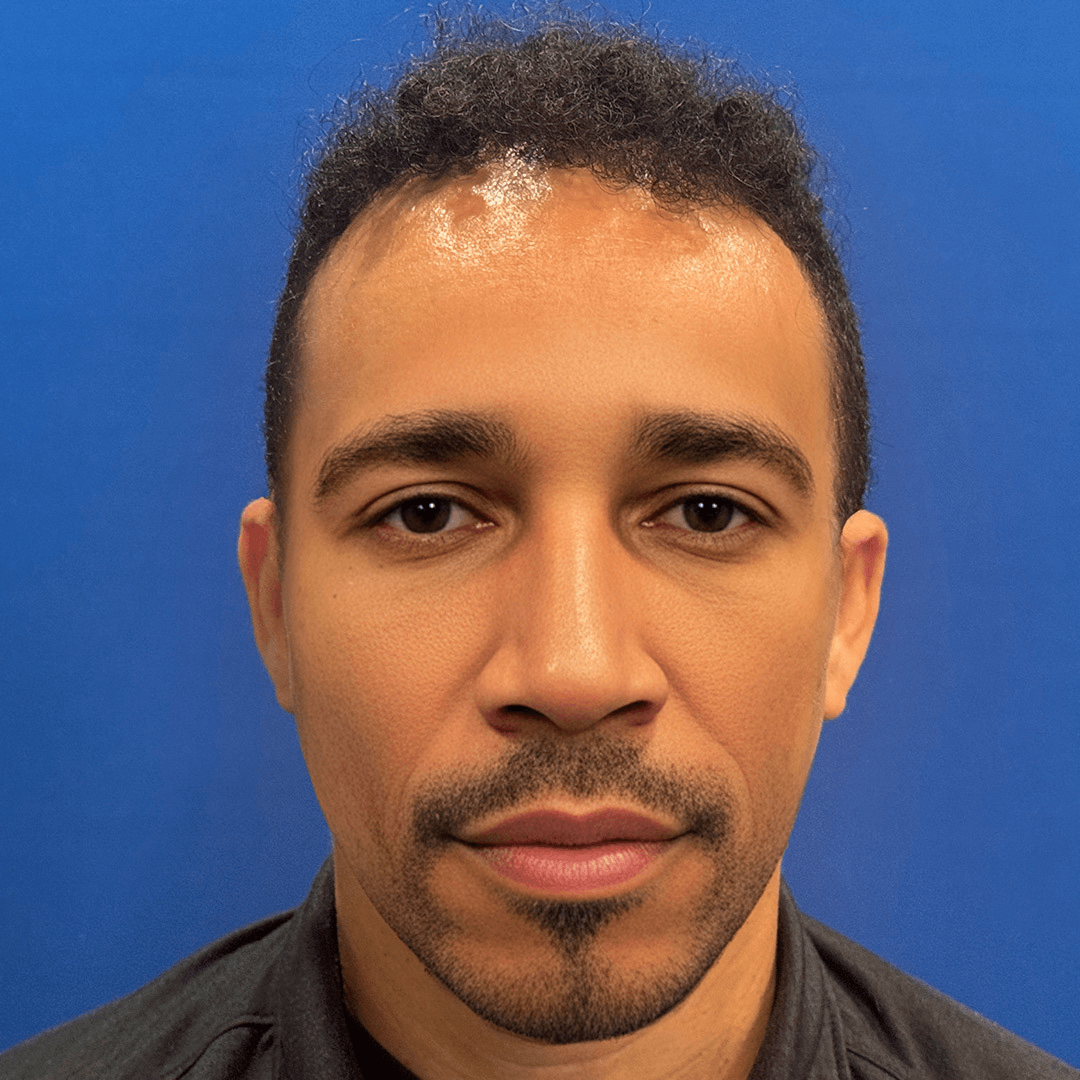
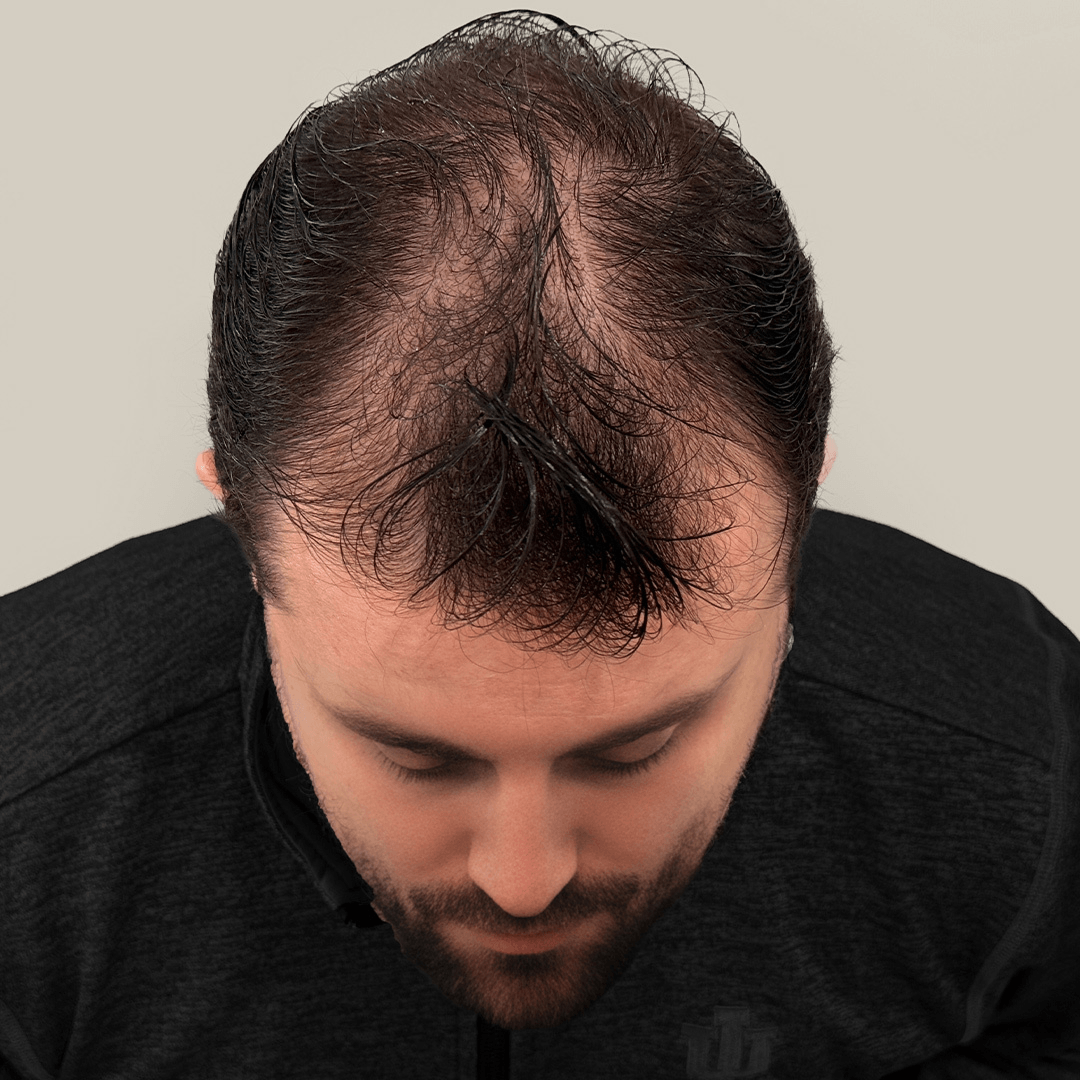
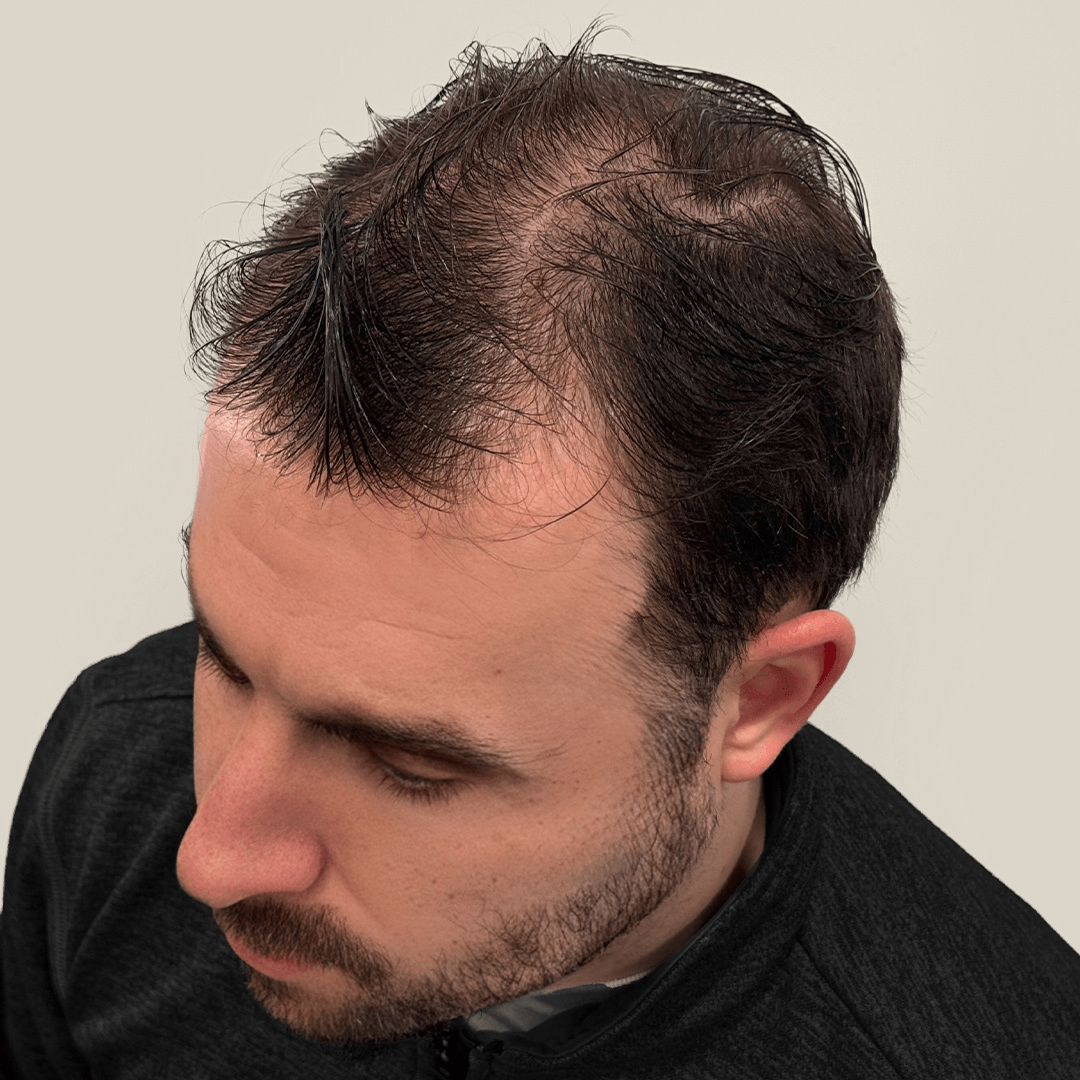
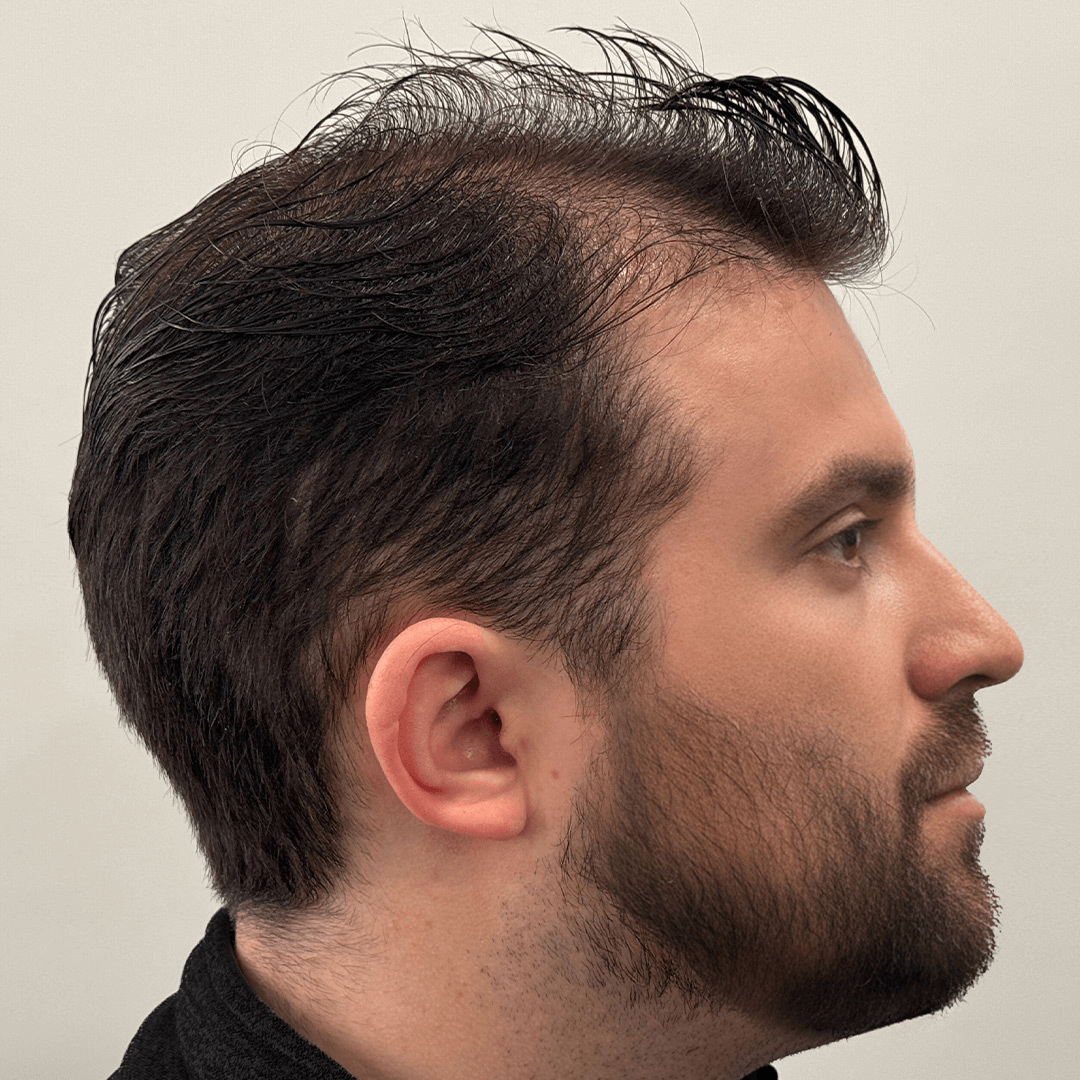
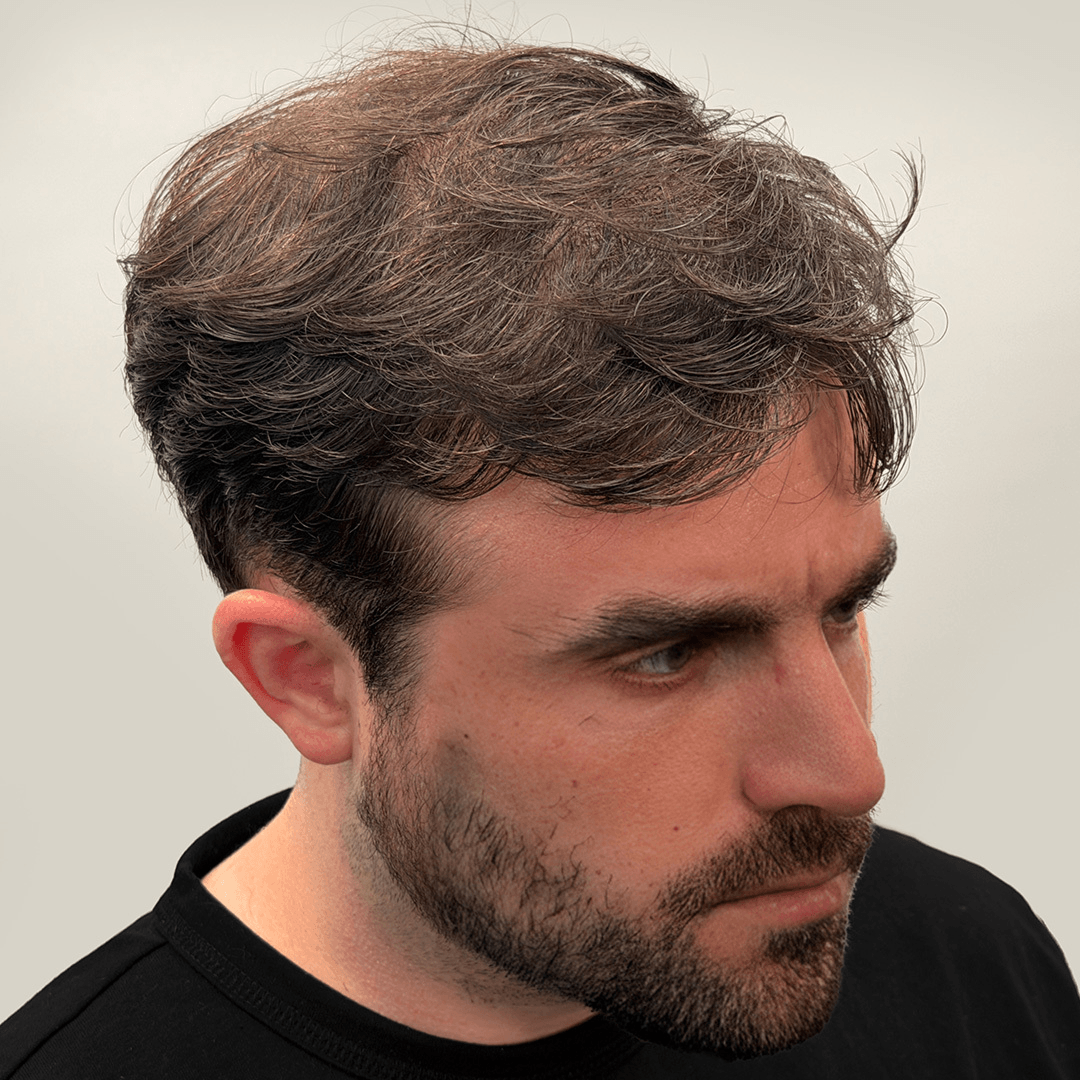
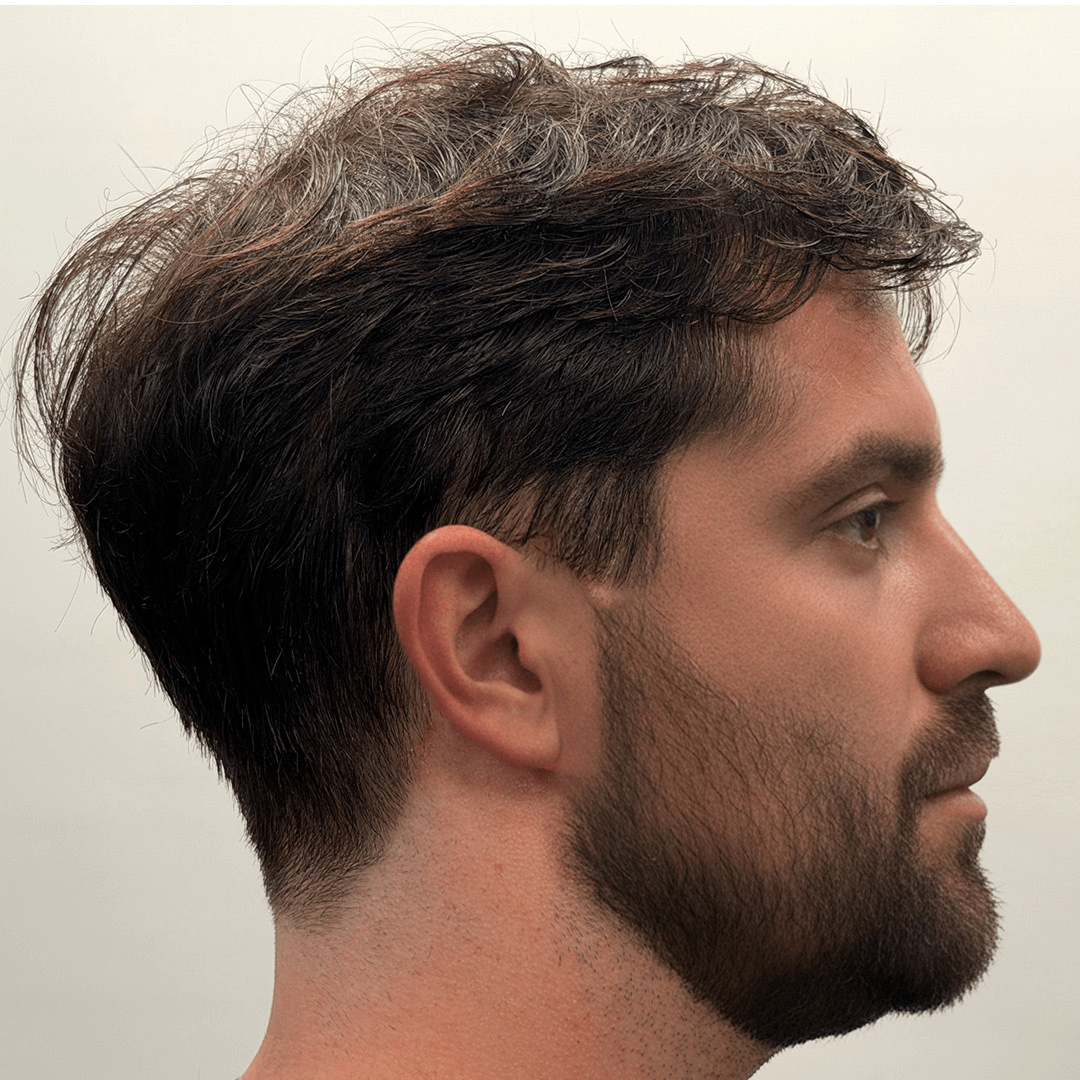
FUE has become the standard surgical technique for hair restoration around the world, but the technique alone is the beginning of what’s possible. The result can be designed to look natural across decades, not just at the one-year mark. The grafts placed can be healthier, growing in like hair rather than reading as grafts. No-Touch FUE is the set of fundamental changes Northwestern Hair makes to standard FUE to deliver both. It’s the procedure every Northwestern Hair patient receives unless their case calls for something more advanced, and our standard that we won’t compromise. The principle is simple to state and difficult to execute: don’t touch the graft unless you absolutely have to, and when you must, treat it as the fundamental unit being transferred. The more delicate the transfer, the less injury to the graft, the more naturally it grows. It’s a “handle with care” message that almost every FUE team forgets. The discipline is paired with Timeless Hairline and Crown Design: every hairline is planned by Dr. Vinay personally, designed for the face it’s framing and intended to age well across decades. Together, the two pillars create a new standard in FUE hair transplantation: a perfected design executed with the most natural-appearing grafts FUE can produce. Where No-Touch FUE differs from Micro PUE® is the extraction method itself. Micro PUE® is a fundamentally different extraction technology, developed in-house, producing healthier and hardier grafts than standard FUE can deliver. As a refined extraction option within our broader hair restoration services in Chicago, it reflects the same precision-first standard we hold across every technique. No-Touch FUE applies the no-touch discipline to standard FUE — the highest expression of what the standard technique is capable of, when handled correctly.
Before
After
FUE has become the standard surgical technique for hair restoration around the world, but the technique alone is the beginning of what’s possible. The result can be designed to look natural across decades, not just at the one-year mark. The grafts placed can be healthier, growing in like hair rather than reading as grafts. No-Touch FUE is the set of fundamental changes Northwestern Hair makes to standard FUE to deliver both. It’s the procedure every Northwestern Hair patient receives unless their case calls for something more advanced, and our standard that we won’t compromise. The principle is simple to state and difficult to execute: don’t touch the graft unless you absolutely have to, and when you must, treat it as the fundamental unit being transferred. The more delicate the transfer, the less injury to the graft, the more naturally it grows. It’s a “handle with care” message that almost every FUE team forgets. The discipline is paired with Timeless Hairline and Crown Design: every hairline is planned by Dr. Vinay personally, designed for the face it’s framing and intended to age well across decades. Together, the two pillars create a new standard in FUE hair transplantation: a perfected design executed with the most natural-appearing grafts FUE can produce. Where No-Touch FUE differs from Micro PUE® is the extraction method itself. Micro PUE® is a fundamentally different extraction technology, developed in-house, producing healthier and hardier grafts than standard FUE can deliver. As a refined extraction option within our broader hair restoration services in Chicago, it reflects the same precision-first standard we hold across every technique. No-Touch FUE applies the no-touch discipline to standard FUE — the highest expression of what the standard technique is capable of, when handled correctly.
Five Ways No-Touch FUE Delivers Better Results
Every FUE procedure follows the same basic process. Hair grafts are extracted one at a time from the donor area at the back and sides of the scalp, prepared for transfer, and placed into the area being restored. The technique has been the standard in hair restoration surgery for two decades, and on its face, every FUE looks like every other FUE. What separates them is what happens between the moment a graft is extracted and the moment it is placed. That is the work No-Touch FUE is built around, and the reason every FUE hair transplant at Northwestern Hair is performed this way. Standard FUE done well delivers good results for many patients. But when a result shows kinking, unnatural angles, or hairs that read as grafts rather than as hair, at least one of these five injuries went unmanaged. The five categories below cover the full territory.
01
Extraction
FUE extraction uses a small cylindrical blade called a punch bit, fitted to a rotating handpiece. The punch cuts a circular core around each graft, scoring the tissue so the graft can be lifted out. Within millimeters of that cutting edge are the follicle, the oil glands, and the protective tissue that determines how the hair grows once it’s placed. Any of them can be damaged before the graft leaves the donor area.
Most clinics use the smallest possible punch and market this as a benefit. The clinical evidence doesn’t support the claim. Punch sizes below 1 millimeter heal at nearly the same rate as larger sizes, and going smaller doesn’t protect the graft — it just narrows the margin for error around the structures it’s trying to protect. What protects the graft isn’t a smaller punch. It’s a punch sized to the graft itself.
Single-hair grafts get the smallest appropriate punch. Double-hair grafts get a mid-sized punch. Triple-hair grafts get a larger punch. Each bit sized to extract its specific graft cleanly while preserving the protective tissue around it.
The match isn’t possible without a plan. You can’t size the punch to the graft if you don’t already know what graft you’re about to extract. Every No-Touch FUE at Northwestern Hair is mapped under magnification before extraction begins. Donor zones identified, graft types counted, harvest sequence set. The surgical team executes against that plan with the right punch for each step.
The planning is included in every No-Touch FUE at no additional cost.
Always use the right bit size for the right size hair. Smaller is not always better.”
FUE extraction uses a small cylindrical blade called a punch bit, fitted to a rotating handpiece. The punch cuts a circular core around each graft, scoring the tissue so the graft can be lifted out. Within millimeters of that cutting edge are the follicle, the oil glands, and the protective tissue that determines how the hair grows once it’s placed. Any of them can be damaged before the graft leaves the donor area.
Most clinics use the smallest possible punch and market this as a benefit. The clinical evidence doesn’t support the claim. Punch sizes below 1 millimeter heal at nearly the same rate as larger sizes, and going smaller doesn’t protect the graft — it just narrows the margin for error around the structures it’s trying to protect. What protects the graft isn’t a smaller punch. It’s a punch sized to the graft itself.
Single-hair grafts get the smallest appropriate punch. Double-hair grafts get a mid-sized punch. Triple-hair grafts get a larger punch. Each bit sized to extract its specific graft cleanly while preserving the protective tissue around it.
The match isn’t possible without a plan. You can’t size the punch to the graft if you don’t already know what graft you’re about to extract. Every No-Touch FUE at Northwestern Hair is mapped under magnification before extraction begins. Donor zones identified, graft types counted, harvest sequence set. The surgical team executes against that plan with the right punch for each step.
The planning is included in every No-Touch FUE at no additional cost.
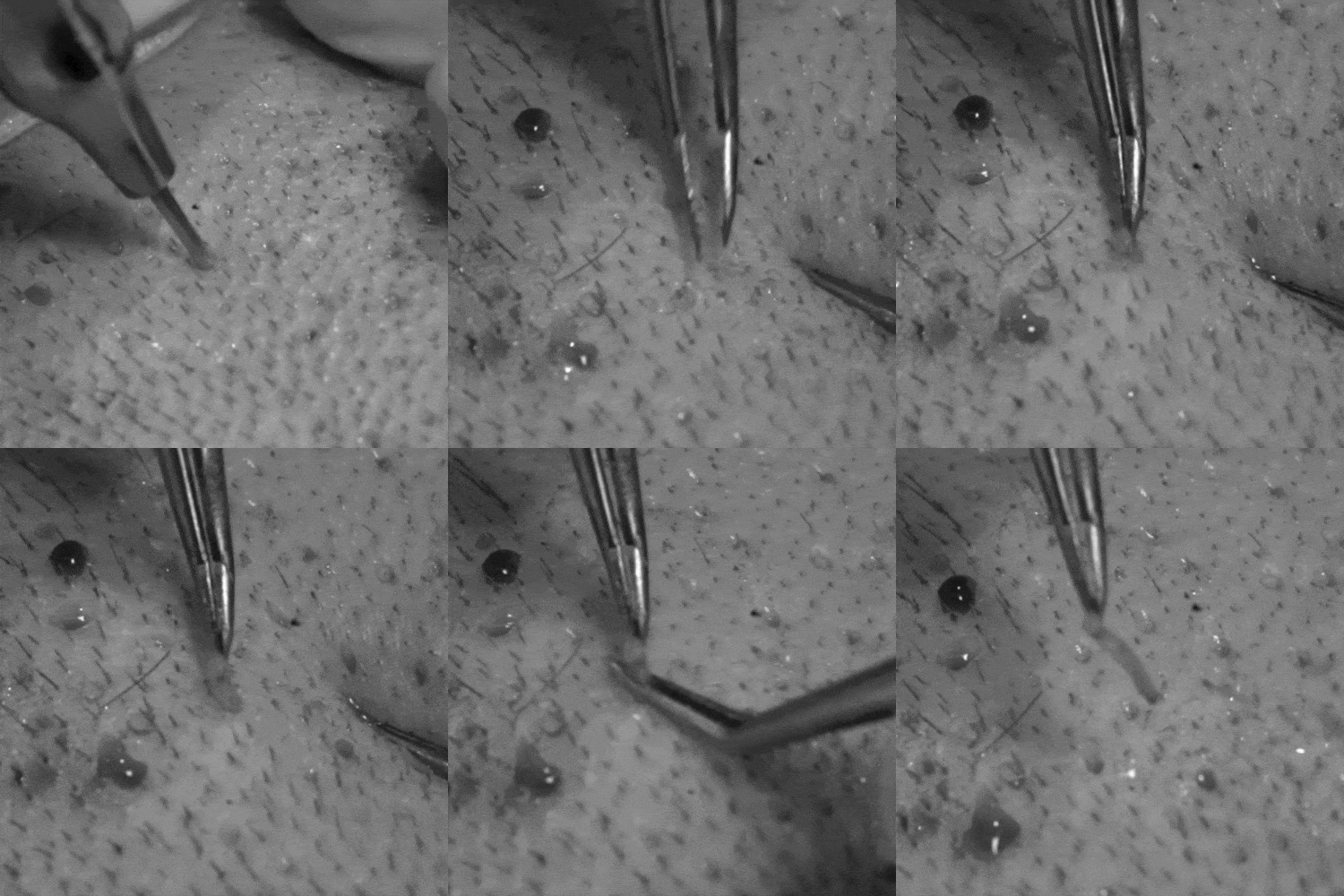
Standard FUE is a two-step extraction, and most patients are never told this. The cylindrical bit cuts the walls around the graft, but it doesn’t cut the base. The follicle remains anchored to the underlying tissue. To finish the extraction, someone (usually a technician) uses tweezers to pull the graft free. This is where the most damage happens in a standard FUE. A still-anchored follicle resists the pull, the tweezer either tears the base loose with excessive force or leaves the follicle behind, and the structures around it absorb the violence: oil glands crushed, hair tracts kinked, the base of the follicle torn away from the tissue that was supposed to feed it. Northwestern Hair eliminates this step by adapting gentle suction. As the punch cuts the walls of the graft, gentle suction slowly elevates the graft upright within the cylinder. The follicle releases from its base on its own, at its own pace, without being torn loose. A precisely trained motion by the surgeon completes the release. The work that produces the most damage in standard FUE — the tweezer pull — never happens.
02
Removing the Graft from the Scalp
Standard FUE is a two-step extraction, and most patients are never told this. The cylindrical bit cuts the walls around the graft, but it doesn’t cut the base. The follicle remains anchored to the underlying tissue. To finish the extraction, someone (usually a technician) uses tweezers to pull the graft free. This is where the most damage happens in a standard FUE. A still-anchored follicle resists the pull, the tweezer either tears the base loose with excessive force or leaves the follicle behind, and the structures around it absorb the violence: oil glands crushed, hair tracts kinked, the base of the follicle torn away from the tissue that was supposed to feed it. Northwestern Hair eliminates this step by adapting gentle suction. As the punch cuts the walls of the graft, gentle suction slowly elevates the graft upright within the cylinder. The follicle releases from its base on its own, at its own pace, without being torn loose. A precisely trained motion by the surgeon completes the release. The work that produces the most damage in standard FUE — the tweezer pull — never happens.
03
Evaluating Grafts for Viability
Not every graft that exits the donor area is viable. Standard FUE produces transection rates around 12 to 15 percent, meaning roughly one in seven grafts gets damaged in ways that compromise its ability to grow. If non-viable grafts go in alongside viable ones, the final result shows it: decreased density, visible gaps, the kind of patchy outcome a patient can’t unsee. The standard approach to this problem is to sort grafts after extraction. Every graft, healthy and damaged alike, gets picked up a second time, examined under magnification, and routed accordingly. Across thousands of grafts, that’s thousands of additional contact events, on grafts that have already been through extraction. At Northwestern Hair, viability is assessed as the graft exits the scalp. Each graft is evaluated in real time, under magnification, in the same moment it is placed onto the workstation. Non-viable grafts are flagged and removed from the procedure flow immediately. Viable grafts are picked up once, sorted on the way out, and routed directly to preservation. The second pickup never happens. One less touch, one less scar, one better hair.
04
Sorting Grafts
Once a graft is extracted, it has to be categorized before it can be placed. Single hair grafts go at the hairline, where the finest detail matters most. Double hair grafts go just behind, building density. Triples go in the mid-scalp and crown, where coverage matters more than precision. Three categories, three destinations, every graft sorted accordingly. That’s another injury-prone contact event on tissue that’s already been through extraction and viability assessment. Northwestern Hair sorts grafts before the procedure begins, pre-planning the exact number of single, double and triple hair grafts. Then, we extract grafts in sequence using the appropriate sized bit. Singles come out first, then doubles, then triples — with each type already grouped at the workstation by the time extraction is complete. The viability assessment at the moment of extraction means non-viable grafts are removed from the flow immediately, and the graft moves from extraction directly to preservation. The sort-after step is eliminated. Three thousand contact events that don’t happen.
03
Evaluating Grafts for Viability
SENSITIVE CONTENT - View Surgical Video
05
Placement
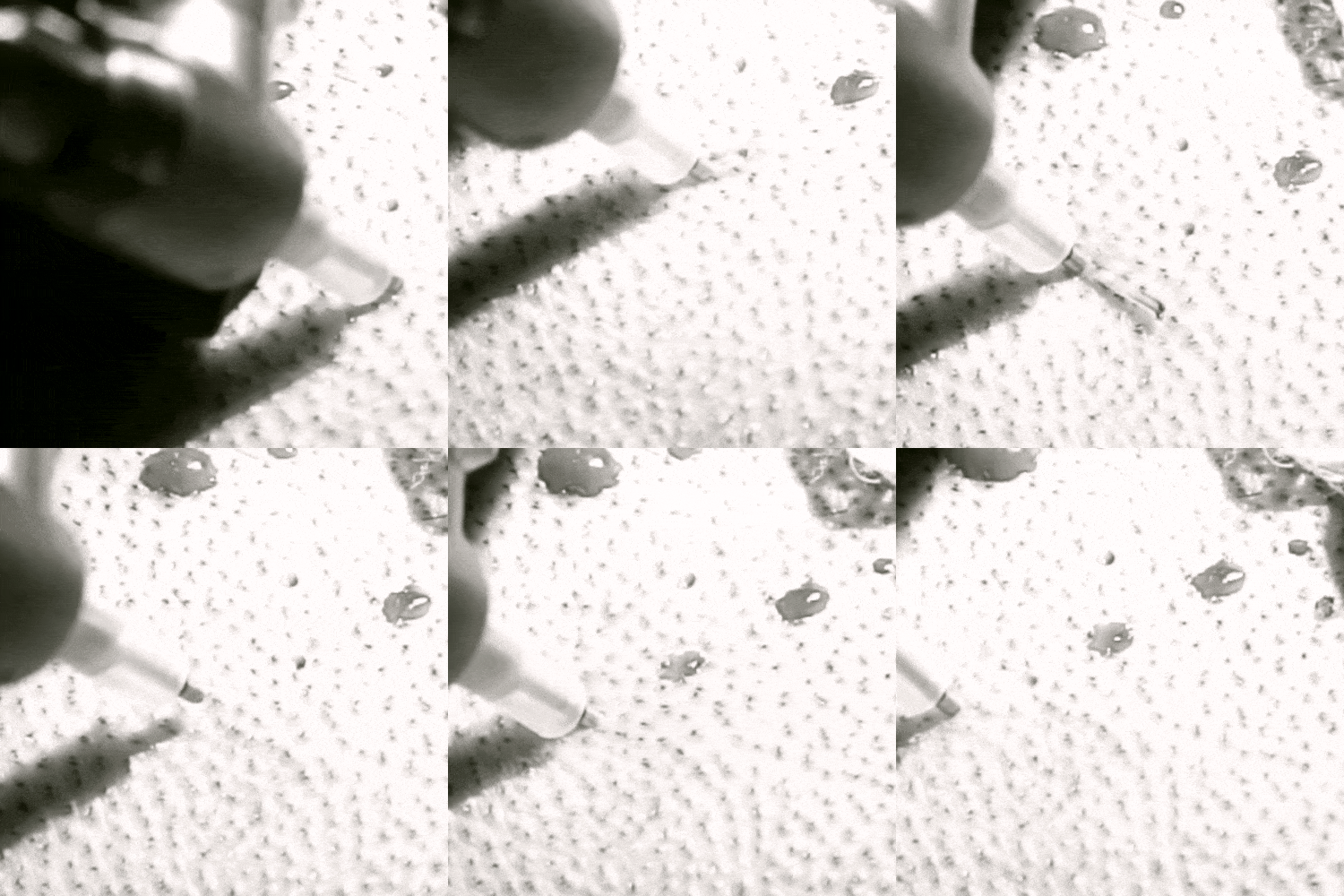
The final point. Each graft is placed into a recipient site, a small opening in the scalp where the new hair will grow. The placement is the most delicate moment in the entire procedure, because the graft has to be inserted at the right depth, the right angle, and the right orientation for the hair to grow naturally. Any of the three can be wrong, and all three depend on the placer. Two methods are used today. Direct Hair Implantation (DHI) uses a plunger device that loads the graft and pushes it into the scalp under concentrated thumb pressure — applied at the most vulnerable structural moment of the procedure, with the most force. Manual placement uses fine tweezers, controlled by hand, depending entirely on the experience of the person holding them. One wrong move or too much pressure can crush any part of the graft. At Northwestern Hair, we developed a placement technique that combines the value of both. From DHI, we take the idea of creating an opening for the hair to slide into cleanly. From manual placement, we take the delicate fine handling of the graft without the need for pressure. The recipient site is created first, using an SP89 blade — the thinnest blade available, which allows for precise control of depth and angle. A semi-circular tube, adapted from DHI, is then fitted into that slit to form a tunnel directly into the scalp. The graft is gently picked up and slid down the tube into its final position. No thumb pressure. No forcing. No crush injury. It is the perfect placement technique. The right angulation. The right depth. The right orientation. And no injury to the graft. It is the perfect way to end a No-Touch procedure.
The final point. Each graft is placed into a recipient site, a small opening in the scalp where the new hair will grow. The placement is the most delicate moment in the entire procedure, because the graft has to be inserted at the right depth, the right angle, and the right orientation for the hair to grow naturally. Any of the three can be wrong, and all three depend on the placer. Two methods are used today. Direct Hair Implantation (DHI) uses a plunger device that loads the graft and pushes it into the scalp under concentrated thumb pressure — applied at the most vulnerable structural moment of the procedure, with the most force. Manual placement uses fine tweezers, controlled by hand, depending entirely on the experience of the person holding them. One wrong move or too much pressure can crush any part of the graft. At Northwestern Hair, we developed a placement technique that combines the value of both. From DHI, we take the idea of creating an opening for the hair to slide into cleanly. From manual placement, we take the delicate fine handling of the graft without the need for pressure. The recipient site is created first, using an SP89 blade — the thinnest blade available, which allows for precise control of depth and angle. A semi-circular tube, adapted from DHI, is then fitted into that slit to form a tunnel directly into the scalp. The graft is gently picked up and slid down the tube into its final position. No thumb pressure. No forcing. No crush injury. It is the perfect placement technique. The right angulation. The right depth. The right orientation. And no injury to the graft. It is the perfect way to end a No-Touch procedure.
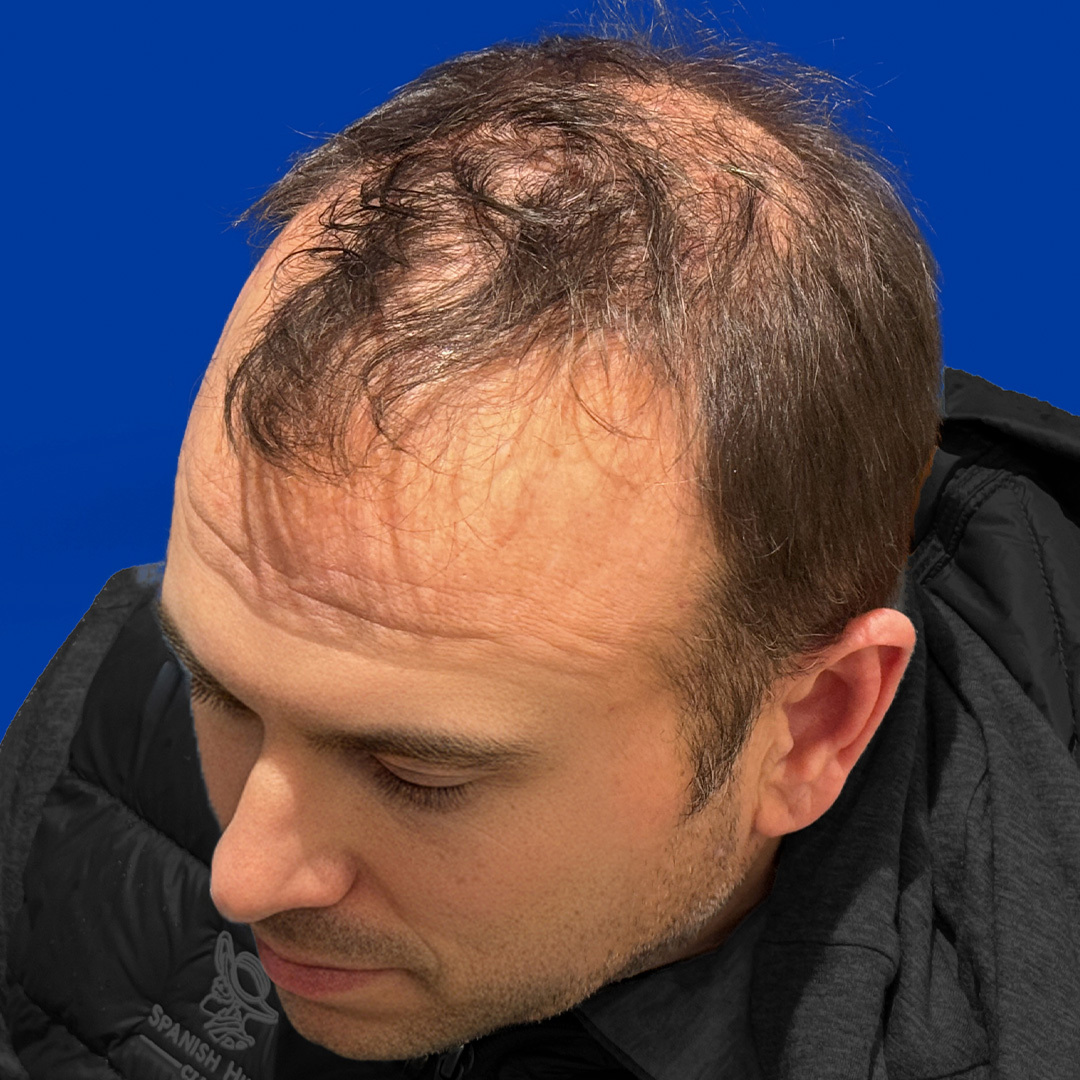
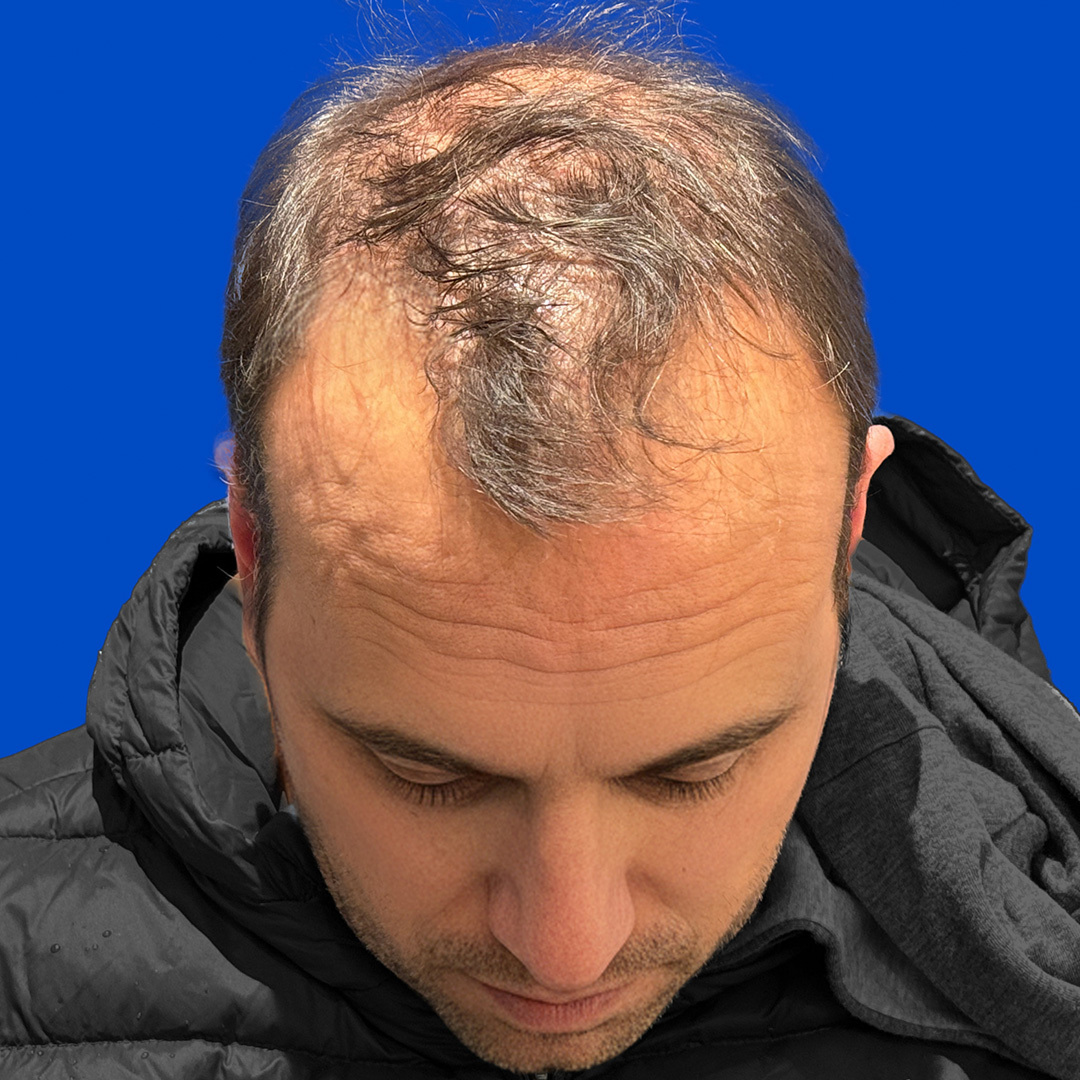
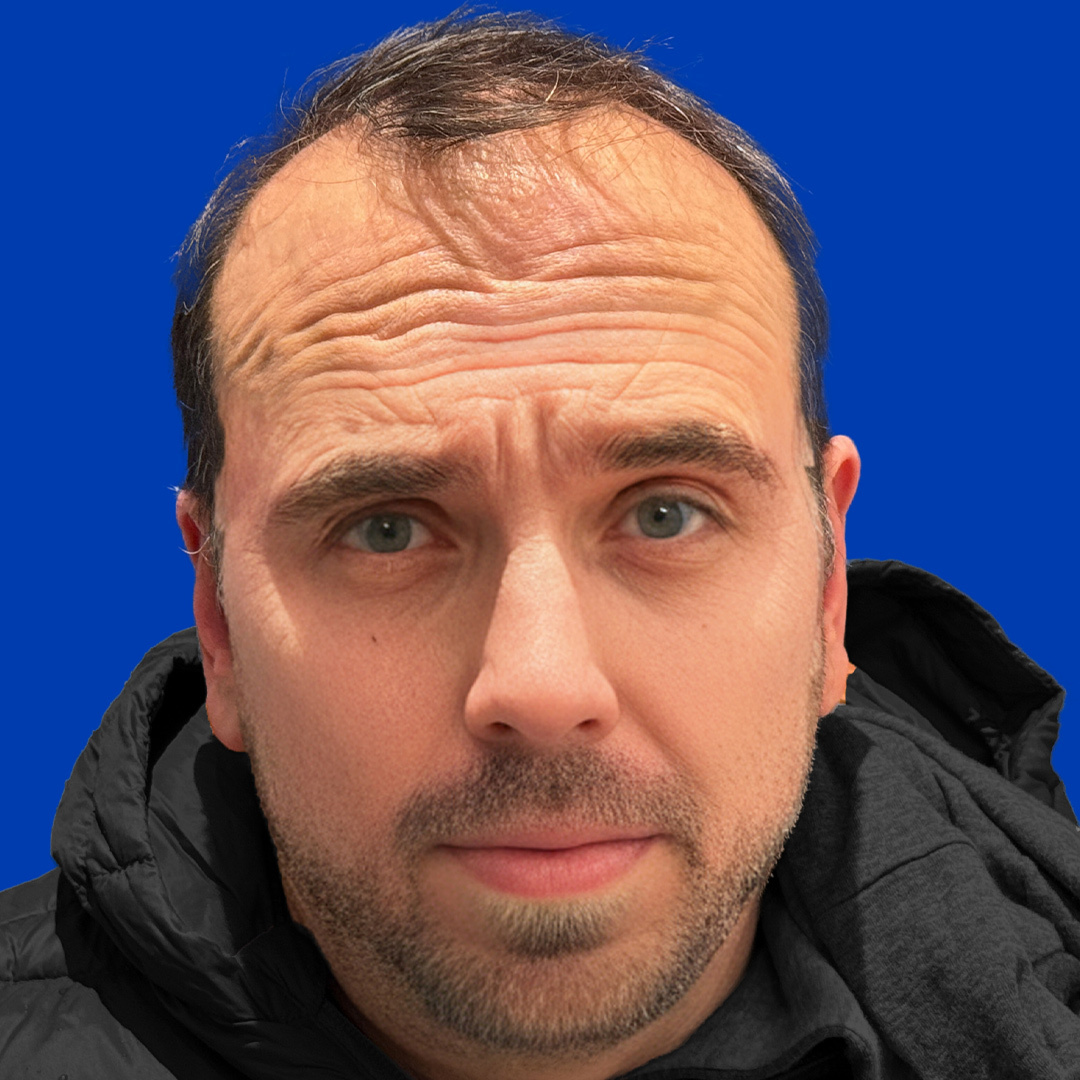
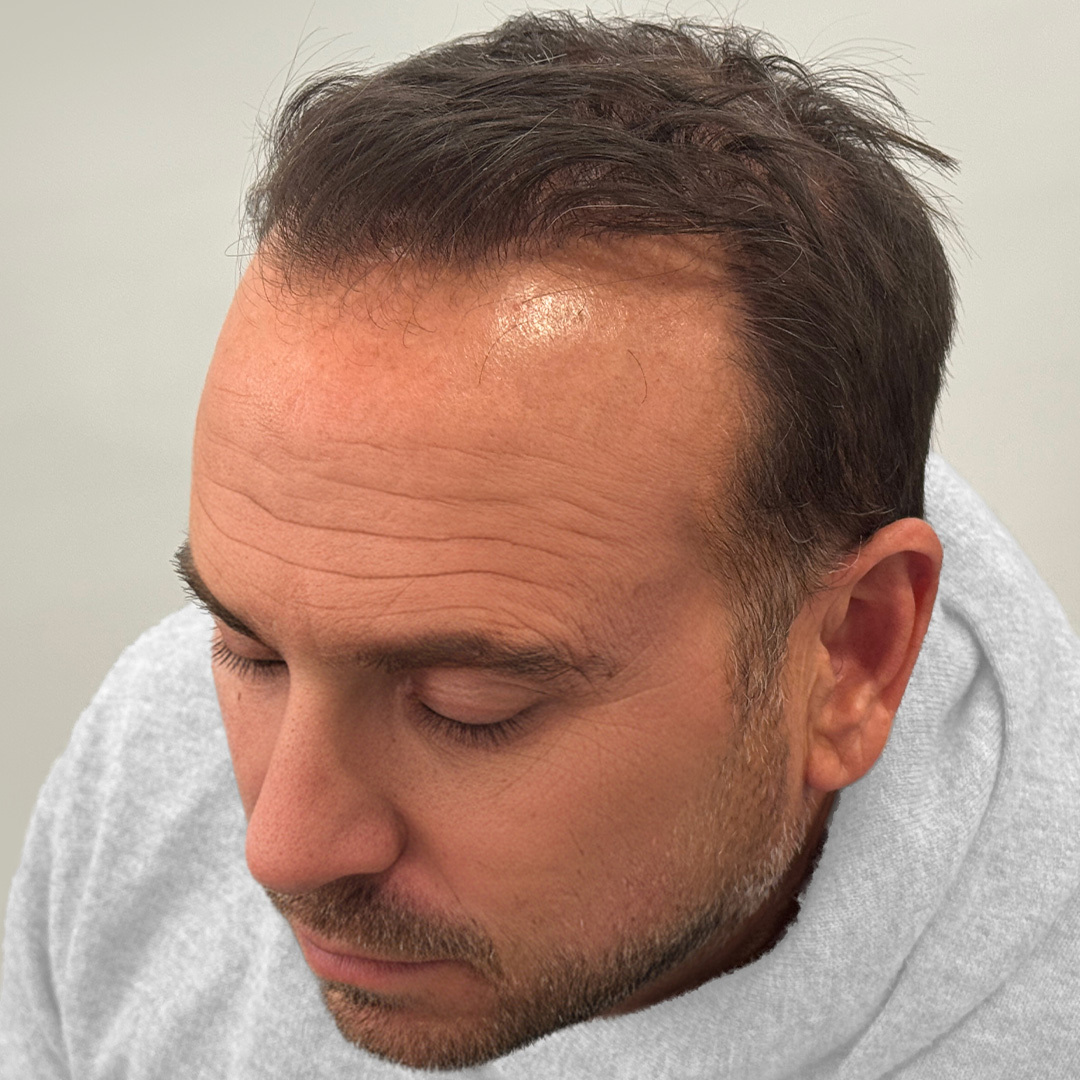
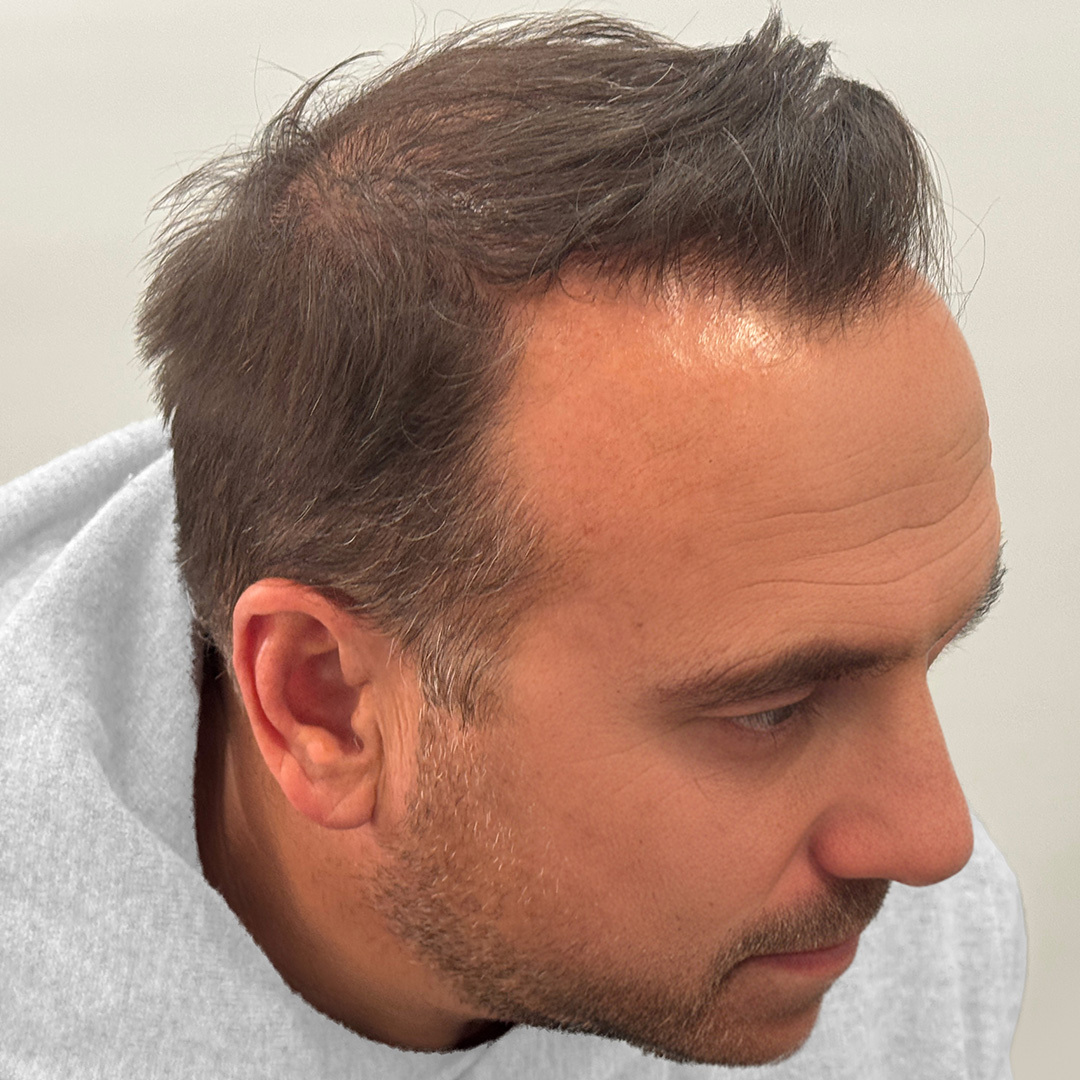
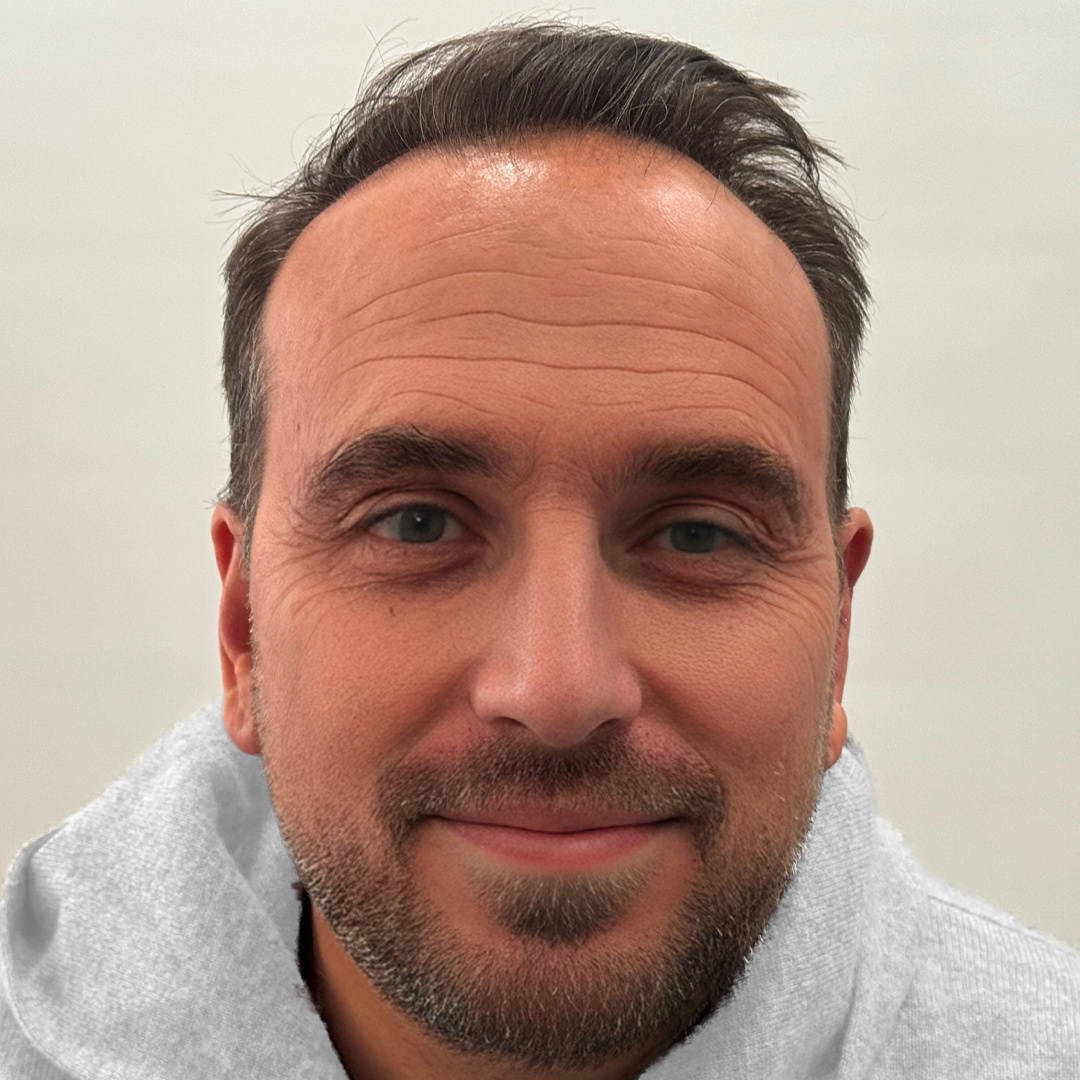
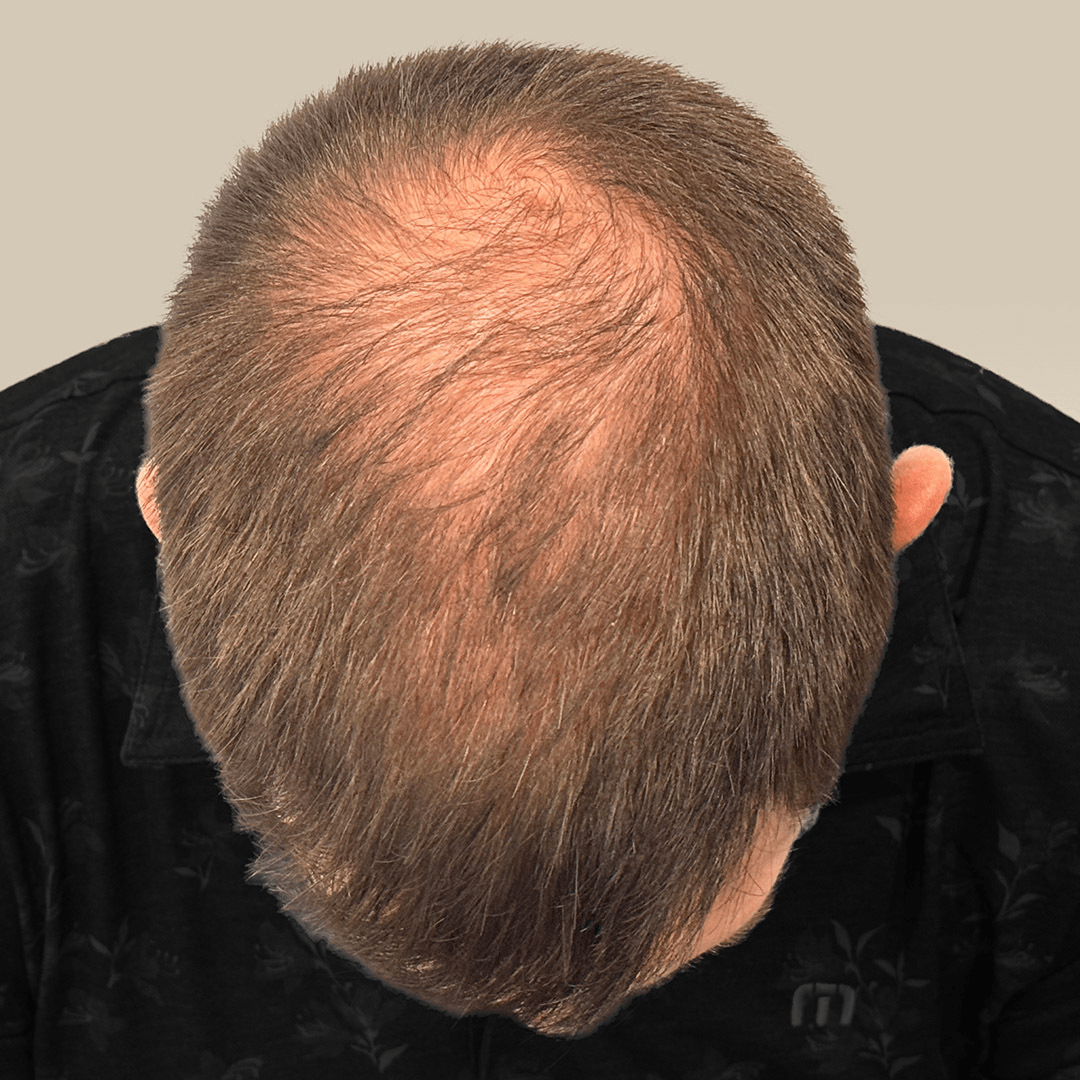
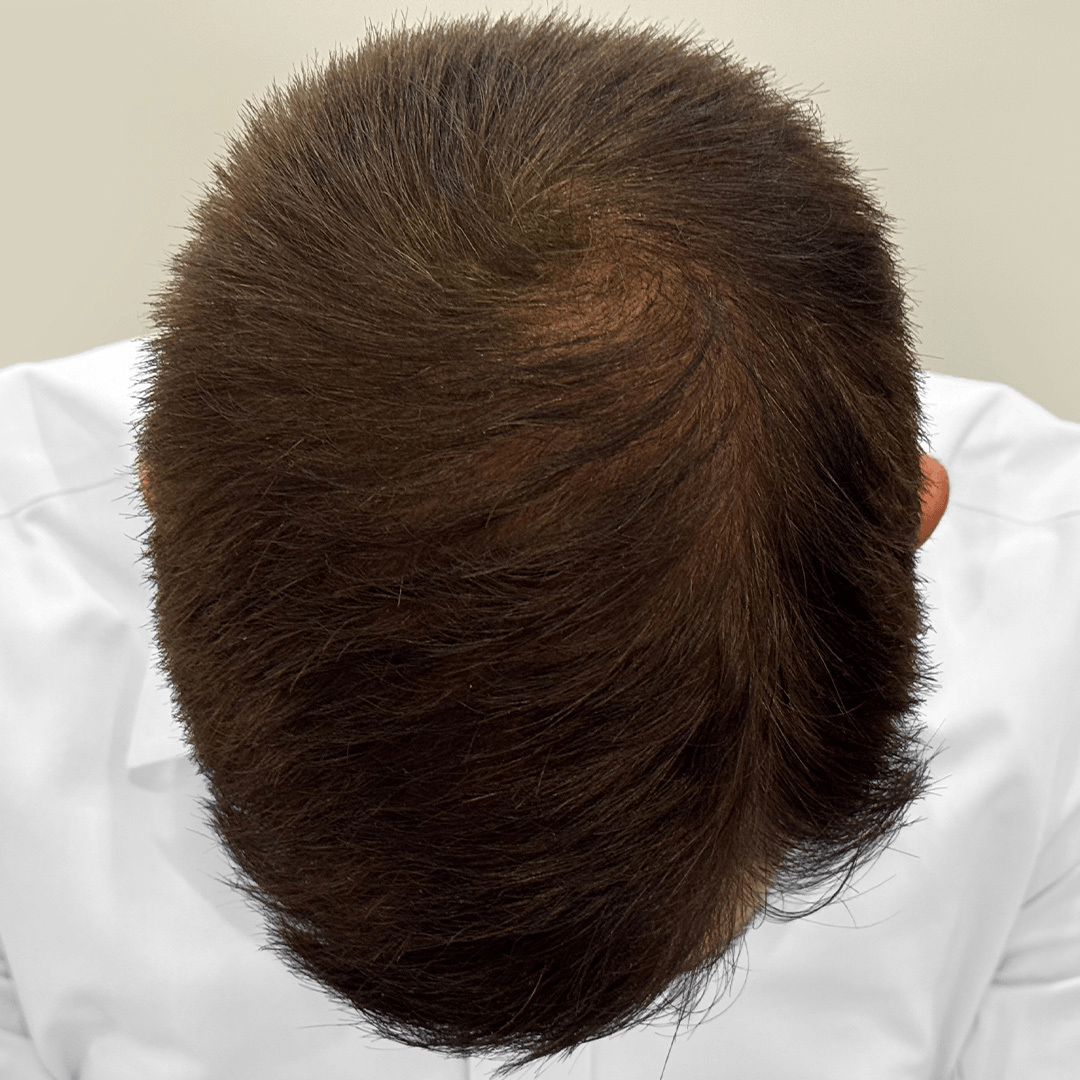
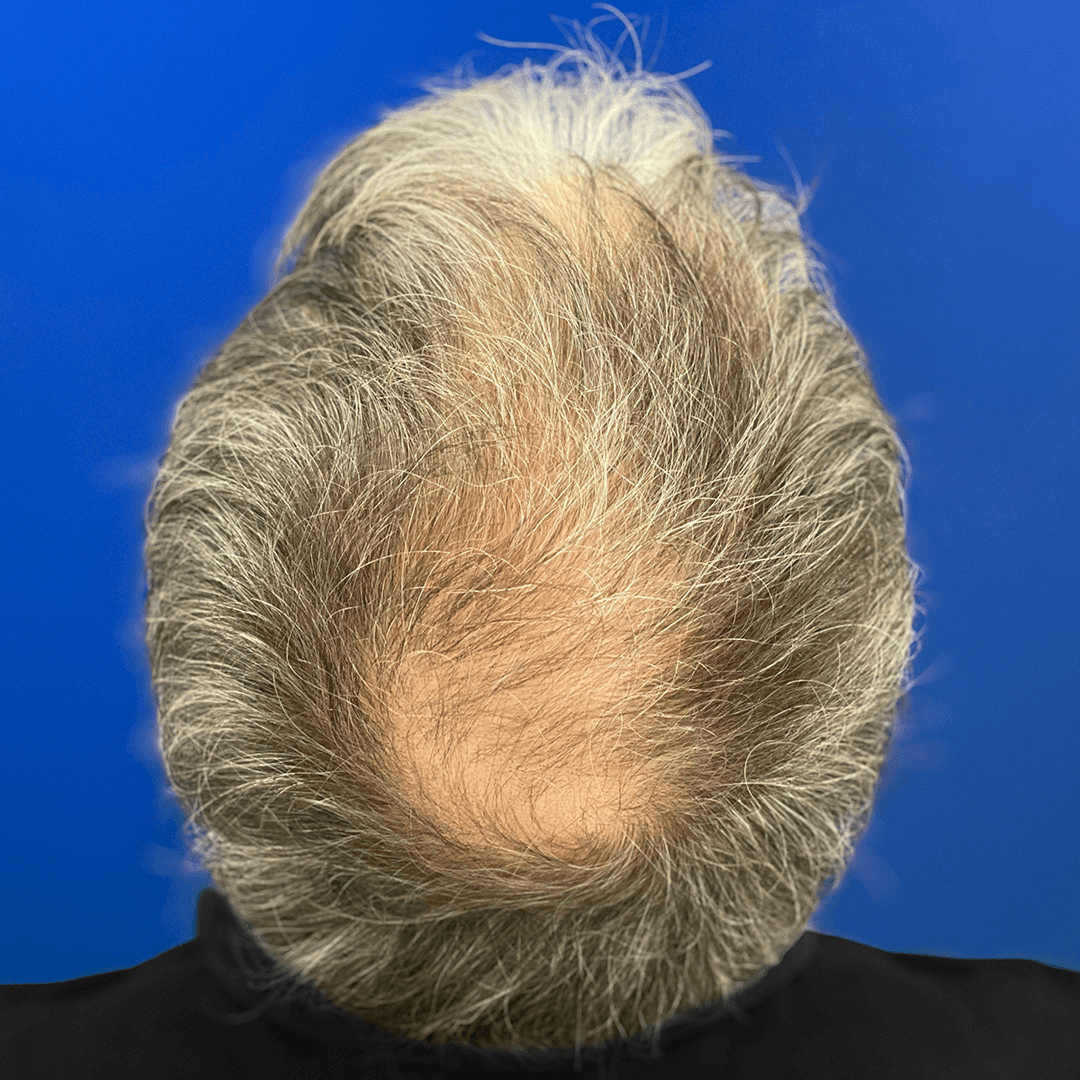
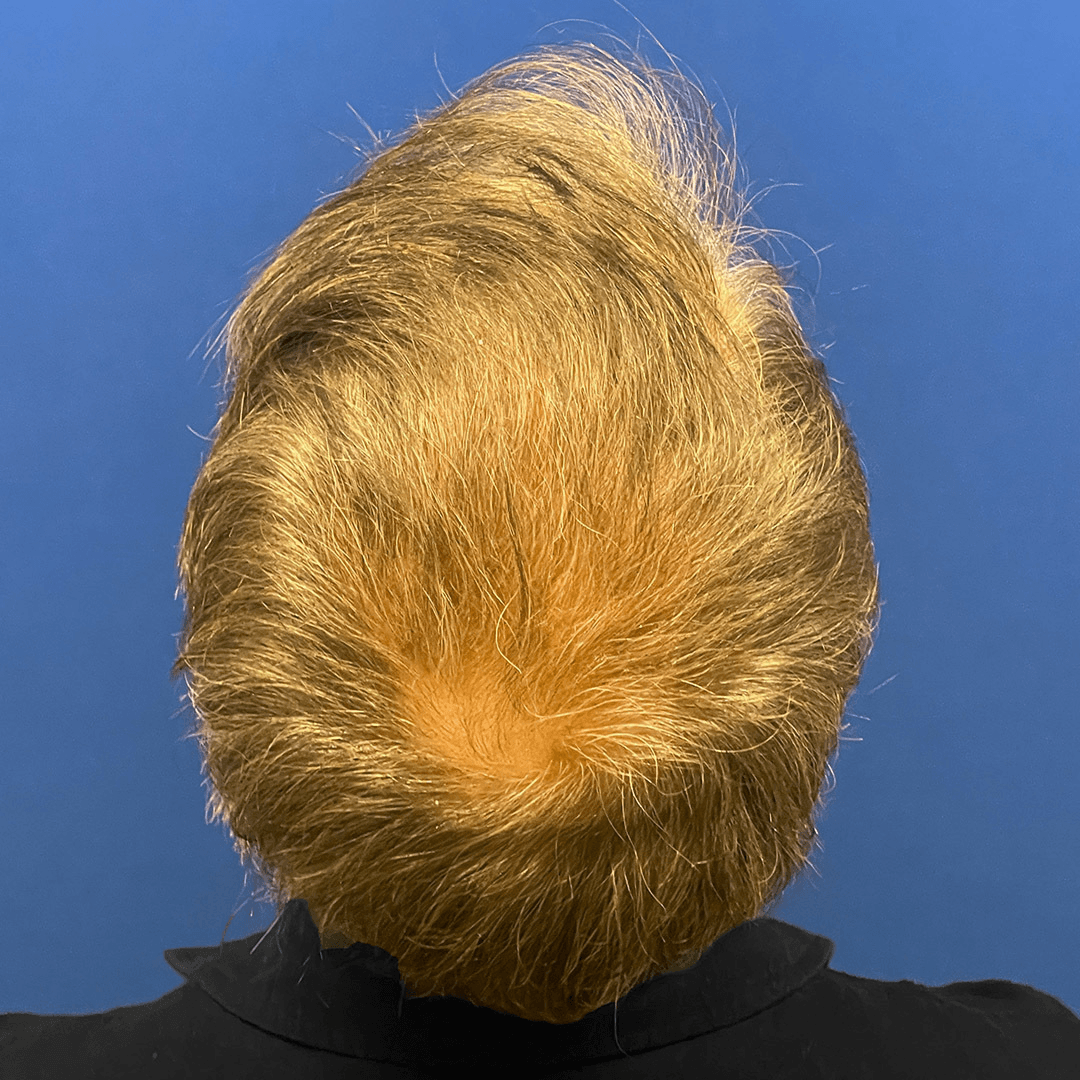
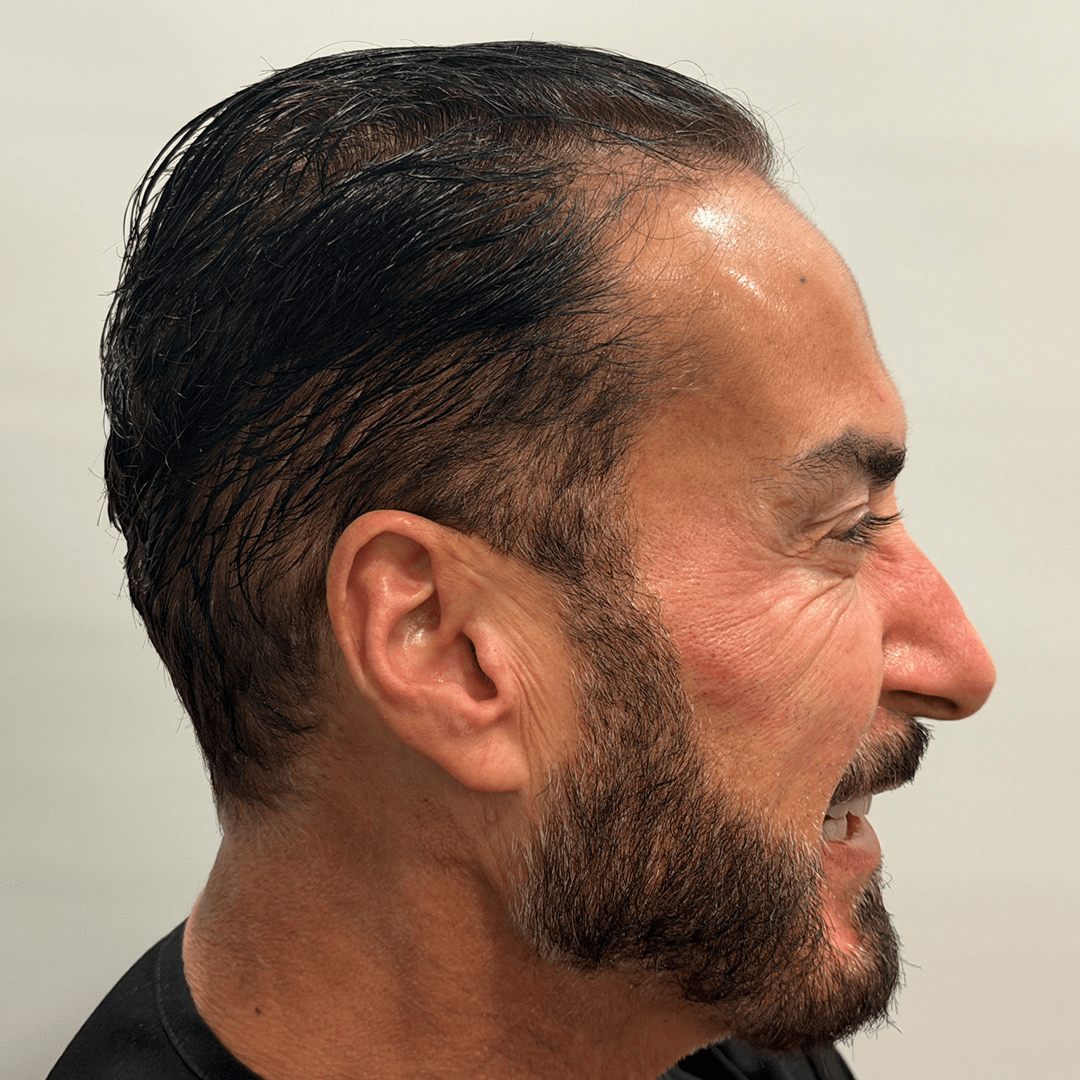
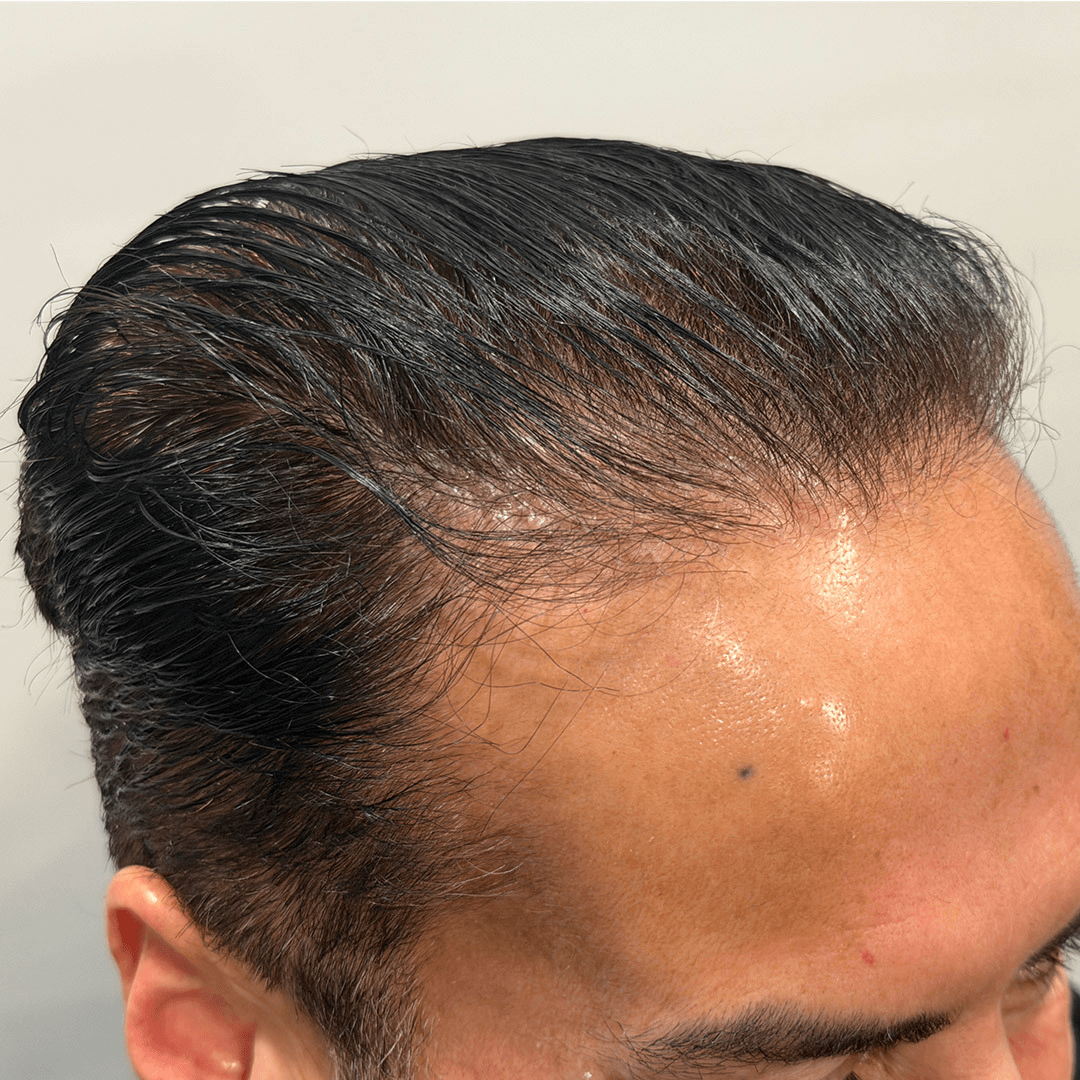
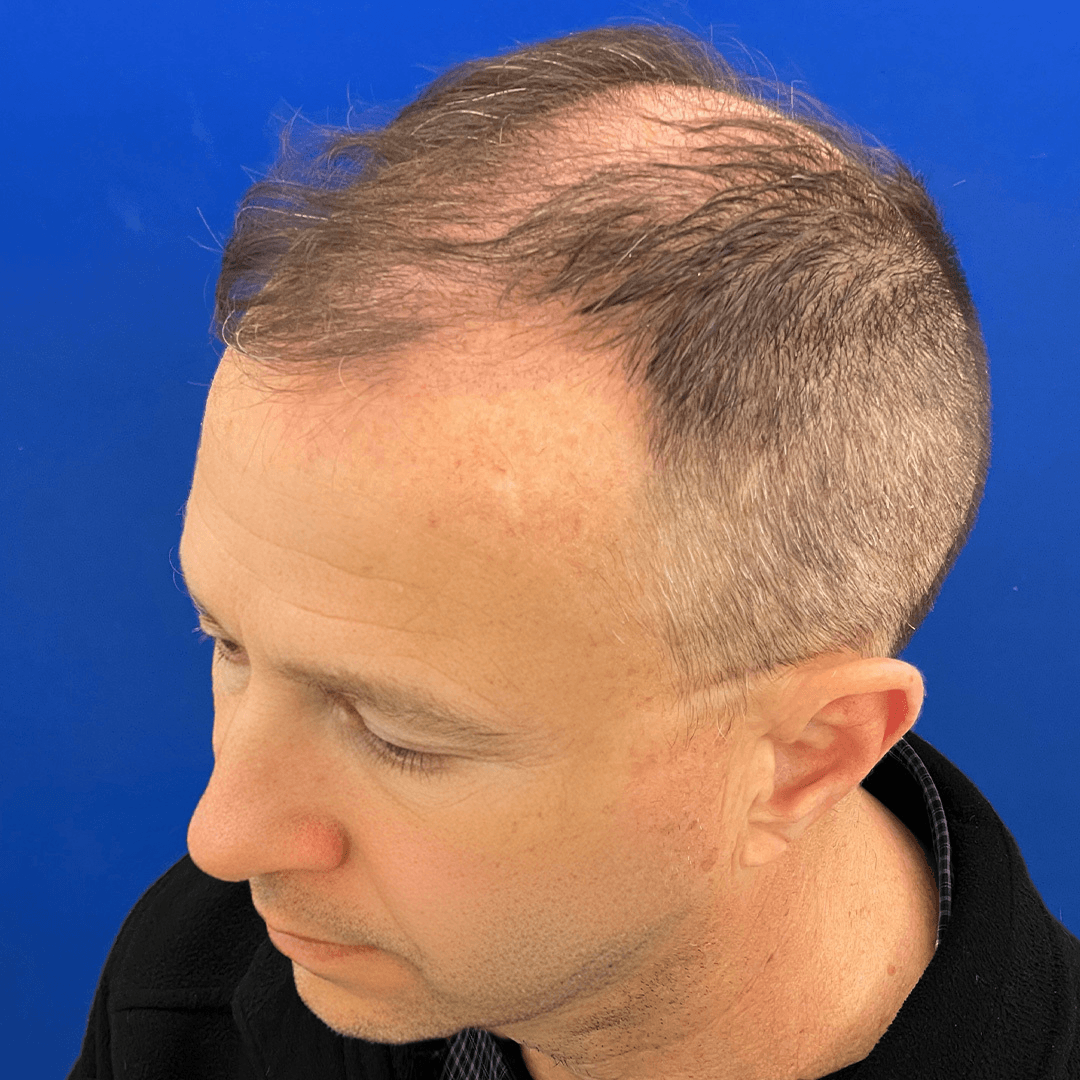
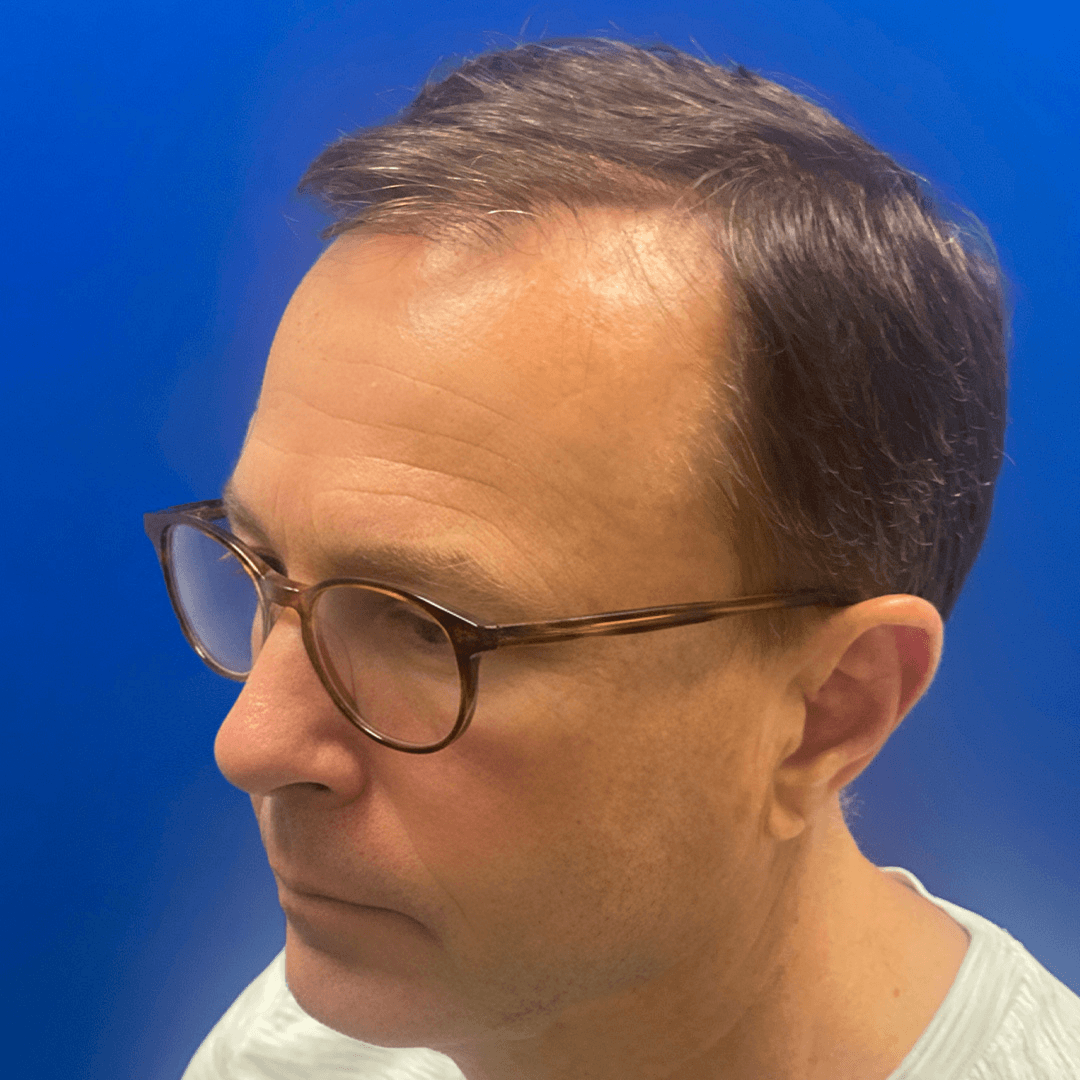
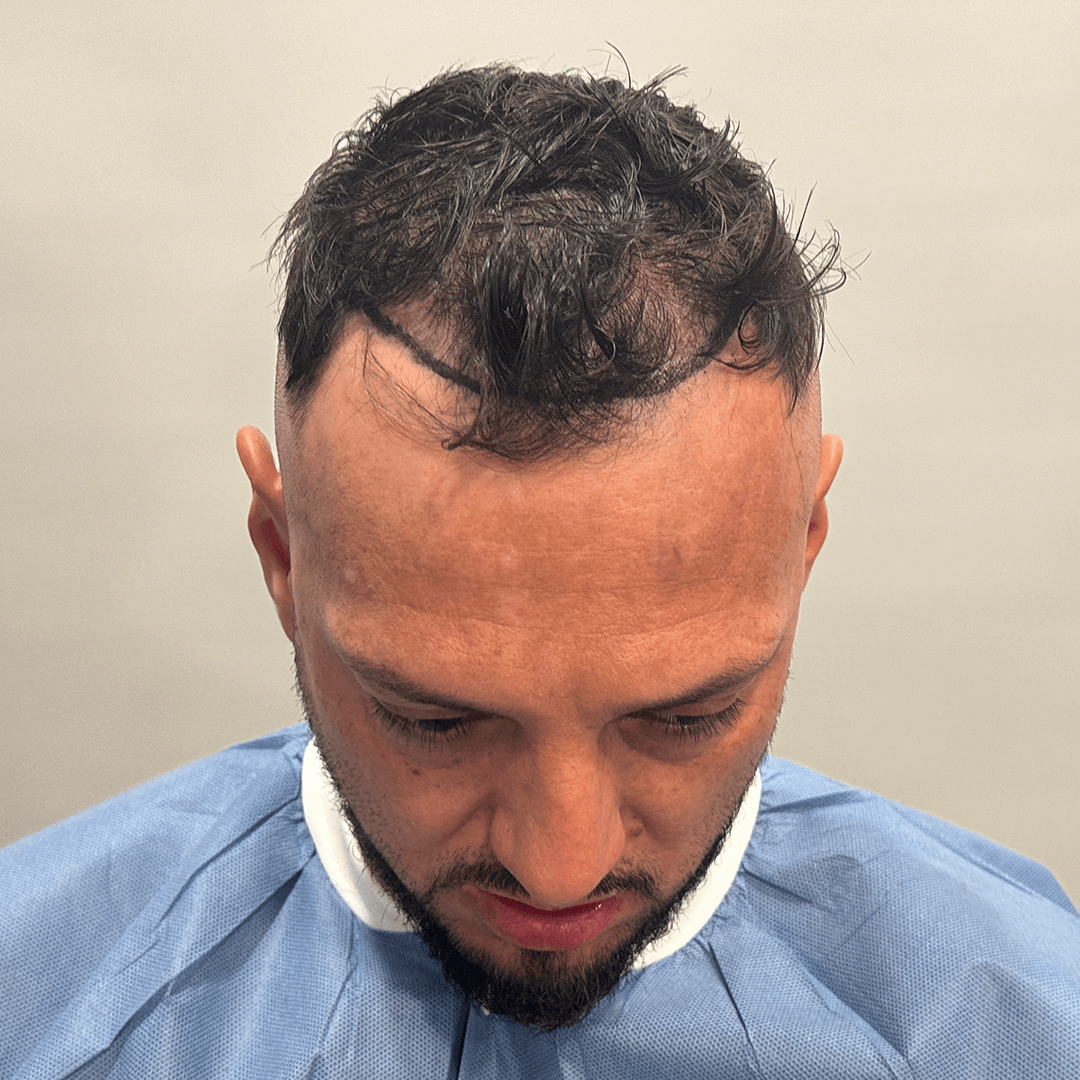
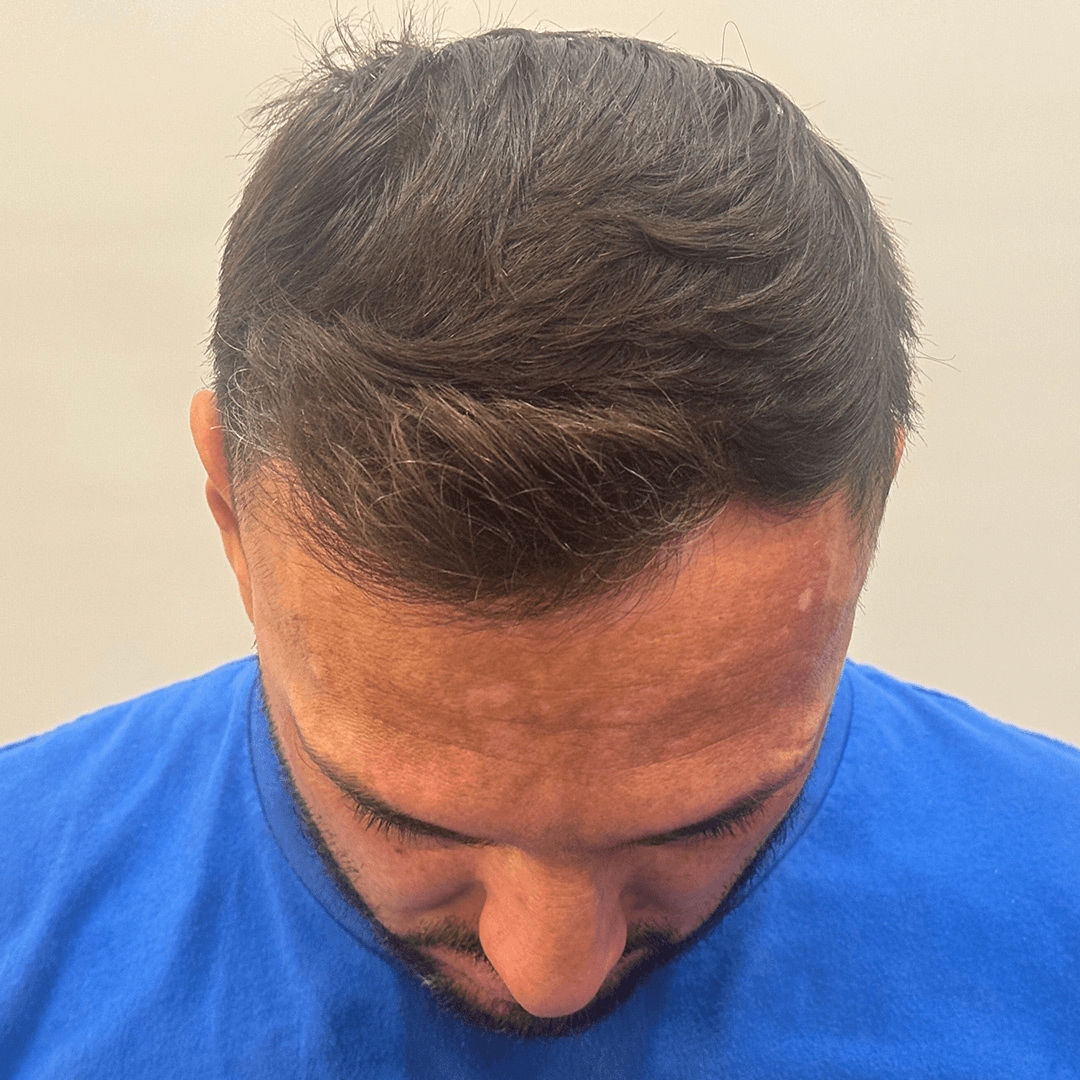
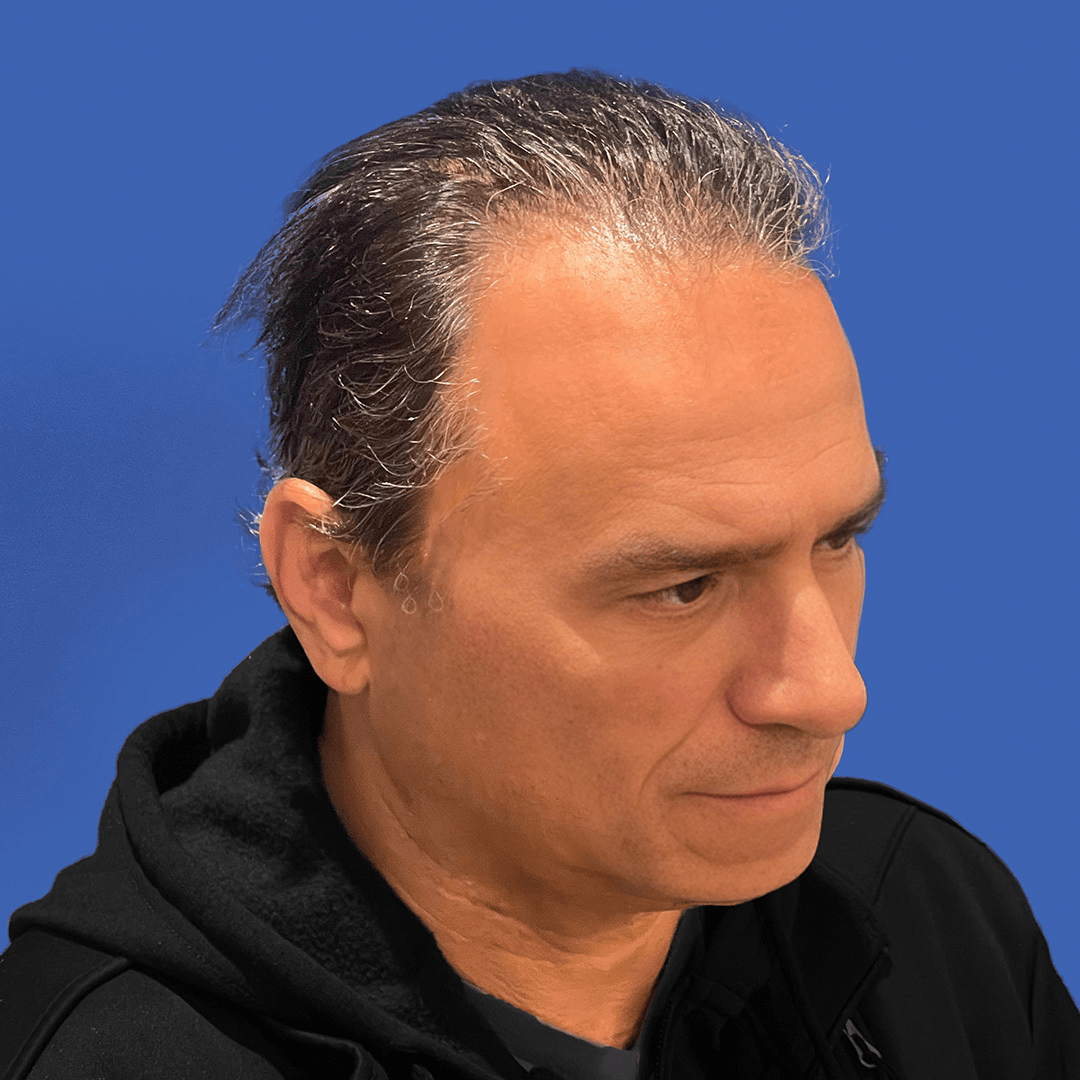
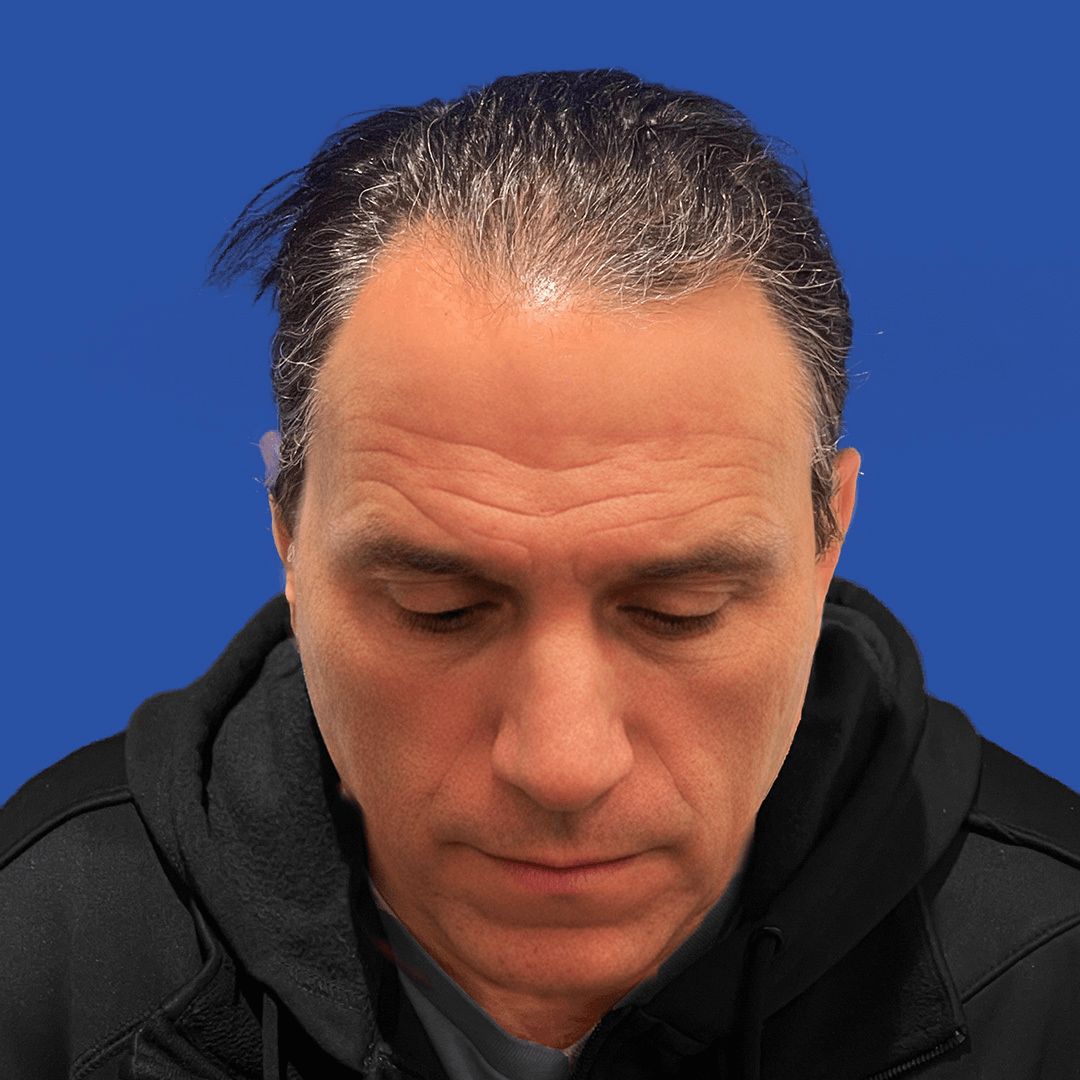
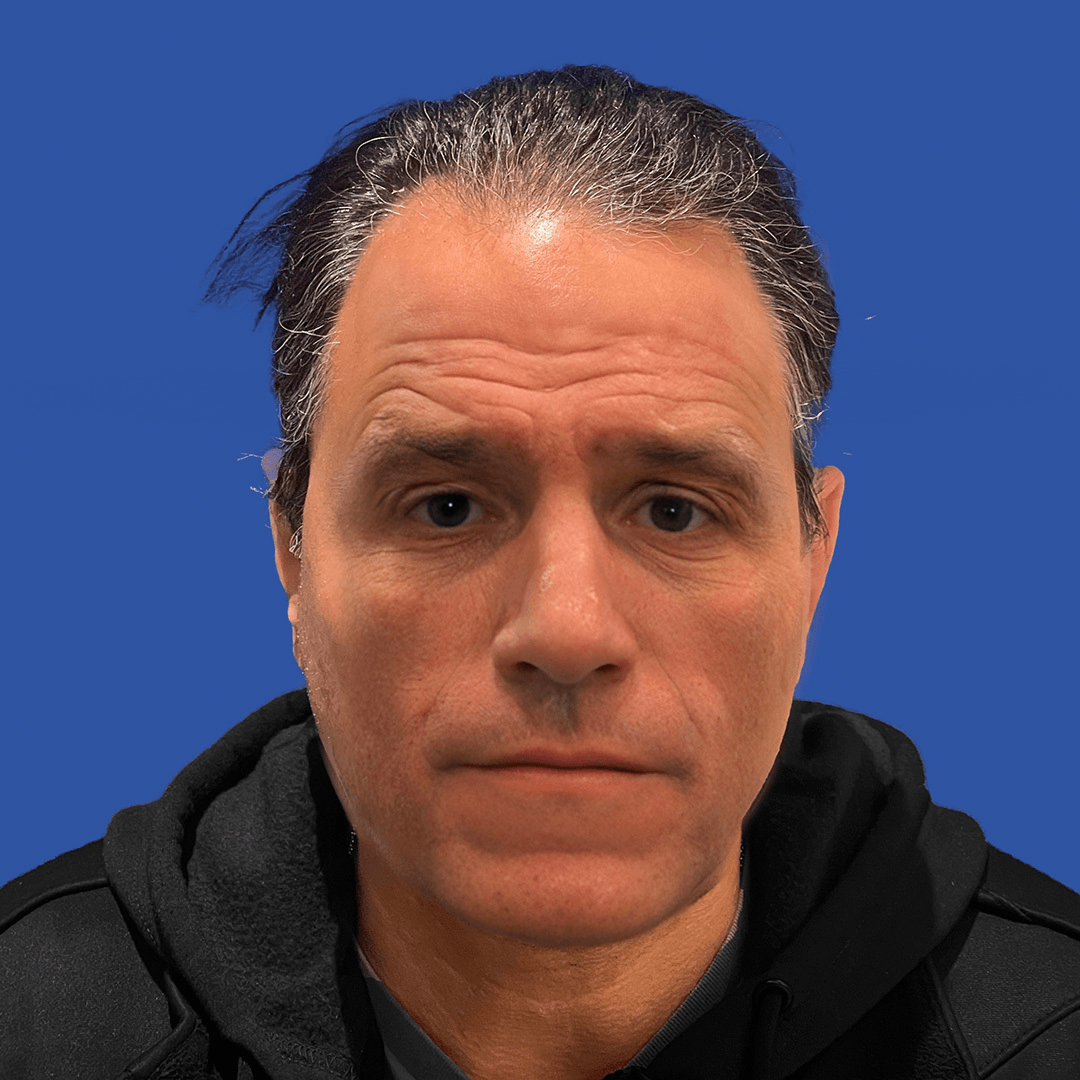
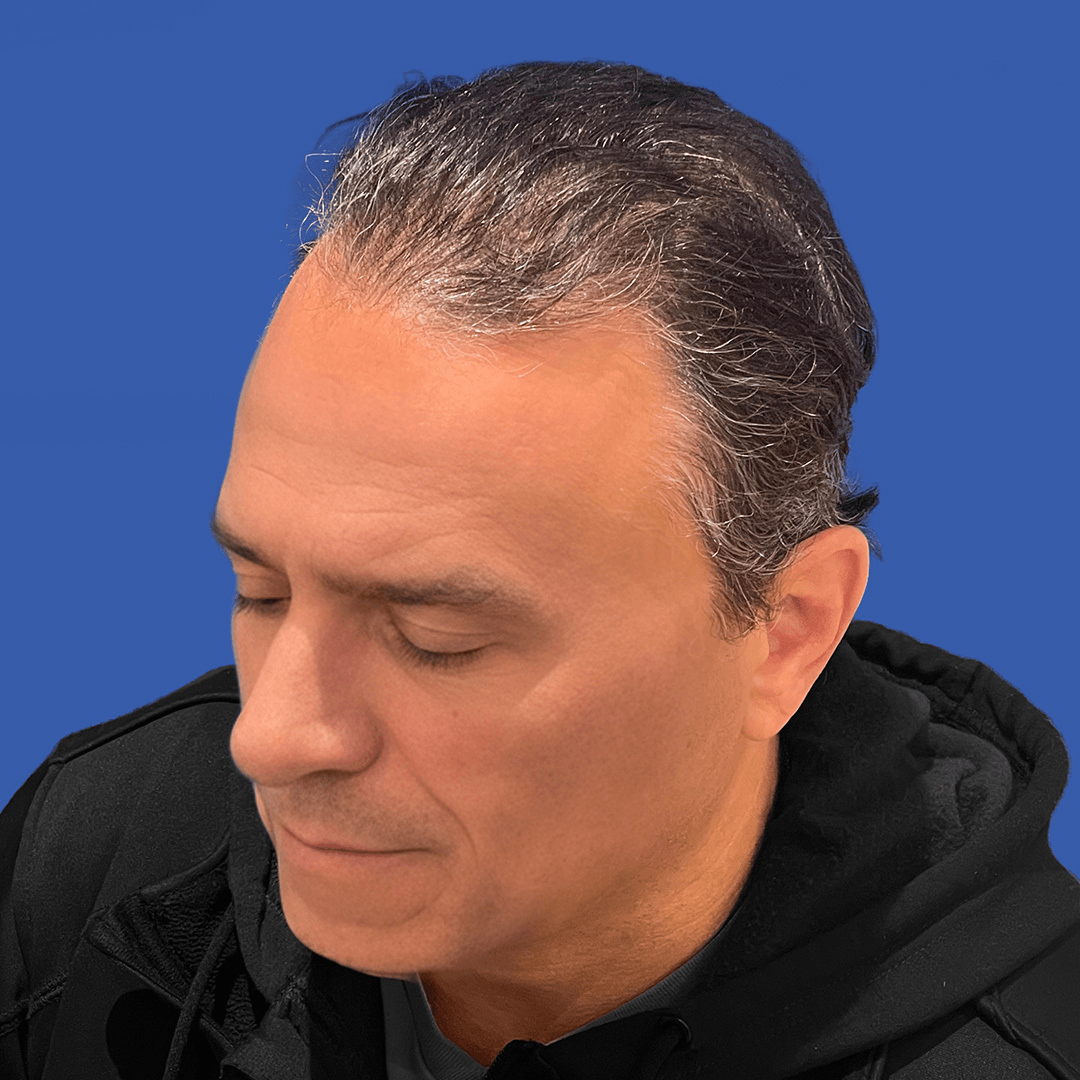
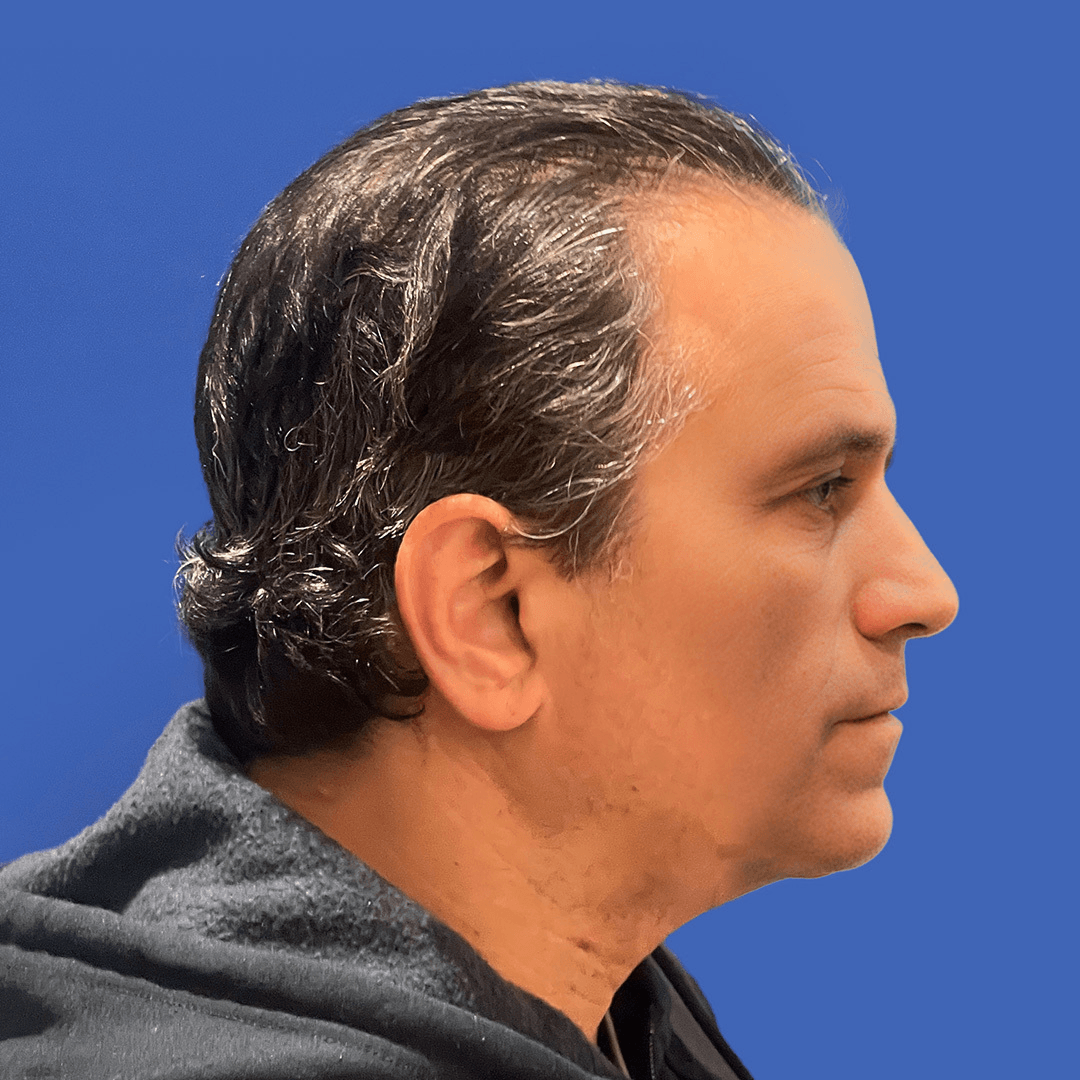
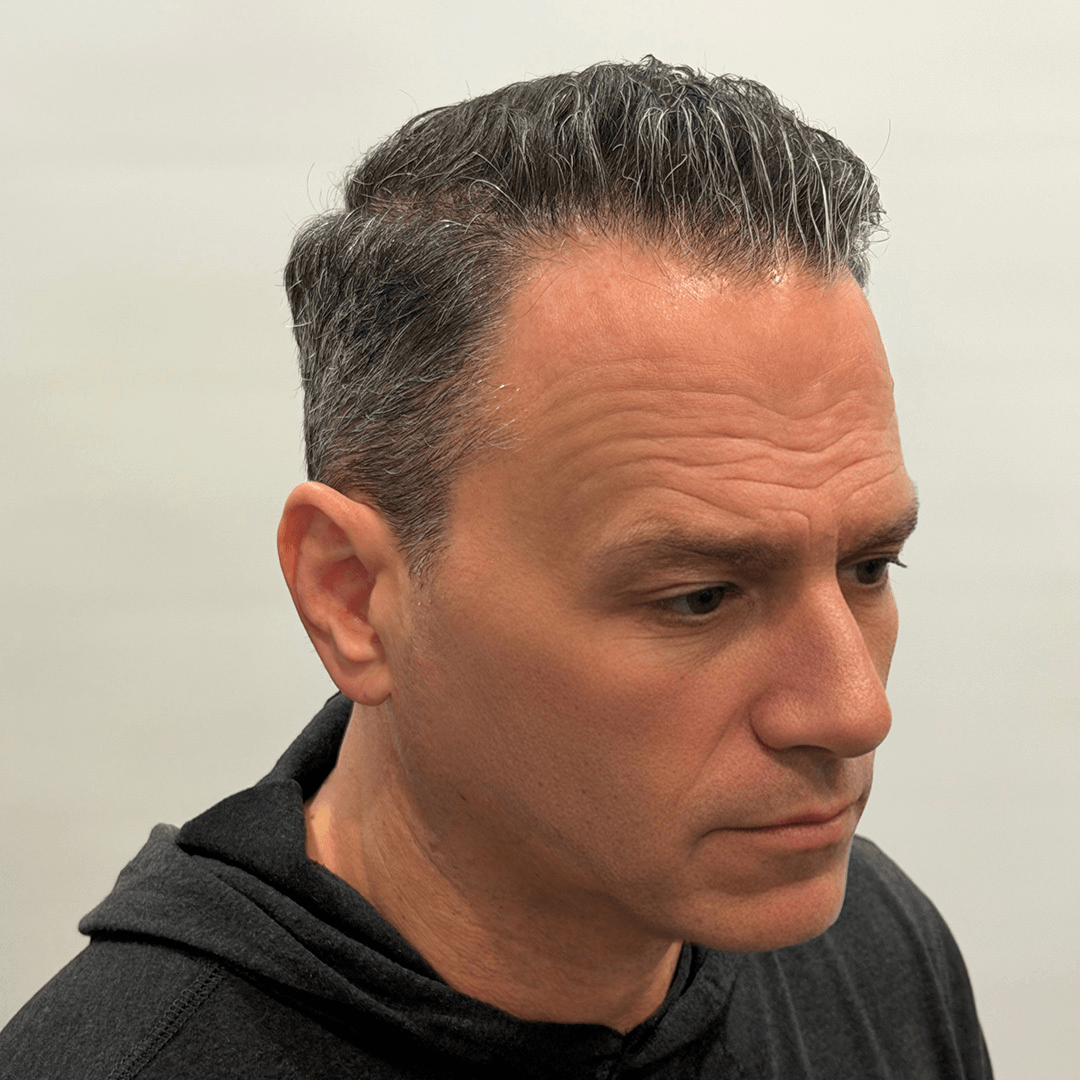
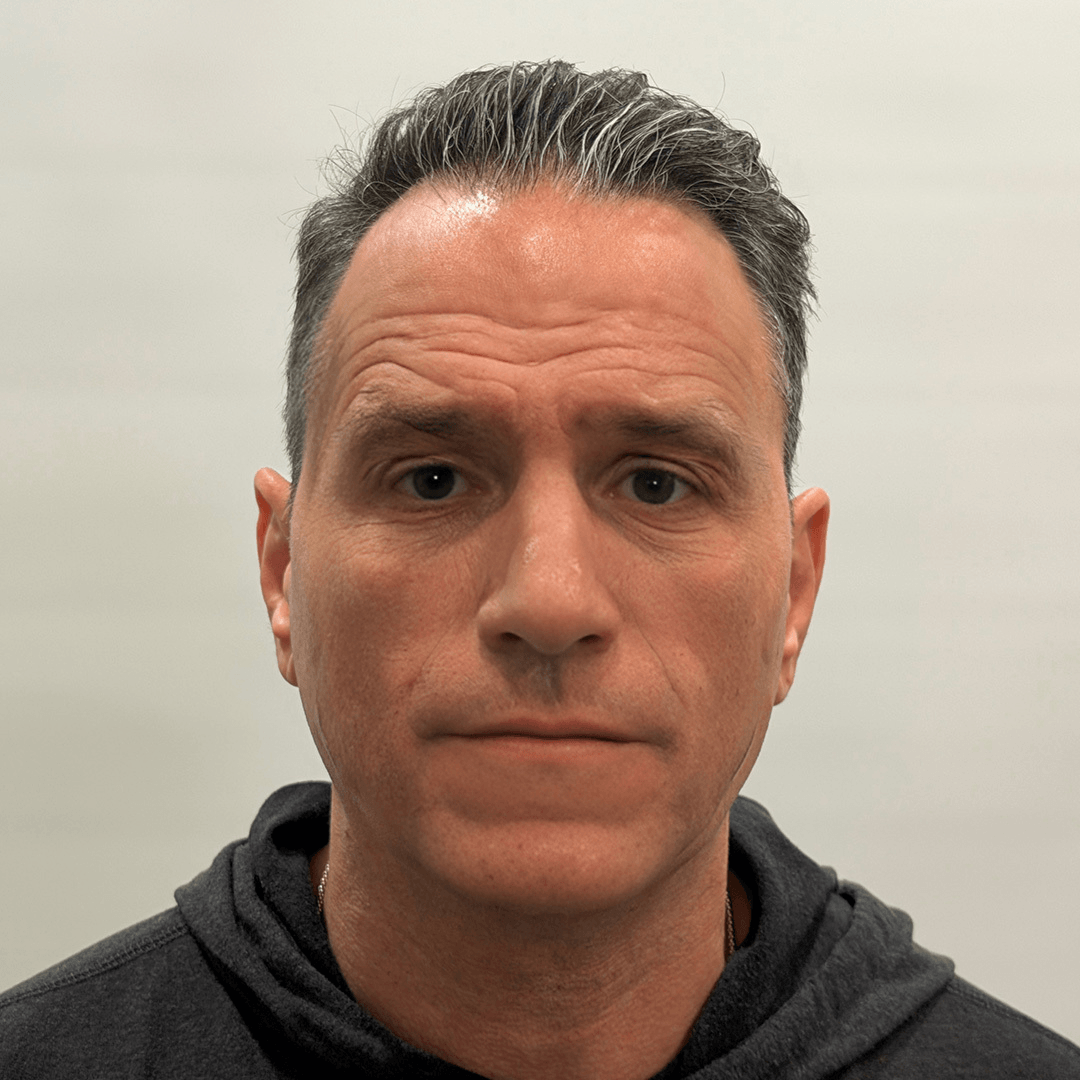
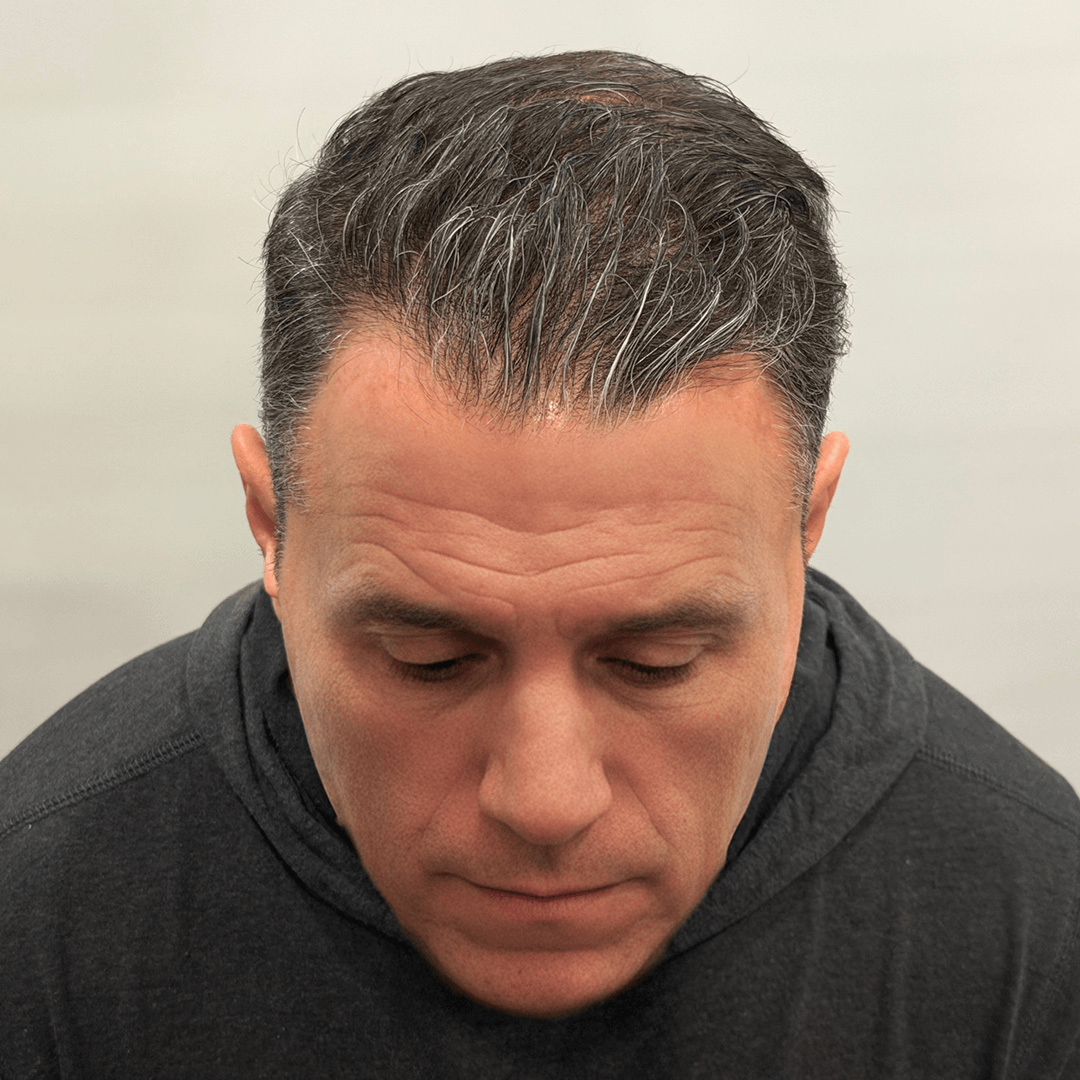
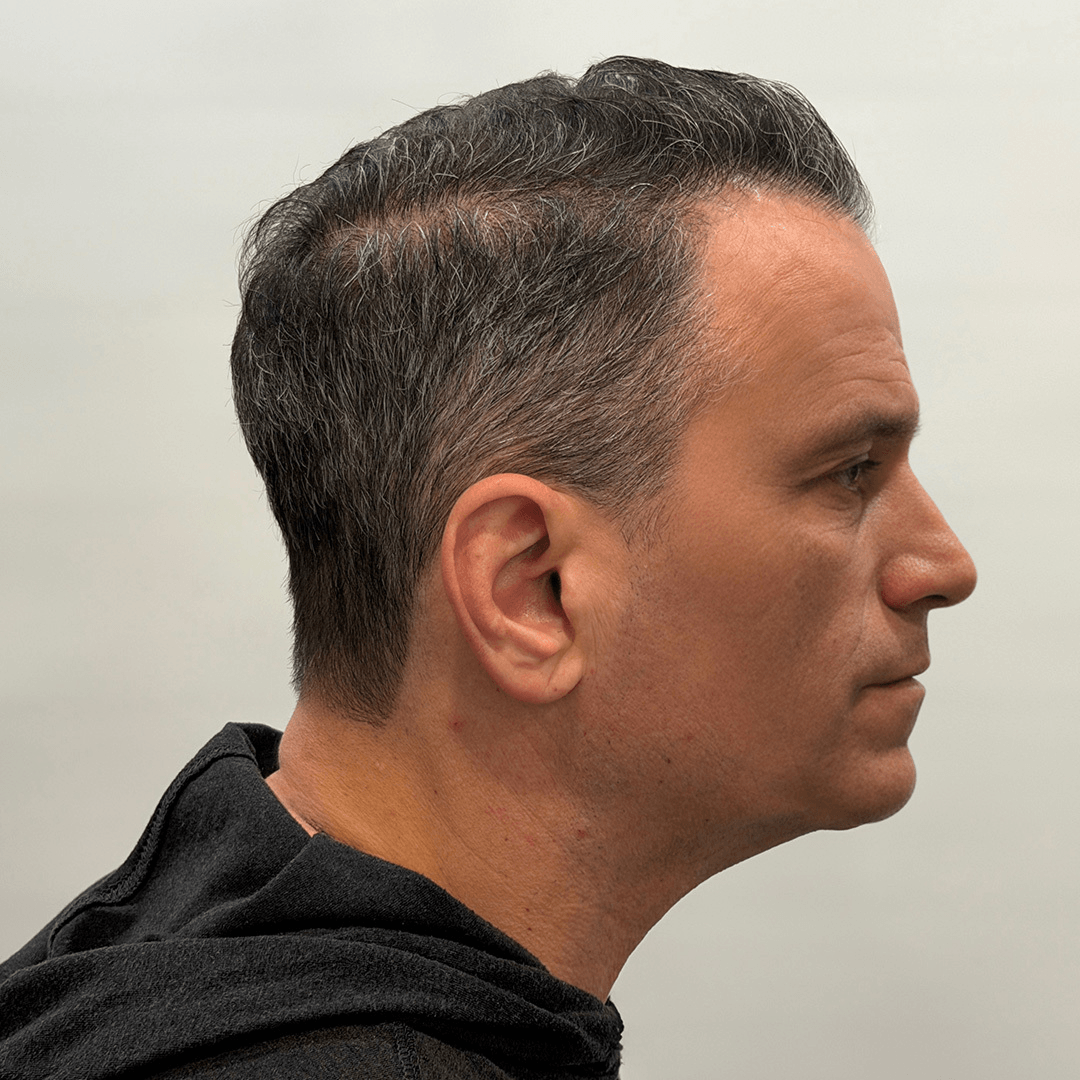
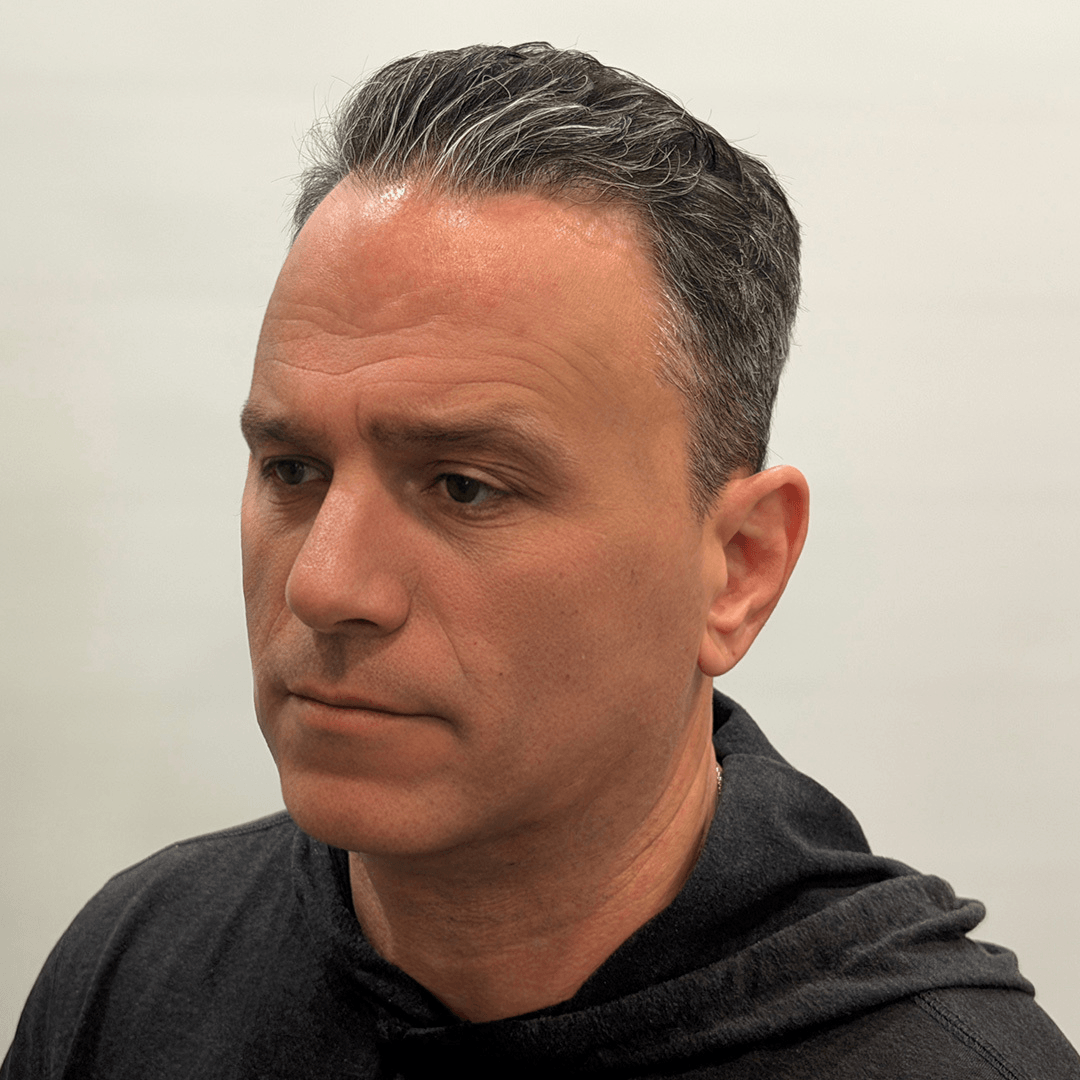
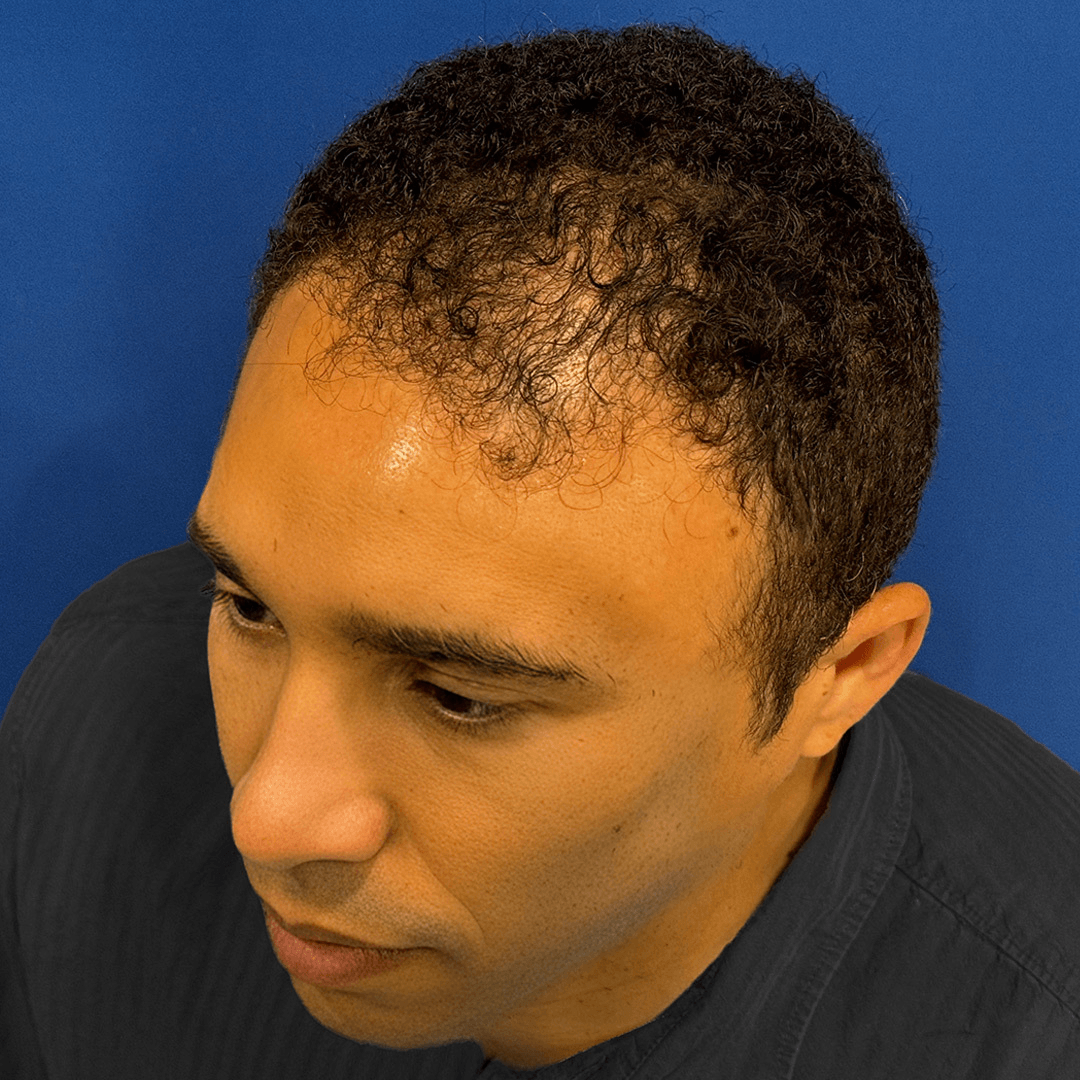
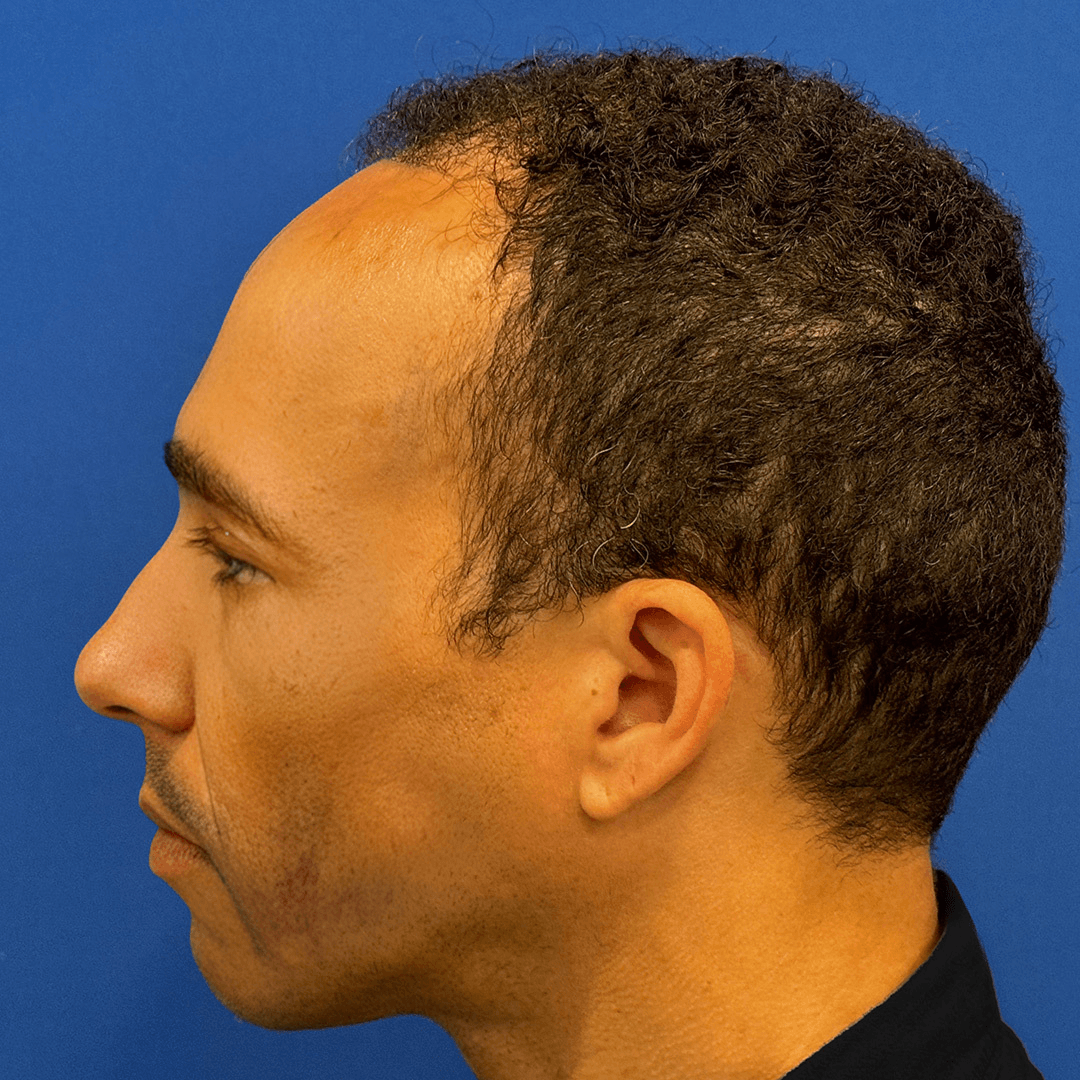
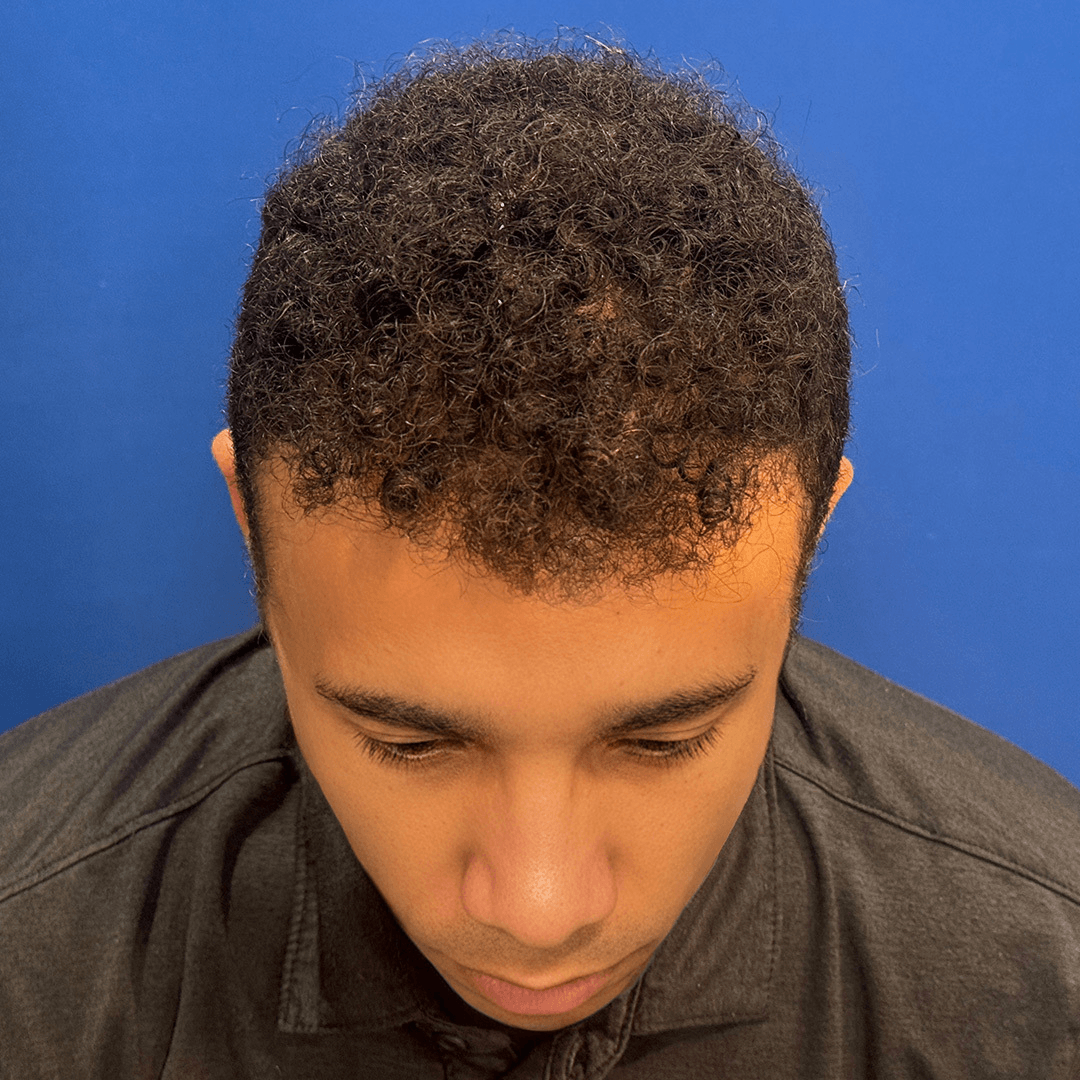
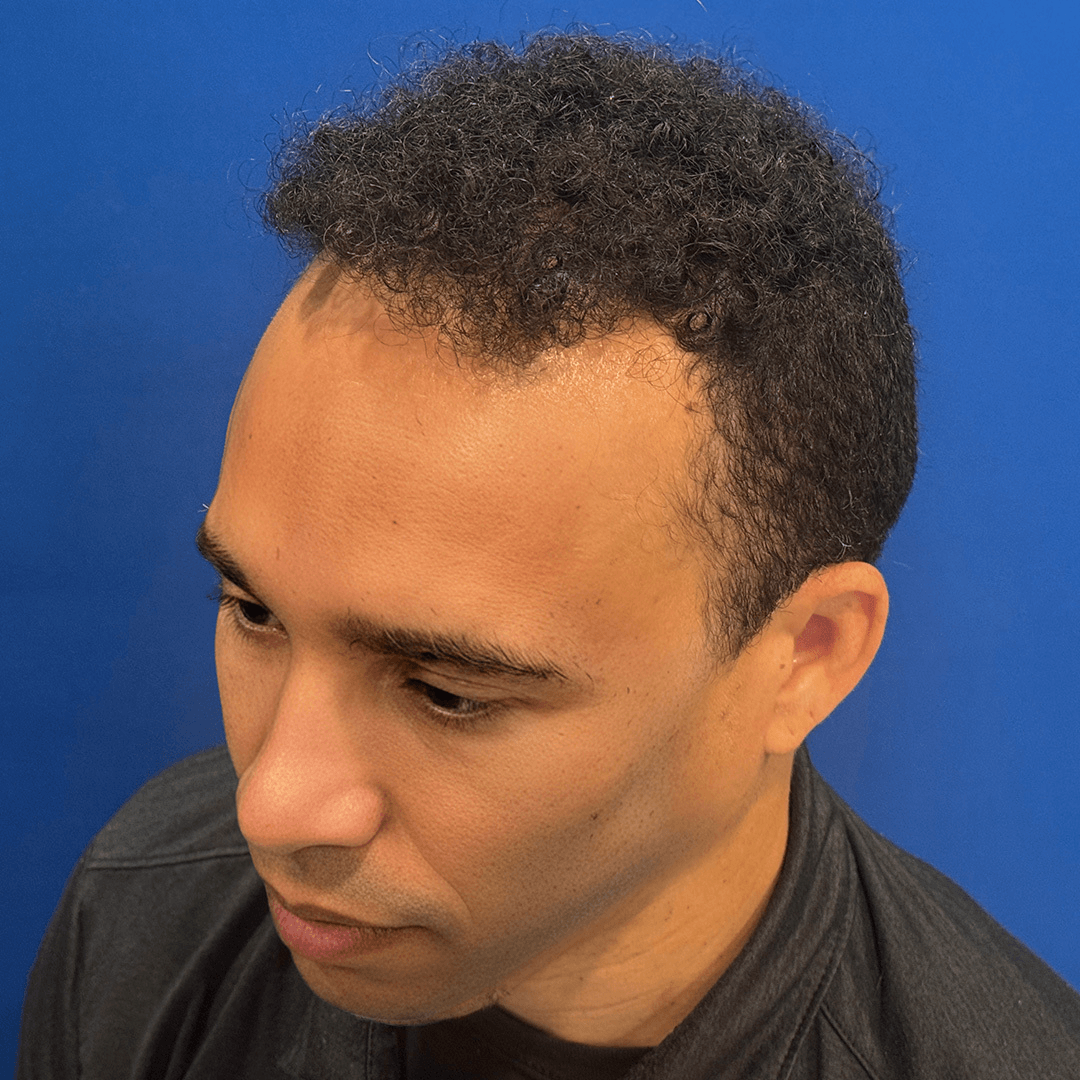
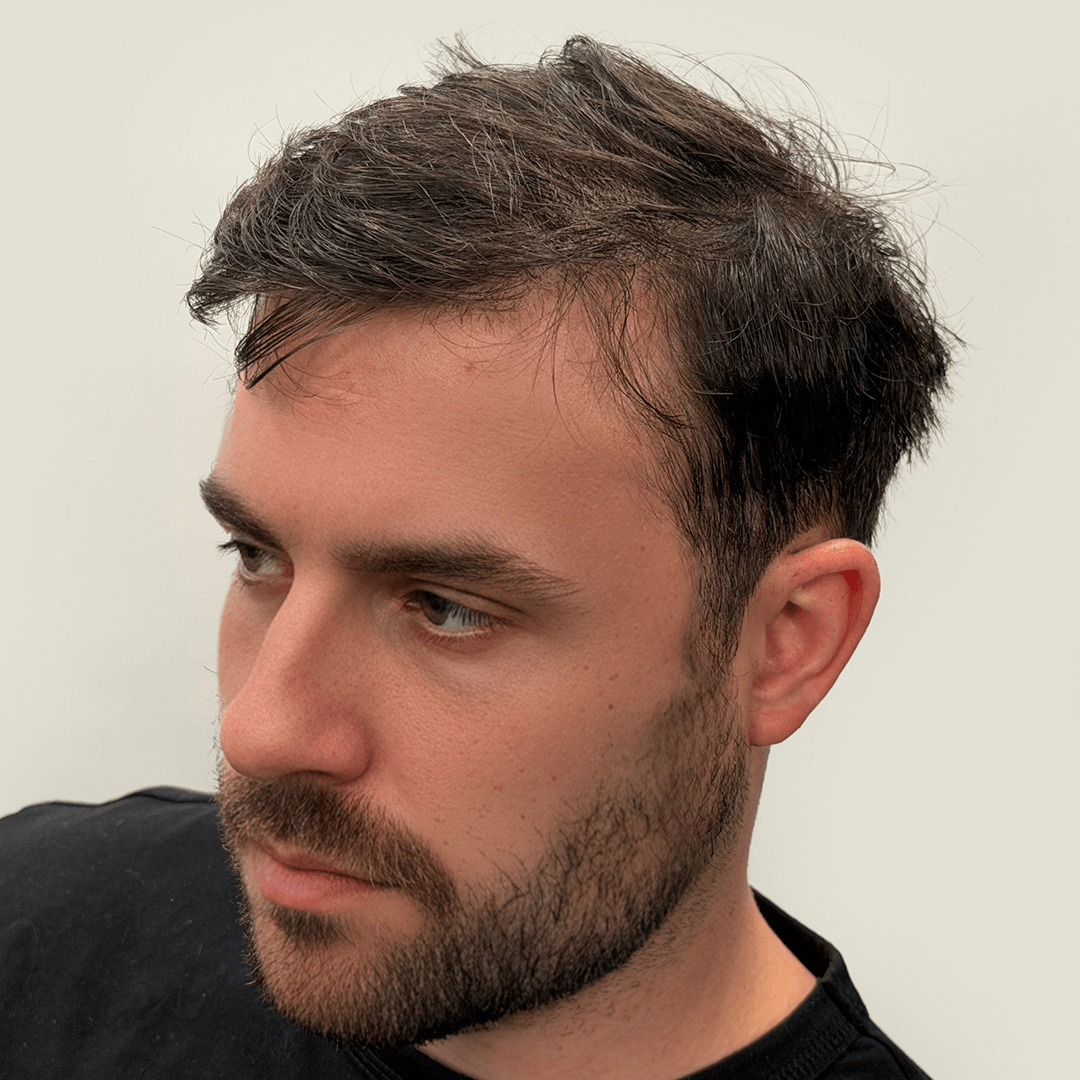
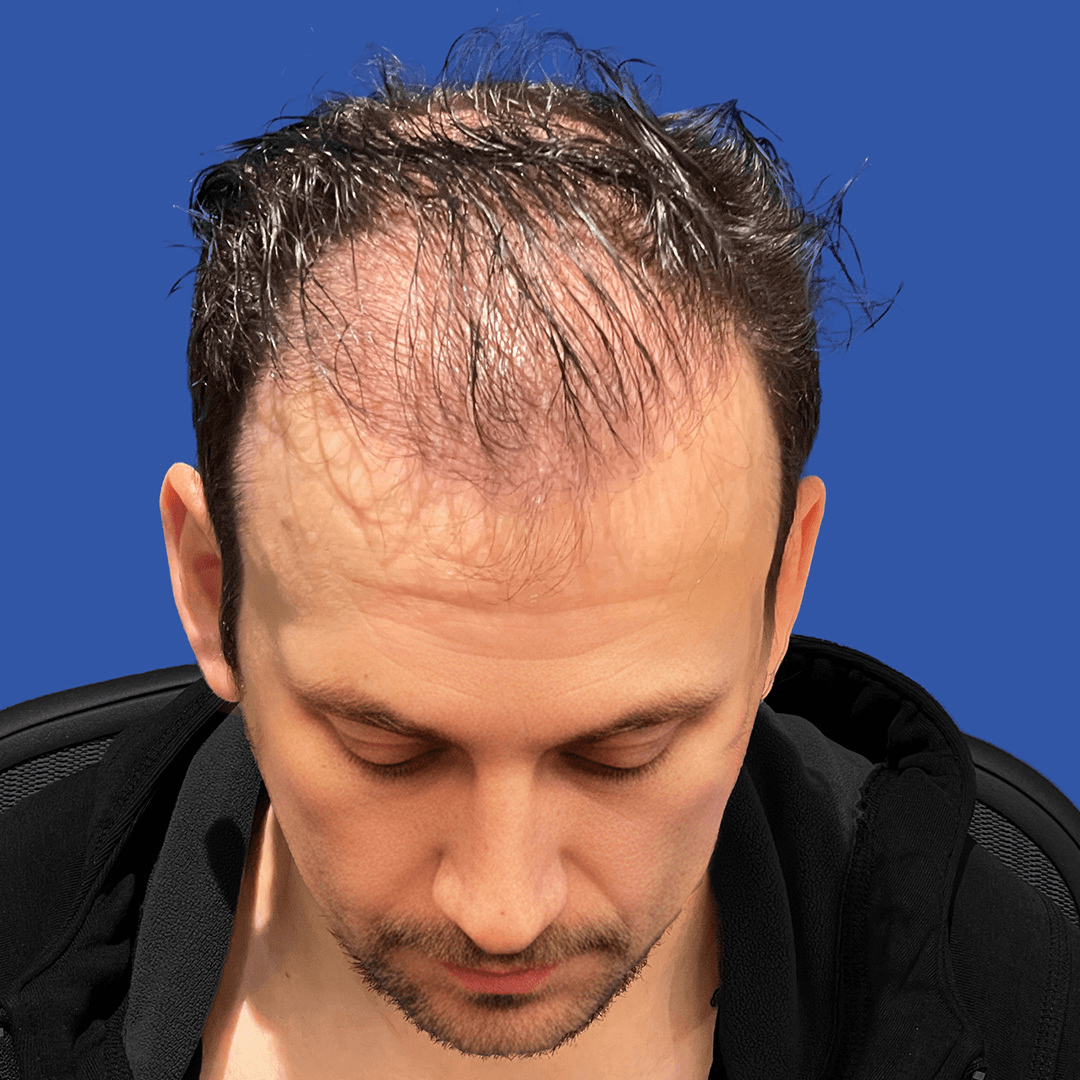
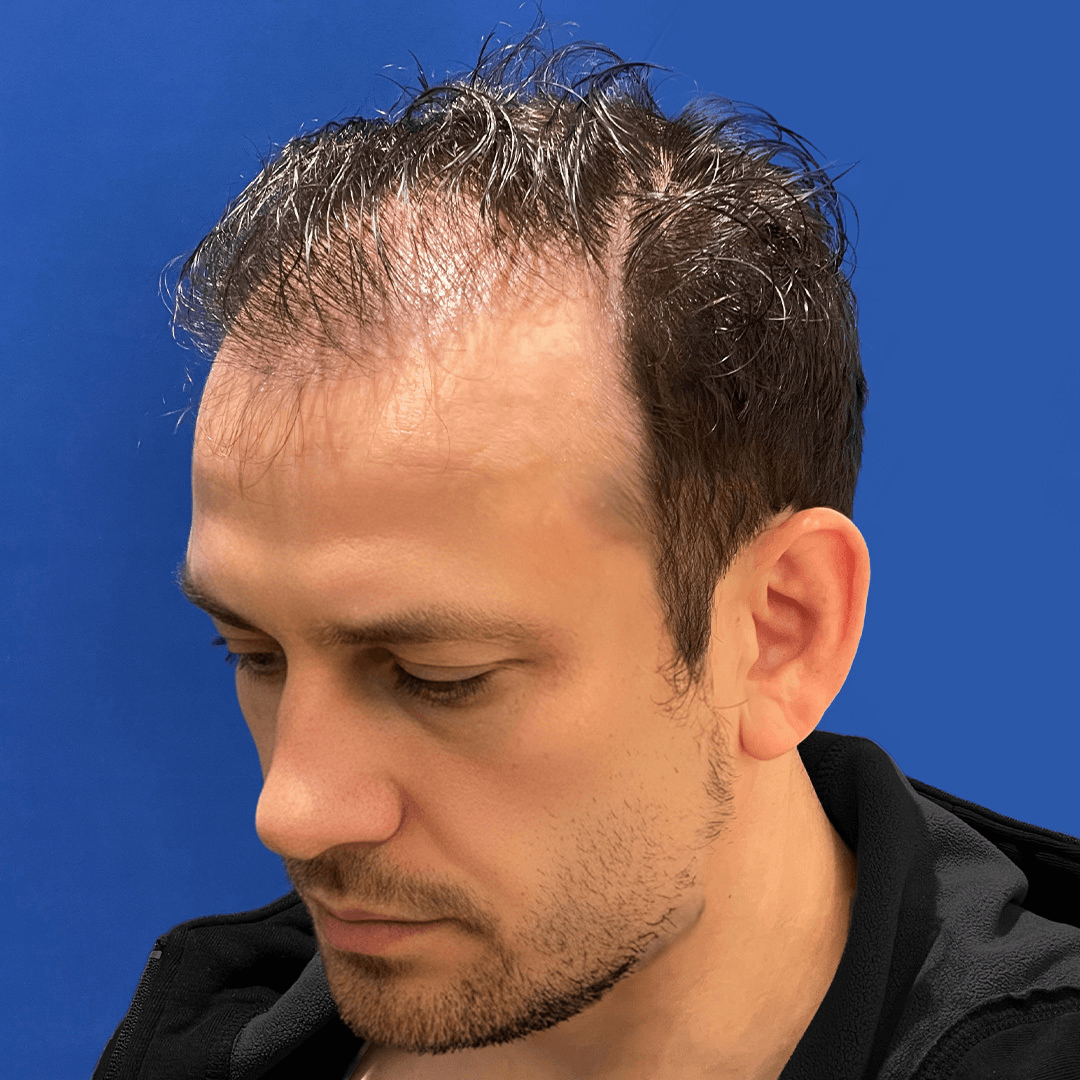
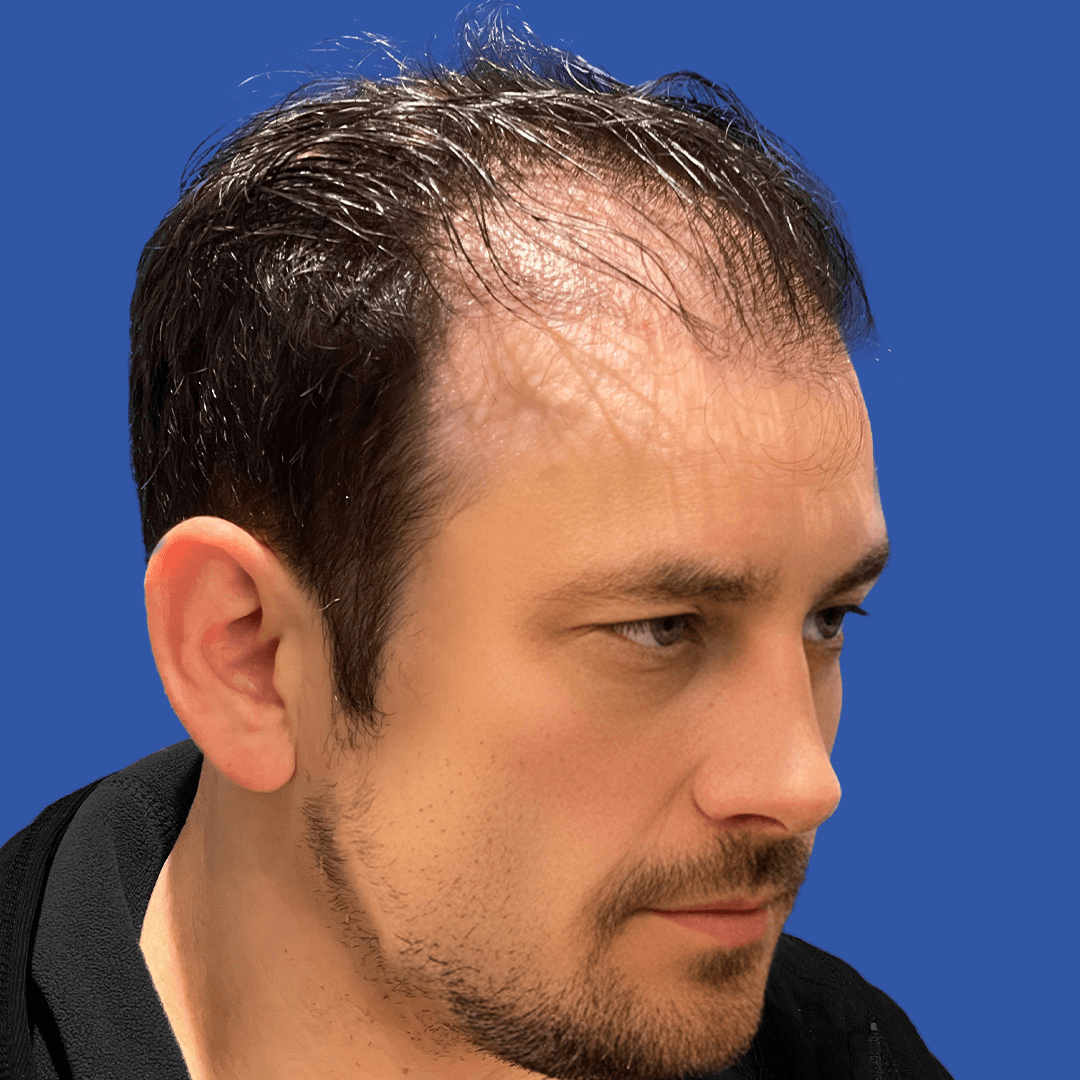
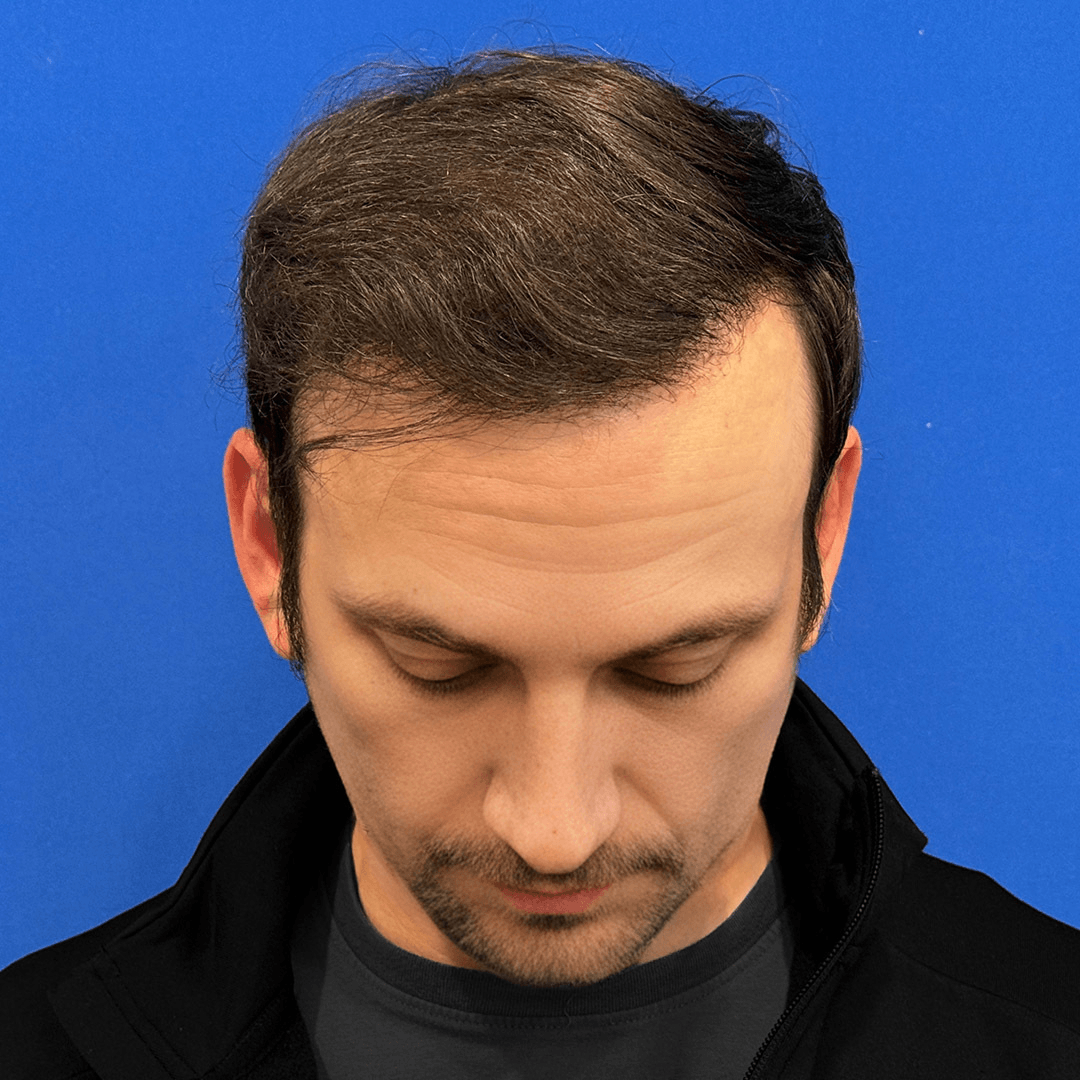
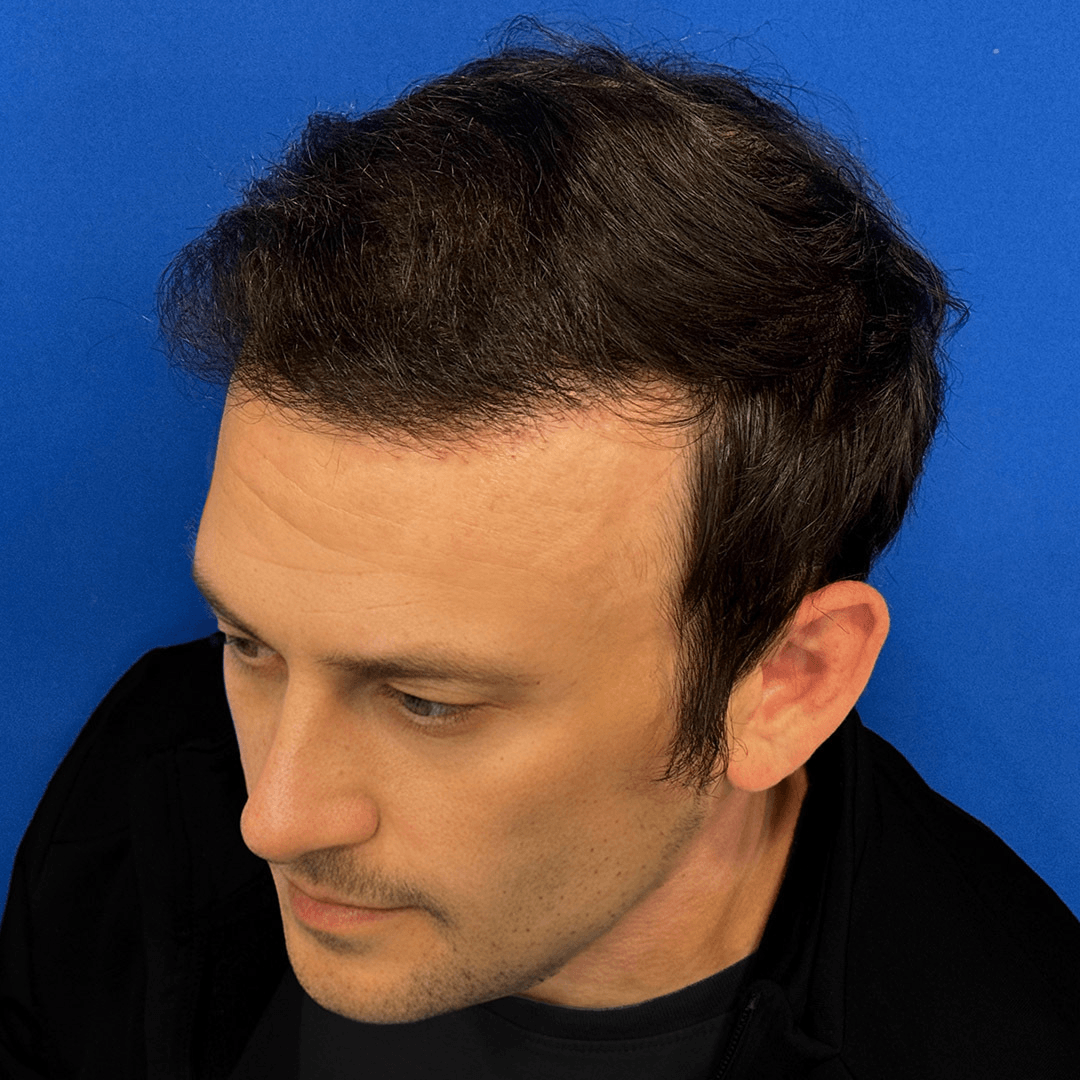
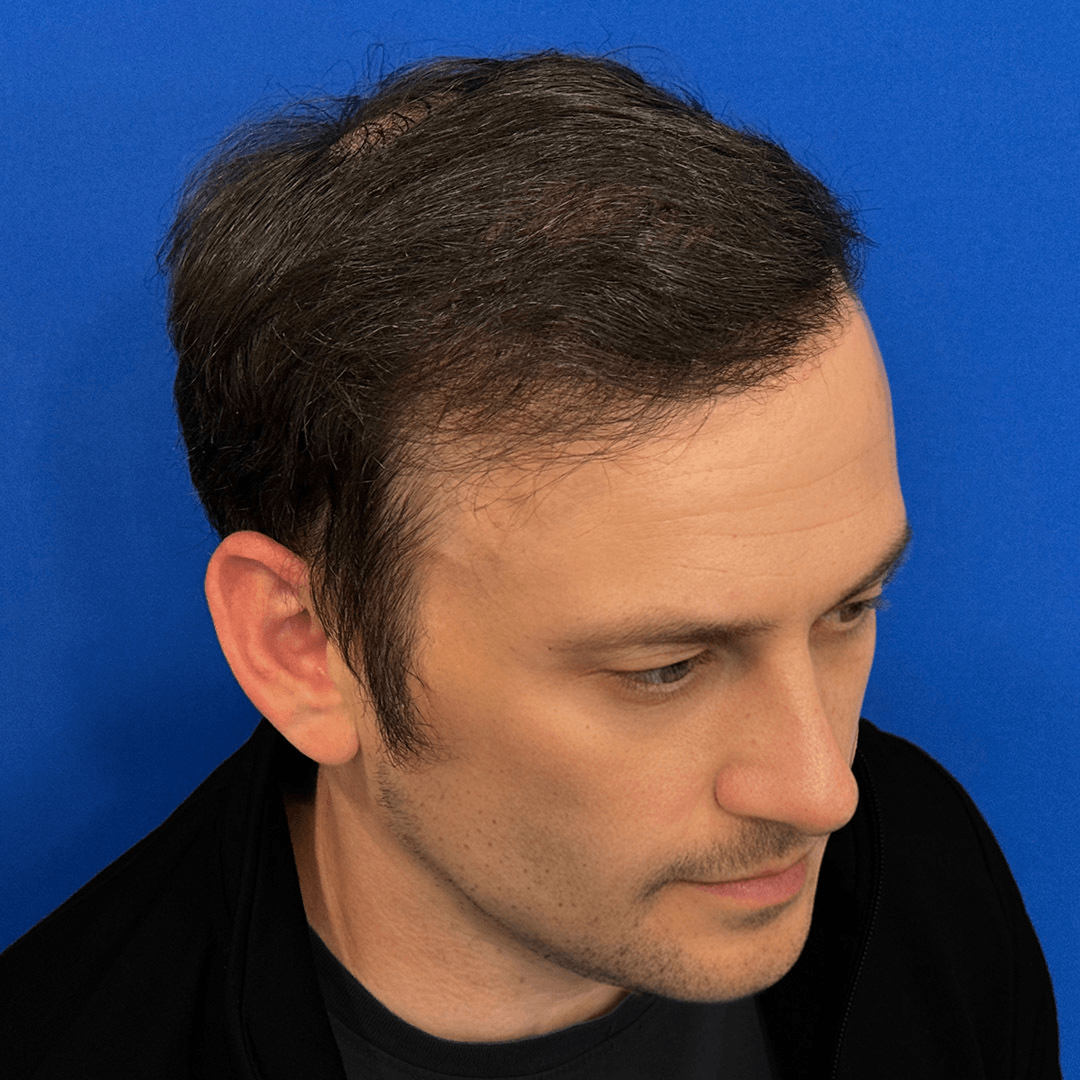
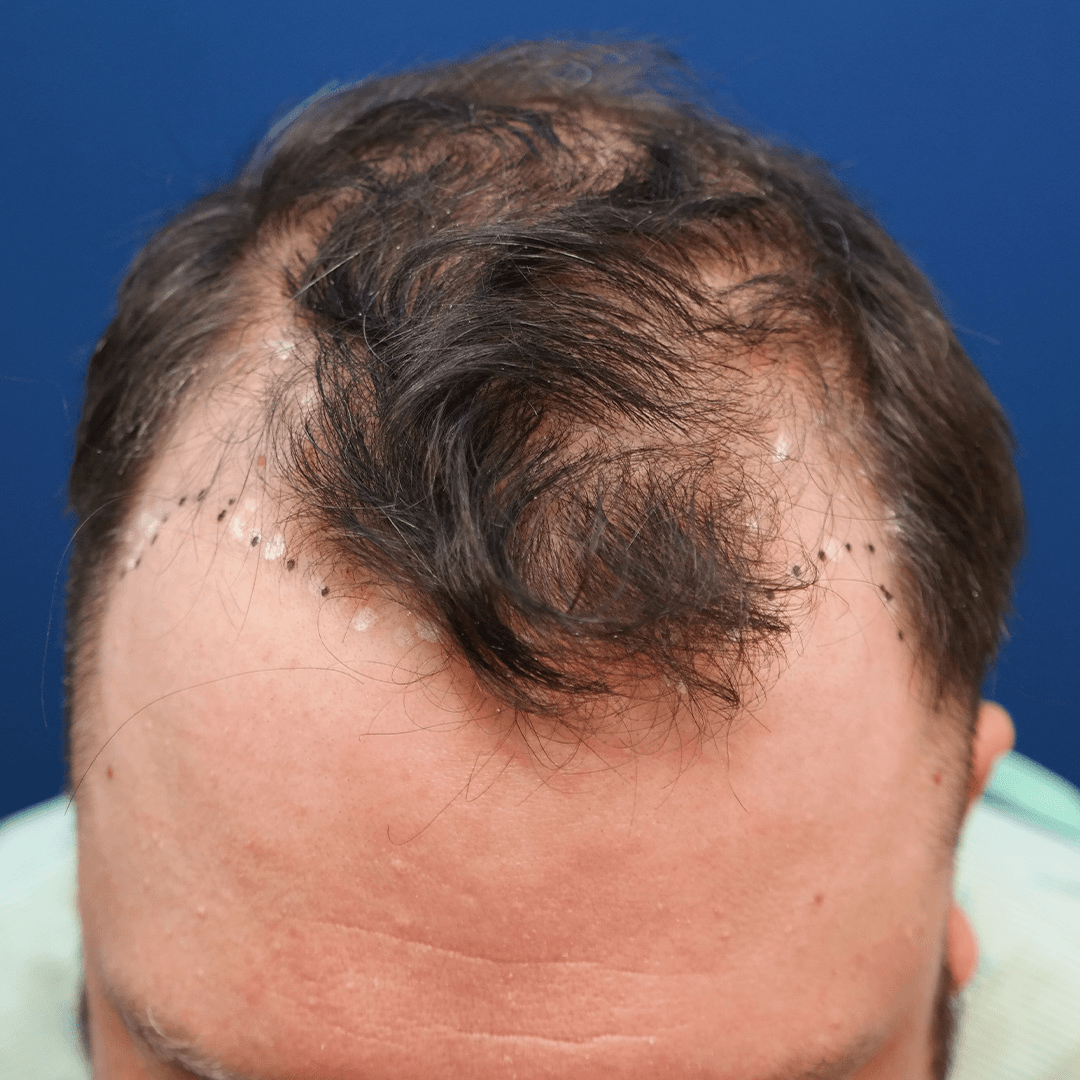
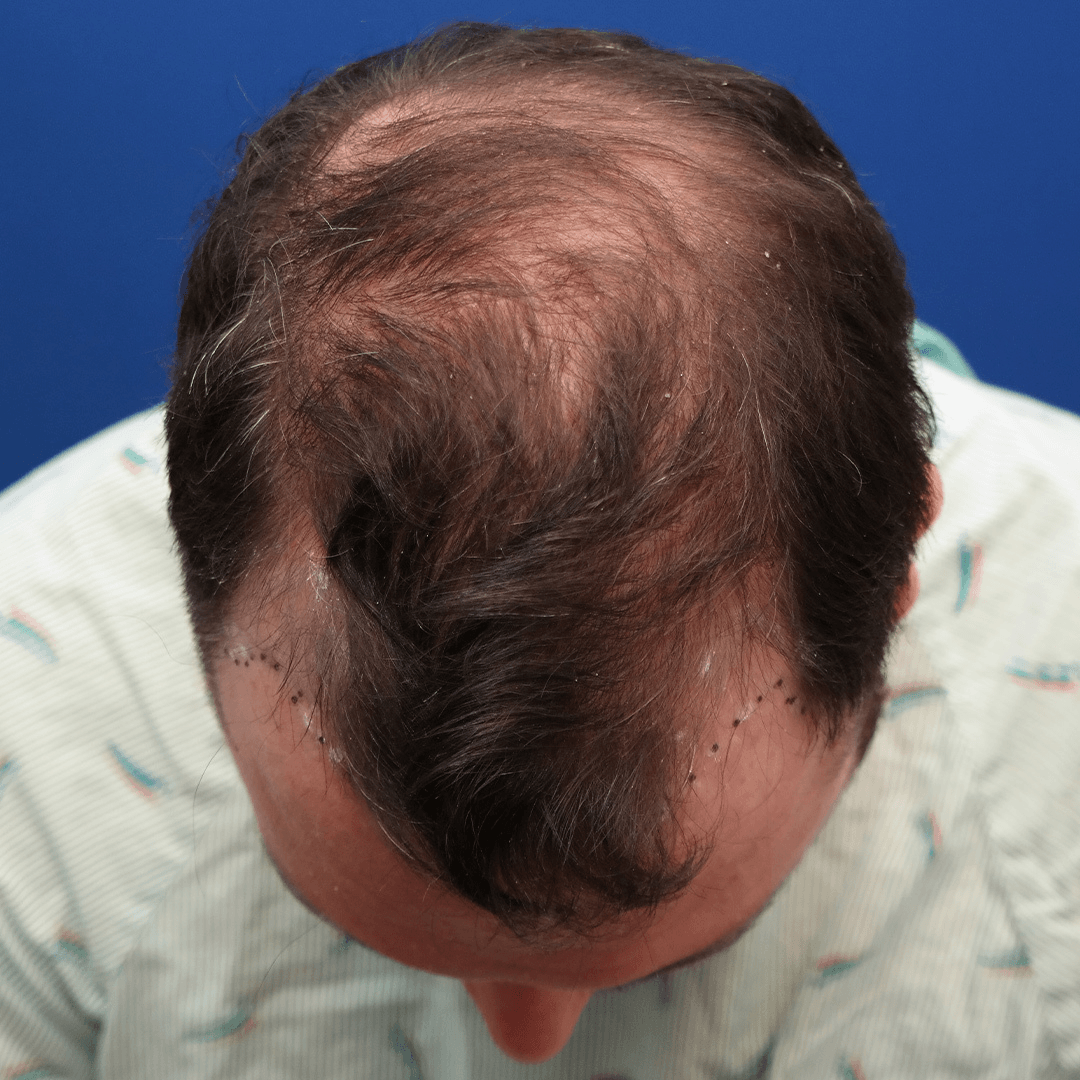
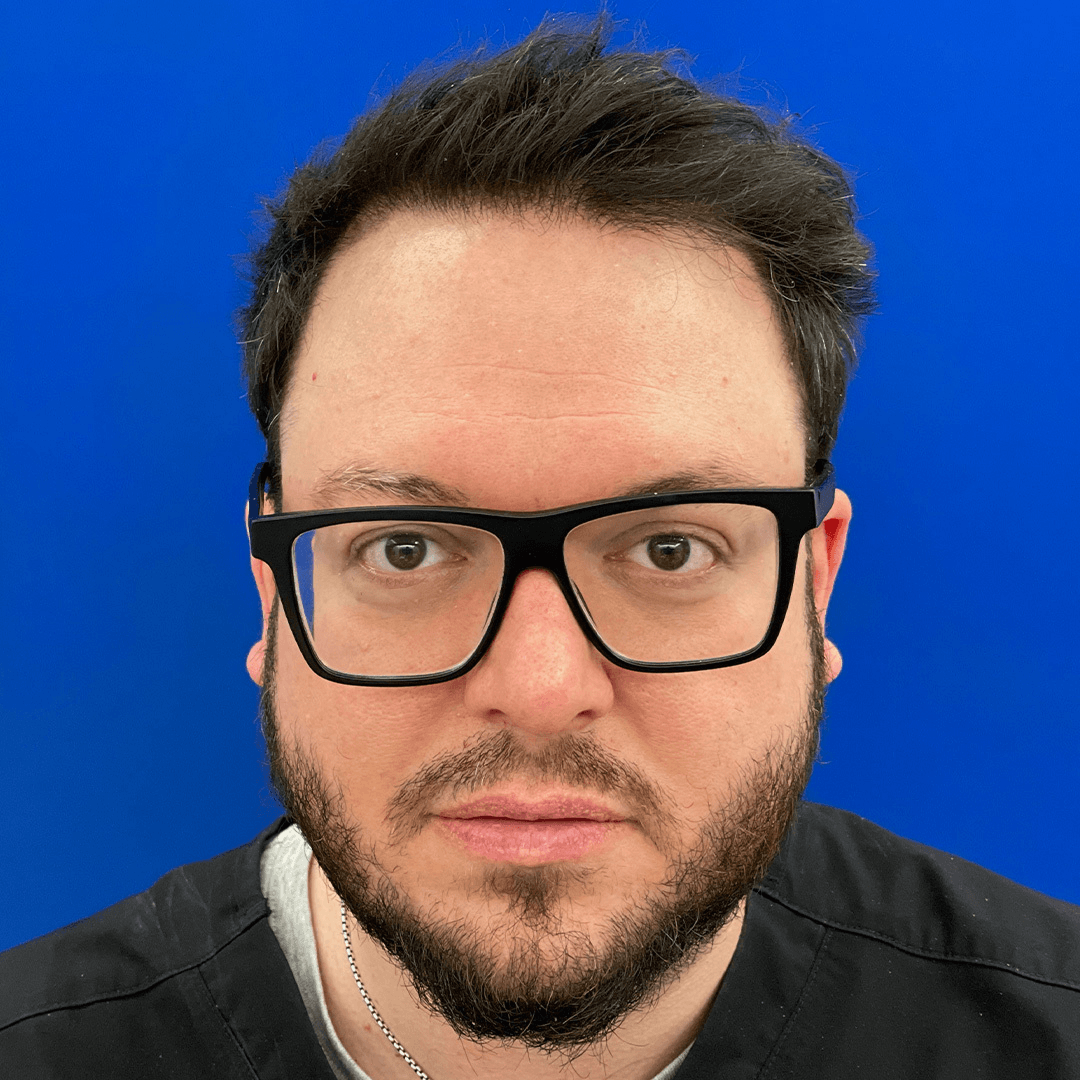
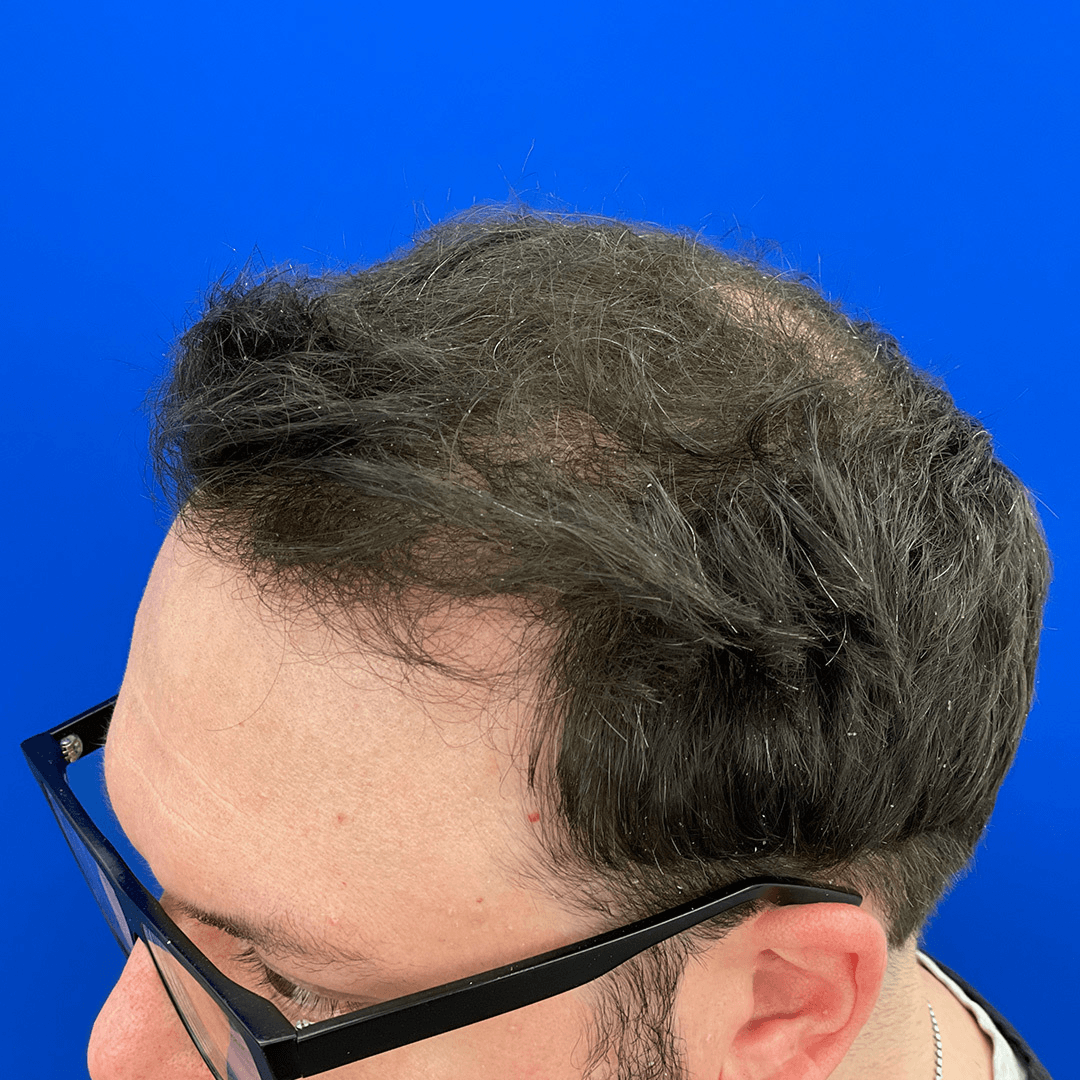
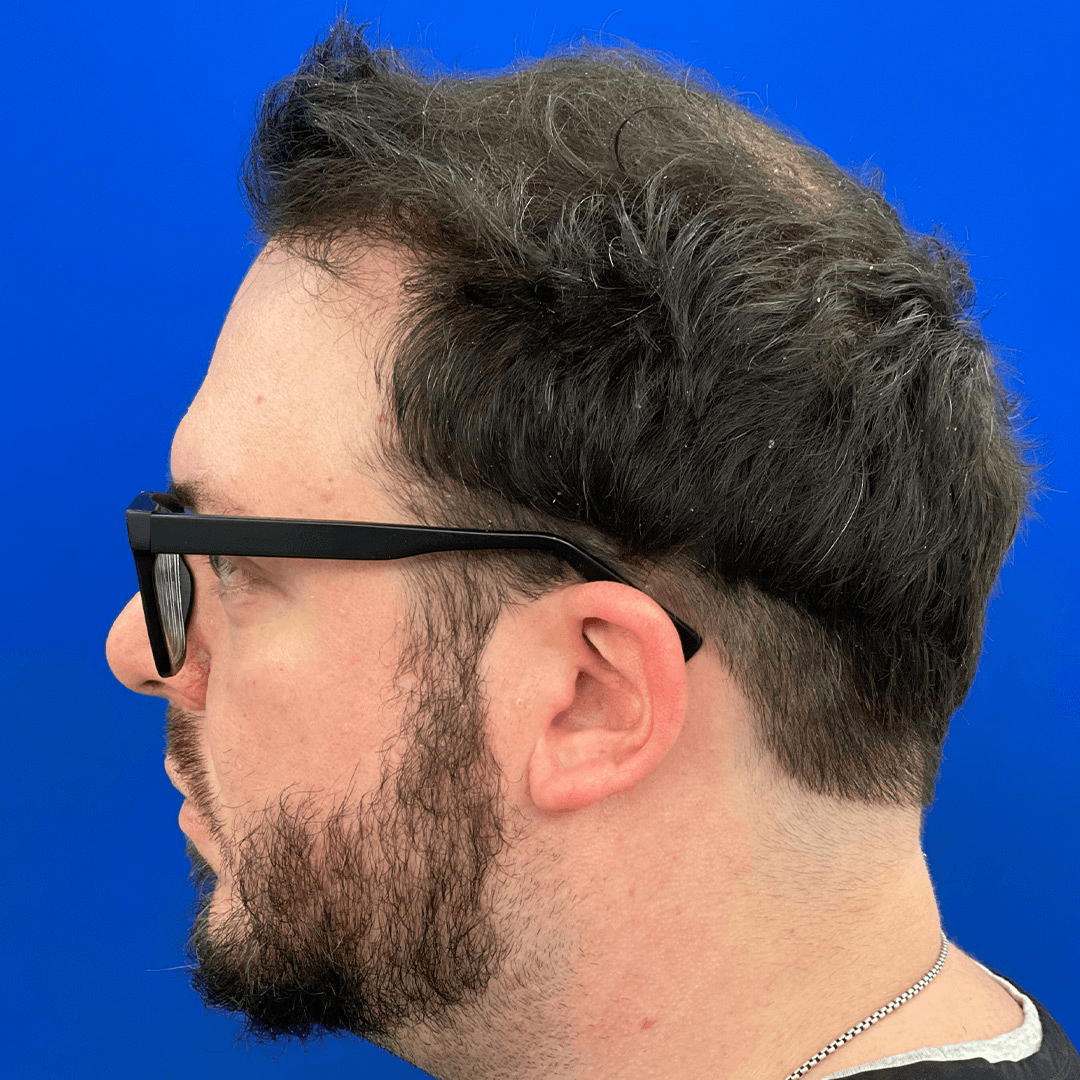
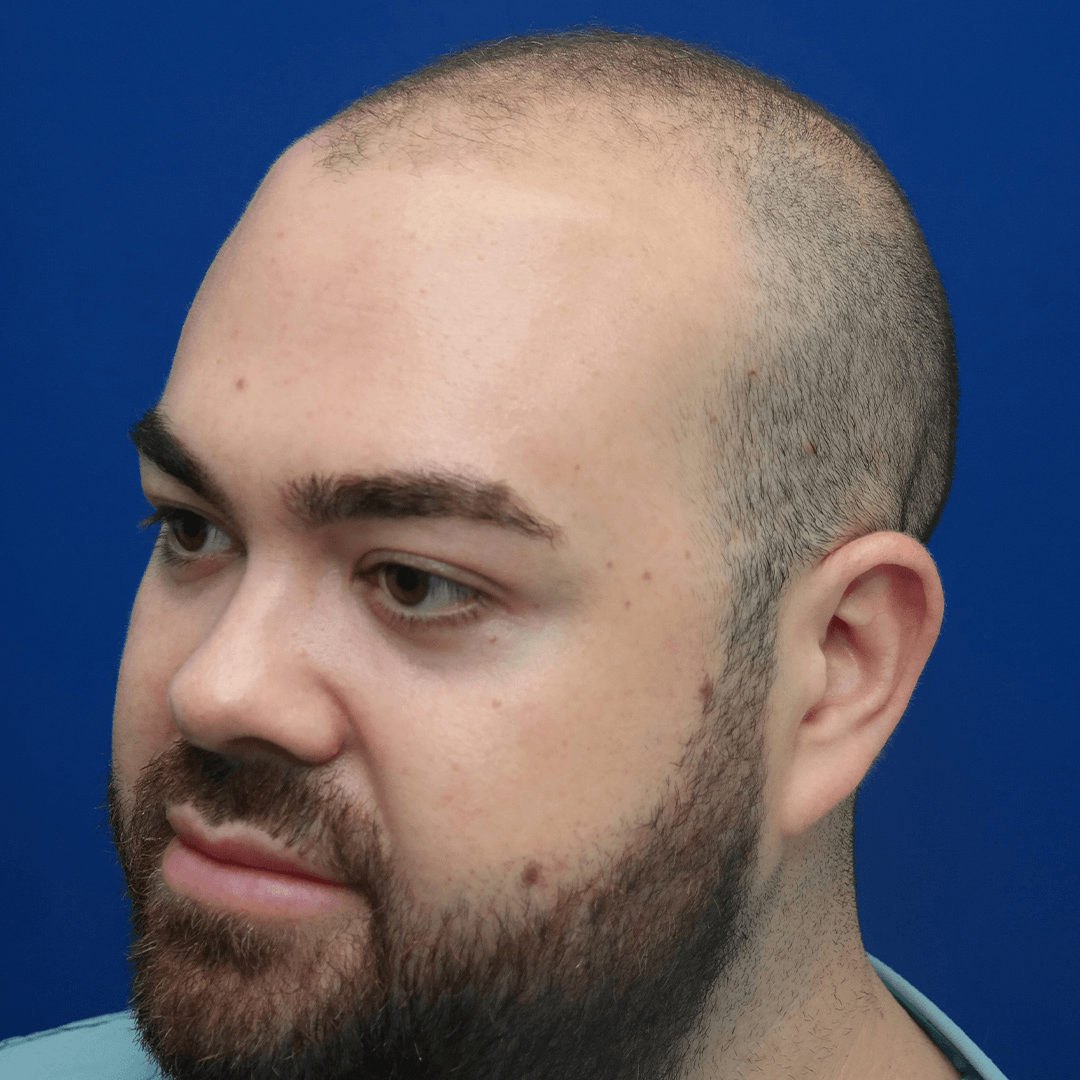
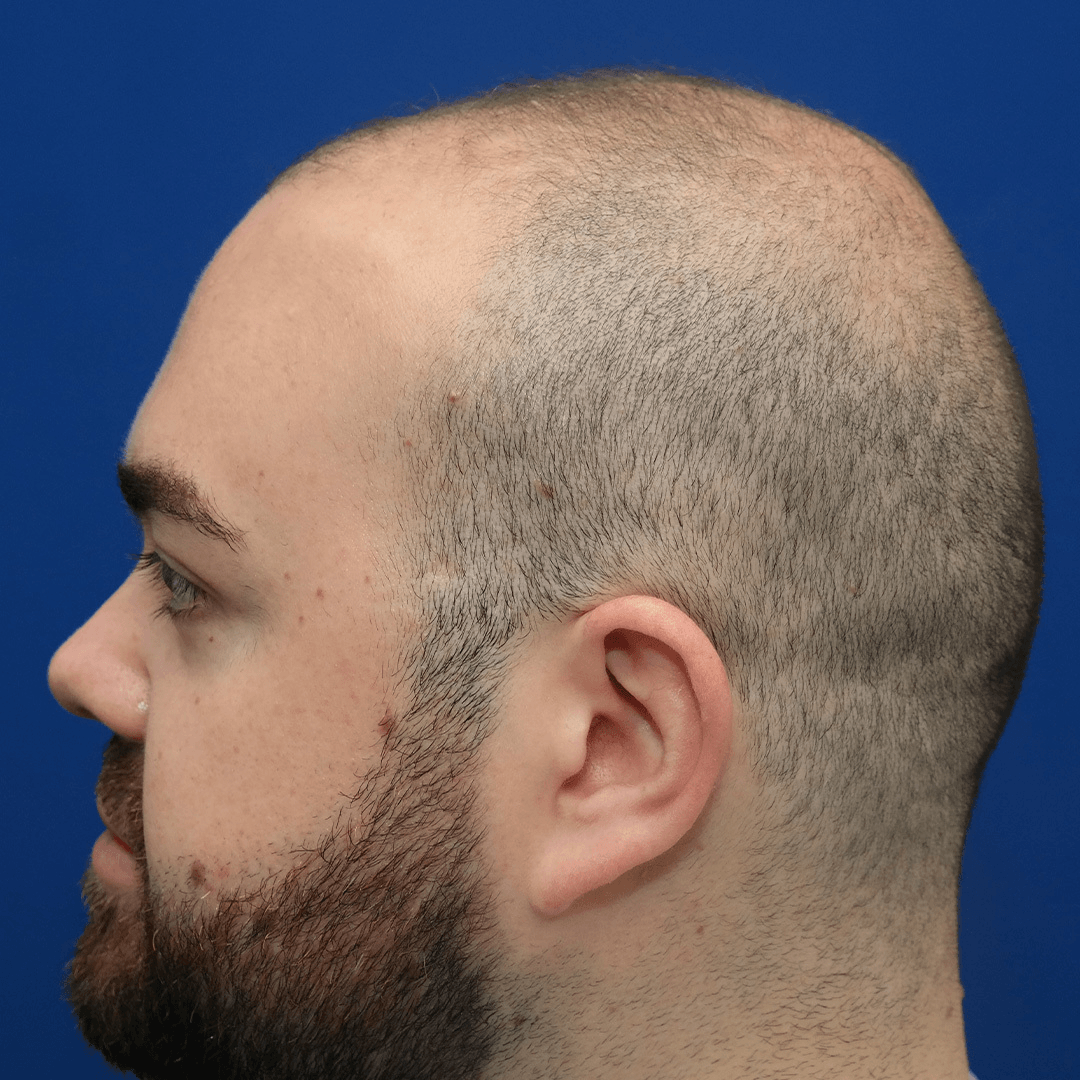
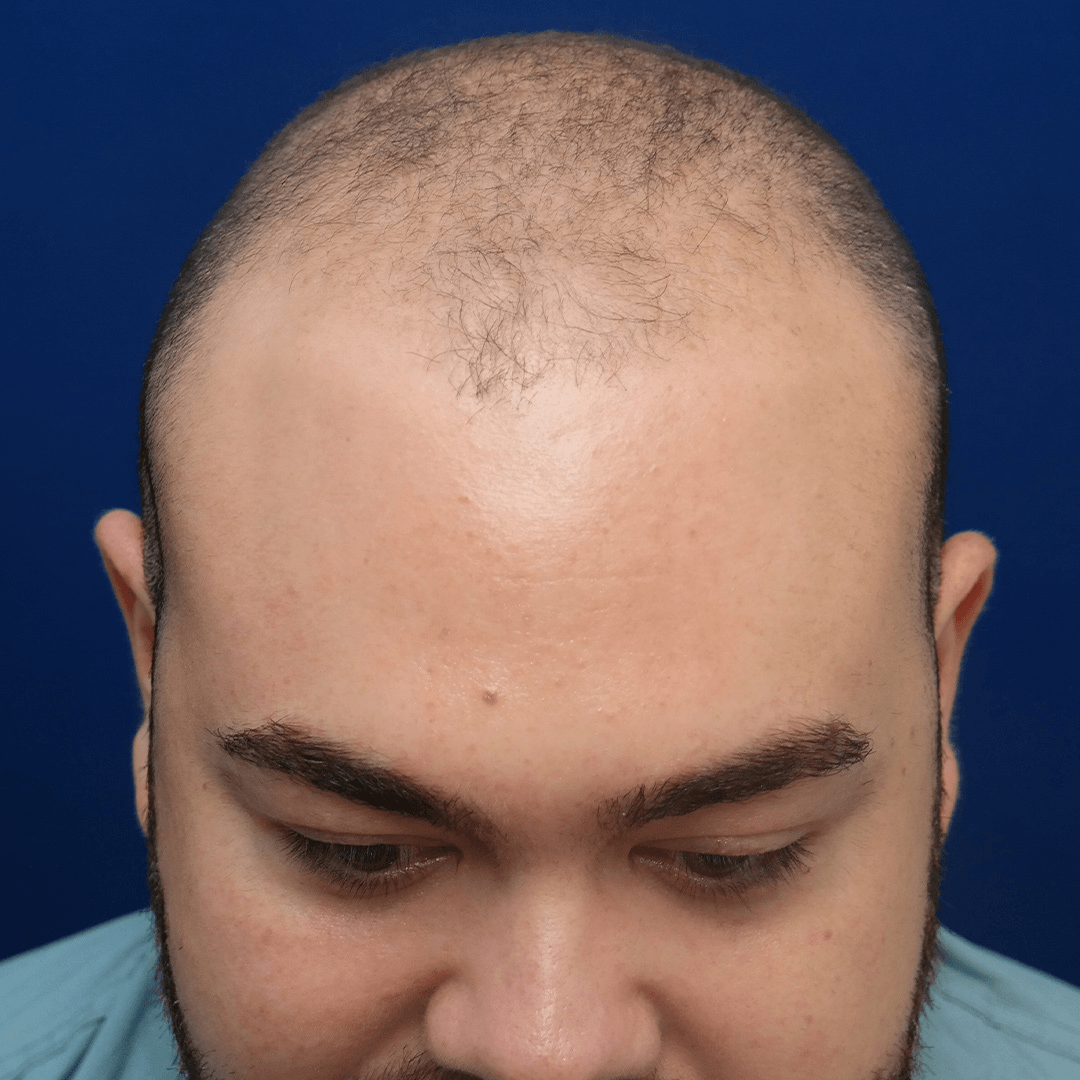
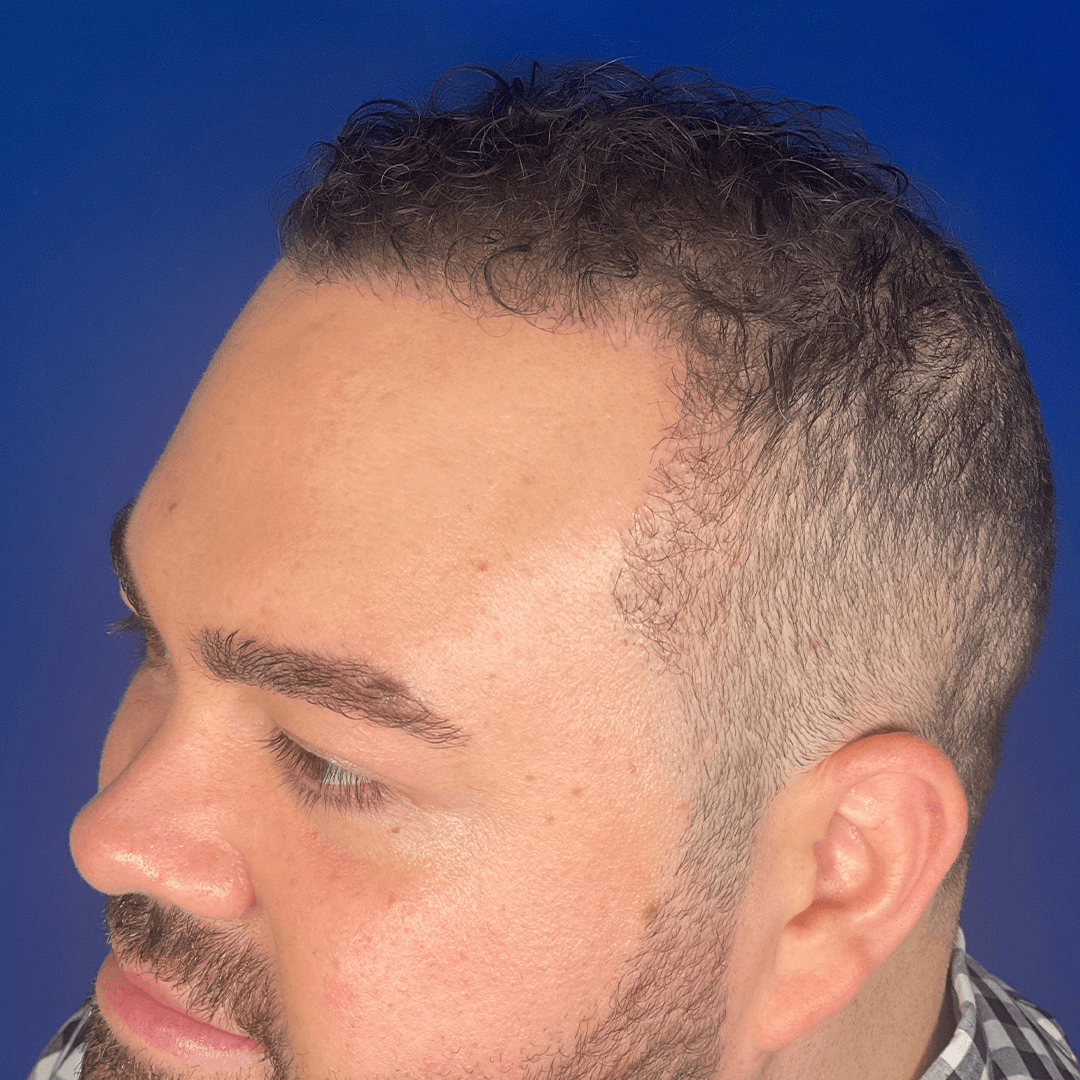
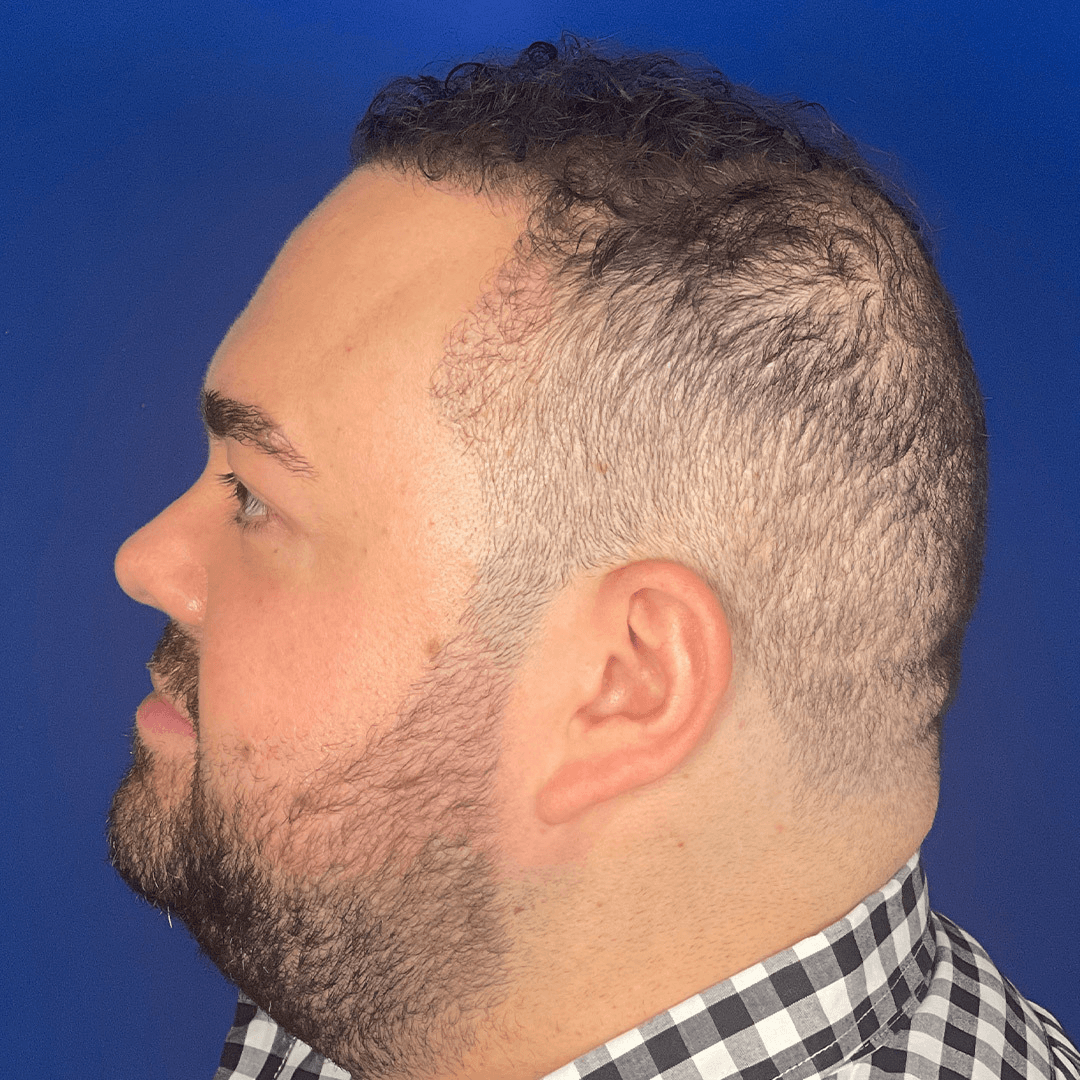
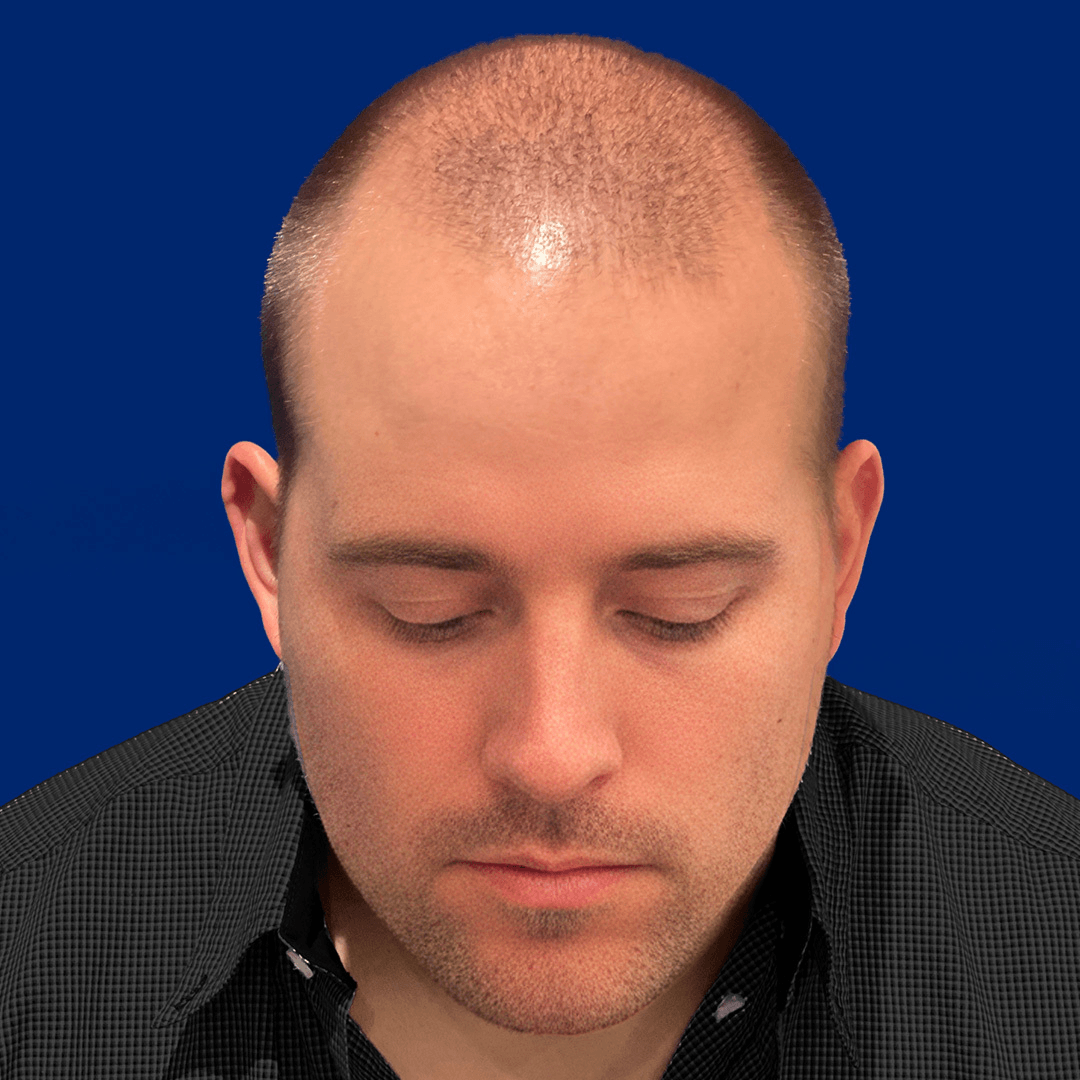
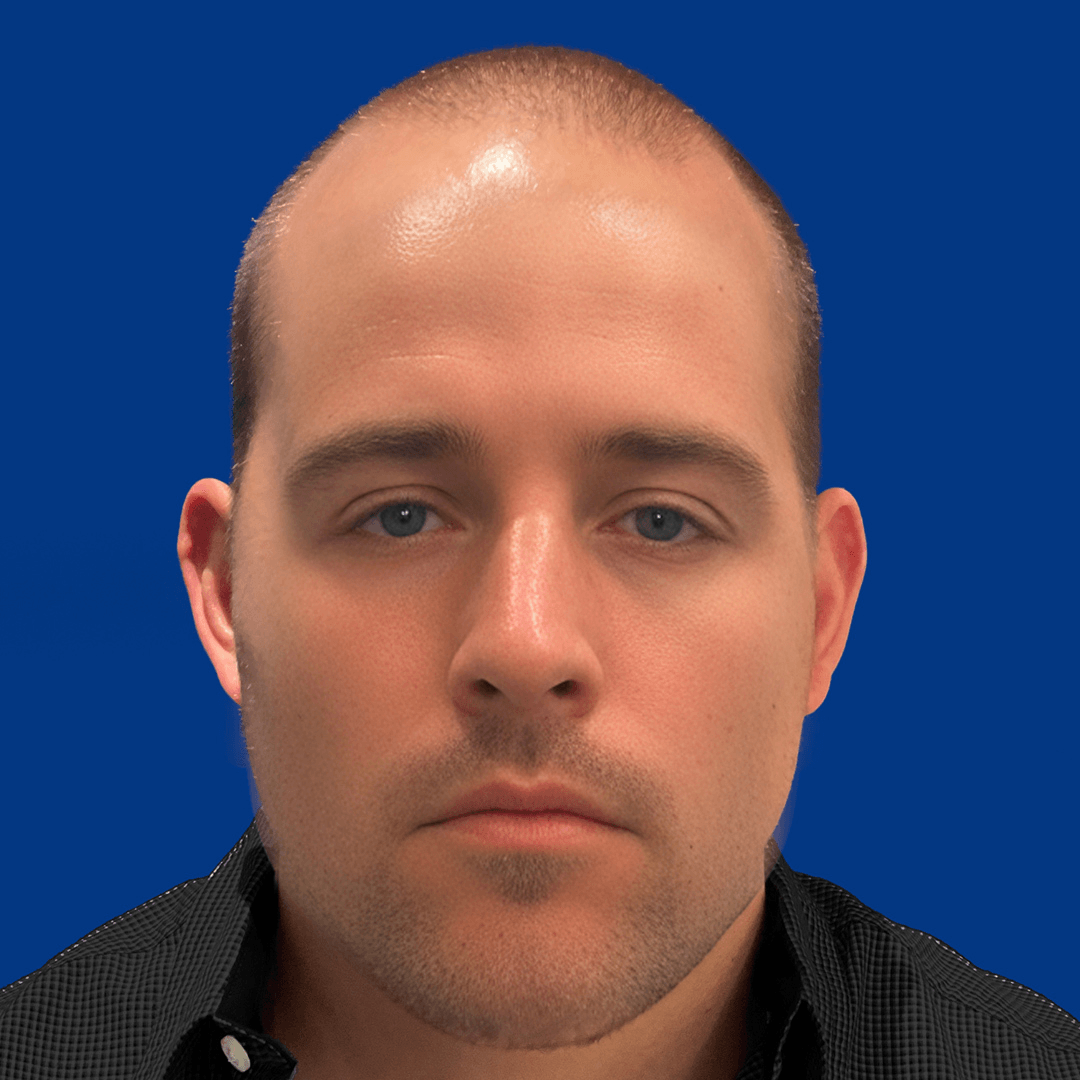
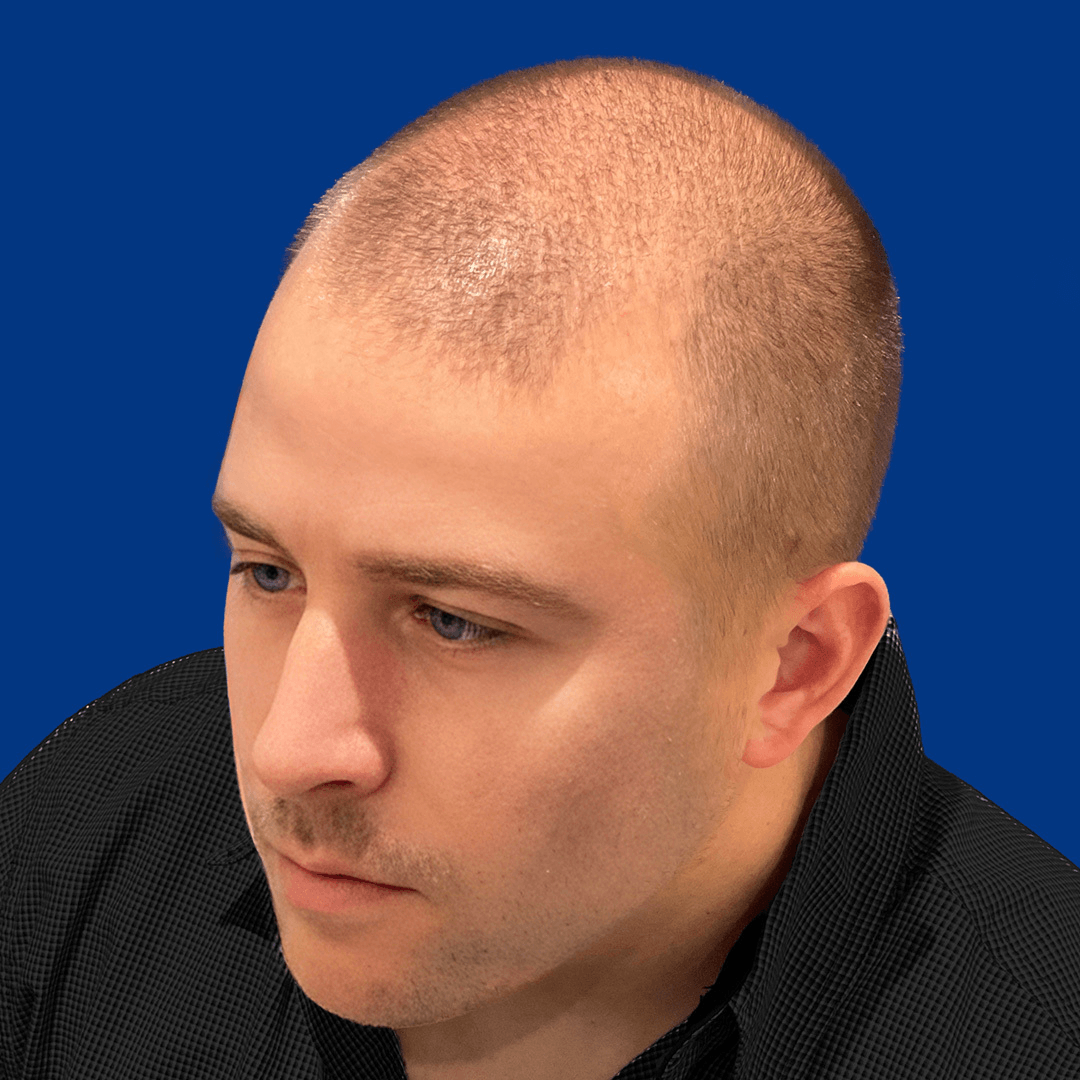
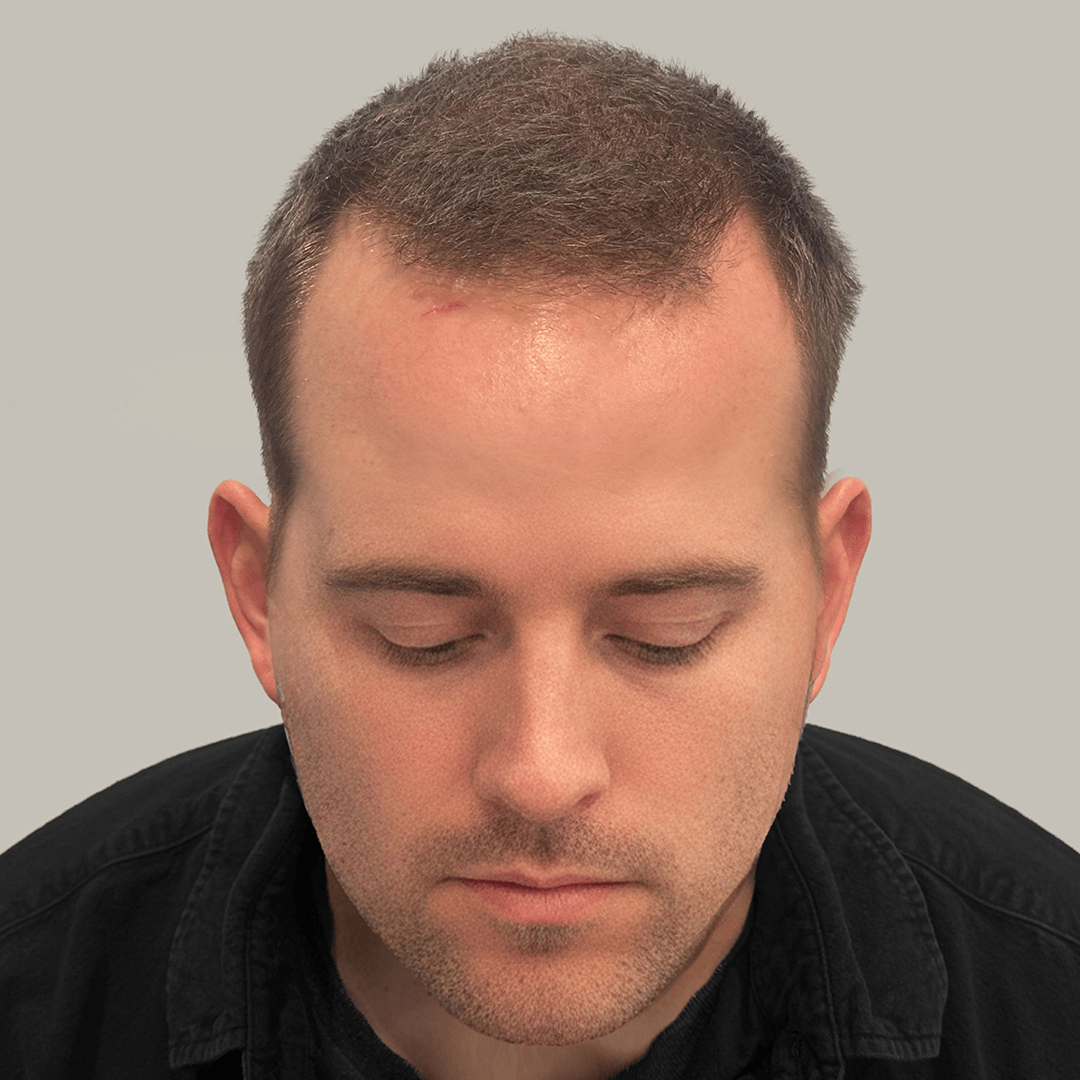
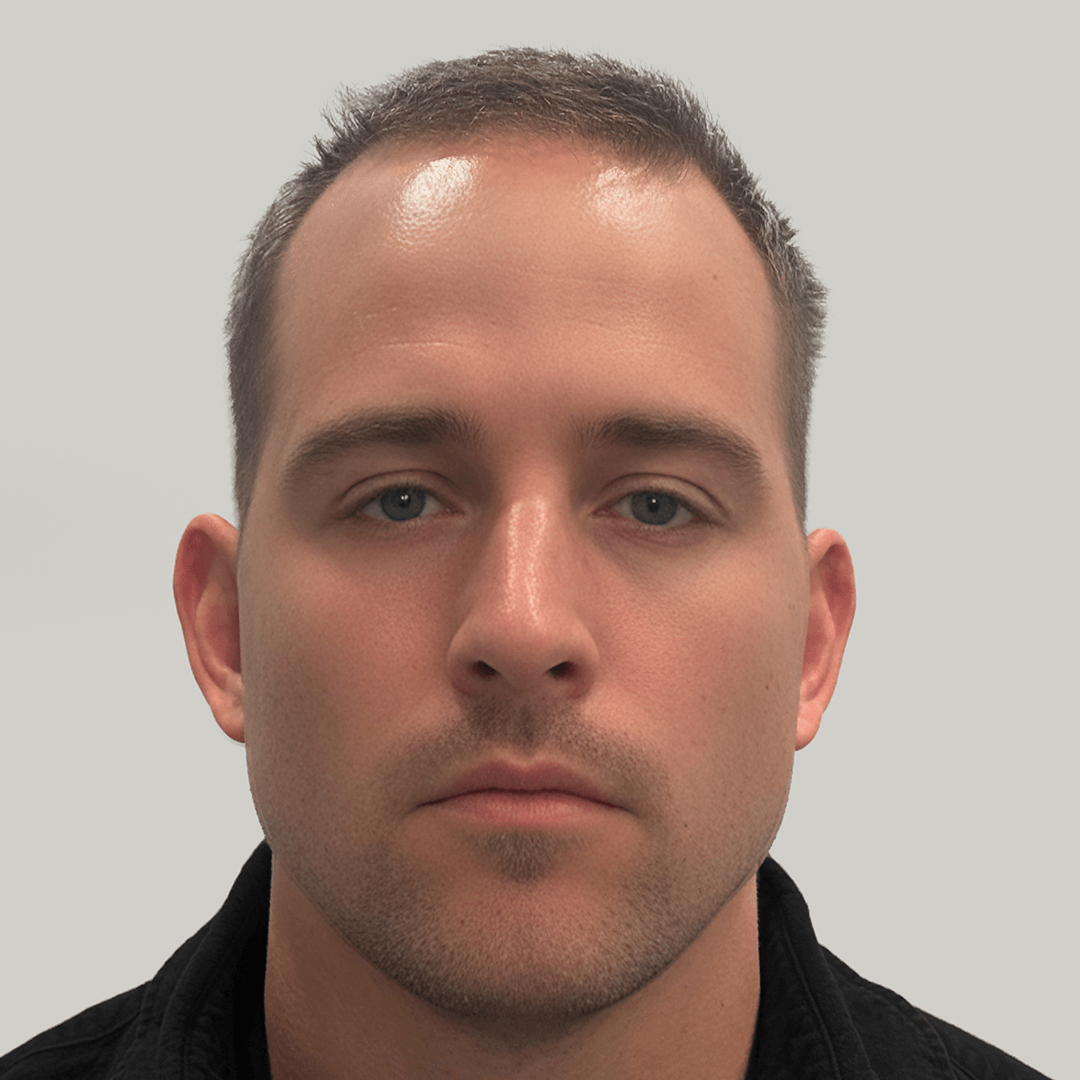
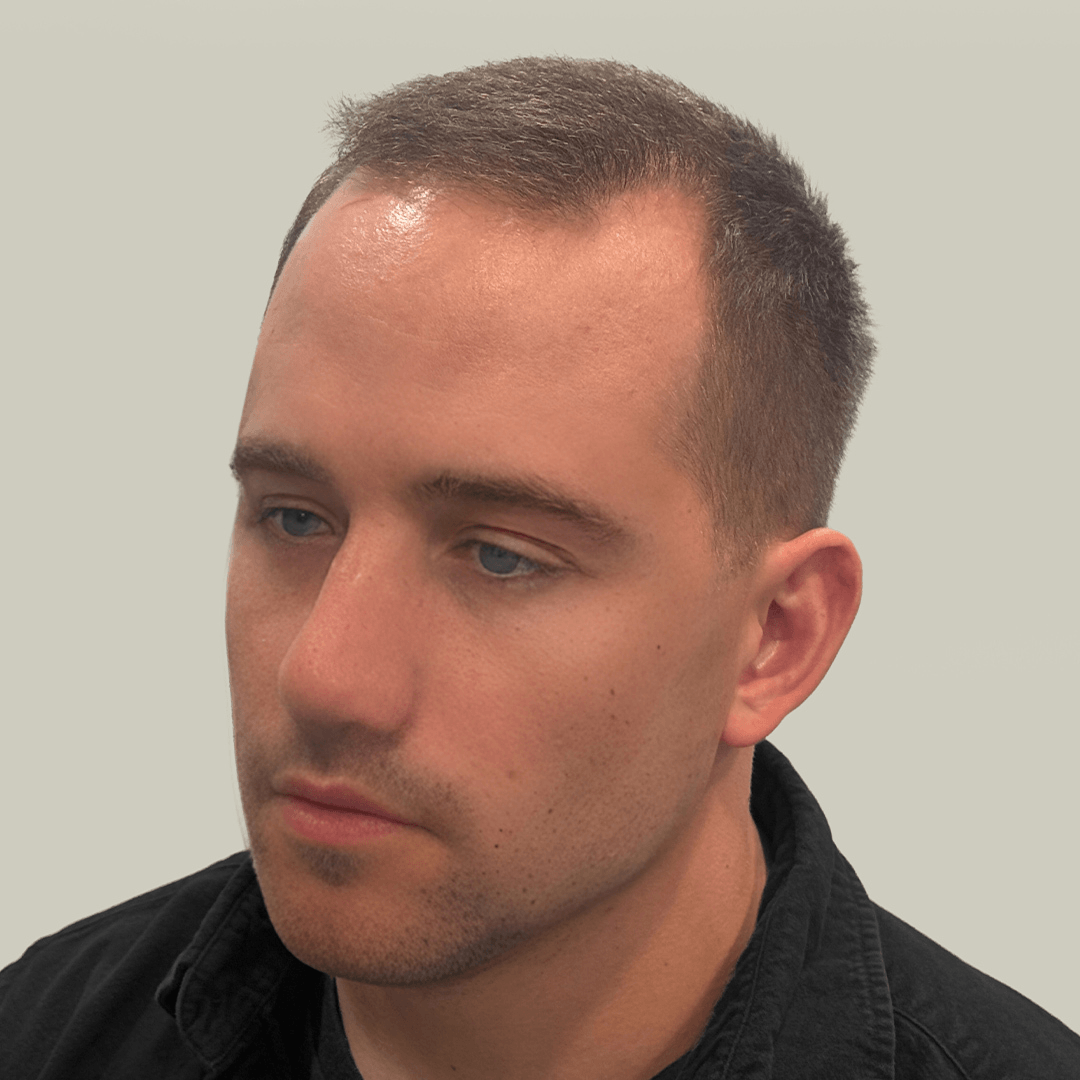
No-Touch FUE Hair Transplant Results
Before
After
Before
After
The Surgeon Behind No-Touch FUE
The Surgeon Behind No-Touch FUE
Dr. Vinay Rawlani trained as a plastic surgeon at Northwestern University and the University of Chicago before founding Northwestern Hair Restoration, a Chicago hair restoration practice. The atraumatic tissue principles he learned there became the foundation of No-Touch FUE. Hair restoration didn’t have those principles when he entered the field. The five injuries described above were happening at every clinic, and the procedures being performed treated them as acceptable features of FUE rather than failures within it. Dr. Vinay built a clinic around the opposite premise: that every one of them was preventable. That work has produced Micro PUE® and ACS Non-Surgical Hair Restoration, both of which began as solutions to specific injuries No-Touch FUE couldn’t fully eliminate on its own. It also produced two FUE procedures Dr. Vinay underwent himself, with his own team. You can watch the video below and see the results in person when you come in for your consultation. A consultation is the first step to discuss whether a hair transplant in Chicago is right for your goals.
Every No-Touch FUE at Northwestern Hair includes the work that prevents each of the five injuries as standard and supports natural-looking results. It also includes three further elements that are part of the procedure rather than separately priced add-ons:
Timeless Hairline or Crown Design
Every hairline placement at Northwestern Hair is designed by Dr. Vinay personally to create a natural hairline — the placement, the shape, the asymmetries and irregularities that make a hairline read as natural rather than drawn. A timeless approach intended to age well across decades.
No-Touch Technique
A deliberate technique to achieve the most natural results FUE has to offer, through delicate handling of hair grafts during a hair transplant.
Same Northwestern Hair Team
Every procedure at Northwestern Hair is performed by Dr. Vinay and a hair transplant team with 50+ years of experience, at a state-of-the-art facility built around the No-Touch technique.
Before
After
No-Touch FUE Pricing in Chicago
No-Touch FUE at Northwestern Hair is $7 per graft, or $5 per graft through Northwestern Hair Studio, our patient educational content program. No-Touch FUE can be combined with other techniques such as Micro PUE® for super natural hairlines and ACS to increase yield. Your consultation helps determine your graft count and final quote, and explains how Northwestern Hair’s other procedure tiers compare to No-Touch FUE on price and indication in detail on our Hair Transplant Cost page.
Technique
Cost per Graft
Best For
No-Touch FUE
$7 / graft
Density-building in mid-scalp and crown
Micro PUE
$14 / graft
The hairline and any zone where grafts are clearly visible
Northwestern Hair Studio, our educational content program, saves patients $2 per graft. Financing is available through CareCredit, PatientFi, and Cherry.
Financing is available through CareCredit, PatientFi, and Cherry.
Northwestern Hair offers four procedure tiers. No-Touch FUE is the foundational tier, the one most patients receive, either as their complete procedure or combined with one of the more advanced tiers where a specific area calls for it. It can be appropriate for both men and women with stable hair loss when this approach matches their goals.
More natural results than standard FUE
For individuals with thinning hair who are considering a standard FUE procedure for hair restoration but want to increase the naturalness of the result, No-Touch FUE can reduce kinking and dryness of hairs.
Mid-scalp and crown restoration
The no-touch technique can be used across the entire scalp as an upgrade to standard FUE, but it’s best for the mid-scalp and crown if one can upgrade to Micro PUE® for the hairline; for some patients, full restoration may include both the crown and hairline depending on the scope of the procedure.
Budget-conscious patients
Although advanced beyond standard FUE, No-Touch FUE is our base procedure at Northwestern Hair. With prices as low as $5 per graft, hair transplantation is broadly accessible without compromising the work that goes into it.
For patients whose hairline calls for the finest extraction technology, for patients with fine or curly hair where graft integrity has tighter tolerances, or for revision cases, Micro PUE® or one of the advanced tiers may be a better fit — either on its own or combined with No-Touch FUE through sequential extraction. Dr. Vinay walks through the right tier for your specific case during consultation, and candidacy still depends on having a healthy donor area and an individualized treatment plan.
How the procedure works
Before the procedure
Your No-Touch FUE begins with a consultation, virtual or in person, with Dr. Vinay. The consultation covers your goals, evaluates your donor area, identifies your graft count, and produces a procedure plan and quote. For out-of-town patients, the in-person evaluation typically happens the day before surgery.
Procedure day
Most No-Touch FUE procedures take a full day, generally six to ten hours, depending on graft count. You’ll arrive at the clinic in the morning for a tailored outpatient treatment, receive local anesthesia, and the team works in a way that helps you feel comfortable and keeps stress low through the day, with breaks for meals and rest. You’re awake throughout but generally relaxed; many patients read, watch shows, or sleep through portions of the procedure.
The donor area is buzzed by a professional barber before extraction begins. The fade conceals the buzzed area within about a week of normal hair growth.
Recovery
Most people feel good the next day and return to work within three to seven days. The recipient area shows small scabs for the first week to ten days, and in the first few days, mild redness is normal as early healing gets underway. The grafts themselves go through a dormant phase for the first three months. Placed hairs typically shed in the first few weeks, then the transplanted follicles enter a resting phase before new hair begins to grow in around month three to four.
Results emerge over six to twelve months as the new hair grows in and thickens, with final density usually reached around the one-year mark. From there, another six months allows the hairs to reach their final quality and texture. That step-by-step journey is planned around natural growth and undetectable results, with the goal of restoring confidence.
Before
After
Frequently Asked Questions
About No-Touch FUE Hair Transplants in Chicago
What does No-Touch FUE cost?
No-Touch FUE at Northwestern Hair is $7 per graft, or $5 per graft through Northwestern Hair Studio, our content creation program. Both procedures are the same and performed by the same team. The only difference is patients in the Northwestern Hair Studio program agree to content creation (photos, videos, testimonials, etc.).
How is No-Touch FUE different from standard FUE?
Both are Follicular Unit Extraction procedures, but the results from No-Touch FUE have fewer kinks and less dryness. The difference is the discipline applied at every step: donor area mapping before extraction begins, controlled extraction protocol, minimized graft handling, controlled preservation, and manual placement by an experienced senior team. Each step is engineered to prevent one of the five ways a graft can be injured during a standard FUE.
How is No-Touch FUE different from Micro PUE®?
No-Touch FUE is the foundational procedure at Northwestern Hair. Micro PUE® is the advanced extraction technology. The focus of standard FUE and No-Touch FUE is extraction of the follicle, whereas the focus of PUE is extraction of the entire hair unit, which comprises not only the hair follicle but also the oil glands, the stem cells, and the connective tissue sheath. Micro PUE® produces healthier, hardier grafts than No-Touch FUE and is the right choice when individual graft character matters most, typically at the hairline. Many patients combine the two through sequential extraction, using Micro PUE® at the hairline and No-Touch FUE for the rest of the restoration. Our Hair Transplant Cost page walks through how the procedure tiers compare and combine.
How long does the procedure take?
Most No-Touch FUE procedures take six to ten hours, depending on graft count. You’ll be at the clinic for a full day. The procedure is performed under local anesthesia, so you’re awake throughout but generally relaxed.
How soon can I return to work?
Most patients return to work within three to seven days. The low taper fade haircut included with every procedure conceals the donor area within about a week of normal hair growth.
When will I see the final result?
Placed hairs typically shed in the first few weeks after the procedure, then enter a dormant phase before new hair begins to grow in around month three to four. Results fill in over six to twelve months, with final density usually reached at about one year. From there, another six months allows the hairs to reach their final quality and texture.
Is No-Touch FUE permanent?
The transplanted hairs are taken from areas of the scalp genetically resistant to the patterns of hair loss most patients experience. Once they take and grow in, they continue to grow in their new location with the same characteristics they had in the donor area. The grafts themselves are a permanent solution. Surrounding native hair may continue to thin over time, which is why hairline design and procedure planning account for the long-term trajectory of your hair, not just the present condition.
Ready to Talk About Your Hair Growth?
Every No-Touch FUE at Northwestern Hair is fully customized to your goals. Your accurate graft count, donor area plan, and final quote come from a virtual or in-person consultation with Dr. Vinay.