
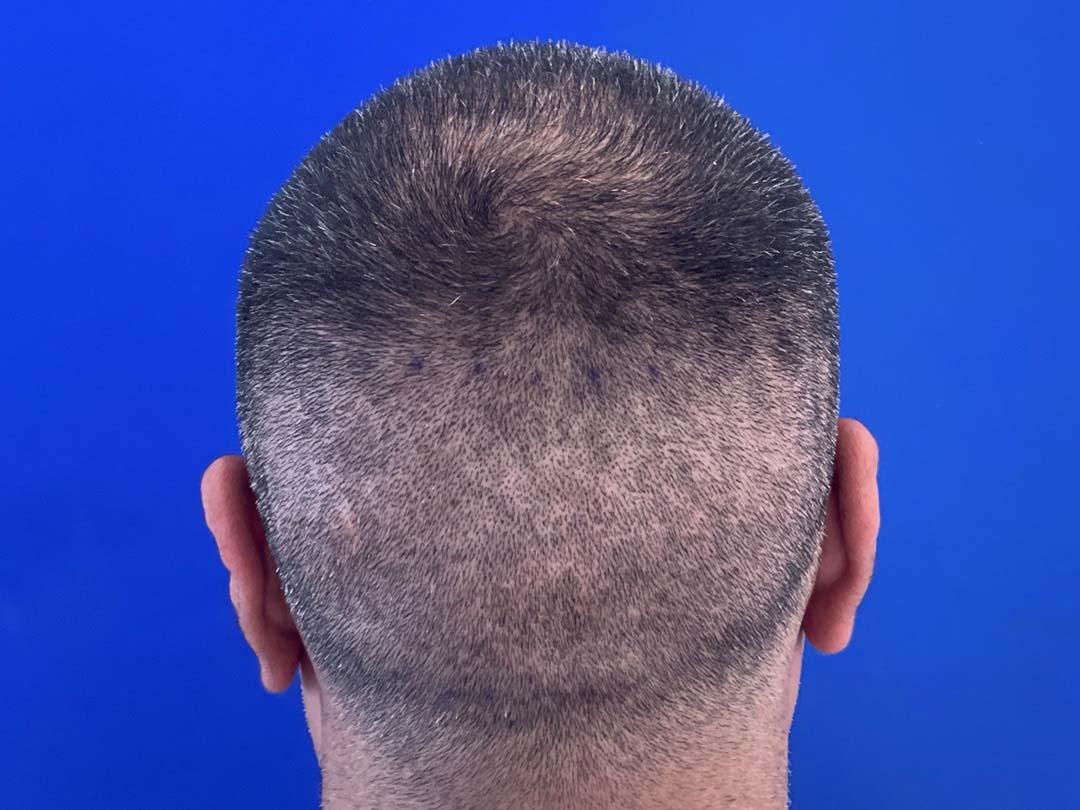
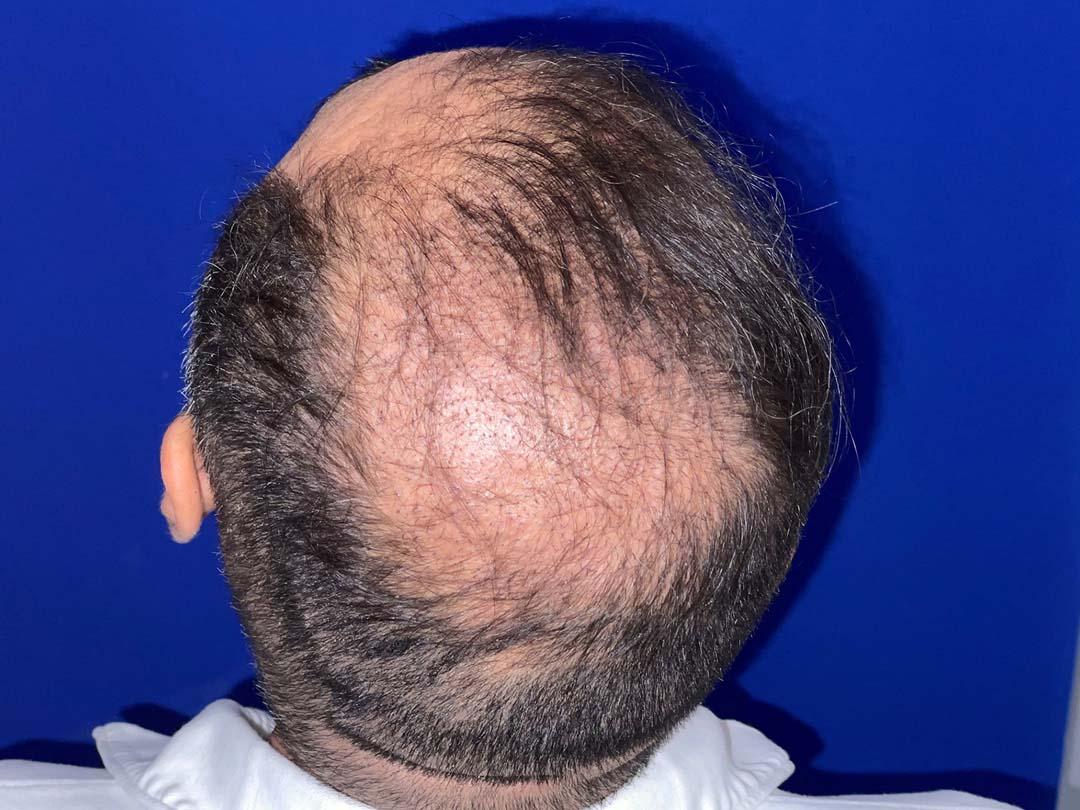
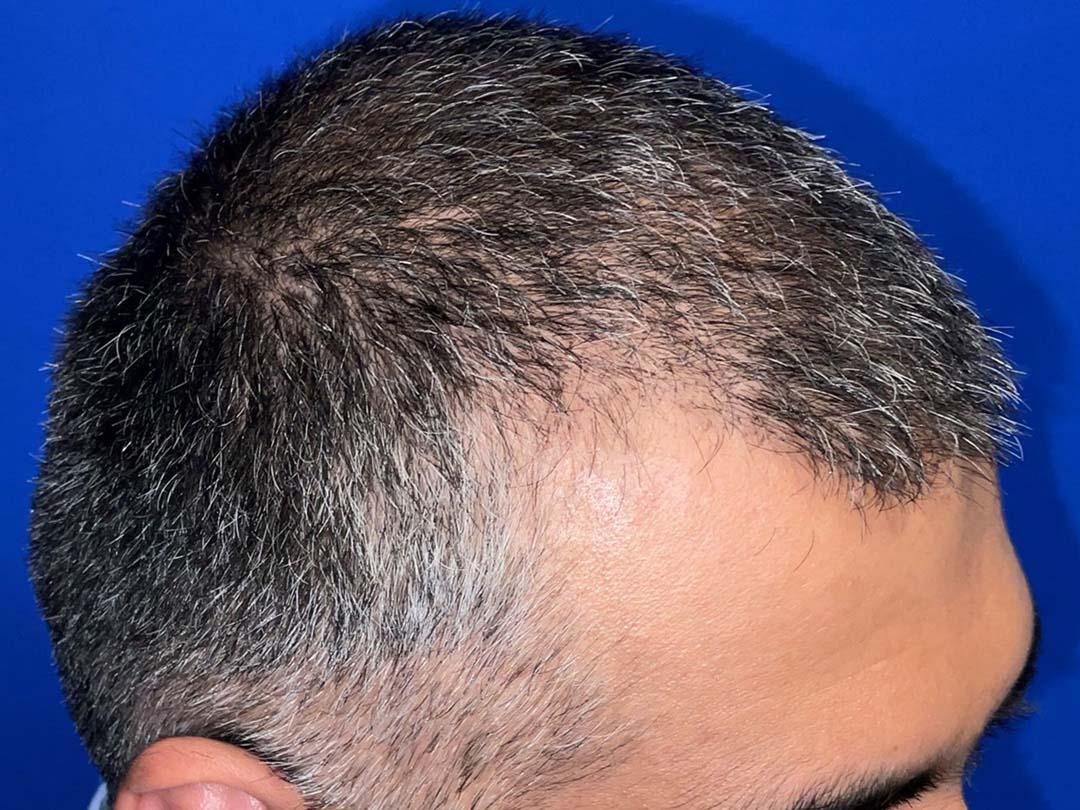
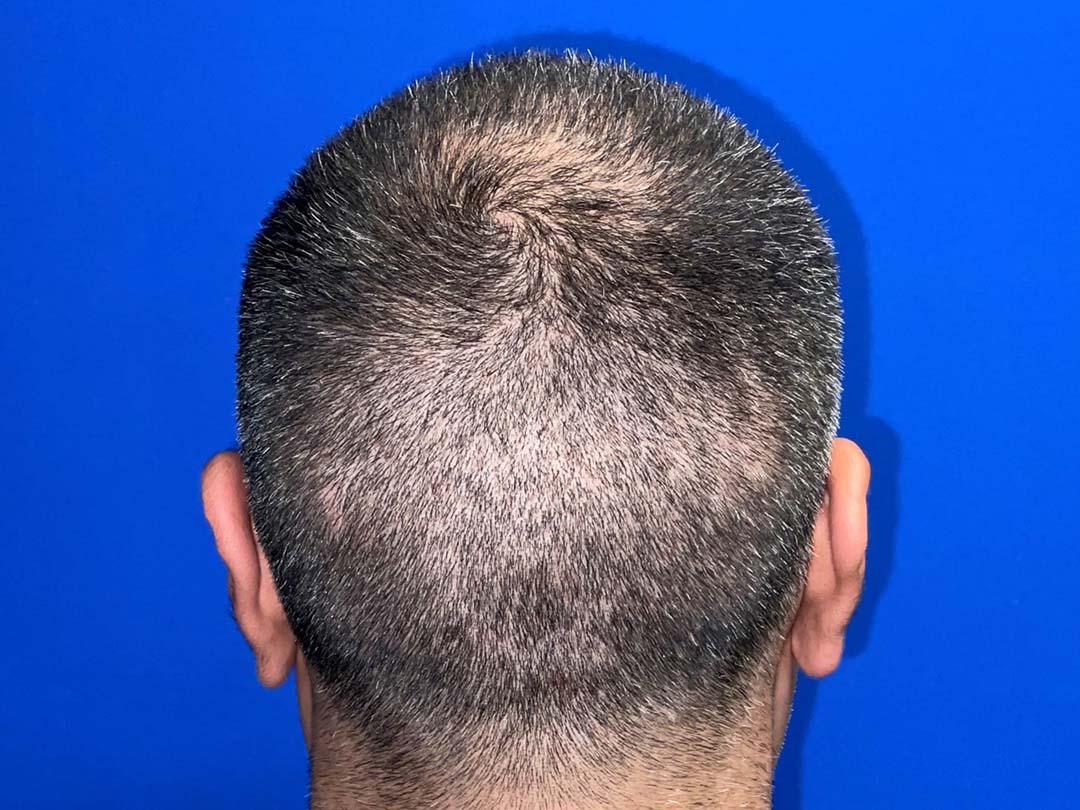
Medically reviewed by Dr. Vinay Rawlani, MD · Last updated June 2026

This hair transplant healing timeline walks you through your recovery day by day — what’s happening underneath the surface, what you’ll see, and exactly what to do at each step. For most patients, recovery is faster and easier than they expect: back to work the next day, and healed in seven to ten days.

Group-1030.svg

+200 Reviews

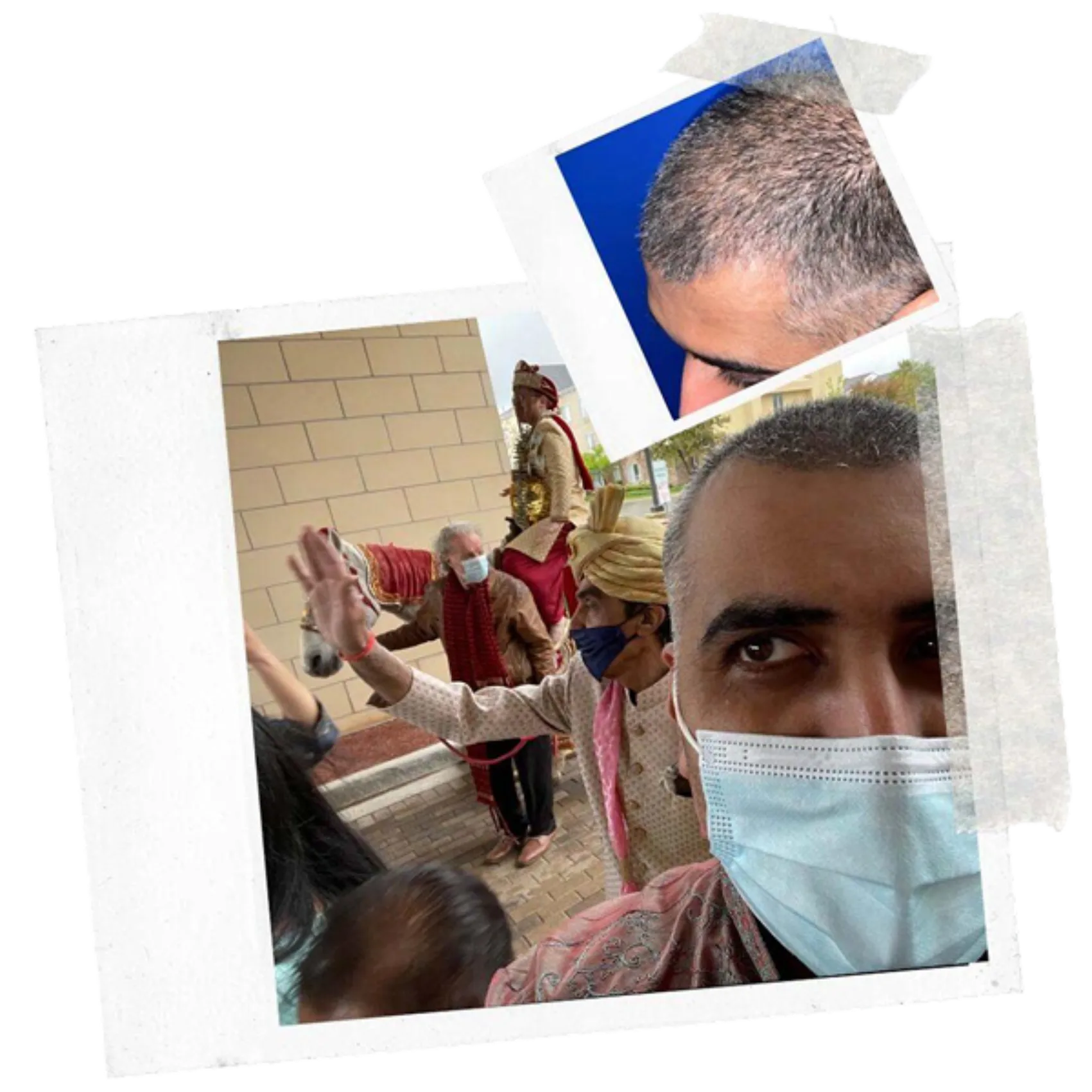
Watch: Dr. Vinay Rawlani healing seven days before a wedding

Two things are healing at once after your hair transplant, and they heal differently. In the donor area — the back and sides, where the grafts were taken — your body is closing thousands of sub-millimeter sites from the bottom up. In the recipient area — where those grafts now sit — something more remarkable is happening: each transplanted follicle has lost its blood supply, and over the first several days your body grows new vessels into it to bring it back to life. One area is closing. The other is reconnecting.

Almost everything we ask you to do in aftercare comes back to both of these processes. The grafts are fragile while their new blood vessels form — thin-walled, easy to disrupt — so the misting, the careful washing, the no-pressure rules, and the timing of when you can sweat or wear a cap all exist to protect the grafts until they’re locked in. The donor side is easier to care for — the body is filling in the holes and regenerating the nerves — but you may still need to manage sensations like itching and sensitivity. Understand what’s happening underneath, and every instruction makes sense.

When Can You Do What After a Hair Transplant? Return-to-Activity Timeline

Most people’s first question is simple: when can I get back to normal? Here’s the full return-to-activity timeline at a glance — the detailed healing and aftercare process follows below.

Return to work

Some people even work during the transplant — answering calls, emails, and so on. When you go back really depends on your level of social engagement. You’ll wear a dressing for the first two days, and you’ll have a short haircut, scabs, and possibly some swelling for about ten days. Physically, you’ll feel fine to work right after surgery — you just may not want to be seen.

From the day after surgery through day two, you can shower from the shoulders down and use a washcloth to clean your face — you cannot get your hair or your dressing wet. From day two to day five, you will be washing your new grafts with soapy water, and you can shower normally on your body and along the donor site where the hairs were taken. After day five, you can start gently scrubbing the new grafts with baby shampoo. From day ten on, you can return to normal showering and use your normal hair products that wash out of your hair.

On day two, you wash with soapy water only, without touching the grafts. On day five, you can lather the shampoo in your fingers and gently massage the area. By day ten, you can return to your normal shampoo. See “How to Wash Your Hair” below for the full method.

You can return to light activity on day two, meaning nothing that raises your heart rate or blood pressure, and nothing that makes you sweat. On day five, you can start to sweat, but still without raising your heart rate or blood pressure — an elliptical is a good example. On day ten, you can raise your heart rate, but not your blood pressure — think minor strength training, around 10 to 12 reps with no struggle. At three weeks, you can raise your blood pressure too, which means heavy lifting and strict, rigorous exercise.

You can wear a loose, brimmed cap starting on day five, as long as the brim sits off your grafts and nothing presses on the recipient area. By three weeks, you can wear any hat. See our guide to wearing a hat after a hair transplant.

Minimize direct sun for the first five days. From day five, you can be out in the sun while wearing a cap. Sunscreen on the treated area is best saved until three weeks.

Sex and other strenuous activity follow the same gradual return as exercise, because both raise your blood pressure. Keep it easy in the first days, return to moderate activity around day ten, and return to normal by three weeks.

You can have a haircut on day ten, as long as nothing touches the new grafts — that means scissors, or clippers with a guard. Cutting directly on the scalp with clippers has to wait until three weeks. Shaving has to wait until six weeks.

Anything that washes out of your hair, you can start using on day ten. Anything that stays in your hair, you can start using at three weeks. Coloring, heat styling, and pulling or tight styling all have to wait six weeks, because physically, chemically, or thermally affecting your hair can have a more significant impact.

You can swim, in either a pool or open water, starting at three weeks.

You can have a small amount of alcohol about two days after surgery. Wait the full ten days before having a substantial amount. How much is reasonable depends on the person.

You should never smoke. Smoking at any point during the growth phase will impact your results. If you’re a smoker, we may advise you against having a transplant, for your best interest.

The Hair Transplant Healing Process: What Happens in Each Area

What Happens to the donor area

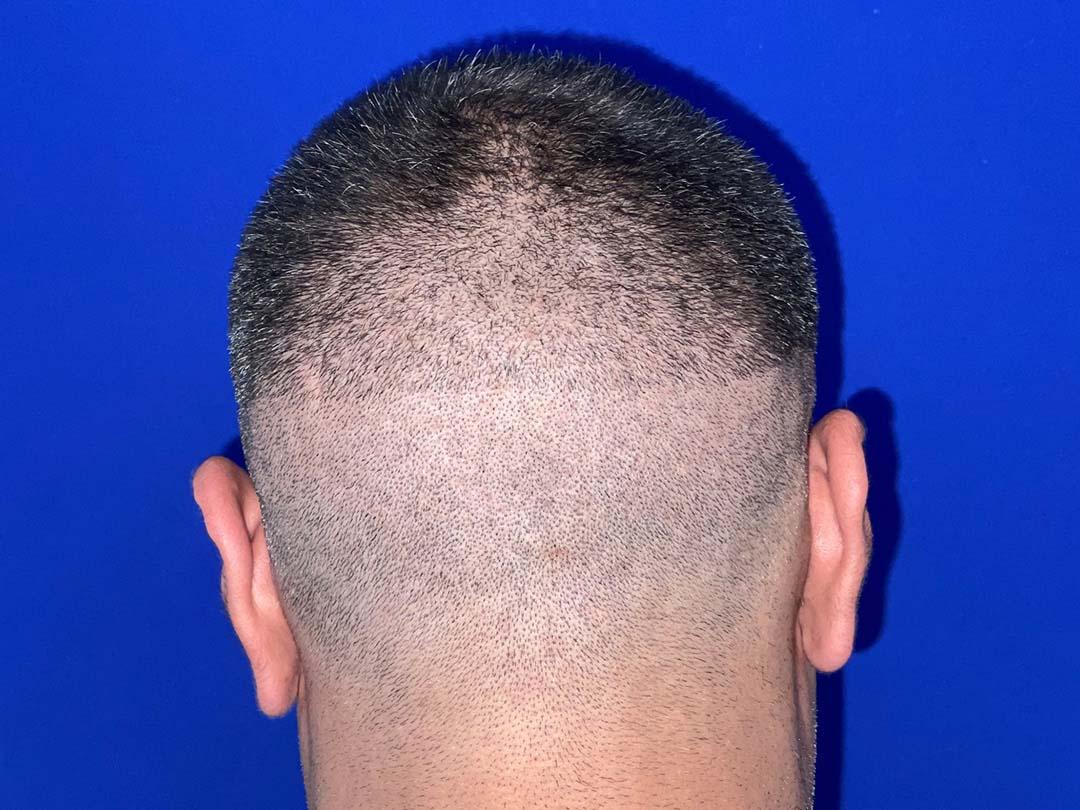
In the donor area, the body fills the tiny openings created during follicular unit extraction (FUE) — where individual hair follicles are removed one by one — with brand-new tissue. First, it lays that tissue down, from the bottom up; then the nerves regenerate through the area; and finally, the sites contract down into pin-sized spots that are barely visible as they heal. The back tends to heal a little faster than the sides, simply because of the pressure it gets while you sleep, and the surrounding hairs draw together to conceal the area entirely.

How the recipient area heals

The recipient area is where something remarkable happens. We took this tissue out of the body and, in doing so, stripped it of all its life support — and now it has to be reintegrated into a new place. At first, each graft survives only on the nutrients in the surrounding tissue. Then, over the first several days, new blood vessels course in and have to connect to every part of the graft — the follicle, the oil glands, and the stem cells. Each component has to be revascularized for the graft to live. Those vessels are at their most fragile around day five and grow robust by day ten, and treatments such as ACS Non-Surgical Hair Restoration can help by supplying extra growth factors early on. This reintegration is the process that makes the whole procedure work.

Hair Transplant Healing Timeline: How It Looks and Feels, Day by Day

This is how the healing process will look and feel to you on a day-to-day basis while your body is going through two different types of healing.

Immediate

What you’ll see

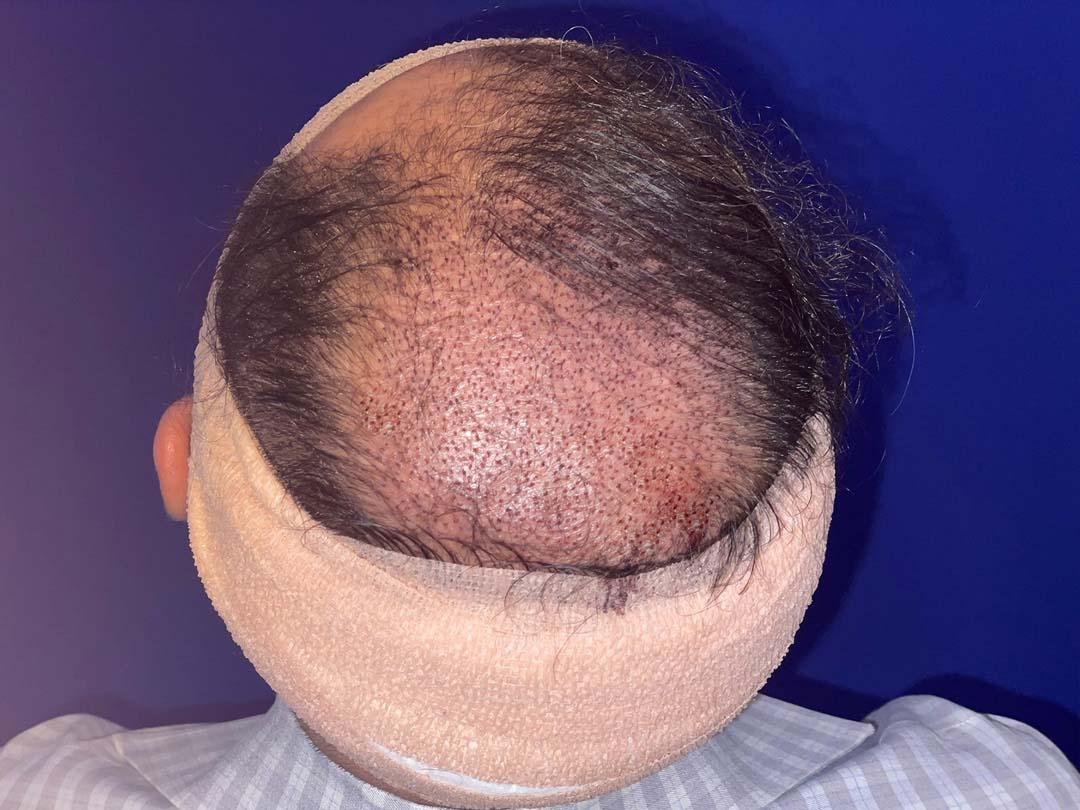
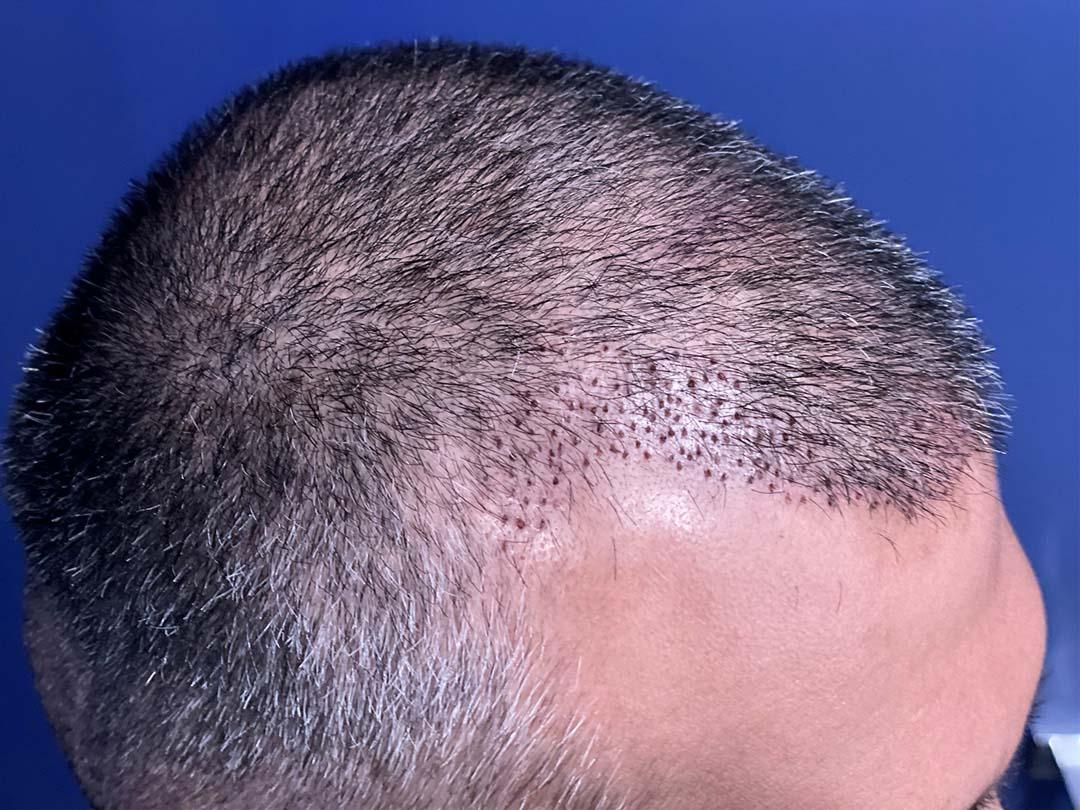
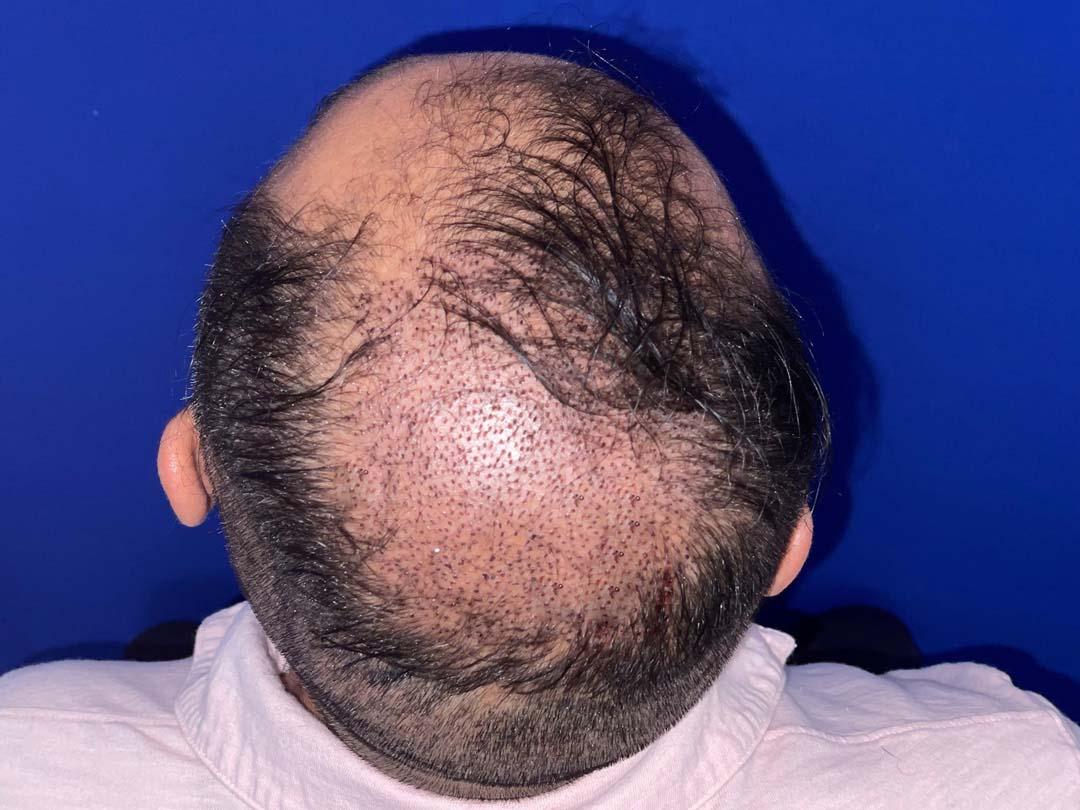
Small white or red knobs of tissue with tiny hairs in the recipient site. The donor is covered by your dressing — an absorptive bandage, ointment, and elastic band — and underneath are extraction cores under 1 mm, with possible minor drainage.

How it feels

It feels like you had a long day. A slight sensation may return to both the donor and recipient sites by the end of the day. You might feel some throbbing or burning, but only minor pain.

Crown

Hairline

Hair Collection Area

What you’ll see

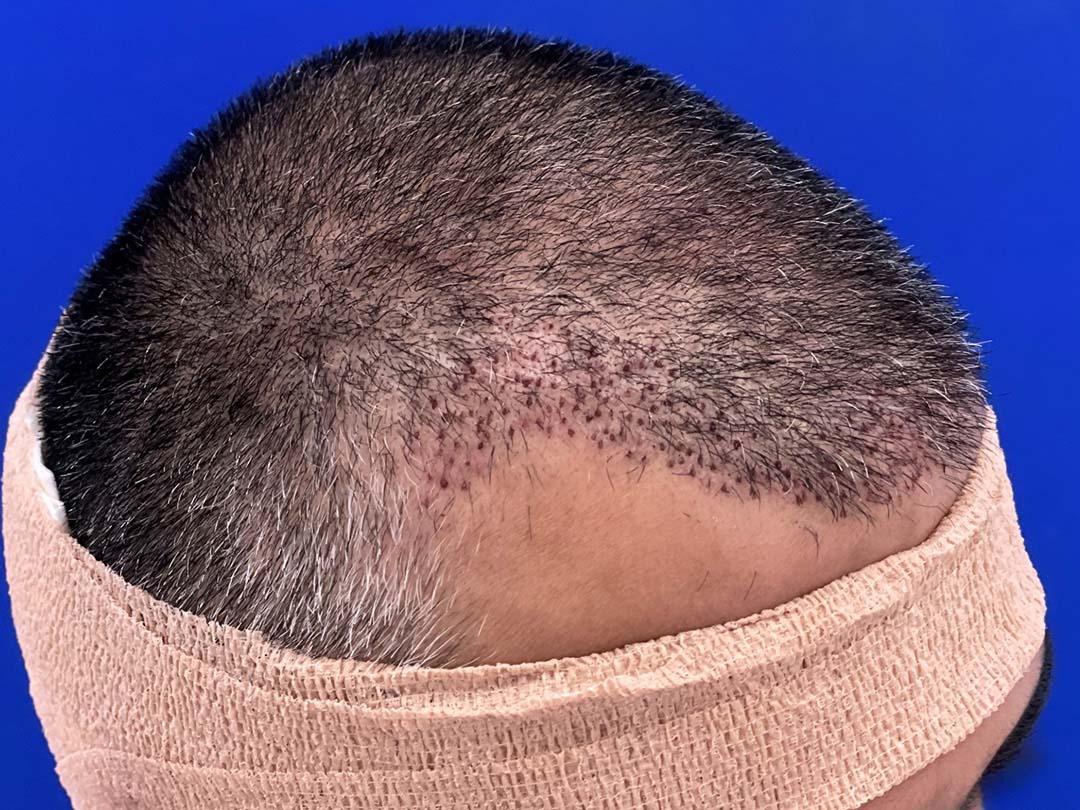
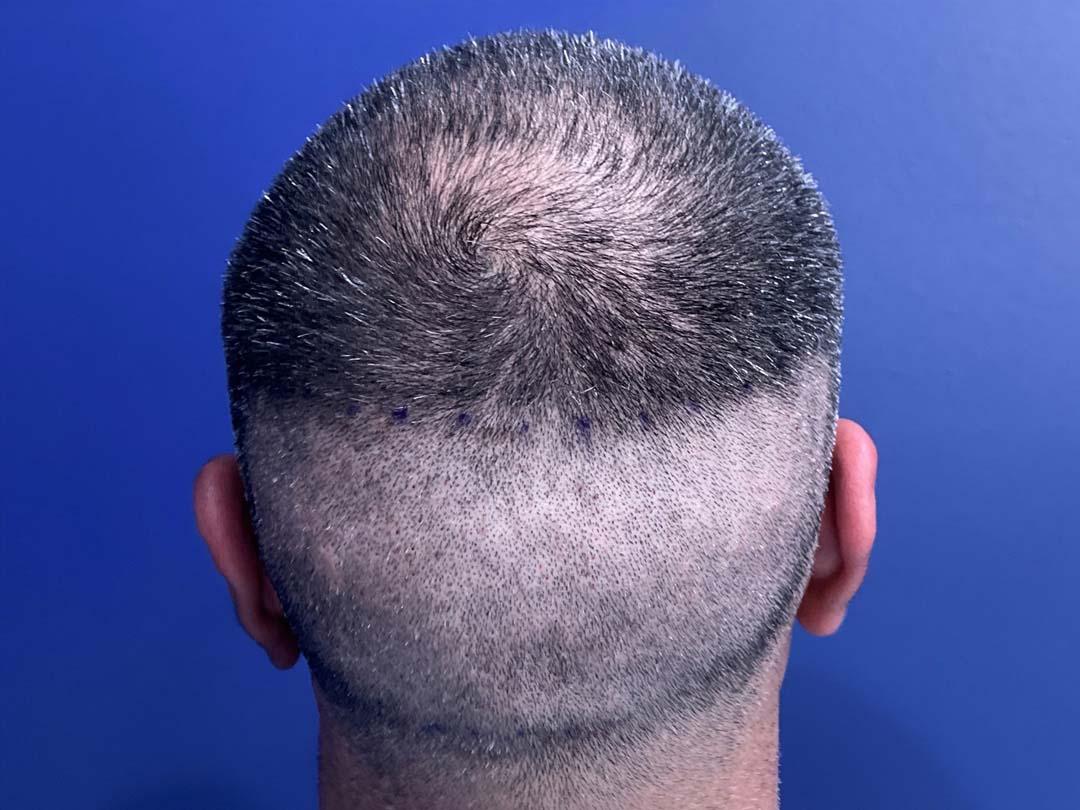
Dressing comes off. Grafts have turned red-brown or maroon and dried. Donor sites are 50–75% closed — the back ahead of the sides. Hair coverage is slightly reduced, with minimal redness and perhaps one day of minimal donor drainage.

How it feels

More comfortable. Swelling that built above the band tends to move down once it’s off — usually behind the ear, though in about 20% of front-hairline cases it can move into the forehead and face.

Crown

Hairline

Hair Collection Area

What you’ll see

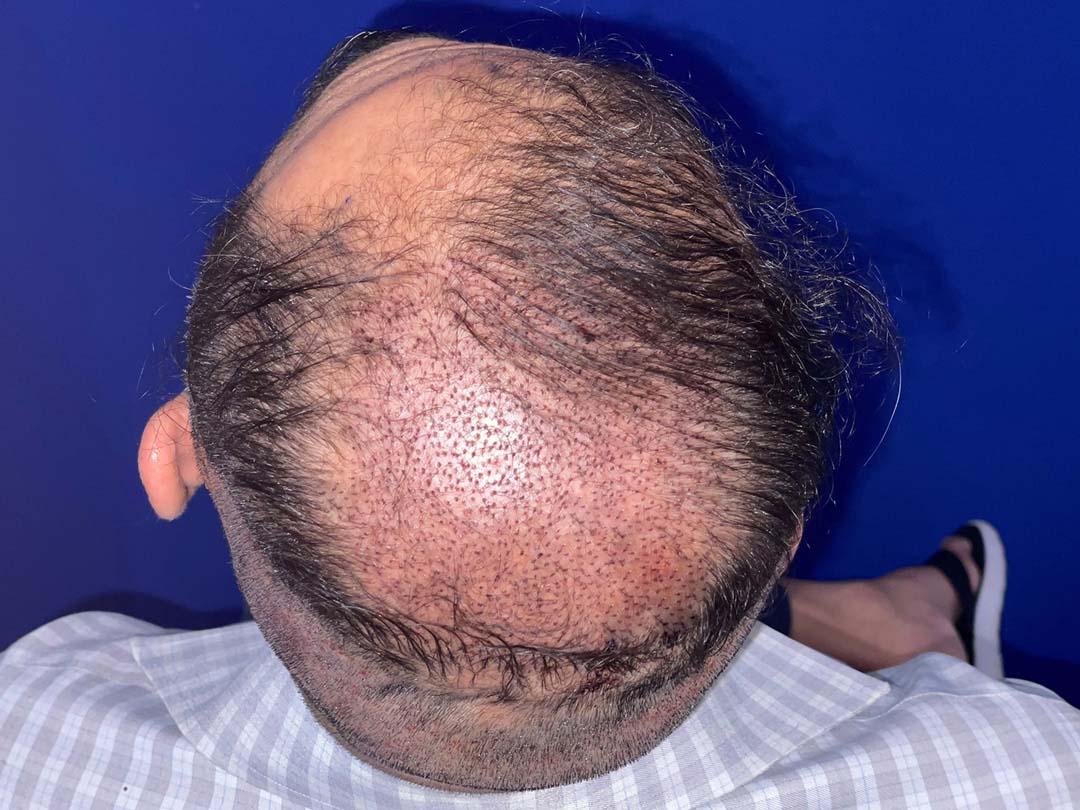
Donor essentially closed, with hair starting to grow over it. The recipient grafts have formed a firm crust. You may also notice some hair shafts shedding — these are shafts, not follicles.

How it feels

The donor may be sore and tender, and itching often kicks in — usually the main complaint — sometimes with burning or “zingers.”

Crown

Hairline

Hair Collection Area

What you’ll see

Donor nearly fully healed — perhaps faint redness, but no open holes or scabs, with hair growing over it. Recipient scabs have softened and may have fallen off, partly or fully.

How it feels

Comfortable and largely back to normal. You’re ready for your follow-up visit to remove any remaining scabs.

Crown

Hairline

Hair Collection Area

What you’ll see
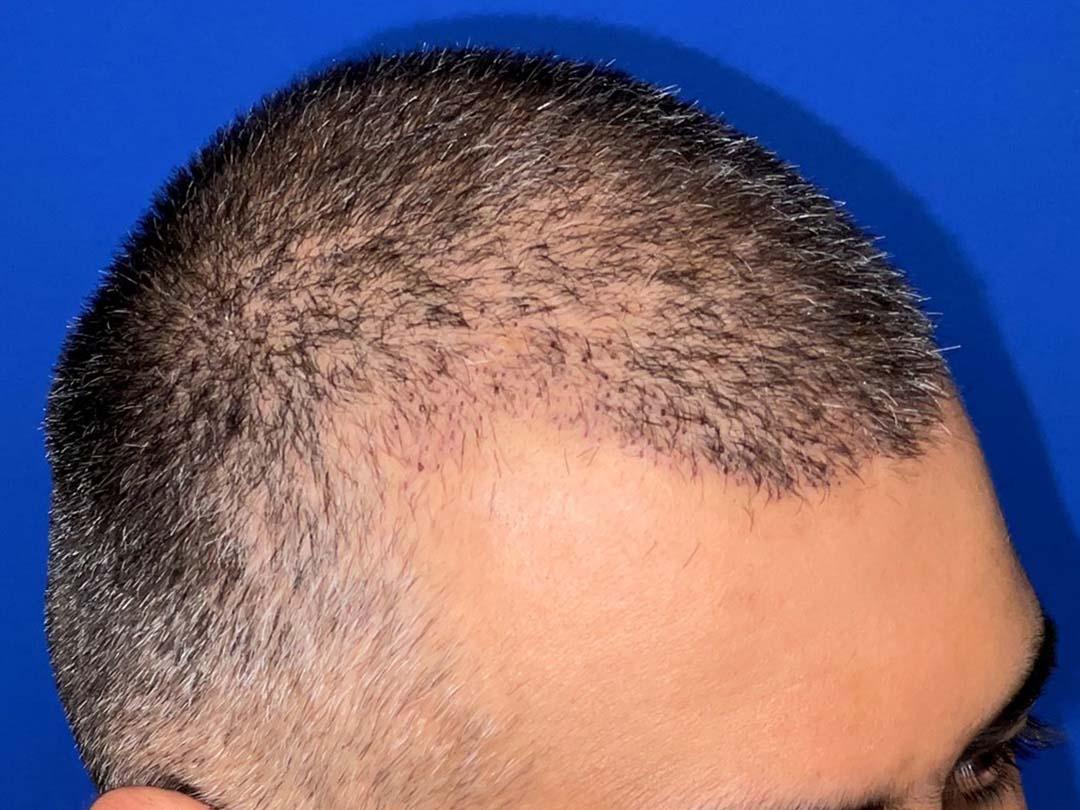
Donor typically covered by growing hair and styleable. In the recipient area the new hairs are beginning to grow, and a portion enter the normal shedding of shock loss. For people with light skin, the skin may appear slightly red at the recipient site.

How it feels
You’re largely back to normal. Some people may still notice some nerve sensations in the donor site — like a zinger, a sensitive spot, or a few bumps from hairs regrowing.

Healing Discreetly: Concealed Follicular Unit Extraction (FUE) Hair Transplant Techniques

If staying discreet matters to you, the technique itself can minimize what’s visible from the very first day.

Micro PUE®

With a concealed haircut. The haircut is performed only where the procedure needs it. Either a taper fade looks normal within about three days, once the extraction sites heal, or the concealed haircut covers the donor area immediately after the procedure. 

Discreet PUE®

No haircut is performed, so the recipient site is the only area visible to you. If the grafting was done underneath existing hairs, even that may not be visible; otherwise it looks like a normal transplant in that area.

Long-Hair PUE®

A haircut is performed for the donor sites so the donor is concealed immediately, and long hairs are transferred into the recipient site — covering the grafts right after surgery and giving you a preview of your result before the shedding phase. 

Hair Transplant Healing Symptoms: What You’ll See and Feel

Most of what you notice during recovery is normal and expected. Here is each one — why it happens, and what you can do about it.

Swelling

Why it happens
Mostly from the local anesthesia fluid, which moves down with gravity once the dressing is off; inflammation plays a smaller part. About 20% of front-hairline cases see it reach the forehead and face.

What you can do
Massage below the eyebrows (around the eyes and face) to move fluid down. Never massage above the eyebrows — pressure there can push fluid toward the grafts. Usually peaks day 3–4 and resolves within about a week.

Why it happens
Uncommon — as each graft seats, the bleeding seals off. If it appears, it can track to the under-eye area along the path of least resistance.

What you can do
Reassurance only. It typically shows in 1–2 days near the scalp, 3–4 days around the eyes, and resolves in about 10 days.

Why it happens
The crust is the upper part of each graft, intentionally left slightly elevated so the scalp heals evenly without cobblestoning — plus a little dried blood.

What you can do
Leave them alone for five days, then start oiling to soften. Most release on their own; any remaining are removed at your follow-up around day 7–10.

Why it happens
The tiny extraction cores fill in from the bottom up, and skin grows over them; the back heals faster than the sides because of sleep pressure.

What you can do
Keep it clean and moisturized. Surrounding hairs contract closer together to conceal the area; faint redness can last up to two weeks.

Why it happens
The number-one complaint. Caused by regrowing nerves firing as they mature, plus inflammation (histamine) in the healing tissue.

What you can do
Antihistamines such as Zyrtec or Claritin, a topical steroid such as hydrocortisone ointment until the donor closes, and keeping the area moisturized. For nerve-driven itch, gabapentin can help.

Why it happens
Minimal. Removing tissue cores can involve a nerve, creating a sensitive spot or “zinger”; both areas are mostly numb at first.

What you can do
One pain medication at night and one the next morning, then Tylenol, is all 98% of patients need. (A deeper guide to pain lives on our procedure page.)

Why it happens
A weeks-to-months issue, mainly in the donor: a transected hair keeps growing but loses its exit, so it ingrows and can become a pimple or, if infected, folliculitis.

What you can do
Keep the donor hair exfoliated so new hairs find their exit. It rarely becomes a problem and resolves with exfoliation.

Why it happens
Healing (granulation) tissue is red until the skin above it thickens — more visible in paler skin and in the recipient area.

What you can do
Usually just time (up to a month). Topical azelaic acid or niacinamide can calm and soothe. Rarely noticeable to others.

Why it happens
In the extraction areas, the nerve is gone and has to regenerate across the area.

What you can do
Time. Sensation returns as the nerves regrow. The related “tight” feeling is the donor sites contracting together.

Hair Transplant Swelling

Swelling comes from two things. The inflammation from the procedure is actually minimal; most of it is the local anesthesia — a liquid we pump into the scalp to numb it. That’s a volume of fluid your scalp isn’t used to, and if it doesn’t drain through the lymphatics it moves down with gravity. For the first two days the elastic dressing holds it up; once the dressing is off, it descends. Keeping your head elevated helps minimize swelling during the initial recovery period.

If you had a hairline restoration, the fluid sits closer to your face, so you’re more likely to see facial swelling — this happens for about 20% of people. It moves through the forehead first (wrinkles smooth out), then the thin eyelid skin around the eyes, where it’s most apparent around day three or four, before resolving out of the jaw and neck. It can take up to seven days to clear completely. Massage below the eyebrows — around the eyes and face — helps it drain faster. Do not massage above the eyebrows: that pressure can push fluid back toward the grafts.

Hair Transplant Scabs and Crusting

It looks like dried blood around each graft, but it’s mostly the upper part of the graft itself, left intentionally elevated so the scalp heals evenly without cobblestoning. The part that matters — the follicle, oil gland, stem cells, and sheath — sits safely inside the scalp, so we leave the crust alone rather than risk disturbing the graft.

The scabs harden over the first five days. From day five, oiling softens them, and they begin to exfoliate — sometimes with the hair shaft, which is fine, because the shaft has already separated from the follicle inside. One thing to watch: scabs falling out together with active bleeding is the only real warning sign, since it can mean a follicle was ejected. By the seven-to-ten-day mark, the follicles are well integrated with a good blood supply, so we safely remove any remaining crusts at your follow-up visit.

How the Donor Area Heals

The donor is made of individual cores that need to fill in. Your dressing applies pressure that collapses and speeds their closure, and because the back of the scalp takes more pressure than the sides as you sleep, the back is often 75%+ closed when the sides are nearer 50%. The body fills each site from the bottom up and grows skin over it. A new follicle won’t grow from an extraction site — the follicle was moved — but the site contracts over time, drawing the surrounding hairs closer together to conceal it.

The wounds fill in about five days, but it can take up to two weeks for thick skin to fully reform, which is why faint redness can linger that long (most visible on a short buzz cut). Some people feel a tightness during this time — that’s the many tiny sites all contracting at once.

A note on cobblestoning. Cobblestoning — a small divot around a graft — is not part of normal healing; it comes from placing grafts flush. As a healing scar contracts, it pulls a flush graft downward. Leaving grafts slightly elevated, with the follicle and stem cells inside and only the dermis and shaft on top, is what produces a smooth scalp.

Hair Transplant Healing: Frequently Asked Questions

How long does it take to heal after a hair transplant?

Most patients are back to work the next day and look healed within seven to ten days. The donor area is essentially closed by day five and nearly fully healed by day ten, while the transplanted grafts’ scabs soften and release around day ten. By three weeks, the recovery phase is complete, and the longer growth phase begins.

Swelling comes mostly from the anesthesia fluid and moves down with gravity once the dressing is off. It typically peaks around day three or four and clears within about a week. Massaging below the eyebrows helps it drain — never above, to protect the grafts.

For about 20% of people — usually those with a front-hairline restoration — the fluid travels down through the forehead and into the eyes, where the thin eyelid skin makes it most noticeable around day three or four. It then resolves out of the jaw and neck within a few more days.

The scabs harden over the first five days. Once you start oiling them at day five they soften and begin to release — some people are clear by day seven, others still have a few at two weeks. Any remaining scabs are removed at your follow-up visit around day seven to ten.

That’s normal — some grafts hold their crust until about two weeks. Oiling from day five softens them, and we remove any that remain at your follow-up once the follicles are well anchored. The one thing to watch for is a scab coming off together with active bleeding, which is the only sign worth calling about.

The extraction sites are 50–75% closed by day two, essentially closed by day five, and nearly fully healed by day ten. Faint redness can linger up to two weeks while thicker skin reforms, but the surrounding hair grows over the area and contracts to conceal it.

Hair Transplant Aftercare: Supporting the Healing Process

Aftercare makes a lot more sense once you understand the healing process above. So now, let’s talk about how we take care of the body as it heals.

Dr Vinay

I Was a Hair Transplant Patient Too


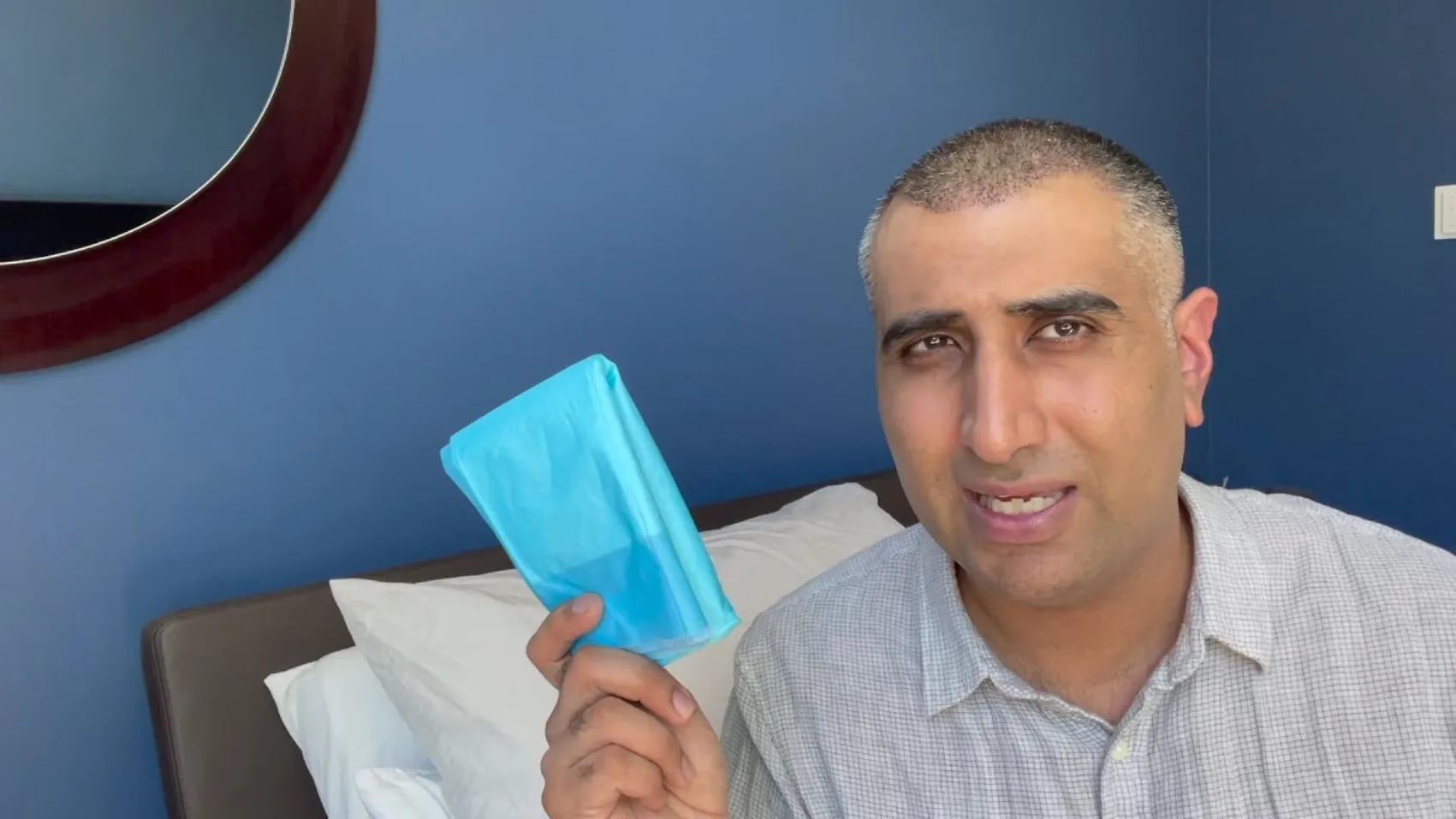
I had a hair transplant myself. When I realized how much aftercare actually matters, I knew I had to build a seamless process for every patient — so they’d have no worries. Every instruction is laid out, every supply is provided, and daily videos answer every single question. Since I started doing it this way, I barely hear from patients after their procedure; I’m the one who has to call them to check in. That speaks to how good our aftercare really is.

Daily Hair Transplant Aftercare Videos from Dr. Vinay Rawlani

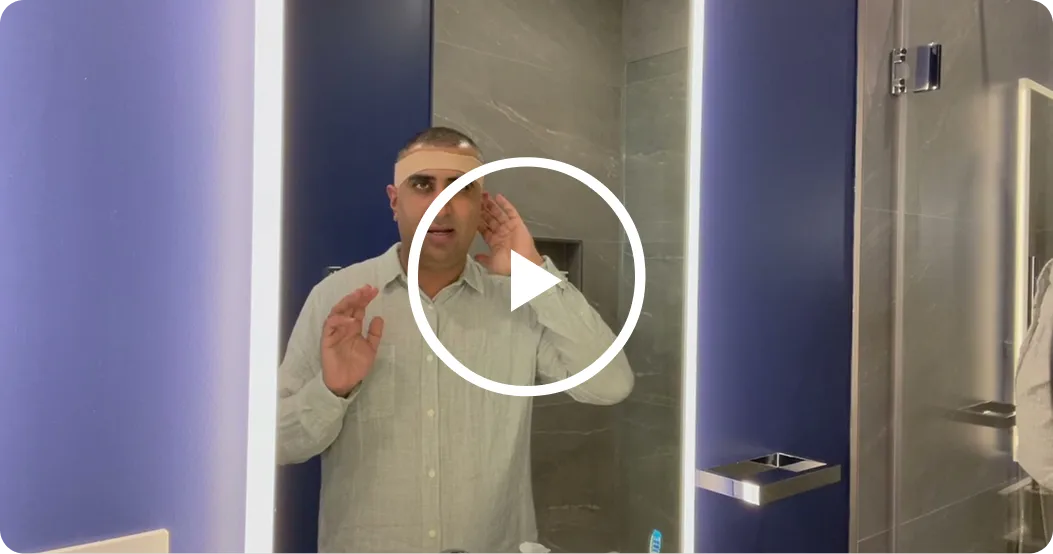
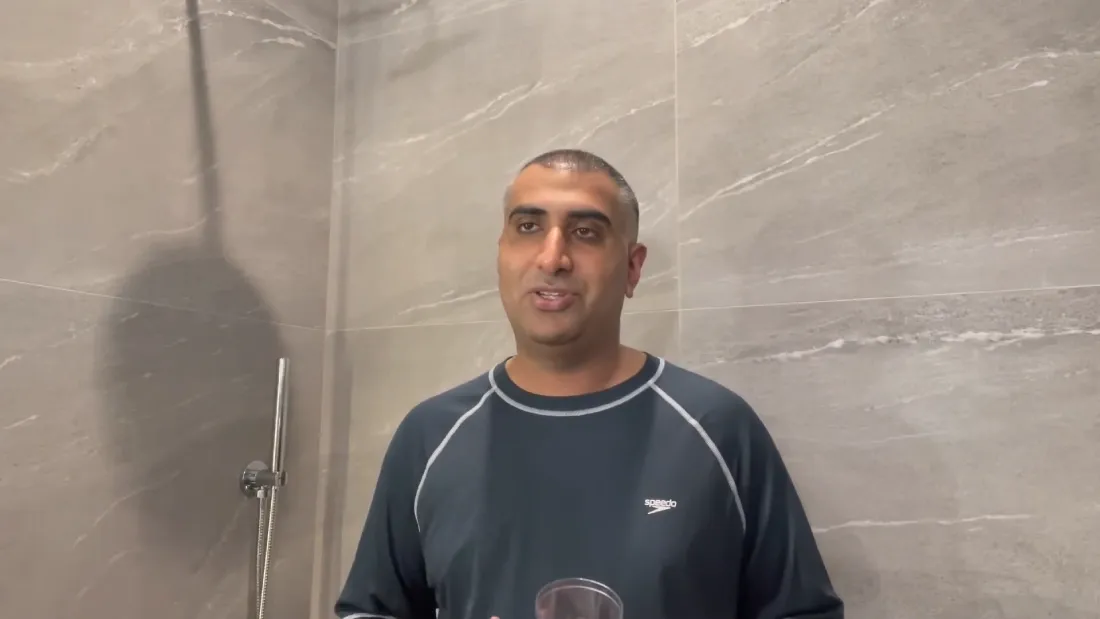
You’ll get a short video for each of the first ten days, with every supply you need already included. As an example of just how thorough it gets, here’s me washing my hair in the shower.

Day 01

What to expect

  • Headaches, especially at the hair collection site, are normal.


What you need to do

  • Continue everything else from previous day, except the following
  • Wean yourself off the prescription pain medication on to Tylenol. You an alternate Tylenol and the prescription pain medication every 4-6 hours, but do not take them both at once.
  • Take a shower taking care not to get your new placed hairs or the dressing wet.
  • Continue basic, non-exertional daily activities including work

If your dressing becomes loose and starts to move towards your new grafts, remove it. Please see instructions for removing your dressing in the video library below.


What not to do

  • Do not exert yourself
  • Do not remove your dressing
  • Do not touch your grafts
  • Don’t use NSAIDs for 2 days
  • Don’t use alcohol or drugs

What to expect

  • Drainage into your dressing has mostly stopped.
  • You may notice swelling, which will migrate down towards your eyes once you remove the dressing if you had grafts placed in the front.


What you need to do

  • Continue everything else from previous (antibiotic, misting, sleeping elevated etc.), except with the following changes:
  • You should be off the prescription pain medication by now.   If not, you can now use NSAIDs to help control any pain you may have, but Tylenol is still preferred.
  • Remove your dressing. It best to do this before you have time to shower and wash your hair. Allow 45 min total for dressing removal and washing your hair in the shoer. Cut the dressing in the middle of your forehead and let it fall off towards the back.
  • Wash your newly inserted hair grafts with this protocol. The hair collection site and the rest of your hairs can be washed normally. Do not let the shower stream hit the newly grafted area. Pour a quarter size amount of baby shampoo into the plastic cup. Fill the cup with water and swirl the soap into the water. Pour the soapy water over your grafts. Repeat until you washed all your grafts. Use the same cup to rinse with water. Gently pat your hair dry with a face towel. No not rub.
  • Apply bacitracin to the hair collection site once a day after you shower. Do not apply bacitracin to the newly placed grafts


What can do

  • Use NSAIDs to help control any pain you may have.
  • Light exercise (no sweating or straining)
  • Have alcohol as long as you are off the prescription pain medication.

What to expect

  • Swelling will begin to resolve around now and usually be gone around Day 8-10
  • Itching will start to annoy you. Itching is the most cumbersome part about your recovery. It is normal for itching to last a few weeks but can take a few months.
  • Scabs and hair will begin to fall out. Seeing hair fall our seems scary, but it’s normal. After a hair replacement, the shafts of most transplanted hairs will fall out, but the follicles are seated within your scalp.


What you need to do

  • Continue everything else from previous, except the following:.
  • Finish your antibiotics +/- steroid as prescribed.
  • Stop using bacitracin/neosporin/polysporin


What you start doing

  • Sleep in a normal position
  • Moderate exercise (sweating is fine, no straining)
  • Wear a cap. No part of the cap should touch your newly grafted hairs. It is fine for the cap to touch the hair collection area.
  • Go in the sun with a cap


What not to do

  • Do not itch your hairs or scabs regardless of how bad the itching is.

What to expect

  • Yours are solidly in place. It would be hard to hurt them, but still be gentle until week 3.
  • Non-transplanted hairs may start to fall out. This is normal and can happen for up to 3 months. This is a common condition called “shock” loss. Some hairs that were close to their shedding phase of were “shocked” by the procedure and accelerated to shred. These hairs will grow back.


What you need to do

  • Stop misting unless it’s helping you with itching
  • Shower normally but be gentle. Don’t rub hard or scratch, but shampoo everywhere as you normally would. The shower stream can now hit your newly grafted area. Don’t rub hard when you dry your hair.


What you start doing

  • Regular exercise (sweating and light straining is fine). Refrain from intense exercise (sprinting, power-lifting, competitive sports, etc) for 3 weeks.

Hair Transplant Aftercare Timeline: What to Do, Day by Day

Here’s the at-a-glance version — what you’ll be doing at each milestone. This is the “what you do” companion to the look-and-feel timeline above.

Immediate
Recipient / grafts

Mist with water or saline to keep the grafts hydrated; never let the crust dry out. Don’t touch the grafts. Keep your head above your heart — in other words, keep your head elevated for the first 48 hours — and your heart rate down.

Donor site

Dressing stays on.

Meds & aftercare

Antibiotic; pain medication the night of and the next morning, then Tylenol (no NSAIDs); any other prescribed medications as directed; an optional steroid to get ahead of itching. Rest, and be cautious sleeping — use the travel pillow.

Recipient / grafts

Remove the dressing. This is your first wash, since you avoid washing the grafts for the first day or two. Rinse the grafts with soapy water only — no fingers, no lather. Keep misting.

Donor site

Now exposed: wash off scabs and apply bacitracin to keep the small wounds hydrated.

Meds & aftercare

Continue the antibiotic (and steroid, if using); most people are off pain medication. As swelling moves down, massage it below the eyebrows.

Recipient / grafts

Hands-on now: lather and gently massage to exfoliate dandruff and lower bacteria. Begin oiling with mineral or baby oil to soften the scabs.

Donor site

Healed — stop the bacitracin.

Meds & aftercare

Off all medication except itch relief (an antihistamine such as Zyrtec, or a topical steroid). Caps are OK. Use sun protection and avoid direct sunlight while the scalp is still sensitive.

Recipient / grafts

In-office visit — we remove all the scabs and check how the grafts have taken. Afterward: normal shampoo and conditioner, no special care.

Donor site

Well healed, with hair grown over the donor sites.

Meds & aftercare

Back to moderate exercise; still avoid extreme blood pressure (such as powerlifting) and chemical, heat, or cold treatments.

Recipient / grafts

Back to normal shampoo and daily hair care. (See the return-to-activity timeline up top for when color, heat styling, and shaving unlock.)

Donor site

Normal.

Meds & aftercare

Exercise as rigorously as you want. No restrictions.

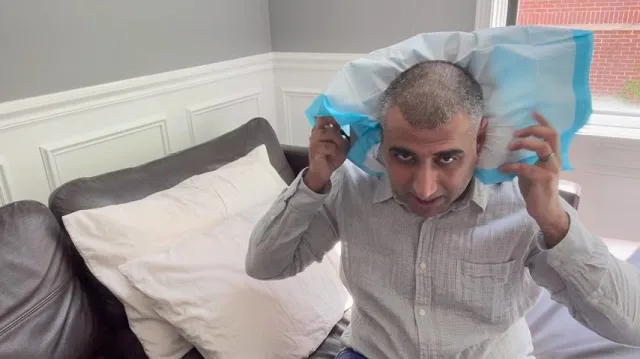
How to Sleep After a Hair Transplant

The most important thing about sleep after your hair transplant is simply protecting the new grafts, which means sleeping with your head elevated. For the first couple of days, they’re held in place only by fluid and loosely forming tissue, so you have to be careful not to disrupt them. The donor area is the opposite — any amount of pressure on it is fine, and more pressure actually helps the wounds collapse and heal faster.

In our experience, most people with a front-hairline restoration only need to be elevated on one or two pillows. People with crown work need three to four pillows, or a reclining-chair position. We send you home with a travel pillow to keep around your neck so you don’t roll onto your side and disturb the grafts — really, as a constant reminder to stay cautious.

Sleeping is, by most patients’ accounts, the hardest part of the first five days. After that, the grafts are secure, and you can sleep normally without worry.

How to sleep in bed

How to sleep on the couch

How to Wash Your Hair After a Hair Transplant, DAY-BY-DAY

Keeping your grafts clean matters more than people expect. Bacteria gather around dead skin and tissue, and after a transplant it’s normal for exfoliation to slow, for dandruff to build up, and for the outer part of each graft to scab — all surfaces bacteria like. They rarely cause a problem, but when they do it can be serious: bacteria in the space between the graft and your scalp can form a film that blocks new blood vessels from growing in, which threatens graft survival. That’s why, on top of careful washing, we use an antibiotic after surgery, even though it isn’t routine for skin procedures.

How you wash matters as much as that you wash, because the grafts are delicate at first. Avoid washing your hair for the first day or two.

Day 2

How to Wash Your Hair After Your Hair Transplant • Day 2

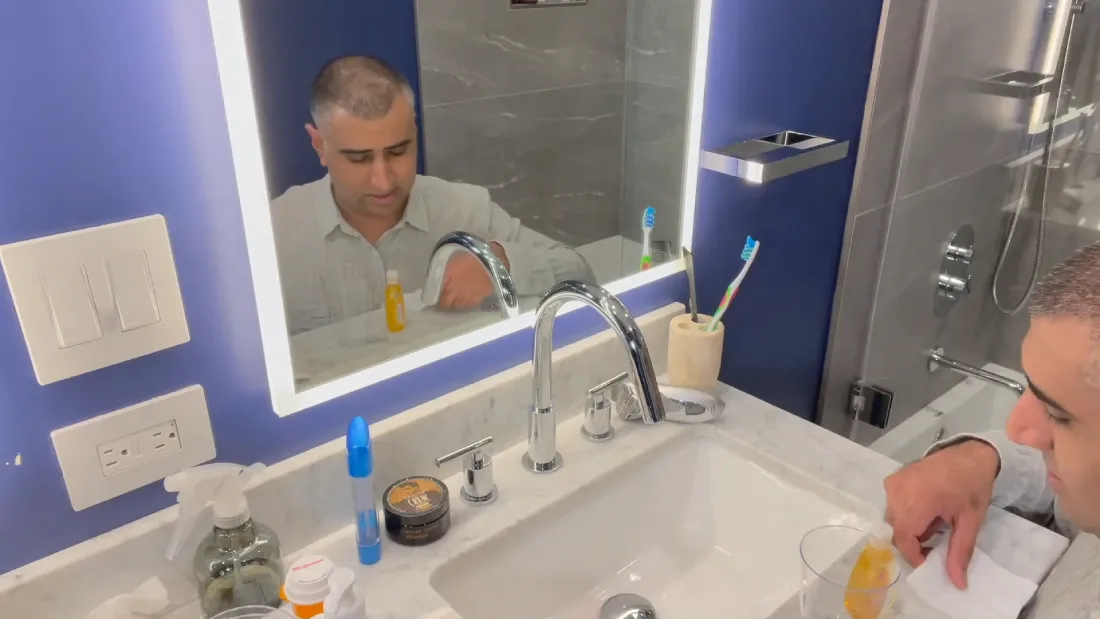
Soapy water, no touching. Mix shampoo into water, swish it, pour it directly over the grafts, and rinse with water. Don’t use your fingers or a lather yet — you’re only lowering the bacterial load.

Washing In the shower

Washing In the sink

How to Wash Your Hair After Your Hair Transplant • Day 5

Lather and gently massage. The grafts can now be touched, so lather the shampoo in your fingers and pat or gently massage the grafts and scalp to exfoliate dandruff and reduce bacteria further.

Washing In the shower

Washing In the sink

How to Wash Your Hair After Your Hair Transplant • Day 10

Back to normal. The grafts are well secured. Resume normal shampoo and conditioner, massaging to loosen any remaining scabs; at your follow-up, we do a thorough, aggressive shampoo to remove the rest.

Call Text Schedule Login