
The year after a hair transplant is mostly a waiting period, and that is good news — the hard part is behind you. But the result is not yet fixed, and a few well-timed treatments meaningfully change how full it becomes.
Whether your grafts survive is settled during healing. How thick they grow, how full the coverage becomes, and how the hair finally behaves are all still open. This page maps what you will see at each stage — and the specific moments where treatment raises the ceiling on your result.
Here’s the at-a-glance version — what you’ll be doing at each milestone. This is the “what you do” companion to the look-and-feel timeline above.
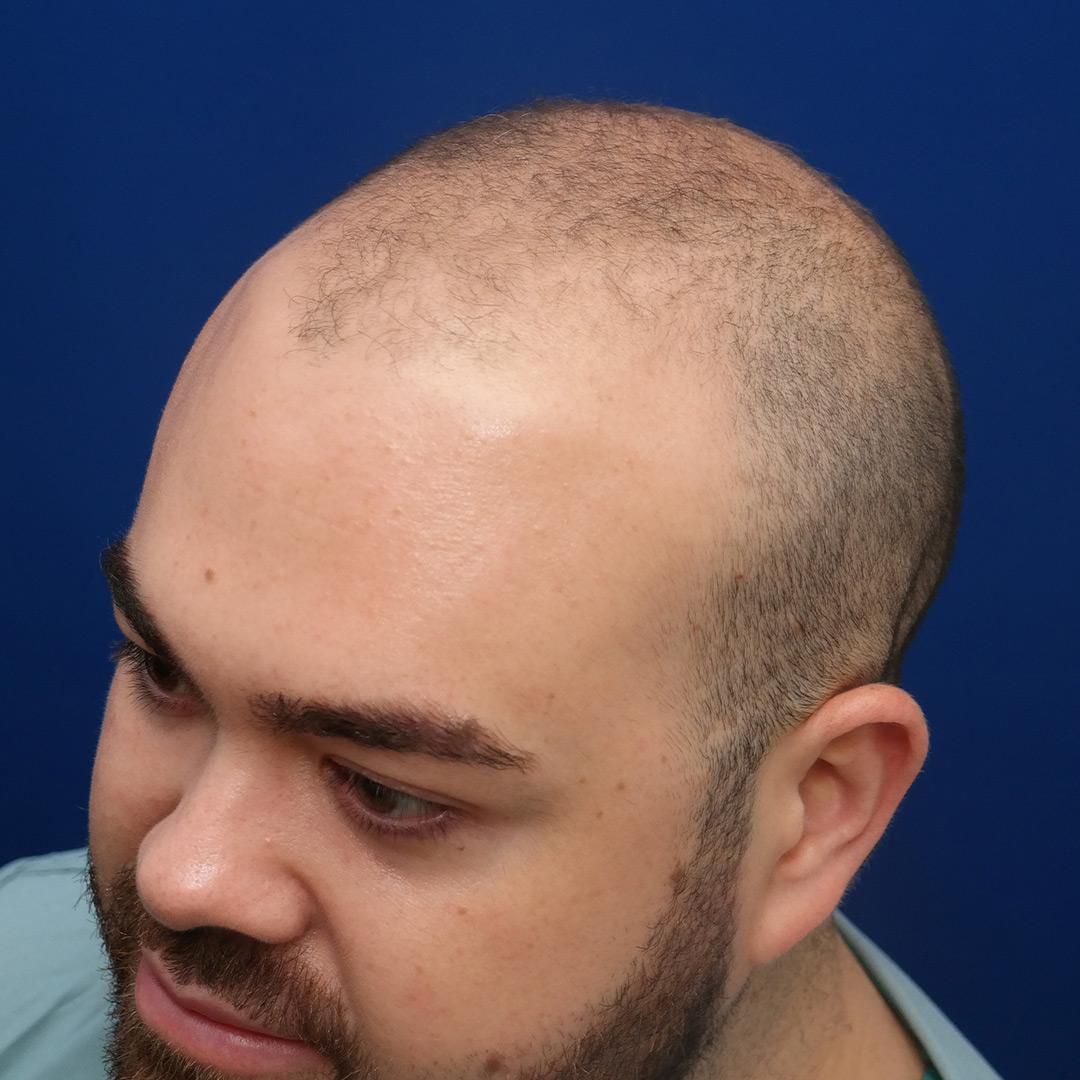
You will notice some immediate changes in this period, and none of them are the shedding phase. What you are seeing is transection of your original hairs, transection of graft hair shafts, and dislodgement of early resting graft shafts and bulbs.
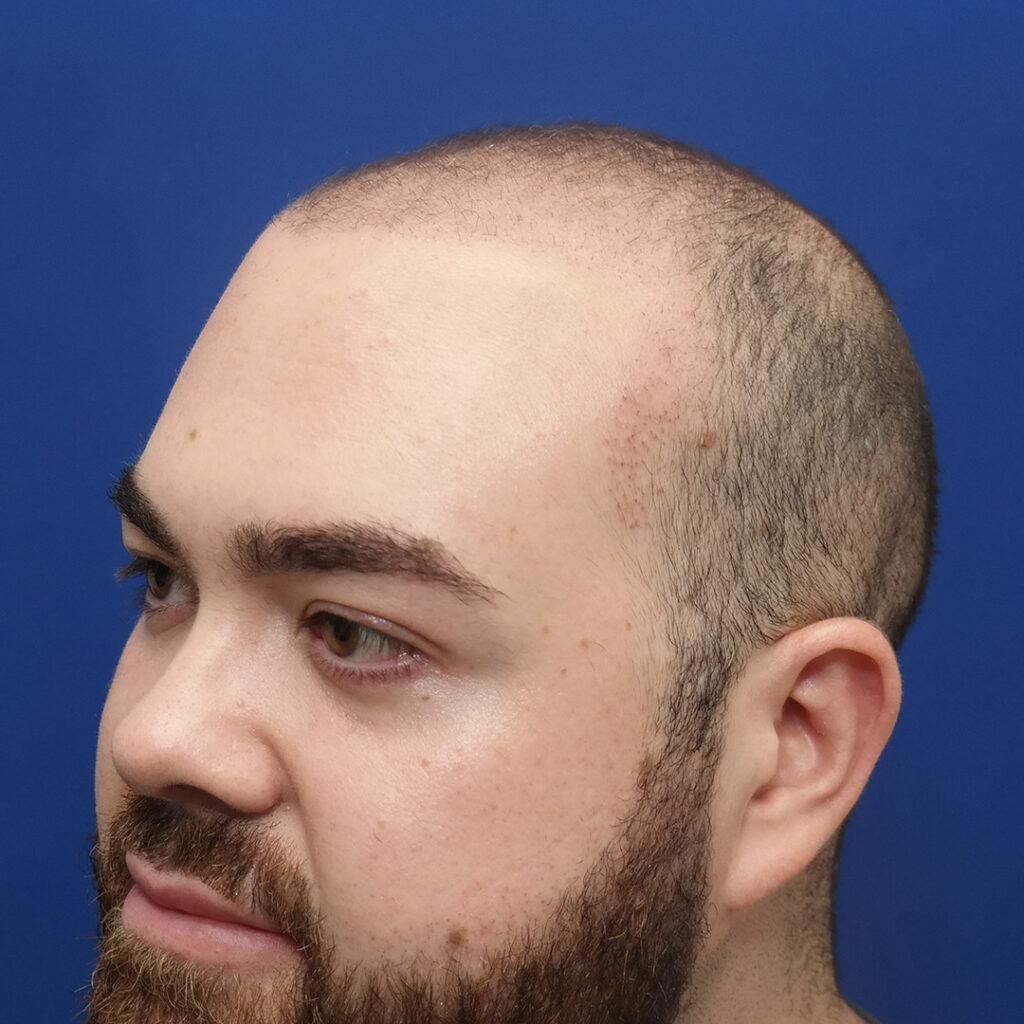
Two things happen at once, which is why this stage confuses people. Some of your grafts are growing. Others have started to shed. There may still be a little redness in the skin.
Both are normal, and they are unrelated to each other. The grafts that are growing will keep going. The ones shedding are doing something specific, and it is not what most people assume.
Some transplanted shafts sit loosely after transfer and release within the first weeks. What comes out is a shaft with no bulb attached — which tells you the follicle stayed exactly where we placed it.
Separately, when we place grafts between hairs you still have — which we do deliberately, to future-proof areas that will thin later — some of those existing hairs get cut. The follicle is untouched and regrows almost immediately. Functionally, you received a very selective haircut during surgery.
Neither is shock loss. That is a different process with its own timing, and it arrives next.
This is the moment to get your maintenance program in place. It slows or blocks ongoing loss and supports new growth by improving blood flow and follicular metabolism.
The scalp looks quiet, but underneath it follicles are cycling into resting and shedding immediately ahead of growth. Support established before that transition is far more useful than support started after it.
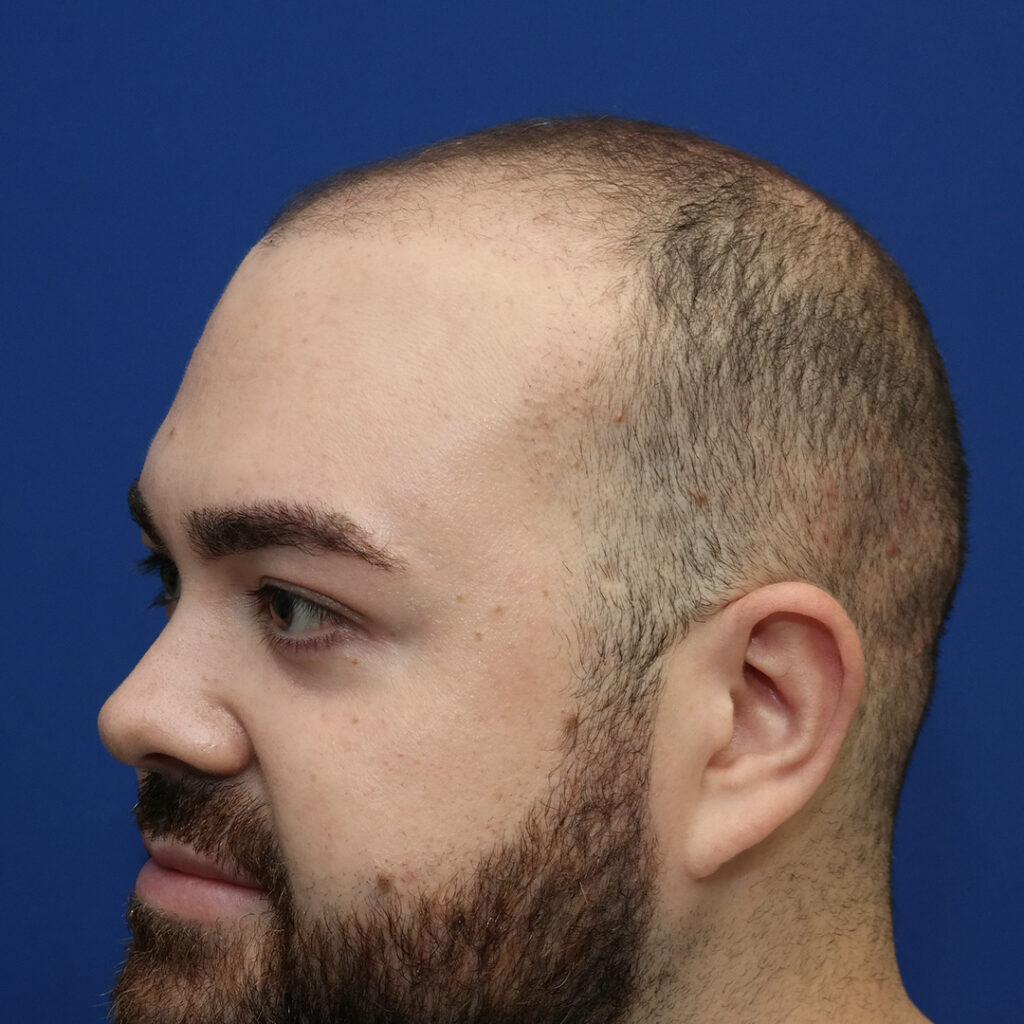
This is the peak of the shedding, and it is why things look close to where they started. The transplanted hair has shed, and some of your original hair has shed alongside it, so you are back to roughly your pre-procedure appearance.
That is the mechanism working, not failing. Shedding is how a follicle re-enters growth — the hair that leaves at three months is hair on its way back.
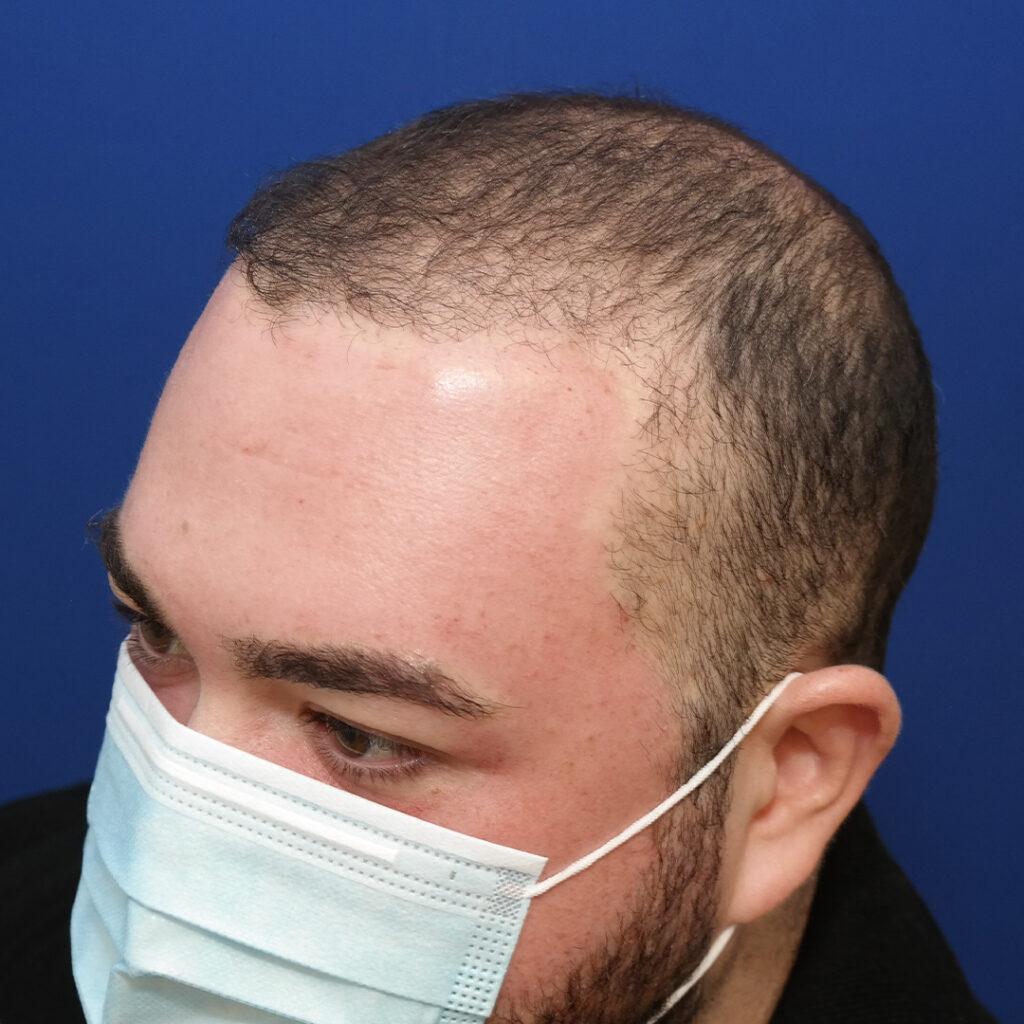
Growth has usually started, typically in the frontal hairline and mid-scalp first. The crown often runs later, as do second procedures.
Early growth arrives sporadically and in clusters. It looks thin and light because new hairs emerge fine and lightly pigmented before they thicken. All of that is on schedule.
Six months is a checkpoint, not a verdict. The one thing to establish here is that growth has begun. This is also where a planned hairstyle pays off — the right cut gives you concealment while the clusters fill in.
A transplanted hair never grows thicker than its blood supply allows, and that supply did not previously exist. It has to be built — which creates a real problem.
In the first ten days, the graft’s metabolic demand drives the body to build vessels. Then the hair sheds, goes quiet, and the body reduces flow to a follicle no longer asking for it. Months later that follicle wakes and needs more supply to thicken — but may not yet be thick enough to generate the demand that would produce it.
ACS intervenes on both sides at once. It mimics wound healing: stem cells that give rise to both skin and hair raise follicular metabolism, while growth factors drive new vessel formation. Metabolism up, blood flow up, at the moment both are needed.
We treat at the first visible signs of growth — when at least one follicle is demanding more supply and the rest are about to. We used to perform two sessions and saw a substantial increase in growth. We now see it with one.
Surgeons elsewhere use PRP toward a similar end, generally starting at one month and repeating monthly until full growth. We believe ACS requires fewer interventions because it is a stronger stimulus to both blood flow and follicular metabolism — though this is our hypothesis. We pioneered ACS after hair transplantation and there is no trial behind that comparison. What we can say is that we time treatment to your body’s signal and measure it against your own donor site, rather than treating on a calendar.
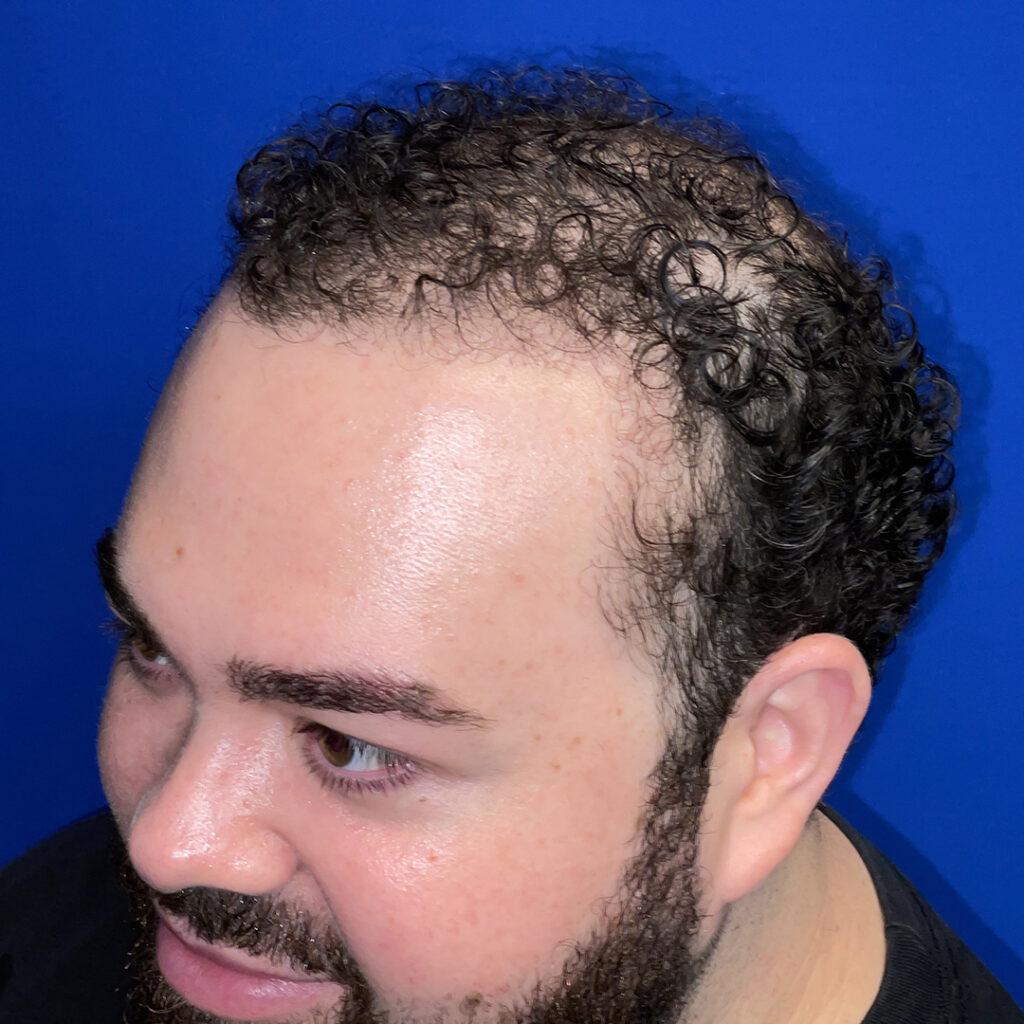
Nine months is the first point where we make a real judgment. Every area of the scalp should show at least an indication of growth, and areas that started early should show a substantial increase in both hair count and coverage.
Caliber may still be short of final. That is expected — blood supply is still catching up with what the follicles are demanding.
Whether a patient needs one ACS session or two is a judgment rather than a schedule. We compare the new hair against the donor area it came from, and growth against the number of grafts placed. When caliber matches the donor and growth reflects the grafts, we are finished.
If you delayed ACS at six months, or density is not where you want it, this is a good time to reconsider. The hairs are in but have not reached full caliber, and in our experience, treatment is still effective at this stage.
The donor site is healed and you can see the coverage the first procedure established. If you are phasing the front and crown separately, untransplanted areas can be considered now.
Waiting is still advised. Density is not final, and if the first result falls short of your expectations there is growth still to come.
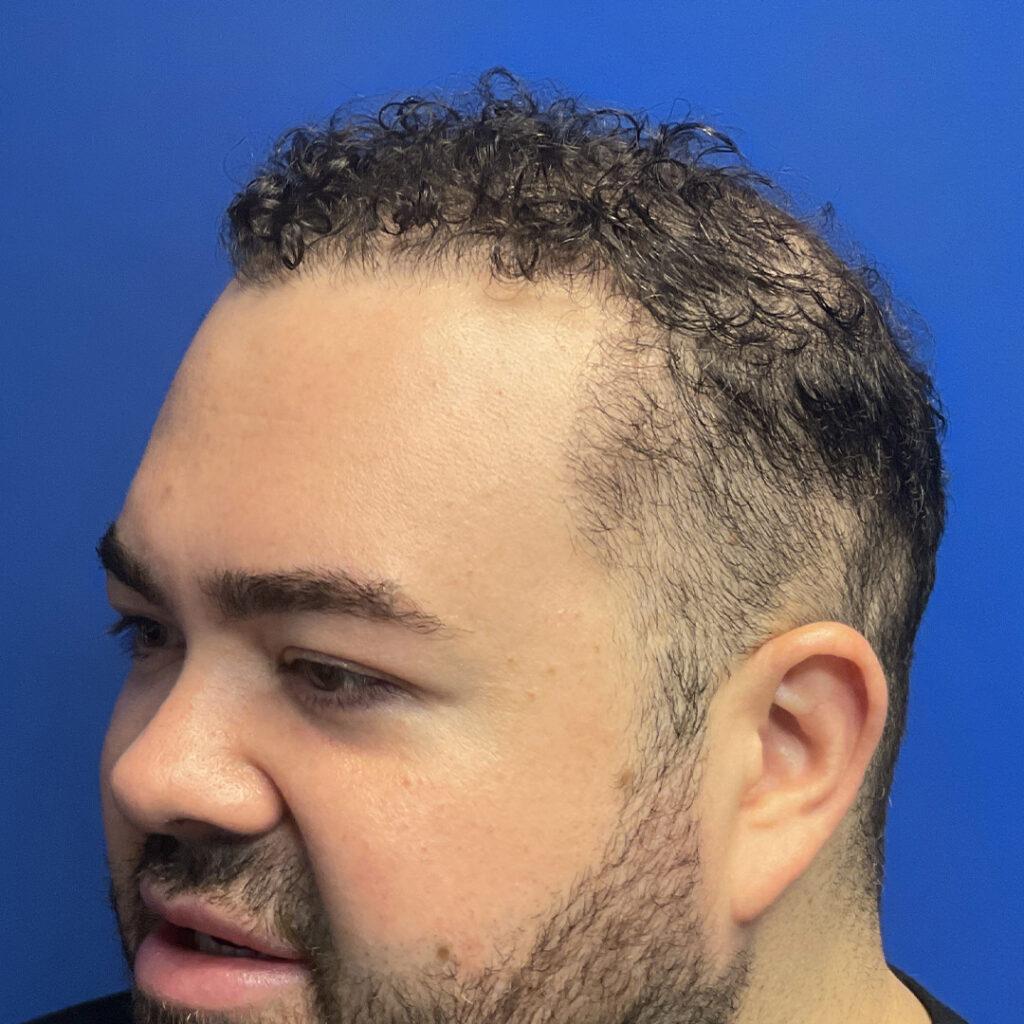
By twelve months all of your hairs have regrown, and most are at their full density.
There can still be more to come. Caliber continues to increase, particularly where growth started late — the crown, secondary procedures, or any area that only began growing within the last three months. Those hairs have had less time to build the blood supply that thickens them.
The hair is still growing to the length you want — expect roughly half an inch to an inch per month. If it is dry or frizzy, that is expected, and it resolves. The skin has to soften before the oil glands fully open and begin producing.
This is the point in the timeline where technique shows. After standard FUE, some hairs stay dry and coarse. Micro PUE preserves the connective tissue surrounding the follicle along with a greater density of oil glands, so scarring does not suppress oil output the same way. Those hairs come in silkier, smoother, and better lubricated.
Transplanted hair does not always behave like the hair you have always had, and most patients have never had reason to learn what products actually do.
Eddie Diebold at Salon DJ is our master stylist. He works directly with our patients and connects them with the stylist best suited to their hair. Oils in particular supply what your own glands have not yet started producing.
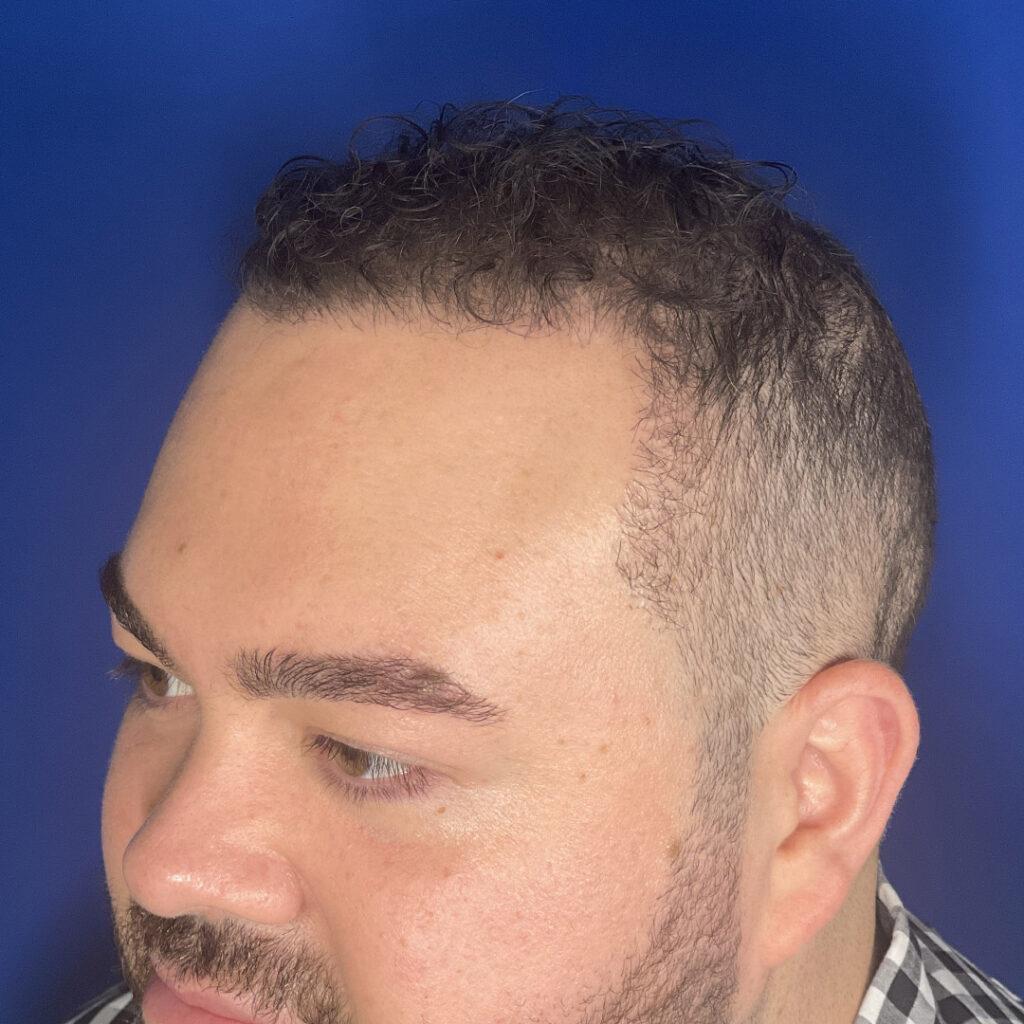
At eighteen months, you have full density, full caliber, and your full number of hairs—plus texture.
The scar tissue around the new grafts and around each hair shaft has softened. The oil glands are functioning and lubricating the hair. The hair no longer grows out constrained by a tight tract, so it takes on its own natural texture — whatever that is for you.
This is the final phase of growth, and it is the point at which you assess your result — not month twelve.
Everything is healed, and you now know exactly how much density the first procedure achieved. If you have additional areas to cover—the crown, the front—this is a strong reason to consider a second transplant with that information in hand.
Oil production is its own reason to consider one. If your first procedure was a No-Touch or standard FUE and the hairs are dry, Micro PUE in a second procedure can bring more oil glands into specific areas — the hairline especially — for smoother, better-lubricated hair.
Staging has to be considered carefully. We prefer to know where the hairline is going in the first procedure, because building it uses hairs from the perimeter of the scalp. Introducing Micro PUE works well when suitable hairline hairs remain — but thicker, coarser grafts should not end up in the hairline. Getting the best result depends on sequencing this deliberately.
Most of what you notice during recovery is normal and expected. Here is each one — why it happens, and what you can do about it.
Shock loss is part of the normal hair cycle, moving faster than usual.
Your hairs sit in one of three main phases. The most common by far is active growth — roughly 90% of your hairs are in it at any time, and they stay there for several years. That is how hair accumulates length.
When a hair finishes its active phase it moves into a resting phase. Growth stops. Then, immediately before a new hair grows in its place, the old one sheds. That is ordinary, everyday shedding, and it happens to everyone continuously.
What changes after surgery is the timing. When hairs are shocked — metabolically, by another stressor, or by a procedure — they move into the resting phase together rather than individually. Then they shed together.
The resting phase lasts six to twelve weeks. That explains the delay.
A hair cannot shed from shock at week one, because it has to complete resting first. The shed you see at two to three months is those hairs arriving at the end of that phase together — which is why it appears suddenly and why it appears late.
Expect this from the transplanted hairs. It is the normal course.
An occasional exception with Micro PUE. In some Micro PUE cases we see a small proportion of transplanted hairs — we would estimate around 30% — continue growing rather than shedding. When it happens, we take it as an indication that the transfer was less traumatic. It does not happen in every case, and it is not something to plan around. Expect the normal course; treat this as an observation rather than a promise.
Your native hairs were not transferred, but they are sitting in an inflamed bed. For hairs already near the end of their active phase, that inflammation is enough to push them into resting. Others are simply disturbed enough to make the same move.
Those hairs then have to shed as well. That is why coverage drops by roughly 10–15% two to three months after a transplant — your original hair is going through the same process, for the same reason.
Most clinics describe all post-surgical shedding as shock loss. There are three distinct events, and telling them apart tells you exactly where you are.
What sheds
Nothing sheds — existing hairs were cut
What it looks like
No shed hair
Why
Native hairs trimmed during graft placement. Regrow immediately.
What sheds
Transplanted shafts
What it looks like
Shaft only, no bulb
Why
Loosely seated shafts release. Follicle remains in place.
What sheds
Transplanted hair plus 10–15% of native hair
What it looks like
Club hair — pale, keratinized, bulbous root
Why
Inflammation moved follicles into resting. They shed on the way back into growth.
The simplest test is the bulb. No bulb, early, shaft only — the graft is shedding while the follicle stays put. A pale bulbous root at two or three months — a follicle completing its cycle and re-entering growth.
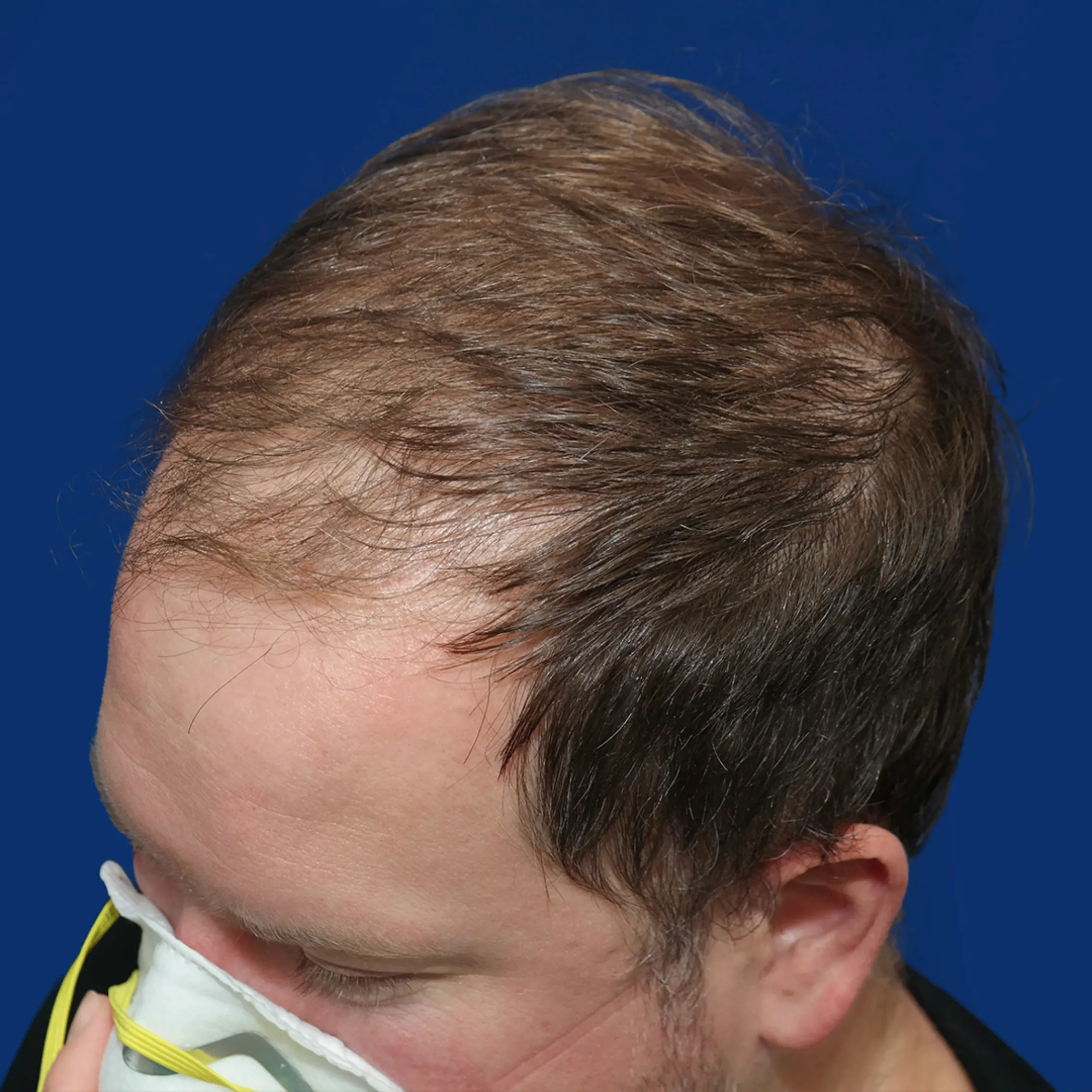
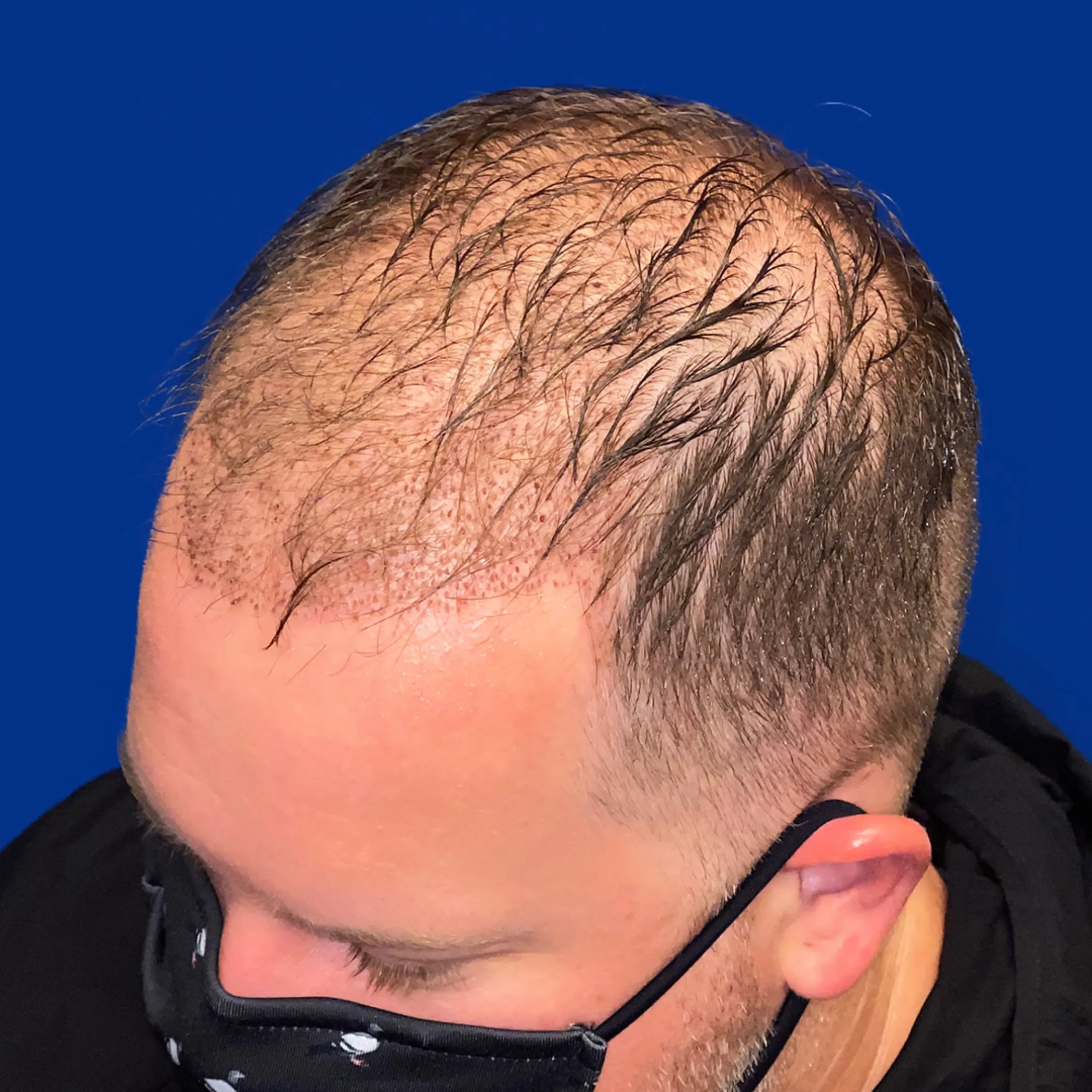
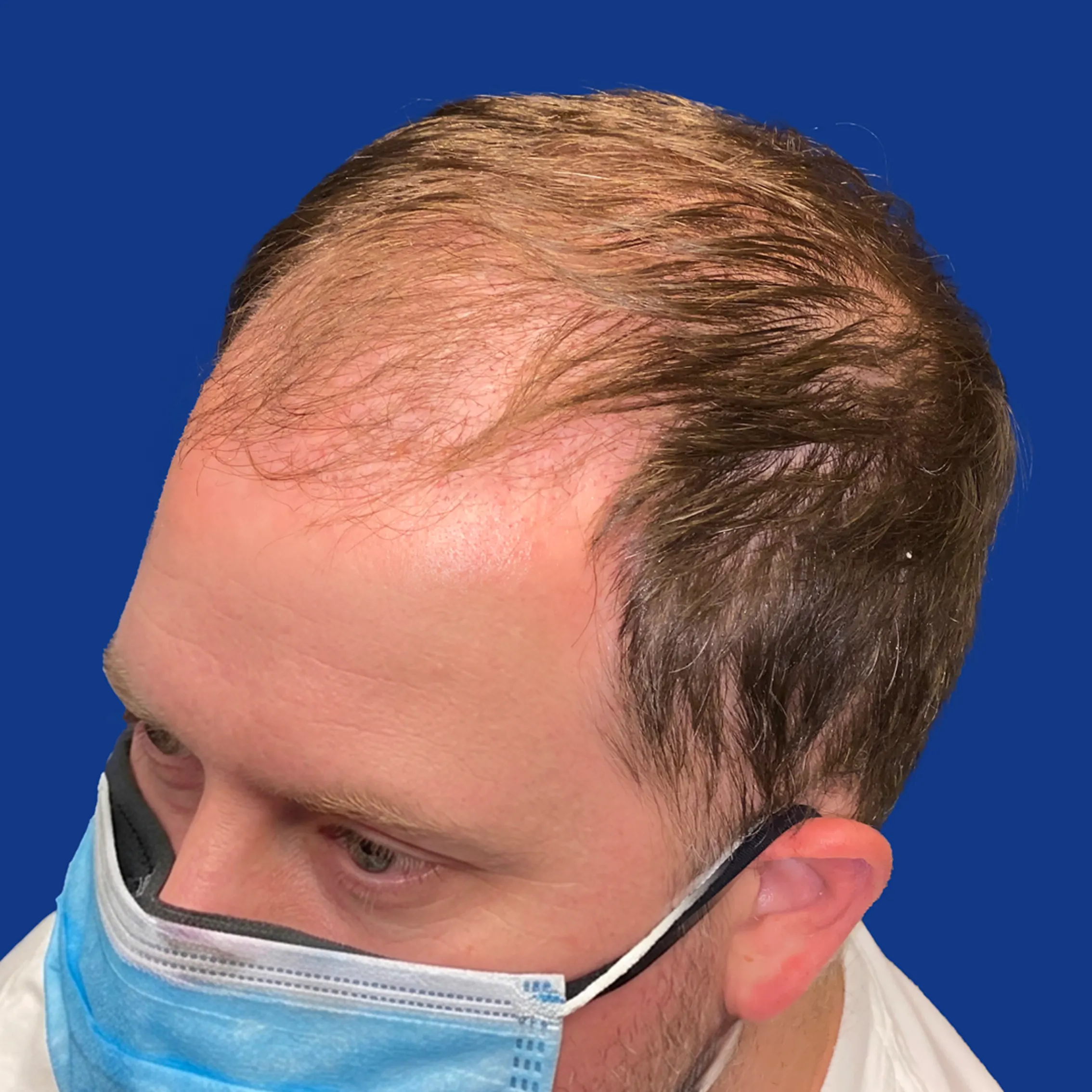
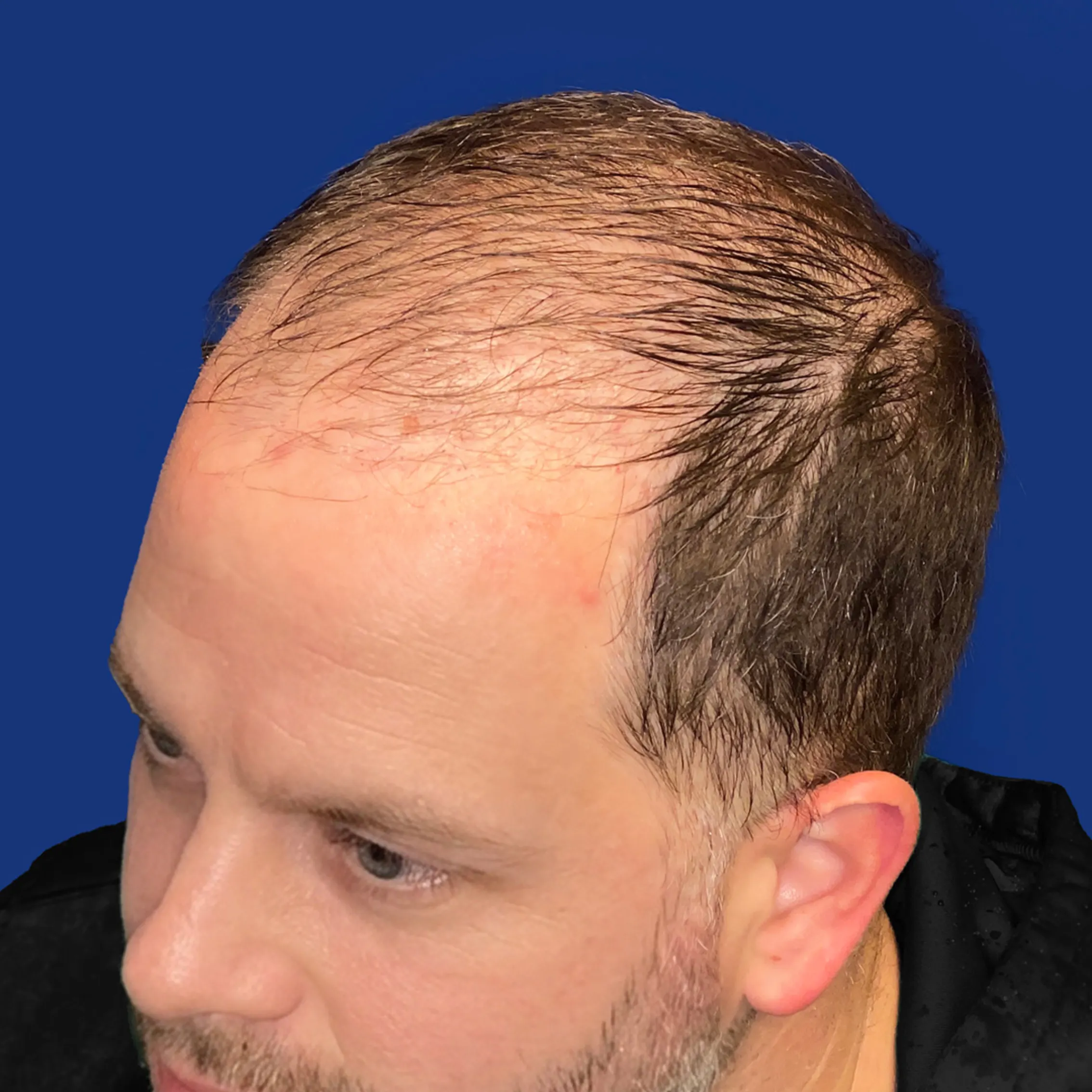
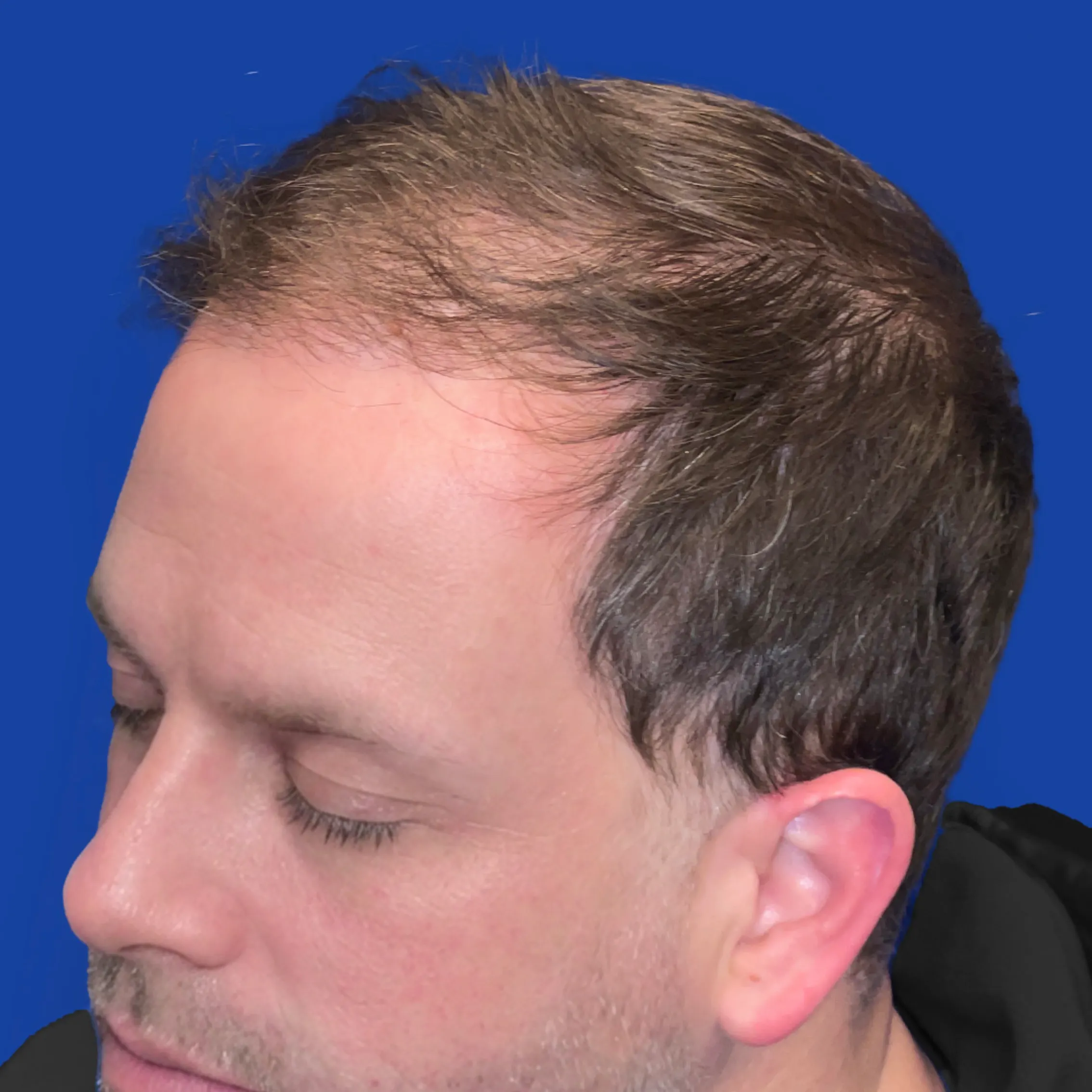
A different patient, at five points through the shedding phase. Compare three months to four — that is how quickly the picture turns once the cycle completes.
If you are past nine months and an area still shows nothing, come see us. Some context first, because most of what looks like a problem at this stage is not one.
Different regions start at different times. The frontal hairline and mid-scalp typically lead; the crown typically follows. One side arriving ahead of the other is common and usually evens out.
It has a lower take rate and a slower start. Crown patients regularly see meaningful change between nine and twelve months.
Scarring at both the donor and recipient sites slows revascularization.
Hair that has emerged but not thickened is a caliber question rather than a growth question — and caliber is what ACS is designed to address.
What we do is compare the treated area against your donor site and against the number of grafts placed. That comparison distinguishes delayed growth from incomplete caliber from genuinely poor take — three different findings with three different responses, two of which we can act on.
These are the two checkpoints patients compare most, and they measure different things.
Six months tells you growth has started. Nothing more.
Twelve months tells you that all your hairs are in and most of your density is established — though caliber can still build, especially in late-starting areas.
Eighteen months tells you everything: full density, full caliber, full hair count, and final texture.
Judging a result at twelve months means judging it early. Nearly all of the hair is there; some of it has not finished thickening, and none of it has finished softening.
Most patients think about the donor area for two weeks and then forget it. It goes through its own process.
The donor area experiences shock loss too. The same inflammation occurs there and you may notice thinning. Where extraction was heavy and baseline density was already reduced, it can look patchy for a period. The response is the same as for the top of the scalp: support growth.
The more common donor-area finding, usually between one and three months, is ingrown hairs.
During extraction, some hairs are transected. The follicle stays, but the tract it grows through is disrupted, and a number of those hairs then have difficulty reaching the surface. They present as small bumps that wax and wane. This is expected; it resolves on its own, and no treatment is needed.
When to Call Us
Two findings are worth a call. Both are uncommon and both are straightforward to treat.
This can indicate a small developing infection, which we treat with antibiotics. I have seen this in fewer than 1% of cases.
The enlargement may be the hair itself, or the oil gland or stem cells within the bulge secreting and expanding. At the point it stretches the skin and thins the hair above it, we make a small incision and decompress it. In my entire career, I have seen this twice.
Short of those two findings, everything at the donor site is watch and wait.
No. It does not affect every patient, though every patient should be prepared for it. When it occurs, it peaks around three months and involves roughly 10–15% of native hair in the treated area alongside transplanted hair.
The shed hair has a pale, keratinized, bulbous root — a club hair. That distinguishes it from the early shedding in the first weeks after surgery, which produces shafts with no bulb at all.
The resting phase that precedes it lasts six to twelve weeks, which is why shedding appears around two to three months. It resolves as follicles complete their return to growth, with regrowth generally visible between four and six months.
Two different sheds occur. Loosely seated transplanted shafts release within the first weeks after surgery. True shock loss begins around two months.
Early on, because existing hairs were cut during graft placement and transplanted shafts released — neither is hair loss. At two to three months, because inflammation moved follicles into a resting phase and they shed on the way back into growth.
No. The shaft sheds; the follicle stays. Shedding is how a follicle re-enters the growth phase, which is precisely why it cannot happen immediately after surgery.
Expect them to. In some Micro PUE cases, we see a small proportion continue growing instead, which suggests a less traumatic transfer — but it does not happen in every case and it is not something to plan around.
Yes. ACS raises follicular metabolism and drives new blood vessel growth at the point your follicles begin demanding both, which supports hairs reaching their full caliber. Your at-home regimen protects existing hair through the same window.
Ingrown hairs most often occur between one and three months. Extraction disrupts the tract the hair grows through, and some hairs have trouble reaching the surface. They wax and wane and usually resolve on their own.
If it becomes tender or painful, or if it grows large enough to stretch the skin with a bald spot over it. Both are uncommon, and both are treatable.
No. Six months establishes that growth has started. At twelve months, all your hairs are in, and most of your density is set, and texture and remaining caliber continue developing through eighteen.
Caliber finishes building in late-starting areas, scar tissue relaxes, oil gland tracts open, and the hair takes on its natural texture.
Our focus is yield and caliber — how full and how thick your result becomes — rather than speed. Larger studies of similar treatments do report faster growth; our own case mix is too specialized for us to make that claim ourselves.