
Medically Reviewed by Dr. Vinay Rawlani, MD
A no-shave hair transplant is a bad idea. It trades off 10-days of concealment for an unnatural look. The surgeon operates blind, causing injury to hair grafts and increased scarring. After they all grow in, hairs can be dry and kinky and should never be used for hairline in our opinion. A no-shave doesn’t hide any of the newly transplanted hairs after surgery. We have four techniques that can totally conceal a procedure and give you full natural results in as little as two days.
Serving Lake County and the North Shore


+200reviews
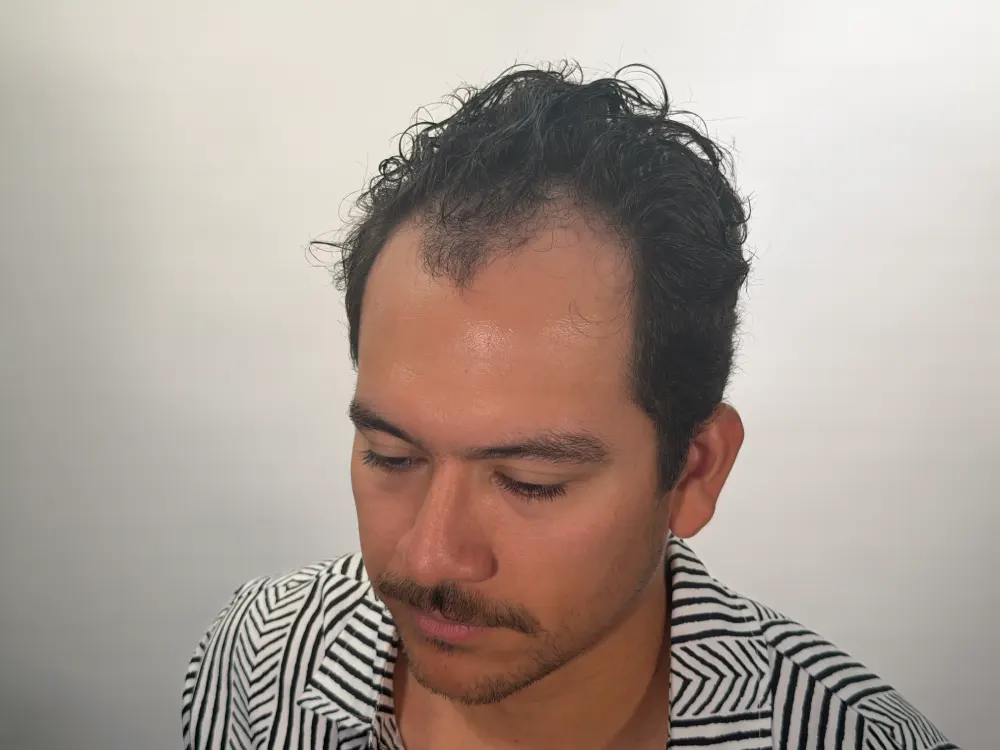
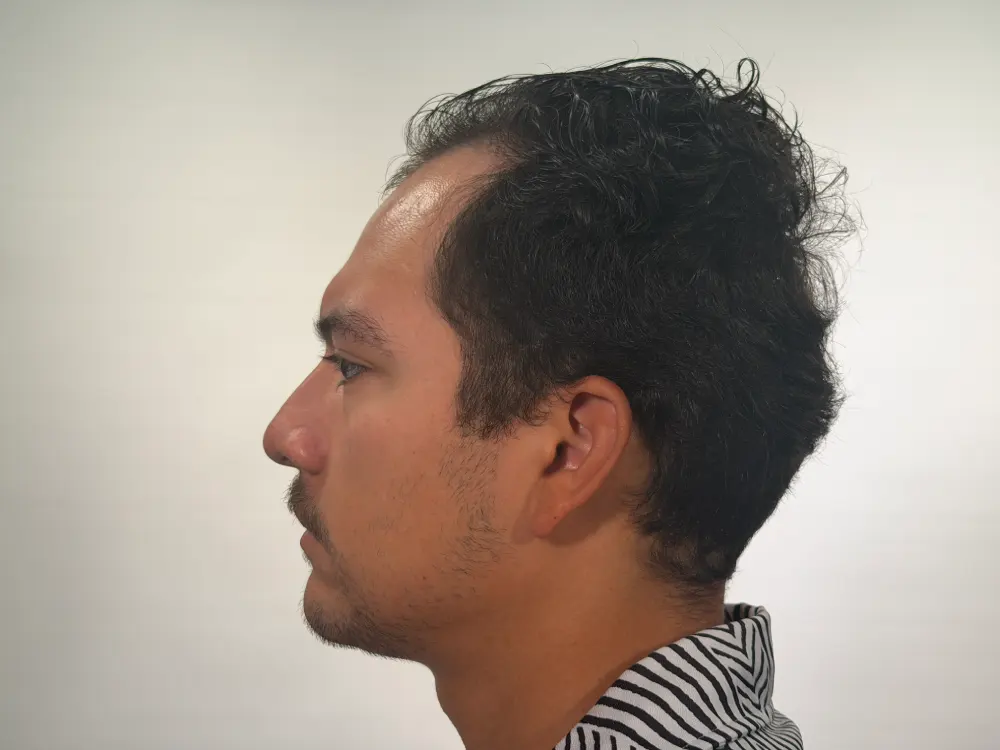
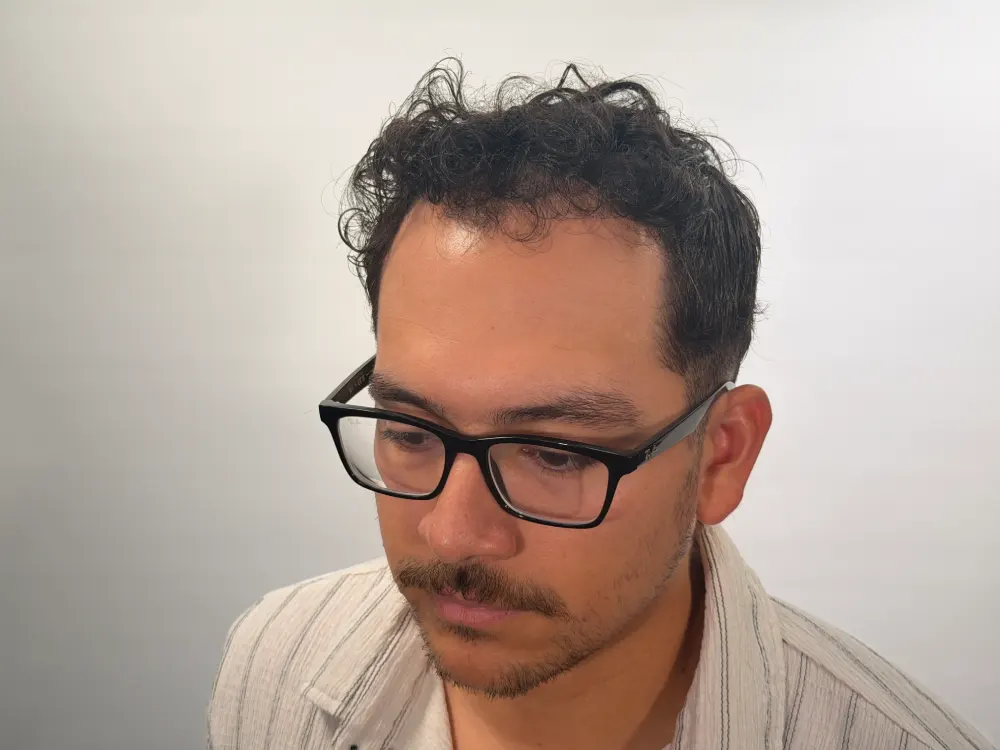
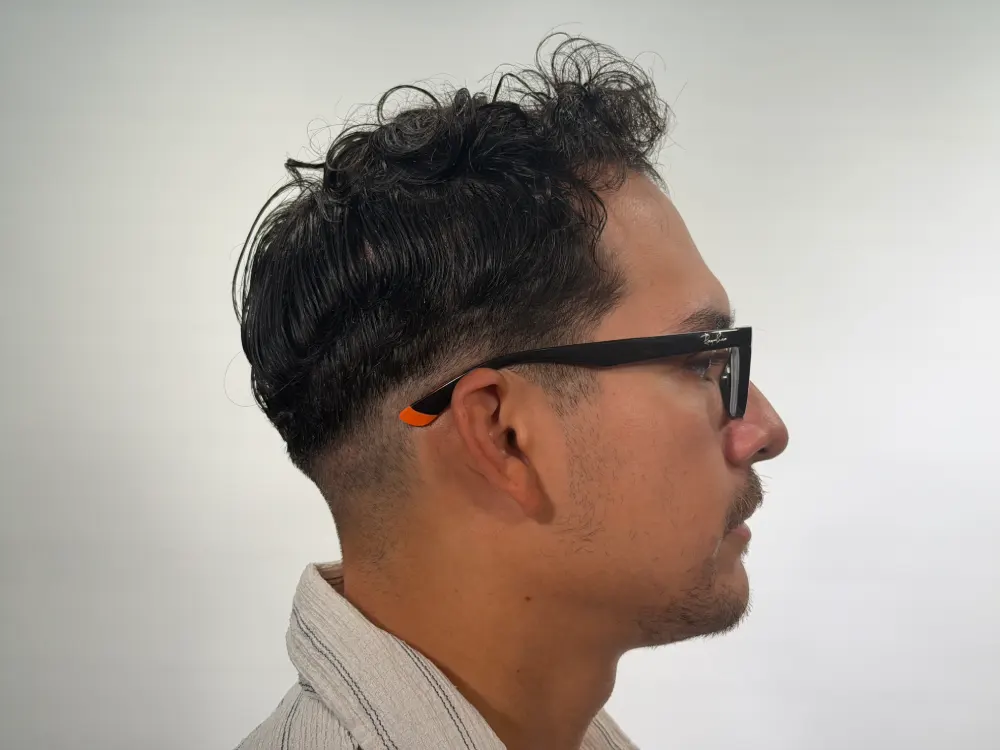
Remember: the goal here is not getting a no-shave procedure. The goal is two-fold.
Results that look natural now and stay natural long-term. We never do anything that affects the naturality of your result. No-shave FUE definitely affects naturality — especially at the hairline. We won’t compromise this.
Privacy through recovery, at both the donor site and the recipient site. We have four techniques we combine and tailor to your case to make your procedure completely concealed.
When you go with no-shave, you’re going with concealment and losing your naturality. At Northwestern Hair, you get both.
What we’d rather do is tell you about the four techniques that work in our hands — and how we combine them to give you natural results long-term, without anyone knowing. Because those are your two actual goals, not getting a no-shave hair transplant.
Northwestern Hair is the concealed hair transplant clinic in Chicago. Not the no-shave clinic. The concealed one.
We developed a Discreet PUE years ago, which was a better alternative to the no-shave FUE using the MICRO PUE technology. Here’s were But we’re still not perfect. Since then, we have developed three more techniques To achieve total, natural, undetectable, and immediate result hair transplant. These combine two hair cut techniques And two advanced hair graft extraction techniques. These four techniques are combined in a customized fashion for each patient’s needs, With results and capabilities surpassing no-shave hair transplant. Before we walk you through the four ways we conceal a hair transplant, watch what a concealed hair transplant actually delivers.
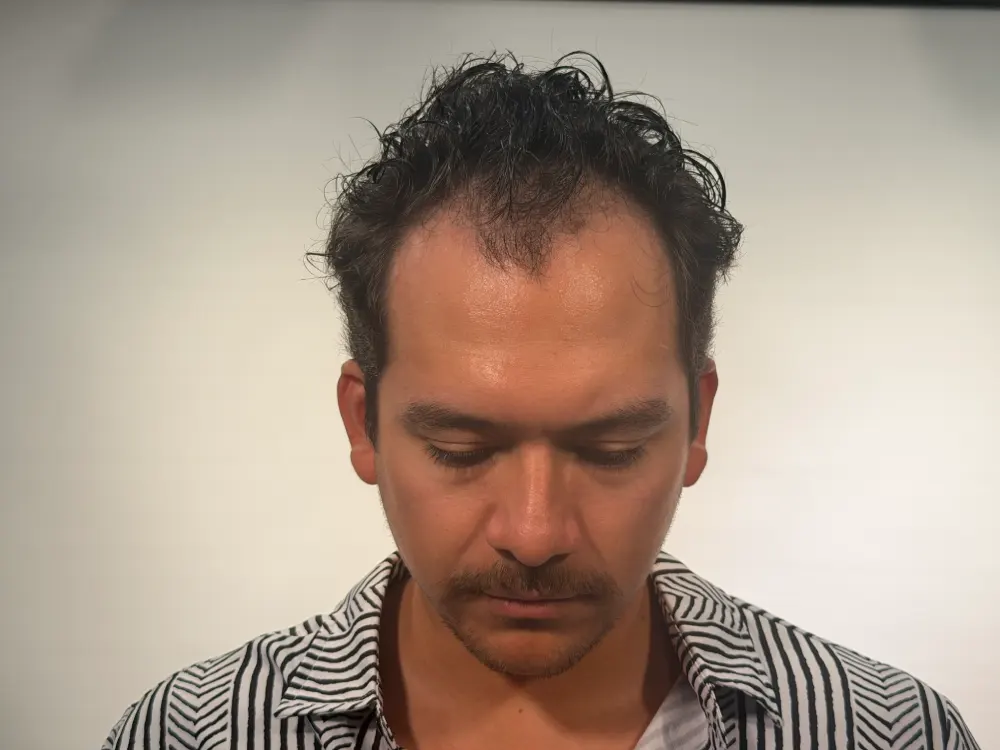
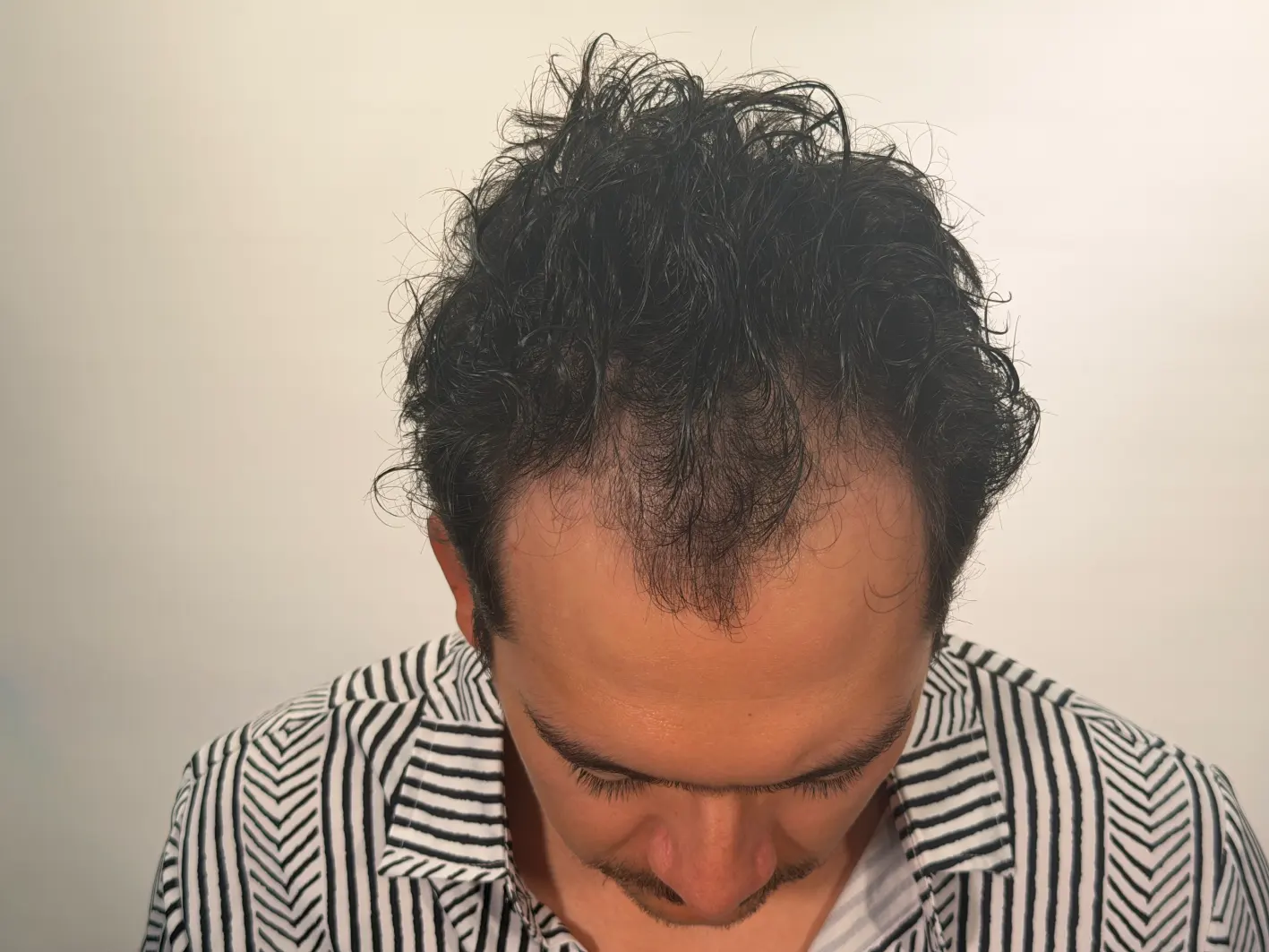
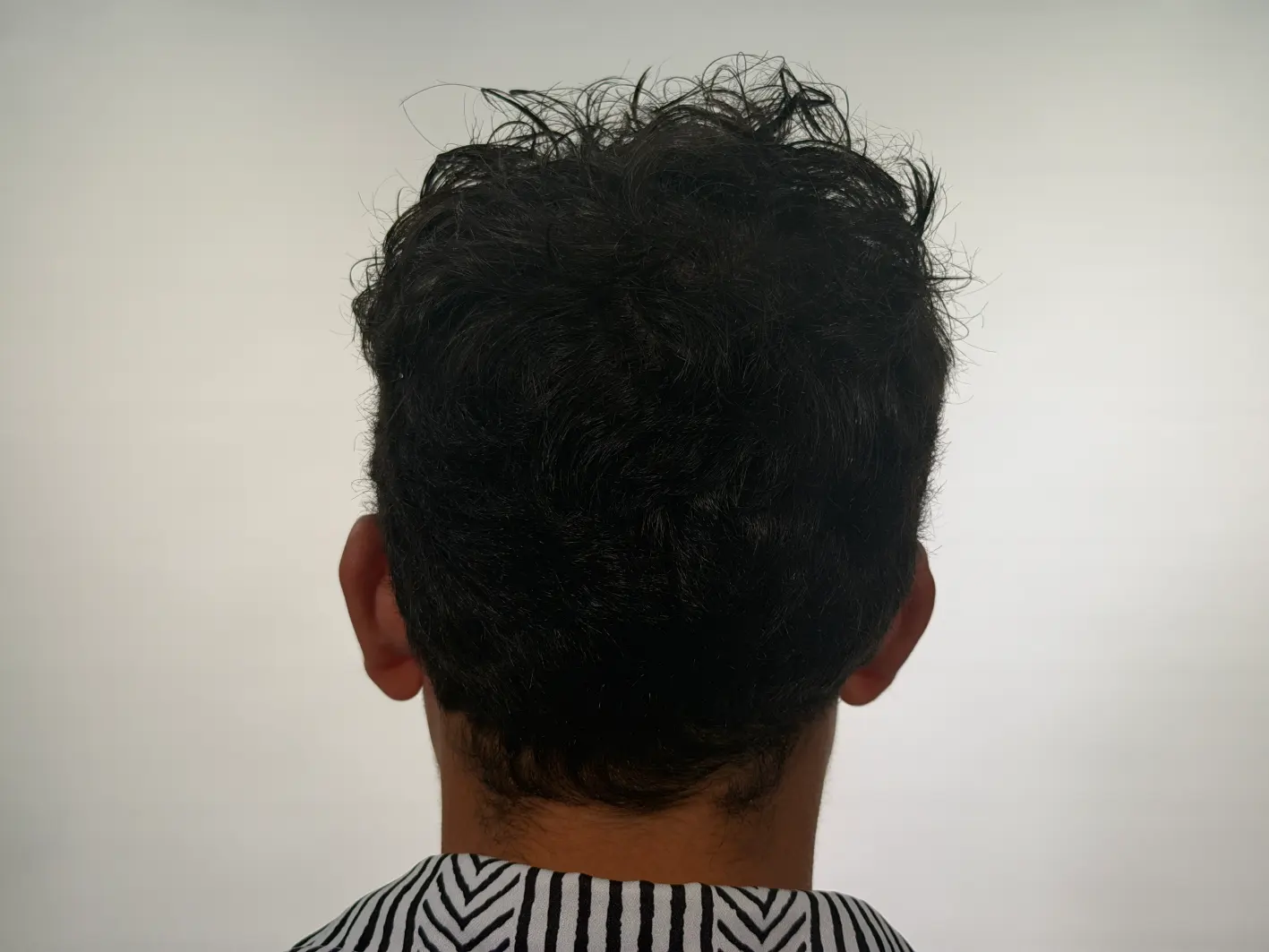
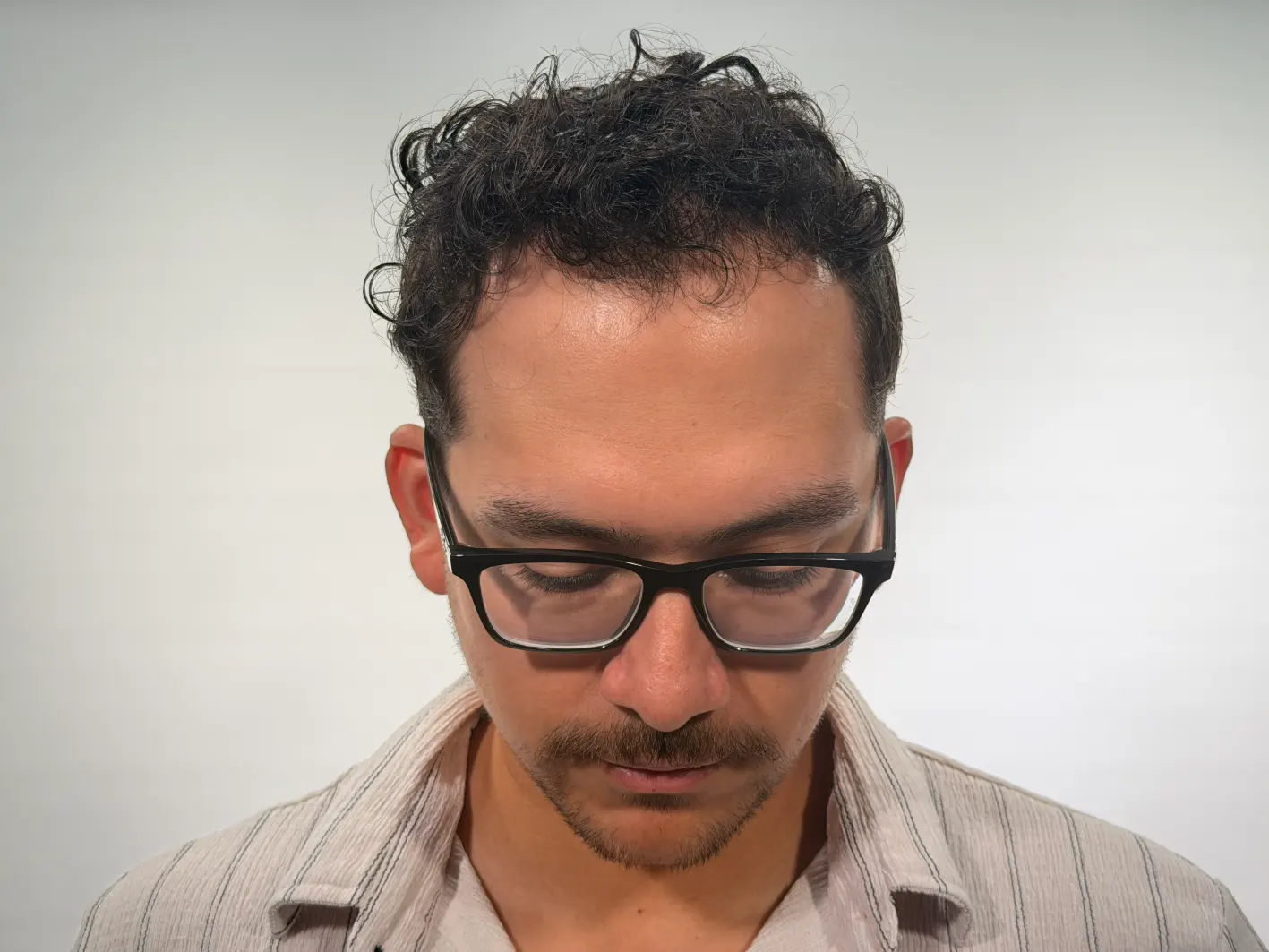
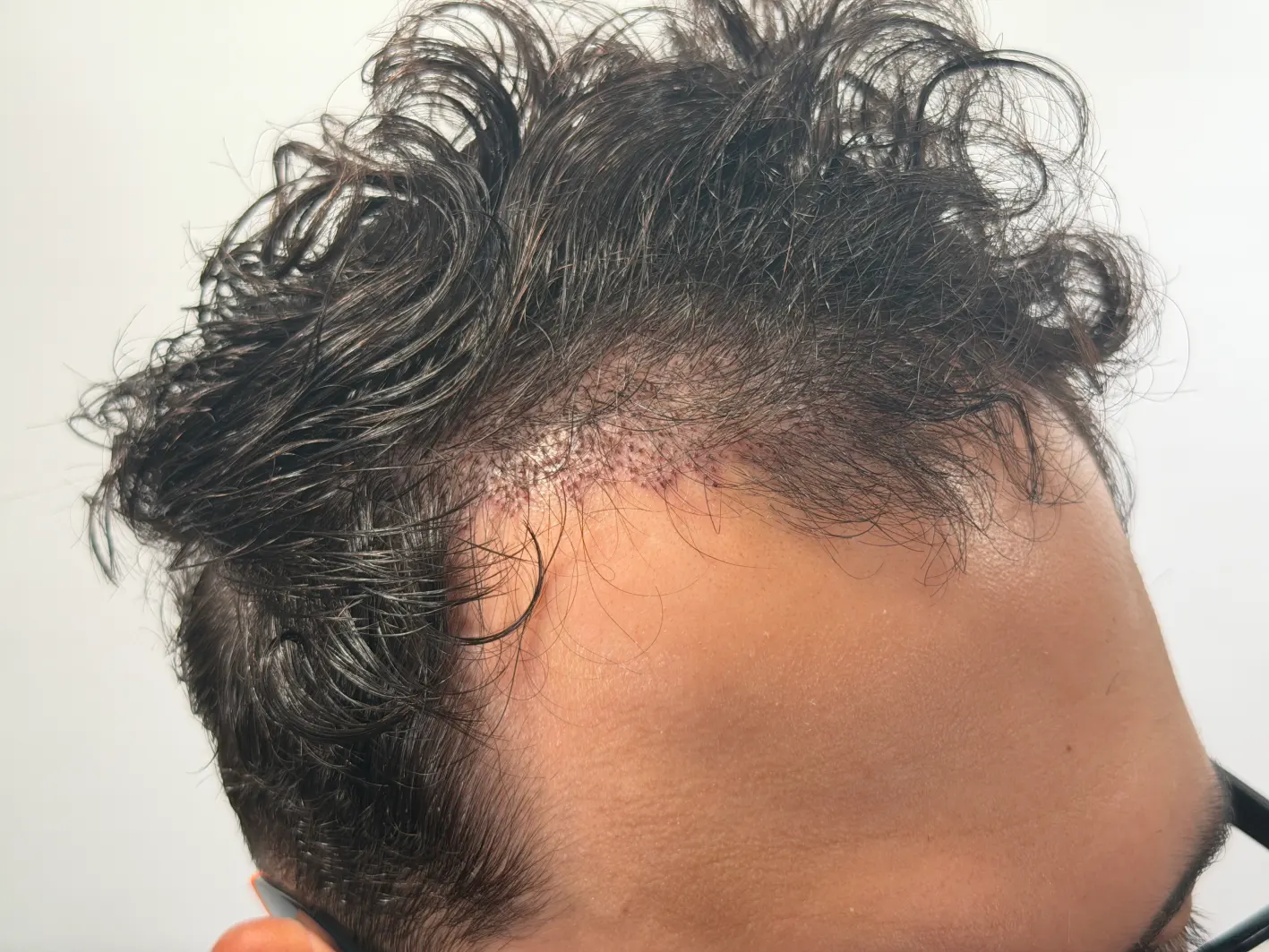
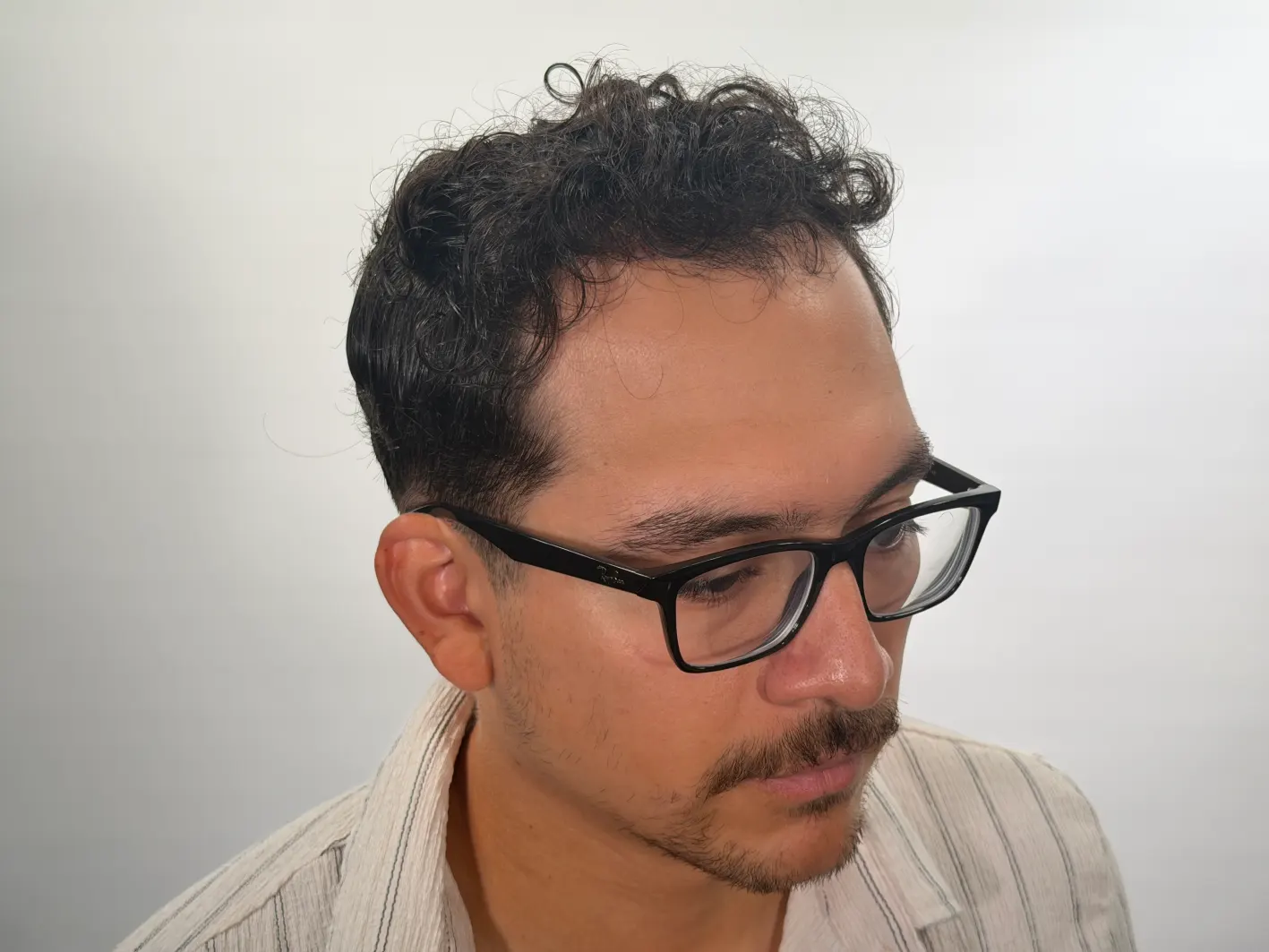
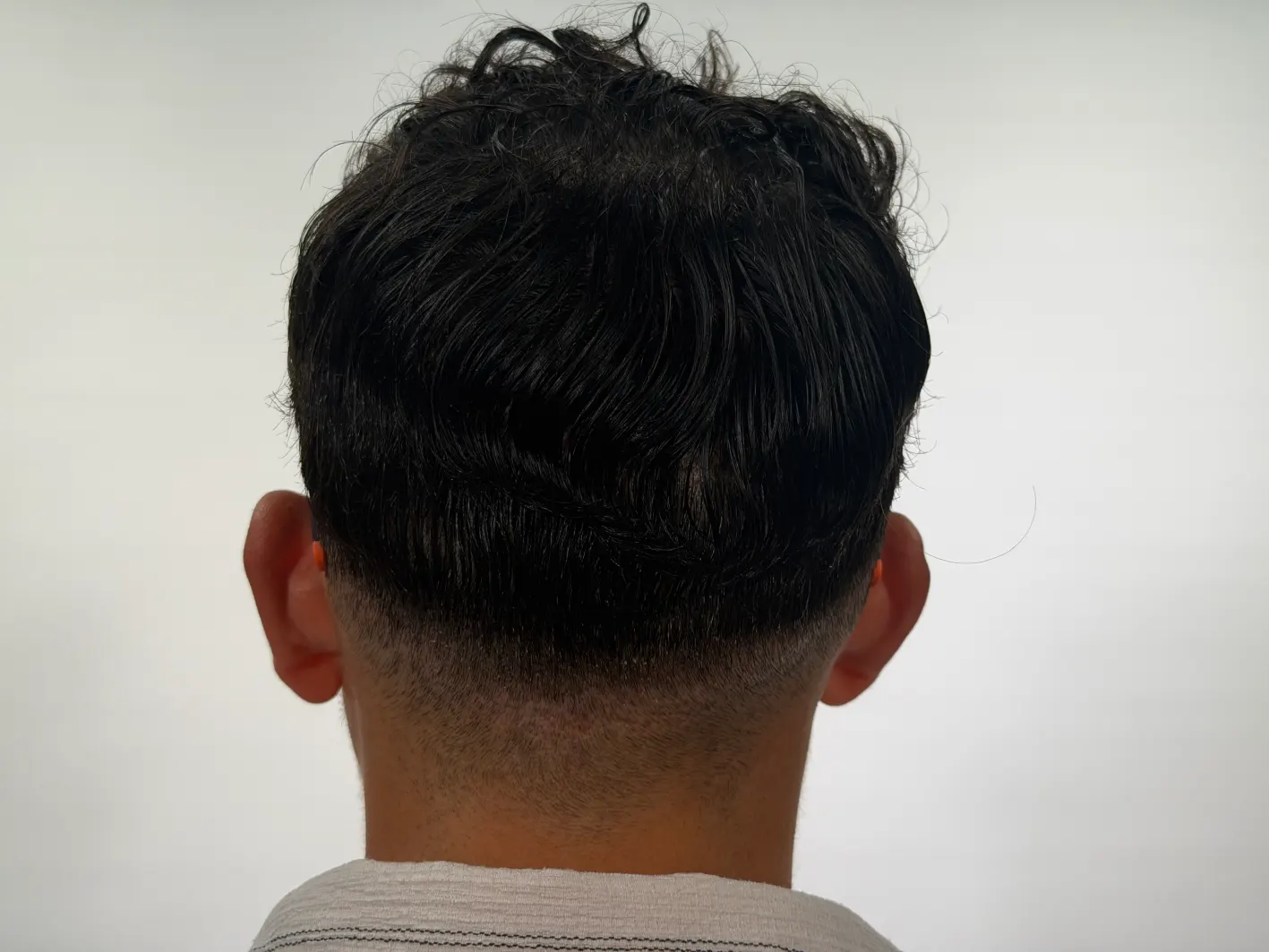
This patient is a Chicago police officer. Hispanic male, medium skin, dark hair. High contrast profile. Physical job. His profession is essentially a fraternity — he cannot have anyone know he had a hair transplant. He also cannot have a delicate healing that he has to baby for weeks.
The clinical challenge: he needs approximately 4,000 grafts to restore a hairline that has receded well into the mid-scalp. No-shave FUE could not deliver this. The graft count is beyond that technique’s ceiling. The hairline quality would be inferior. His recipient site would be exposed. None of these outcomes were acceptable.
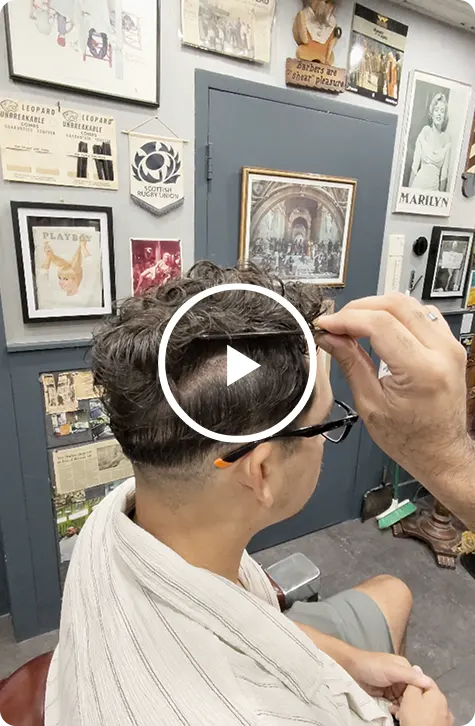
To establish a natural, long-lasting result — including the hairline — while totally concealing the procedure, we used four ways to conceal a hair transplant: two specialized haircuts and two specialized extraction technologies. Each technique has a specific purpose. Each technique has a specific purpose.
| Technique | Grafts Extracted | Description |
|---|---|---|
| Low Tapered Fade Haircut | 1,200 | A Low Tapered Fade was performed in the neck and ear area to collect 1,200 hairs ideal for the front 6 mm of the hairline. |
| Roman Hair Shade Haircut | 2,500 | The Roman Hair Shade was performed along the ridge to collect 2,500 thicker multi-hair grafts ideal for mid-scalp and crown density, with the extraction area concealed by the overlying hair laid back down over it. |
| Discreet PUE® | 500 | Discreet PUE® used our Micro PUE® technology to gather 500 additional grafts from the areas in between the buzzed collection zones, maintaining the health of the grafts and the naturalness of the final results while distributing extraction load across the donor site. |
| Long Hair PUE® | 200 | Long Hair PUE® transplanted 200 grafts with their full-length hairs still attached, restoring and concealing the recipient site — which no-shave FUE does not accomplish — and giving the patient a preview of his final result on the day of the procedure. |
| Total Extracted: 4,400 | Total Implanted: 4,264 grafts | Transection Rate: 3.1% |
|---|---|---|
For context, a 3.1% transection rate on a concealed procedure is lower than standard PUE (12-15%), dramatically below no-shave FUE (50%+), and slightly above the Micro PUE® best case (2%). That’s a concealed procedure with very little donor damage — nearly every extraction wound justified by a usable graft.
The result: he returned to police work in five days with no one able to tell. The Low Tapered Fade healed under his hat. The Roman Hair Shade was concealed under his overlying hair from the moment he walked out of the clinic. The Long Hair PUE® at the recipient site covered his new hairline zone before the transplant would otherwise have been visible.
This is what a concealed hair transplant actually looks like. Here’s how each of the four techniques works.
A no-shave hair transplant looks like the discreet solution. It isn’t. It doesn’t hide where the newly transplanted hairs go. It may hydrodonorcyte immediately after surgery, but it compromises your result in ways that only become visible after the procedure — some of which you’ll never see because they’re hidden under your own hair.
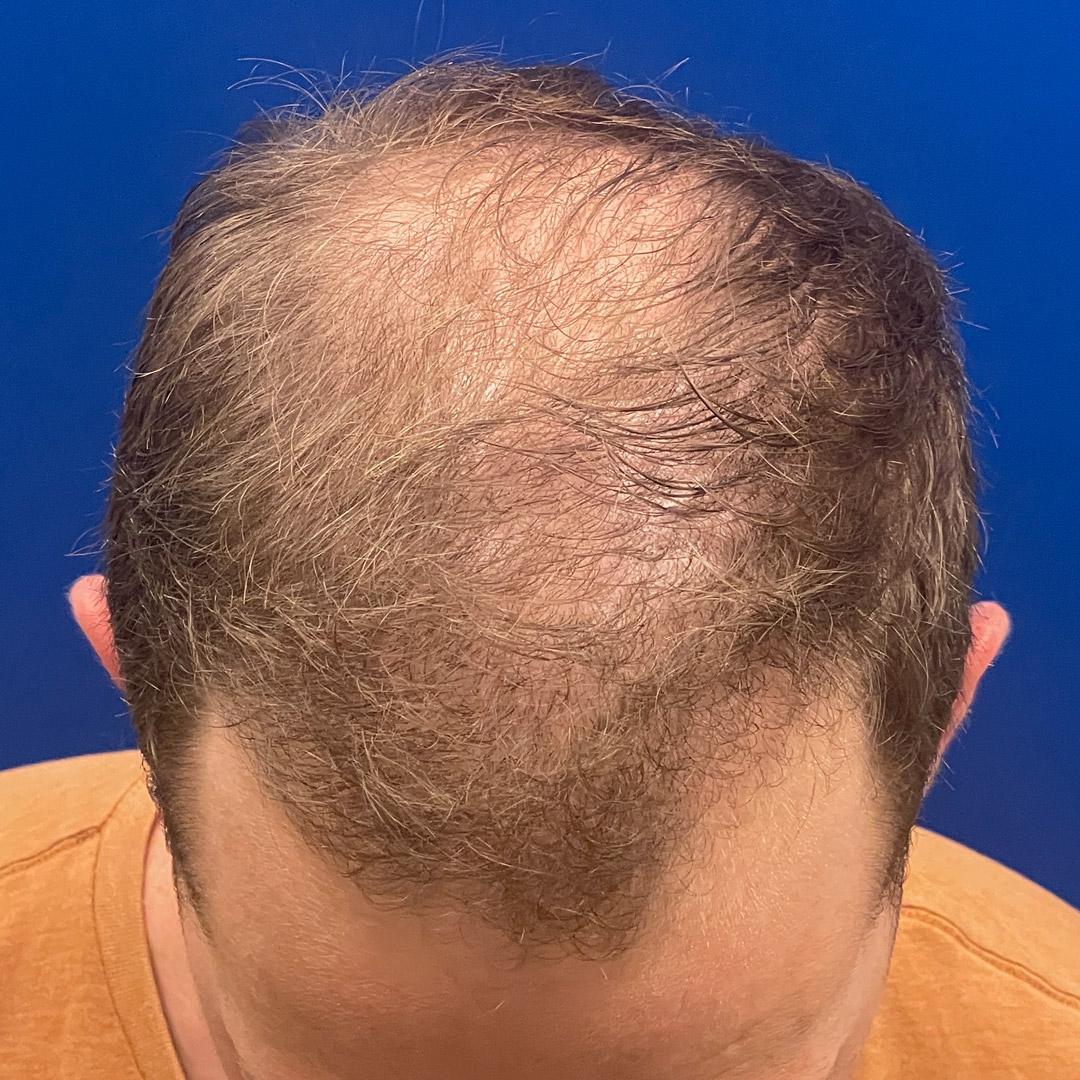
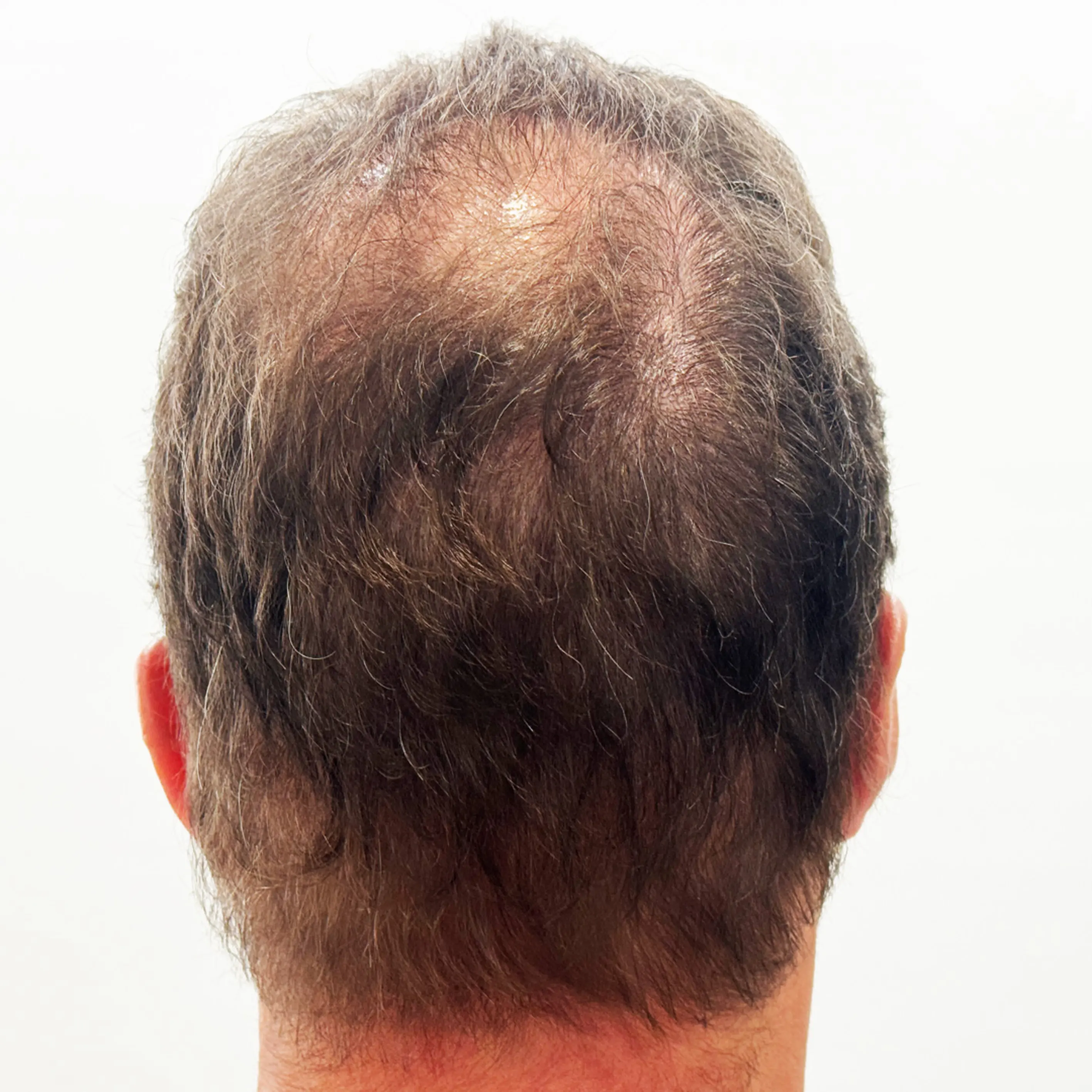
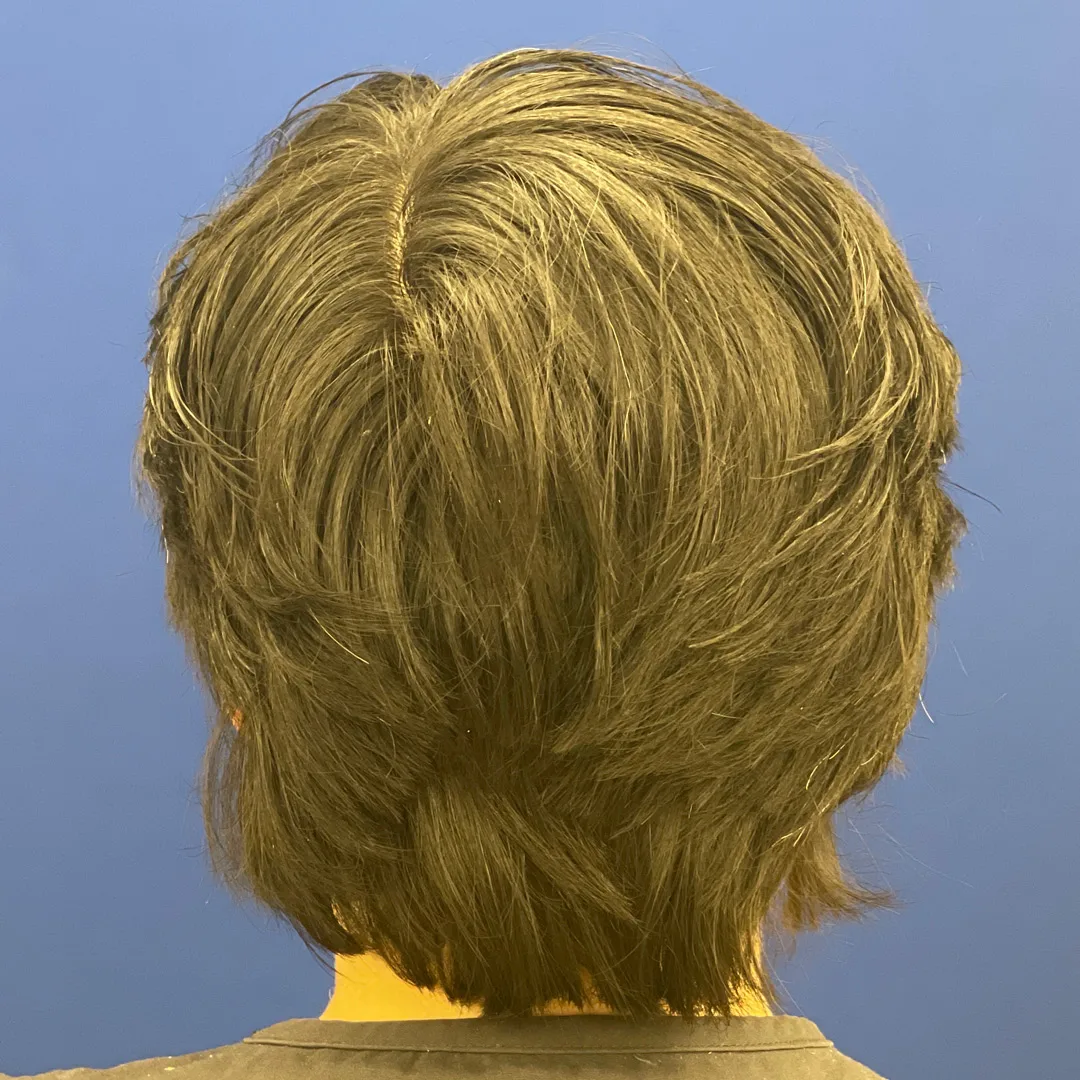
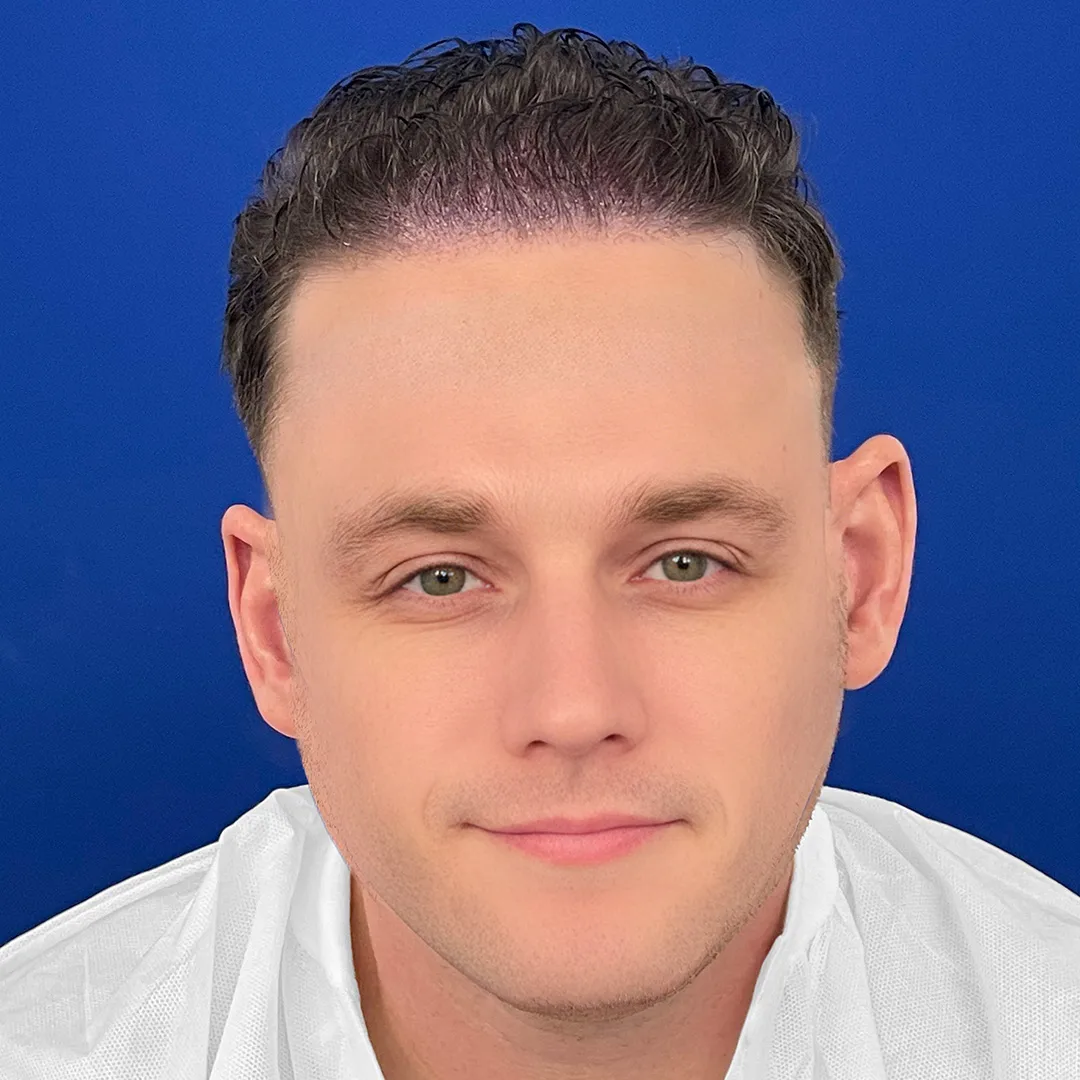
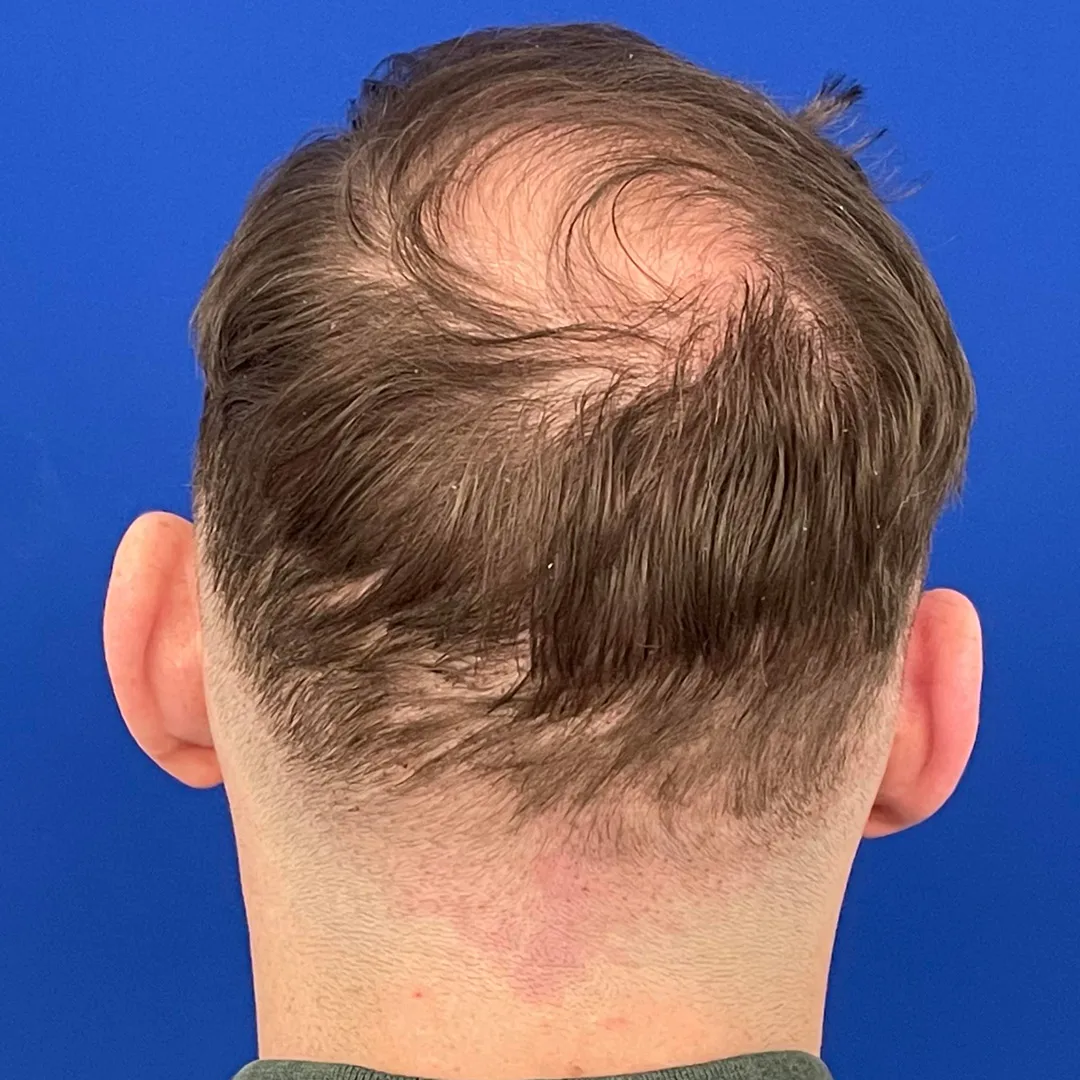
Below are two patients who had no-shave hair transplants in Chicago. There are problems with both new hairs in the newly restored area, which has limited coverage and an unnatural curly, kinky appearance to hair, and the donor site, which is patchy.
Any clinic that offers No-Shave FUE won’t show you these results.You’ll typically see an after picture with people with long hair in the donor site and no long-term results. You’ll never see what the new hairs look like after surgery because a no-shave technique doesn’t hide that part of the surgery.
This is what a no shave can actually look like. It’s a bogus, marketed procedure. In fact, every time a patient tells me their hair transplant has completely failed, my first question is: “Did you have a no-shave technique?” Every time I see dry, frizzy hairs, I ask the same question. Every time I see excessive scarring on the back of a patient’s head, I ask: “Did you have a no-shave technique?” Those are indicators of a poor procedure.
The aggregate visible outcome of the mechanical failures below.
Loss of the oil gland (sebaceous gland stripped from the graft during blind extraction).
Stripped connective tissue during blind extraction leaves hair morphology damaged.
Limited graft counts of no-shave procedures — typically 1,500-2,000 grafts, with 3,000 the industry ceiling.
Look at the transplanted hairs against the patient’s naturally occurring hair behind them. They don’t match. The transplanted hairs are dry, frizzy, and different in texture. That mismatch is the giveaway. The overall coverage is also very limited.— even if the transplanted hairs looked perfect, It looks like someone placed a strip of hairs along the hairline and didn’t think about the shape of a natural result.. Both problems have the same underlying cause: the graft is injured during blind extraction, because the surgeon (or technician) can’t see through the dense donor hair to extract it cleanly.
Uneven extraction from the assistant-exposes-then-surgeon-collects workflow, which forces the surgeon to over-harvest whatever small area is currently visible.
A 50%+ transection rate creates unnecessary extraction wounds — half the wounds produced no usable graft, only scar tissue.
Excessive damage to donor follicles limits what remains for future procedures or hairstyle choices later in life.
The patchy loss is visible in this patient because his hair is short. Most no-shave FUE galleries elsewhere show donor-site images of patients whose overlying hair is thick and long — which hides the patchiness from view. The damage exists on those patients too. The marketing images are chosen or styled specifically to conceal what you’re seeing here.
This section explains the mechanical reasons no-shave FUE produces those outcomes, and why they aren’t a matter of surgeon skill — they’re built into the technique.
No-shave FUE uses a sharp cylindrical blade, wielded by a surgeon who cannot see through the dense donor hair. It is very hard to get the graft out in its most natural form. Transection rates that are normally 12-15% in standard FUE jump to nearly 50% or above in no-shave FUE. That doesn’t account for other injuries — stripping the oil gland (which makes the transplanted hair dry) or stripping the connective tissues (which makes the hair kink). This is why the front view of our hero patient shows dry, frizzy, unnatural-looking hairs that don’t match the native hair behind them.
The back view of our hero patient shows patchy hair loss at the donor site. This happens because of how a no-shave FUE procedure is forced to be performed.
The assistant exposes a small area of the donor site so the surgeon can see the follicles. The surgeon collects vigorously in that exposed spot, because it’s the only area currently visible. This over-harvests that spot. Then the assistant moves to the next area, exposes it, and the pattern repeats. Over the full procedure, the extraction ends up clustered in the specific spots that were sequentially exposed — with unharvested territory in between.
The result is patchy hair loss at the donor site. Not evenly distributed thinning. Concentrated bald patches where the exposed spots were, denser hair between them. This isn’t a matter of surgeon skill — it’s the workflow itself. The technique forces the pattern.
Most no-shave procedures yield around 1,500 grafts per session. The most experienced clinics reach 2,000. The largest documented no-shave procedure elsewhere — performed in Belgium — was 3,000 grafts. For many hair restorations, that is simply not enough. This is why the front view of our hero patient also shows a shortage of hair — even if every transplanted graft had looked natural, there weren’t enough of them.
The concealed hair transplant approach at Northwestern Hair has documented 6,119 grafts in a single session — a procedure performed with the Roman Hair Shade alone, and the largest documented no-shave hair transplant on record. The graft count ceiling exists for no-shave FUE because of the technique itself, not because of what’s possible with a properly designed concealed approach.
A 50% transection rate means half of every extraction wound the surgeon made was unnecessary. The other half produced usable grafts. The first half produced only donor damage — scarring, tissue disruption, wasted follicles — with nothing to show for it.
In a no-shave procedure, this damage is hidden from the patient. The overlying hair covers the donor site. The patient literally cannot see the damage even if they wanted to. They are trusting the surgeon with harm they have no way to verify.
Transection rate is a proxy for donor-site damage. Every transection represents an inaccurate extraction — an attempt that missed. The lower the transection rate, the more accurate the surgeon has been, and the less collateral damage exists at the donor site. The higher the transection rate, the more extraction wounds the patient carries with no graft to show for them.
The 3.1% transection rate on the police officer’s concealed procedure means 96.9% of the extraction wounds we created produced a usable graft. Compare that to no-shave FUE where half the extraction wounds were unnecessary donor damage the patient will never see.
Patchy donor scarring also prevents the patient from ever wearing shorter hairstyles later in life. The haircut they wanted to avoid today becomes the haircut they cannot have at all. And the follicles destroyed by blind extraction can never be used for future procedures — the patient’s total lifetime donor supply is depleted faster than necessary. Today’s decisions constrain future options in ways no-shave FUE patients rarely realize until it’s too late.
No-shave FUE only describes the extraction approach at the donor site. The recipient site — where the grafts are actually placed — receives no concealment consideration. Crusts, redness, and visible graft placement patterns at the recipient site are not touched by the term “no-shave.” A no-shave hair transplant is, by definition, only half-concealed.
The concealed hair transplant addresses both sites through the coordination of techniques described above. This is the fundamental structural difference between the two categories.
The tables under the hero images at the top of the page named the failure modes: unnatural appearance, dry hair, kinks and tears, deficient graft count, patchiness, increased scarring, decreased future donor reserve. This section explains the mechanical reasons no-shave FUE produces those outcomes, and why they aren’t a matter of surgeon skill — they’re built into the technique.

When patients came to Northwestern Hair asking for concealment, we didn’t want to offer them something we knew would produce inferior results. Over years of clinical work, we developed the four ways we now use to conceal a hair transplant — each engineered specifically for the concealment problem — so we could deliver on both naturality and concealment without compromising either.
A concealed hair transplant at Northwestern Hair uses four ways to conceal the procedure. Two are haircut techniques — strategic barbering that hides the donor site under normal-looking hair. Two are extraction technologies — specialized tools that let us work with the hair rather than against it.
The most important thing to understand about the two haircut techniques: both expose the hair at the exact point it exits the scalp. That means we extract as if the procedure were fully shaved — same surgical visibility, same precision, same graft yield, no increase in transection rates or graft injury — while the patient walks out fully concealed. The trade-off no-shave FUE forces (concealment paid for with worse outcomes) doesn’t exist in our approach.
The four ways combine differently for each patient depending on graft count, hair length, hairline design, and how bald the recipient area is. Most patients receive some combination of all four. None of them require you to shave your head. None of them leave the recipient site exposed. And unlike no-shave FUE, they don’t compromise the naturality of your long-term result.
The Tapered Fade is a normal-looking tapered haircut — the kind of haircut you’d see on any man walking down the street. Nothing special about the haircut itself. This is actually our standard haircut in No-touch FUE approach. We never cut the top, and we only fade in the sides and back to the extent we need.
We fade the hair around the perimeter of the scalp — the neckline, the area around and above the ear. This exposes the single, fine, feathered hairs that live at the perimeter donor zone. These are the exact hairs required to build a natural hairline: thin, wispy, undetectable when placed one at a time along the leading edge of the hairline.
Because the fade cuts the perimeter hair down to the scalp, we can see every follicle we need to extract at the point it exits the skin. The extraction happens under full surgical visibility — exactly the same as a standard shaved No-Touch FUE procedure. Transection rates stay at the low baseline of shaved extraction . No compromise on graft quality, and the fade itself looks like a normal barbershop haircut from day one.
We deliver the Tapered Fade at three basis levels like you would get at a barbershop — Low, Medium, or High — fitted to the size of your procedure. The naming follows standard barbering vocabulary, so you already know what each level looks like. The haircut is fit to your procedure. Not the other way around.
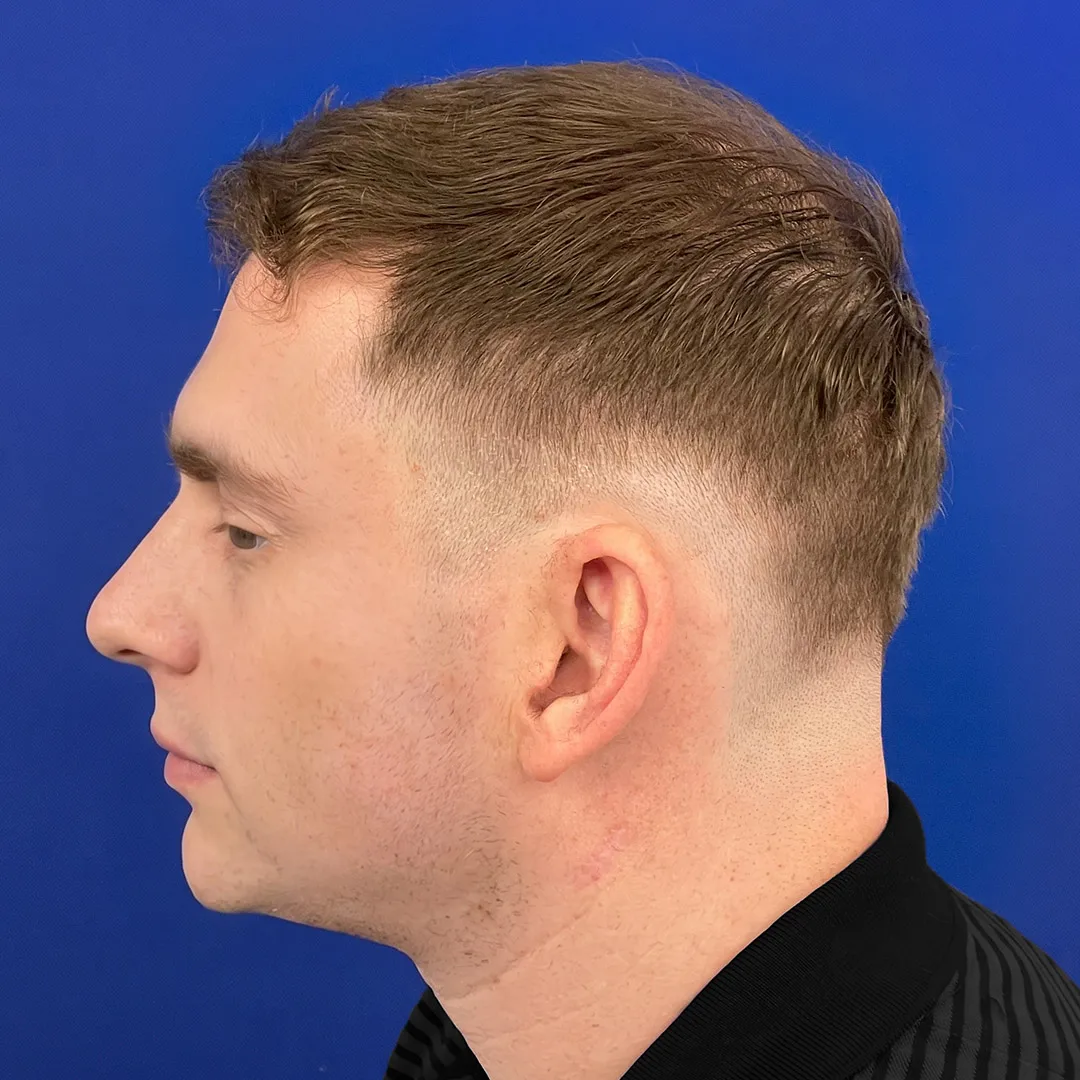
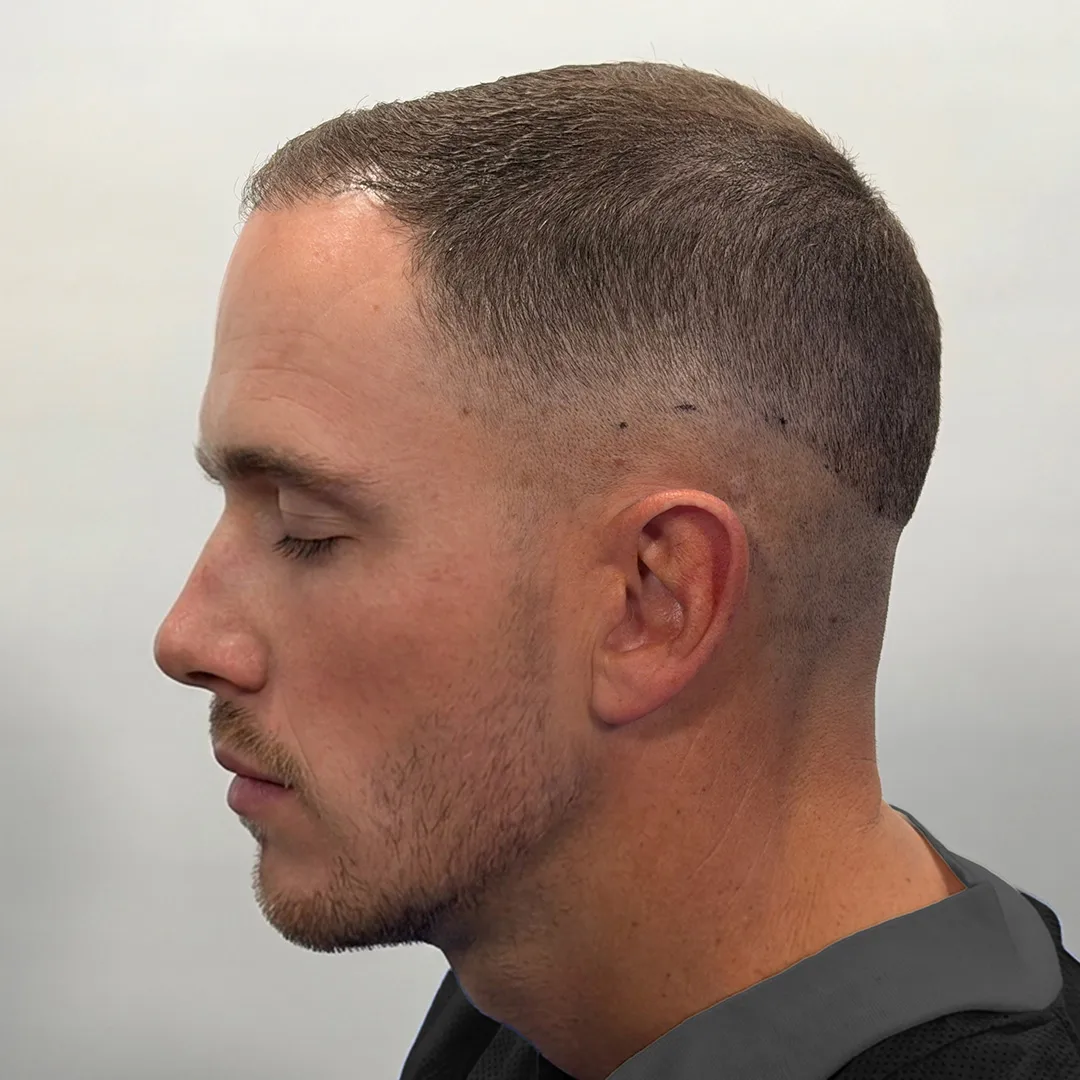
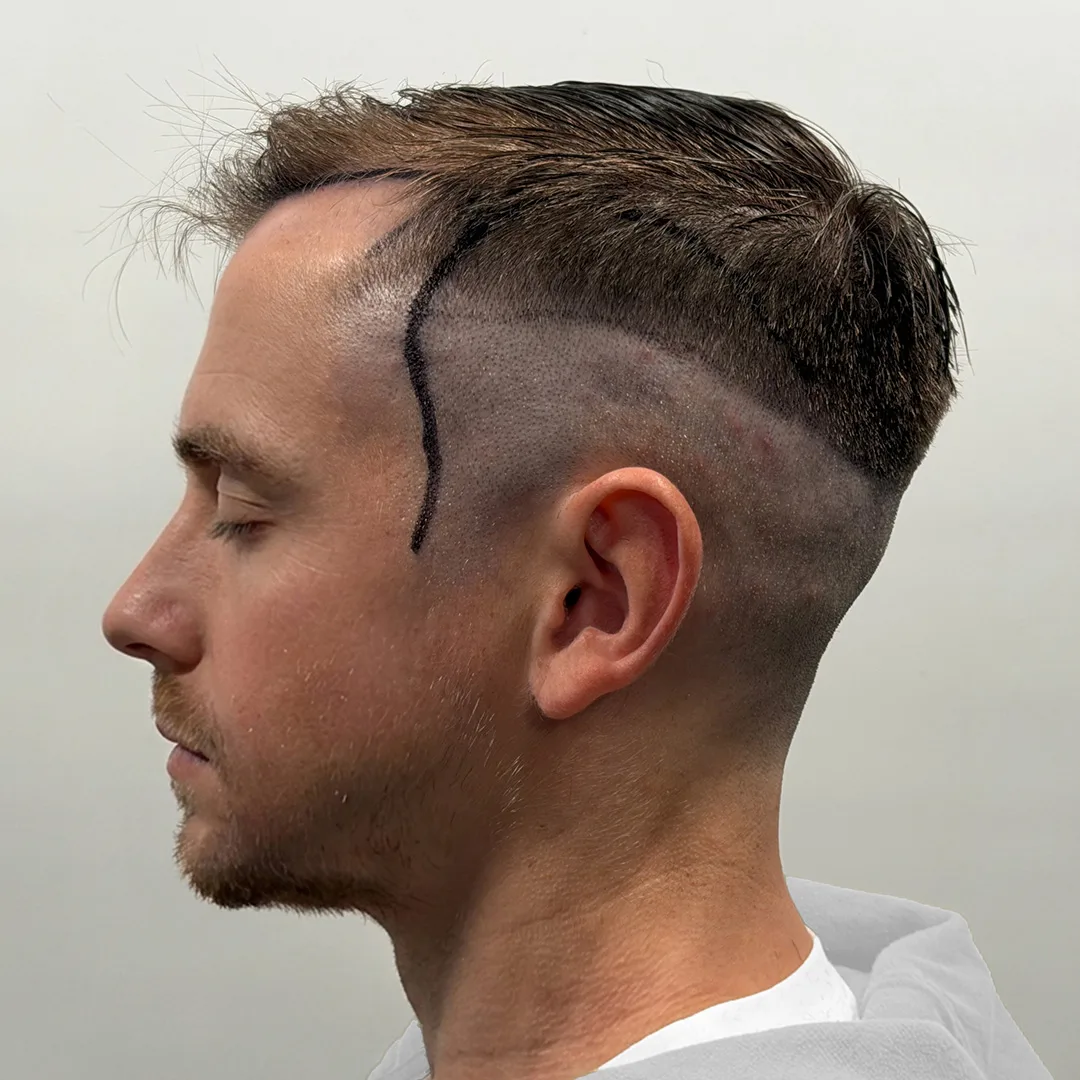
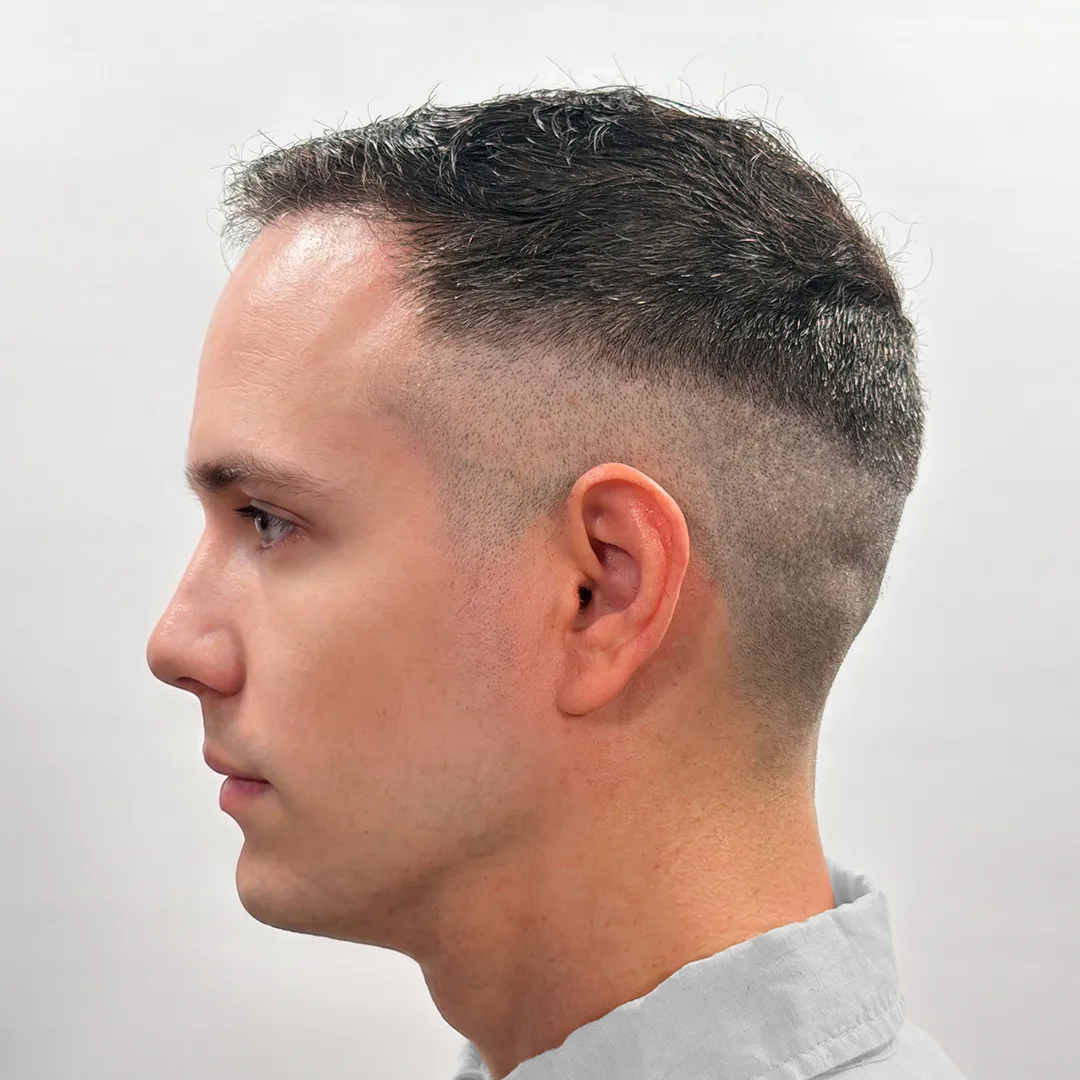
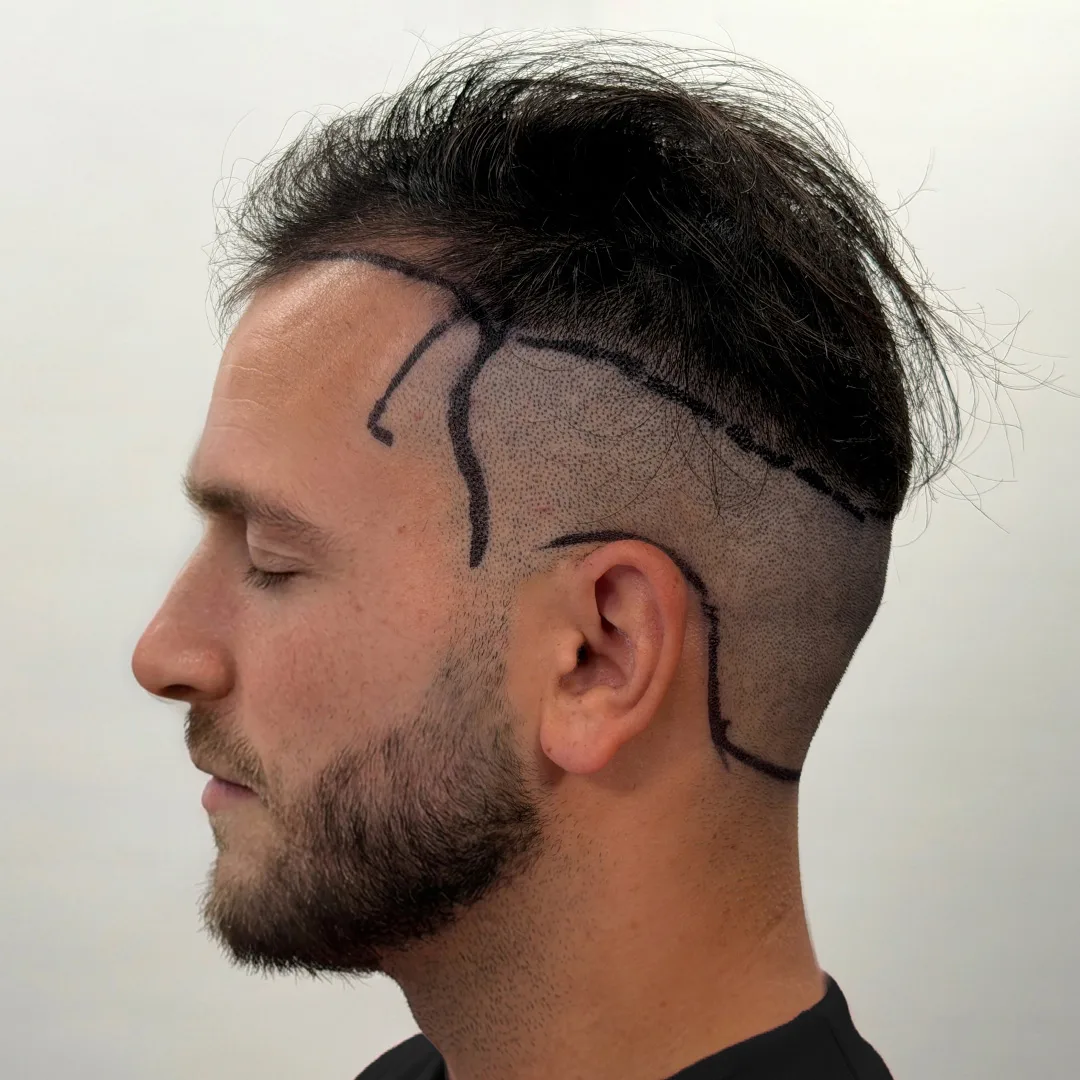
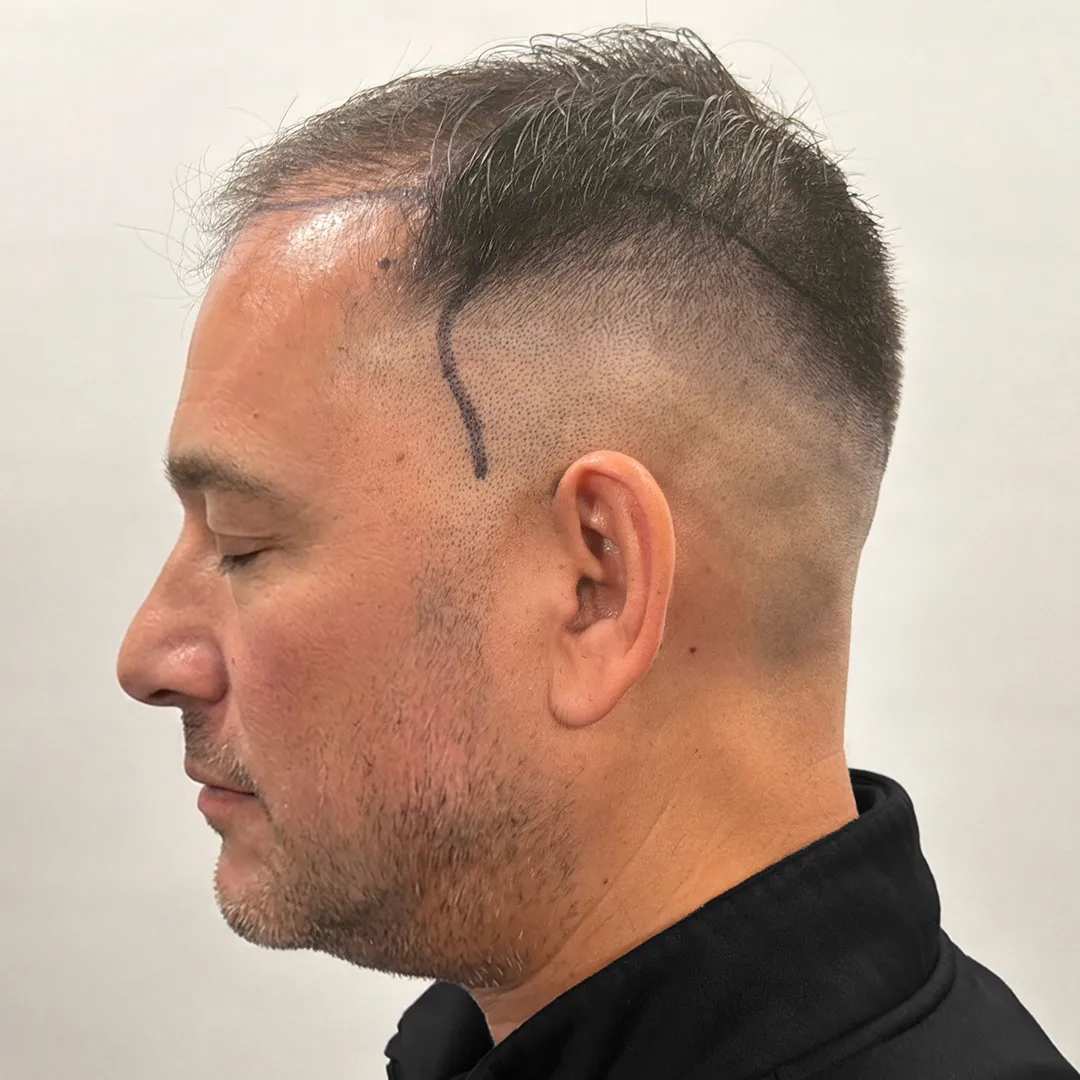
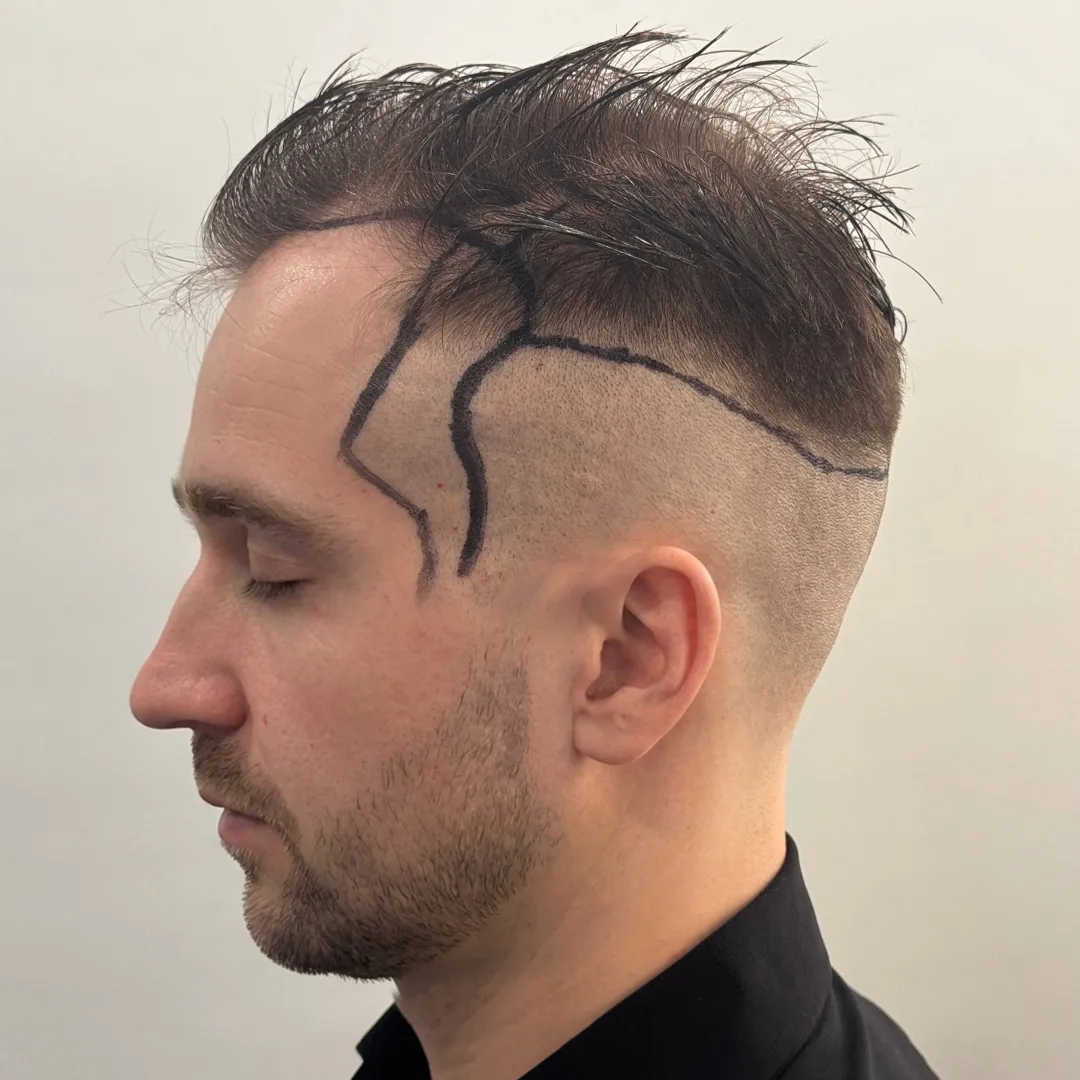
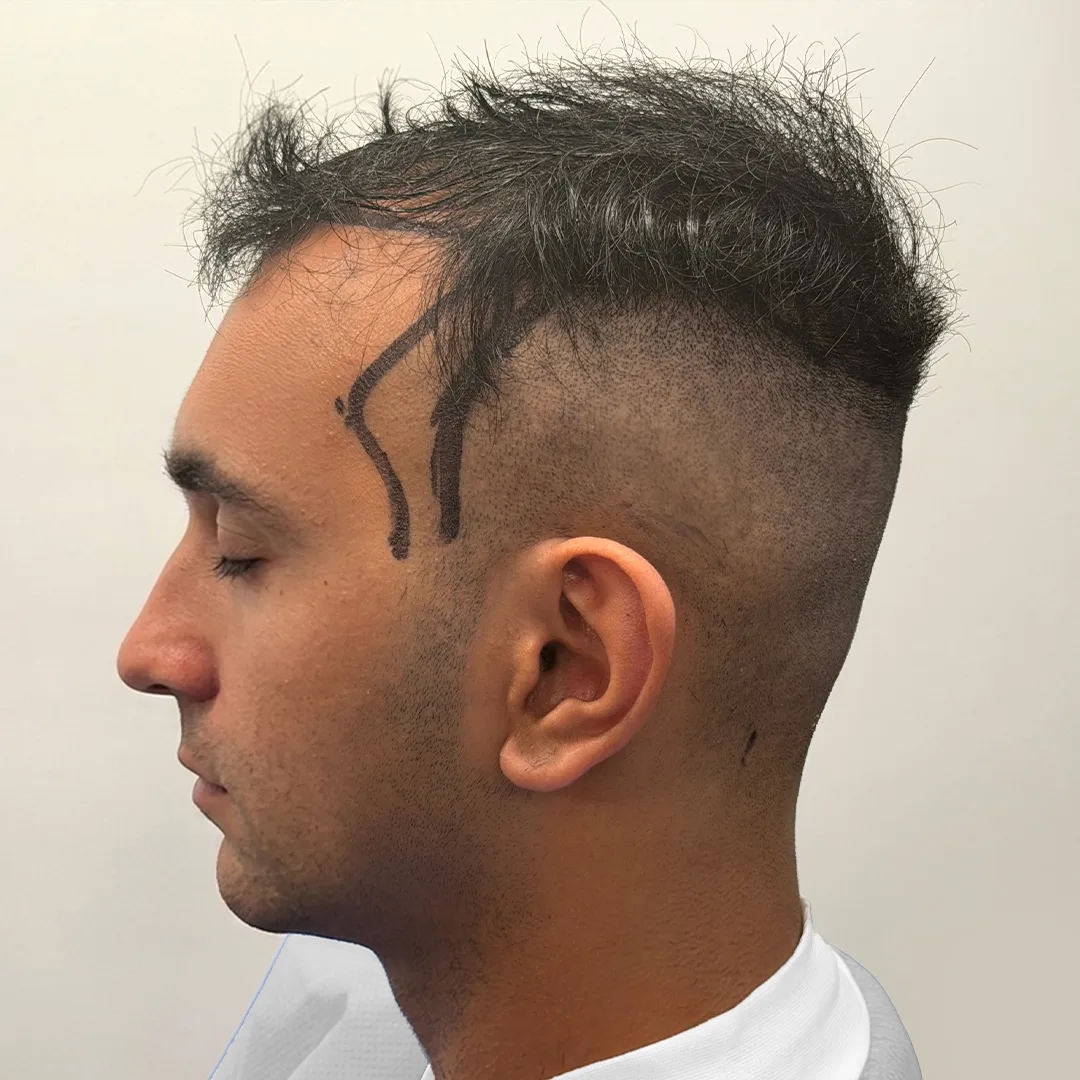
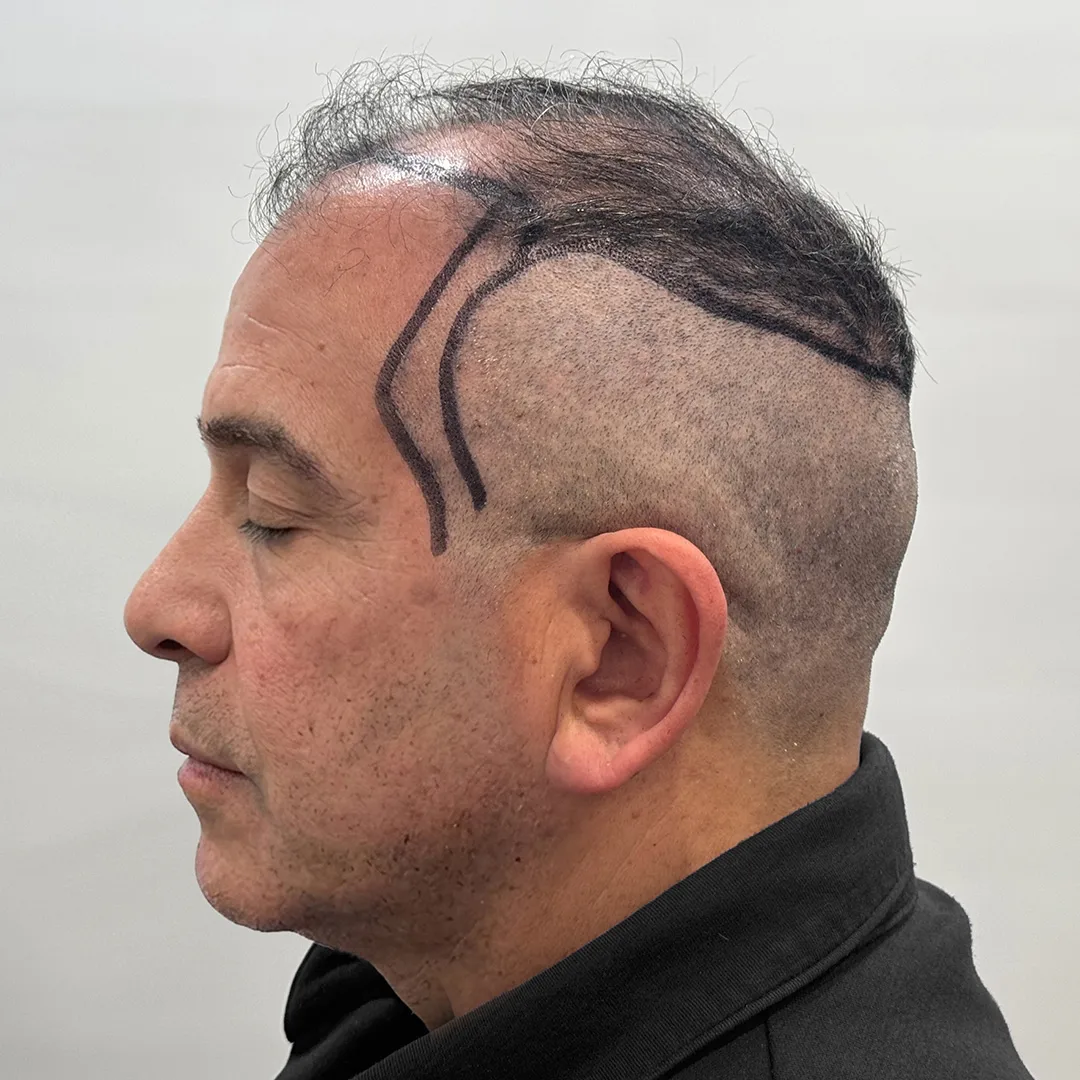
The Low Tapered Fade extends up from the neckline, staying low on the head. This is the fade you’d give a client walking into a barbershop asking for a modest, understated tapered haircut. It delivers approximately 2,000 grafts — enough for a substantial hairline restoration, or for a smaller combined procedure. The extraction holes heal within three to five days. The fade looks completely normal from day one.
The Medium Tapered Fade rises higher, into the mid-scalp region. Still a completely normal barbershop haircut — just a fade that starts a little further up. It delivers approximately 4,000 grafts, which handles combined hairline plus mid-scalp density work in a single session.
The High Tapered Fade extends highest of all — what most barbers call a high-and-tight style. This is reserved for our largest concealed restorations, where the entire front and mid-scalp need to be rebuilt in a single session. At this level, the Tapered Fade alone can support up to 8,000 grafts.
The gallery above documents the Tapered Fade at nine graft-count bands, from 1,000 to 9,000 grafts. As the graft count increases, the fade rises higher on the head — a smooth escalation from Low to Medium to High. Most concealed hair transplants at Northwestern Hair fall somewhere in the 2,000-to-5,000 range. Every image above the 3,000 mark represents a procedure size no-shave FUE structurally cannot deliver.
For every level of the Tapered Fade, the concealment work is included in your standard procedure at no additional charge. It’s how we deliver a concealed hairline restoration to most of our patients without asking you to pay a premium for concealment.
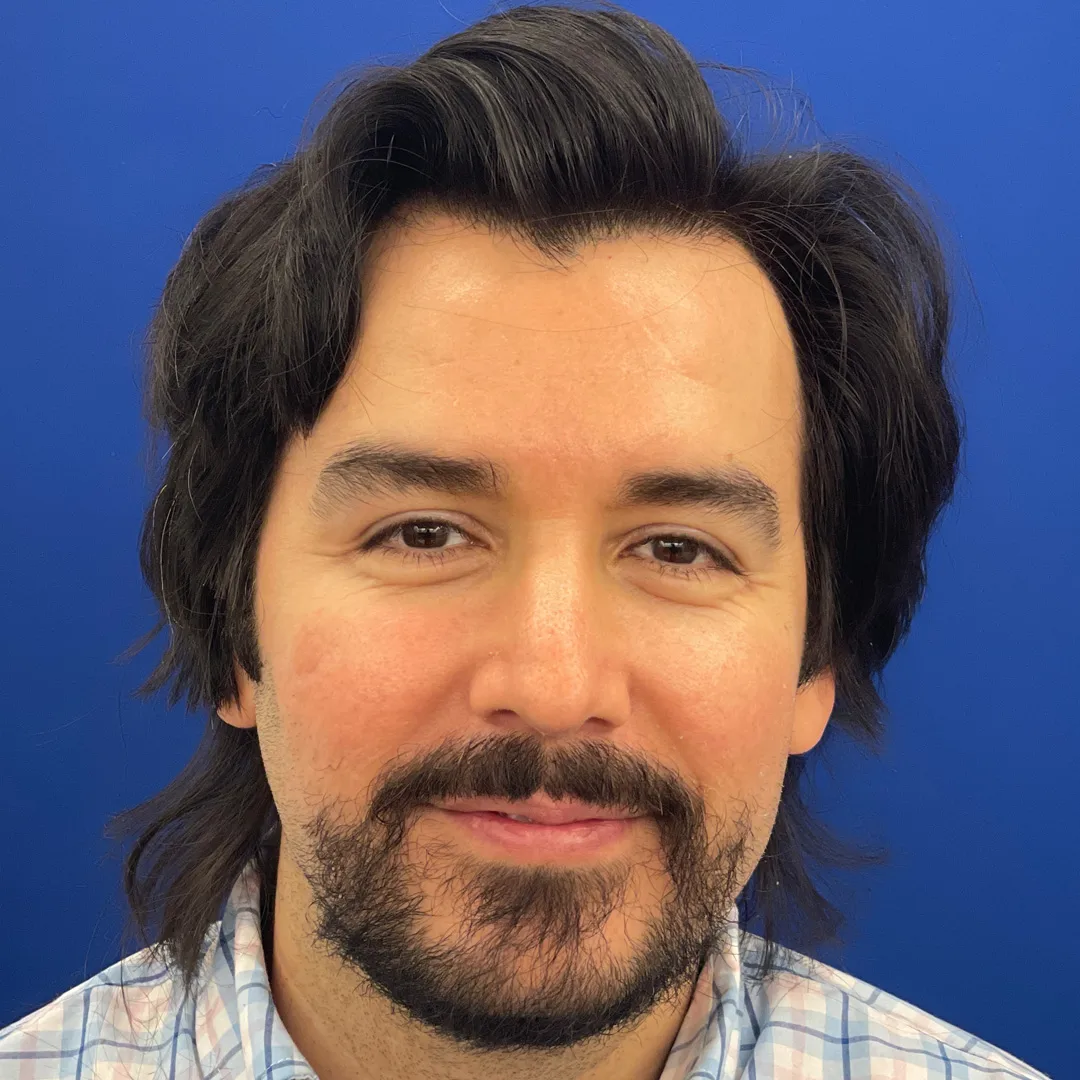
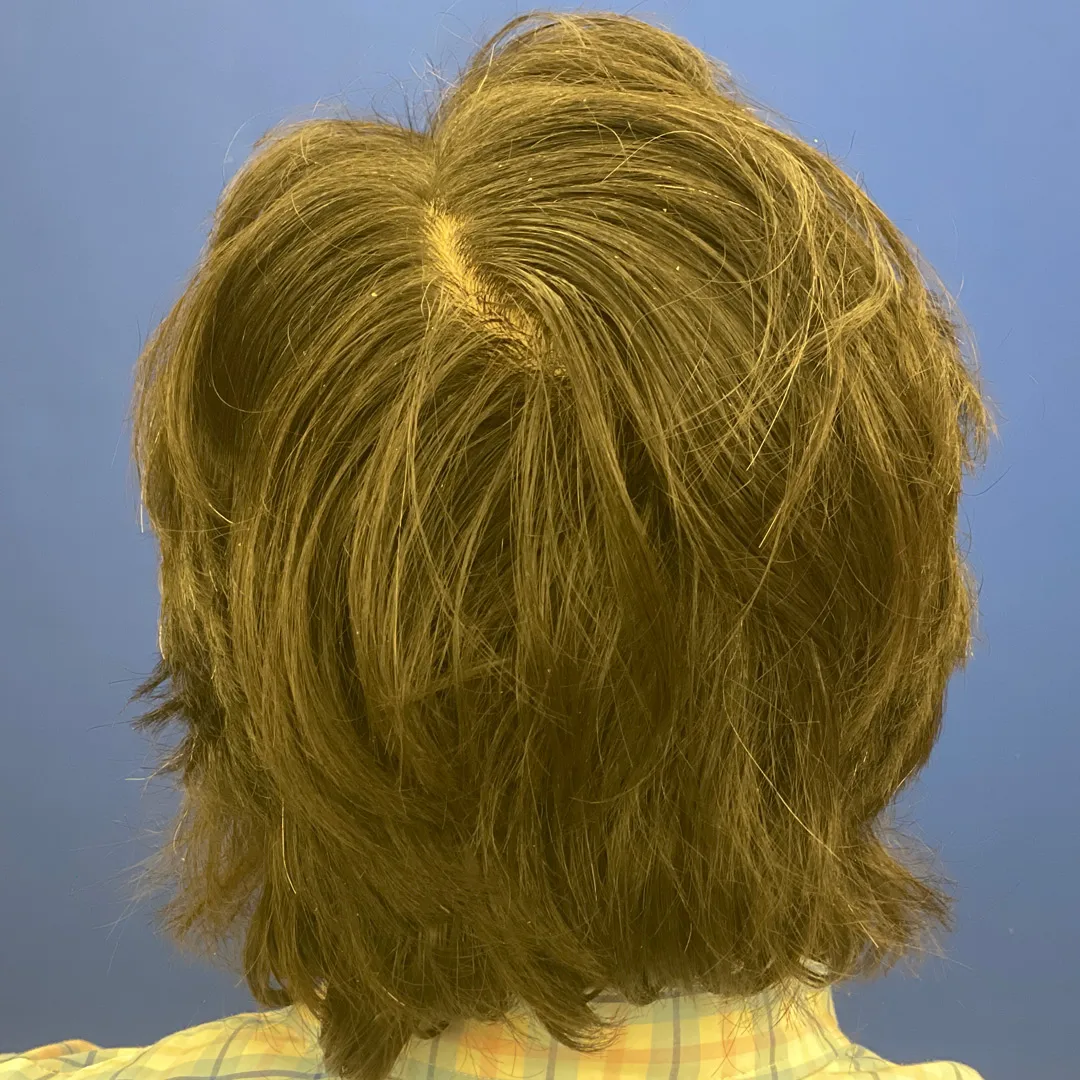
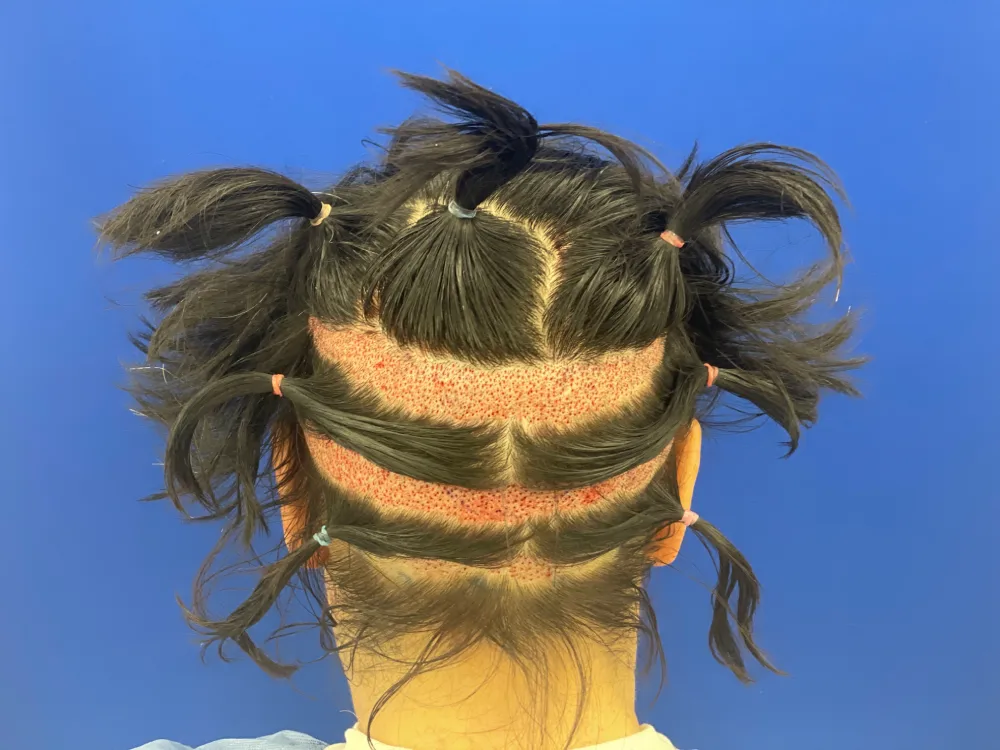
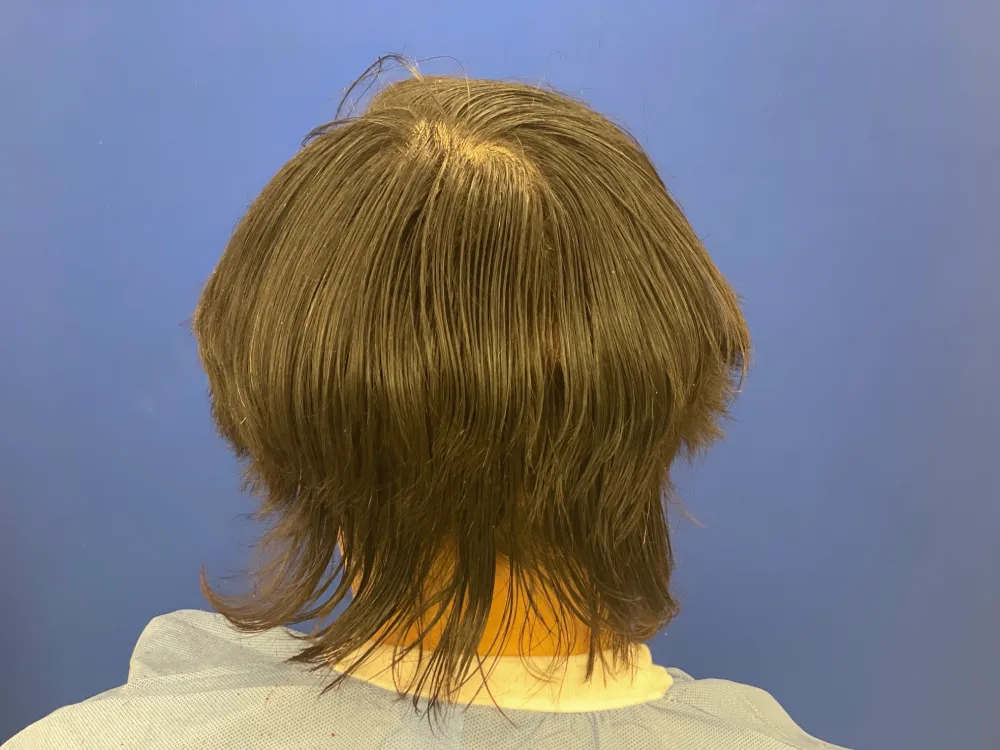
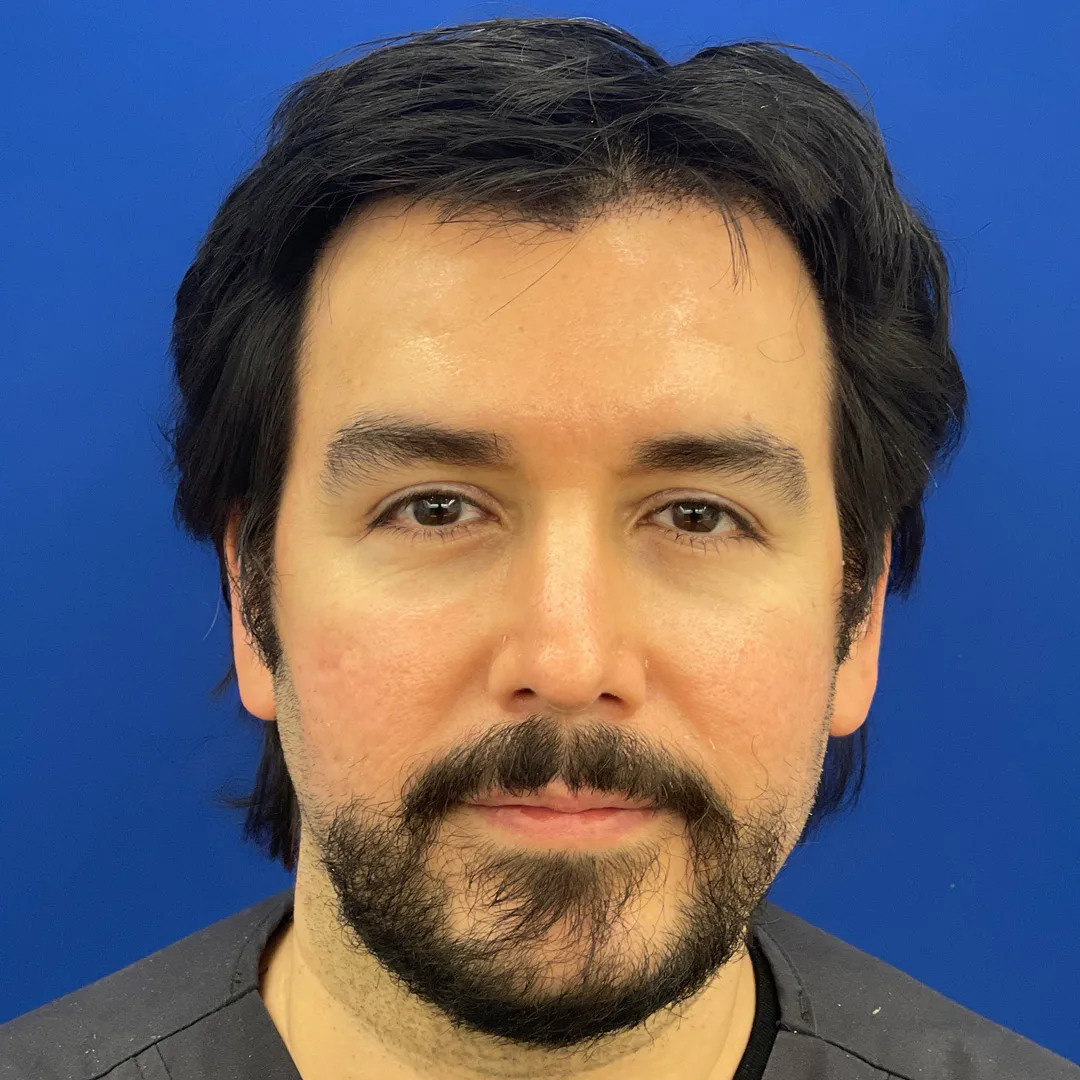
The three-timepoint set above documents a common Roman Hair Shade case — before the procedure, same-day post-procedure, and one week later. The buzzed strips are concealed under the overlying hair from the moment the procedure ends, and the concealment holds through the immediate recovery window. Our world record documentation (a 6,119-graft procedure performed with the Roman Hair Shade alone) appears later on the page, where the graft-count-ceiling argument is made.
The Roman Hair Shade takes its name from the Roman shade window covering — a fabric shade where each horizontal fold covers the layer below it. When lowered, the folds stack together and completely conceal the window.
The technique works the same way, applied to hair. We flip up the longer hairs along the ridge and identify a thin strip below where we want to extract. That strip is buzzed down. Grafts are collected. The longer hairs above are then laid back down like the folds of a Roman shade — completely covering the buzzed extraction area. No one can see the strip underneath, no matter if your hair is dry, wet, styled down, styled up, or tied back.
The amount of donor area we can safely expose is a function of your overlying hair length. For every inch of hair length above the extraction strip, we can collect approximately 1,000 grafts from areas that remain fully concealed.
We can often perform two to three layers of Roman Hair Shade in a single procedure — stacked horizontally down the ridge. The total exposed area across all layers cannot exceed 6-7 cm of buzzed strip height, because we must leave unbuzzed strips of hair between the layers to preserve continuous visual coverage. These unbuzzed intervening strips are strategically placed at anatomical landmarks — usually at the nuchal ridge — where the hair provides optimal coverage of the buzzed strips above and below.
The Roman Hair Shade collects hairs from the ridge and mid-levels of the sides — where the donor hair is longest, thickest, and highest caliber. These are the multi-hair grafts needed for mid-scalp and crown density restoration. Not the fine perimeter hairs used for the hairline — those come from the Tapered Fade zone. This is why we often combine the two haircut techniques in one procedure: each technique accesses a different anatomical zone that contains different graft types for different restoration goals.
Because the strip is buzzed down to the scalp at each extraction layer, we see every follicle we need to extract with full surgical visibility — exactly as we would in a fully shaved procedure. Transection rates stay at the low baseline of shaved extraction. No graft injury, no compromise on graft quality, and the entire buzzed area is concealed under the overlying hair from the moment the procedure ends.
The Roman Hair Shade is our proprietary technique, developed with our in-clinic barber Ron Edwards at Medina Barbershop. It carries a flat fee, regardless of graft count. Most concealment work at the perimeter (the Tapered Fade) is included in your standard procedure. The Roman Hair Shade is the specialized concealment technique for the ridge, which is why it carries the additional fee. Specific pricing is in our pricing section below.
Discreet PUE® is our extraction technology for concealed procedures. It’s the same vibrational extraction platform that powers our Micro PUE® procedures, adapted with a specialized tip that lets us extract through uncut donor hair without transecting the hair shaft or damaging the graft.
The tool that makes this possible is the Ring Tip.
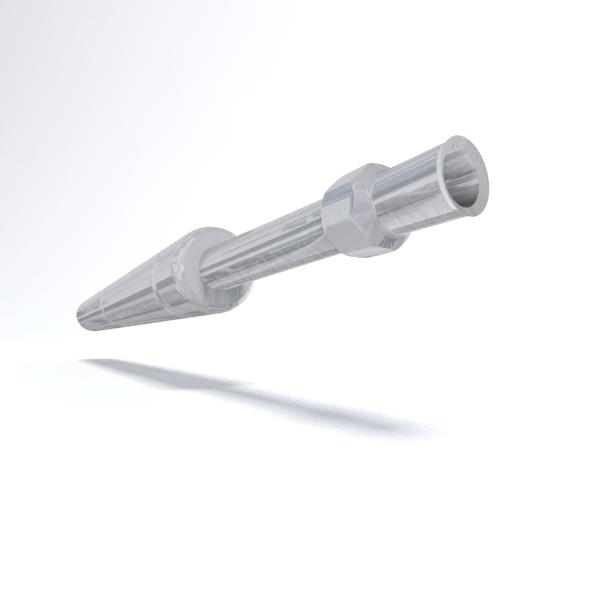
The Ring Tip has a physical ring positioned 4 millimeters above the cutting edge. The ring is a mechanical depth stop. It cannot pass through the scalp surface, which means the blade cannot go deeper than 4mm — no matter how the surgeon holds the handpiece or how much pressure is applied. The rest of the extraction happens through multi-phase modes — vibration, oscillation, suction — that elevate the graft out of the scalp rather than cutting it out.
The Ring Tip serves three purposes. First, it prevents transections. In no-shave FUE, transection rates are 50% or higher because the blade cuts blindly through hair shafts. With the Ring Tip, the blade physically cannot reach the hair shaft. Second, combined with a flared cutting edge, it prevents stripping. The flared geometry angles the cut away from the hair unit, preserving the pilosebaceous tissue around the graft. Grafts come out anatomically intact rather than dry or kinked. Third, the ring prevents the surgeon from accidentally pushing the uncut hair shaft down into the extraction wound during coring. It also gives the surgeon tactile depth feedback — they feel the ring hit the skin and know exactly where they are.
The result: Discreet PUE® transection rates are significantly less than 12% — well below the 12-15% baseline of standard shaved FUE, and dramatically below the 50%+ rate of no-shave FUE. Our best-case Micro PUE® rate is 2%. Discreet PUE® falls between the two.
Discreet PUE® has two primary deployments in our practice.
The first is for patients who want no haircut at all. This is the technique we use when a patient genuinely cannot accept any haircut modification — no Tapered Fade, no Roman Hair Shade. Discreet PUE® extracts through completely uncut donor hair with graft quality far superior to what no-shave FUE can produce. If the same patient also needs recipient-site concealment in a bald zone, we pair Discreet PUE® with Long Hair PUE® — the fourth technique, described next.
The second is in combined procedures. When we deploy the Tapered Fade and Roman Hair Shade together for a case, we also use Discreet PUE® to extract grafts from the unbuzzed intervening strips between the Roman Hair Shade layers. These areas of uncut hair can’t be extracted with standard FUE without transecting the shaft. Discreet PUE® handles them cleanly.
Rather than concentrating extraction in the two haircut-exposed zones, Discreet PUE® pulls grafts from the intervening strips as well, spreading the collection across the wider donor field.
Even distribution is the mechanism; prevention of over-harvesting is why we do it. Concentrated collection in one zone risks depleting that specific area.
The alternative to even distribution is clumping — graft collection concentrated in small clusters within accessible areas. This is what occurs in no-touch and no-shave FUE, where the surgeon’s limited visibility forces sequential vigorous collection in whichever spot the assistant is currently exposing. The visible outcome is patchy hair loss at the donor site — clumped scarring, clumped follicle depletion, patchy hair appearance long after the procedure. You can see this in the back view of our hero patient at the top of the page.
Discreet PUE® in the intervening strips prevents clumping by giving us extraction access to zones beyond just the two haircut-exposed areas. Even distribution across the wider donor field is the mechanism. Prevention of over-harvesting is the result. Avoiding patchy loss is the visible patient outcome.
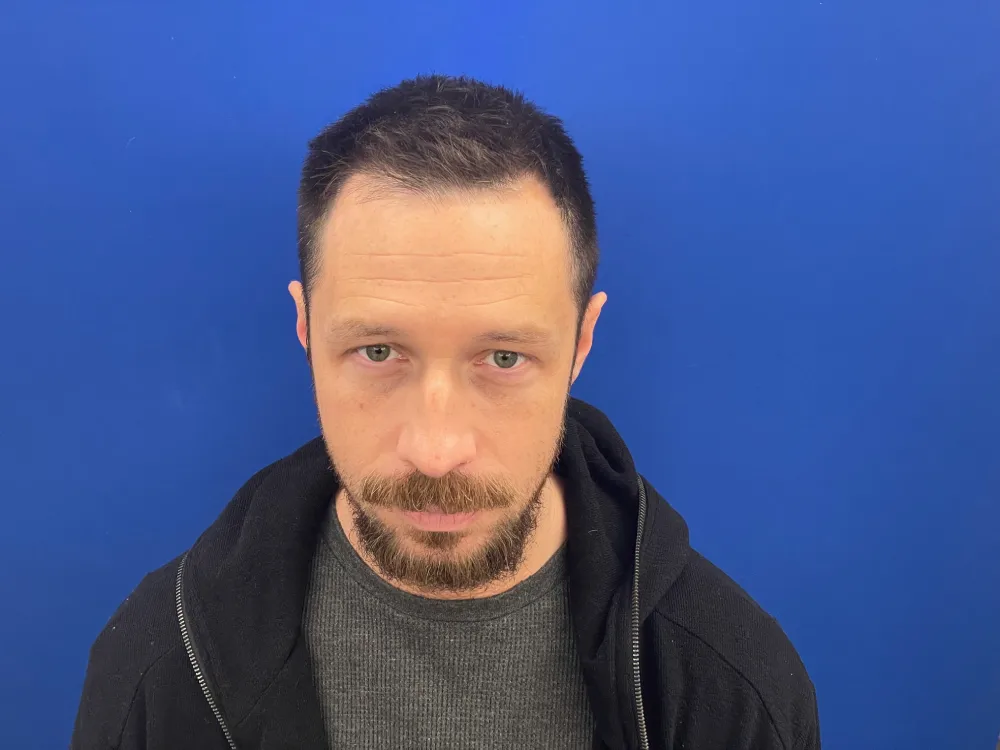
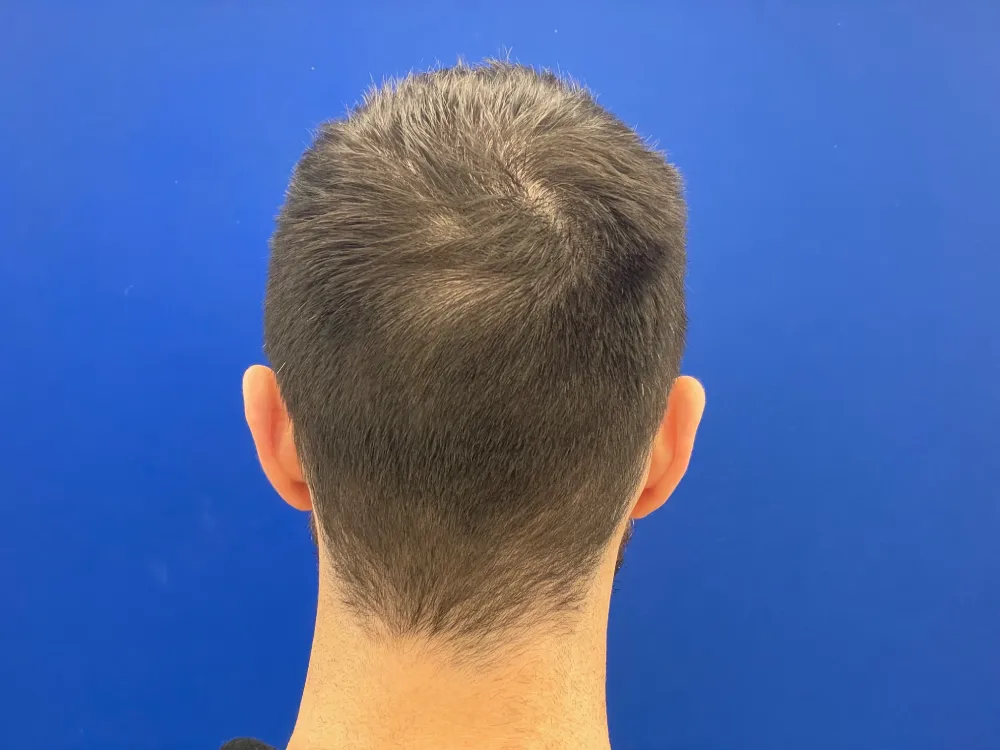
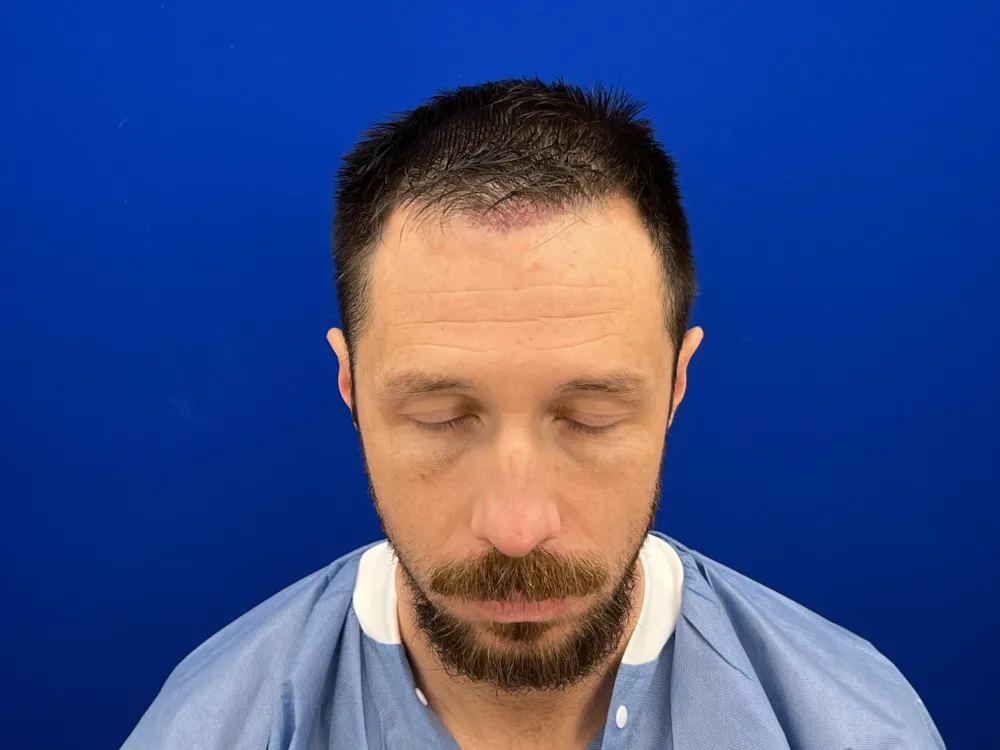
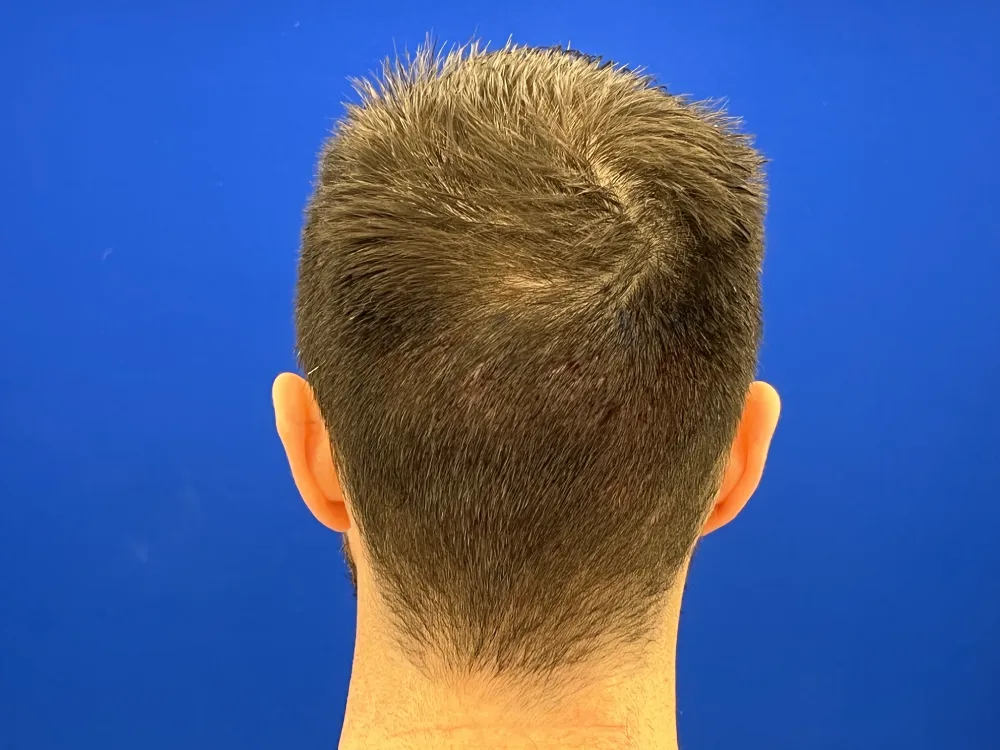
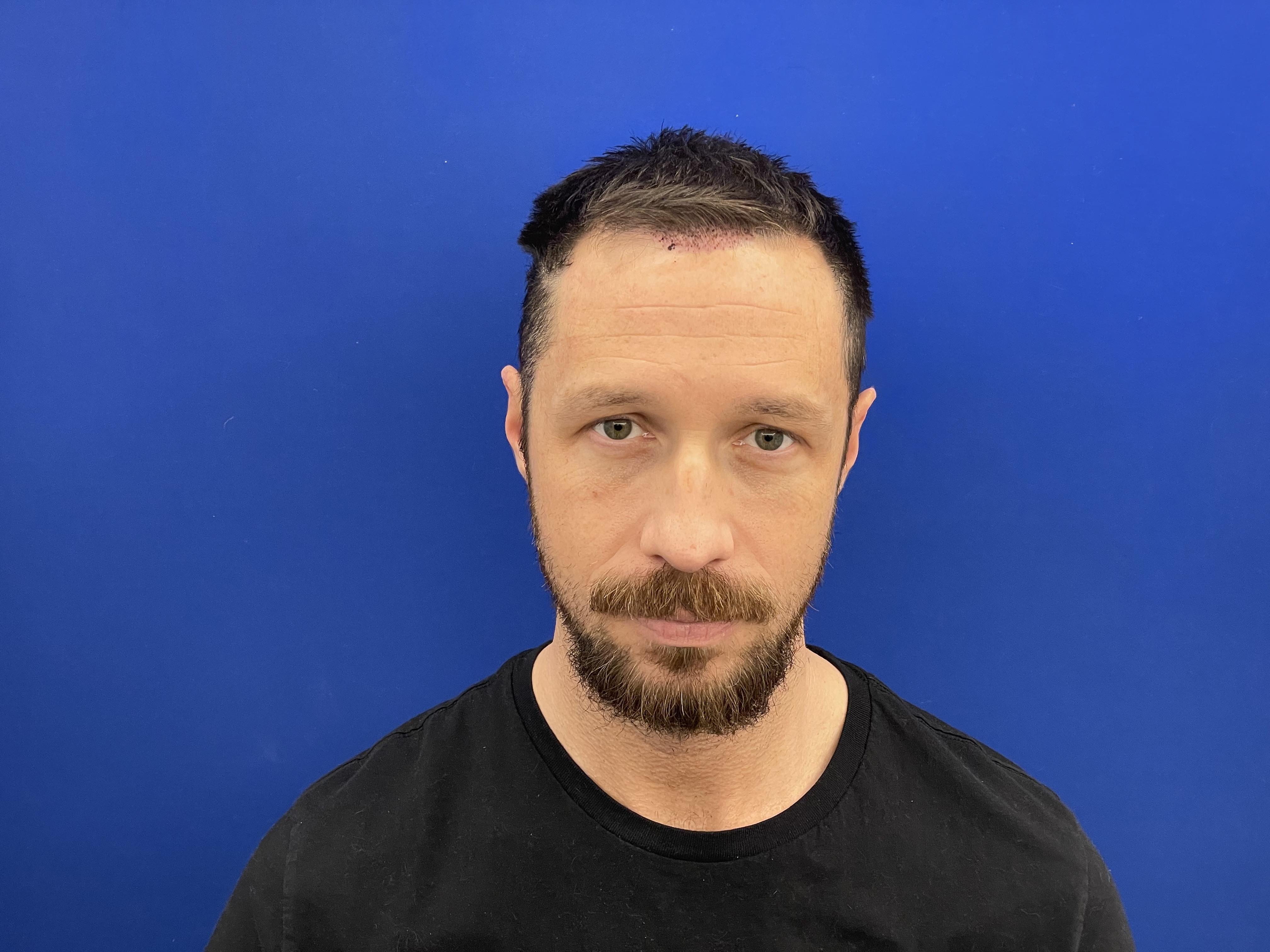
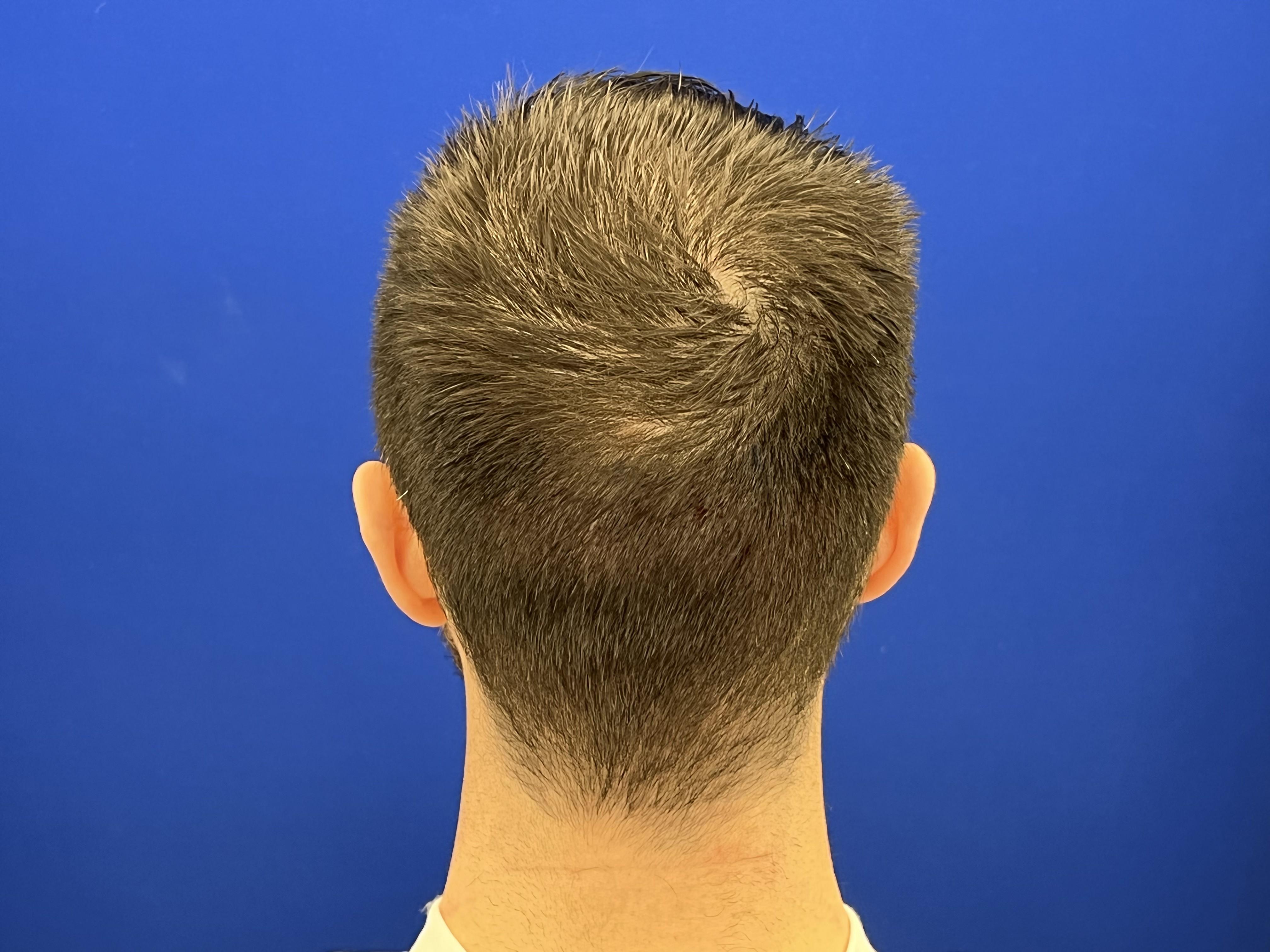
The three-timepoint set above documents a Discreet PUE® case where the patient wanted no haircut at all. The before, immediately after, and one-week images show that the donor hair is preserved at full length throughout — the concealment isn’t dependent on healing time. It’s present from the moment the procedure ends.
Long Hair PUE® is the only extraction technique that conceals the recipient site.
The three techniques above — the Tapered Fade, the Roman Hair Shade, and Discreet PUE® — all conceal the donor site (where the grafts come from). None of them do anything to conceal the recipient site (where the grafts are placed). That’s a separate concealment problem, and it needs a separate technique.
Before we get to Long Hair PUE®, we need to name what Northwestern Hair does differently at the recipient site: we never cut or shave the recipient area.
Other clinics claim shaving the recipient area allows better graft insertion. In our experience, that claim is not supported. We prefer to see your full hair length — it tells us the relative density loss across every zone of your scalp, reveals natural hair exit angles, and shows us how you style your hair day-to-day. Our technical team places grafts by navigating around your existing hairs. The existing hair also does the concealment work post-procedure: it lays over the recipient site and covers the healing area immediately.
For most patients, this first-line approach — combined with the pre-procedure barbering we design around your comb pattern, preferred style, and product routine — is enough. The existing hair conceals the placement, and Long Hair PUE® isn’t needed.
Long Hair PUE® shines when we’re placing grafts in an area where no existing hair exists — a completely bald hairline zone, bald temples, a bald crown or mid-scalp. In those zones, there’s no overlying hair to cover the placement. Without full-length hair transfer, the grafts would be exposed during healing.
Long Hair PUE® solves this by transplanting the graft with its full-length donor hair still attached. The tool that makes this possible is the Notched Tip.
The Notched Tip has grooves carved into the cutting edge. During extraction, the hair shaft sits inside a groove and is protected from the cutting surface. The graft is cored around the hair, and both the graft and its uncut full-length hair are elevated out together via multi-phase extraction — using oscillation, vibration, and shaking, but never rotation. Rotation would sweep the notch across the hair and cut it, so it’s excluded from the workflow.
This is technically impossible with standard FUE equipment. Standard FUE devices only offer rotation as an extraction mode. No matter how the tip is designed, a rotating blade cuts the hair. Long Hair PUE® requires the non-rotational multi-phase capability of the PUE® platform.
When the transferred long hairs are placed at the recipient site, they provide immediate coverage of the placement area. Patients also see an instant visualization of what their final hairline will look like — the transferred hairs preview the shape and density of the completed restoration on the day of the procedure.
There’s a real trade-off with Long Hair PUE® that we address directly: the transferred long hairs act as physical tethers to their grafts during healing. Any accidental pull on a long hair — during sleep, when adjusting a hat, when running a hand through your hair — can dislodge the underlying graft. This is a real vulnerability the other techniques don’t have.
We manage this risk with two practices.
First, we don’t transfer every graft as a long hair. We’ve learned that approximately one in every eight to ten grafts placed in a bald recipient zone needs to be a Long Hair PUE® graft. The rest can be standard extraction grafts with short stubble. The spaced long hairs conceal the surrounding stubble grafts through visual interpolation — the same principle as the Roman Hair Shade, applied at graft-level scale. For a 1,000-graft bald-zone placement, only 100-120 grafts carry the tether-risk. The remaining 880-900 grafts are protected standard extractions.
Second, our outcomes bear the approach out. Long Hair PUE® procedures at Northwestern Hair demonstrate graft survival rates of 90% — comparable to standard hair transplant outcomes. The technique is clinically viable because the survival data proves it works when the ratio is managed correctly.

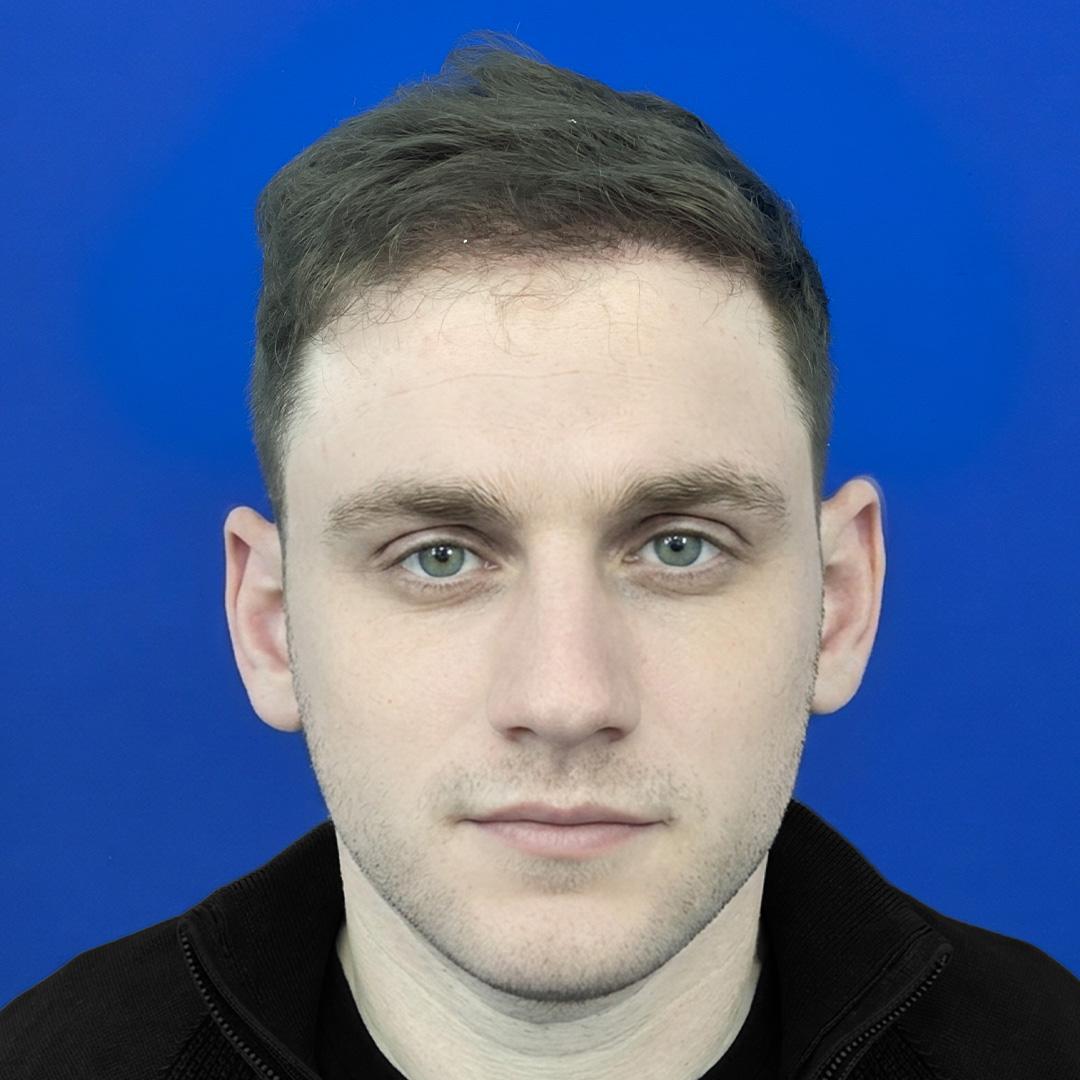
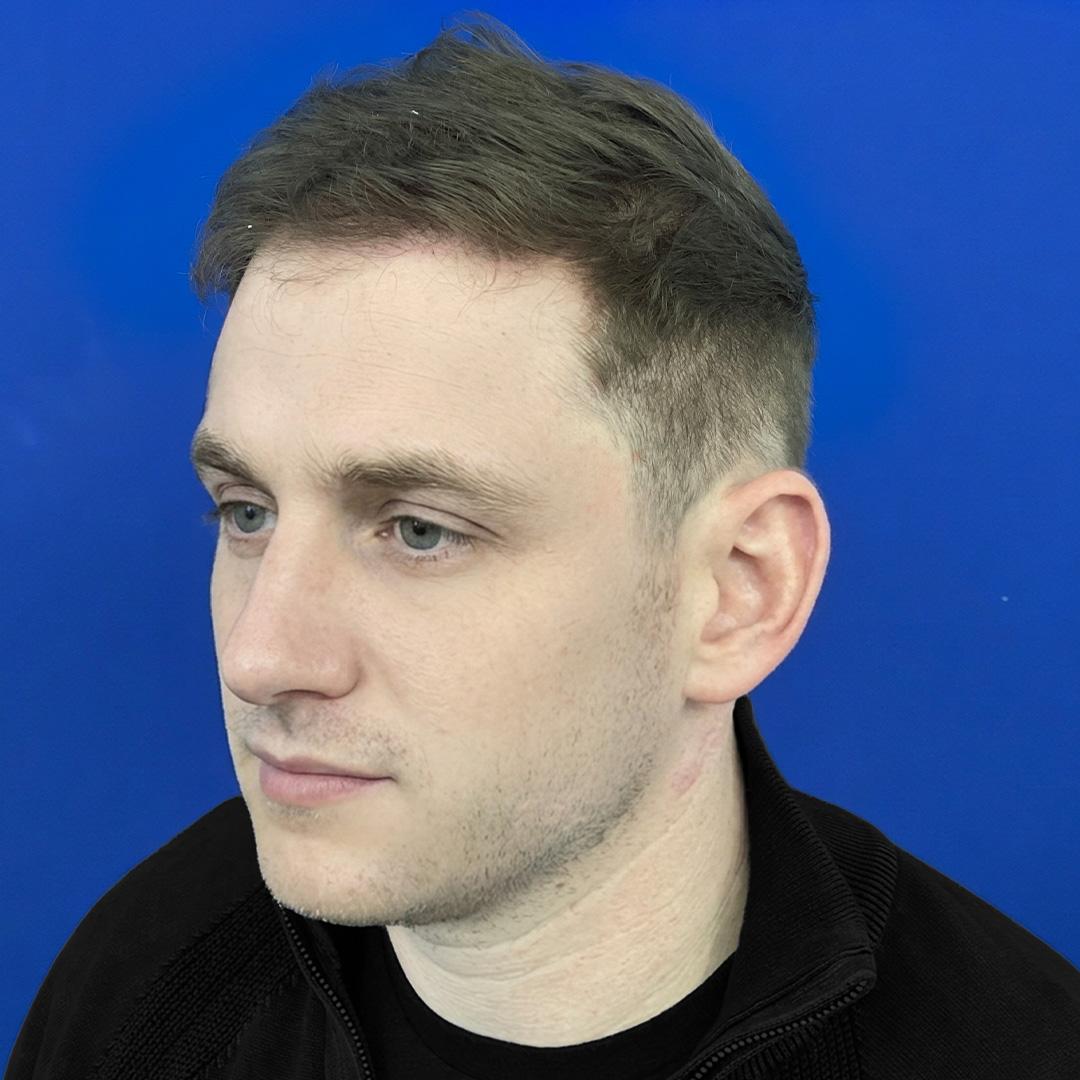
The three-timepoint set above documents a Long Hair PUE® case with a bald recipient zone. The immediately-after image shows the full-length transferred hairs already concealing the placement site — a preview of the final hairline design on the day of the procedure. The one-week image shows the concealment holding through the immediate recovery window.
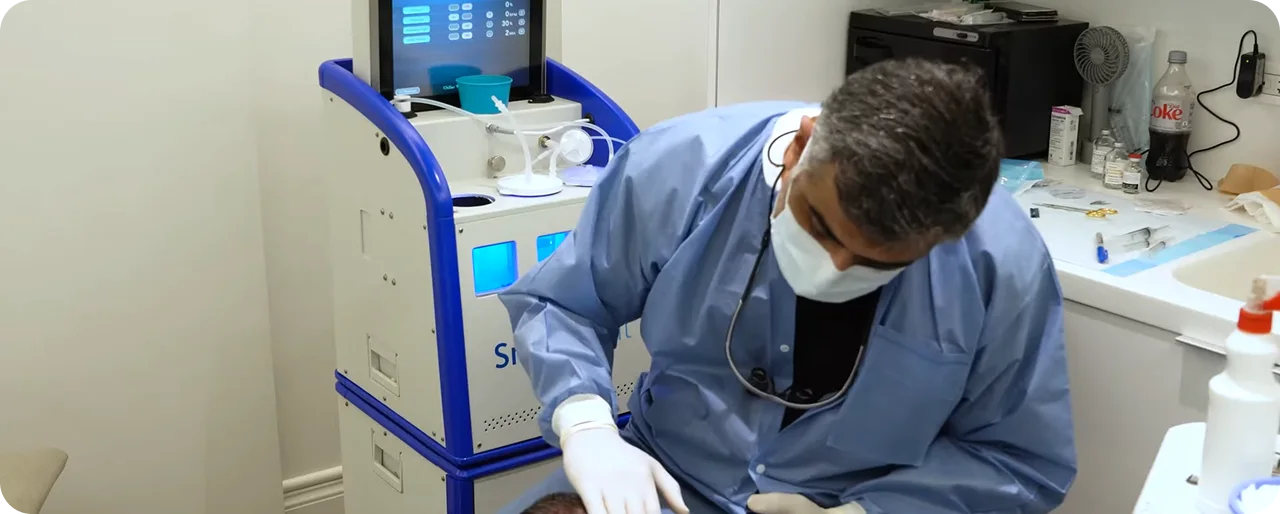
The recipient site is where the grafts are placed. In an unconcealed procedure, crusts form at each recipient site during healing. Without overlying hair coverage, those crusts are visible for one to two weeks. For hairline restoration especially, the recipient site is in an area with little existing hair coverage by definition. Recipient site visibility can exceed donor site visibility for the first two weeks post-procedure.
We never buzz the top of your head. When cut and styled appropriately before the procedure, your existing top hairs cover the transplanted grafts through the healing phase and the growth phase. That’s the primary reason we preserve the length. There are two additional benefits.
Density information. Existing hairs show us the density we need to match and where your scalp is relatively thin, medium, or thick. This determines how much density to add and where to place which graft type.
Directionality. Existing hairs reveal your natural exit angles and how you style your hair.
In all honesty, the only reason to cut the top hairs is if the team is less technically experienced at inserting grafts around existing hair. Our team is.
Instead of buzzing your top hair, we take a strategic approach to covering the new grafts with the hair you already have. Your pre-procedure haircut is designed around four variables: how you comb your hair, what length the hair needs to be cut to in order to cover the recipient site, your preferred style, and what products you use day-to-day. All of this is taken into account before surgery so that growth in the recipient area is covered immediately afterward. It’s one of the reasons we work closely with our barber Ron Edwards at Medina Barbershop, attached directly to our Chicago clinic. A concealed hair transplant verges on stylish.
When your recipient area includes truly bald zones — where no existing hair can cover the placement — Long Hair PUE® is the technique we deploy. Full-length hair transferred with the graft provides immediate recipient-site coverage and shows you your final hairline design on the day of the procedure. Only about one in every eight to ten grafts in the bald zone needs to be a Long Hair PUE® graft. The rest are standard extractions with short stubble. Together, they conceal the recipient area completely, at a 90% graft survival rate.

The four ways work as a coordinated system, not as alternatives. Most concealed hair transplants at Northwestern Hair use some combination of all four. The design decisions flow in a specific order.
We start with the hairline requirement because the hairline determines everything else. Approximately 200 grafts are needed per millimeter of hairline zone depth. The depth of the fine feathering zone (5-10 mm) depends on the contrast between your hair color and skin color.
Higher-contrast patients (dark hair, light skin) actually need less feathering. Each individual feathered hair is more visible against the contrasting skin, so deep feathering makes the hairline look weak. We keep the feathering zone shallow — closer to 5 mm — and transition to density quickly. That’s about 1,000 grafts from the perimeter, delivered via a Low Tapered Fade.
Lower-contrast patients (matched hair and skin tone) can support deeper feathering — closer to 10 mm. That’s about 2,000 grafts, requiring the same Low Tapered Fade to access enough perimeter hair.
Behind the hairline, the restoration goal shifts from feathering to density. The mid-scalp and crown need thicker multi-hair grafts, which come from the ridge — the anatomical zone above the nuchal ridge where the dense hair grows. This is the Roman Hair Shade zone.
We calculate how many density grafts we need based on your recession pattern and how much area we’re restoring. That determines how many Roman Hair Shade layers we deploy — usually two when combined with a Tapered Fade (the fade takes up scalp real estate that would otherwise support a third Roman Hair Shade layer). It also determines which Tapered Fade level fits: Low, Medium, or High.
The buzzed strips of the Roman Hair Shade have graft-count limits — you can only extract so many grafts from any single strip without over-harvesting that specific donor zone. To distribute the extraction load, we use Discreet PUE® in the unbuzzed intervening strips between the Roman Hair Shade layers. The Ring Tip lets us extract through the full-length uncut hair without transecting the shaft, adding to the total graft count without concentrating harvest in any one zone. Even distribution across the wider donor field is the mechanism. Prevention of over-harvesting is the result. Avoiding the patchy hair loss you see in no-shave FUE donor sites is the visible patient outcome.
If your existing hair covers the recipient area, we preserve that hair length and let it do the concealment work. No shaving. No cutting. Pre-procedure barbering shapes your existing hair to lay optimally over the placement zone.
If your recipient area includes bald zones — a bald hairline leading edge, bald temples, a bald crown — we deploy Long Hair PUE® in those specific zones. One in every 8-10 grafts placed in the bald zone is a full-length hair transfer. The transferred long hairs conceal the surrounding stubble grafts and preview your final result.
If you have ten days to heal, you may not need a concealed hair transplant at all. A standard FUE or No-Touch FUE will heal in that window without needing haircut concealment.
If you need to look presentable sooner, concealment techniques shape the design. Being camera-ready the day after the procedure requires one plan. A three-day return-to-work window (like our police officer case) requires a different plan. The shorter your timeline, the more the four concealment techniques become central to the procedure design.
If you want no haircut at all and a natural result, then Discreet PUE® and Long Hair PUE® are your only options. If you’re not concerned about naturality, a standard no-shave hair transplant at any Chicago clinic will be sufficient — but most people care more about Long term naturality than one week of discretion.
Both the Tapered Fade and the Roman Hair Shade can be performed with either FUE or PUE. For no-haircut cases and any procedure that requires recipient-site concealment, PUE is the only option — because Discreet PUE® and Long Hair PUE® both require the vibrational multi-phase capability that FUE cannot provide.
The pricing implications of this choice are covered in the cost section below. The clinical reasoning — why PUE preserves grafts better, why the pilosebaceous unit stays intact, why long hair transfer needs non-rotational modes — is covered in depth on our Micro PUE® page.
A concealed hair transplant at Northwestern Hair is designed around one core promise: within days, no one can tell you had a procedure. Here’s what the recovery timeline actually looks like across the immediate concealment window.
You arrive at our Chicago office with your hair at normal length. You leave with a normal-looking haircut. That’s the design goal from the start. Depending on your case, this is a Low, Medium, or High Tapered Fade, potentially with two layers of Roman Hair Shade already fully concealed by your overlying hair. The extraction sites are protected under a light dressing that also applies pressure to speed the initial healing. You walk out looking like you got a haircut, not a hair transplant.
The extraction holes in the Tapered Fade zone begin to close. Any small crusts at the recipient site are covered by your existing top hair (which was never shaved) or by the Long Hair PUE® grafts (if your bald zones required them). You continue your normal daily routine. Most patients feel comfortable being seen by close friends and family within 24-48 hours.
By day three to five, the Tapered Fade area has fully healed. The fade blends back into a normal haircut. Any post-procedure redness has dissipated. This is the window when most of our patients return to work — including patients in visible professions like our police officer case, who returned to duty at the very start of this window, on post-procedure day 3, with no one able to tell.
By day five to ten, every element of a concealed procedure is undetectable at normal social distance. The Tapered Fade is fully healed. The Roman Hair Shade has been concealed under overlying hair since the procedure itself. The Long Hair PUE® grafts continue to conceal the recipient site. Camera-ready appearances are typically comfortable by this point. Physical activity resumes normally.
Northwestern Hair never cuts hairs that we don’t need to. Almost all our procedures — concealed or unconcealed — look normal at ten days. That’s a standard procedure at Northwestern Hair. The recipient area is usually totally untouched unless it’s for styling and concealment. The donor area is only cut to the extent needed for your procedure, which is a function of your graft count and hair type. The vast majority of our patients get Medium Tapered Fades and look completely normal at ten days — no special concealment branding required.
The immediate concealment window closes around day 10. After that, your transplanted grafts enter a longer growth phase that unfolds over months. This is a separate topic — the growth timeline includes phases like shock loss and gradual regrowth that most patients want to understand in detail. We cover the full growth timeline on a dedicated page. For now, know that everything you see in the immediate concealment window represents a fully concealed procedure. The longer-term growth simply improves what’s already invisible.
Most patients wanting a concealed hair transplant in Chicago need only the Tapered Fade — a strategically designed but otherwise normal-looking tapered haircut that heals in three to five days. There is no additional charge for the Tapered Fade, at any level (Low, Medium, or High). It’s included in your standard procedure because delivering it is part of what we do anyway. Most patients receive complete hairline concealment without paying any premium for the concealment itself.
The other three techniques carry additional charges reflecting the specialized equipment and expertise required.
If you’re weighing whether to spend more on your hair transplant, we would rather see your budget go to a better extraction technology — Micro PUE® at $14 per graft, or Discreet PUE® at $21 per graft — because better extraction directly improves your long-term hairline quality. That’s a real clinical benefit.
We do not create additional charges for concealment when your case doesn’t require additional specialization. The Tapered Fade is standard. The clinical expertise to deploy it in a concealed way is what we bring to every procedure at no additional cost. Only the Roman Hair Shade — which requires specialized haircut planning with our in-clinic barber Ron Edwards at Medina Barbershop — carries a flat concealment fee.
Specific pricing for your case is provided during consultation at our Chicago office. Our full pricing framework — including the Northwestern Hair Studio program for reduced rates in exchange for content participation and other a la carte add-ons — is described on our pricing page.
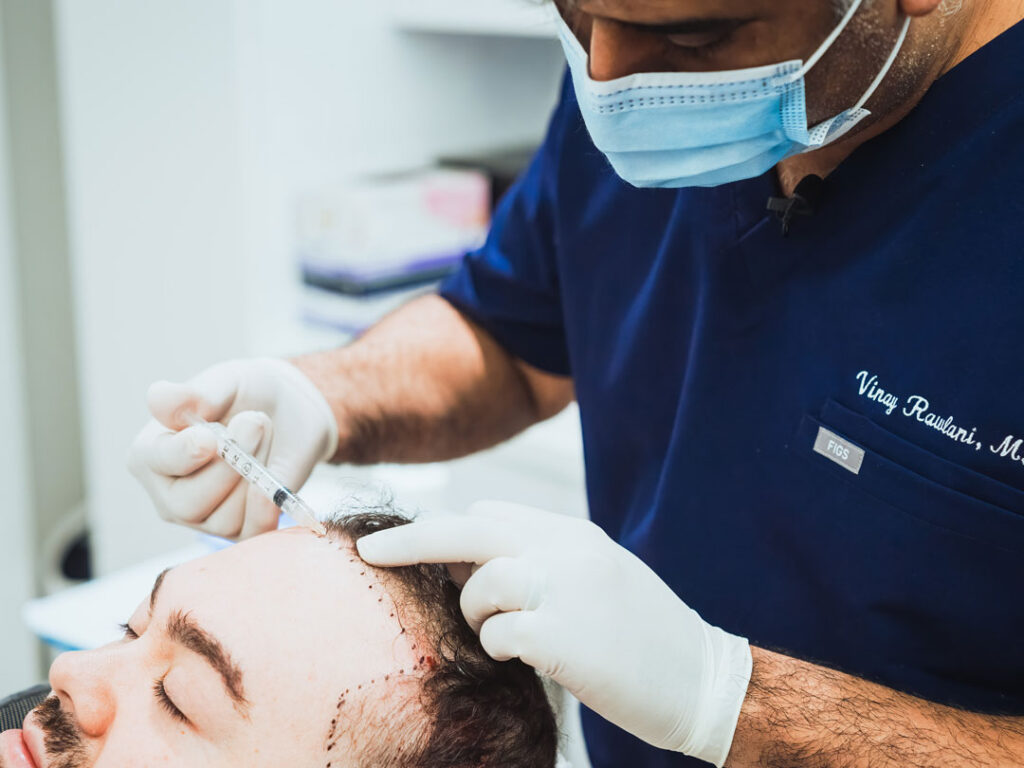
| Extraction Technology | Grafts Extracted |
|---|---|
| No-Touch FUE | $7 per graft |
| Micro PUE® | $14 per graft |
| Discreet PUE® | $21 per graft |
| Long Hair PUE® | $28 per graft |
| Haircut Technique | Grafts Extracted |
|---|---|
| Tapered Fade (Low, Medium, or High level) | No additional charge (included in standard procedure) |
| Roman Hair Shade | $2,500 flat |
Both the Tapered Fade and the Roman Hair Shade can be performed with either FUE or PUE. Because the extraction happens in a zone where hair has been cut down to the scalp, there is no rotational component tangling up long hairs. FUE works reliably in this setting, which allows for cost-effective natural concealed hair transplants at the No-Touch FUE rate of $7 per graft.
PUE is a more advanced extraction technology with specific benefits — lower per-graft trauma, preserved pilosebaceous unit, more natural-looking grown-in hair, and the specialized deployments (Discreet PUE® and Long Hair PUE®) that FUE cannot perform. For no-haircut cases or any procedure requiring recipient-site concealment, PUE is the only option. Full technical detail on the PUE® platform is on our Micro PUE® page.
If you’re weighing whether to spend more on your hair transplant, we would rather see your budget go to a better extraction technology — Micro PUE® at $14 per graft, or Discreet PUE® at $21 per graft — because better extraction directly improves your long-term hairline quality. That’s a real clinical benefit.
We do not create additional charges for concealment when your case doesn’t require additional specialization. The Tapered Fade is standard. The clinical expertise to deploy it in a concealed way is what we bring to every procedure at no additional cost. Only the Roman Hair Shade — which requires specialized haircut planning with our in-clinic barber Ron Edwards at Medina Barbershop — carries a flat concealment fee.
Specific pricing for your case is provided during consultation at our Chicago office. Our full pricing framework — including the Northwestern Hair Studio program for reduced rates in exchange for content participation and other a la carte add-ons — is described on our pricing page.
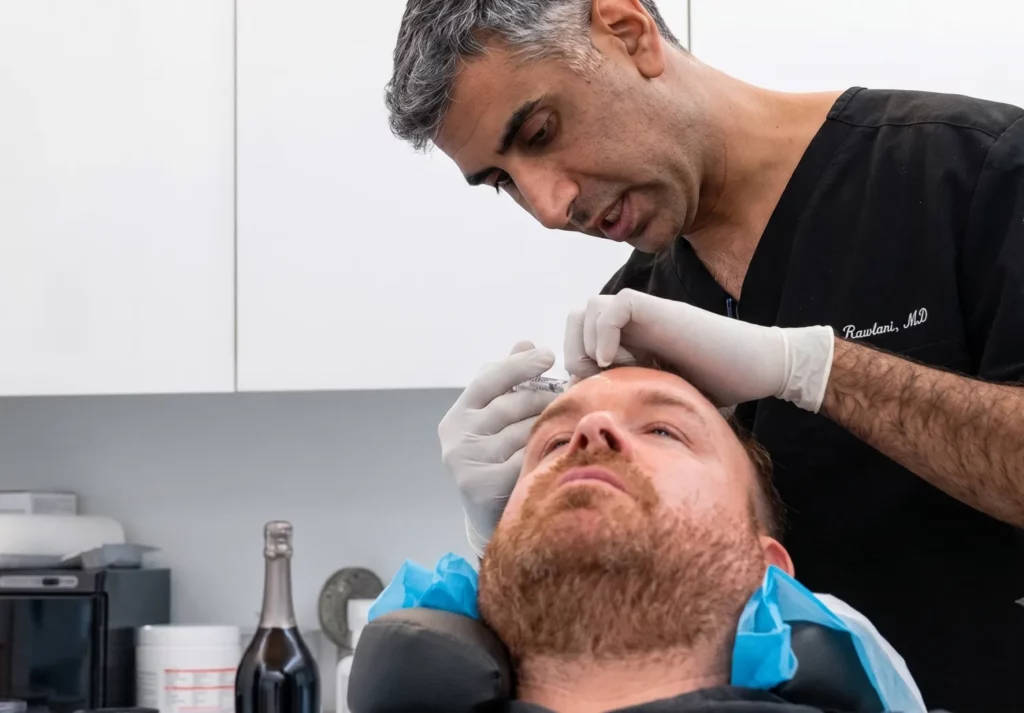
A concealed hair transplant at Northwestern Hair in Chicago uses four techniques — two haircut techniques and two extraction technologies — coordinated together to deliver natural results without anyone knowing you had a procedure.
The four techniques are the Tapered Fade (Low, Medium, or High — perimeter concealment via a normal tapered haircut fitted to your procedure size), the Roman Hair Shade (ridge concealment via strategic buzzed strips covered by overlying hair layers, developed with our in-clinic barber Ron Edwards of Medina Barbershop), Discreet PUE® (extraction technology using the Ring Tip to core through uncut hair without transection), and Long Hair PUE® (extraction technology using the Notched Tip to transfer full-length hair for recipient site concealment).
Documented cases include a 6,119-graft procedure performed with the Roman Hair Shade alone — the largest no-shave hair transplant on record. And a 4,264-graft procedure performed with all four techniques for a Chicago police officer who returned to duty on post-procedure day 3 with no one able to tell — 3.1% transection rate, complete concealment of both donor and recipient sites.
Combined, these techniques allow us to perform hair transplants that no-shave FUE cannot match: graft counts more than double the industry ceiling, transection rates comparable to shaved procedures, complete concealment of both donor and recipient sites, and a 90% graft survival rate on Long Hair PUE® deployments. All while never compromising the naturality of your long-term result — the priority that no-shave FUE fundamentally cannot deliver.
A no-shave hair transplant is a procedure in which extraction is performed without buzzing the donor site. The term describes what isn’t done (no shaving) rather than what is done. The industry standard for no-shave hair transplant uses standard FUE equipment, which produces high transection rates (50%+) and low graft count ceilings (1,500-2,000 grafts). At Northwestern Hair, we perform something different — a concealed hair transplant that uses four coordinated techniques to deliver natural results without shaving your head. This includes proprietary haircut techniques (the Tapered Fade family and the Roman Hair Shade) and specialized PUE® extraction technology (Discreet PUE® and Long Hair PUE®) that no-shave FUE cannot replicate.
Standard no-shave FUE works by extracting grafts through uncut donor hair using the same sharp cylindrical blade used in shaved FUE. The surgeon works blindly through the dense field of hairs, cores each graft, and transfers it to the recipient site — which is typically shaved or trimmed for placement. This is why standard no-shave FUE has such high transection rates and such low graft count ceilings.
A concealed hair transplant at Northwestern Hair works differently. We use two haircut techniques (the Tapered Fade in Low, Medium, or High level, and the Roman Hair Shade) to strategically expose donor zones under normal-looking hair. We use two extraction technologies (Discreet PUE® with the Ring Tip, and Long Hair PUE® with the Notched Tip) that can extract through uncut hair without transecting the hair shaft. We never cut or shave the recipient area. All four techniques combine in a single procedure to conceal both the donor and recipient sites while delivering natural, uncompromised results.
Yes. Hair transplant without shaving your head is one of our most common requests at Northwestern Hair in Chicago. Our concealed hair transplant approach allows extraction without buzzing the top of your head, using specialized haircut techniques (the Tapered Fade and the Roman Hair Shade) that conceal the donor work under a normal-looking haircut. For patients who cannot accept any haircut modification at all, we use Discreet PUE® — extraction technology that works through fully uncut donor hair with graft quality significantly better than standard no-shave FUE.
No. We never need to shave the top of the scalp, and we do not shave the recipient area either. The concealed hair transplant is performed underneath normal-looking haircuts — a Tapered Fade at the perimeter (Low, Medium, or High level fitted to your procedure) and, when needed, the Roman Hair Shade at the ridge. Every concealed procedure appears as a normal haircut on the day of the procedure and continues to blend within three to five days. We prefer to see your full hair length because it helps us plan density, directionality, and immediate recipient site coverage.
Standard no-shave FUE typically yields 1,500 to 2,000 grafts per session. The largest documented no-shave FUE procedure elsewhere was 3,000 grafts, performed in Belgium — that’s the industry ceiling. Northwestern Hair has performed the largest documented no-shave hair transplant in the world: a 6,119-graft procedure performed with the Roman Hair Shade alone. That’s more than 2x the industry ceiling. With combined techniques, our documented maximums are 5,700 grafts in a male and 3,700 grafts in a female — both procedures used the combined-technique approach.
Standard no-shave FUE is not appropriate for hairline restoration. The surgeon extracts blindly through dense hair, in donor zones that do not contain the single, fine, feathered hairs required for a natural hairline. The result is a coarse, plug-like hairline that is apparent the moment the hairs grow in. This is one of the two failure modes visible in the before-and-after images at the top of this page.
A concealed hair transplant at Northwestern Hair is the appropriate technique for hairline restoration without shaving. The Tapered Fade exposes the fine perimeter hairs that a natural hairline requires. Discreet PUE® preserves the pilosebaceous unit intact during extraction, so the transplanted hairs grow in looking like your original hair. The combination delivers a hairline result that is both concealed during healing and natural for a lifetime.
Yes, and women are particularly good candidates for the concealed hair transplant approach. Female donor density is typically more limited than male donor density, and the concealed approach permits extraction of more grafts with less trauma per graft. Northwestern Hair has performed documented concealed procedures of 3,700 grafts in a female patient in a single session — a graft count no standard no-shave FUE approach could achieve in a female patient.
It depends on your profession and how discreet you need to be. We have had patients — including a Chicago police officer with a physically active job — return to work on post-procedure day 3 with no one able to tell. Patients returning to camera the next day is possible with the right technique combination. Professional athletes have returned to training within seven days. If you have ten days or more of available downtime, you may not need concealment techniques at all — a standard FUE or No-Touch FUE will heal in that window.
Yes. The concealed hair transplant is the appropriate technique when next-day camera readiness is required. The extraction holes typically heal within three to five days, but strategic haircut design and post-procedure styling can make you presentable immediately. We recommend planning the procedure with some social downtime where possible, but next-day return is achievable for the right cases.
Concealed hair transplant cost in Chicago varies by technique. At Northwestern Hair, most concealed hair transplants use the Tapered Fade, which is included in standard No-Touch FUE pricing at no additional charge — at any level (Low, Medium, or High). The Roman Hair Shade for ridge concealment carries a flat fee. Upgraded extraction technologies (Discreet PUE®, Long Hair PUE®) are priced per graft when case specialization requires them. Full per-graft rates and technique fees are in our pricing section above. Specific pricing for your case is provided during consultation.
No-shave FUE describes only what isn’t done at the donor site (no shaving). It uses standard FUE equipment, produces high transection rates, has low graft count ceilings, and doesn’t address recipient site concealment. A concealed hair transplant is a complete approach: two haircut techniques (Tapered Fade and Roman Hair Shade), two extraction technologies (Discreet PUE® and Long Hair PUE®), and integrated recipient site concealment. It delivers natural results, high graft counts, and complete concealment — outcomes standard no-shave FUE cannot achieve.
For patients considering a no-shave hair transplant in Chicago, every consultation with Dr. Vinay begins with the six questions described above. Whether you found this page searching for no-shave hair transplant Chicago, no-shave FUE Chicago, unshaven hair transplant Chicago, shaveless FUE Chicago, UFUE Chicago, discreet hair transplant Chicago, or hair transplant without shaving Chicago — the consultation is the same conversation. We tell you honestly what your case actually needs, whether that’s a small procedure that fits within a no-shave FUE cost budget or a substantial concealed hair transplant Chicago patients travel from across the Midwest to receive. We design the procedure around your real goals: natural results and concealment. This is particularly true of no-shave FUE for professionals — patients in visible careers who cannot afford any procedure-related visibility during recovery. We never sell you a no-shave FUE, because we don’t perform them. We perform concealed hair transplants.
At Northwestern Hair, our physicians work one-on-one with patients across the entire journey — consultation, procedure, aftercare, and long-term results. Dr. Vinay Rawlani is the physician who plans your case, performs your extraction, designs your hairline, oversees your placement, and reviews your results at follow-up. That accountability is why we’re direct about outcomes. When we promise you something, we’re the ones who have to keep that promise.
If you tell us you want an undetectable hair transplant, we will get it done — but only if the result is uncompromised. We have studied and tried every technique to make this possible. We will let you know if it is.