


Why Chicago Is Becoming a Midwest Hub for Hair Restoration
For most of its history, hair restoration was a procedure that patients traveled away from the Midwest to get. New York. Los Angeles. Miami. The assumption — not entirely wrong — was that the best surgeons, the most advanced techniques, and the highest standard of care were concentrated in coastal cities with larger markets and longer histories of cosmetic medicine.
That calculus is changing.
Chicago has quietly become one of the most significant hair restoration markets in the country, and increasingly, the city is functioning as a regional destination — drawing patients not just from within the metro area but from Milwaukee, Madison, Indianapolis, South Bend, Rockford, and further. People who could theoretically find a local option are instead getting in the car or booking a short flight to Chicago.
Understanding why that’s happening tells you something important about what the best hair restoration actually looks like — and what patients have figured out they’ve been missing when they settle for what’s closest. Contact Northwestern Hair Restoration today for more information.
Chicago’s Natural Advantages as a Medical Destination

Before getting into the hair restoration market specifically, it’s worth acknowledging what Chicago brings as a medical city.
Chicago is home to some of the most respected academic medical institutions in the world — Northwestern University Feinberg School of Medicine, the University of Chicago, Rush University Medical Center, and others that have shaped generations of physicians across virtually every specialty. That institutional density creates a training environment, a culture of clinical rigor, and a concentration of specialized talent that smaller Midwest markets simply can’t replicate.
It also creates patients who have access to elite medical care across disciplines and who, as a result, carry higher expectations into any clinical encounter. Chicago patients — and the Midwest patients who travel there — aren’t just looking for someone who can perform a procedure. They’re looking for someone who can deliver a result at a standard they’ve come to expect from the city’s broader medical culture.
Hair restoration, historically a specialty that lagged behind other fields in clinical sophistication, has caught up. And in Chicago, the standard being set is drawing attention well beyond the city limits.
The Midwest’s Underserved Hair Restoration Market
To understand Chicago’s emergence as a regional hub, you have to understand the gap it’s filling.
Hair loss affects roughly half of men by age fifty and a significant percentage of women across all age groups. It’s not a niche concern — it’s one of the most common medical complaints in any general population. And yet in most Midwest cities outside Chicago, the options for surgical hair restoration range from thin to genuinely poor.
A patient in Milwaukee, for example, can find general dermatologists who offer basic treatments or refer out for surgical cases. A patient in Madison has similar constraints. South Bend, Rockford, Champaign — the further you get from a major metro, the more the market thins out, and the more patients face a choice between a local option they can’t fully trust and traveling to access something better.
For decades, travel defaulted toward the coasts — or increasingly, toward international destinations. What’s shifted is that Chicago now offers a third option: a world-class surgeon and clinical operation close enough to drive to, in a city patients already know and trust as a medical destination. When the drive from Milwaukee to Chicago is ninety minutes, and the drive from Milwaukee to a genuinely excellent local hair transplant surgeon is considerably further, the decision starts to make itself.
What Regional Patients Are Actually Looking For
The patients traveling from outside Chicago to Northwestern Hair aren’t doing it because they couldn’t find someone closer. They’re doing it because they did their research and concluded that closer wasn’t good enough.
That research process typically looks something like this: a patient in Madison or Indianapolis starts experiencing meaningful hair loss, begins looking into options, and discovers quickly that hair restoration is a field with enormous variance in quality. They look at local clinics, read reviews, examine before-and-after galleries, and reach one of two conclusions — either the local options don’t produce results they’d be confident in, or the local options don’t offer the technique they’ve read about and want.
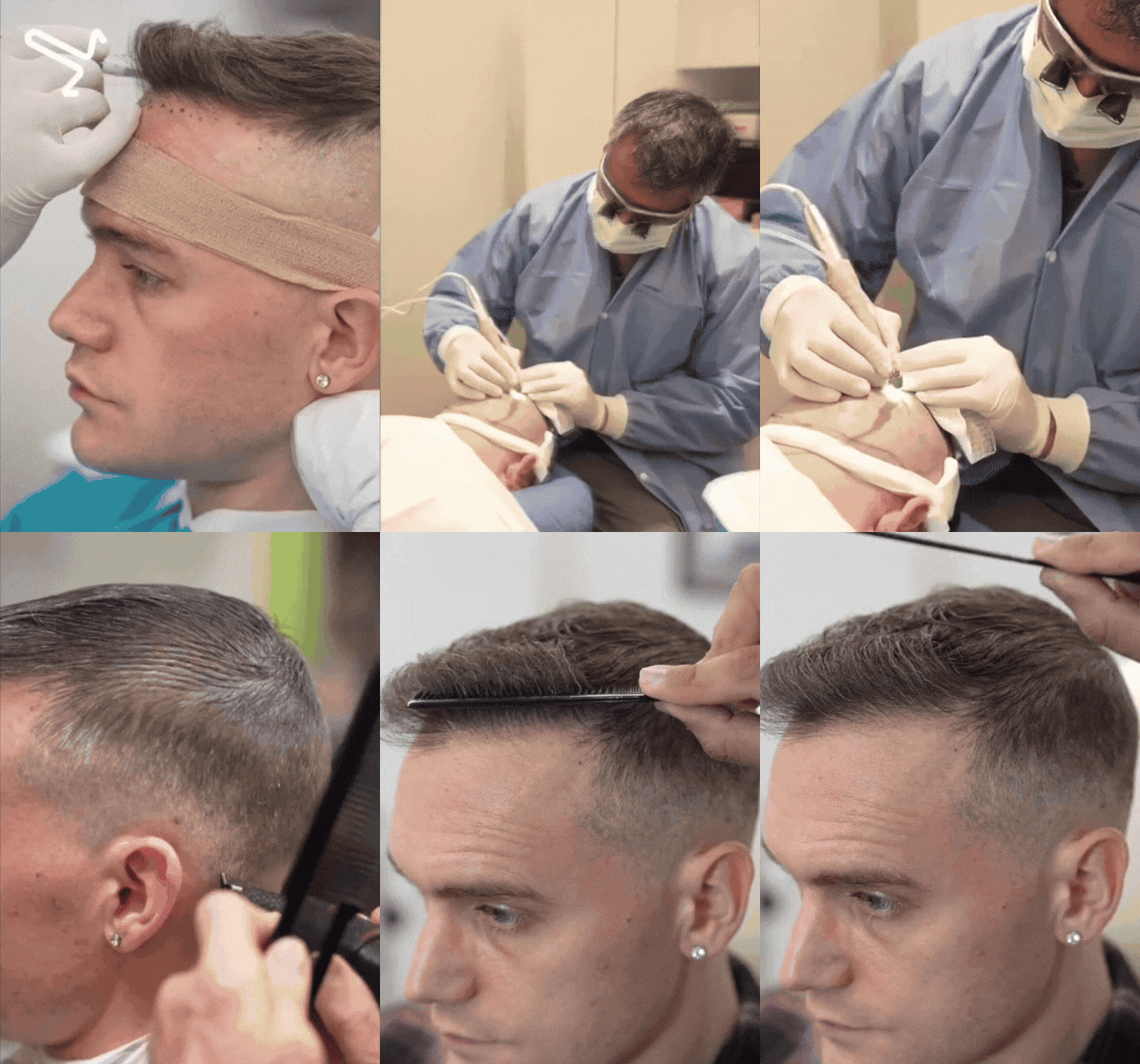
Increasingly, the technique question is central. Patients doing serious research learn about the limitations of standard FUE — the graft damage, the crushing and severing that can compromise follicles during extraction, and the way technician-led high-volume operations optimize for throughput rather than outcomes. And then they find Micro PUE — an approach that eliminates that damage — and they discover it’s being performed in Chicago. At that point, an extra hour of driving is not a meaningful barrier.
The One-Procedure-Per-Day Standard
One of the things that most distinguishes Northwestern Hair from both domestic chain operations and international high-volume clinics is a structural commitment that regional patients find genuinely striking when they encounter it: one procedure per day, with Dr. Vinay personally involved in every step.
This isn’t a boutique affectation. It’s a clinical philosophy that reflects what the procedure actually requires to be done right.
A hair transplant is not a high-volume manufacturing operation. It’s a surgical procedure involving thousands of individual follicular units, each of which needs to be extracted without damage, stored in conditions that preserve viability, and placed with precision that determines both density and natural appearance. Doing that well requires focused attention sustained over the full course of the procedure — not attention divided across three rooms and five simultaneous patients.
For a patient traveling from two states away, the one-procedure-per-day model also answers a practical question: they know the surgeon they consulted with is the surgeon leading their operation, from start to finish. There’s no bait-and-switch, no junior staff stepping in for the extraction while the attending physician manages someone else. What you see in the consultation is what you get on procedure day. That reliability matters more when you’ve driven four hours to get there.
The Travel Logistics Are Genuinely Simple
One thing that doesn’t get enough acknowledgment in discussions of traveling for medical care is how uncomplicated the logistics actually are for Midwest patients coming to Chicago.
Northwestern Hair is located at 3 E. Huron Street in Chicago’s River North neighborhood — a few blocks off Michigan Avenue, directly accessible from I-90/94 and well within reach of every major transit corridor connecting Chicago to the surrounding region.
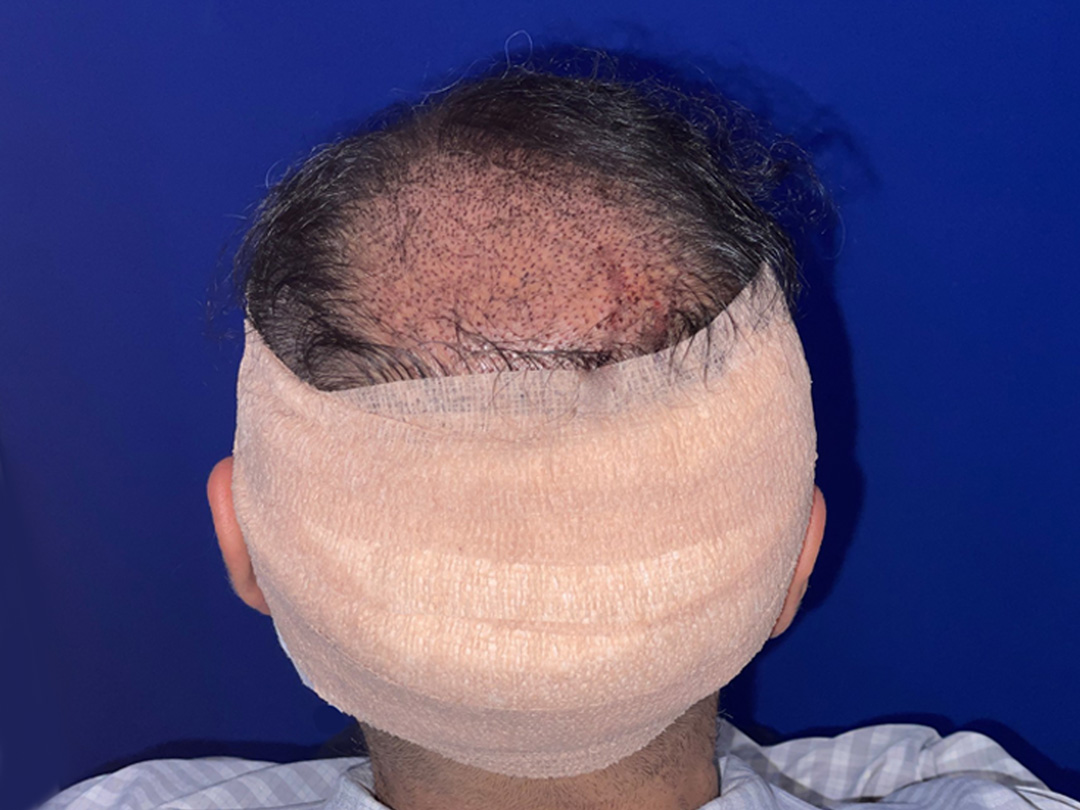
For patients from Milwaukee, Madison, Rockford, or South Bend, the trip is a straightforward drive. For patients from further afield — Indianapolis, Cincinnati, or Iowa — a single overnight stay handles the logistics entirely. The procedure itself, depending on graft count, runs somewhere between six and ten hours. Most patients are driving home or to their hotel the same evening. By day two, bandages are off. By day five, a hat covers any visible healing. Most out-of-town patients build a simple itinerary: arrive the evening before, procedure day, one recovery night, and home.
That’s a far simpler trip than Istanbul — and the surgeon you’re seeing is reachable by phone or text when you get home, not an ocean away.
What Chicago Has That Smaller Markets Can’t Replicate
Beyond the individual surgeon and clinic, Chicago offers something smaller Midwest markets structurally cannot: a full ecosystem of complementary medical expertise.
Hair loss doesn’t exist in isolation. It’s frequently connected to hormonal factors, thyroid function, nutritional deficiencies, autoimmune conditions, and dermatological issues that benefit from specialist attention alongside or instead of a surgical approach. In Chicago, the referral network that surrounds a hair restoration specialist includes endocrinologists, dermatologists, and internal medicine specialists at institutions with the depth to handle complex cases.
For patients whose hair loss has a medical component — women dealing with postpartum loss, patients with hormonal irregularities, candidates whose candidacy for surgery needs a broader medical evaluation — the Chicago ecosystem provides resources that a standalone clinic in a smaller market simply can’t connect them to. This depth doesn’t show up in a before-and-after gallery. But it’s part of what makes Chicago a hub rather than just a good clinic in a mid-sized city.
The Ethnic and Cultural Diversity Factor
 Chicago is one of the most ethnically diverse cities in the Midwest, and that diversity has shaped the clinical experience of its hair restoration surgeons in ways that matter for patients across the region.
Hair type varies significantly across ethnicities. Asian hair is typically thicker in diameter and grows more straight than Caucasian hair, requiring different extraction angles and hairline design considerations. African American hair has a naturally curved follicle structure that increases transection risk during extraction if the surgeon isn’t specifically trained for it. Hispanic hair presents its own texture and growth patterns. Each requires not just technical awareness but real accumulated experience with cases that reflect that diversity.
A surgeon in a predominantly homogeneous, smaller market may be technically proficient but have limited exposure to the range of hair types they’ll encounter. A Chicago surgeon with a genuinely diverse patient base develops the clinical fluency to handle that range with confidence — which matters both for patients from Chicago itself and for the broader Midwest population traveling in for care.
The Reputation Compound Effect
Something interesting happens when a city develops genuine excellence in a specialty: reputation builds on itself.
Patients who traveled from Milwaukee got excellent results, and told their friends to create the next wave of Milwaukee patients. Online reviews, forums, and social media amplify that signal well beyond word of mouth. Hair restoration is a category where patients research extensively before committing — and in that research environment, a clinic with a growing body of authentic results from geographically diverse patients develops a gravitational pull that extends its reach well beyond its zip code.
Northwestern Hair’s patient base reflects this pattern. Reviews and results from patients across the Midwest have built a body of evidence that regional patients encounter naturally in their research process. When someone in Indianapolis is reading about hair restoration late at night and keeps finding the same Chicago clinic mentioned in the same breath as the results they’re looking for, the distance stops feeling like a barrier.
What This Means for Midwest Patients Considering Their Options
If you’re in the Midwest and you’ve been holding off on addressing hair loss because your local options don’t inspire confidence, the point of this piece is simple: you have a legitimate regional option that doesn’t require an international flight, an unfamiliar country, or a compromise on the standard of care you’re looking for.
Chicago is close. The logistics are manageable. The standard of care available at Northwestern Hair is not a watered-down version of what you’d find at the top coastal clinics — it’s setting its own standard that patients from across the region have found worth the drive.
The consultation is free. The conversation is honest. And if you’ve been waiting for a reason to take the next step, geography is no longer a compelling reason to wait.
Traveling to Chicago from Milwaukee, Madison, South Bend, or further? Northwestern Hair regularly works with out-of-town patients and can walk you through exactly what the trip involves. Book a consultation with Dr. Vinay and find out what’s possible.