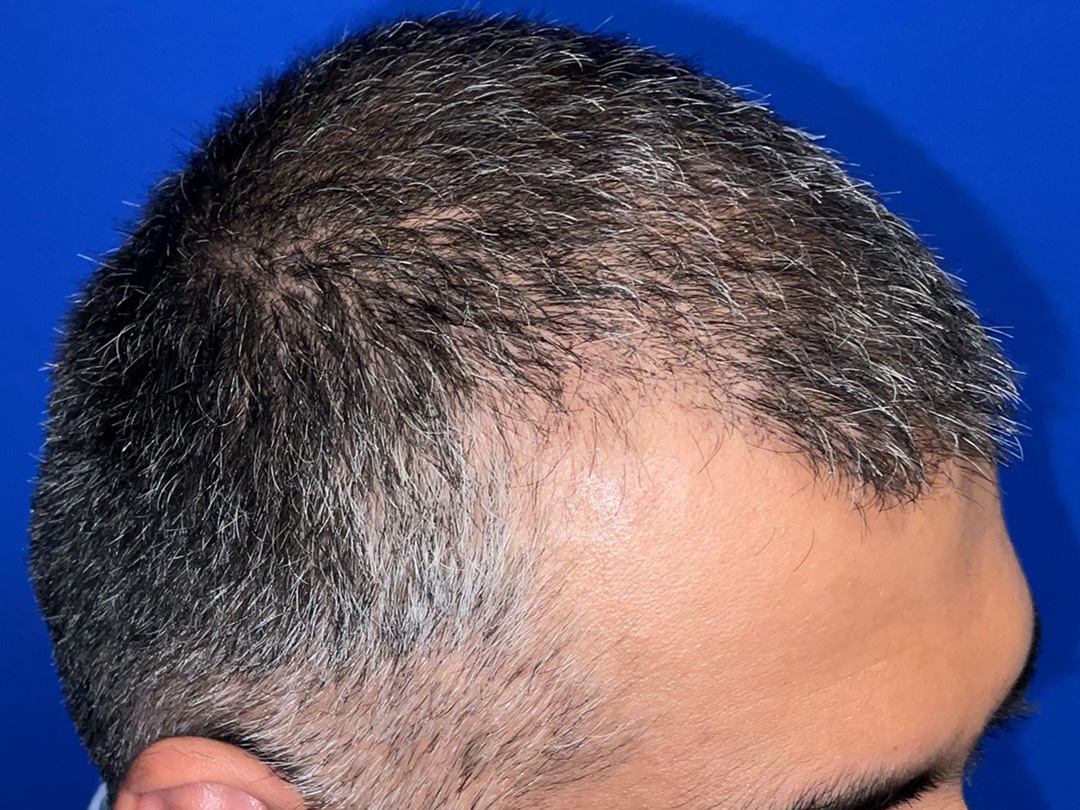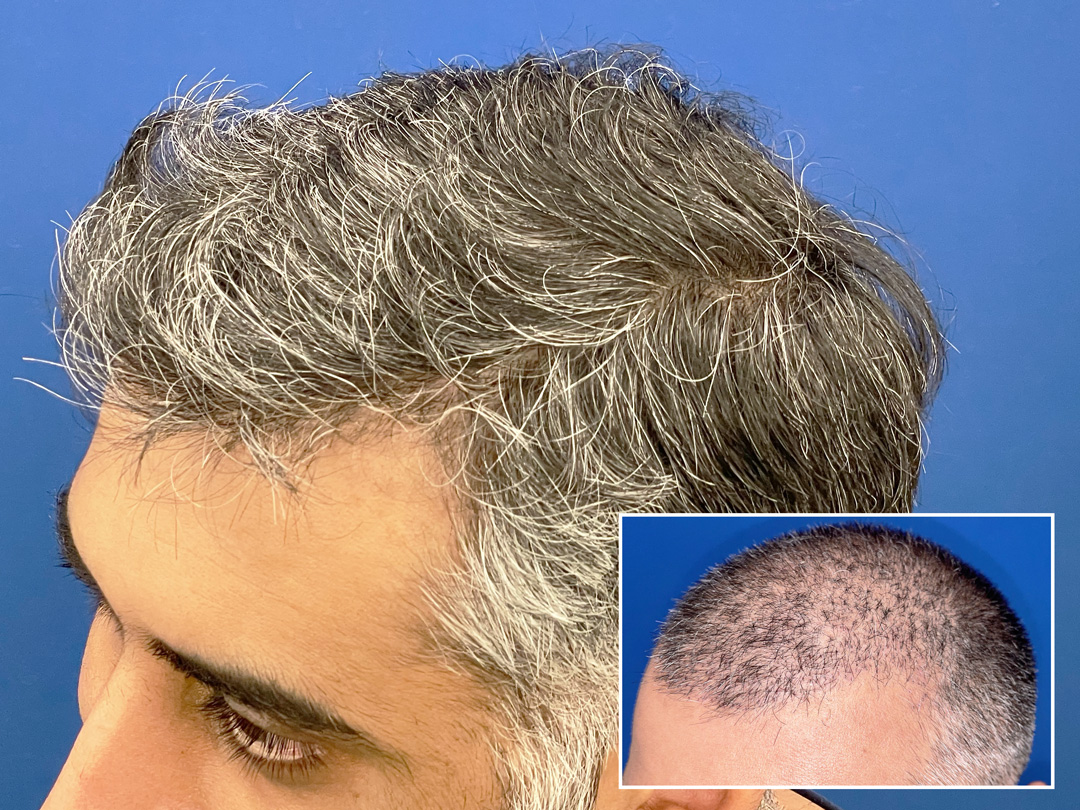





The short answer is: often, yes. Not in every case, and not without a realistic understanding of what non-surgical treatment can and can’t achieve — but for patients who catch hair loss early and commit to a consistent protocol, modern non-surgical options can slow or stop progression, improve density, and in some cases meaningfully restore hair that has thinned but not yet been permanently lost.
What those options are, how they work, and which combination makes sense for a given patient depends on what’s actually driving the loss. Here’s the full picture.
Why Early Intervention Changes the Outcome
 The most common form of hair loss — androgenetic alopecia, or pattern hair loss — is driven by genetic sensitivity to DHT, a hormone that gradually miniaturizes hair follicles over time. The process is slow, which is both why it often goes unnoticed in the early stages and why early treatment is so much more effective than late treatment.
A follicle that is miniaturizing can often be supported and stabilized. A follicle that has been dormant long enough to lose its productive capacity is significantly harder to restore. The window for non-surgical intervention is real, and it closes as the loss progresses. That’s the core reason early diagnosis and a personalized treatment plan matter as much as the treatments themselves.
FDA-Approved Medical Treatments
Minoxidil
 Minoxidil is one of the most widely used and well-evidenced treatments in hair restoration. It works by increasing blood flow to follicles and extending the active growth phase of the hair cycle, which supports the retention and thickening of existing hair. It’s FDA-approved, available in both topical and low-dose oral forms, and effective for both men and women across a range of thinning patterns.
Results typically become visible between three and six months of consistent use. The important caveat is that minoxidil is a maintenance treatment — it supports the follicle while it’s being used, and stopping treatment generally leads to the resumption of shedding. It works best as part of a long-term strategy, not a short-term intervention.
Finasteride
Finasteride works differently from minoxidil. Rather than stimulating the follicle directly, it addresses the hormonal environment by blocking the enzyme that converts testosterone to DHT — the primary driver of follicle miniaturization in androgenetic alopecia. For men with pattern hair loss, it can be highly effective at slowing or halting progression, and many patients see some degree of regrowth. It’s typically not prescribed for women of childbearing age due to potential hormonal effects, though it may be appropriate in certain postmenopausal cases. Finasteride is most effective when started before significant loss has occurred and is often used in combination with other treatments.
Regenerative Treatments
Autologous Cellular Serum (ACS)
ACS is the most advanced regenerative option we offer, and it represents a meaningful step beyond what earlier growth factor therapies could achieve. The treatment uses a concentrated serum derived from the patient’s own blood — processed to isolate and amplify the cellular components most relevant to follicle health — and delivers it directly to the scalp. The mechanism targets follicle metabolism, reduces the inflammatory environment that accelerates miniaturization, and supports the scalp conditions in which hair growth is most likely to be sustained.
For patients with early to moderate thinning, ACS can produce meaningful improvements in density and hair quality. For surgical patients, it’s an important part of the post-procedure protocol, supporting graft survival and the health of native hair around the transplant. It’s also the centerpiece of our non-surgical program for patients who aren’t candidates for surgery or who prefer to exhaust regenerative options first.
Microneedling
Microneedling creates precisely controlled micro-injuries in the scalp surface that trigger the body’s healing response — stimulating collagen production, improving blood flow, and significantly enhancing the absorption of topical treatments applied afterward. When used alongside ACS or topical minoxidil, microneedling acts as an amplifier: the same treatment delivered to a scalp that has been prepared with microneedling tends to produce better results than treatment alone. Emerging research supports its use as a standalone stimulator of dormant follicles, though its primary role in most protocols is as an enhancement to other therapies.
Low-Level Laser Therapy (LLLT)
LLLT uses specific red light wavelengths to stimulate follicle activity at the cellular level, improving mitochondrial function in the follicle and supporting the growth phase. It’s drug-free, painless, and well-tolerated for long-term use — making it a practical maintenance option that can be used at home with FDA-cleared devices. The evidence base supports its effectiveness for slowing thinning and modestly improving density, particularly when used alongside medical therapy. It’s rarely the most powerful tool in a protocol, but it’s a consistent contributor and adds up over time.
When Hair Loss Isn’t Genetic
Not all hair loss is androgenetic. Hormonal imbalances, thyroid disorders, elevated cortisol from chronic stress, nutritional deficiencies, postpartum changes, and certain medications can all produce hair loss that looks similar to pattern loss but has a different driver — and responds to different treatment.
This is why a medical evaluation matters before committing to a treatment protocol. Treating DHT-driven loss in a patient whose thinning is actually caused by thyroid dysfunction doesn’t address the root cause, and results will reflect that. A proper evaluation ensures the treatment is matched to what’s actually happening, not just to what it looks like.
The Role of Lifestyle
Medical treatment is the foundation. Lifestyle is what either supports or undermines it. Chronic stress elevates cortisol, which has a documented negative effect on the hair growth cycle. Poor nutrition — particularly inadequate protein, iron, or certain micronutrients — can contribute to diffuse thinning independently of genetic factors. Poor sleep disrupts the hormonal environment that governs hair growth. None of these factors alone will cause pattern hair loss in someone not genetically predisposed, but they can accelerate progression in someone who is, and they can blunt the results of treatment in ways that are easy to miss if they’re not part of the conversation.
When Non-Surgical Treatment Is Most Effective
Non-surgical treatment works best when hair loss is recent, follicles are still active and capable of responding, and the patient is willing to commit to a consistent long-term protocol. It’s also the right foundation for patients who have had a transplant and want to protect the native hair around the surgical area — which continues to be subject to progression regardless of what the transplanted hair does.
The patients who get the most out of non-surgical treatment are the ones who start early, use it consistently, and approach it as a long-term strategy rather than a short-term fix.
When Surgery Becomes the Right Conversation
If follicles in the affected areas have permanently stopped producing hair, medical therapy alone won’t restore them. That’s the point at which transplantation becomes the most effective path forward — relocating DHT-resistant donor follicles into areas where the native follicles are no longer viable. Even then, non-surgical treatment remains part of the plan: protecting the surrounding native hair that wasn’t transplanted is what determines how the result holds up over the next decade.
Surgery and non-surgical treatment aren’t competing options. For most patients with meaningful hair loss, they’re different phases of the same long-term strategy.
Schedule a Consultation at Northwestern Hair Restoration
If you’re experiencing hair loss and want to understand what’s driving it, what options are available, and what a realistic non-surgical protocol looks like for your specific case — a consultation with Dr. Vinay Rawlani is where that conversation starts. We’ll evaluate your hair loss pattern, assess follicle activity, and build a treatment plan around what your hair actually needs, not a standard protocol.
In-person evaluations are available at our Chicago clinic. Virtual consultations are available for patients anywhere.
→ Book your consultation today.