
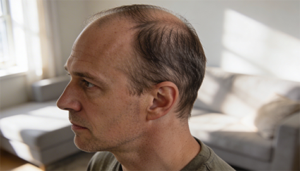
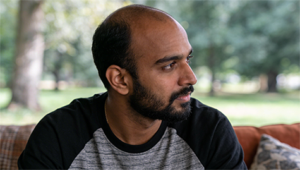
It’s often the very first question patients ask—not about pain, not about graft numbers, but something far more immediate.
“Do I need to shave my head?”
That concern makes sense. For many people, the idea of showing up to work with a buzz cut feels more disruptive than the procedure itself. Spending a day in a surgical setting is manageable. Explaining a suddenly shaved head on Monday morning can feel like a bigger hurdle.
So, do you have to shave my head for a hair transplant? The honest answer is that it depends—both on the technique used and how your individual case is approached. At Northwestern Hair Restoration, many patients complete their procedure without shaving their heads at all.
The key lies in selecting the right method and tailoring the plan to your lifestyle, hair characteristics, and goals. Below, we explain how non-shaven and partially shaved options work—and how to determine which approach makes the most sense for you. Contact us today for more information.
Why Traditional Hair Transplants Require Shaving
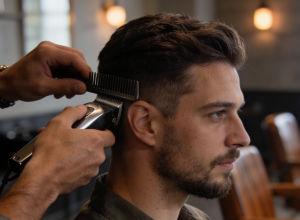 In standard FUE (Follicular Unit Extraction), the extraction tool — a cylindrical punch — has to travel down the length of each hair shaft before reaching the follicle. When hair is long, this creates real problems. The strands obstruct visibility of follicle angles, increase the risk of transection, and slow the entire procedure down.
The practical solution most clinics land on: shave everything. The donor area, the recipient area, and sometimes the entire scalp. It gives surgeons maximum visibility and efficiency, especially for high-graft sessions.
That’s the standard. It’s not the only option.
Do You Have To Shave The Top Of Your Head?
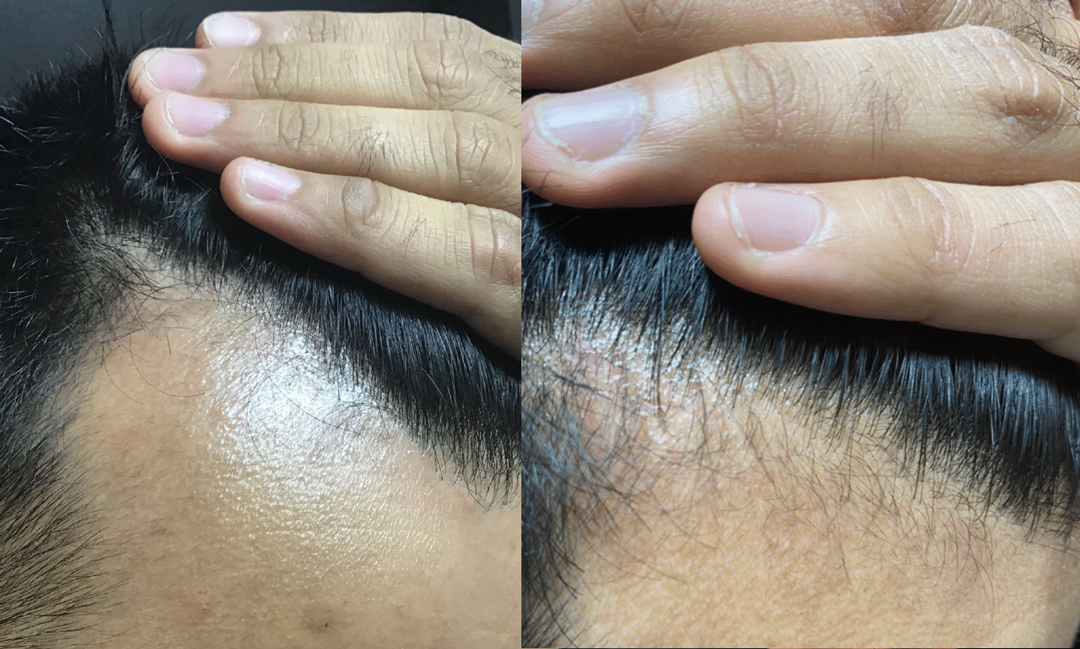
No. At Northwestern Hair Restoration, we don’t shave the recipient area — the top and front of the scalp where new hair is placed. Your existing hair stays intact, which does a lot of work concealing early healing. The real question is how we handle the donor area in the back, and that’s where technique makes all the difference.
Can You Get A Hair Transplant Without A Buzz Cut?
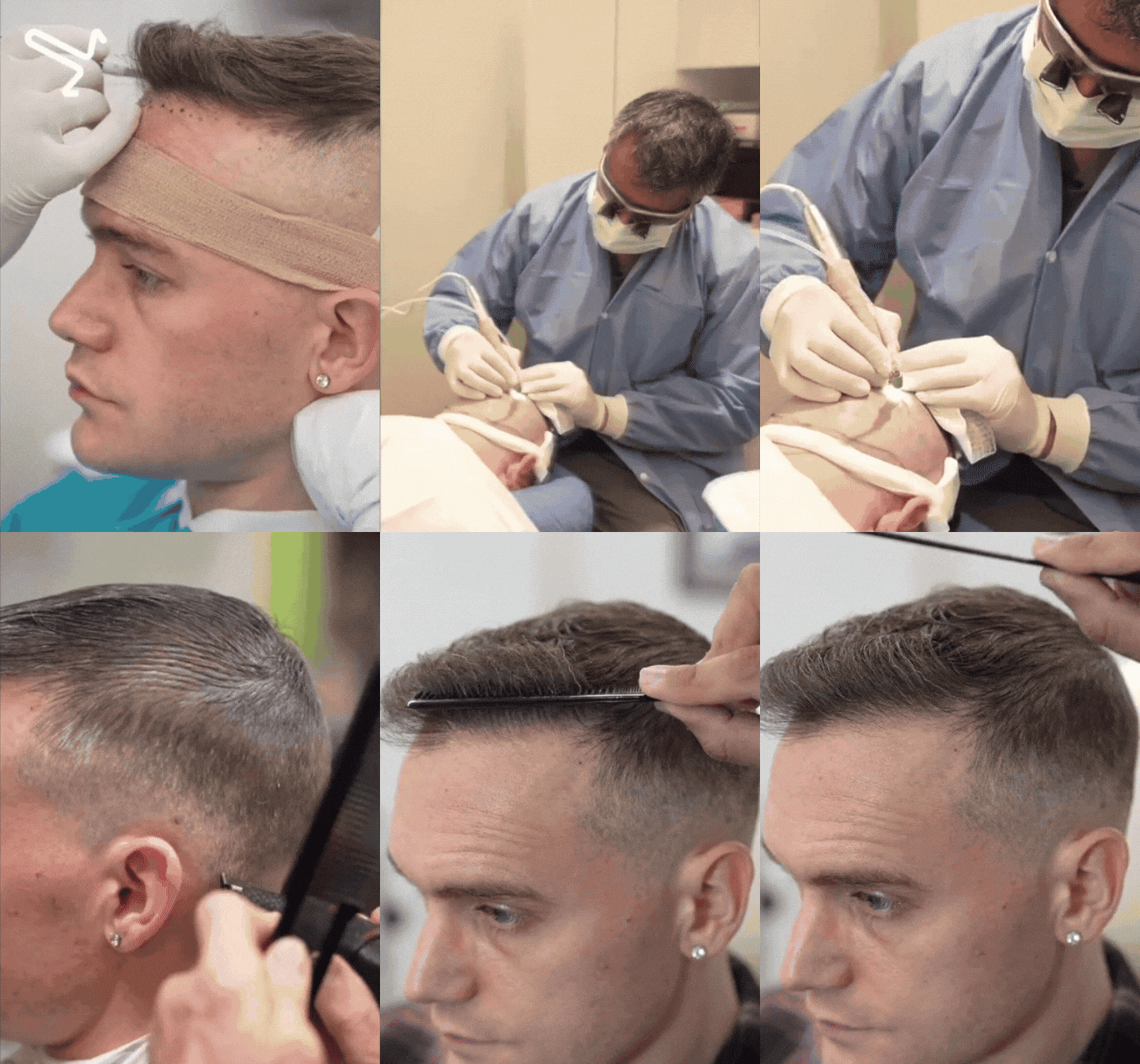
Yes — in many cases, completely. We perform no-shave hair transplants using our Micro PUE technique. Instead of a standard punch that slides over the hair shaft, we use a specialized micro blade that cups around each follicle and gently oscillates it free. The follicle comes out with the surrounding protective tissue intact. Because the tool doesn’t need to travel down the hair shaft, we can work between existing hairs — no buzzing required.
For the right candidate, you can come in on a Friday and be back in a public-facing role on Monday with nothing visible. That’s not marketing language. That’s the result we’re designing toward.
What’s The Trade-Off?
I’ll be direct: working between existing hairs takes longer and limits how many grafts we can harvest in a single session. Precision becomes even more critical when we’re operating without the visibility that shaving provides.
For smaller sessions — hairline refinement, early-stage thinning, targeted density work — the no-shave approach works extremely well. For cases requiring 2,500–3,000+ grafts, some level of trimming is usually necessary to achieve the density you’re after.
That’s not a failure of the technique. It’s a trade-off between discretion and graft count, and it’s one worth thinking through before your procedure. We’ll walk you through it, honestly.
Discreet Shaving Options (When You Need More Grafts)
If your case calls for a higher graft count but a full buzz cut isn’t an option, we have approaches that get you there without making the procedure obvious.
Hidden Strip Trimming
Instead of shaving the entire donor area, we shave narrow horizontal strips and extract grafts from those sections. The surrounding hair falls naturally over them. Once it lies flat, the trimmed areas are virtually undetectable. This approach works especially well for women, men with longer styles, and professionals who need a fast return to public life.
Strategic “Tic-Tac-Toe” Extraction
This is the most meticulous approach we offer. We part the hair, identify target follicles, trim only specific hairs, and extract grafts from between existing strands. It’s time-intensive and limits total graft count — but it provides one of the most discreet harvesting methods available. The name sounds casual. The execution is anything but.
How This Compares To FUT Strip Surgery
Traditional FUT involves removing a strip of hair-bearing scalp from the donor area and closing the site with sutures. It can yield a large number of grafts, but it leaves a linear scar, involves a longer recovery, and is a fundamentally more invasive procedure.
Micro PUE avoids all of that. No strip, no sutures, no linear scar. For patients who want to keep their options open — shorter hairstyles, different looks down the road — that matters.
Does Shaving Affect Your Results?
No. Shaving is about surgical access, not outcome. Hair growth depends on graft quality, extraction technique, implantation angle, and the surgeon’s skill. Whether your donor hair was one inch long or four doesn’t change what happens after the follicle is placed. The result is determined by what we do inside the skin, not what we do to the surface.
Who Is A Good Candidate For A No-Shave Hair Transplant?
 The patients who tend to be best suited for our no-shave approach are those who need a smaller session — hairline refinement, early thinning, targeted density — and who have longer hair available to provide natural coverage during healing. Public-facing professionals, people who aren’t ready to explain a buzz cut, anyone for whom discretion isn’t optional.
If your case calls for a larger session, we’ll have an honest conversation about your options. In most cases, there’s a way to get the result you’re after while keeping visible signs of surgery to a minimum. It requires more planning. That’s what the consultation is for.
What To Expect During Your Procedure
Regardless of the shaving method, the core process is the same. Local anesthesia keeps you comfortable throughout. Follicles are individually extracted from the donor area and prepared under magnification. Recipient sites are created with attention to angle, direction, and density — designed to look natural now and age well over time. Grafts are placed with precision.
Most procedures take several hours, depending on graft count. Recovery is typically fast, with minimal disruption to daily life.
So… Do You Need To Shave Your Head?
In modern hair restoration, a full buzz cut is no longer the default.
Some trimming may make sense depending on your graft goals. But advanced Micro PUE allows many patients to skip it entirely. The right approach comes down to balancing graft count, discretion, and what you want your result to look like in ten years — not just next month.
That’s exactly what your consultation is designed to answer.
Schedule A Consultation At Northwestern Hair Restoration
If concerns about whether you need to shave my head for a hair transplant are holding you back, a consultation can bring clarity. We’ll evaluate your hair loss pattern, explain every available option—including no-shave and minimal-shave techniques—and design a plan that fits your lifestyle as much as it fits your hairline.
Northwestern Hair Restoration is located in Chicago’s River North neighborhood. Virtual consultations are available for patients outside the area.