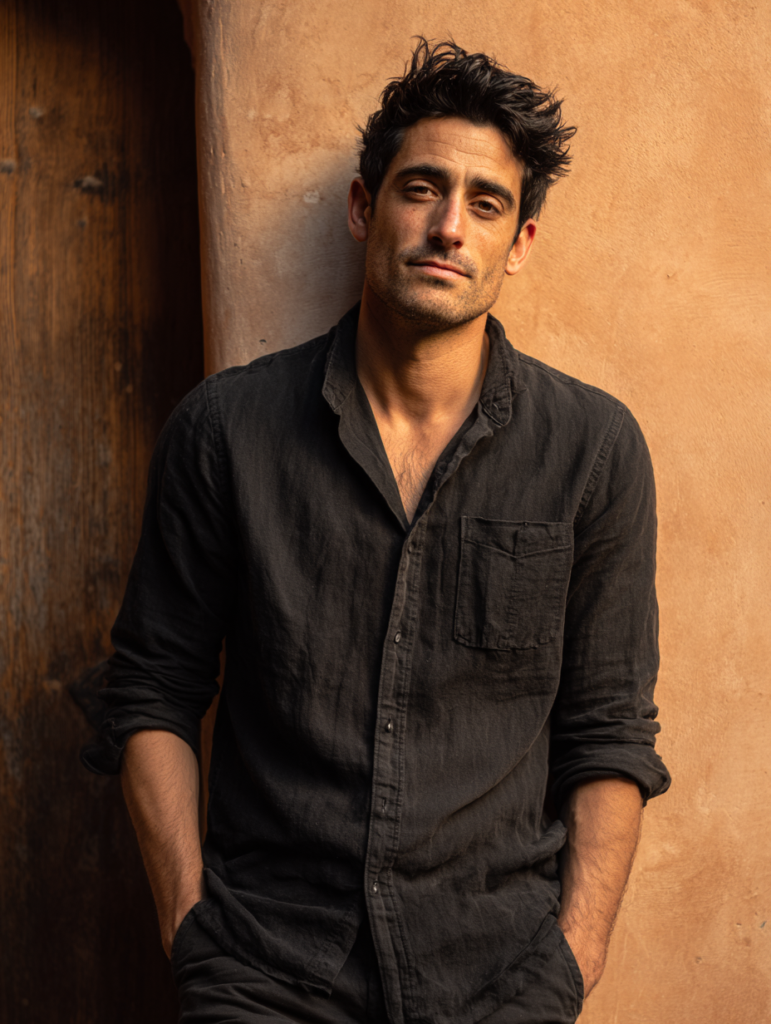
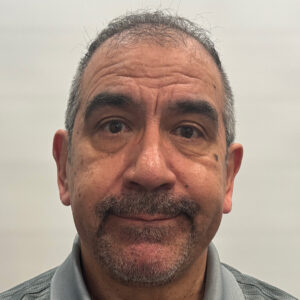
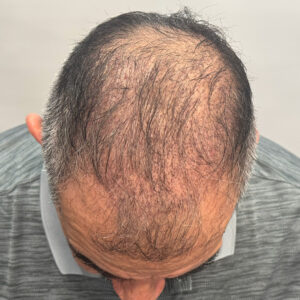
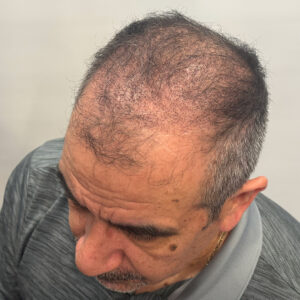
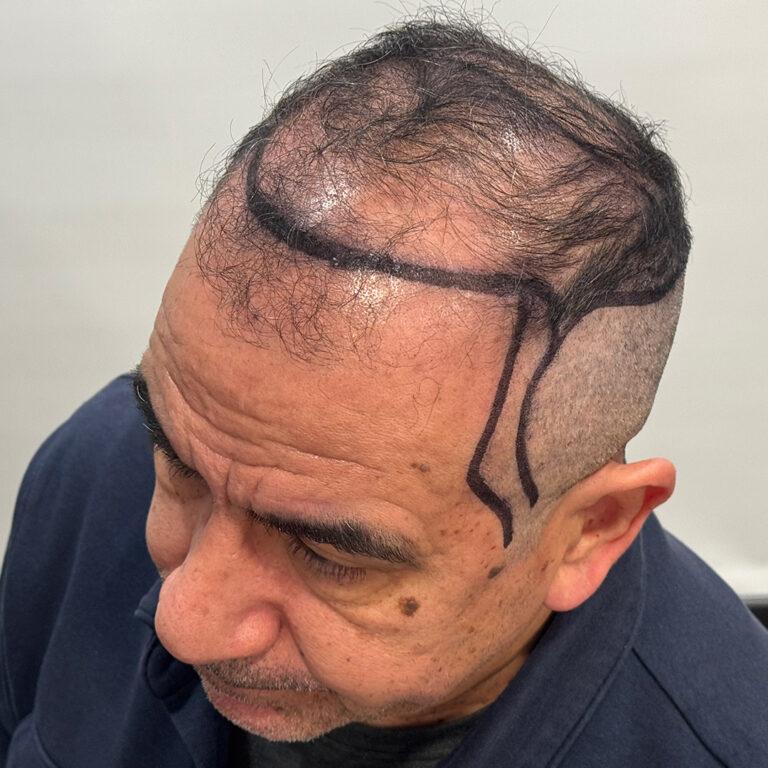
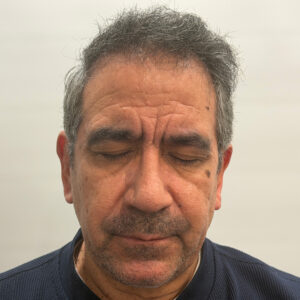
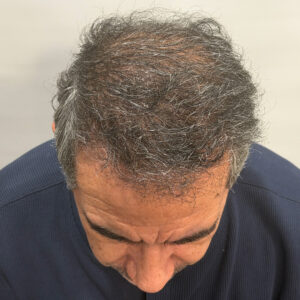
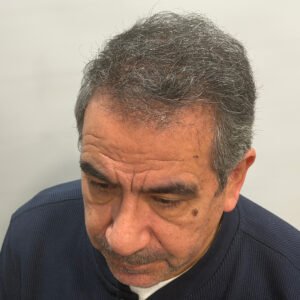
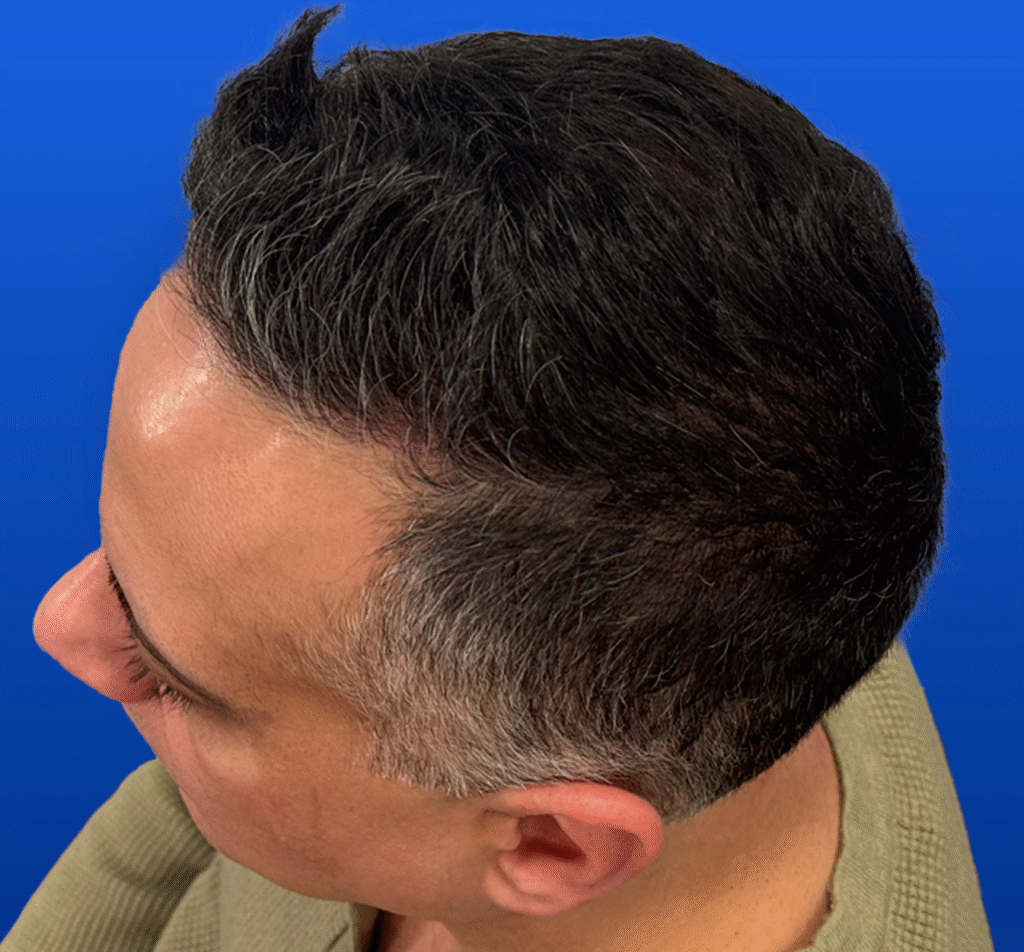
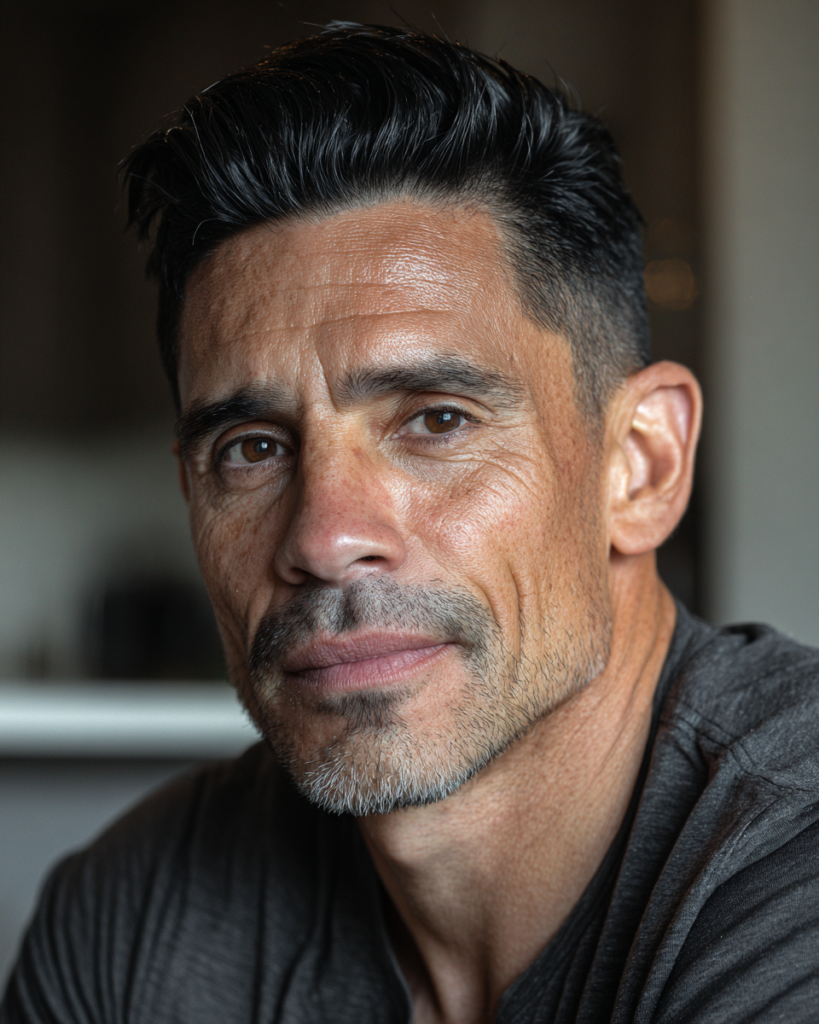
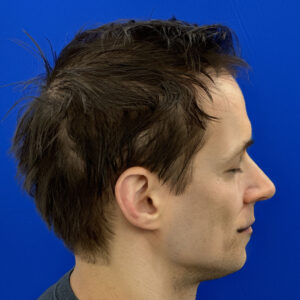
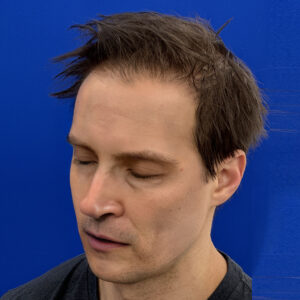
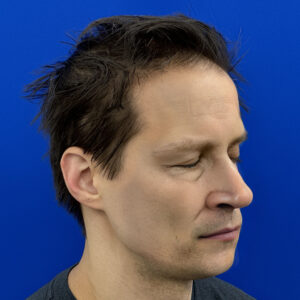
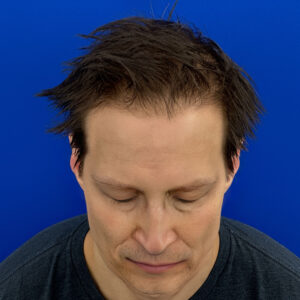
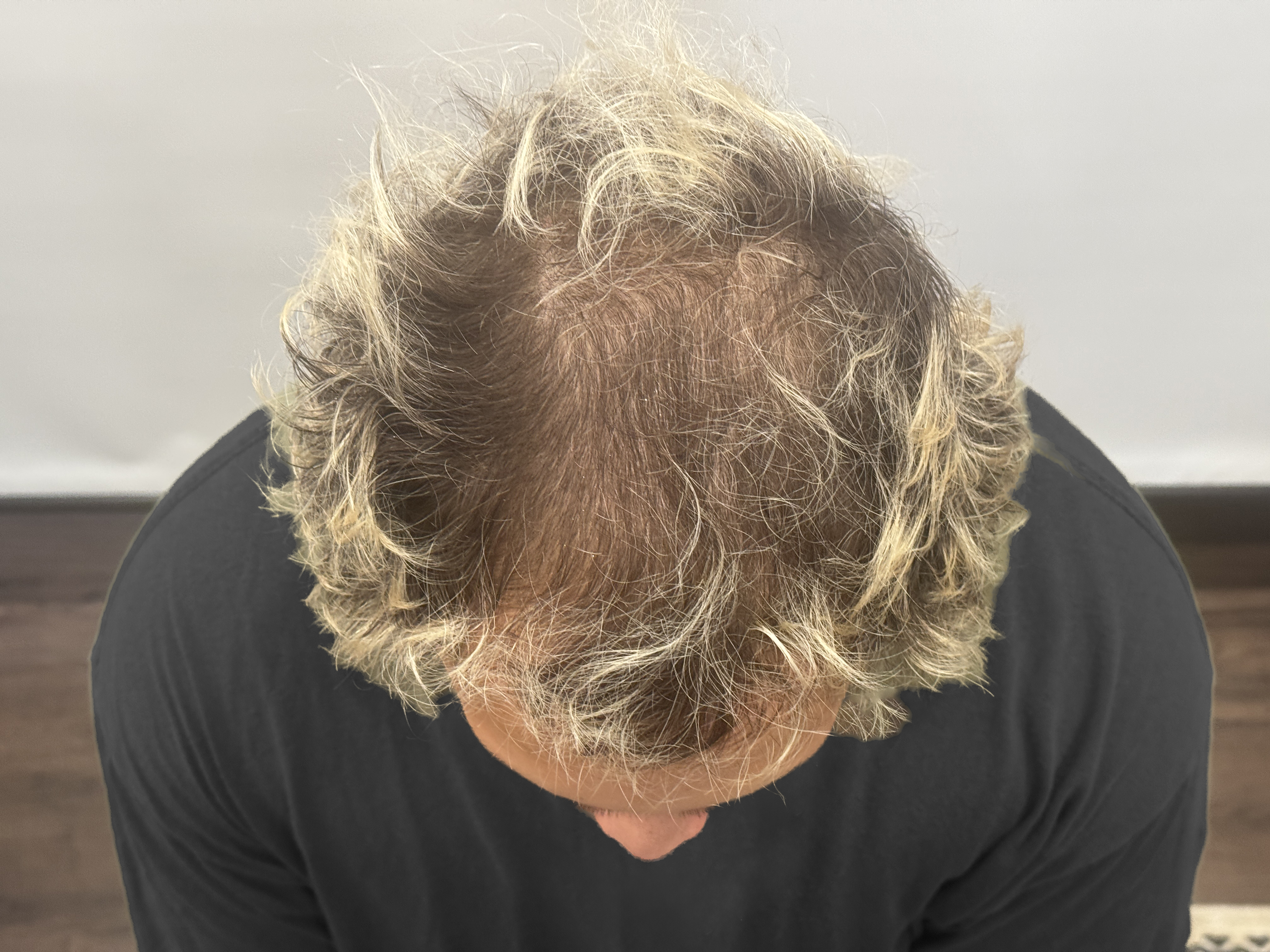
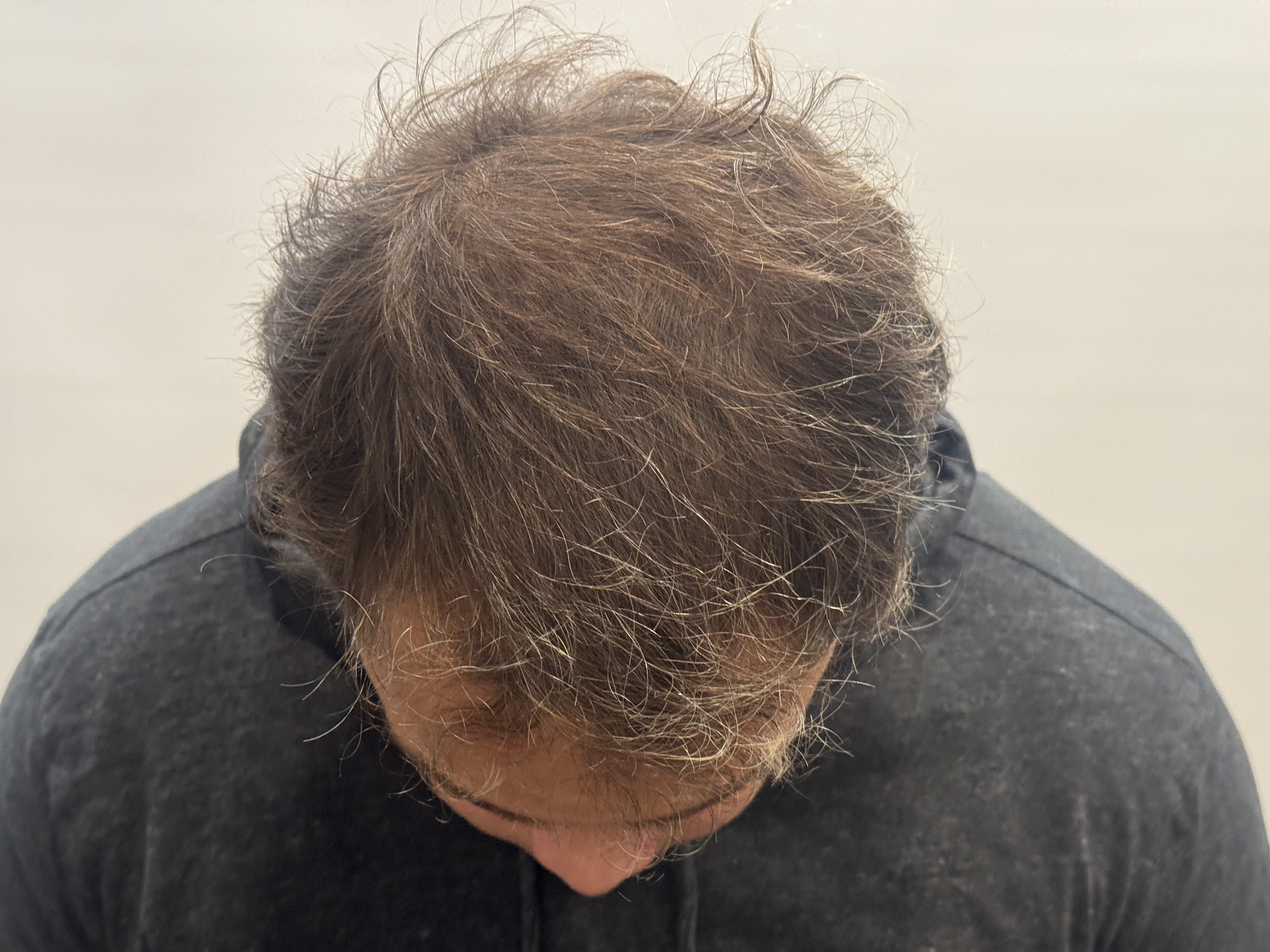
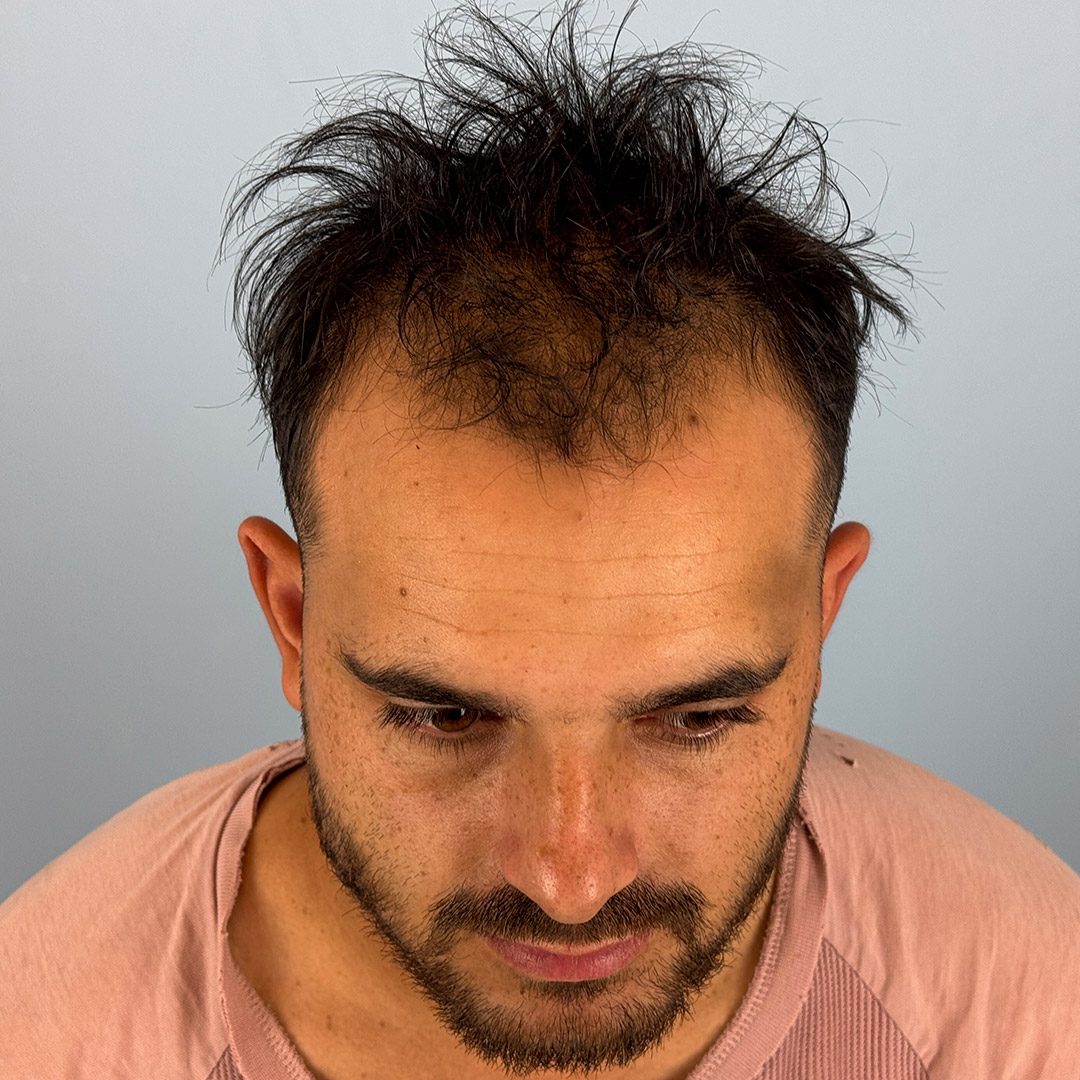
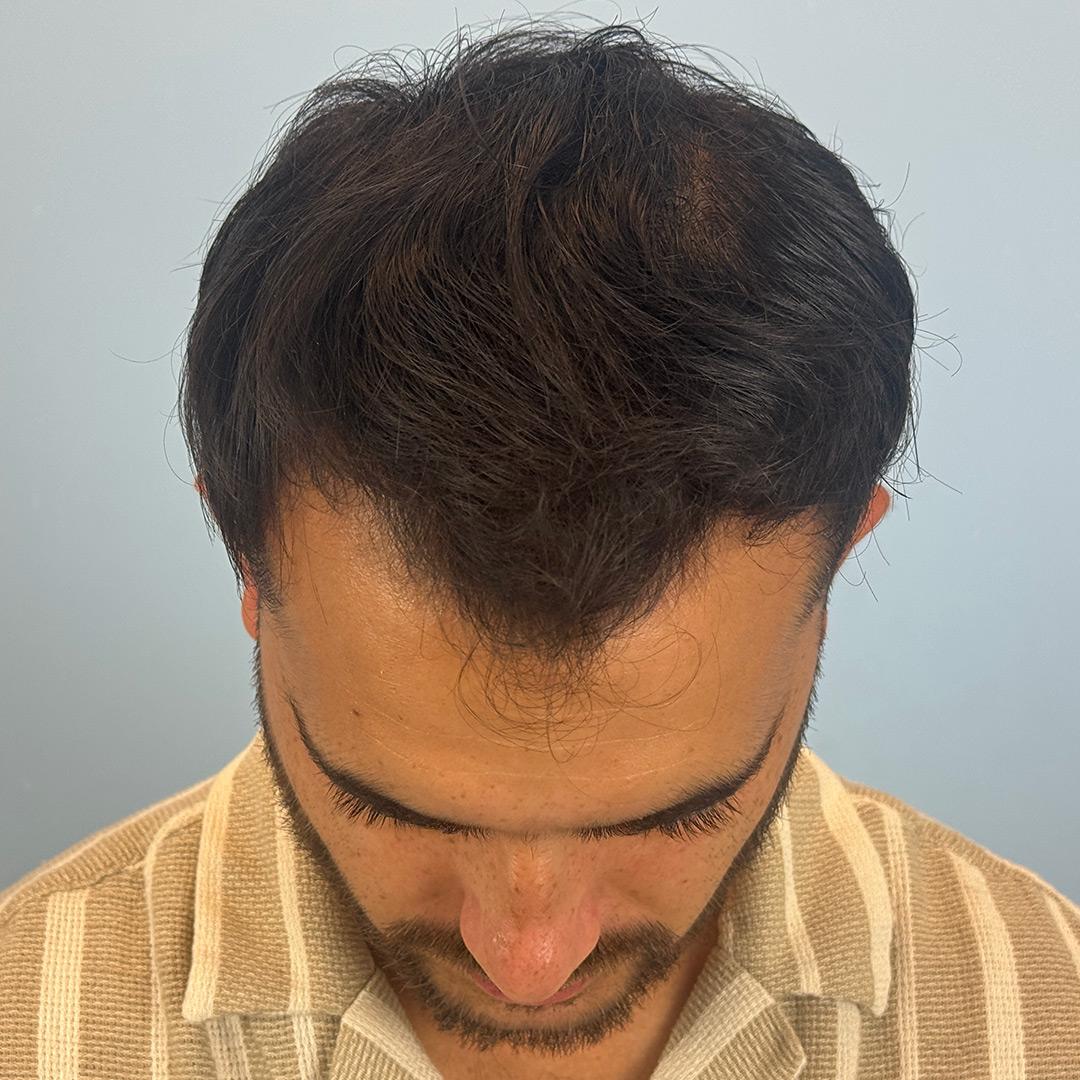
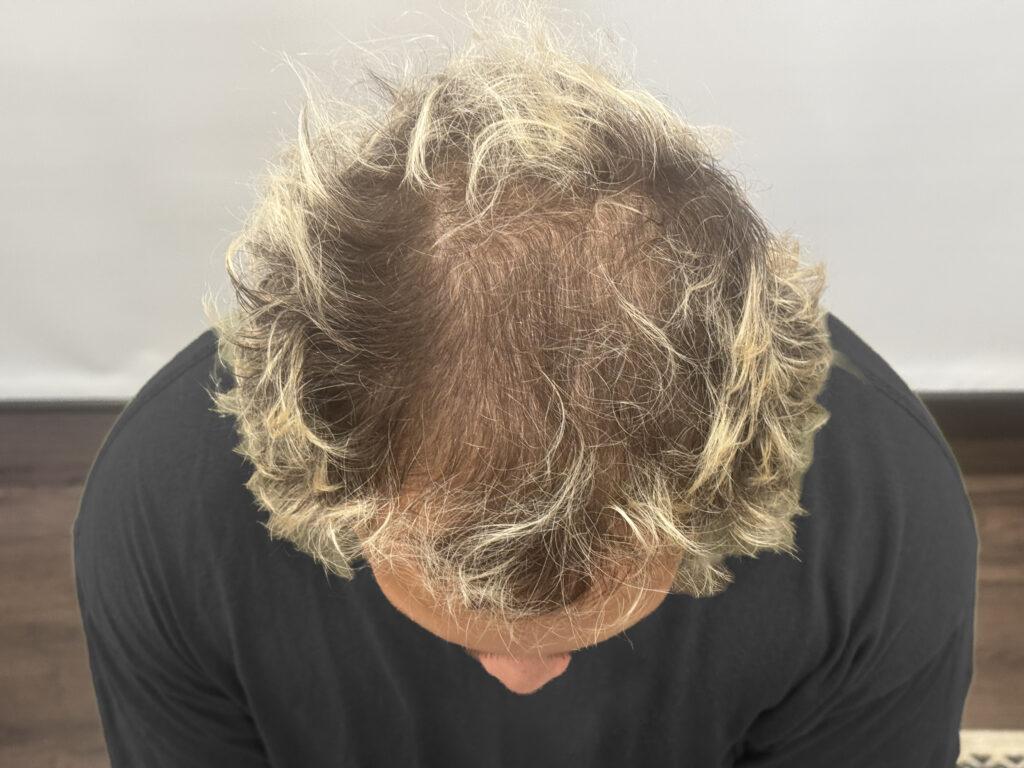
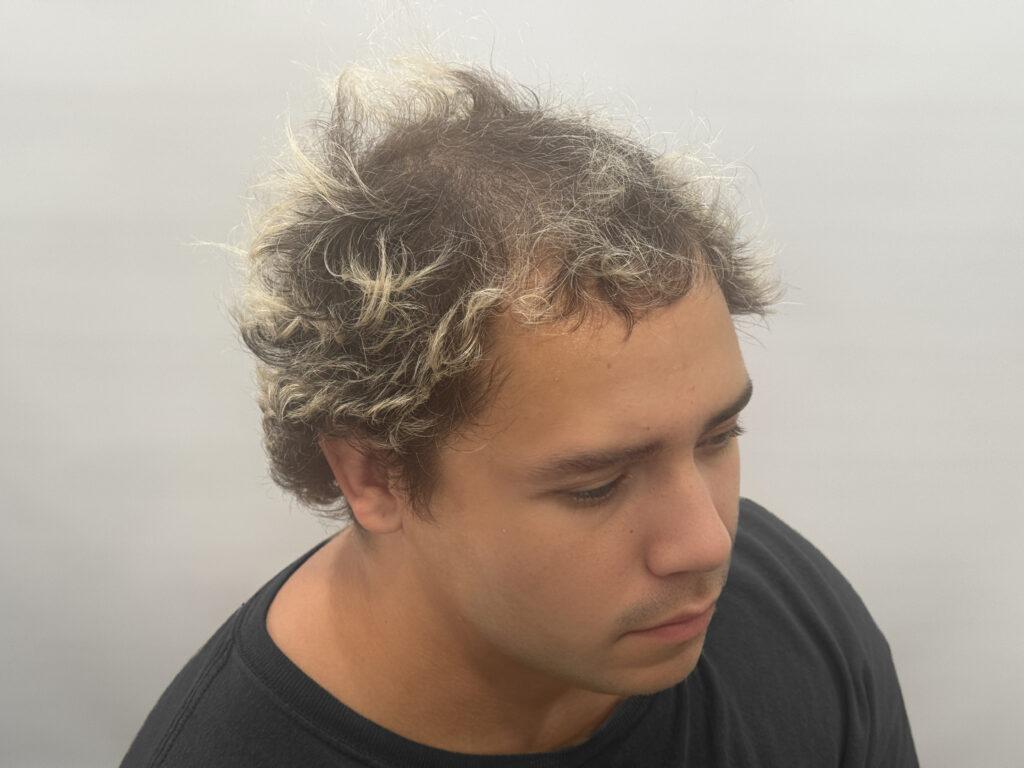
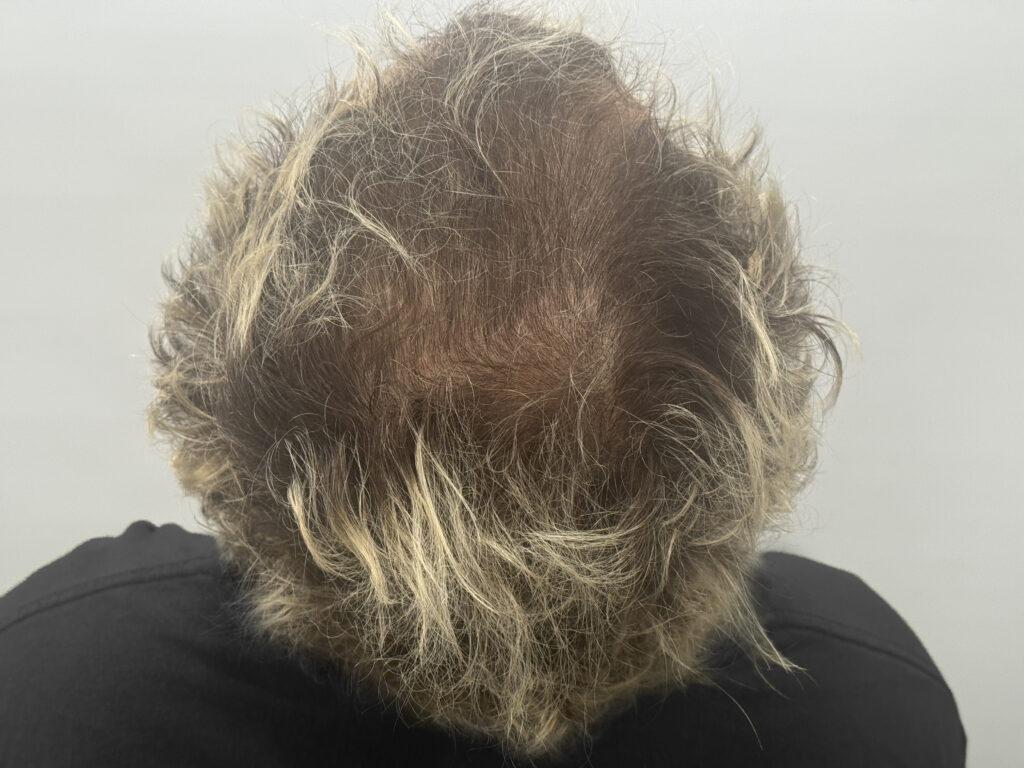
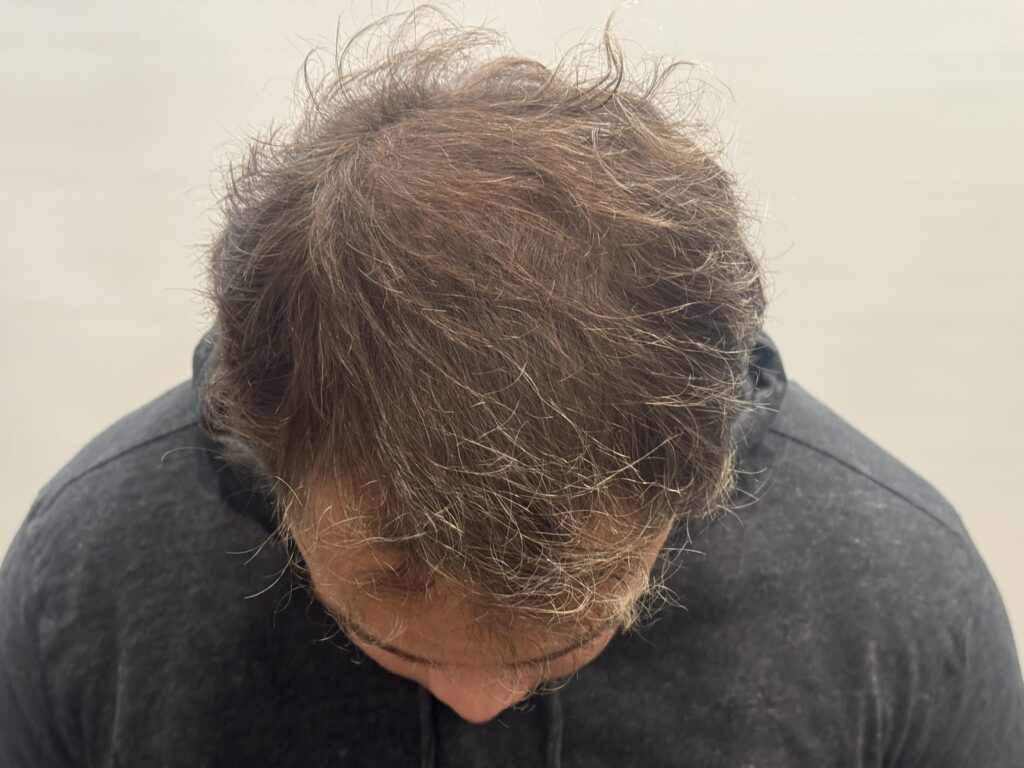
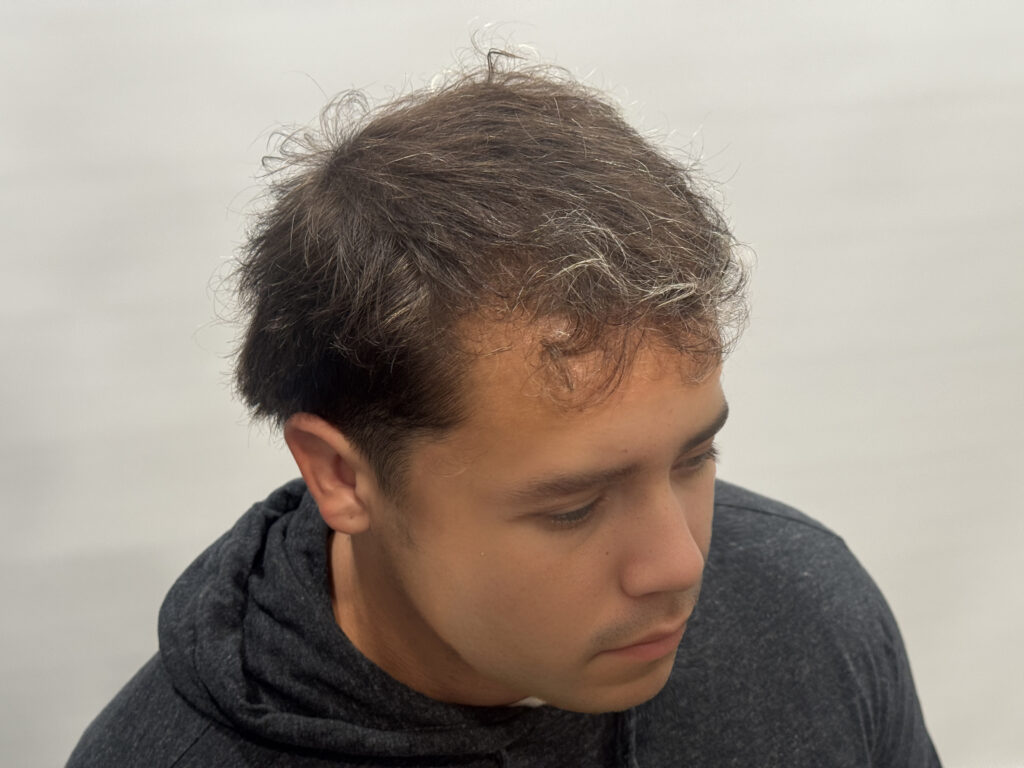
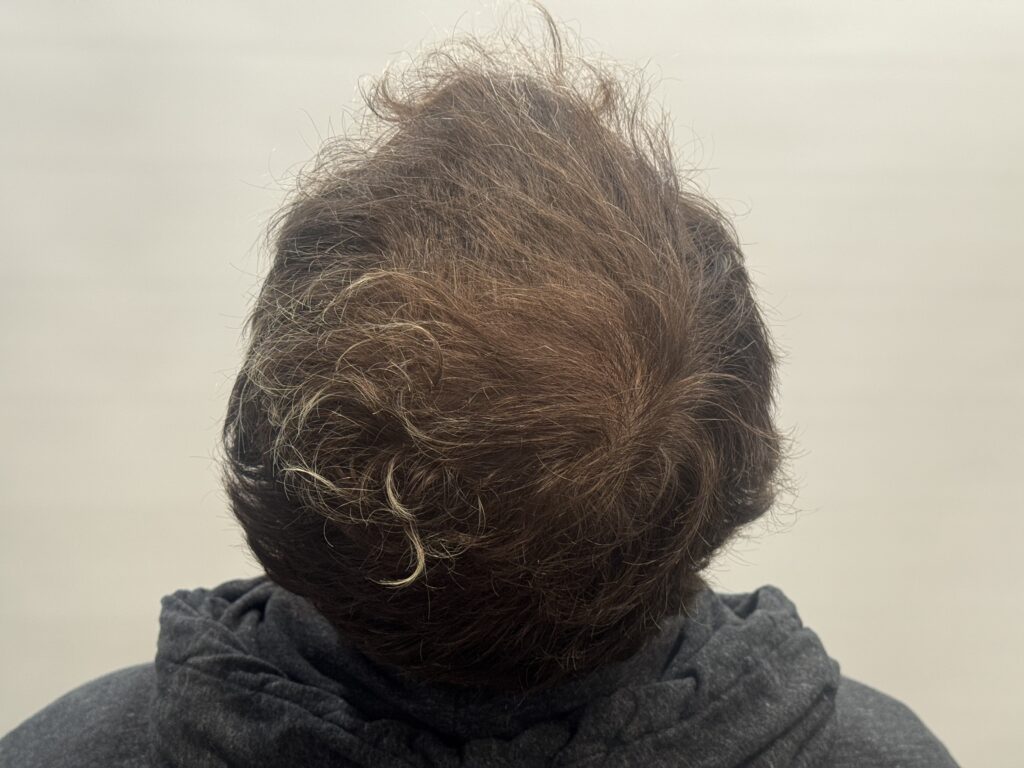
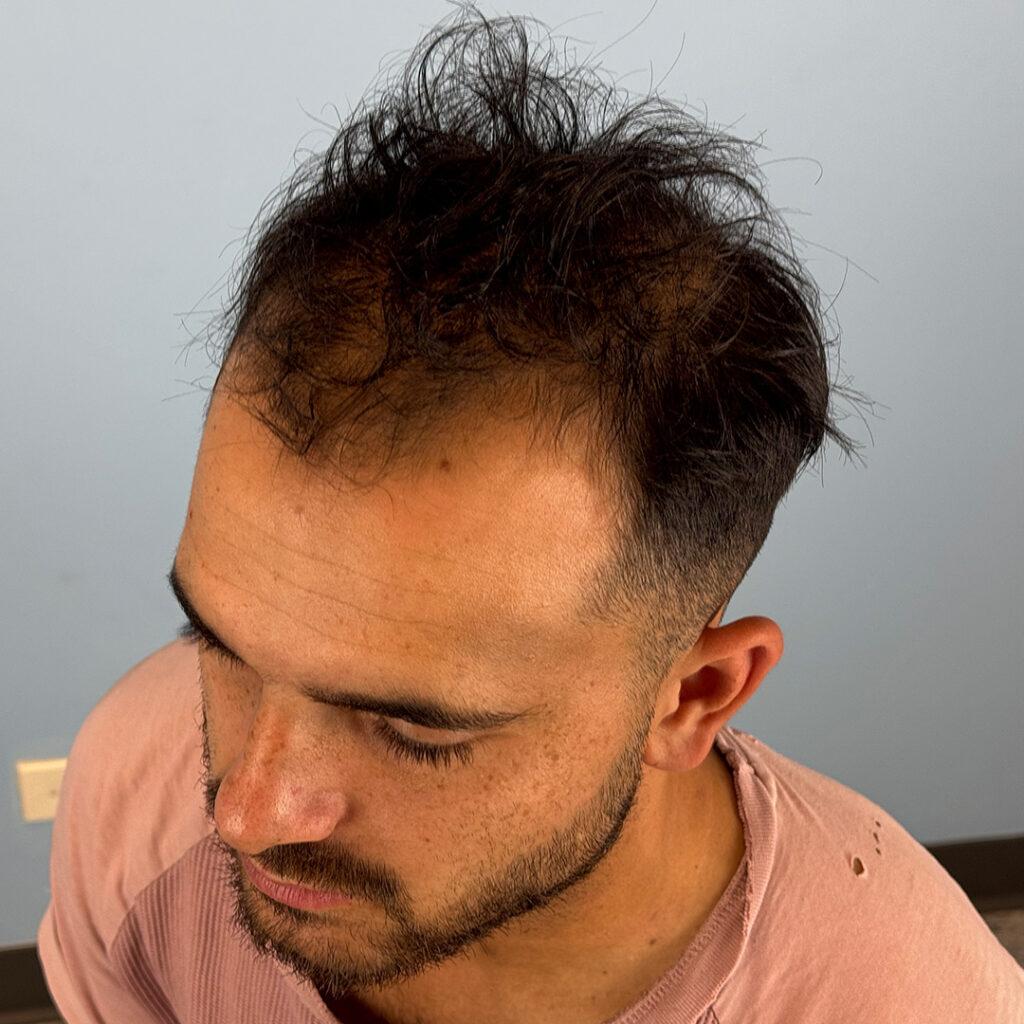
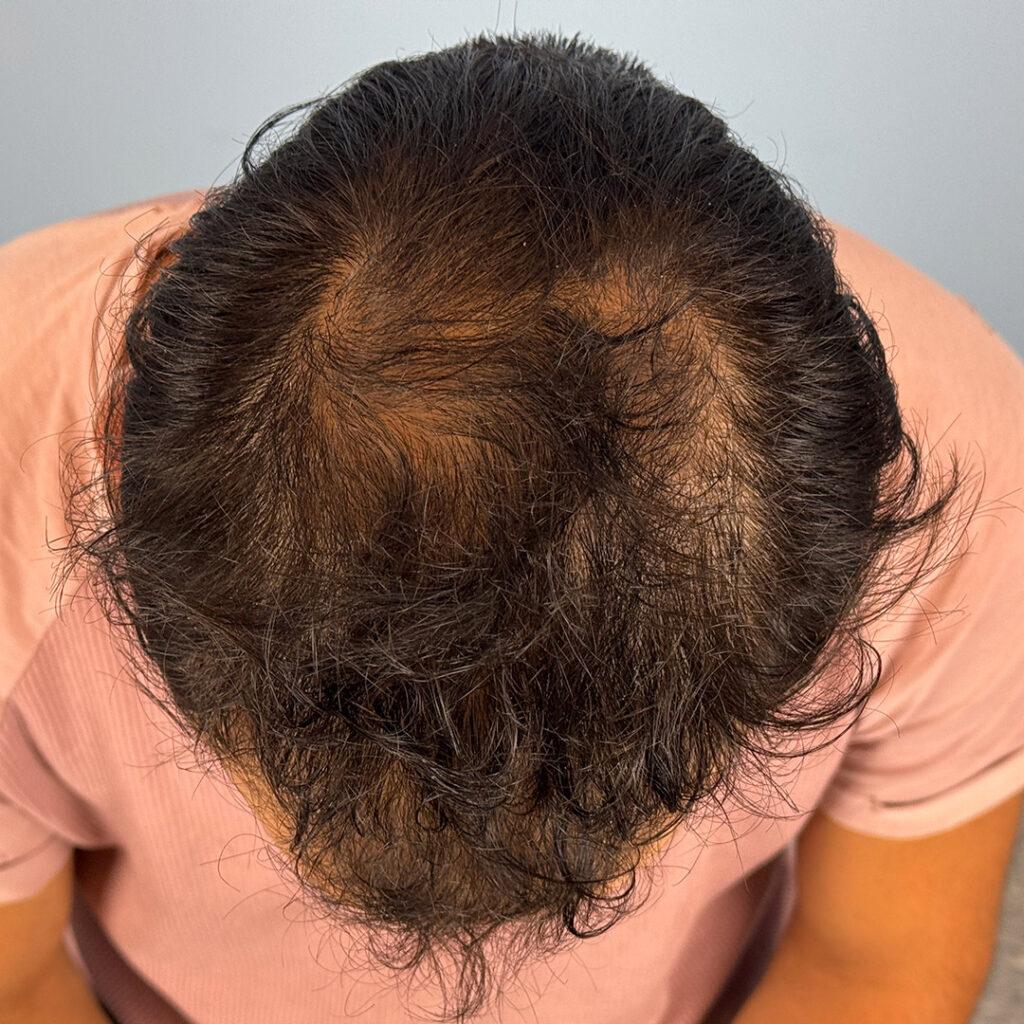
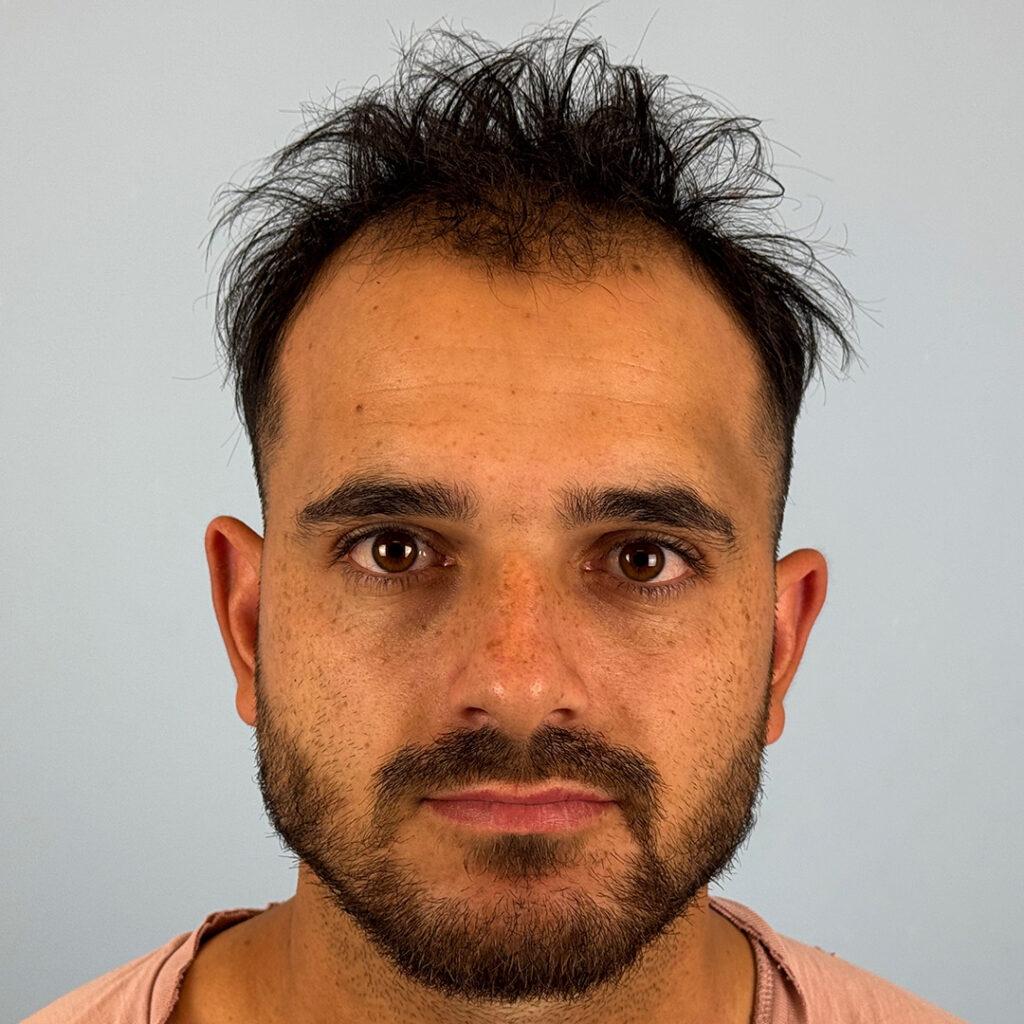
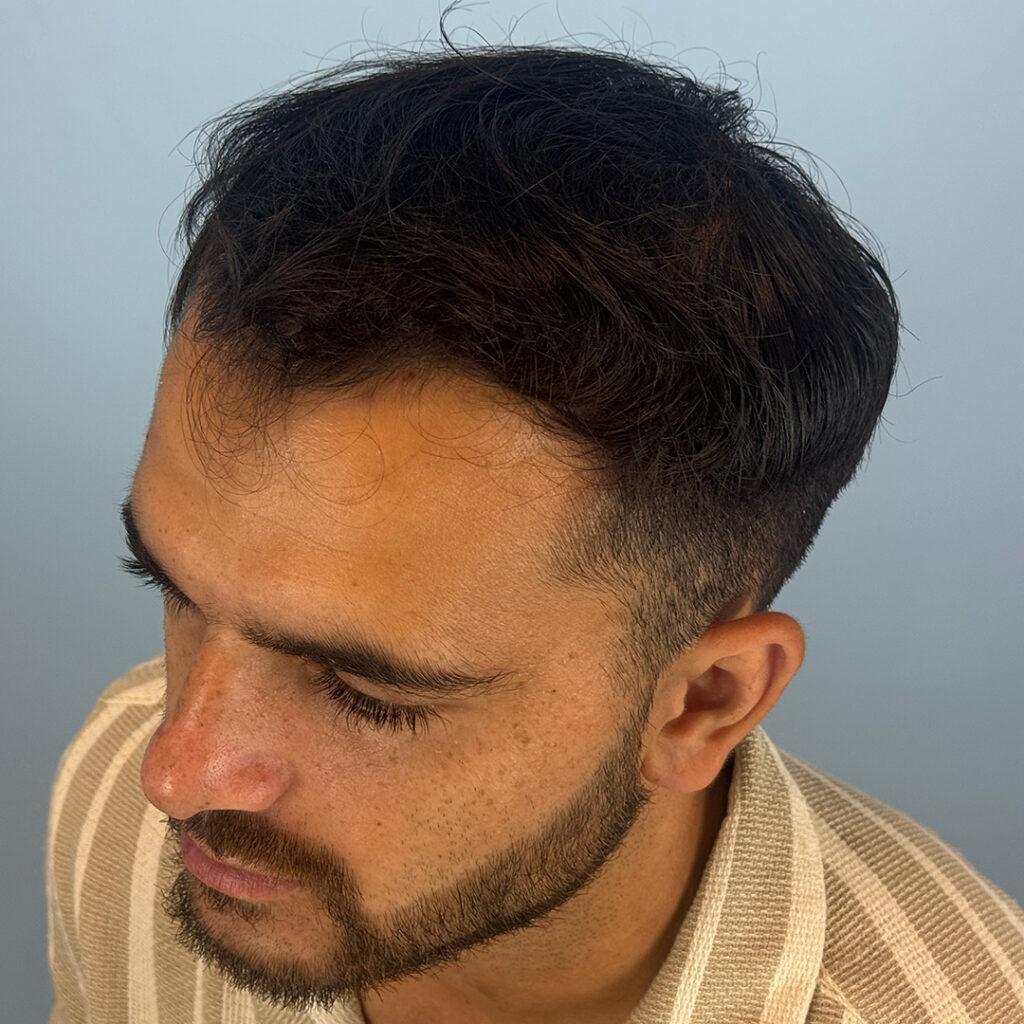
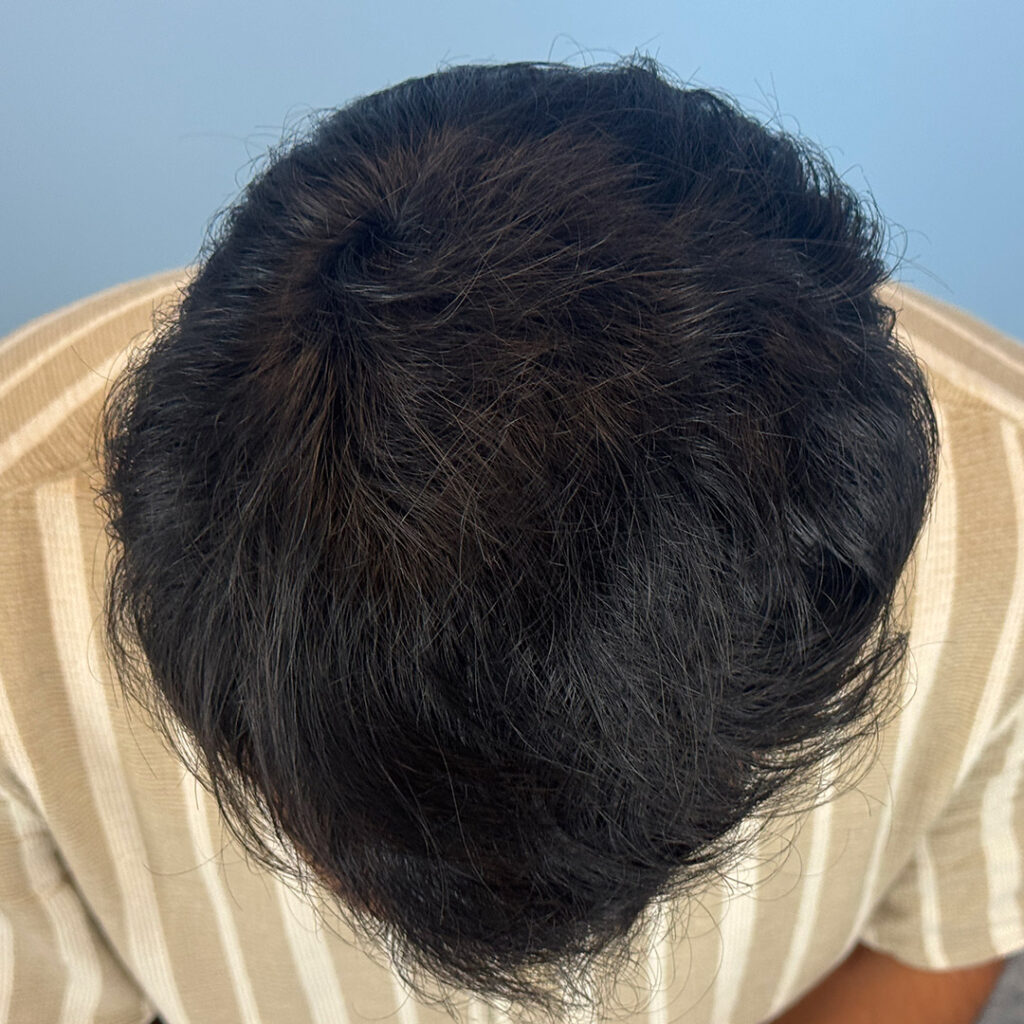
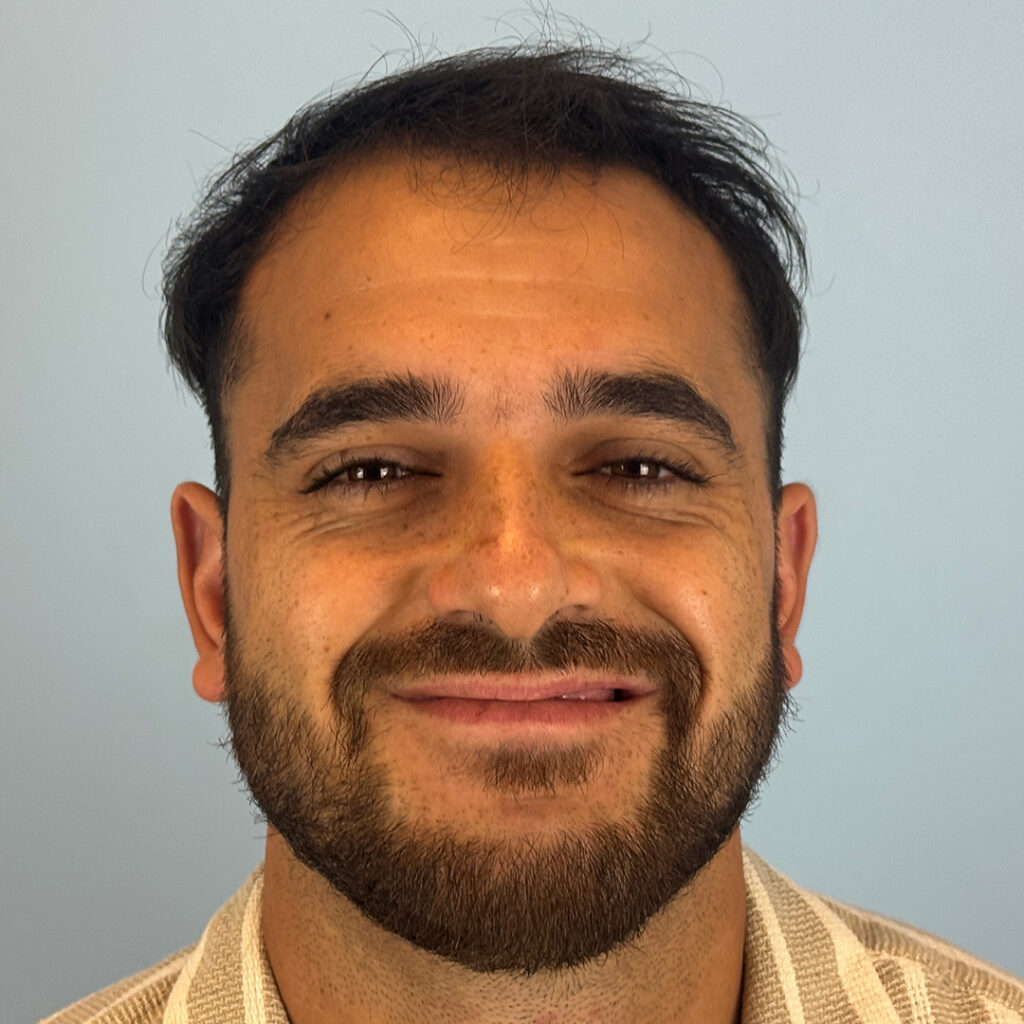
With the hair types we most commonly see in the Hispanic community, we have real advantages to work with: thickness, density, and a shaft diameter that creates fuller-looking coverage with precise placement.
Thick, dark hair shafts mean fewer grafts needed to achieve full-looking coverage. That’s a real surgical advantage — and Dr. Vinay plans the distribution to make the most of it from the first design session.
That same contrast between dark hair and scalp means precision isn’t optional. A placement that’s slightly off angle, slightly wrong in depth, shows. The standard we hold every result to is the same: no one should look at your hairline and see a procedure. They should just see you.
What’s consistent is that we design to your specific hair, your face, and where your hair loss is headed.
Thick, dark hair creates real advantages for transplant outcomes — and real demands on surgical execution.
01 — Thick Shaft Diameter More visual density per graft. Results that read as full with strategic placement.
02 — Wide Texture Range From thick and coarse to fine and wavy, Hispanic hair varies significantly. Every treatment plan is built around your specific hair, not a community average.
03 — Precision Is Non-Negotiable Precision here means accounting for your hair color, texture, and skin tone together — because what holds up under any light is different for every patient.
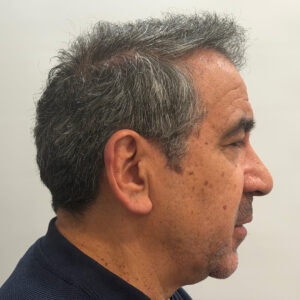
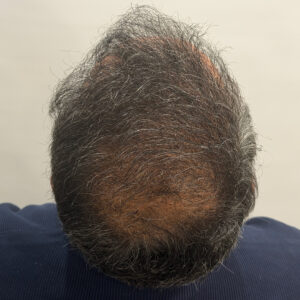
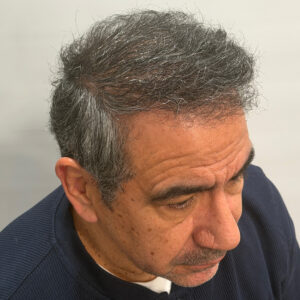
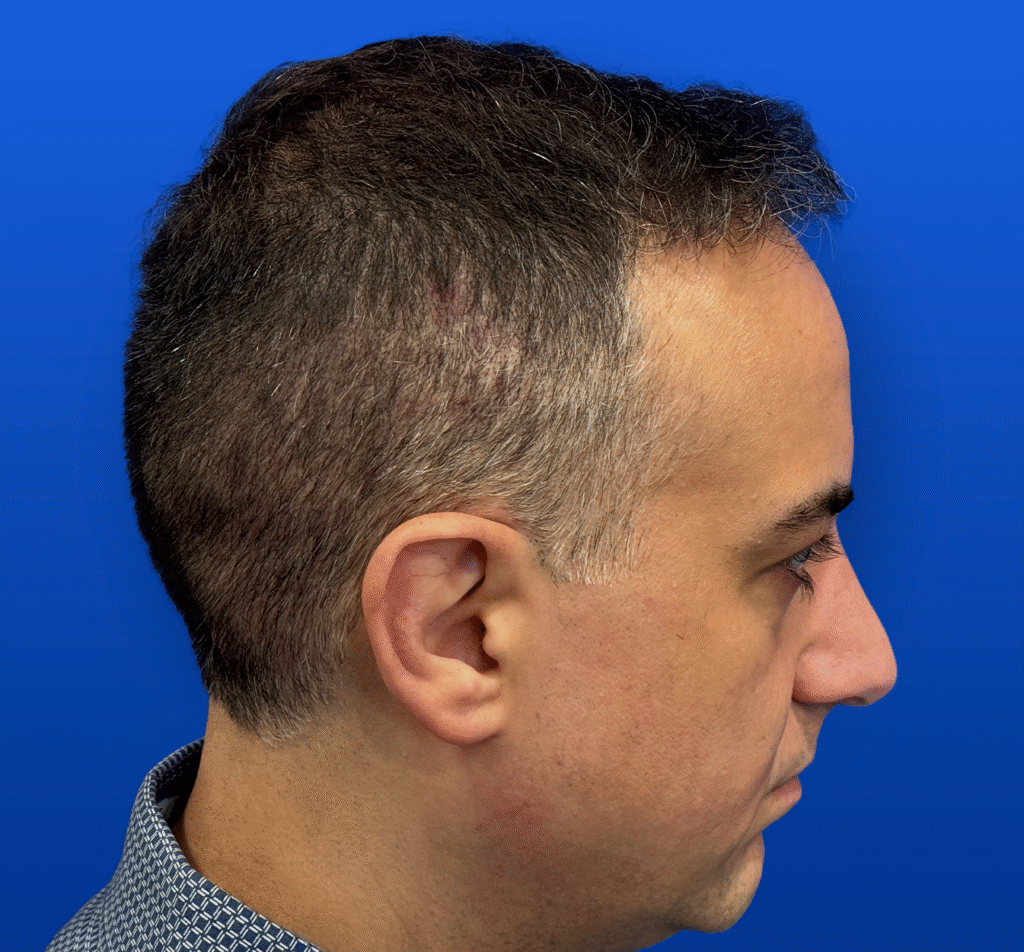
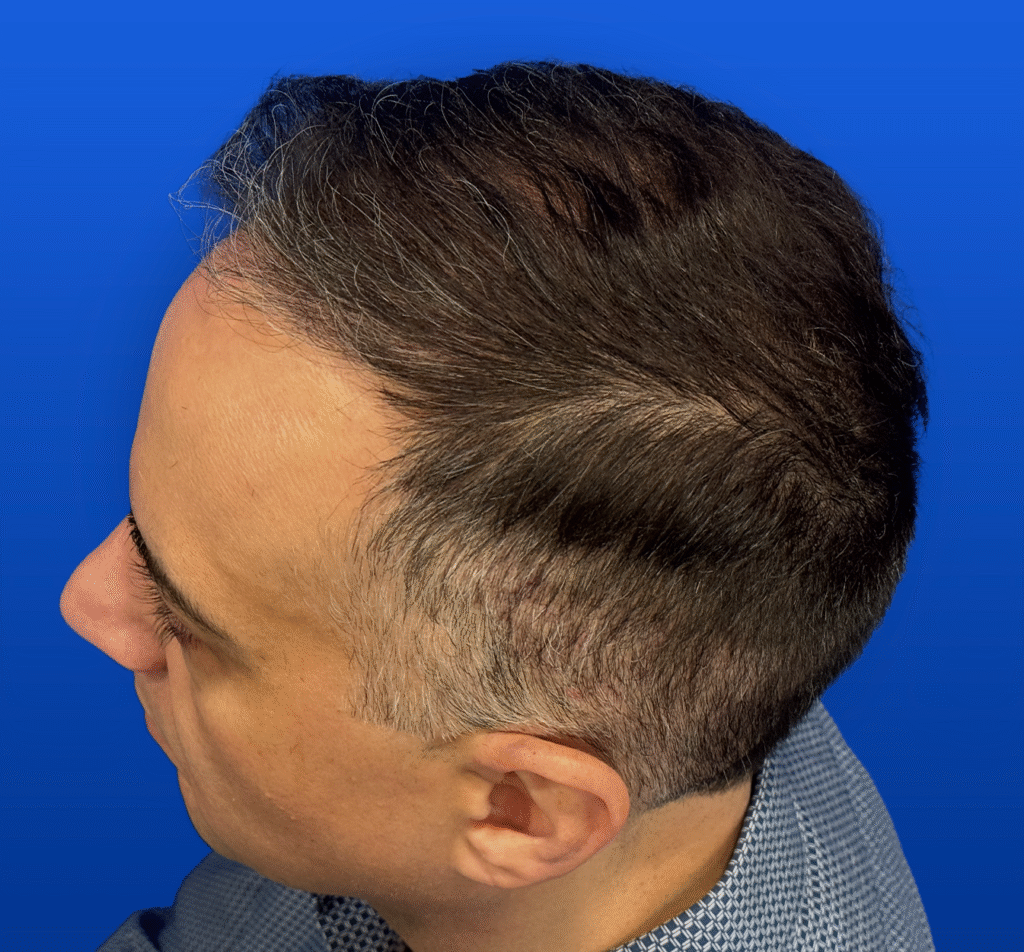
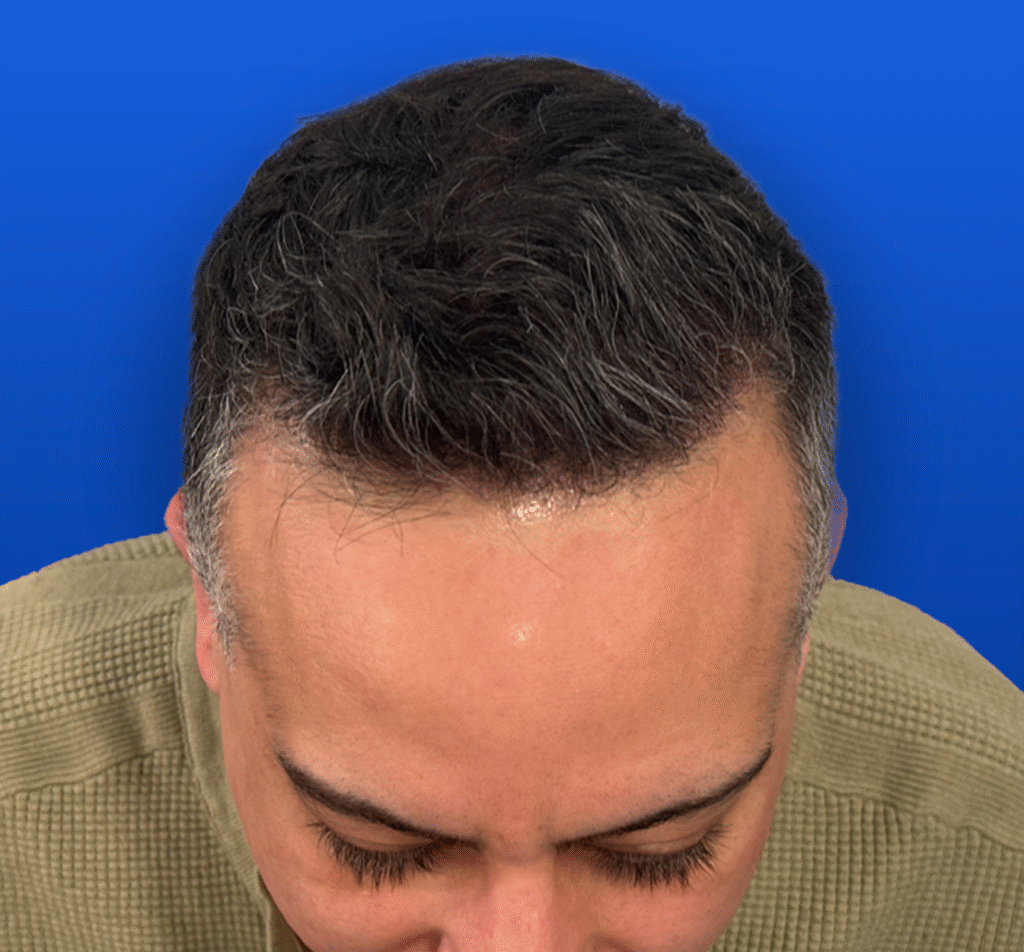
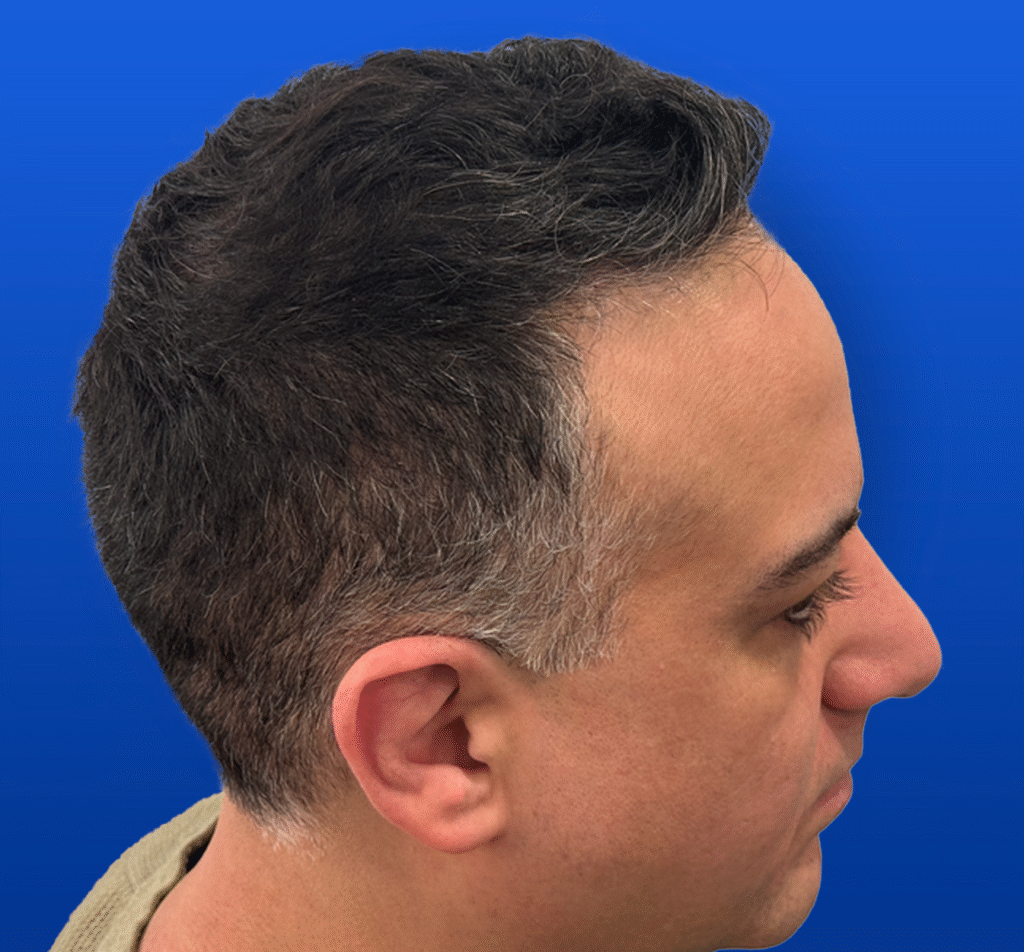
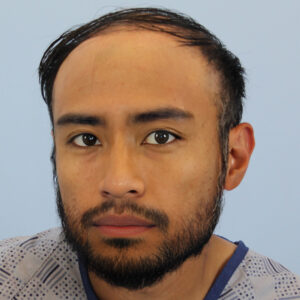
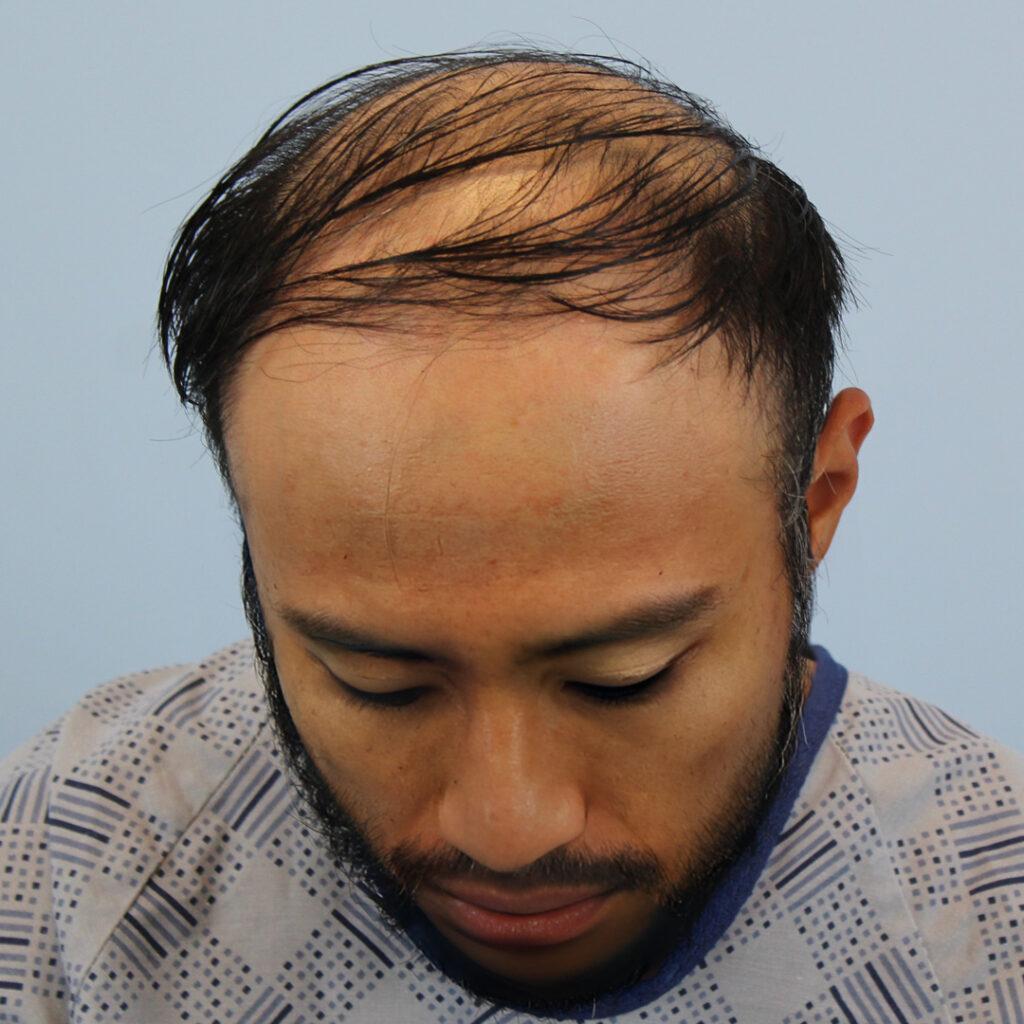
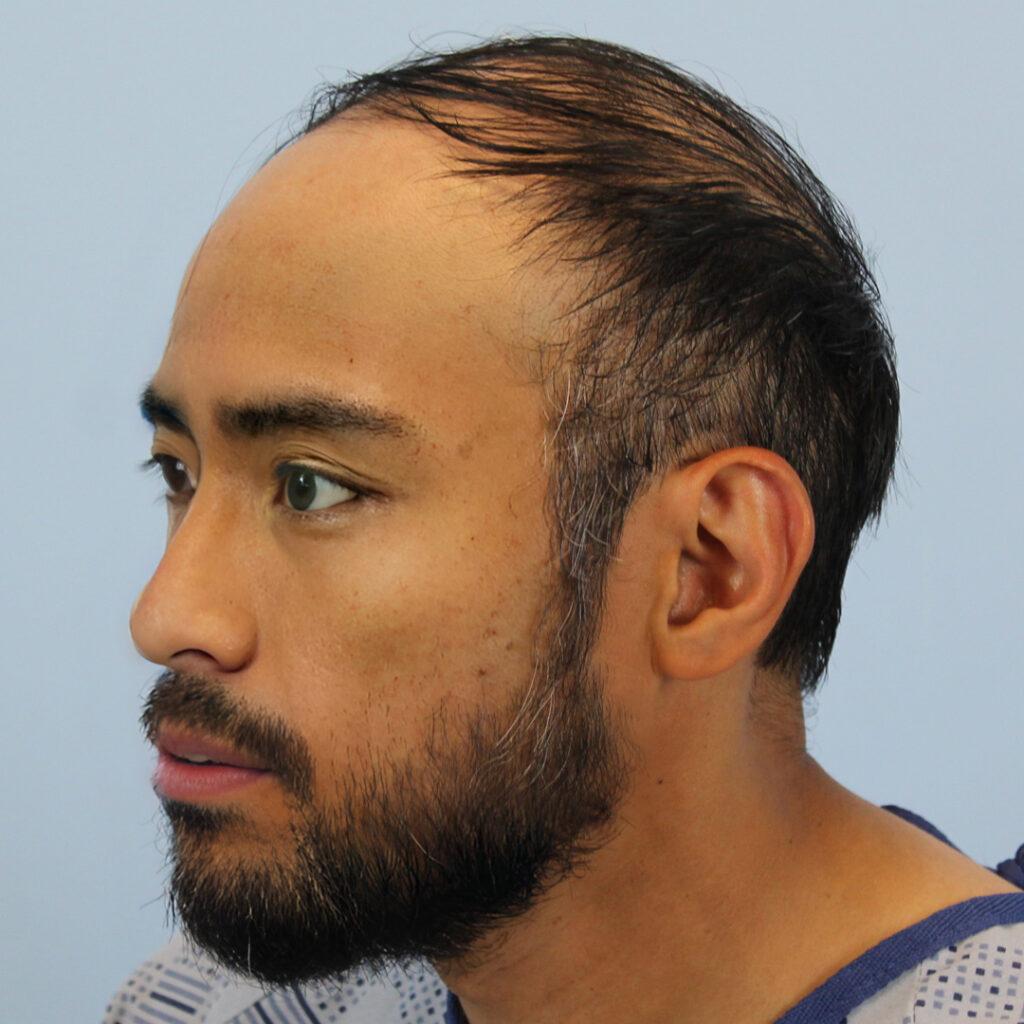
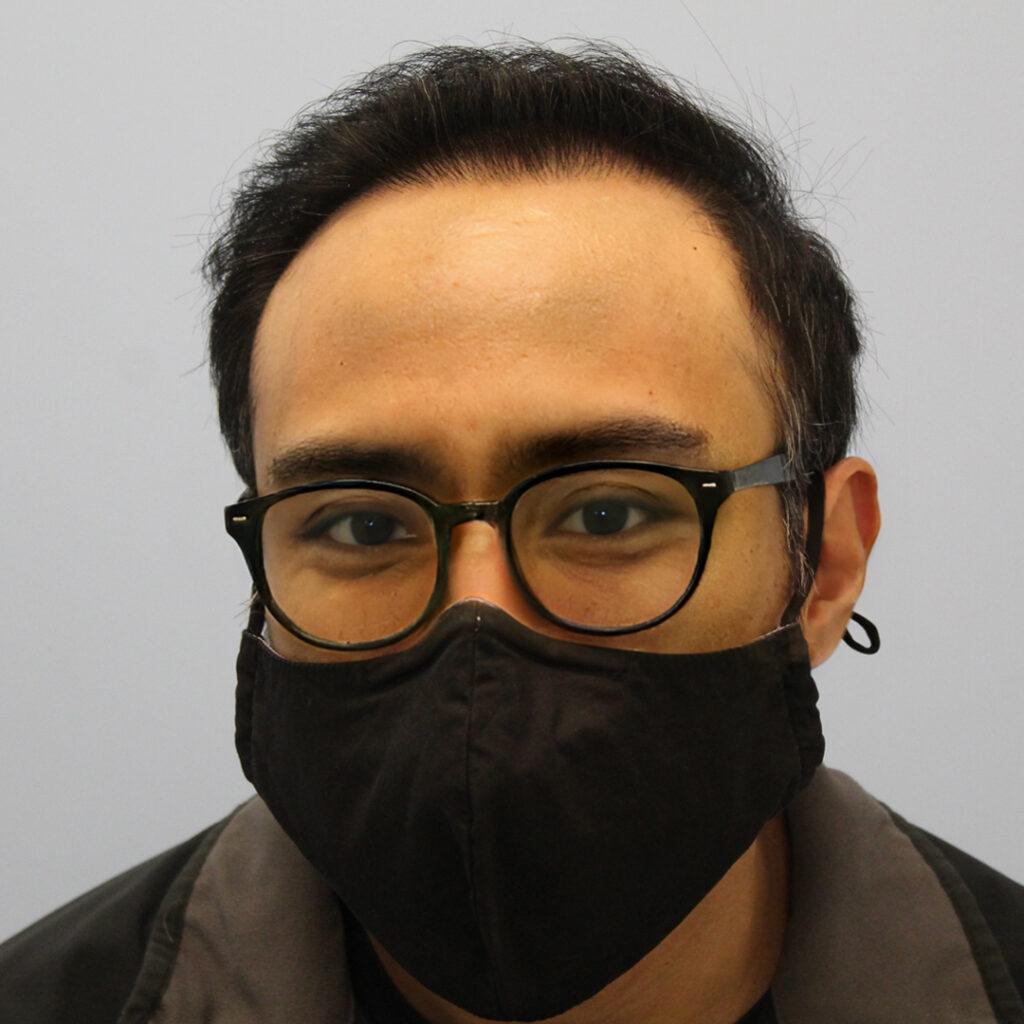
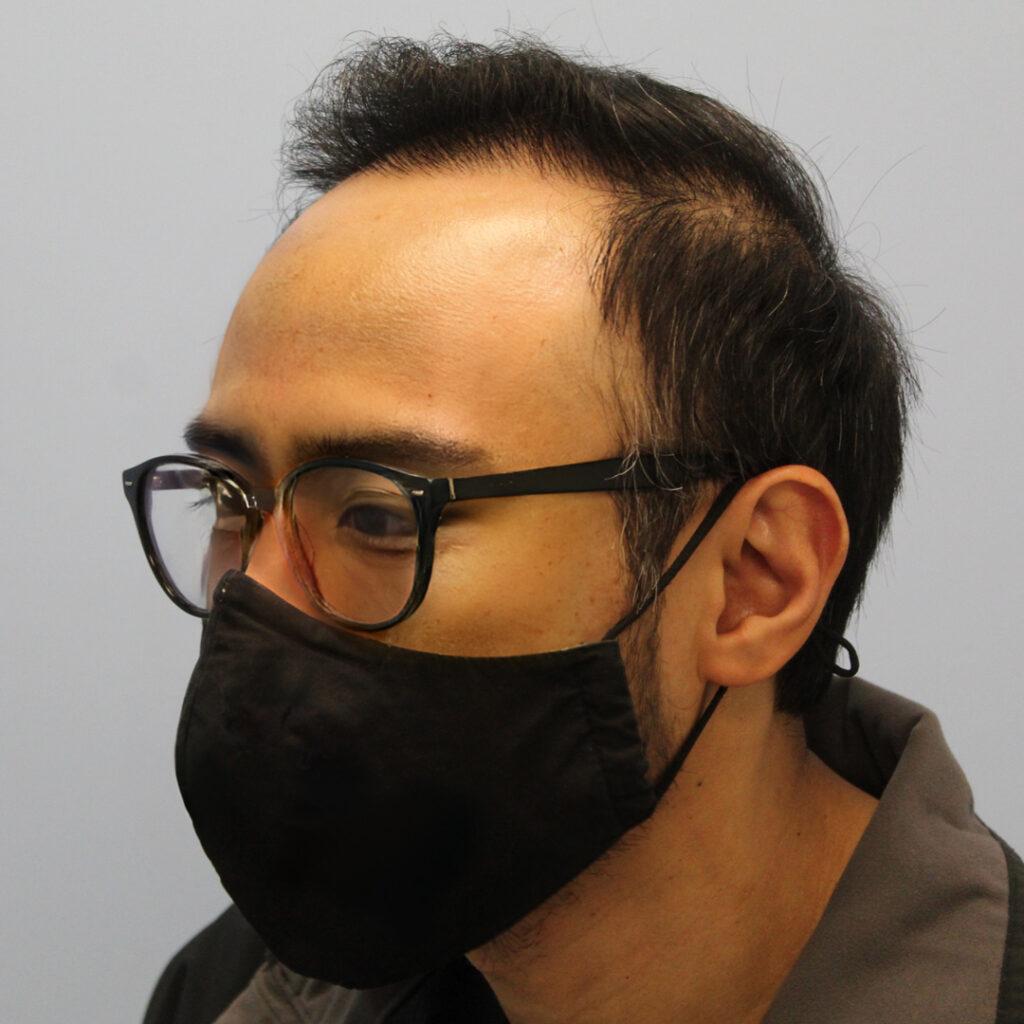
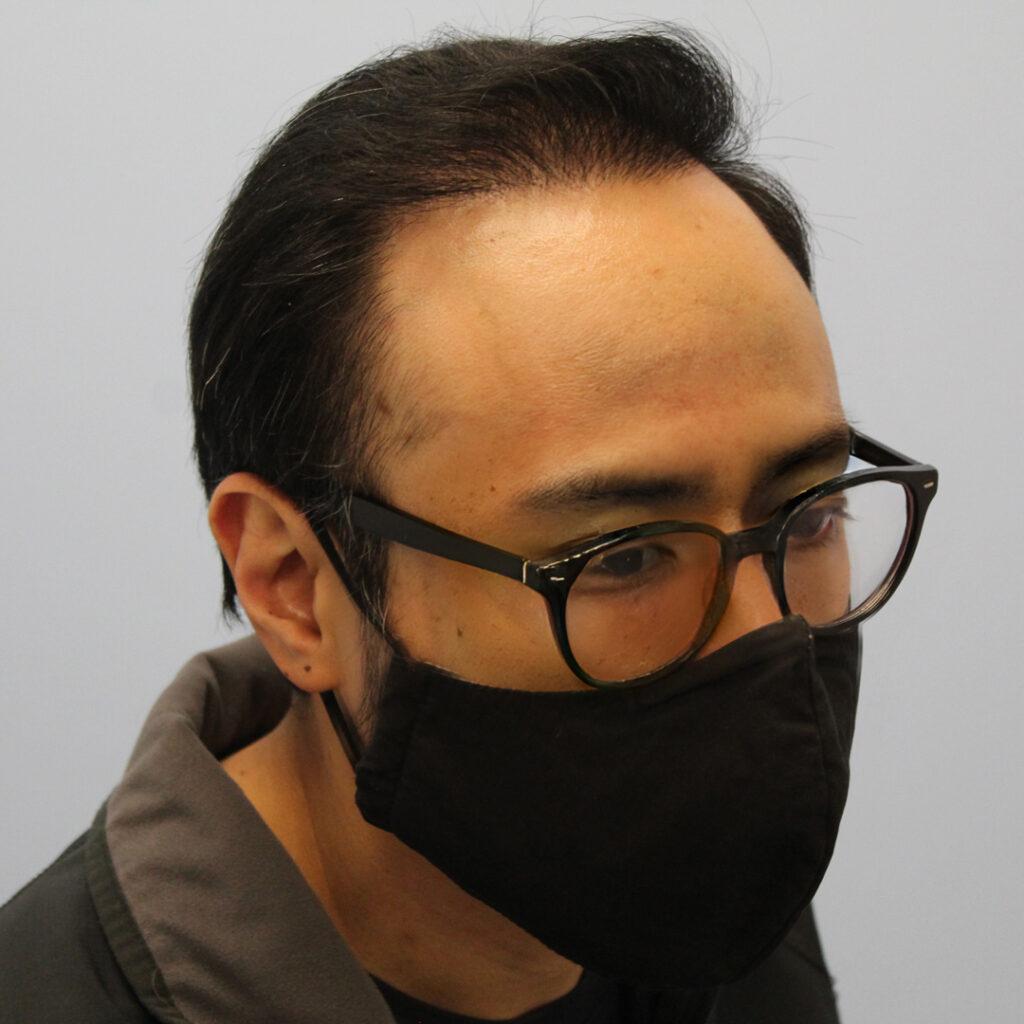
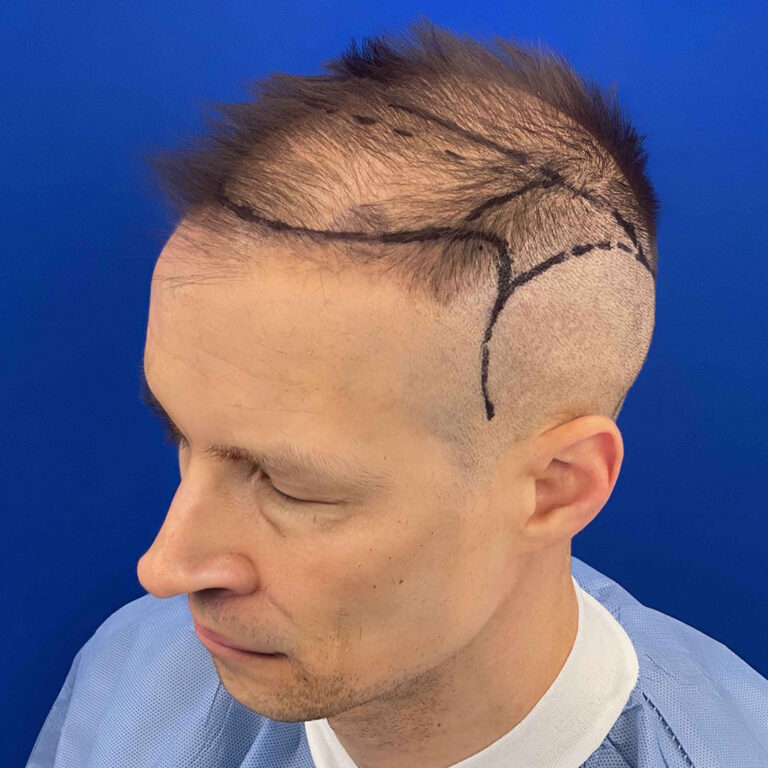
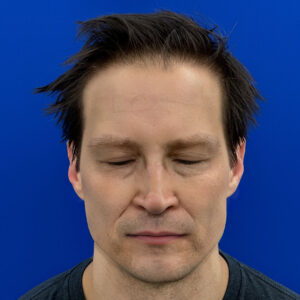
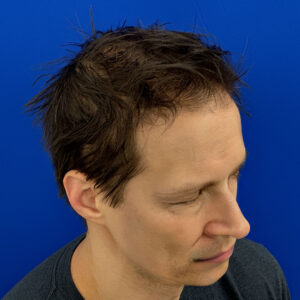
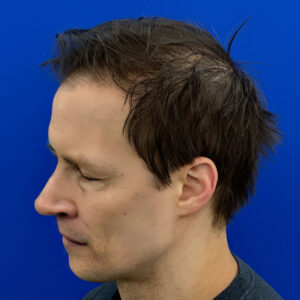
BEFORE
AFTER 4359 grafts
“The hairline itself will last him a lifetime. But what mattered most was that he owned the choice. We presented options that both protected his future. He picked the one that felt like him.”
Dr. Vinay
What the Hairline Needs to Do
We hear this often: “I don’t want anyone to be able to tell.” That starts with the design session. We spend real time mapping the hairline because the proportions, angles, and density decisions made before extraction begins determine everything about how the result holds up over decades.
Designed for Your Face
Your specific anatomy — bone structure, hairline remnants, facial proportions.
Built to Last
We account for where your hair loss is going, not just where it is — and manage the donor supply to keep future options open.
Precision here means accounting for your hair color, texture, and skin tone together — because what holds up under any light is different for every patient. Dr. Vinay plans to that standard specifically, for how your hair will look in 20 years, not just at six months.
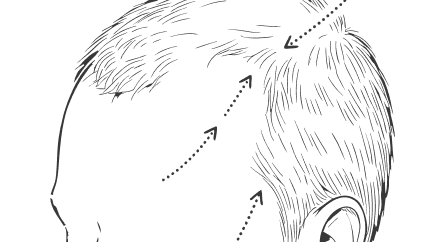
Angle
Must match your natural hair growth direction exactly — so the result flows naturally rather than looking planted.
Depth
Ensures proper emergence profile. Grafts placed too shallow or deep produce a result that reads as artificial.
Direction
Creates natural flow that holds for life. Each graft is placed to work with the surrounding hair, not against it.
Surgical
Surgical Hair Restoration
For patients whose hair loss has progressed to the point where transplantation is the right answer, Dr. Vinay leads every procedure personally, present and engaged at every critical stage.
The Hispanic men in this gallery share the same outcome standard: a result that looks completely natural under any light, at any distance, now and decades from now.
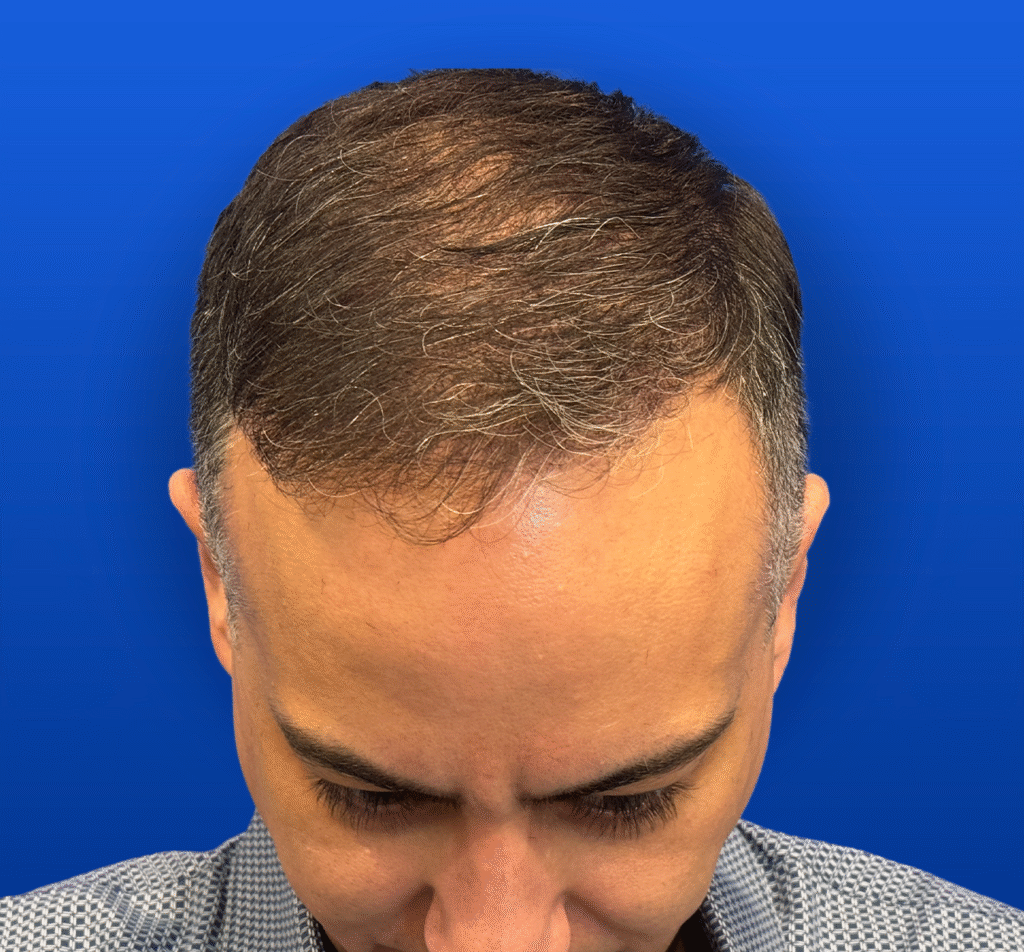
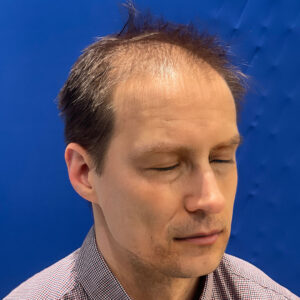
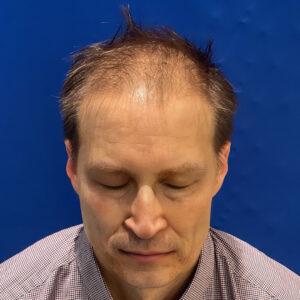
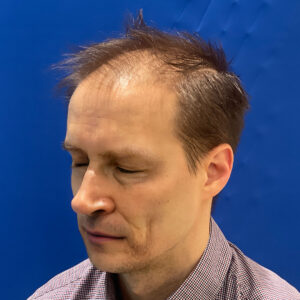
BEFORE
AFTER 2580 grafts
BEFORE
THE DESIGN
AFTER 3200 grafts
Planned for the Long Term
We design for where your hair loss is going. Donor supply is preserved strategically, so future options remain open. The result holds up in 20 years, not just at six months.
Hairline designed to your specific facial anatomy
Graft placement angle and direction matched to natural growth
Donor supply managed to protect future options
Result assessed against a standard of complete naturalness
Beard Restoration
We also perform beard restoration for patients looking to address patchy growth, scarring, or uneven density. Ask about it at your consultation.
before
AFTER
before
AFTER
Non-Surgical
ACS + At-Home Care
For patients who aren’t yet surgical candidates, or who want to protect what they have alongside a transplant, ACS uses regenerative cells from your own blood to reactivate dormant follicles, restore blood flow, and stimulate new growth. It goes beyond traditional platelet therapies by drawing on active healing cells — a difference that shows up in outcomes.
The results shown here reflect what happens when the right treatment is matched to the right stage of loss.
BEFORE
AFTER 4359 grafts
The Complete Non-Surgical Program
In-Office Sessions
A series of in-office ACS sessions, each building on the last. Progressive reactivation of follicles, calibrated to your specific pattern of thinning.
At-Home Maintenance
A personalized protocol — topical treatments, medications, and devices — to stop progression and support the outcome of any ACS work.
When Non-Surgical Makes Sense
For patients in earlier stages of loss, ACS combined with a targeted at-home regimen can meaningfully slow progression and improve hair quality — preserving the advantage of thick, dark hair before surgical intervention becomes necessary.
BEFORE
AFTER 4359 grafts
STILL NOT SURE WHICH PATH IS RIGHT FOR YOU?
Dr. Vinay Rawlani has seen both sides of the hair restoration process. Having undergone both surgical and non-surgical treatments for his own hair loss, he understands firsthand what works—and what doesn’t.
With medical training from Northwestern University and the University of Chicago, Dr. Vinay combines artistry, precision, and innovation to deliver exceptional results. Whether he’s crafting a timeless hairline or optimizing density, every step is guided by his commitment to perfection.