


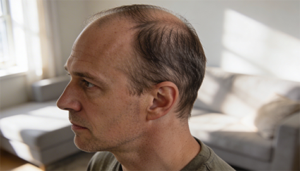

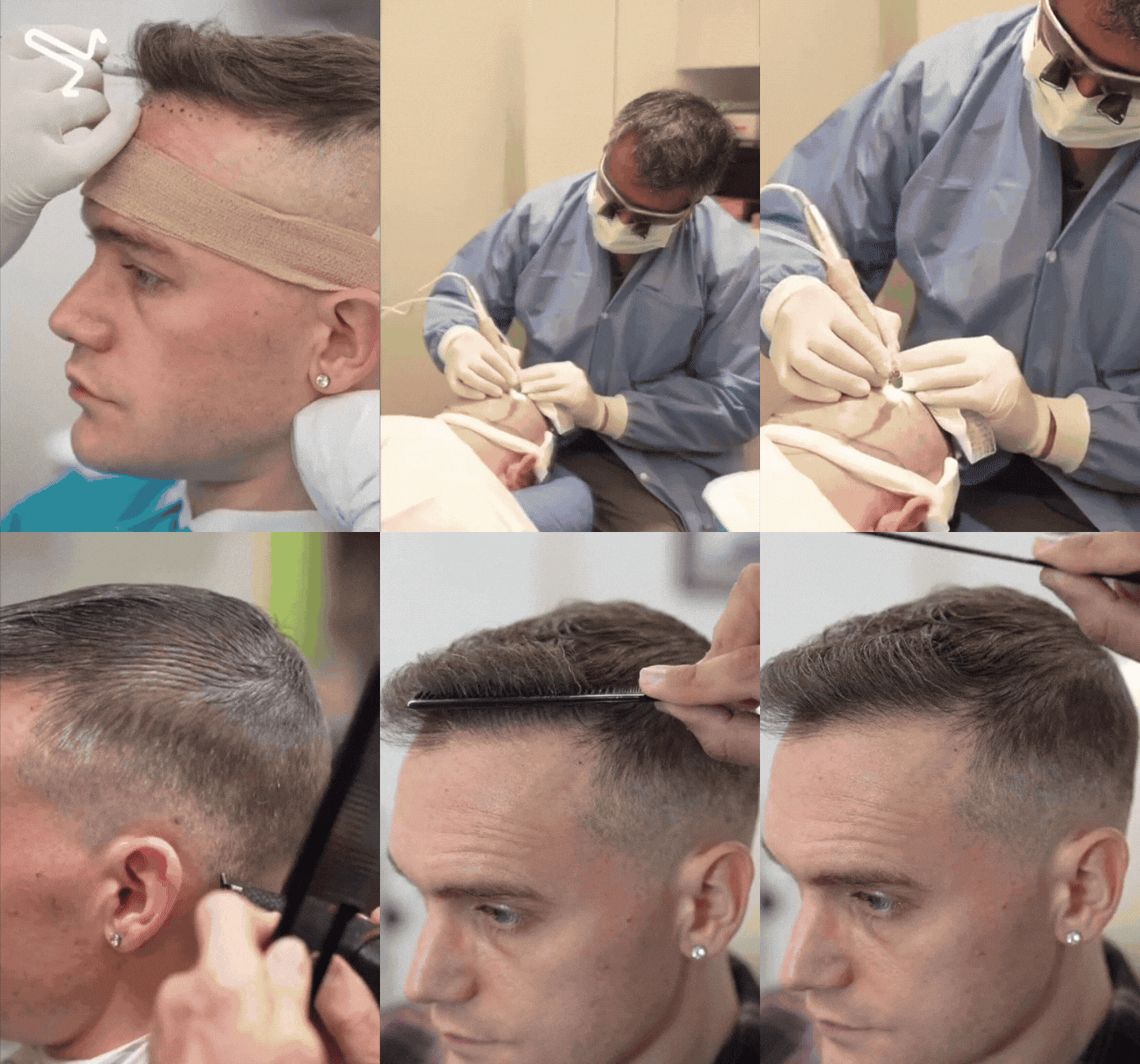
Patients ask me a version of this question in almost every consultation.
“Is it actually permanent? Or will the hair just fall out again?”
It’s a fair question — and one that deserves a real answer, not just reassurance.
The short version: a properly performed hair transplant is permanent. The transplanted follicles will keep growing for the rest of your life. But permanence and density are two different things, and the gap between them is where most of the confusion lives.
Are Hair Transplants Permanent?
 Yes. And the reason comes down to biology.
The follicles we use in transplantation are taken from the donor area — typically the back and sides of the scalp. These follicles are genetically resistant to DHT, the hormone that drives male pattern baldness. That resistance is intrinsic to the follicle itself. When we relocate it to a thinning or balding area, it doesn’t adapt to its new environment. It keeps doing what it was always going to do: grow.
In other words, the transplanted hair doesn’t know it moved. It just keeps growing.
What Percentage of Transplanted Hair Survives?
With modern techniques like Micro PUE, graft survival rates typically fall between 75% and 98%. The range exists because technique matters enormously — how follicles are extracted, how they’re handled between harvest and placement, how precisely they’re implanted.
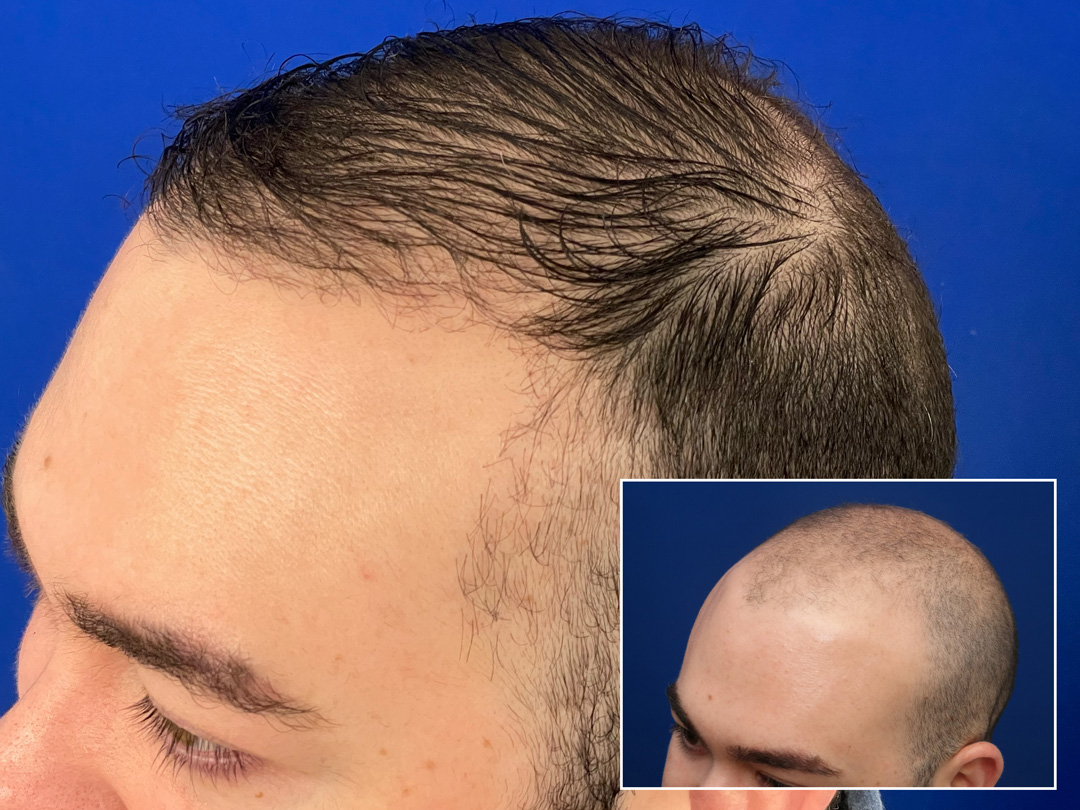
After the procedure, the transplanted hairs shed within the first few weeks. This is normal, and it’s not what it looks like. The hair shaft releases, but the follicle stays. It enters a resting phase, then begins producing new growth around months three to four. Full results are typically visible between nine and twelve months.
The follicles that survive transplantation grow for life. That part is settled.
Is FUE Permanent?
Yes — FUE (Follicular Unit Extraction) is a permanent hair restoration solution. But there’s an important distinction worth understanding.
A hair transplant makes transplanted hair permanent. It does not stop the progression of hair loss in surrounding, non-transplanted areas. Your native hair — the hair that was already there — can continue to thin over time if it’s not managed. When that happens, the transplant itself hasn’t failed. It’s that the ground shifted around it.
This is why the strategy we build around a transplant matters as much as the procedure itself.
Why Some Patients Think Hair Transplants Don’t Last
 There are three things that tend to drive this perception, and none of them are graft failure.
Ongoing Hair Loss in Untreated Areas
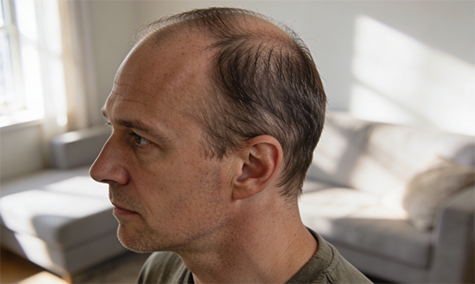
The transplant holds. But if the surrounding native hair continues to thin — which it will, without intervention — the overall density can start to look uneven. The island of transplanted hair becomes more visible, not because it changed, but because everything around it did. This is a planning problem, not a surgical one, and it’s something we account for explicitly in how we design your hairline and graft placement.
Surgical Technique
Longevity starts in the operating room. Graft survival depends on how follicles are extracted, how they’re kept viable between harvest and placement, the angle and direction of implantation, and how carefully the donor area is managed across the session. These aren’t small variables. They’re the difference between a result that looks great at one year and one that still looks great at fifteen.
No Maintenance Plan
A transplant gives you permanent structure. Maintaining density over time — especially in the native hair around the transplant — requires ongoing attention. Patients who treat the procedure as a finish line often find themselves back in a consultation a few years later wondering what happened. Patients who treat it as the beginning of a long-term strategy tend to stay happy with their results for decades.
How to Make Your Hair Transplant Last as Long as Possible
At Northwestern Hair Restoration, we don’t think of hair restoration as a single procedure. We think of it as a strategy that evolves with you. That means the work we do together doesn’t end when you leave the clinic on procedure day.
In-Office Optimization with ACS
Autologous Cellular Serum (ACS) is a regenerative treatment we introduced to hair restoration from the field of orthopedic surgery. It uses your body’s own healing mechanisms to reactivate dormant follicles, improve follicle metabolism, and strengthen the hair that’s already there. For post-transplant patients, ACS does something the surgery itself can’t: it works on the native hair around the transplant, improving the overall scalp environment and helping maintain density over time.
The transplant gives you the architecture. ACS helps you keep it looking full.
A Customized At-Home Maintenance Plan
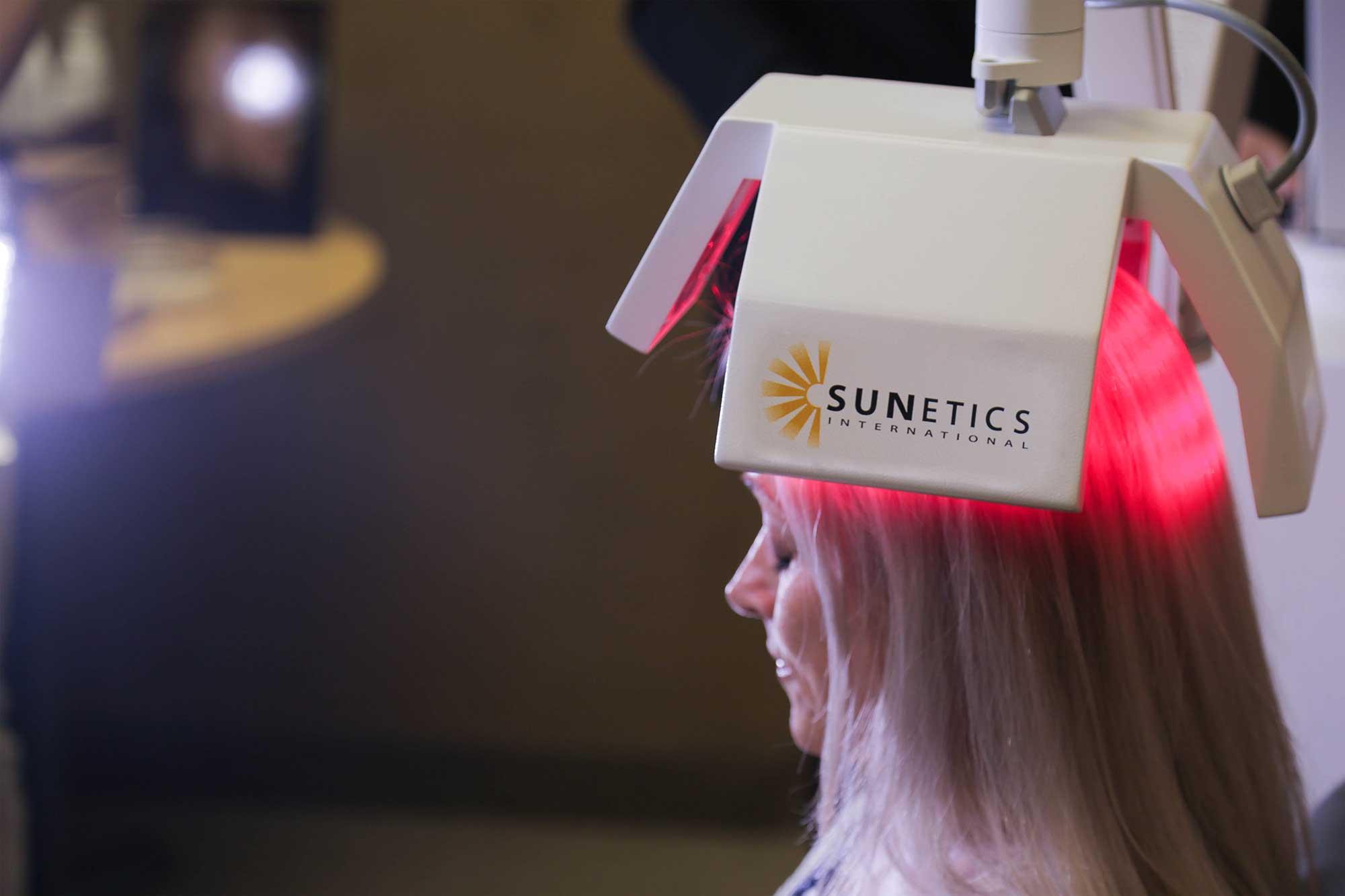
Depending on your hair loss pattern, your genetics, and how far along the process is, we build a maintenance plan that might include oral or topical medications, scalp health treatments, laser therapy, and product and lifestyle guidance. We revisit and adjust at every follow-up. Because the plan that’s right for you at month six may not be the same one that’s right at year three.
How Long Do Results Typically Last?
Done properly and maintained consistently, a hair transplant can last decades — often a lifetime. The transplanted follicles themselves aren’t going anywhere. The question is always what’s happening with the surrounding hair, and whether you have a plan for it.
Patients who come in early, before significant loss has occurred, tend to have the most sustainable long-term outcomes. There’s more native hair to protect, more flexibility in graft placement, and more runway to build a strategy that ages well. That’s not a sales pitch for acting fast. It’s just how the math works.
Will You Ever Need Another Procedure?
Possibly — but not because the first one stopped working.
Some patients choose a second procedure years later because hair loss has progressed in areas we didn’t treat the first time. Others come back because they want more density, or because their goals have evolved. Many never need a second procedure at all.
Whether you do depends on your genetics, how aggressively your hair loss progresses, and what you want your hair to look like at fifty versus at seventy. We talk through all of this during your consultation, and we’re honest about what to expect. There’s no version of this where we promise you’ll never need to come back — and there’s no version where we leave you without a plan if things change.
What Makes Results Last Longer?
 The factors that drive long-term success are consistent across almost every patient we’ve worked with: high graft survival rates, precise extraction and implantation, careful donor management, early intervention, and an ongoing maintenance plan that treats scalp health as a moving target rather than a checkbox.
The earlier the intervention, the more we have to work with — and the more naturally sustainable the result tends to be.
The Bottom Line: How Long Does a Hair Transplant Last?
Transplanted follicles are permanent. They carry DHT resistance with them and keep growing for life. That’s not conditional on anything you do afterward.
But a great long-term result — dense, natural, and age-appropriate — is the product of good surgery and good strategy. The transplant builds the foundation. The plan we build around it determines what that foundation looks like in ten years.
Hair restoration isn’t about replacing what you’ve lost. It’s about building something that lasts.
Schedule a Consultation at Northwestern Hair Restoration
If you’re weighing a hair transplant and want an honest picture of what long-term results look like for your specific situation — your loss pattern, your genetics, your goals — that’s exactly what your consultation is for.
We’ll evaluate where you are, map out where you’re headed, and build a strategy designed to hold up over time. Not just next year.