


Minoxidil has been a cornerstone of medical hair restoration for decades. It was originally developed as a blood pressure medication, and its effect on hair growth was discovered when patients taking it orally began growing hair in unexpected places. That observation eventually led to the topical formulation most people recognize today — and more recently, to a renewed clinical interest in low-dose oral minoxidil as a hair loss treatment in its own right.
Both forms work. The question of which is better suited to a given patient depends on how their hair is thinning, what their lifestyle accommodates, and what other treatments they’re using alongside it. Here’s what actually differentiates them.
How Minoxidil Works
Minoxidil promotes hair growth primarily by increasing blood flow to hair follicles, extending the active growth phase (anagen), and stimulating follicles that have begun to miniaturize back toward fuller function. It doesn’t address the underlying cause of genetic hair loss — it doesn’t block DHT or alter the hormonal environment — but it supports the follicle’s ability to grow hair while it’s being used. Stopping treatment typically results in the resumption of loss. It’s a maintenance tool, not a cure, and it works best when that’s understood going in.
Topical Minoxidil
Topical minoxidil is the form most patients encounter first. It’s FDA-approved for hair loss, available over the counter in 2% and 5% strengths (foam and liquid), and applied directly to the scalp once or twice daily. Because it’s applied locally, systemic absorption is minimal — which means systemic side effects are uncommon.
The practical limitations are around compliance and application. Topical minoxidil needs to be applied consistently to work, and the daily application can be inconvenient — particularly for patients with longer hair, who may find it difficult to reach the scalp surface effectively, or for patients who find the residue or texture disruptive to their routine. Scalp irritation and dryness are possible, particularly with the liquid formulation. For patients who manage the application consistently, it’s an effective tool for slowing progression and maintaining or improving density, particularly in early or diffuse thinning.
Oral Minoxidil
Low-dose oral minoxidil is prescribed off-label by hair restoration specialists and has become an increasingly common option over the past several years. The doses used for hair loss — typically between 0.625mg and 5mg daily — are significantly lower than the cardiovascular doses at which the medication was originally studied, which is why the side effect profile at these levels is generally manageable.
The primary advantages are convenience and coverage. A once-daily pill requires no application technique and reaches the entire scalp uniformly, which matters for patients with diffuse thinning or those who have struggled with consistent topical use. Some patients also see improvement in eyebrow or beard density as a secondary effect.
The side effects worth knowing about include possible fluid retention, mild changes in blood pressure, and increased body or facial hair growth. These are uncommon at low doses but real, and oral minoxidil does require medical supervision and periodic monitoring — it’s not an over-the-counter option. Patients with certain cardiac conditions may not be appropriate candidates.
Side-by-Side Comparison
| Topical Minoxidil | Oral Minoxidil | |
| FDA Approval | Yes | Off-label |
| Prescription Required | No | Yes |
| Convenience | Moderate — daily scalp application | Easy — once-daily pill |
| Scalp Irritation | Possible | None |
| Systemic Effects | Rare | Possible at higher doses |
| Body Hair Growth | No | Possible |
| Best For | Targeted or early thinning | Diffuse thinning; compliance challenges with topical |
What Results to Expect and When
Both forms require patience. In the first four to eight weeks, some patients experience a temporary increase in shedding as follicles reset — this is normal and generally resolves. By months three to four, shedding typically slows and early regrowth begins. Visible thickening and meaningful density improvement usually become apparent between six and twelve months of consistent use.
The results are real, but they’re maintenance-dependent. Hair grown with minoxidil support tends to revert toward its pre-treatment state within several months of stopping. That’s not a reason to avoid it — it’s a reason to build a long-term strategy around it rather than treating it as a short-term intervention.
Can You Use Both Together?
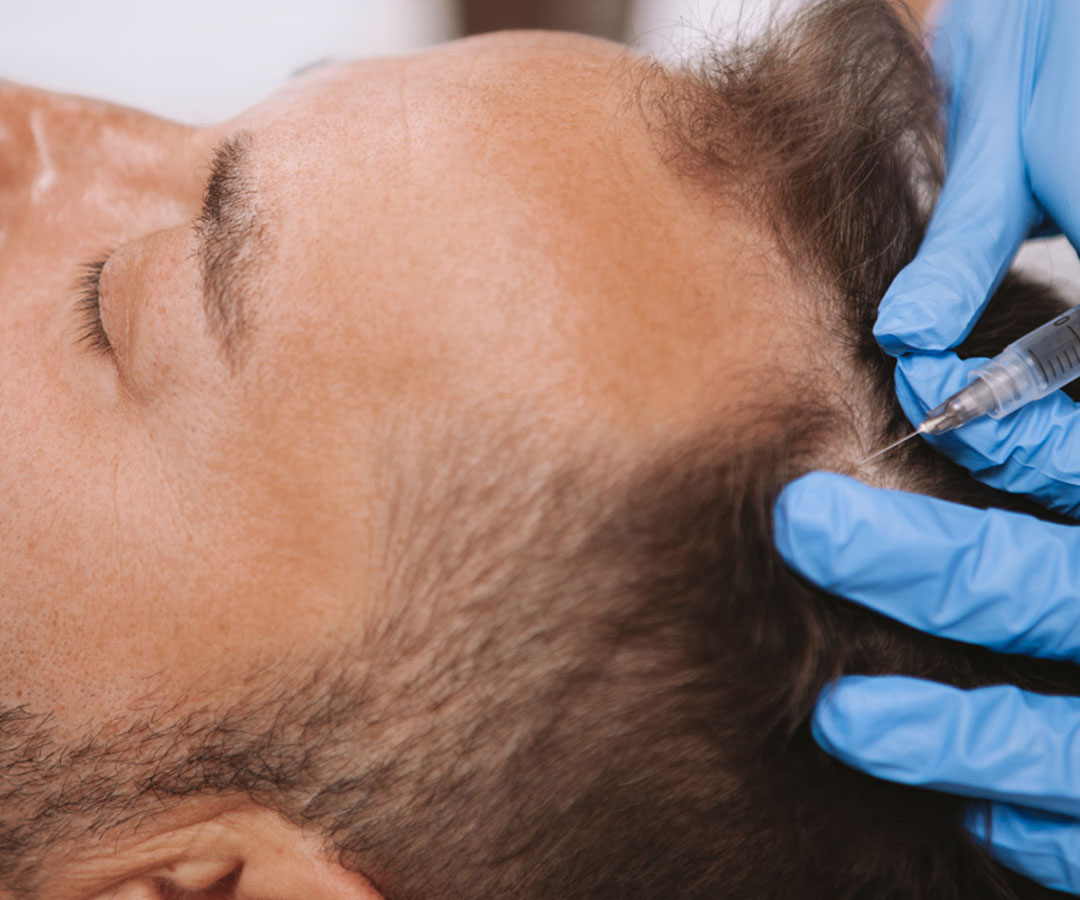
Yes, and in some cases it’s clinically appropriate. Combining oral and topical minoxidil is occasionally recommended when response to one form alone has plateaued, though the additive benefit varies by patient. More commonly, minoxidil in either form is used as part of a broader protocol that may include finasteride or dutasteride to address the DHT-driven component of loss, Autologous Cellular Serum (ACS) to support follicle health and scalp environment, low-level laser therapy, or microneedling to enhance absorption and follicle stimulation. The combination that makes sense depends on the individual’s hair loss pattern, biology, and what they’re trying to achieve.
Which Form Is Right for You?
Topical minoxidil is often the right starting point for early or targeted thinning, for patients who want an over-the-counter option, and for women experiencing diffuse thinning who are not candidates for DHT-blocking medications. Oral minoxidil tends to be a better fit for patients with more widespread thinning, those who haven’t responded adequately to topical use, or patients for whom the daily application routine has been a barrier to consistent use.
Neither form works in isolation from the broader picture. The follicles still have to be active enough to respond. Treatment has to be consistent. And the protocol has to account for the specific pattern and progression of the patient’s hair loss, which is why a clinical evaluation before starting is worth more than any comparison chart.
Beyond Minoxidil: ACS
For patients looking for a more targeted approach to follicle health, Autologous Cellular Serum (ACS) represents a significant evolution beyond what minoxidil alone can achieve. Where minoxidil works by improving blood flow and extending the growth phase systemically, ACS works by delivering a concentrated serum derived from your own blood directly to the scalp — supporting follicle metabolism, reducing inflammation, and creating a healthier environment for hair growth at the cellular level. For many of our patients, ACS is the centerpiece of a non-surgical protocol, with minoxidil playing a supporting role rather than carrying the full load. Whether ACS is right for your case is something we assess individually — but if minoxidil alone hasn’t delivered the results you were hoping for, it’s often the next conversation worth having.
Schedule a Consultation at Northwestern Hair Restoration
If you’re considering minoxidil — in either form — and want to understand how it fits into a broader strategy for your specific hair loss pattern, a consultation with Dr. Vinay Rawlani is where that conversation starts. We’ll evaluate what’s driving your loss, what your follicles are doing, and what combination of treatments gives you the best long-term outcome.
In-person evaluations are available at our Chicago clinic. Virtual consultations are available for patients anywhere.