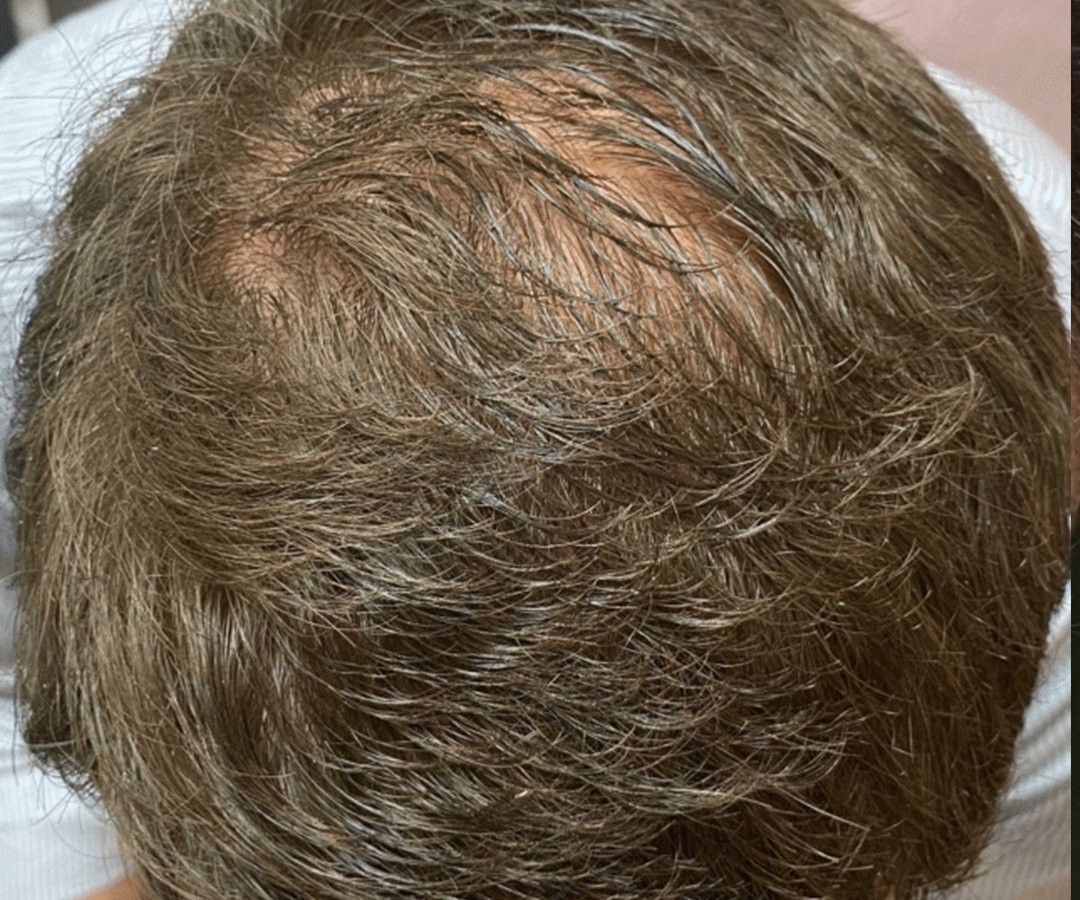





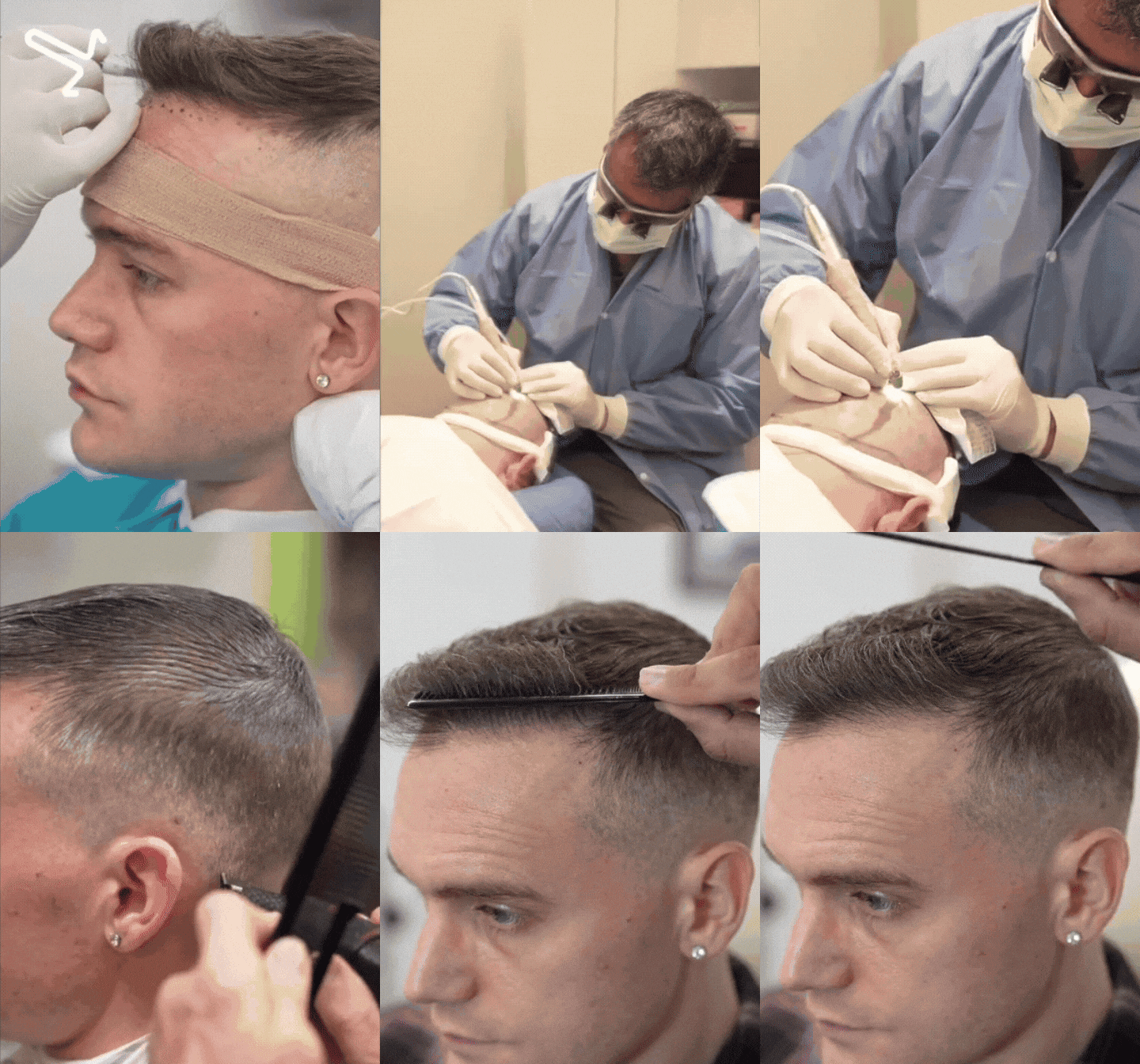
A lot of patients who find their way to Northwestern Hair Restoration have already tried PRP somewhere else. At a med spa, a dermatology office, or another hair clinic. Some saw modest improvement. Many saw nothing at all. Almost all of them arrive with the same question underneath the surface: was it the treatment, or was it me?
Usually, it’s neither. It’s the gap between what PRP can actually do and what it’s routinely promised to do — and that gap is wide enough that we no longer offer it.
We moved on from PRP because the clinical results from Autologous Cellular Serum — ACS — consistently outperform it. That’s not a positioning statement. It’s the reason the change happened. But to understand why ACS is a more effective tool, it helps to understand what PRP actually is, where it falls short, and what’s possible when the biology is approached differently.
What PRP Actually Is
 PRP — Platelet-Rich Plasma — is derived from a patient’s own blood. A sample is drawn, centrifuged to isolate and concentrate the platelet fraction, and injected into the scalp. Platelets carry growth factors involved in tissue repair, new blood vessel formation, and cellular signaling. The premise is sound: introduce concentrated growth factors into the follicle environment, and you can support metabolism and stimulate growth activity in weakening hair.
The problem isn’t the premise. It’s the ceiling.
PRP can only influence follicles that are already viable. It cannot create new follicles, reverse fully miniaturized ones, or address the hormonal and genetic drivers of hair loss that are actively working against it. Its mechanism is narrow — primarily platelet-derived growth factors — and in many patients, that’s simply not enough biological signal to produce meaningful, lasting change.
Why PRP Produces Inconsistent Results
The patients who see real benefit from PRP tend to be those with early hair loss, follicles that are weakening but still active, and a scalp environment that responds well to growth factor stimulation. In those cases, PRP can improve hair caliber, reduce shedding, and slow the progression of miniaturization.
But that’s a narrow window. For patients with more advanced loss, metabolic suppression in the scalp, inflammatory drivers, prolonged or recurrent shedding, or follicles that have already crossed the threshold into full miniaturization, PRP consistently underdelivers. The treatment isn’t unpredictable. The biology it’s working against is simply more complex than platelet growth factors can address.
This explains the experience many patients describe: real money spent, real time invested, real hope — and results that ranged from modest to nonexistent. They weren’t wrong to try it. They were working with the best tool that was available to them at the time.
Why We Moved Past PRP: Autologous Cellular Serum (ACS)
 ACS was introduced to hair restoration by Dr. Vinay Rawlani from the field of orthopedic surgery, where he first encountered its regenerative capacity during his own recovery from a shoulder injury. What he observed was a treatment that worked on tissue at a fundamentally different level than PRP — and when he brought it into hair restoration, the clinical results confirmed what the biology suggested.
Like PRP, ACS is derived entirely from the patient’s own biology — no synthetic additives, no foreign material. But where PRP isolates the platelet fraction primarily, ACS is designed to harness a broader range of autologous components involved in tissue signaling, inflammation regulation, and cellular communication. It engages the follicle environment more completely, addressing not just growth factor delivery but the underlying metabolic and inflammatory conditions that determine whether follicles can respond in the first place.
The results we see from ACS — in hair thickness, shedding reduction, follicle reactivation, and sustained density over time — are consistently stronger than what PRP produced. That’s why it replaced PRP on our menu entirely, rather than sitting alongside it as an upgrade option.
What ACS Can Do That PRP Cannot
Broader biological signaling
PRP delivers growth factors. ACS engages a wider array of biological mechanisms — including pathways involved in cellular repair, inflammation modulation, and follicle metabolism — that PRP’s narrower mechanism doesn’t reach. For patients whose hair loss involves more than a simple growth factor deficit, that range matters.
More effective in complex cases
ACS tends to produce meaningful results in patients who saw little from PRP: those with prolonged shedding, metabolically suppressed follicles, significant inflammation, or hair quality that has deteriorated substantially. These are precisely the cases where PRP’s ceiling becomes a wall. ACS has more biological runway to work with.
Integration with surgical restoration
For patients who undergo hair transplantation, ACS plays a role both in supporting graft survival and in maintaining the native hair around the transplant over time. That dual function — protecting the procedure and preserving what’s already there — is part of how we approach long-term density, not just immediate results.
The Right Question to Ask
If you’re researching PRP, the question worth asking isn’t whether it works in general. It’s whether the regenerative treatment you’re considering is actually matched to the biology of your specific hair loss — its cause, its stage, and what the follicle environment looks like right now.
PRP has a role in hair restoration under the right conditions. Those conditions are narrower than most clinics acknowledge, which is part of why so many patients come to us having already tried it. ACS was developed to address a broader range of those conditions more effectively — and the clinical results are why it’s the only regenerative treatment we offer.
Schedule a Consultation at Northwestern Hair Restoration
If you’ve tried PRP and didn’t get the results you were hoping for, or if you’re exploring non-surgical options and want to understand what ACS might actually do for your hair, a consultation with Dr. Vinay Rawlani is the place to start. We’ll evaluate where your hair loss is, what’s driving it, and whether ACS — alone or as part of a broader restoration strategy — is the right next step.
In-person evaluations are available at our Chicago clinic. Virtual consultations are available for patients anywhere.