



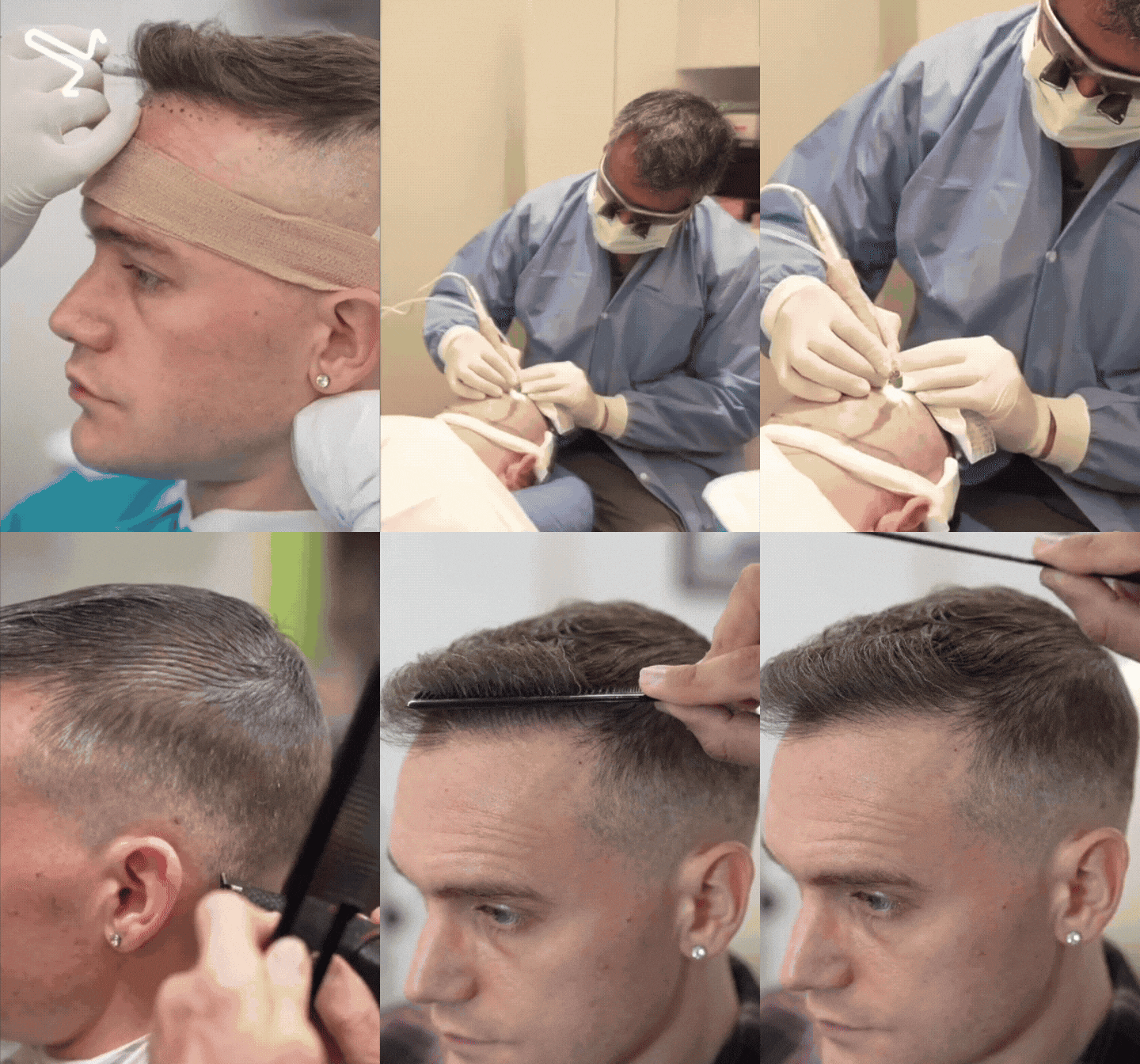
The question patients ask most often after a procedure isn’t about the surgery itself. It’s about what happens next: when will the hair actually start growing? The answer requires understanding something most patients haven’t thought about before — that transplanted hair doesn’t grow on a surgical schedule. It grows on a biological one.
The follicles we relocate are living tissue. They respond to the relocation process the way living tissue does: by temporarily stepping back before moving forward. Understanding that process is what makes the recovery period legible, and what separates patients who stay confident through the timeline from patients who panic unnecessarily at month two.
Why Transplanted Hair Doesn’t Grow Immediately
 During a hair transplant, healthy follicles are harvested from the donor area and placed into thinning or balding regions. The follicles themselves are permanent — they retain the genetic characteristics that make donor hair resistant to the DHT-driven miniaturization responsible for most hair loss. But relocation is a biological stress, and the follicles respond accordingly.
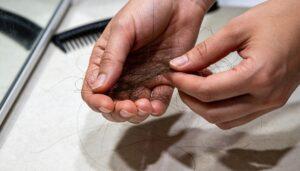
The immediate response is a temporary transition into a resting state. The hair shaft — the visible part of the hair above the scalp — sheds within the first few weeks. The follicle beneath the skin remains intact and viable. It isn’t gone. It’s resetting. This is called shock shedding, and it is a normal, expected part of the process, not a sign that anything has gone wrong.
The Four Phases of the Hair Growth Cycle
 Every hair follicle on the scalp cycles continuously through four phases, independently of its neighbors. Understanding these phases is what makes the transplant timeline make sense.
Anagen — the growth phase
Anagen is the active growth period, during which the follicle is producing a hair shaft. It lasts anywhere from two to seven years, and it’s the phase that determines maximum hair length. At any given time, roughly eighty-five to ninety percent of scalp hairs are in anagen. This is the phase transplanted follicles are working toward — the phase we’re waiting for them to reenter after relocation.
Catagen — the transition phase
Catagen is a brief transitional period lasting two to three weeks, during which the hair shaft detaches from its blood supply and the follicle begins preparing to rest. Only a small percentage of follicles are in this phase at any time. It’s the bridge between active growth and dormancy.
Telogen — the resting phase
In telogen, the follicle is dormant. The hair is retained but not growing, and the phase lasts approximately three months. After transplantation, follicles temporarily enter telogen — which is the biological explanation for why the early post-procedure period looks the way it does. The follicle is present and alive beneath the scalp. It’s simply not producing hair yet.
Exogen — the shedding phase
Exogen is when the old hair shaft releases and the follicle begins forming a new one beneath the surface. This is the phase patients experience as shock shedding in the weeks after transplantation. The shedding is the hair shaft, not the follicle. The follicle stays. The hair that grows back is the new growth cycle beginning.
What to Expect: The Growth Timeline
The timeline below reflects what most patients experience. Individual variation is normal — hair characteristics, overall health, and how closely post-procedure instructions are followed all influence pace. But the sequence is consistent.
Weeks 1–2: Initial healing
Scabbing and redness at the recipient and donor sites resolve. Grafts secure in place beneath the scalp. There is no visible growth at this stage, and there shouldn’t be.
Weeks 2–6: Shock shedding
Transplanted hairs shed. The recipient area may look similar to how it looked before the procedure. This is the phase that most often causes unnecessary alarm. The follicles are intact. The shedding is normal biology, not failure.
Months 3–4: Early emergence
Fine, soft hairs begin breaking through the scalp surface. Growth is typically uneven at this stage — some follicles reenter anagen earlier than others. The texture may be thinner than the final result will be. This is the beginning of something, not the something itself.
Months 5–6: Visible improvement
Density begins increasing meaningfully. Hair shafts thicken. The overall pattern of the restoration starts to become legible. Most patients find this the first stage where they can genuinely see where things are heading.
Months 8–10: Continued maturation
Density continues to strengthen. Hair texture and behavior approach what the final result will look like. Styling becomes more straightforward as coverage improves.
Months 12–18: Full results
Transplanted hair has fully matured. Density, thickness, and texture have reached their final state. The hair behaves like the rest of your natural hair because, genetically, it is. This is the result the procedure was planned to achieve.
Why Growth Looks Uneven Early On
Follicles don’t reenter the growth phase simultaneously. Each one cycles independently — which is exactly how natural hair growth works, and why natural hair doesn’t look like a single synchronized crop. The staggered emergence in the months after transplantation mirrors normal follicle behavior. Some hairs will appear before others. Texture and thickness will improve gradually as more follicles transition into and through the growth phase. By month twelve, the asynchrony that made months four and five look uneven has largely resolved into consistent coverage.
What Influences Growth Success
Graft survival and growth quality are shaped by factors from both sides of the procedure. On the clinical side, extraction technique, graft handling, and the precision of placement all directly affect how many follicles survive the relocation process and how well they establish in the recipient area. This is the part the surgical team controls.
On the patient side, overall health, nutritional status, hormonal balance, and whether post-procedure care instructions are followed all influence how the healing process goes. Smoking meaningfully impairs circulation and graft survival and is worth addressing before surgery if it applies. Hair characteristics — thickness, curl pattern, color contrast with skin — affect how density reads visually as the hair grows in, even when the underlying graft count is the same.
None of these factors are reasons to delay a procedure indefinitely. They’re variables to understand and, where possible, optimize going in.
Supporting Growth After the Procedure
The transplant itself is the foundation. What surrounds it — in terms of ongoing treatment — determines how well the native hair holds up over time and how the overall density picture looks at year three, five, and beyond.
Depending on your hair loss pattern and biology, physician-guided support may include finasteride or minoxidil to protect native hair from continued DHT-driven miniaturization, Autologous Cellular Serum (ACS) to support follicle health and scalp environment, low-level laser therapy, or a combination approach. The goal is to protect what the transplant built and slow the progression in the surrounding hair that wasn’t transplanted. That’s the long-term strategy — the transplant and the maintenance plan working together.
When to Follow Up with Your Provider
Regular follow-up appointments are part of the process, not a sign that something is wrong. Most patients check in at one month, three months, and again around six to nine months, with final documentation at twelve to eighteen months. If there is no visible growth at all by the six-month mark, that warrants a conversation. Persistent redness, irritation, or unusual swelling at any stage should be addressed promptly. In practice, the majority of concerns that arise in the recovery period turn out to be normal biology — but your provider should be the one making that determination, not a search engine.
Schedule a Consultation at Northwestern Hair Restoration
If you’re considering a hair transplant and want to understand not just the procedure but the full arc of what recovery and growth look like for your specific case — your hair characteristics, your timeline, and what a realistic result looks like at twelve months — a consultation with Dr. Vinay Rawlani is where that conversation starts. We walk through the biology, the planning, and the post-procedure strategy together before you make any decisions.
In-person evaluations are available at our Chicago clinic. Virtual consultations are available for patients anywhere.