



Hair loss is not a single condition. It is a clinical symptom that can arise from multiple biological mechanisms, each requiring a different diagnostic approach and treatment strategy. Yet many individuals delay care because they assume thinning hair or shedding is “normal” or inevitable.
At Northwestern Hair, every patient is personally evaluated under the clinical leadership of Dr. Vinay Rawlani, a plastic-surgery-trained physician who is redefining what is possible in modern hair restoration. Trained at Northwestern University and the University of Chicago, and driven by both scientific rigor and artistic precision, Dr. Vinay designs each treatment plan with intention. Having undergone hair restoration himself, he understands both the emotional impact of hair loss and the technical standards required to create results that look natural and endure over time.
Through comprehensive scalp analysis and medical assessment, Dr. Vinay identifies the specific form of hair loss affecting each patient and designs a personalized treatment program that may include advanced non-surgical therapies, regenerative options such as Autologous Cellular Serum (ACS), and surgical hair restoration when appropriate.
Three of the most common diagnoses seen in clinical hair restoration are androgenetic alopecia, telogen effluvium, and alopecia areata. Understanding how these conditions differ is essential to understanding why professional diagnosis matters—and how targeted treatment can protect existing hair while supporting regrowth.
Androgenetic Alopecia (Genetic or Pattern Hair Loss)
Clinical overview
Androgenetic alopecia is the most prevalent cause of hair loss in both men and women. It is a genetically influenced condition driven by the interaction between susceptible hair follicles and androgens, particularly dihydrotestosterone (DHT).
In individuals with a genetic predisposition, DHT binds to receptors in specific follicles and gradually disrupts their normal growth cycle. Over time, this leads to follicular miniaturization—the progressive shrinking of hair follicles.
How androgenetic alopecia progresses
As miniaturization advances:
- Growth cycles shorten
- Hair shafts become finer and weaker
- Visible density decreases
- Eventually, follicles may stop producing visible hair
This process is progressive. Without intervention, androgenetic alopecia continues to worsen.
Typical presentation
- Men: Receding hairline, temporal recession, and crown thinning
- Women: Diffuse thinning over the crown and widening of the part, often with preservation of the frontal hairline
How Dr. Vinay Rawlani approaches androgenetic alopecia
Dr. Vinay does not treat pattern hair loss as a cosmetic problem. He approaches it as a biological and architectural challenge—one that requires preserving vulnerable follicles while designing for the future.
Every evaluation examines not only visible thinning, but also:
- Follicle miniaturization
- Scalp and metabolic health
- Rate of progression
- Long-term aesthetic trajectory
Treatment strategies are often layered and may include non-surgical follicle-support therapies, regenerative treatments such as ACS to stimulate scalp metabolism and circulation, and surgical hair transplantation when follicles are no longer capable of producing viable hair.
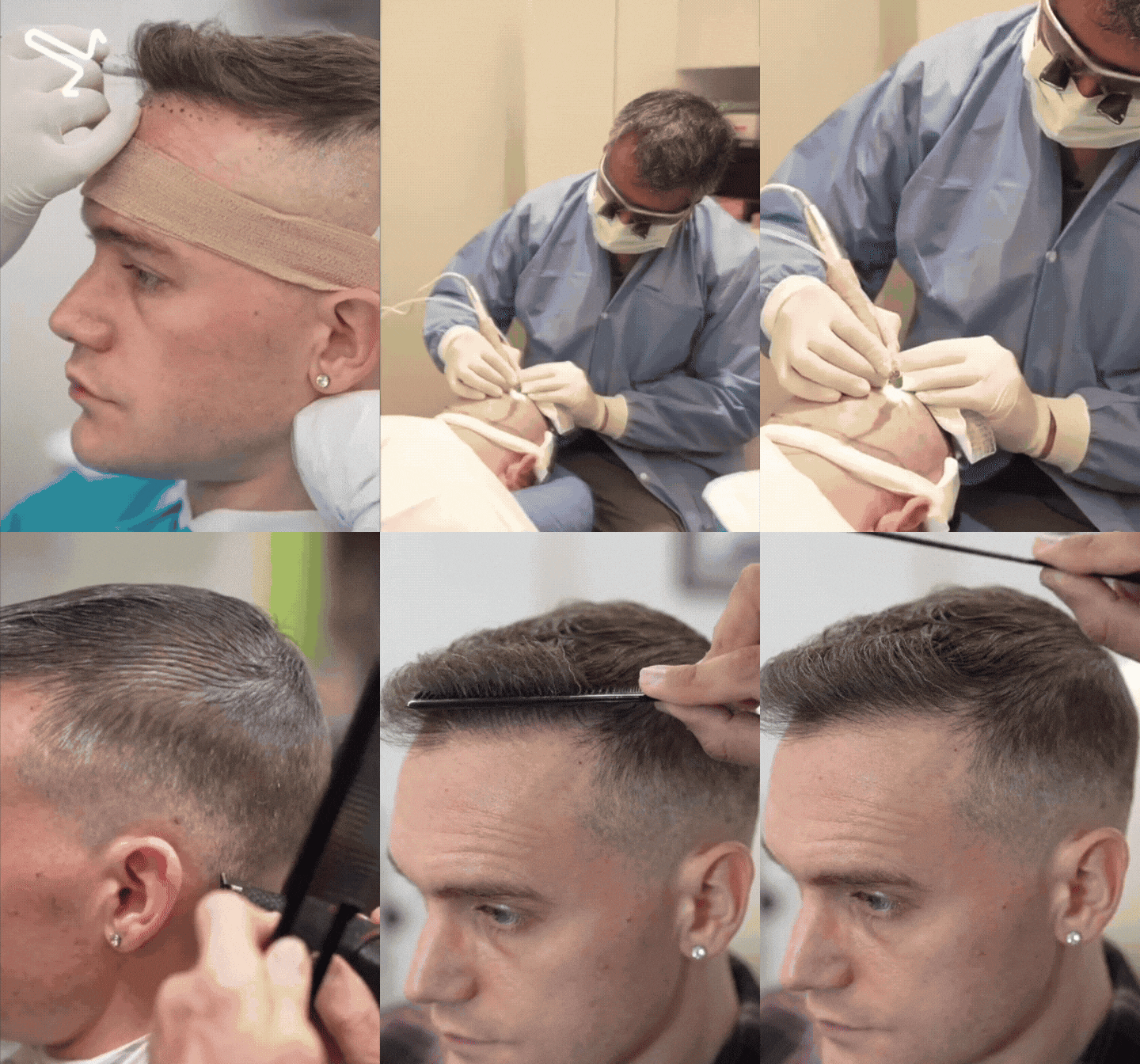
Because Dr. Vinay personally designs and performs each procedure, surgical restoration is never isolated from long-term planning. His hairline design methodology—developed over more than a decade of studying facial proportions, aging patterns, and density architecture—ensures that each result not only looks natural today, but continues to look natural as the patient ages.
Telogen Effluvium (Reactive or Shedding-Based Hair Loss)
Clinical overview
Telogen effluvium is a non-scarring hair loss condition characterized by diffuse, excessive shedding rather than patterned thinning. It occurs when a significant number of follicles are abruptly shifted from the growth phase into the resting and shedding phase.
This disruption is often delayed. Patients typically notice shedding several weeks to months after a physiological or emotional stressor.
Common triggers
Telogen effluvium is commonly associated with:
- Major illness or surgery
- Hormonal shifts
- Nutritional deficiencies
- Rapid weight changes
- Psychological stress
- Medication effects
Clinical characteristics
- Sudden increase in hair shedding
- Overall reduction in density
- Preserved hairline
- Healthy-appearing scalp
The follicles remain alive, but the hair cycle is dysregulated.
How Dr. Vinay Rawlani approaches telogen effluvium
Dr. Vinay’s evaluation focuses on identifying and correcting the root cause of shedding while simultaneously restoring optimal scalp conditions.
Diagnostic review includes medical history, lifestyle factors, and scalp analysis to determine whether telogen effluvium exists alone or is revealing early androgenetic alopecia.
Treatment programs may integrate regenerative therapies, non-surgical scalp treatments, and customized follicle-support protocols to normalize cycling, strengthen emerging hair, and accelerate recovery.
By addressing both systemic and follicular factors, Dr. Vinay is able to reduce prolonged shedding and support healthier, more resilient regrowth.
Alopecia Areata (Autoimmune-Mediated Hair Loss)
Clinical overview
Alopecia areata is an autoimmune disorder in which the immune system mistakenly targets hair follicles, interrupting growth and causing sudden hair loss. Unlike androgenetic alopecia or telogen effluvium, this condition is immunologically driven.
Follicles are not destroyed, but functionally suppressed.
Patterns of presentation
- Discrete round or oval bald patches
- Sudden onset
- Smooth, non-scarred scalp
- Possible progression to total scalp or body hair loss
The course is unpredictable, with periods of loss and regrowth.
How Dr. Vinay Rawlani approaches alopecia areata
Dr. Vinay evaluates alopecia areata within a medically guided framework, assessing disease activity, extent, and patient history. Treatment planning emphasizes follicle preservation, scalp health, and supportive regenerative strategies designed to encourage follicle signaling and recovery.
Where appropriate, regenerative therapies may be incorporated to improve circulation, metabolic support, and follicular communication, while treatment plans remain flexible to accommodate the variable nature of autoimmune hair loss.
Why Accurate Diagnosis Is the Foundation of Effective Hair Restoration
Although these three conditions all result in hair loss, their biological drivers are fundamentally different.
- Androgenetic alopecia requires long-term follicle preservation and architectural restoration
- Telogen effluvium requires correction of triggers and normalization of hair cycling
- Alopecia areata requires medically guided, immune-aware management
Treating hair loss without defining its cause risks progression, misaligned therapy, and avoidable loss of viable follicles.
Dr. Vinay’s diagnostic process is intentionally comprehensive. From the metabolic health of the scalp to the angle and integrity of emerging hair shafts, no detail is overlooked. This depth of evaluation allows treatment to be biologically targeted rather than generic.
Northwestern Hair’s Physician-Led, Integrated Restoration Model
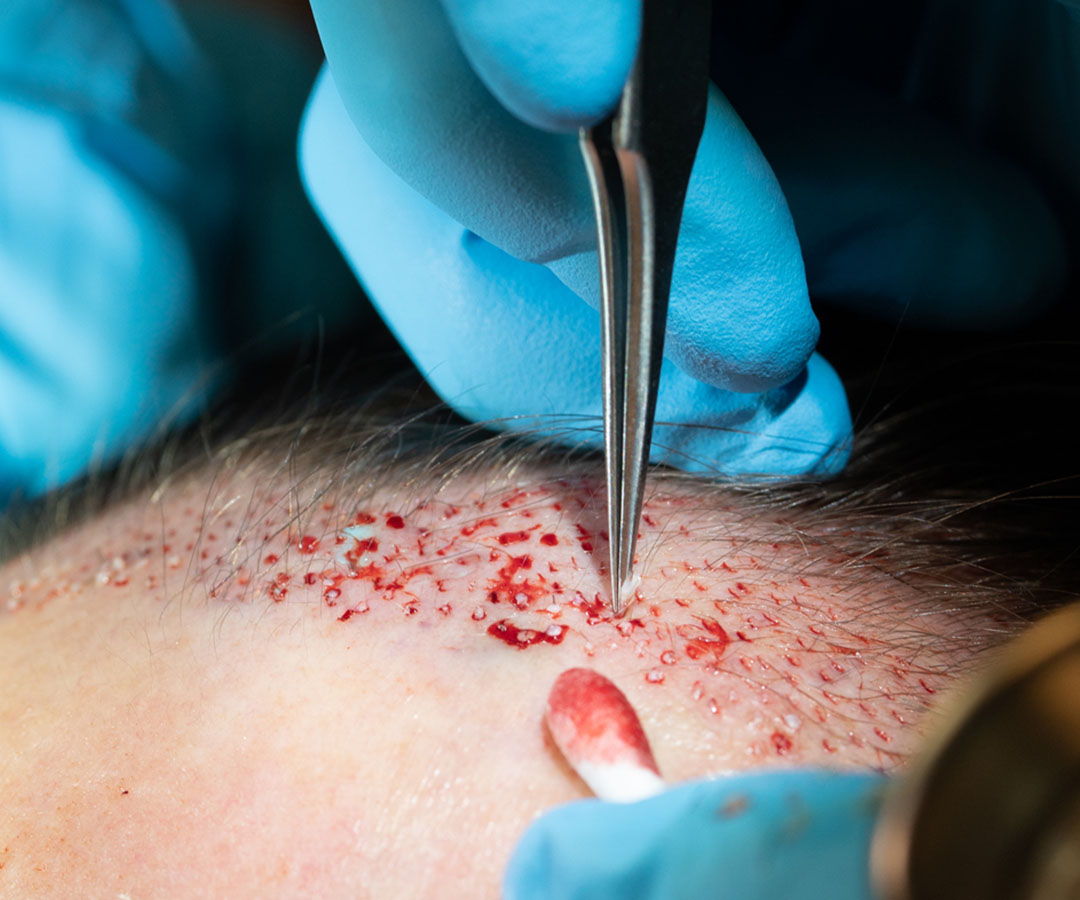
Northwestern Hair operates on a physician-led model in which diagnosis, design, and execution are unified. Dr. Vinay personally designs and performs every hair transplant and oversees the integration of non-surgical and regenerative therapies.
His methodology—rooted in both plastic surgery training and artistic design—guides every layer of treatment, from early intervention programs to advanced surgical restoration.
Designing a timeless hairline is both an art and a science. Dr. Vinay spent more than a decade studying facial proportions, density gradients, and aging patterns to develop his proprietary hairline design philosophy. This framework does not simply guide surgery—it informs graft placement, plasma preservation, regenerative protocols, and long-term treatment planning.
Every arc, every angle, and every density pattern is intentional.
Final Thoughts
Hair loss is not a diagnosis. It is a symptom. Androgenetic alopecia, telogen effluvium, and alopecia areata represent three of the most common—and most biologically distinct—forms of hair loss.
When the underlying mechanism is correctly identified, treatment can move beyond temporary camouflage and toward true follicle preservation and restoration. Under the direction of Dr. Vinay Rawlani, Northwestern Hair approaches hair loss with clinical depth, regenerative innovation, and aesthetic intention.