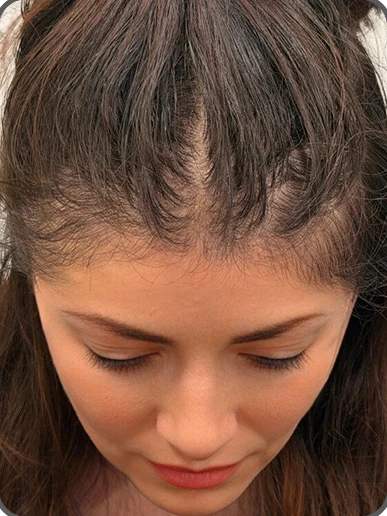
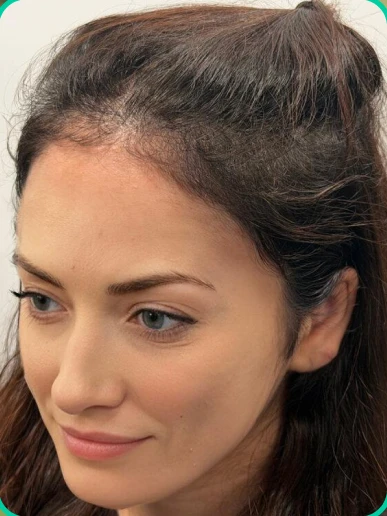
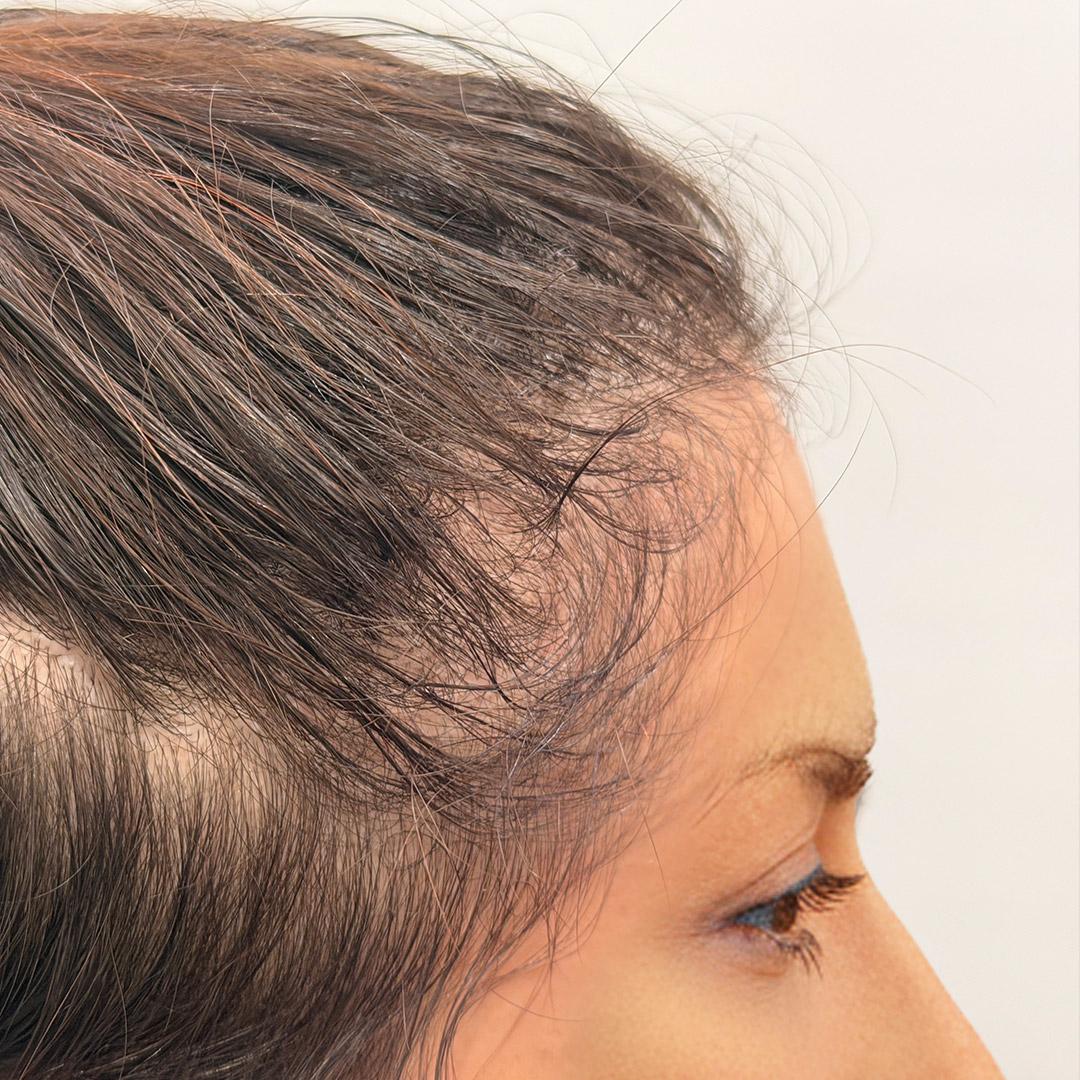
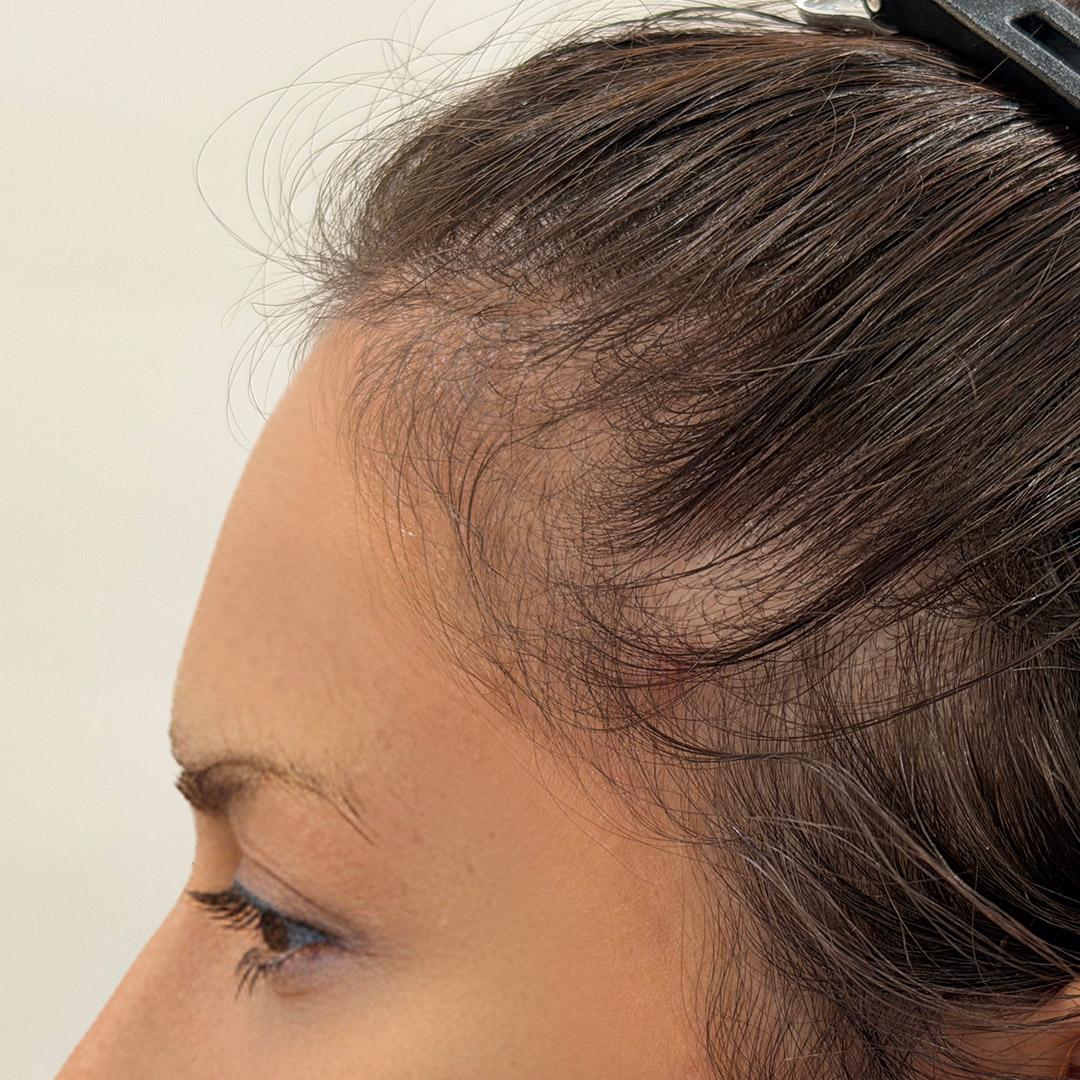
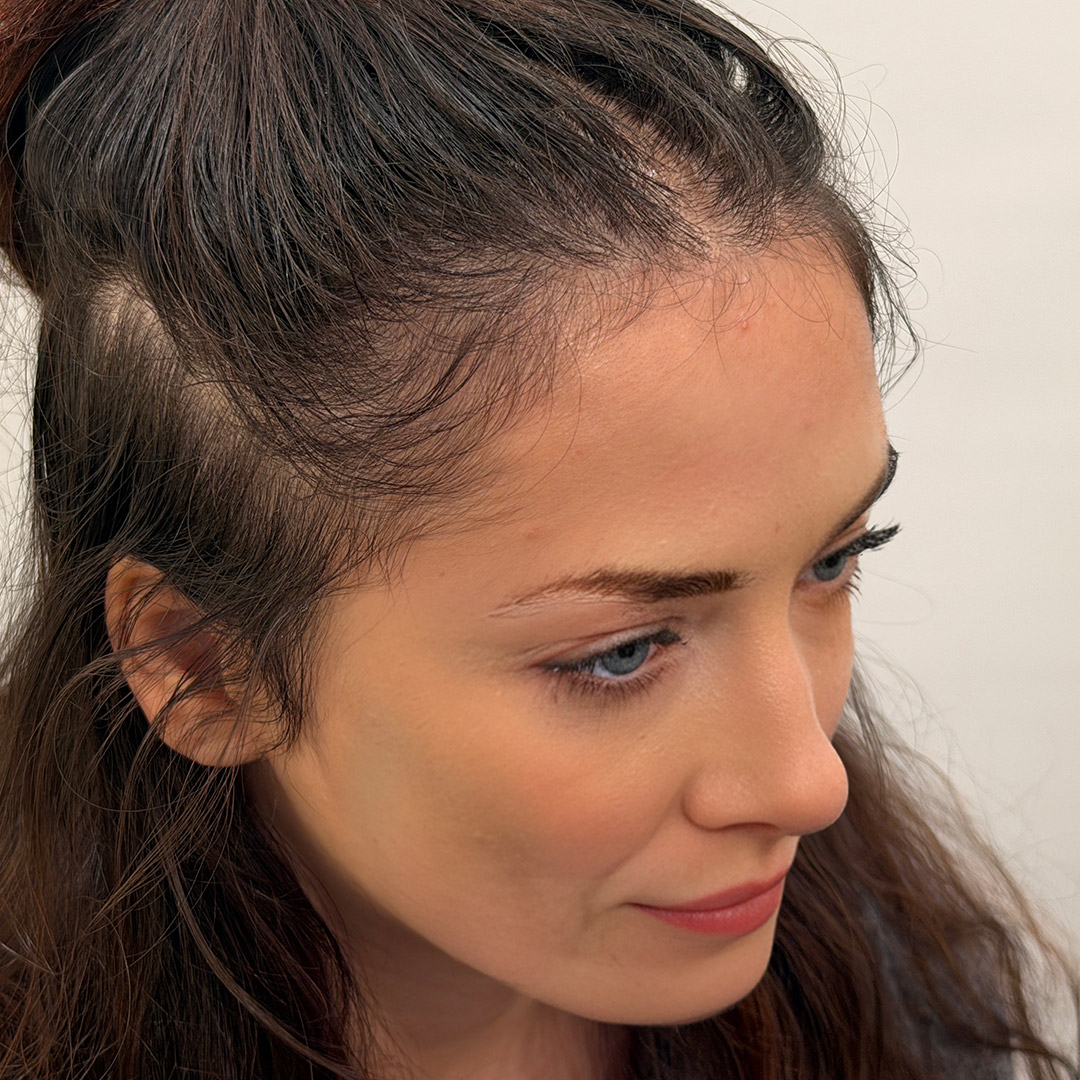
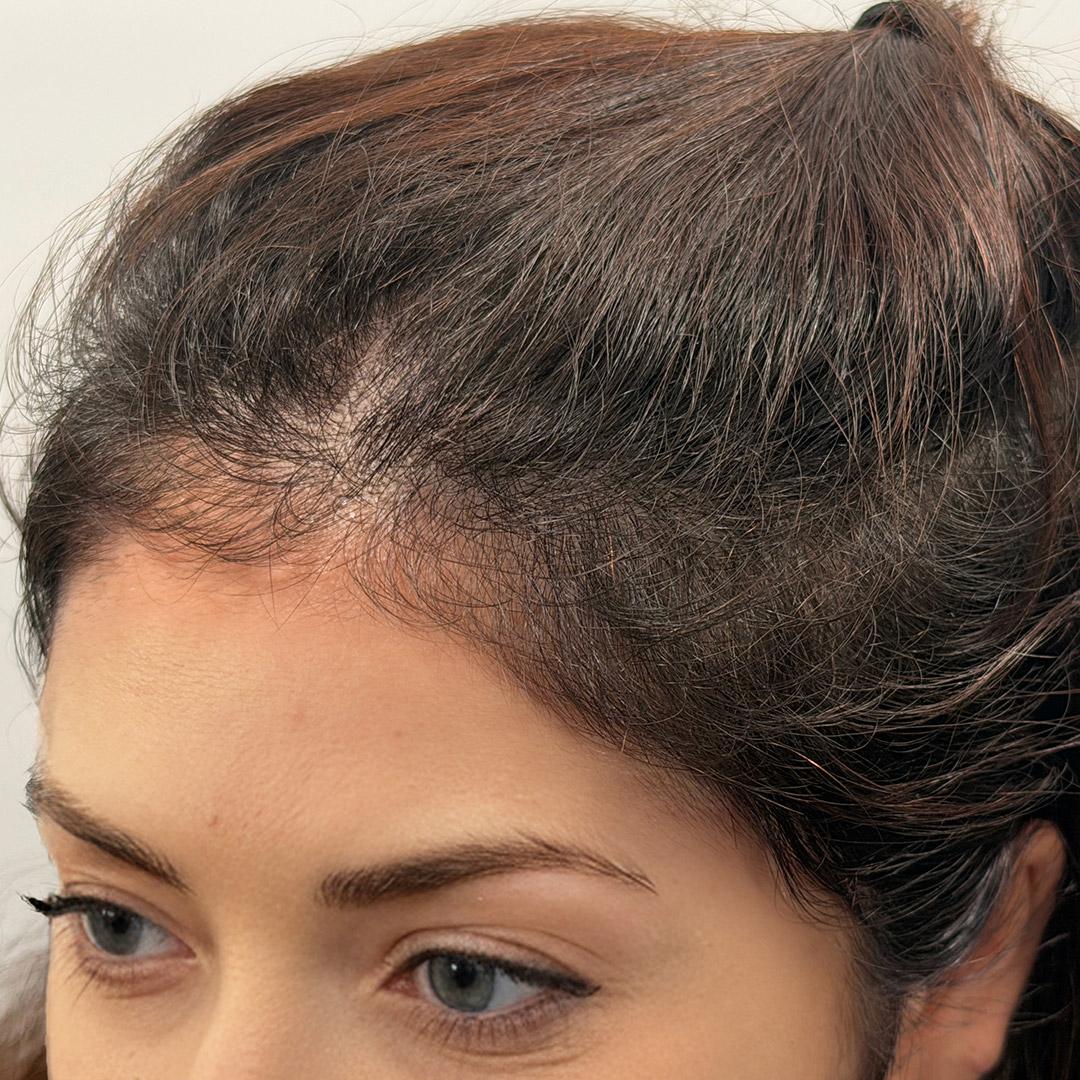
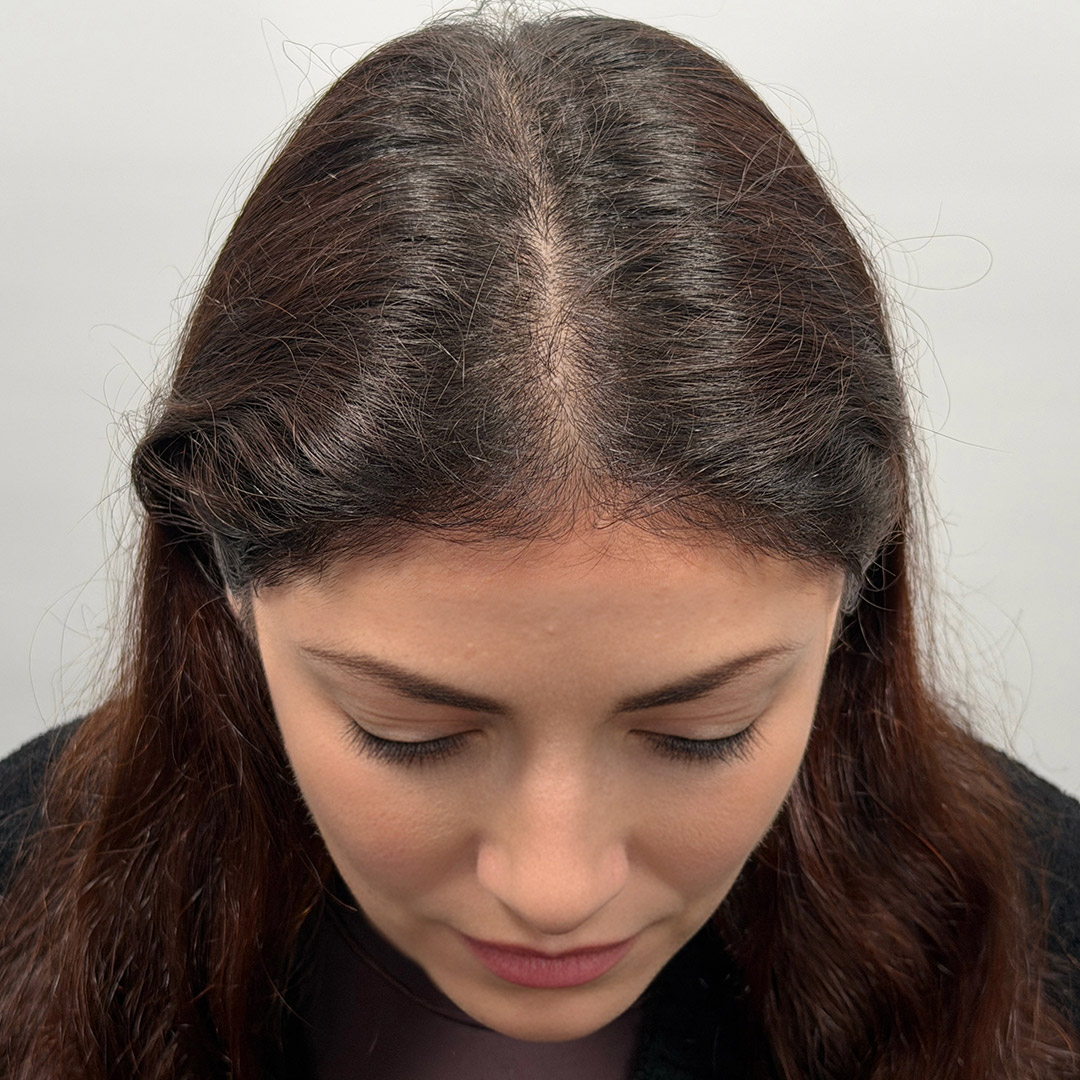
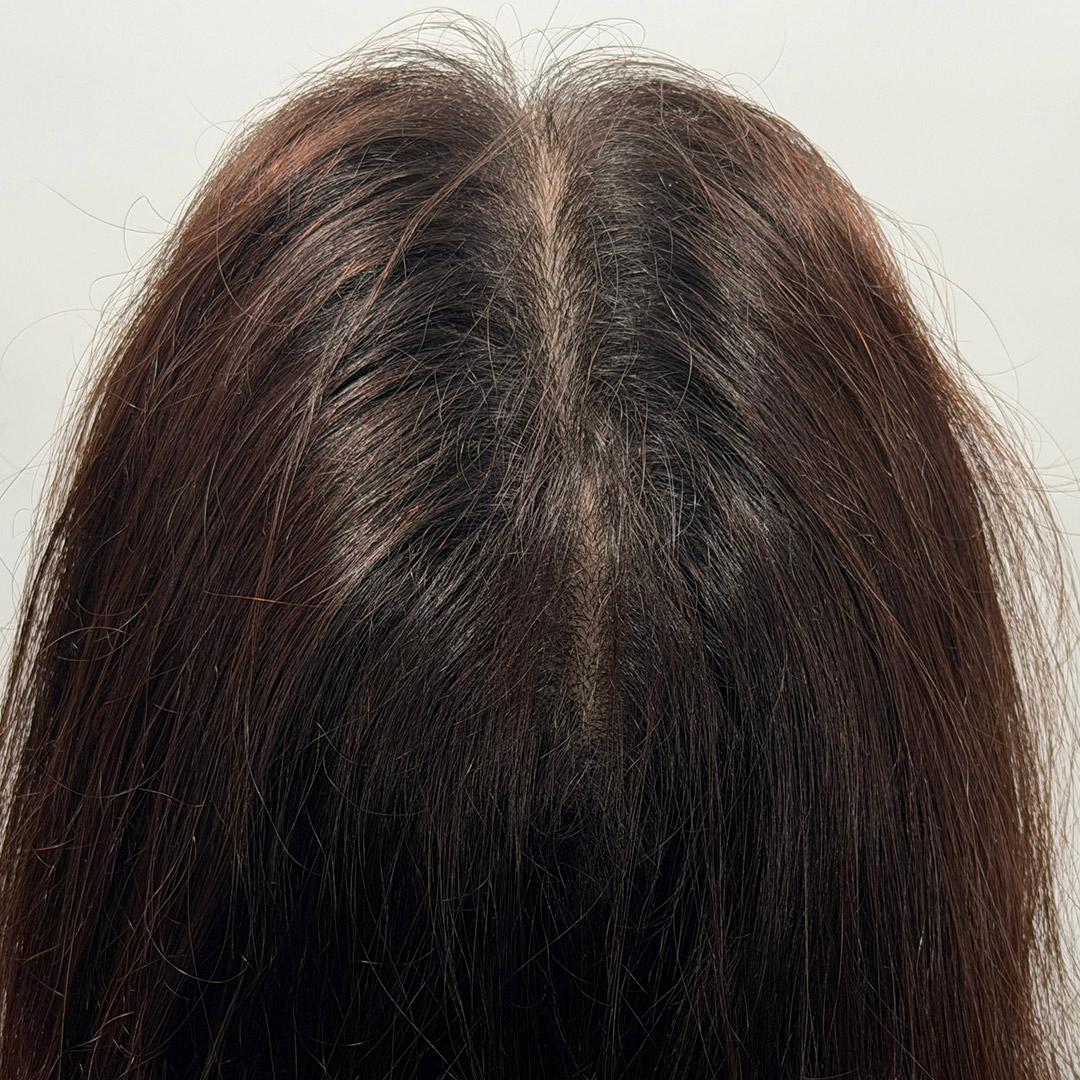
Women’s hair transplants in Chicago, personally performed by Dr. Vinay Rawlani. Designed around your hair, your life, and the hairline you came in for.
WOMEN'S HAIR TRANSPLANT IN
CHICAGO, DESIGNED FOR YOU.
For too long, women’s hair restoration has been a footnote in a field built around men. Dr. Vinay built this program because women deserve to be the focus of the work, not an adaptation of it — with techniques, design sensibility, and care designed for how their hair actually behaves and what their lives actually require. We offer personalized solutions for women experiencing hair thinning and thinning hair, with every treatment plan tailored to address these primary concerns. Our approach is designed to achieve optimal results based on each woman’s unique needs and goals.
I’m 2 years out of my hair transplant and I’m beyond happy with the result. Highly recommend this place.
ALEXANDRA L.
WHAT IS A WOMEN'S
HAIR TRANSPLANT?
A women’s hair transplant is a surgical procedure known as hair transplantation that moves healthy follicles from a donor area at the back and sides of the scalp into a recipient area where hair has thinned. It’s a form of cosmetic surgery — one that calls on plastic surgery principles for design and an artist’s eye for proportion. Done well, it produces a fuller head of hair that looks like the woman in the mirror at her best.
Most women’s hair transplants today use follicular unit extraction (FUE), a minimally invasive hair transplant technique that involves harvesting individual hair follicles from the donor area and transplanting them to the thinning or balding areas of the scalp. FUE leaves no linear scar, allows for selective harvesting, and supports faster recovery. The hair transplant procedure itself is performed under local anesthesia, which means you’re awake, comfortable, and able to go home the same day.
WHAT IS A WOMEN'S
HAIR TRANSPLANT?
Female hair loss often presents as diffuse thinning rather than the
receding pattern more common in men. That changes how the hair
transplant procedure is planned. Donor area selection is more careful, the recipient area is mapped to preserve every native hair, and the design is built around restoring density to thinning areas without disturbing the hair that’s already there. Hairlines designed for women typically maintain a softer and more rounded appearance to preserve a feminine aesthetic.
The result is a hair restoration surgery that does two things at once: it adds new hair where it’s needed, and it protects the hair you already have, with the goal of achieving natural looking results and natural looking hair.
SURGICAL AND NON-SURGICAL OPTIONS.
A hair transplant is one option among several. For women who are candidates, transplanted hair offers a permanent and natural-looking solution to hair loss through hair transplantation surgery.
Many women who come to Northwestern Hair turn out to be better served — at least first — by non-surgical treatments. Our full-spectrum approach means you receive an honest assessment of which path fits your individual needs, your goals, and your timeline. The right answer for one woman isn’t always the right answer for another.
1.
ARTISTRY, BACKED
BY MEDICINE
Every hairline we design begins the same way — as a piece of art.
We don’t start with technical limitations, graft counts, or what’s convenient. We start with you: your face, your features, the hairline that belongs to the woman in front of us. We design first for beauty, so that when you look in the mirror, you see yourself.
Only then do we bring in the medicine. Is this hair transplant procedure possible? How do we execute it? To achieve your vision, we use cutting edge, advanced technology—state-of-the-art techniques and equipment that ensure the best outcomes and a natural appearance. The art leads. The medicine makes it real.
COSMETIC SURGERY, WITH A SURGEON’S DISCIPLINE.
Dr. Vinay trained in plastic surgery at Northwestern University and the University of Chicago — two of the most rigorous programs in the country. That training shapes everything about how he approaches a women’s hair transplant: as cosmetic surgery, where the result has to be beautiful, but also as a medical procedure, where every decision has to hold up clinically.
CASE 01
ALEJANDRA.
Diagnosis: Genetically thin hairline and temples
Plan: Concealed FUE with Micro PUE extraction; pre- and post-procedure ACS optimization
Performed by: Dr. Vinay Rawlani
DR. VINAY’S NOTE ON THIS CASE:
Alejandra came to us with genetically thin temples and a hairline that had always sat a little too high. This case wasn’t about graft count — it was about drawing the hairline she was meant to have. Everything in the procedure room followed from the design, and the result is a frame that belongs to her face. Patients sometimes think a beautiful transplant means more grafts. What it actually means is the right grafts, in the right places, at the right density.
Dr. Vinay is a SUPERB surgeon!! He truly has a passion for his work.
MARYAM A.
02
HAIR TRANSPLANT TECHNOLOGY,
REFINED FOR WOMEN.
Once the design is set, we execute it using the refinements we’ve built on top of standard FUE.
FUE HAIR TRANSPLANT — THE
FOUNDATION.
Follicular unit extraction is the foundation of every hair transplant procedure we perform. Each follicle is removed individually from the donor area, evaluated, and placed into the recipient area at an angle and depth chosen to match how the surrounding hair grows. There is no strip removal, no linear scar, and the recovery period is shorter than it would be with an older technique.
MICRO PUE EXTRACTION.
Rather than punching follicles out of the scalp, we vibrate each one free in its natural form — intact, with its oil glands preserved — so every graft arrives healthier and behaves more like the natural hair it’s replacing. The technique also lets us place roughly double the grafts of standard FUE in a single session, which is what makes one-and-done procedures possible and keeps the social footprint of a hair transplant small.
ACS — BIOLOGICAL
OPTIMIZATION.
The second refinement is Autologous Cellular Serum, or ACS. Before and after surgery, ACS reactivates follicle metabolism and restores blood flow to the scalp — maximizing the yield from every graft we place. It’s how we give each follicle the best possible chance of surviving and thriving.
These two refinements are why our results hold up at one, two, and five years out. The work is only as good as the biology that supports it.
There are not many doctors who cater to women's hair loss — especially in Chicago. I've lacked the courage to confront my own hair loss for many years, but I'm glad I finally found my way to Dr. Vinay. He has a bedside manner you rarely see in doctors
today. Didn't rush me, had a pragmatic approach to my treatment plan, and somehow made the process of putting dozens of tiny needles in my scalp as painless as possible. For the first time in almost a decade, I have hope for my hairline.
OLIVIA M.
CASE 02
DENISE
Diagnosis: Traction alopecia
Plan: Concealed FUE with Micro PUE extraction; pre-op ACS optimization
Performed by: Dr. Vinay Rawlani
DR. VINAY’S NOTE ON THIS CASE:
Denise is a young woman who loved tight, protective styles growing up. Over years, her hairline paid the price — a slow, quiet traction alopecia that kept progressing no matter what she tried. She had spent years on treatments that couldn’t work for her, because the follicles those treatments were meant to wake up had already been scarred out. After preparing her scalp and stabilizing the environment, we restored her hairline in a single session. It’s the kind of case Micro PUE was built for — enough grafts, in one day, to give a woman her hairline back without making surgery a second career.
A CONCEALED PROCEDURE, WITHOUT COMPROMISING THE RESULT.
Performing a beautiful hair transplant is one thing. Performing it so that no one can tell it happened is another — and for most women, that part isn’t negotiable.
A concealed procedure is any approach designed to keep a hair transplant private. Two techniques can get you there, and each one comes with real tradeoffs.
DISCRETE PUE — OUR APPROACH, PERSONALIZED TO YOU.
Discrete PUE isn’t a single technique. It’s a concealment plan we build specifically for you — combining Micro PUE extraction with the specialized haircuts and styling work of our in-house stylist, tailored to your hair, your hairline, and your life outside this office.
Because the plan is personalized, and because Micro PUE removes the graft-count ceiling, you’re not forced to choose between hiding the procedure and getting the result you came in for. We can design concealment that preserves exactly what you need — especially the front hairline — and scale the session to what your restoration actually requires. Where it’s the right call, we can even transplant full-length hairs.
NON-SHAVEN FUE HAIR TRANSPLANT.
This is the most common attempt at concealment, and in the right hands, it works — but its limits are built in. Non-shaven FUE typically caps around 2,000 grafts per session, which is often not enough to restore a full hairline. And because the surgeon has to work through a dense canopy of existing hair to extract follicles, the ability to selectively choose which follicles belong in the visible hairline is lost. That’s a problem, because for most women, the front hairline is the entire point. Non-shaven FUE often can’t deliver it.
With Discrete PUE, no one has to know the procedure happened. And the hairline you leave with is the hairline we designed — not a compromised version of it.
WHAT RECOVERY LOOKS LIKE DAY BY DAY
Most women have never seen what a hair transplant looks like in the days after surgery. The photos below walk you through a real Discrete PUE recovery period at Northwestern Hair, so there are no surprises — only a clear picture of what the days between procedure and normal life actually look like. Most women can resume normal activities within a few days, with some precautions to protect the transplanted area and ensure optimal healing. After a female hair transplant, the transplanted hair typically sheds within the first few weeks, followed by a natural growth cycle, with visible results becoming apparent over the following months.
Plan: Concealed FUE with Micro PUE extraction; pre- and post-op ACS optimization
Performed by: Dr. Vinay Rawlani
DR. VINAY’S NOTE ON THIS CASE:
Amy’s hair loss progressed after menopause to the point where her hairline no longer felt feminine to her. She had worked with several dermatologists over the years without getting the result she was looking for. We restored her hairline with 2,500 grafts using Micro PUE, fully concealed, and she was back in front of her classroom teaching within ten days. Nobody in her life — students, colleagues, friends — could tell. That’s the point.
Most helpful and honest consultation and hair specialist I've been to. Dr. V was very clear about options and expectations. Finally seeing the results and I am very happy with them. Have recommended him to many people!
LISA W.
04
BEFORE SURGERY,
WE MAKE SURE YOU NEED SURGERY..
Before we commit to a hair transplant, we want to be certain it’s the right answer for you.
NON-SURGICAL OPTIONS COME FIRST.
Northwestern Hair is a physician-led, full-spectrum hair loss practice. Many of the women who come to us asking about a transplant turn out to be better served — at least first — by medical therapy and non-surgical options. That’s why we offer the complete range of in-office non-surgical treatments, and work alongside trusted collaborators including dermatologist Dr. Kiracofe, our in-house stylist, and permanent makeup artists, so every woman walks out with the right next step for her individual needs.
HAIR TRANSPLANT — WHEN SURGERY IS THE RIGHT ANSWER.
Dr. Vinay shares in your commitment. Where medical therapy is the better starting point, we’ll recommend it. If it produces the hair growth we’re aiming for, you may avoid the procedure entirely — or need a smaller one than you expected. If it doesn’t, Dr. Vinay’s physician fee for those treatments is reinvested into your transplant. Either way, the medical work isn’t wasted: it functions as preparatory optimization, so your scalp is better prepared on the day of your procedure than it would have been otherwise.
CASE 04
MEI
Diagnosis: Genetically recessed hairline
Plan: Six months of ACS and at-home medical therapy first; then concealed FUE with Micro PUE extraction; pre- and post-op ACS optimization
Performed by: Dr. Vinay Rawlani
DR. VINAY’S NOTE ON THIS CASE:
When Mei first came in, she was certain she needed a transplant. Her hairline had always sat a little further back than she wanted, and by her early thirties it had started to bother her daily. I wasn’t ready to operate yet. We put her on a medical protocol first — ACS, plus a tailored at-home regimen — and gave it six months to work. Her existing hair thickened meaningfully, which meant when we finally did her transplant, we needed fewer grafts and had a healthier scalp to place them into. Her physician fees from those six months were credited toward her procedure. That’s how we think about these decisions — as one continuous plan, not two separate transactions.
I started losing my hair and self-identity in my twenties. I spent 10 years looking for help before finding Northwestern Hair. Dr. Vinay is the kindest, most talented doctor you'll ever meet. His positivity and amazing results have restored my confidence and forever transformed my outlook on life.
RAKI P.
FAQs
Am I a candidate for a hair transplant as a woman?
Fewer women are ideal surgical candidates than men, because female hair loss is often diffuse — meaning the donor area itself may be involved. Strong candidates include women with traction alopecia, stable localized thinning, a clear pattern of loss with a preserved donor zone, women seeking hairline lowering or scar camouflage, and women whose underlying medical drivers have been identified and stabilized. The only way to know with certainty is a proper evaluation.
What if I'm not ready for surgery — or Dr. Vinay doesn't think I'm a candidate yet?
Many women who come to us asking about a transplant are better served, at least first, by medical therapy. Our non-surgical women’s program combines ACS (Autologous Cellular Serum) with a personalized at-home regimen, and for many patients it produces the growth they were looking for without surgery at all. If you later decide to move forward with a transplant, the work isn’t wasted — it functions as preparatory optimization, and Dr. Vinay’s physician fee is reinvested into your procedure. Learn more about the women’s non-surgical program.
How many grafts will I need?
Anywhere from a few hundred for an eyebrow or hairline refinement to several thousand for broader coverage. Our Micro PUE technique allows us to place roughly double the grafts of standard FUE in a single concealed session, which makes one-and-done procedures possible in most cases. We give you a specific number during the consultation.
Will I have to shave my head?
No. Our Discrete PUE approach is a personalized concealed procedure combining specialized styling with our in-house stylist and Micro PUE extraction, designed around your hair and hairline. Most women return to normal life without anyone knowing.
How much does a women's hair transplant cost in Chicago?
Pricing depends on graft count and technique. You receive a written quote after your consultation. We don’t give blind estimates.
What's the downtime?
Pricing depends on graft count and technique. You receive a written quote after your consultation. We don’t give blind estimates.
When will I see results?
New hair typically emerges at three to four months, with meaningful density at six to nine months and final results at twelve to eighteen months.
Is the transplant permanent?
Transplanted follicles retain their original genetic programming and are generally permanent. In women with progressive female pattern hair loss, ongoing medical therapy protects your non-transplanted hair — which is why long-term follow-up with Dr. Vinay is part of the plan.
Who performs the surgery?
Dr. Vinay performs every procedure personally, supported by his dedicated technician team with more than 50 years of combined experience.
LET'S TALK
ABOUT YOUR
HAIR.
Not a sales pitch. A diagnosis, a plan, and an honest recommendation from Dr. Vinay personally. If a hair transplant is the right answer for you, you’ll be in the hands of one of the most capable women’s hair restoration practices in the country. If it’s not, you’ll leave with a plan that is.