




Why Northwestern Hair Restoration Attracts Patients from Across Illinois and the Midwest
There’s a particular moment in a patient’s research process that tends to produce the decision to travel.
It usually happens after a few local consultations that left something unresolved — an answer that felt rehearsed, a portfolio that didn’t include cases like theirs, a gut sense that the surgeon they met was a capable technician but not someone they fully trusted with a decision this permanent. They go back to their research. They widen the search. And somewhere in that process, Northwestern Hair keeps coming up.
At that point, the question shifts from where’s the closest option to where’s the right option — and for a growing number of patients across Illinois and the Midwest, those turn out to be different places.
This piece is about why that’s happening. Not in marketing language, but in the specific, concrete terms that explain why a patient in Rockford, or Madison, or Indianapolis makes a decision that involves getting in the car and driving to Chicago for a hair transplant consultation. Contact Northwestern Hair Restoration today for more information.
The Geography of the Decision
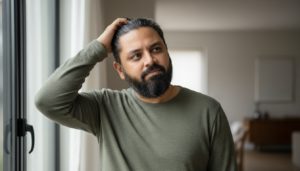 Northwestern Hair sits at 3 E. Huron Street in Chicago’s River North neighborhood — accessible from every major highway corridor connecting the city to the surrounding region, minutes from the interstate, and well within reach of a patient base that extends well beyond the Chicago metro.
The distances patients regularly travel to Northwestern Hair would surprise most people who think of medical care as inherently local. Milwaukee is ninety minutes. Madison is three hours. Rockford is ninety minutes. South Bend is two hours. Champaign is two and a half hours. Indianapolis is three hours. The Quad Cities are three hours. Further patients — from Cincinnati, St. Louis, Kansas City, and even further afield — book flights for a day trip that involves a morning consultation or procedure and an evening return.
None of these patients made that trip because they couldn’t find a hair restoration clinic closer to home. They made it because they evaluated their local options, found them wanting by the specific standard they’d developed through research, and concluded that the additional distance was a worthwhile investment in a better outcome.
Understanding why they reach that conclusion requires understanding what they found — and what they weren’t finding locally.
What Regional Patients Find That They Couldn’t Find at Home
A surgeon who performs his own procedures
This seems like it should be a baseline expectation in any surgical specialty. In hair restoration, it isn’t.
The dominant clinical model at high-volume hair transplant clinics — domestically and internationally — involves a physician who consults, designs, and oversees, and a team of trained technicians who perform the majority of the actual extraction and placement work. This model is economically efficient. It allows a clinic to run multiple procedures simultaneously and maximize revenue per physician per day. It is also the model most likely to produce the variance in outcomes that drives regional patients to look beyond their local options in the first place.
When a patient in Springfield, Peoria, or Sheboygan has a consultation at a local clinic and asks who will actually be performing their procedure, the answer they frequently receive is some version of “our experienced team” — a phrase designed not to answer the question directly. The patients who push past that phrasing and find out that the surgeon named on the website will be supervising rather than operating are often the patients who end up searching further.
At Northwestern Hair, the answer to this question is direct and unconditional. Dr. Vinay leads the procedure — from the initial evaluation and hairline design through surgical oversight and final placement, with the patient as the only case on the schedule for the day. That commitment is verifiable in the structure of the practice, not just in a marketing claim, and patients who have learned to ask the right questions recognize it immediately.
A technique that protects what matters most
Most regional markets outside Chicago don’t have access to Micro PUE. They have access to standard FUE, which is the dominant global technique and produces acceptable results in skilled hands — but which carries a fundamental limitation that patients doing serious research increasingly understand.
In standard FUE, mechanical forceps handle grafts during extraction, and sharp punch instruments remove follicular units from the donor area. Both create risk. Forceps can crush graft tissue. Sharp punches can transect the follicular structures below the visible shaft that determine whether the graft grows. The damage is microscopic, invisible at the time of extraction, and doesn’t reveal itself until months later when growth is thinner than expected, patchy in specific areas, or simply absent where grafts were placed.
Micro PUE eliminates this mechanism. Vibration and suction replace mechanical contact. Grafts are extracted without the handling that compromises them. What arrives at the recipient site is an intact follicular unit with preserved architecture — positioned to grow strong and look natural rather than to reveal, months later, the damage that happened in extraction.
For a patient who has done enough research to understand this distinction — and the internet has made this easier than it used to be — finding a local clinic that offers it becomes the constraint that drives the geography of the search. When the technique they’ve identified as the right one exists in Chicago, Chicago becomes where they go.
A practice built around one patient
The one-procedure-per-day standard at Northwestern Hair is unusual enough in the industry that patients who encounter it in their research tend to pause on it. Most clinics — even good ones — schedule multiple procedures on a given day. The economics of the specialty make this rational. A surgeon who can perform three cases in a day generates three times the revenue of one who commits a full day to a single patient.
What gets traded in that model is the thing that matters most: full surgical attention, sustained over the entire procedure, from the same physician who designed the plan. A surgeon dividing attention across three rooms makes different decisions — not necessarily worse decisions, but decisions made with less information and less focus — than a surgeon for whom the patient in front of them is the only patient in the building.
For patients who have spent months developing their understanding of what makes a hair transplant outcome excellent, the one-procedure-per-day standard is a signal. It’s the structural proof of a set of values that marketing language can claim but that operational decisions reveal. The patients traveling from across the Midwest to Northwestern Hair have often identified this signal specifically — not because someone told them to look for it, but because it’s the natural conclusion of asking the right questions. Contact
Post-procedure continuity that travels with them
 A practical concern for any patient traveling for a medical procedure is what happens after they go home. The procedure takes one day. Recovery takes twelve months. If something needs attention — an unexpected healing pattern, a question about the shedding phase, a concern at month four that requires clinical judgment — who handles it?
At high-volume clinics, post-procedure support is typically managed by staff coordinators who triage questions and escalate to the surgeon when necessary. This system functions adequately for routine follow-up. It is less adequate for the moments when a patient genuinely needs physician-level judgment quickly and directly.
At Northwestern Hair, post-procedure communication goes to Dr. Vinay directly. Patients have his contact. Questions at week two or month six are answered by the surgeon who performed the procedure, who knows the case, and who has a personal stake in the outcome. For a patient in Milwaukee or Indianapolis, this continuity doesn’t require being physically in Chicago — it just requires a physician who is genuinely accessible.
The patients who have traveled the furthest for their procedure consistently cite this as one of the factors that made the distance feel manageable. The trip to Chicago is a one-time commitment. The relationship with the surgeon extends across twelve months of recovery and beyond.
What the Reviews Reveal
The pattern that drives regional patient volume to Northwestern Hair isn’t primarily advertising. It’s reputation — specifically, the kind of reputation that builds through authentic patient experiences documented publicly and encountered naturally in the research process.
A patient in Madison doing evening research on hair restoration reads reviews on Google, RealSelf, and hair loss forums. They’re not looking for the closest clinic. They’re looking for the best one they can find evidence for. When they encounter a consistent body of reviews from patients across the Midwest — patients who describe the same specific things: the one-patient commitment, the direct surgeon access, the natural results, the surprise of how manageable the recovery actually was — the geography starts to feel secondary to the quality of the evidence.
The reviews that travel furthest — the ones that a patient in Rockford or South Bend encounters and trusts — are typically the ones that contain specifics: the graft count, the technique, the recovery timeline, the moment at month nine when the density became clearly visible. Those details are the fingerprint of an authentic experience, and they’re what convert a regional patient’s curiosity into a consultation booking.
Illinois Beyond Chicago: A Market Being Underserved
Illinois outside Chicago — Rockford, Peoria, Springfield, Champaign, the Quad Cities, the collar counties — represents a significant population with the same hair restoration needs as any major metro, and considerably fewer quality options to address them.
The hair restoration clinics serving these markets range from general dermatology practices that offer basic non-surgical treatments to national chain operations that bring standardized, volume-oriented approaches to markets that deserve better. The gap between what’s locally available and what patients have learned to want — through research, through word of mouth from friends who traveled to Chicago, through the same forums and review ecosystems that drive regional decisions everywhere — is measurable and growing.
For Northwestern Hair, this isn’t a market to be captured through advertising. It’s a patient population that’s already finding its way to the clinic through the same organic search and reputation pathway that drives Milwaukee and Indianapolis patients. The question for these patients is never “should I consider Chicago?” It’s “is the specific clinic I’ve identified in Chicago actually as good as my research suggests?
The consultation is where that question gets answered. And patients who arrive having done real research consistently leave having confirmed what they suspected — that the distance was worth it before they ever sat down with Dr. Vinay, and that the confirmation they needed was always going to come from the conversation rather than the website.
The Wisconsin Market: Closer Than It Feels
Wisconsin patients — Milwaukee, Madison, Green Bay, and beyond — have a relationship with Chicago that makes Northwestern Hair a more natural destination than it might appear on a map.
Chicago is Wisconsin’s city in a way that no other major metro is. Chicagoans vacation in Door County. Wisconsinites travel to Chicago for concerts, sporting events, restaurant experiences, and medical care that isn’t available at home. The I-94 corridor between Milwaukee and Chicago is one of the most trafficked stretches of interstate in the Midwest, and the cultural and economic relationship between the two cities means that a Milwaukee patient considering a Chicago clinic isn’t making an unusual choice — they’re making the same kind of choice they make when they go to a Bulls game or a Chicago restaurant that’s worth the drive.
What makes Northwestern Hair specifically the destination for Wisconsin patients rather than a general Chicago clinic is the same thing that drives patients from every other regional market: the specific combination of technique, surgeon commitment, and post-procedure continuity that regional clinics can’t replicate. The geography is easy. The hard part — finding a surgeon and clinic that meet the standard serious patients develop through research — was already done before the drive began.
Indiana and Beyond: When the Drive Is Worth It
Indiana patients — Indianapolis, South Bend, Fort Wayne, Terre Haute — represent the outer edge of Northwestern Hair’s regional patient base, and their decision to travel involves a different calculation than a Milwaukee patient’s.
Three to four hours of driving for a medical procedure is not a casual decision. The patients who make it from Indiana have typically been through a longer research process, have likely consulted locally without finding what they were looking for, and have arrived at Northwestern Hair through a research pathway that left them confident enough in what they’d find to make the trip before the consultation.
What they find, when they get there, is consistent with what the research suggested, which is itself a meaningful outcome. The patients who travel furthest are often the most attuned to the gap between what clinics say about themselves and what they actually deliver, and the alignment between expectation and experience at Northwestern Hair is what converts a one-time patient into a regional ambassador. The Indiana patient who returns home with strong results at month twelve becomes the source of the recommendation that brings the next Indiana patient.
This word-of-mouth network is slow to build and durable once established. It doesn’t require advertising spend or regional marketing campaigns. It requires consistently delivering outcomes that patients feel compelled to tell people about, which is a different kind of competitive strategy than most clinics in this space employ.
What This Means for the Patient Considering the Trip
If you’re reading this from Rockford, Madison, South Bend, or anywhere else in the Midwest where your local research hasn’t produced an option you’re fully confident in, the argument being made here is straightforward.
The drive to Chicago is manageable. The procedure is one day. The recovery happens at home, with direct access to the surgeon who performed it. And the outcome — a well-executed Micro PUE procedure designed and led by Dr. Vinay, with a plan built around your specific case and long-term trajectory — is not something you’ll find at a closer option simply because it happens to be closer.
Distance in this context is a logistics problem. It’s solvable with a single tank of gas or a short flight. What isn’t solvable after the fact is a procedure performed by a team that didn’t give it the attention it deserved, with a technique that compromised grafts you can’t get back, in a donor area that was managed for immediate results rather than long-term options.
The patients who make the drive consistently report the same thing: the decision that felt like a significant one before the consultation felt obvious after it. That’s not a function of a persuasive sales process. It’s the product of a clear answer to a question that hadn’t been answered clearly before.
One More Thing Worth Saying
Northwestern Hair doesn’t market itself as a regional destination in the conventional sense. There’s no campaign targeting Milwaukee or Indianapolis, no regional advertising buy, no effort to position Chicago travel as a feature rather than a fact.
The regional patient base exists because patients find their way here through genuine research, follow the evidence to its logical conclusion, and make a decision based on what they learn rather than where they happen to live. That’s a different foundation than a market built on advertising — and it produces a different kind of patient, one who arrives already understanding why they’re there and already convinced by their own research that the trip is worth making.
Dr. Vinay’s job in those consultations isn’t to persuade. It’s to confirm what the patient has already figured out — and to build from there toward a plan that serves them well for the next twenty years, wherever they happen to be driving home to. Contact Northwestern Hair Restoration today for more information.
Traveling to Northwestern Hair from outside Chicago? We work with out-of-town patients regularly and can walk you through exactly what the logistics involve. Book a consultation with Dr. Vinay — the conversation is worth the drive.