The Biology of Balding: How DHT Miniaturizes Hair Follicles
Most men experiencing hair loss know two things about it: that it runs in the family, and that there’s a hormone involved called DHT. Beyond that, the biology tends to blur into vague references to genetics and hormones that feel explanatory on the surface without actually clarifying anything.
That vagueness matters more than it might seem. Because the treatment decisions patients make — whether to start non-surgical treatment, when surgery makes sense, how to think about prevention, why some treatments work and others don’t — all flow from understanding the underlying mechanism. The patients who understand what DHT actually does to their follicles make better decisions at every stage of the process than those who are working from a simplified version of the story.
This piece is the detailed version. Not a medical textbook, but a genuinely thorough explanation of what’s happening at the follicular level when hair loss begins — and what that means for how it can be addressed.
Hair Growth Starts With the Follicle
Before getting to DHT, it helps to understand what a hair follicle actually is and how it works — because the miniaturization process only makes sense in the context of normal follicular function.
A hair follicle is a complex mini-organ embedded in the dermis — the deeper layer of skin beneath the visible surface. Each follicle operates on a cycling program that repeats throughout a person’s lifetime, moving through three primary phases:
Anagen is the active growth phase. The hair shaft is actively extending from the base of the follicle, which is metabolically active and well-supplied with blood and nutrients. Scalp hair in anagen grows approximately half an inch per month. The duration of the anagen phase determines maximum hair length — scalp follicles can remain in anagen for two to seven years in healthy individuals, which is why scalp hair can grow long while eyebrow hair can’t.
Catagen is a brief transitional phase lasting two to three weeks. Growth stops, the follicle detaches from its blood supply, and the lower portion of the follicle regresses. This is a controlled process, not a failure — it’s the follicle preparing for its next rest period.
Telogen is the resting phase. The follicle is quiescent — not growing, not regressing, simply waiting. A telogen hair is held loosely in the follicle and eventually sheds naturally, either through brushing and washing or on its own. After telogen, the follicle re-enters anagen and a new hair shaft begins forming.
At any given time, roughly 85 to 90 percent of scalp follicles are in anagen, around one percent are in catagen, and ten to fifteen percent are in telogen. The natural daily shedding of fifty to one hundred hairs that most people experience is simply the telogen follicles releasing their hair shafts before re-entering the growth phase.
This cycling program is what DHT disrupts — and understanding the disruption requires understanding what DHT is and where it comes from.
What DHT Is and Where It Comes From
DHT stands for dihydrotestosterone. It is an androgen — a class of hormones that includes testosterone — and it is produced from testosterone through the action of an enzyme called 5-alpha reductase.
The conversion happens primarily in specific tissues: the skin, the prostate, the liver, and the hair follicles themselves. When testosterone enters cells in these tissues that contain 5-alpha reductase, the enzyme converts it to DHT. DHT is considerably more potent than testosterone in its androgen receptor binding capacity — estimates vary, but DHT binds androgen receptors with roughly three to five times the affinity of testosterone, and it dissociates more slowly, meaning the receptor activation it produces is both stronger and longer-lasting.
DHT serves legitimate biological functions. It played a role in the development of male characteristics during fetal development and puberty. In adult men, it continues to function in various tissues. It is not a pathological substance — it is a normal component of male endocrinology that happens to have an adverse effect on genetically susceptible hair follicles.
The critical phrase there is genetically susceptible. DHT circulates in the bloodstream of every man. Not every man loses hair. The difference is not in the DHT itself — it’s in how specific follicles respond to it.
The Androgen Receptor: Why Some Follicles Are Vulnerable
Hair follicles on different parts of the scalp have fundamentally different relationships with DHT. This isn’t a subtle difference — it’s the entire biological basis of male pattern hair loss, and it explains why baldness follows the patterns it does rather than occurring uniformly across the scalp.
Follicles in the frontal hairline, the temples, and the crown are genetically programmed to express androgen receptors that respond to DHT with sensitivity. When DHT binds to these receptors, it triggers a cascade of molecular signals that progressively alter how the follicle functions — shortening the anagen phase, extending the telogen phase, and eventually causing the follicle to produce progressively smaller, finer, less pigmented hair. This process is called miniaturization, and it is the central biological mechanism of androgenic alopecia.
Follicles on the back and sides of the scalp — the donor area used in hair transplantation — express fewer androgen receptors or receptors with lower sensitivity. They are largely resistant to DHT. This is why the horseshoe pattern of remaining hair in advanced baldness persists indefinitely — those follicles genuinely don’t respond to DHT the way the frontal and crown follicles do. And critically, this resistance is genetic — it travels with the follicle. When donor-resistant follicles are transplanted to the frontal zone, they retain their resistance in the new location. This is the biological foundation that makes hair transplantation a permanent solution rather than a temporary one.
The Miniaturization Process: What Actually Happens
Miniaturization is not the sudden death of a follicle. It’s a gradual degradation that happens over years — and understanding its stages changes how you think about early intervention.
Stage One: Shortened Anagen
The first effect of sustained DHT exposure on a susceptible follicle is a progressive shortening of the anagen phase. Where a healthy follicle might remain in active growth for four to six years, a DHT-affected follicle begins cycling faster — anagen shortens to three years, then two, then one, then months.
The practical consequence is that each successive hair shaft produced by the follicle is shorter than the last — not because growth rate has slowed, but because the growth period has been truncated. A follicle that used to produce a hair twelve inches long before shedding now produces a hair four inches long, then two inches, then less.
This early stage is often when patients first notice something is changing — hair that seems finer, doesn’t grow as long, or lies flatter than it used to. These are real changes, and they’re early warning signals that the miniaturization process has begun. They’re also the stage at which intervention has the highest leverage.
Stage Two: Follicular Miniaturization
As DHT exposure continues, the follicle itself begins to physically shrink. The dermal papilla — the cluster of specialized cells at the base of the follicle that regulates hair growth and determines hair caliber — decreases in size. As the dermal papilla shrinks, it can support less hair matrix activity, and the hair shaft it produces is correspondingly finer and less pigmented.
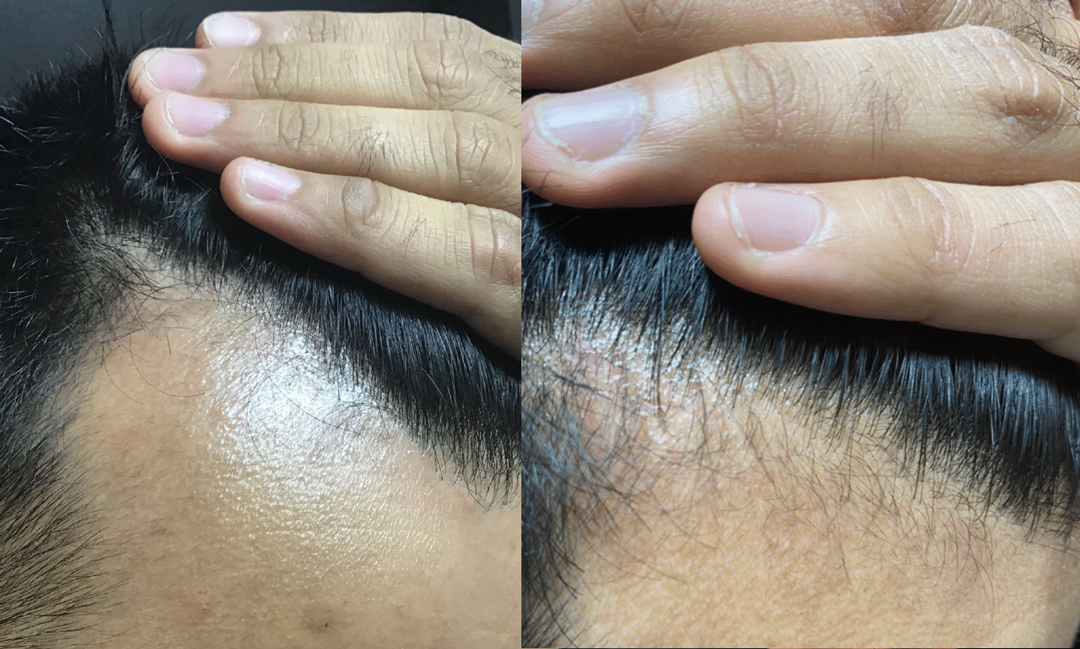
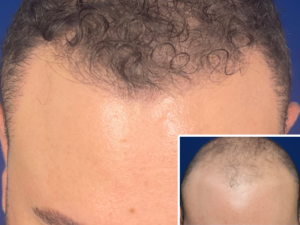
This is the stage at which the visual changes become more obvious. Hairs that were previously terminal — thick, fully pigmented, cosmetically significant — are replaced by progressively finer, shorter, lighter hairs called vellus hairs. This is the biological definition of miniaturization: the conversion of terminal follicles to vellus follicles through sustained androgen activity.
At the scalp surface, what this looks like is thinning — a reduction in the diameter and pigmentation of individual hairs that, distributed across the thinning zone, produces the appearance of reduced density even before significant follicle loss has occurred. The follicles are still there, still cycling, still producing hair — just hair that is increasingly cosmetically insufficient.
This stage is critically important for treatment timing. Miniaturized follicles — follicles that have converted to vellus production but haven’t yet been permanently lost — are still present and potentially responsive to regenerative intervention. ACS and exosome therapy operate on this population of follicles, providing the growth signals and cellular support that can partially reverse the miniaturization process or slow its progression. The follicle that is still there, however compromised, is a follicle that treatment can potentially reach. The follicle that is gone requires surgery to replace.
Stage Three: Follicular Fibrosis and Permanent Loss
The final stage of DHT-driven miniaturization is the permanent loss of the follicle itself. As the dermal papilla continues to shrink and the follicular cycling becomes increasingly abbreviated, the follicular structure eventually collapses and is replaced by fibrous tissue. The biological machinery that produces hair is gone — not dormant, not miniaturized, but structurally absent.
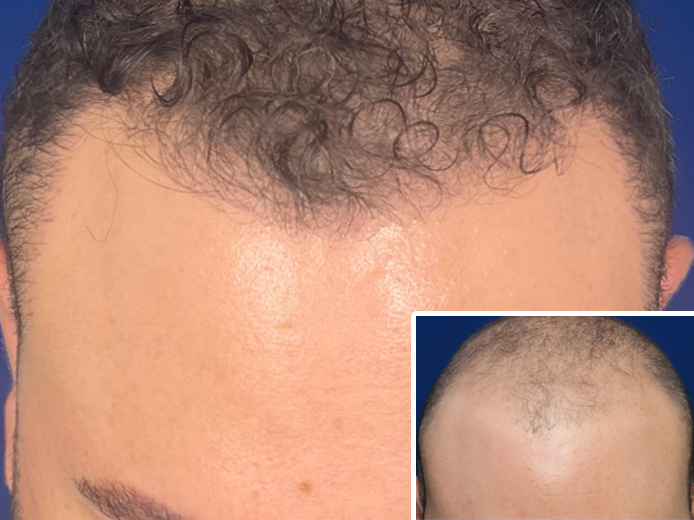
At the scalp surface, this presents as the smooth, follicle-free skin visible in advanced baldness. There are no vellus hairs here — no miniaturized structures that treatment might stimulate. The follicles are simply no longer present, and no topical, injectable, or systemic treatment can restore them. Surgery — specifically, transplanting DHT-resistant follicles from the donor area — is the only path to hair in these zones.
This is why the distinction between active follicles, miniaturized follicles, and permanently lost follicles is so clinically significant. Treatment works on the first two categories. Surgery addresses the third. The right intervention at the right stage depends on accurately identifying which category the patient’s follicles fall into — which is part of what a good consultation evaluates.
Why Pattern Baldness Is Predictable
The Norwood Scale — the classification system used to describe the stages of male pattern baldness — isn’t an arbitrary framework. It maps the predictable progression of DHT-driven miniaturization across the follicles with the highest androgen receptor density and sensitivity.
The frontal hairline and temples typically show the earliest effects because the follicles in these regions tend to have the highest receptor sensitivity. As DHT exposure accumulates over time, the zone of affected follicles expands — progressing across the mid-scalp and into the crown as the miniaturization front advances.
The progression isn’t the same for every patient. The rate of advance, the ultimate extent of loss, and the age at which different stages are reached are all shaped by genetics — specifically, by the inherited sensitivity profile of the androgen receptors in the frontal and crown follicles, the activity level of 5-alpha reductase in scalp tissue, and the baseline DHT levels maintained by individual endocrinology.
This genetic complexity is why two brothers with the same father can have very different hair loss trajectories, and why a patient’s maternal grandfather’s hairline is sometimes cited as a rough predictor — the X chromosome, inherited from the mother, carries some of the androgen receptor genes relevant to hair follicle sensitivity. But the inheritance pattern is polygenic and complex, which means family history provides guidance rather than certainty.
What the Norwood Scale provides is a way to assess current position and estimate likely trajectory — both of which matter enormously for surgical planning. A surgeon who knows a patient is currently at Stage 3 but likely to progress to Stage 5 or 6 based on age, rate of progression, and family history designs a very different procedure than one who assumes the current state represents the final picture.
The 5-Alpha Reductase Connection
Since DHT is produced from testosterone by 5-alpha reductase, the enzyme itself is a logical target for intervention. This is the mechanism behind a class of medications — finasteride and dutasteride — that work by inhibiting 5-alpha reductase activity and thereby reducing DHT levels in the scalp and systemically.
Finasteride inhibits the Type II isoform of 5-alpha reductase, which is predominantly expressed in hair follicles and the prostate. Clinical studies have demonstrated that finasteride reduces scalp DHT levels by roughly 60 to 70 percent, which is sufficient to slow miniaturization progression significantly in many patients and produce modest density improvements in others.
Dutasteride inhibits both Type I and Type II isoforms, producing a more complete suppression of DHT — scalp DHT reductions of 90 percent or more in clinical settings. This more complete suppression may produce greater efficacy for hair retention, though it also affects systemic DHT levels more broadly.
At Northwestern Hair, the approach to these medications is part of a broader non-surgical protocol rather than a standalone recommendation. Their role in preserving native hair alongside surgical outcomes — protecting the miniaturized follicles that remain present and potentially responsive — makes them worth considering as part of a comprehensive treatment plan for the right patient. The conversation about whether they make sense, at what dose, and in combination with what other interventions is one that happens in the context of the full clinical picture rather than as a default recommendation.
What Regenerative Treatments Are Actually Doing
Understanding miniaturization at the cellular level helps clarify what regenerative treatments like ACS and exosome therapy are actually accomplishing — and why they work on some follicles and not others.
The dermal papilla — the structure whose decline drives miniaturization — is responsive to growth signals. In a healthy follicular environment, the dermal papilla receives adequate growth factor stimulation that supports its size, activity, and hair-producing function. In a DHT-affected follicular environment, that signaling environment is disrupted — the dermal papilla is receiving signals that suppress its activity rather than support it.
Regenerative treatments work by introducing growth factors and cellular signals that counteract this suppressive environment. ACS — Autologous Cellular Serum — uses the patient’s own biology to generate a concentrated preparation of growth factors and signaling molecules that, when introduced to the scalp, support dermal papilla function and follicular health. The autologous nature of the treatment means the biological signals are native to the patient’s own cellular environment — not foreign compounds, but the patient’s own growth factors applied at therapeutic concentrations.
Exosome therapy introduces extracellular vesicles — tiny biological packages that carry growth signals, proteins, and genetic material between cells — that can stimulate dormant or suppressed follicular activity. The mechanism is different from ACS but the target is similar: the miniaturized follicle that still has biological potential but is operating in an environment that has been suppressing it.
What these treatments cannot do is restore a follicle that has already progressed to the fibrosis stage — the permanently lost follicle replaced by scar tissue. This is the biological boundary that determines whether a patient is a candidate for regenerative treatment, for surgery, or for both. Identifying where a patient’s follicles fall across the spectrum from active to miniaturized to permanently lost is one of the central clinical assessments of any thorough hair restoration consultation.
The Donor Area: Permanent Resistance Explained
The biological reason hair transplantation works — genuinely, permanently, without the transplanted hair being subject to the same miniaturization as the native hair it replaced — is the androgen receptor profile of the donor follicles.
Follicles from the occipital and parietal regions of the scalp — the back and sides — express androgen receptors at lower density and with lower sensitivity than the follicles of the frontal and crown zones. When these follicles are exposed to the same DHT levels that drive miniaturization in the front, their androgen receptor-mediated response is muted. The molecular signals that drive progressive follicular regression in genetically susceptible follicles simply don’t gain the same traction in donor-area follicles.
When those follicles are extracted and transplanted to the frontal zone, they retain this receptor profile. They are now physically located in an area that — in their original configuration — would have experienced DHT-driven miniaturization. But their own cellular machinery doesn’t respond to DHT with the same sensitivity as the native follicles in that area. They grow. They cycle normally. They produce terminal hair indefinitely.
This is the biological fact that makes hair transplantation uniquely effective among hair restoration options. Topical and systemic treatments can modulate the DHT environment and support existing follicles. They cannot change the androgen receptor sensitivity of the follicles themselves. Surgery physically relocates follicles with the right receptor profile to the areas that need them — which is why transplanted results are permanent when the donor area is managed correctly and the extraction is performed without compromising the follicular architecture.
What This Biology Means for Treatment Decisions
Putting this all together, the biology of DHT-driven miniaturization maps directly onto a set of practical treatment implications.
Early intervention has compounding value. The miniaturized follicle that is still present is treatable. The permanently lost follicle is not. Every month that active miniaturization continues unchecked is a month in which follicles that could have been preserved are crossing the threshold into permanent loss. Starting non-surgical treatment while follicles are still present — even if thinned and compromised — is worth considerably more than starting after they’re gone.
Surgical timing should account for trajectory, not just current state. The Norwood stage a patient presents at today is not their final Norwood stage in most cases. Surgical planning that accounts only for current loss without factoring in likely future progression creates results that may look excellent now and problematic later. The biology of progressive miniaturization doesn’t pause because a transplant was performed.
Donor supply is a finite biological resource. The pool of DHT-resistant follicles available for transplantation is fixed. How that supply is managed — how many grafts are used in a first procedure, how much is preserved for future needs, how extraction is executed to minimize damage — determines the options available across a lifetime of potential hair loss management. Treating donor supply carelessly is a biological cost the patient will pay for decades.
Non-surgical and surgical treatments address different biological targets. Non-surgical treatments — regenerative therapies, DHT suppression, scalp health optimization — work on follicles that still exist. Surgery replaces follicles that are gone. The right treatment plan recognizes which follicles fall into which category and directs the appropriate intervention accordingly. For most patients, the answer isn’t surgical or non-surgical — it’s understanding precisely what each modality can and cannot do for the specific follicular landscape they present with.
The Final Picture
Hair loss is biology, not fate. Understanding the mechanism — what DHT does, why specific follicles are vulnerable while others are resistant, how miniaturization progresses from subtle change to permanent loss — doesn’t just satisfy intellectual curiosity. It changes the quality of every treatment decision that follows.
Patients who understand the biology ask better questions in consultations. They understand why timing matters. They know what non-surgical treatment can realistically accomplish and what it can’t. They understand why the permanence of transplanted hair is genuine rather than a marketing claim. And they make decisions calibrated to their actual clinical situation rather than shaped by the incomplete information that populates most of what’s written about hair loss online.
That understanding is part of what Northwestern Hair tries to provide — not just for patients who are ready to schedule a procedure, but for anyone trying to navigate this space with the clarity it deserves.